Based on the DDMRP framework, JZLOG proposes a forecasting solution for core key products, combining multiple forecasting models with dynamic buffer stock management to optimize supply chain operations and address the shortcomings of traditional MRP.
This article showcases JZLOG's past intelligent forecasting solutions: a material demand forecasting project for a world-renowned electronics company, and a multi-channel sales forecasting project for a home-appliance brand's refrigerators. These success stories demonstrate proven efficiency, helping enterprises improve inventory management, reduce risk, and achieve a win-win in revenue and customer satisfaction.
Length: 2,179 characters
Estimated reading time: 7 minutes

As supply chain management grows ever more complex, companies face intensifying demand fluctuations and mounting inventory pressure, while the market demands ever faster response. Traditional Material Requirements Planning (MRP) relies too heavily on historical-data forecasts and struggles to adapt to real-time change. Demand Driven Material Requirements Planning (DDMRP), an innovative material control and replenishment method, puts real-time demand signals at its core and combines them with dynamic buffer stock management to optimize supply chain operations. Traditional MRP is a "push" approach: production and replenishment are planned in advance from forecasts and historical data, pushing materials downstream even when demand is not yet firm. DDMRP, by contrast, uses "pull" replenishment triggered by actual demand signals, so materials are pulled through the supply chain, enabling a more flexible response to real-time change. Compared with MRP, DDMRP copes quickly with uncertainty and complexity in the supply chain, bringing companies a more flexible and efficient solution.
The core of DDMRP lies in its three processes — Position, Protect, and Pull: first, identify the locations of critical materials and strategic items through historical data and demand forecasts, ensuring focus on high-value categories; second, protect the availability of key items by combining forecasting models with dynamic buffer stock management, guarding against demand volatility; and third, trigger pull-based replenishment from real-time demand signals and short-term forecasts, using a visual system to monitor and adjust inventory status. By embedding forecasting into replenishment decisions, this approach reduces both overstock and stockout risk and markedly improves supply chain efficiency. It is especially suited to industries with frequent demand swings, such as daily necessities and fresh food.
DDMRP-Based Forecasting for Core Key Products
To address the lagging forecasts and low inventory efficiency of traditional MRP, JZLOG proposes a DDMRP-framework-based forecasting solution for core key products. It tackles high inventory costs, slow stockout response, and poor adaptability to demand fluctuations, while improving core-product revenue and customer satisfaction.
The solution focuses on managing core key products. High-value items are selected along three dimensions: sales volume (bestsellers), profit contribution (high-margin goods), and supply chain fluidity (short lead times, fast response). Targeted buffer strategies are built from historical data and short-term forecasting models. Meanwhile, real-time inventory, sales patterns, and supply chain signals dynamically adjust the "green/yellow/red" buffer zones to keep replenishment both timely and efficient.
Technically, JZLOG combines multiple forecasting models: time-series models (ARIMA/Prophet) capture long-term trends; machine learning methods (XGBoost/random forest) accurately predict short-term demand; and deep learning techniques (LSTM/Transformer) analyze complex demand patterns. At the static level, initial buffer zones are set from historical data; at the dynamic level, they are optimized in real time from sales velocity and inventory turnover, ensuring inventory management stays seamlessly aligned with actual demand.
In implementation, JZLOG connects dynamic data sources across sales, inventory, and logistics, and adopts a phased pilot strategy: starting with core key categories to validate the fit between forecasts and replenishment, then gradually integrating the enterprise ERP, point-of-sale terminals, and supply chain management systems into deployment.
The DDMRP-framework-based forecasting solution for core key products delivers significant value:
· In fresh-food scenarios, high-frequency sales data forecasts volume fluctuations and defines buffer zones, enabling pull-based replenishment that avoids both overstock and stockouts.
· In department-store scenarios, long-term forecasting (replenishment lead time) combined with short-term control (dynamic replenishment adjustment) optimizes inventory turnover and effective supply.
· In omnichannel scenarios, data across stores, warehouses, and online platforms is integrated for synchronized inventory management. Connecting consumer demand with real-time supply chain information, DDMRP rapidly adjusts supply chain plans.
Looking ahead, JZLOG plans to introduce AI and IoT technologies for real-time inventory monitoring and seamless dynamic adjustment. Through repeated cycles of analysis and tuning, the solution forms a forecast-pull closed loop that continuously optimizes model parameters and DDMRP strategy, ultimately improving forecast accuracy and operational efficiency. Based on regional sales characteristics, the solution can also scale to national multi-store scenarios for replicable rollout.
Below is a showcase of JZLOG's past intelligent forecasting solutions.
01 · Material Demand Forecasting for a Logistics Project of a World-Renowned Electronics Company
In a material demand forecasting project for a world-renowned electronics company, JZLOG demonstrated deep strength in demand forecasting. The project rolls and refreshes data daily to keep inventory management efficient and accurate. The customer's daily picking-list data is cleaned and fed into the algorithm platform together with historical logistics demand data, generating material heat scores, association analysis, and future demand forecasts.
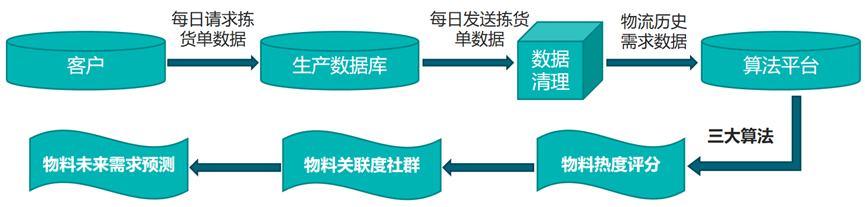
Process flow of the electronics company's logistics project
Core algorithms include the ARIMA model, which captures trends and seasonal fluctuations in material demand; a heat-scoring algorithm that identifies high-demand materials; and association analysis that uncovers material-combination patterns.
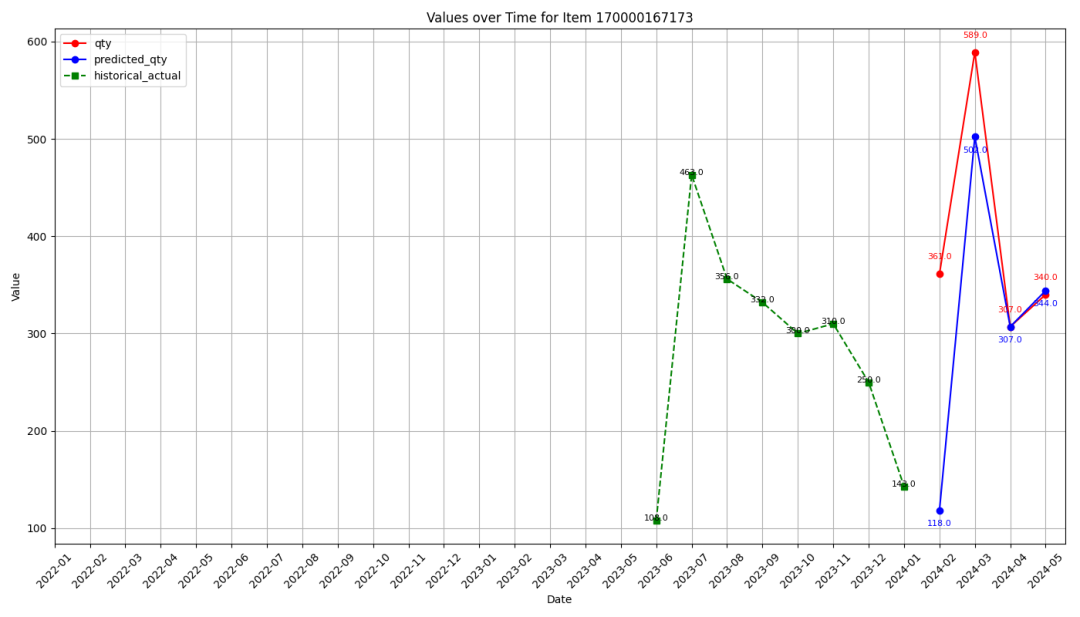
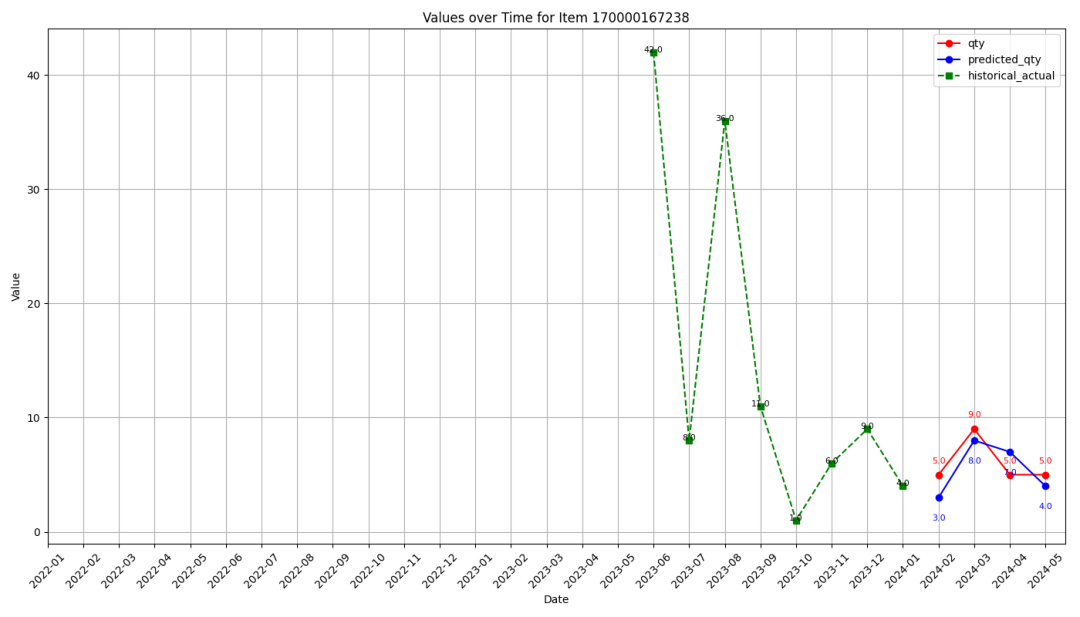
ARIMA model results
The test compares forecast data with actual demand from February 1 to May 25, 2024 (115 days in total), covering 2,157 material items in the warehouse. Results are shown below.
Forecast performance table for future material demand
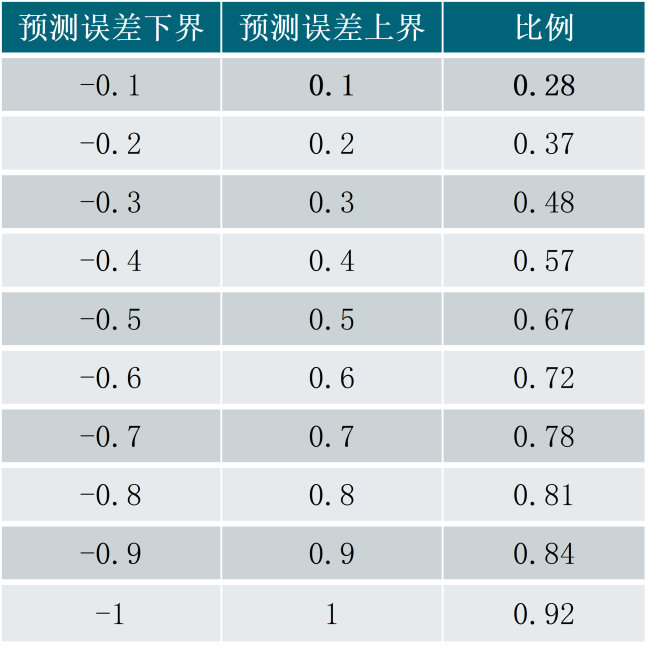
Test results show that across 2,157 materials and a 115-day forecasting horizon, most forecast errors stayed within ±30%, and inventory management efficiency improved significantly. The solution helped the electronics company optimize material replenishment plans and reduce overstock and stockout risk. This case fully validates JZLOG's ability to deliver accurate forecasting and dynamic adjustment in complex supply chain scenarios.
02 · Multi-Channel Sales Forecasting for a Home-Appliance Brand's Refrigerators
For a multi-channel sales forecasting project covering a home-appliance brand's refrigerators, JZLOG adopted the CatBoost model — supervised learning based on lag features — to help optimize inventory, marketing strategy, and production planning.
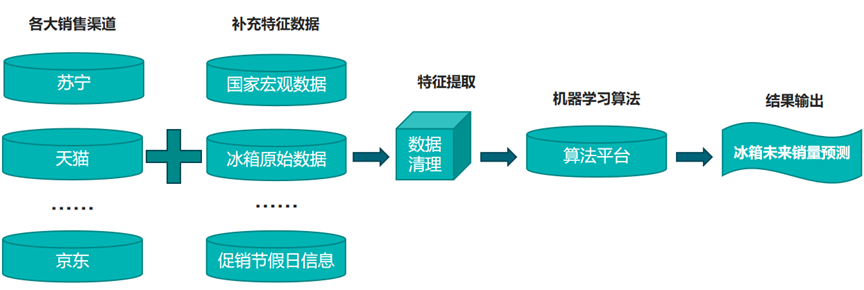
Process flow of the refrigerator sales forecasting project
The training data spans March 2021 to April 2024, covering channels such as JD.com, Tmall, and Suning, as well as multi-dimensional features like promotional holidays and national macroeconomic data. Key features — discount depth, month, sales channel, and prior-month sales — significantly influence the forecasts, reflecting seasonal fluctuations and the complexity of market behavior.
Refrigerator sales forecast performance table
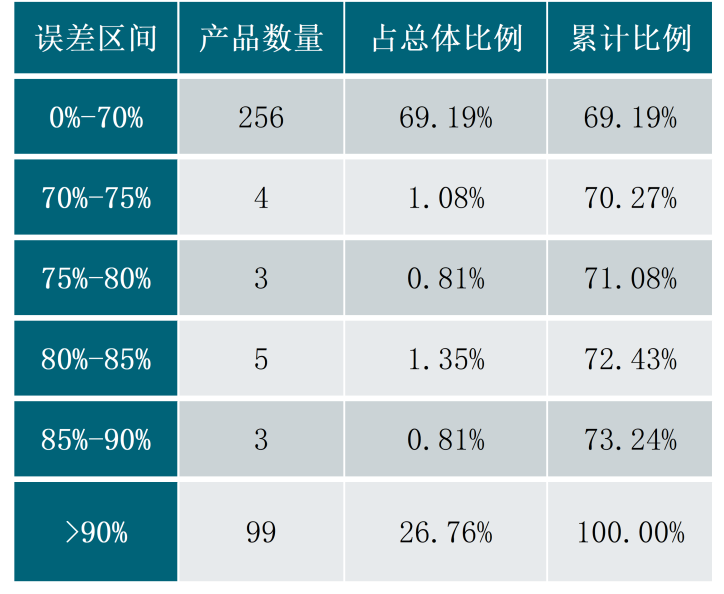
Table of best forecasting cases
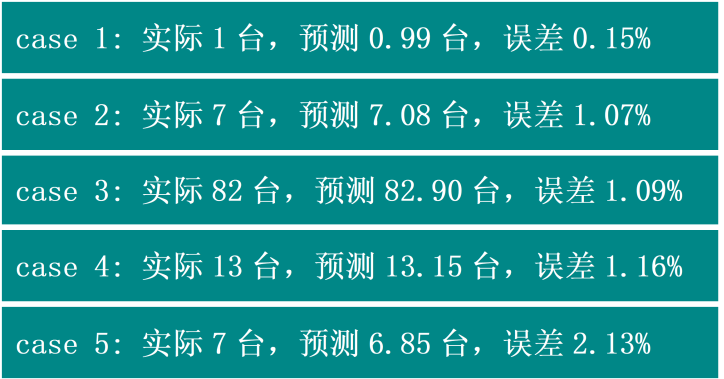
Forecast results show that for over 70% of products the error stayed within 70%, with a median error of just 0.07%. In the best case, actual sales were 82 units versus a forecast of 82.90 (a 1.09% error), demonstrating high-precision forecasting. This project highlights JZLOG's technical strengths in multi-channel forecasting.
Summary
JZLOG's DDMRP-framework-based forecasting solution for core key products provides enterprises with an efficient way to cope with supply chain complexity and uncertainty, through accurate demand forecasting and dynamic replenishment strategies. From the intelligent logistics project of a world-renowned electronics company to refrigerator sales forecasting for a home-appliance brand, JZLOG — with advanced algorithms and proven field results — has significantly improved inventory management efficiency, reduced operational risk, and helped enterprises achieve a win-win in revenue and customer satisfaction.
In the future, as AI and IoT technologies become deeply integrated, JZLOG will continue to optimize the forecast-pull closed loop, bringing more industries a flexible, scalable new paradigm of supply chain management.

Machine-translated from the Chinese original 精准预测 + 动态补货:久章智能 DDMRP 方案解决库存痛点 (published 2025-04-18). WeChat original ↗