This article is aboutGoods distributionProblem introduction, mathematical models, solution results and application demonstrations, etc.

1. Introduction to the problem
In the logistics distribution system, how to plan a reasonable flow of goods between factories, warehouses and customers is crucial. The goal in this problem is to optimize the distribution model to minimize the total cost while satisfying the demand of each customer.
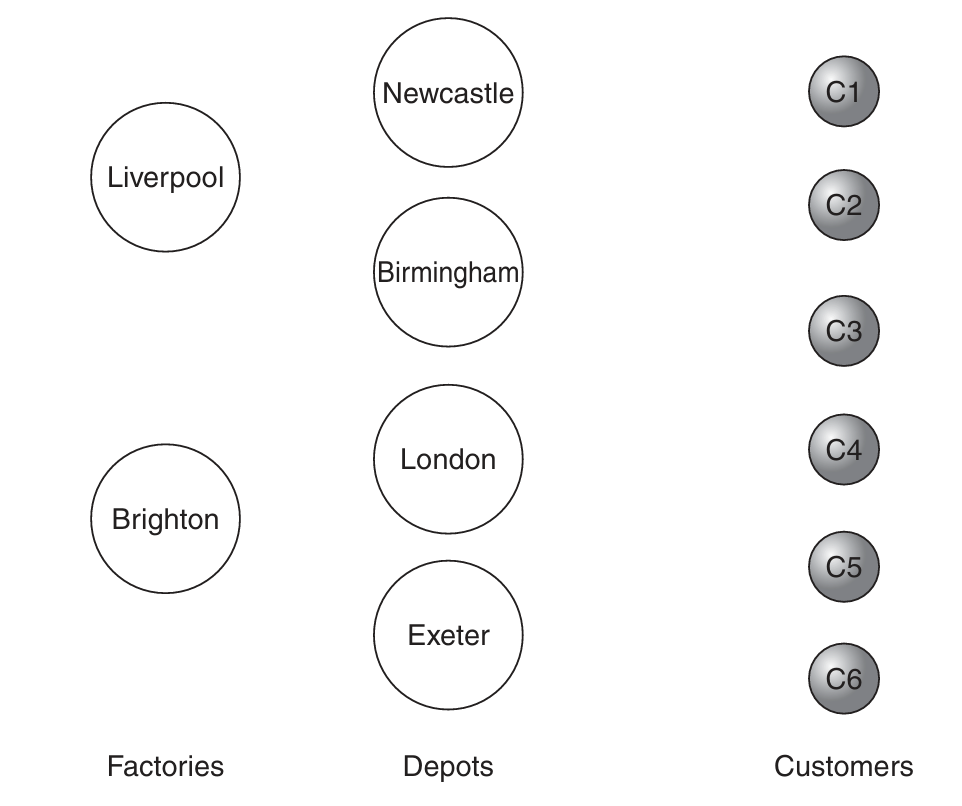
Suppose a company has two factories, one in Liverpool and one in Brighton, and four warehouses with storage facilities, in Newcastle, Birmingham, London and Exeter. The company needs to distribute products to six customers (C1, C2, ..., C6), who can supply them directly from the factory or through the warehouse. The specific information of delivery is shown in Figure 1.
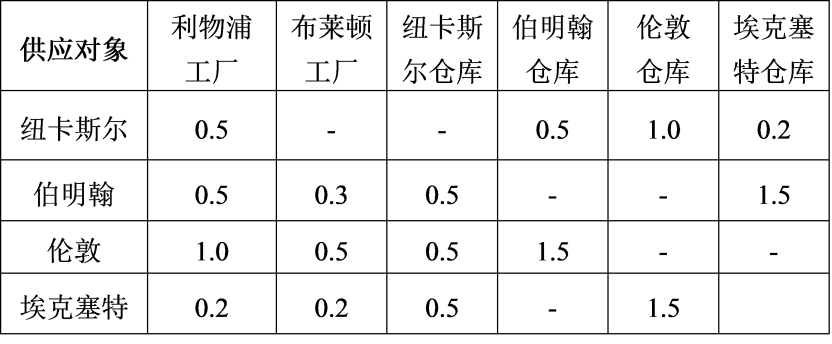
Each customer has a fixed monthly demand, and factories and warehouses have corresponding production and throughput capacity limits. The cost of distribution is shown in Table 1 below. The company hopes to determine a plan that can minimize the total distribution cost based on this information.
Table 1 Distribution costs (£/ton)
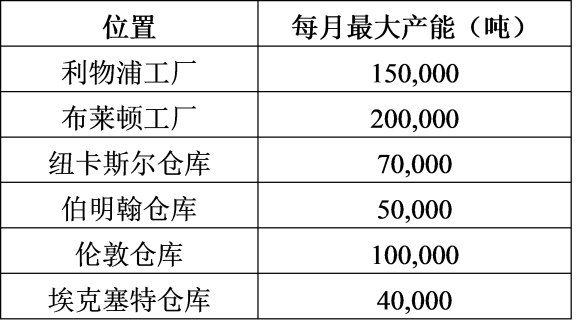
Each factory and warehouse has monthly production and throughput capacity limits as follows:
Table 2 Capacity limits of factories and warehouses
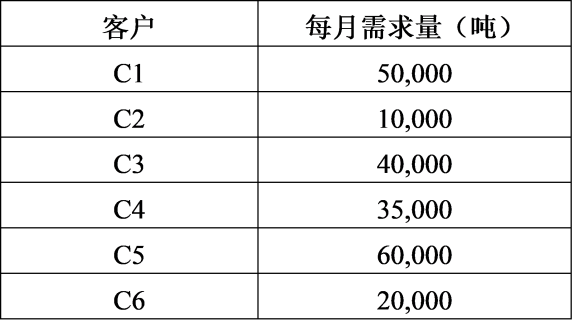
The monthly requirements for each customer are as follows:
Table 3 Customer demand
The company hopes to solve the following problems:
-
How to develop a distribution plan that minimizes total costs while meeting customer needs?
-
How will distribution costs change if the capacity of a factory or warehouse is increased?
-
What is the impact on the optimal distribution plan if small adjustments are made in cost, capacity and demand?
-
Is it possible to fully satisfy a customer's preferred source of supply? If so, what is the additional cost?
2. Establishment of mathematical model
In order to solve this problem, this paper establishes a network flow model to model the flow of goods between factories, warehouses and customers using linear programming (LP). Define the following decision variables:
xij: The amount of goods shipped from factory i to warehouse j;
yik: The amount of goods shipped from factory i to customer k;
zik: The amount of goods shipped from warehouse j to customer k
Additionally, define the following parameters:
ci: Production capacity of factory i, i=1,2;
pj: Throughput of warehouse j, j=1,2,3,4;
ck: Demand of customer k, k=1,2,...,6;
Constraints
(1) Factory capacity constraints:
The total quantity of goods produced by each factory cannot exceed its maximum monthly production capacity.
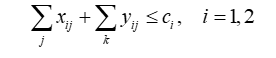
(2) Warehouse capacity constraints:
Each warehouse's throughput cannot exceed its monthly maximum capacity.
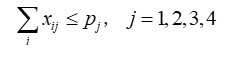
(3) Customer demand constraints:
Every customer's needs must be met.

objective function
The objective function is to minimize the total distribution cost, including transportation costs from factory to warehouse, factory to customer, and warehouse to customer. The specific form is:
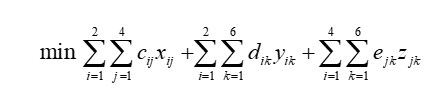
Among them, cij、dikand ejkand represent the unit transportation costs from factory to warehouse, factory to customer, and warehouse to customer, respectively.
3. Problem Solving and Application Demonstration
By solving this linear programming model, the optimal cargo distribution plan can be obtained. This solution will maximize customer demand while minimizing total distribution costs without exceeding factory and warehouse capacity limits.
The problem can be solved quickly using existing linear programming solving algorithms such as the simplex method. The results will show optimal factory and warehouse layout options and how goods are distributed to meet individual customer needs.
The following is the web version of the solver we developed, which can import other data for one-click solving:
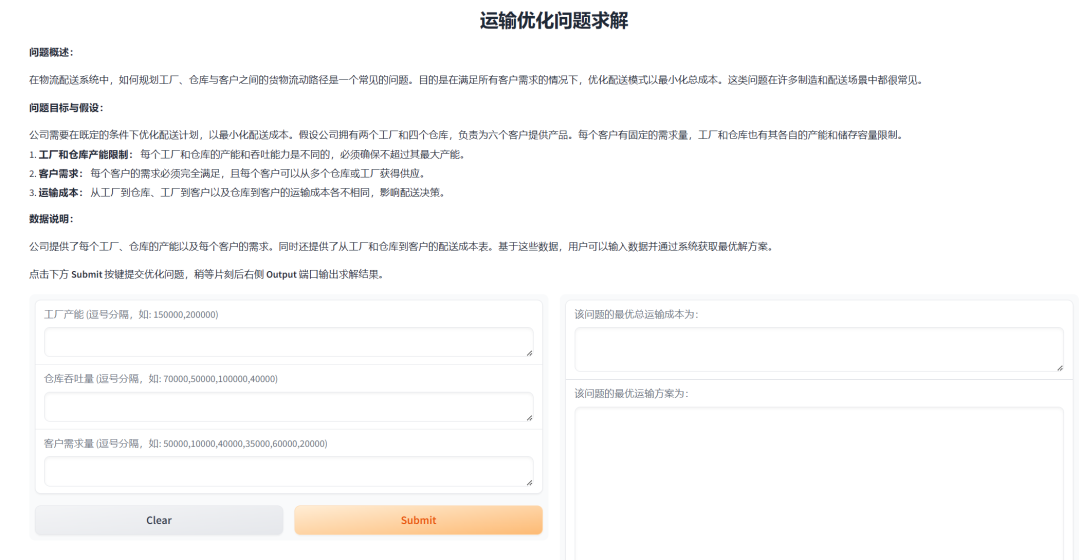
Figure 1 Solver port
As shown in Figure 2, the solver quickly gave the optimal result: the optimal total transportation cost was 148,000.
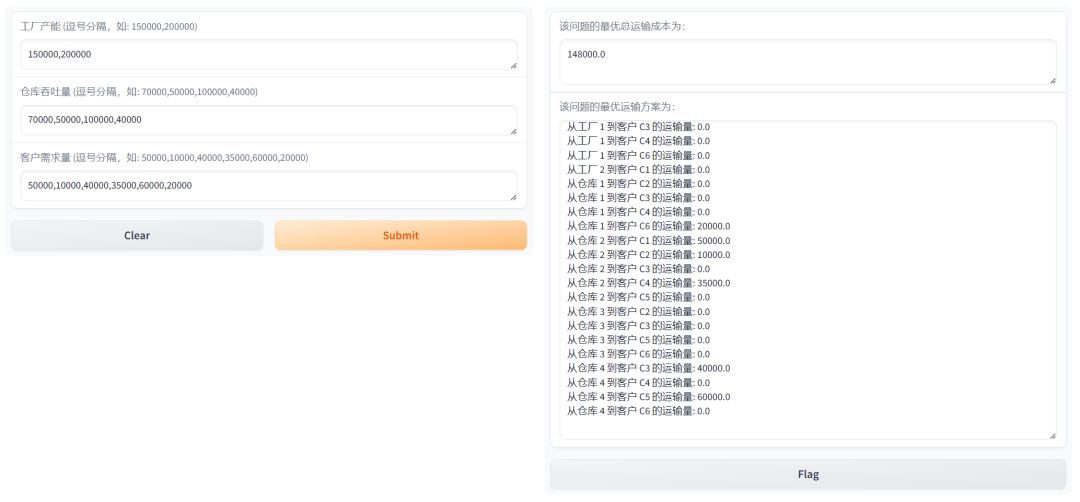
Figure 2 Solver solution results

Machine-translated from the Chinese original 货物分配问题 Distribution1 (published 2024-10-13). WeChat original ↗