This article is aboutFood processing enterprise production planProblem introduction, mathematical model establishment, solution results and application display, etc.

1. Introduction to the problem
For mixed fertilizer production, metal alloy processing, food production and other links, considering the "lowest cost" input of primary production factors is an important consideration in enterprise production planning. At the same time, due to the storability of production factors, multiple links such as market procurement costs and raw material storage costs need to be considered simultaneously during the company's annual, semi-annual, and quarterly production plans to achieve maximum profits.
In order to help manufacturing companies make better decisions on the above issues, Jiuzhang Intelligence now takes the semi-annual production plan of an oil food processing plant as an example to provide Jiuzhang Intelligence's scenario-based solutions and solutions to food production planning problems.
First, we introduce the products operated by virtual enterprise A in our example: AssumptionFood processing factory for saleTwo final products are used to obtain profits: mixed vegetable oil (such as olive oil) and mixed salad oil (such as soybean oil). Each unit of the final product is sold for ¥150.
Secondly, we give the production technology of virtual enterprise A. Vegetable oil requires a 1:1 mixture of two raw material vegetable oils (VEG1, VEG2). Mixed salad oil requires a 1:1:1 mixture of three non-vegetable raw material oils (OIL1, OIL2, OIL3). The oil loss during mixing is not considered, nor is the unit machine depreciation.
We have simplified some practical problems, but in order to ensure the authenticity of the production process, the following production constraints are given:
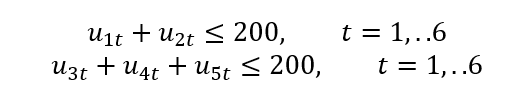
1. Production capacity constraints:Vegetable oil and non-vegetable oil refining require different production lines. In any month, the refining volume of vegetable oil will not exceed 200 tons, and the refining volume of non-vegetable oil will not exceed 250 tons. It is assumed that there is no weight loss during the refining process, and refining heat costs and equipment depreciation are ignored.
2. Storage constraints:The company did not purchase related expensive equipment, and ultimatelyfluid productsCannot save.
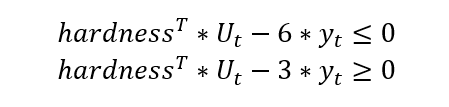
3. Food safety regulatory constraints:At the same time, there are technical limitations on the hardness of the final product. Hardness must be between 3 and 6 in the unit in which hardness is measured. Assuming a linear mixture of hardnesses, the hardness of the raw oil is:
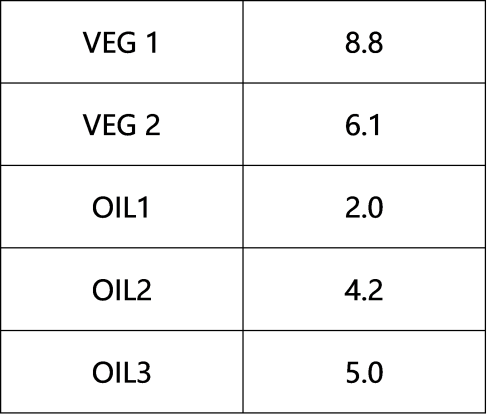
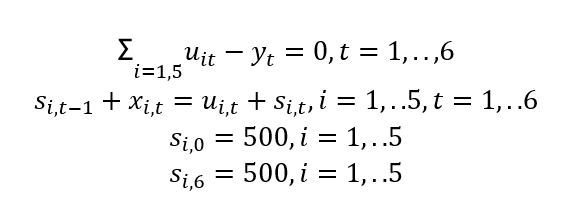
4. Enterprise safety stock constraints:The inventory of each type of crude oil is 500 tons at the beginning of the plan. It is required that the inventory of unit input products be the same at the end of the first-phase production plan to prevent the sudden increase in the price of input factors from affecting the production of the enterprise. That is, these inventories will also exist at the end of the 6-month plan.
After the production plan is completed, we will supplement the relevant conditions for considering purchasing and storage costs.
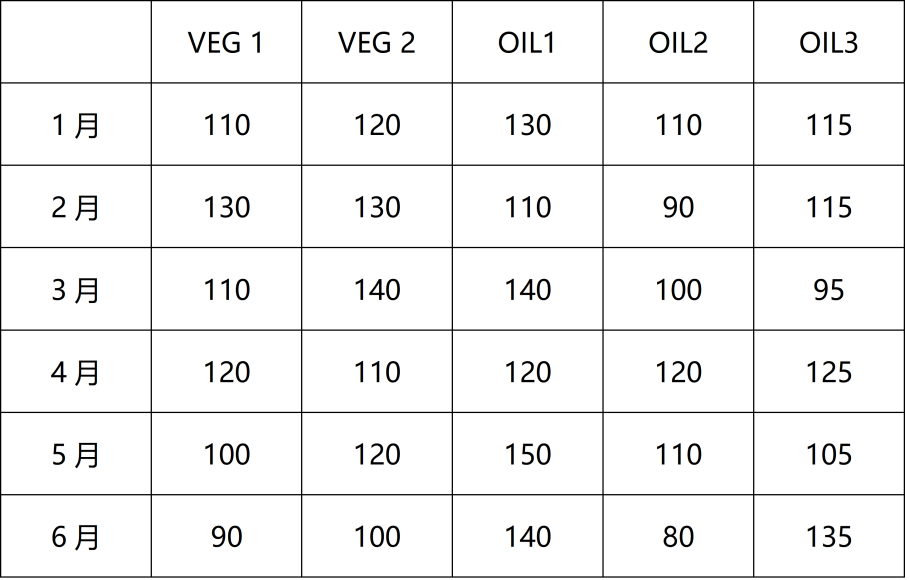
5. First we give the purchase cost.Each factor of production can be purchased and put into production at the beginning of each month, or it can be purchased in the "futures market" and delivered in a specified month. On the current planning date, the prices of production inputs in the commodity market are as follows (pounds per ton):
6. Warehousing constraints:Up to 1,000 tons of raw oil can be stored for later use. Storage costs for vegetable and non-vegetable oils are $5 per ton per month.
In order to maximize profits, what production planning strategy should the company adopt?
2. Establishment of mathematical model
In order to solve the above problems, this article establishes a model of inter-temporal production decision-making.
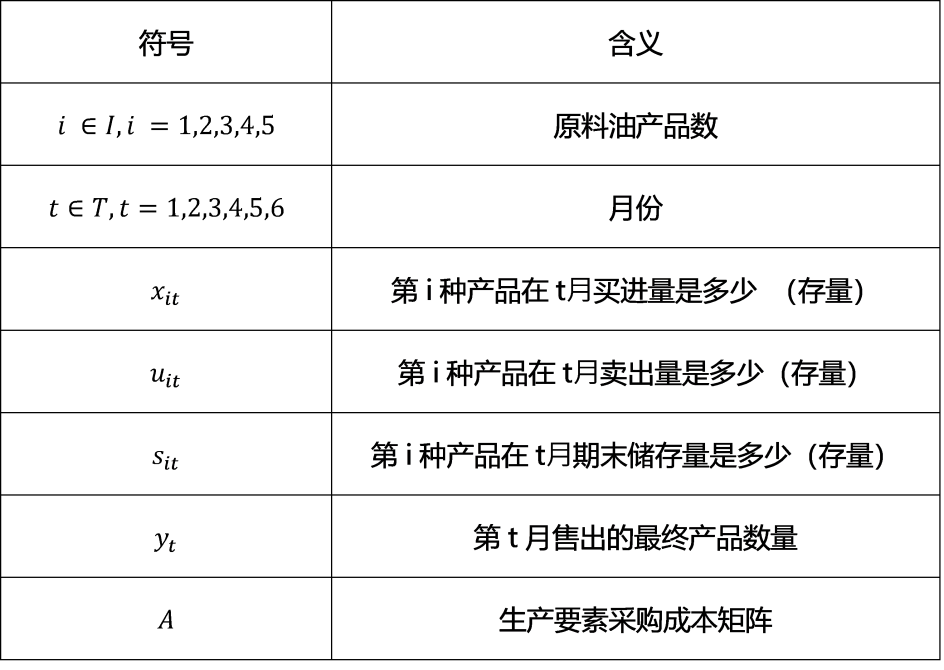
Objective function - net income formula:

Production constraints:
Storage restrictions:

Hardness constraints:
Relationship constraints:
3. Problem Solving and Application Demonstration
The following is the web version of the solver we developed, which can import other data for one-click solving:

Machine-translated from the Chinese original 食品加工企业生产计划 Food Manufacture (published 2024-10-26). WeChat original ↗