
The establishment of Bell Labs is a meaningful event in the history of world science and technology and a classic innovation story. Understanding this period of history is of great enlightenment for China's promotion of new industrialization and technological innovation today.


The original site of the Western Electric Company, 463 West Street, New York CityBell Labs was established here in 1925 until the new location was built in 1945 and Bell Labs moved. After 1965, the building became a venue for New York artists.
The full name of Bell Labs is Bell Telephone Laboratories, and its name comes from the inventor A. G. Bell.
The creation of Bell Labs was a significant event in the history of science and technology. For a long time in the 20th century, Bell Labs has been the most innovative scientific research institution in the world, with many major inventions such as communication technology and transistors, as well as many major discoveries such as electron diffraction phenomena. Bell Labs has had a very significant impact on the development of IT technology and the rise of the industry, and on promoting the development of science and technology in the world.
The great development of the Bell System
Bell obtained two patents related to the invention of the telephone in March 1876 and early 1877. Based on this, he and his partners established the Bell Telephone Company in the early summer of 1877. It started with just a few people. As the business expanded rapidly, in February 1885, the company was reorganized and established the American Telephone and Telegraph Company (AT&T). T. N. Vail, who had worked as a supervisor in the railroad and mail company and had rich management experience, was appointed as the company's president, and H. V. Hayes, a PhD graduate from Harvard University, was appointed as the director of the electrical engineering department. In 1897, G. Campbell, who had returned from studying in Europe, joined the Electrical Engineering Department. Soon, Campbell developed a load coil that could change the attenuation of telephone sound, creating conditions for the laying of long-distance telephone lines from Boston to Chicago.
In 1893 and 1894, Bell's two telephone patents expired respectively, and many companies emerged in the United States, all trying to get a piece of the telephone industry. In 1907, faced with the chaotic telephone market, the under-performing American Telephone and Telegraph Company implored Weill, who had resigned 10 years ago, to come back and serve as president again. After taking office, Weill reviewed the company's operations and found that "abnormal liabilities" had accumulated. He took decisive measures to reduce redundant personnel, acquire small telephone companies as subsidiaries, and centralize the Bell System's scattered R&D institutions in New York. Most were assigned to the engineering department of subsidiary Western Electric, while a smaller number were assigned to AT&T's development and research department. The company's chief engineer was replaced by J. Carty from Hayes. From the overall division of labor, the Engineering Department of Western Electric Company mainly develops, designs and manufactures communication equipment and equipment, and the Development and Research Department of AT&T mainly studies and formulates communication technology standards and plans.
Ware was thoughtful in his work. He believed that a telephone system with unified technology and mutual compatibility could provide better services to the public. Therefore, he clearly put forward the development concept of "one policy, one system, and universal service". In 1909, based on Weir's idea, the American Telephone and Telegraph Company began building a telephone line from New York to San Francisco.
To achieve telephone communication across the North American continent, the key is to solve the problem of long-distance signal attenuation. To this end, Carty's deputy F. B. Jewett returned to his alma mater, the University of Chicago, to seek help from the physicist R. A. Millikan. H. D. Arnold, a doctoral student, was recommended by Millikan to work for AT&T. After more than two years of research, Arnold improved the electronic triode invented by Lee de Forest and made a high-vacuum thermionic tube that could solve the problem of telephone sound amplification, providing an effective amplifier for transcontinental telephone communications. [1]. In 1914, telephone communication across the North American continent was successfully achieved. With the line almost complete, Weill and the company's board of directors decided to support the wireless telephone research project. By the end of 1915, wireless telephone communication across the North American continent was achieved. These two major projects consolidated the position of Bell Technology Systems and had a significant impact in the United States and around the world.
In the implementation of the two major engineering projects, Carty and Jewett played important technical management and leadership roles. In 1916, Jewett was appointed chief engineer of Western Electric Company, in charge of the engineering department, and Arnold served as research director of Western Electric Company's engineering department.
Adjusting institutions to promote reform
By 1924, AT&T's monopoly had reached new heights. The engineering department of Western Electric Company on West Street in New York became very large, with 3,600 technicians and support staff. Its business often overlapped with that of AT&T's engineering department, and sometimes there were conflicts. In order to facilitate career development, at the board of directors meeting in December 1924, AT&T executives unanimously agreed that the engineering department of Western Electric Company would be the main body, and part of the engineering department of AT&T would be merged into an independently developed company with certain autonomy - Bell Telephone Laboratories, Inc. (Bell Telephone Laboratories for short). Details from that time are unclear today, but according to Jewett's personal memo, AT&T and Western Electric's engineering departments overlapped, creating unnecessary duplication and financial problems. Make your company run more efficiently by creating a central laboratory to serve two masters [2]。
On January 1, 1925, Bell Labs was officially established by the American Telephone and Telegraph Company. There are many reports on this in the American media. For example, in February of that year, the American "Telephone Engineer" magazine published this news:
Expansion work has begun to enhance the experimental capabilities of the new Bell Labs scientists and engineers, adding nearly a quarter of the new laboratory space to the 400,000-square-foot complex at 463 West Street in New York City. On the date of the merger, the laboratory employed approximately 3,600 people, 2,000 of whom were technical staff... [3]
Through various reports, Bell Labs, the world's largest industrial laboratory at the time, appeared in front of the world. At that time, Bell Labs occupied the former headquarters building of the Engineering Department of Western Electric Company. The entire building was 13 stories high and had a total construction area of 37,200 meters. 2, Bell Labs operated here for about 20 years. Bell Labs had 3,600 employees when it was founded, more than 2,000 more than the previous largest research laboratory at General Electric.
Bell Labs was governed by a newly formed board of directors, with Carty as chairman. In terms of organizational structure, there is one president, Jewett, who also serves as the vice president of technology of AT&T. Under the president, there are one executive vice president, one vice president and one assistant to the president. Bell Labs has a total of seven departments including the Research Department, Equipment Development Department, and Business Development Department. The Research Department is headed by Arnold.
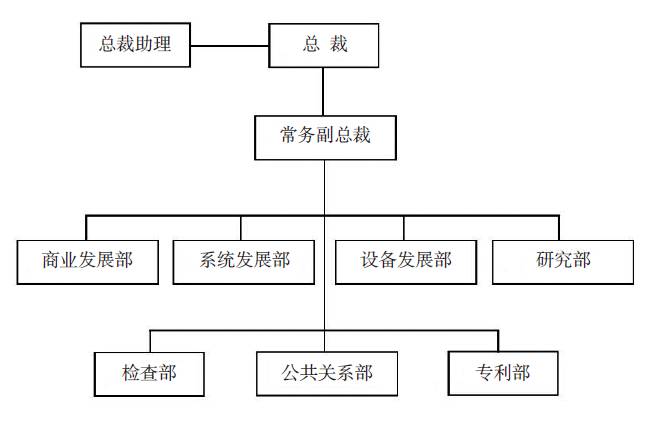
Bell Labs Organizational Structure (1925)
On the surface, the establishment of Bell Labs seems to be the shift from decentralization to centralized and unified management of the scientific research institutions and personnel of the American Bell System. In essence, it means that the systematically organized industrial experimental research in the United States has entered a mature stage of combining basic research and technological development. It also shows that electronic technology innovation has become the core and support point of the development of the communications industry. The Great Depression occurred in the United States in 1929. Amid the severe crisis, the Bell System once again demonstrated its ability to rely on technological innovation to achieve development.
Jewett
Jewett was the first head of Bell Telephone Laboratories. The creation and early development of Bell Laboratories can be largely attributed to his vision and his pioneering work in many aspects.
Jewett was born on September 5, 1879, in Pasadena, northeast of Los Angeles. His ancestors were immigrants who came to the New World from Yorkshire, England in the 17th century. Influenced by his father, a railroad engineer, Jewett has been fascinated by railroads since his childhood. Before going to college, he planned to follow his father's example and make a living in the railroad profession. Later, because his father was interested in arc lighting on railway platforms, he followed his father's advice and entered Throop Institute of Technology (the predecessor of California Institute of Technology) to major in electrical engineering. When he received his master's degree in 1898, he was only 19 years old. Jewett was determined to continue his studies at the Massachusetts Institute of Technology, but his mother's unexpected death delayed his admission.
Chance brings change. Jewett's physics professor at Throop Institute of Technology was hired to teach at the University of Chicago. The professor wrote to Jewett and suggested that he go to the University of Chicago for further study. This proposal tempted Jewett and his father. In early 1899, Jewett entered the University of Chicago. While studying for his doctorate, Jewett worked as a research assistant for physicist A. A. Michelson. In 1907, Michelson won the Nobel Prize in Physics for the invention of precision optical instruments and his research in spectroscopy and metrology using these instruments. Jewett also became familiar with Millikan, who was a new teacher at the time. The two were 9 years apart and admired each other, eventually forming a lifelong friendship. Jewett received his PhD in physics in 1902. Perhaps because of his affinity for MIT, he went there to apply for a position as a lecturer in physics and electrical engineering.
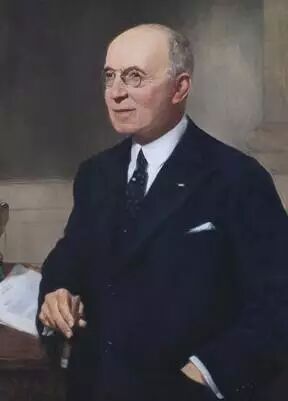
Jewett, the first president of Bell Labs
Soon after another chance encounter, Jewett joined AT&T and formed a lifelong relationship with Bell Labs. It was one day in the spring of 1903. Jewett had not been at MIT for a long time. Campbell, from the Electrical Engineering Department of the American Telephone and Telegraph Company in Boston, went to the college to visit Professor H. E. Cilfford and asked about high-frequency generators. While the two were talking, Jewett happened to pass by, and Clifford introduced Jewett to Campbell. After a brief conversation, Campbell left a good impression on Jewett. When Jewett's one-year work contract was about to expire, Campbell contacted Clifford and Jewett. Jewett was very satisfied with the working conditions and treatment at AT&T, and at the end of 1904 he came to work in Campbell's department. Jewett quickly demonstrated an ability to solve complex problems and direct projects, and in 1906 he succeeded Campbell as head of the Boston Electrical Engineering Department. In 1912, he was appointed deputy chief engineer of Western Electric Company. Four years later, Jewett served as Western Electric's chief engineer and oversaw the company's engineering department.
When Bell Labs was established in 1925, Jewett served as the first president of Bell Labs and concurrently served as vice president of technology for the American Telephone and Telegraph Company. Jewett is a peaceful person and has made many friends since he was a student. He is a person that classmates like to make friends with. At the Bell Telephone and Telegraph Company, he had good superior-subordinate or cooperative relationships with some of the key people in charge. He can be called a Bole, recruiting a number of outstanding talents for the company, and also helping and recommending many capable people to high positions.
At Bell Labs, Jewett developed the idea that new scientific knowledge should be explored and used to advance technology. Under his leadership, Bell Labs invented the telephone number system, radio broadcasting, television, talkies, electric phonographs, artificial larynxes, and submarine telephone cables. It was also under his leadership that physicist C. J. Davison discovered the phenomenon of electron diffraction through experiments, confirming the matter wave theory proposed by French physicist L. de Broglie. Bell Labs won its first Nobel Prize in Physics.
In 1939, due to his leadership achievements in industrial research and the urgent need for industrial research in the United States at the beginning of World War II, Jewett was elected president of the National Academy of Sciences. In October 1940, he resigned as president of Bell Labs and became chairman of the laboratory. He remained until his complete retirement from Bell Labs in 1944.
Clear concept and set direction
It was not all smooth sailing after the founding of Bell Labs. For several years, the leadership seemed peaceful but there were disagreements and arguments from time to time, which directly affected the research direction and development of the laboratory. The reason is the ideological contradiction between the pragmatic school represented by Carty and the academic school represented by Jewett.
Born in 1861, Carty entered the telephone industry immediately after graduating from high school, working his way from telephone exchange operator to mechanical engineer. With his personal hard work, he obtained a number of invention patents and gradually rose from a grassroots technical position to the top of the company. As he grows older, Kati's weaknesses in technological knowledge and short-sightedness in technological management gradually become apparent. In 1916, he publicly stated that basic research results could only be expressed in the form of invention patents rather than publications in academic journals. In the department led by Carty, the scientists and engineers who have been engaged in basic research for many years have produced many patents, but have not published a single article, resulting in little impact in the academic world. Carty has long been opposed to academic basic theoretical research, which destined his thoughts and practices to be difficult to integrate with Jewett.
Unlike Katie, Jewett has a Ph.D. in physics and has a strong theoretical foundation. When he was chief engineer of Western Electric Company, he promoted a policy of strengthening basic scientific research, an attitude that directly affected his research team. After the establishment of Bell Labs, Jewett adhered to the previous style and approach, which was obviously different from Carty. To take the overall situation into consideration, Jewett and Arnold had to temporarily compromise and continue groundbreaking basic research in cutting-edge fields (especially wireless telephony), while applying existing scientific knowledge to technical research in other fields. It was not until after Carty's death in 1932 that Bell Labs developed completely according to Jewett's ideas. Scientists engaged in basic research accounted for about 10% of the scientific and technological staff, and scientific research funds accounted for more than 10% of the annual funds of the entire laboratory. These two percentages are quite large for an industrial research organization. [1]。
January 1932 coincided with the 7th anniversary of the establishment of Bell Laboratories. Jewett delivered a speech titled "Utilizing the Results of Basic Research in the Field of Communications" on the 22nd, clearly expressing his own philosophy on building Bell Labs. Jewett said that the word "basic" should be understood as: "It not only includes all the areas in which it is generally used, but also includes all parts of scientific research in the field of communication that are fundamental to the application of science. In other words, it includes everything that is sought in the field of communication. Various things derived from the method of new knowledge, which are the elements from which new or improved communication structures can be created." From these words, it can be seen that Jewett believes that Bell Labs' basic research is by no means limited to basic knowledge related to technical applications. [1]。
Historical experience and inspiration
Looking back at the successful experience of Bell Labs, it will not become obsolete with the passage of time. Judging from the research on the development history of Bell Labs by scholars at home and abroad, the following experiences can be used for reference.
Follow the trend and promote upgrades
The establishment of Bell Labs was not only the product of its own development to a certain stage, but also the background of the emphasis on industrial research in the process of American industrialization.
After the end of the American Civil War in the 19th century, the industrialization process in the United States accelerated, and some large companies successively established industrial research laboratories as an important source of innovation and development. In 1875, the Pennsylvania Railroad Company established a railway equipment research laboratory, marking the beginning of the development of industrial research laboratories in the United States. The characteristics of the initial stage are: the industrial research laboratory is mainly composed of technicians and technicians, and the research method is mainly "trial and error". By the 1880s and 1990s, industrial research laboratories began to intentionally recruit talents from universities and European students, but empirical and technical research still dominated.
In 1900, the General Electric Company of the United States established a research and development center, marking the second stage of the development of industrial research laboratories in the United States. The characteristics of this stage are: establishing an institution similar to a research institute in a university in the enterprise, which is responsible for applying existing relevant scientific knowledge to product development.
The establishment of Bell Laboratories in 1925 marked the third stage of the development of industrial research laboratories in the United States. The characteristics of the new stage are: enterprises use their own research institutions to conduct creative research on basic knowledge, and then transform the research results into the design and process of new products and equipment. The establishment of Bell Labs not only showed that basic scientific research entered the enterprise, but also showed that basic scientific research entered the entire industrialization and promoted innovation and upgrading in enterprise management.
Sincerely know people and employ them
AT&T has a good tradition of recognizing and employing people. Jewett was spotted by Campbell and later succeeded Campbell. Jewett took the opportunity to recognize and employ people to the extreme. He had a good teacher-student relationship with the famous experimental physicists Michelson and Millikan, and also had extensive connections at MIT. This not only provided conditions for solving telecommunications technology problems, consultation and collaboration, but was also very beneficial for identifying suitable talents. In 1910, Jewett made a special trip back to the University of Chicago to visit Millikan. According to Millikan's recommendation, the first person invited was Millikan's assistant H. Flecher. However, Flecher wanted to return to his hometown of Salt Lake City and teach at Brigham Young University, so he declined the invitation. Jewett was very optimistic about Fletcher. For five consecutive years, he sent an invitation letter to Fletcher in Salt Lake City every spring. His words were sincere and persuasive. In 1916, Fletcher was finally moved and left BYU to play for Jewett. The second person invited was Millikan's doctoral student Arnold, who soon came to Jewett's team.
Later, Jewett hired another Dr. Millikan, M. J. Kelly, and O. E. Buckley from Cornell University, among others. They all lived up to Jewett's high expectations. Buckley became the second president of Bell Labs, and Kelly became the third president of Bell Labs. When Kelly was president, he personally recruited W. Shockley, a Ph.D. graduate from the Massachusetts Institute of Technology. Shockley won the 1956 Nobel Prize in Physics for his work on semiconductors and the discovery of the transistor effect.
Create an environment that inspires learning
When Jewett was in charge of the engineering department of Western Electric Company, he often organized learning for scientists and engineers. After the establishment of Bell Labs, the learning system was further improved. The top floor of the Bell Labs office building is a large auditorium, which is an important place for Bell Labs to spread new ideas. In the 1920s, a one-hour academic lecture was held here every Monday at 5 p.m., inviting scholars who did not work at Bell Labs such as Millikan and E. Fermi, or scholars in the laboratory like Davidson and Shockley to teach researchers about the latest scientific progress. [2]。
There is also a place to spread new ideas on West Street. The threshold is high and only invitations can go there. Some of the new scientific recruits recruited in the late Depression era were interested in furthering their education through study groups, in which participants took turns teaching and discussing the latest advances in physics. This informal study group was organized by Shockley and met every Thursday afternoon. W. Brattain, C. H. Townes, J. Fisk and others were all basic members. Townes later recalled in his autobiography: "I believe that this kind of informal discussion was unique in the industry at that time." [4]Several members of the study group later performed outstandingly. Shockley and Bratton shared the Nobel Prize in Physics with J. Bardeen in 1956; Townes won the Nobel Prize in Physics in 1964; Fiske became the fourth president of Bell Labs.
Another place to learn new ideas is at your local university. Interestingly, the Great Depression in the United States promoted the accumulation of scientific knowledge. During this period, Bell Labs was forced to shorten the working hours of its employees. Some young researchers, because they had free time, enrolled in degree courses at Columbia University in upper Manhattan. Often these people would choose a course taught by Professor I. I. Rabi, who himself won the Nobel Prize in Physics in 1944.
The creation and early development of Bell Labs mentioned above is actually a microcosm of the industrialization process in the United States. At present, China is vigorously promoting new industrialization and attaches great importance to scientific and technological innovation. The famous industrial laboratories in the West (or loosely referred to as corporate research institutes) [5])’s experiences and lessons are worthy of our study and reference.

Dai Wusan: Professor, Shenzhen Graduate School of Tsinghua University, Shenzhen 518055.
Dai Wusan: Professor,Graduate School at Shenzhen,Tsinghua University,Shenzhen 518055.
-
Yan Kangnian. Bell Labs. Baoding: Hebei University Press, 1999: 41, 89, 74.
-
Gertner. Bell Labs and the Great Era of American Innovation. Translated by Wang Yong. Beijing: CITIC Press, 2016: 22, 32.
-
M D Fagen. A history of engineering and science in the Bell System: the early years. Bell Telephone Laboratories, 1975: 52.
-
Towns. How the laser was accidentally discovered. Translated by Guan Hong. Shanghai: Shanghai Science and Technology Education Press, 2002: 38.
-
Boudry. Enterprise Research Institute. Translated by Sheng Fengshi. Beijing: CITIC Press, 2003 .
Keywords: Bell System Bell Labs Jewett Telephone Transistor ■

This article was published in the 2017 issue 2 of Science magazine.
"Science" magazine was published in Shanghai in January 1915.
It is the longest-running comprehensive scientific journal in my country.
The magazine is positioned as a high-end science popularization journal, dedicated to the dissemination of scientific knowledge, concepts and scientific spirit, the interaction between science and humanities, and the emphasis on history and cutting-edge, to serve the purpose of improving the scientific quality of the Chinese people and building an innovative country. The current editor-in-chief of the magazine is Academician Bai Chunli, President of the Chinese Academy of Sciences, and the sponsor is Shanghai Science and Technology Press.

Machine-translated from the Chinese original 戴吾三 | 贝尔实验室创建记 (published 2017-11-24). WeChat original ↗