Enterprise information strategic planning became an independent type of management consulting service around 2002. I was lucky enough to be part of this trend and became the earliest consultant engaged in enterprise information strategic planning (ITSP) consulting services in China, witnessing the development of enterprise information strategic planning in the past two decades.
Along the way, from a fledgling to a cook, I feel that informatization strategic planning has very high requirements for the consulting team. It needs to combine multi-disciplinary talents, including: business topics (such as strategy, finance, supply chain, etc.), industry knowledge, organizational changes, application systems, IT infrastructure, etc. It requires both theoretical height and systematic thinking, and experience in actual system implementation. If you can completely master the informatization strategy, you should be a generalist in the field of enterprise operation management.
Let me talk about my observations on the evolution of this type of consulting methodology in China over the past 20 years. My personal opinions are inevitably misleading, and I welcome your corrections from experts.
1. Early stage: Alignment of business strategy and IT strategy
The large-scale application of information technology to enterprise business and management began in the 1960s. Whether it is administrative management, such as applying to finance, personnel management, or business management, computers have been applied to all aspects of enterprises, such as MRP in the manufacturing industry, account and fund management in the financial services industry, real-time ticket sales through networked outlets in the air transportation industry, etc.
To truly refine the relationship between information system applications and business management, I think it benefits from the emergence of local area network technology (personal computers and networking) and the concept of business processes. At that time, the earliest theoretical frameworks on the relationship between information technology applications and corporate strategy and organizational change were J. C. Henderson, a professor at the Boston University School of Management, and N. Venkatraman published an article "Strategic Fit: Using Information Technology to Promote Organizational Transformation" in 1993 in the "IBM Systems Journal", an academic journal sponsored by IBM. The article stated the "Strategic Match Model" (SAM) proposed by the two authors in 1989, which may be the source of the information technology strategy consulting methodology.
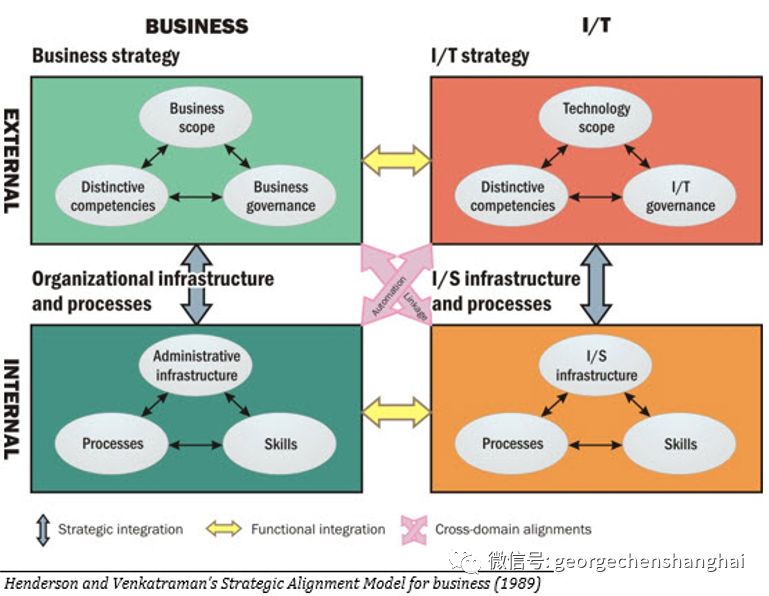
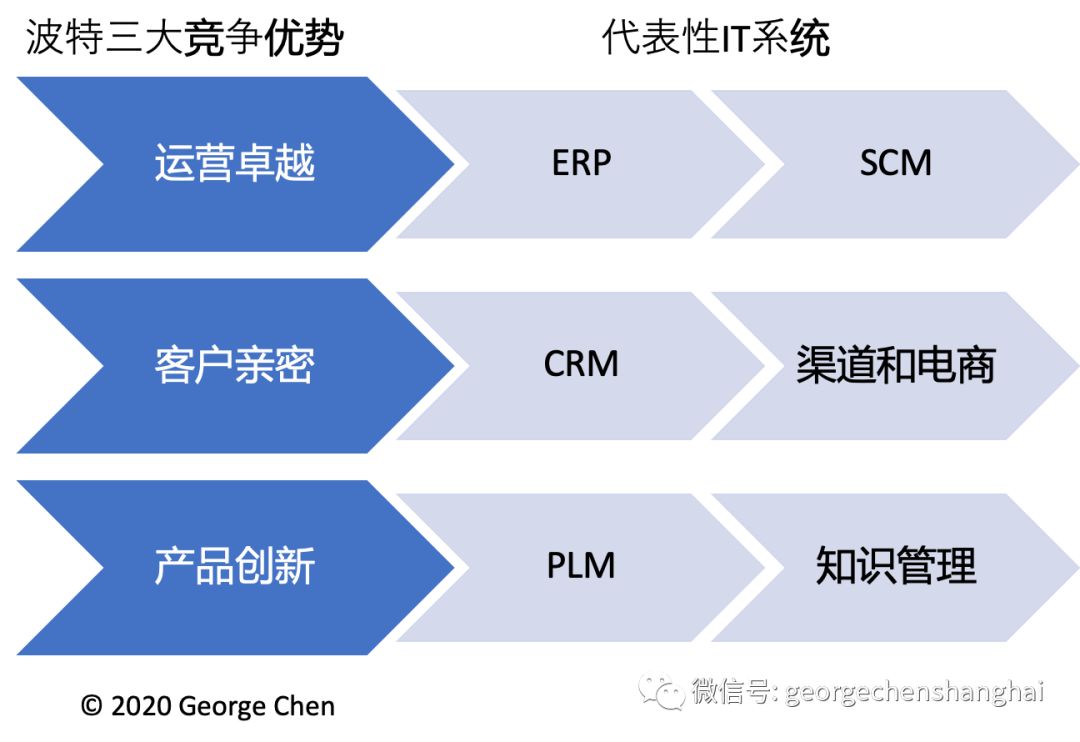
In this model, IT strategy and business strategy are matched: "Business scope/competitive capability/business governance model" corresponds to "IT scope/competitive capability support/IT governance model". The correspondence between strategy and technology is very intuitive. For example, Porter’s Competitive Advantage Theory, which was popular in the mid-1990s, directly corresponded to the package directions of several mainstream enterprise application systems at that time. In other words, competitive strategy determines the focus of information technology applications:
At the implementation level of the SAM model, the organization and processes for strategic implementation, including "management structure, business processes and personnel skills", correspond to the requirements of IT's "infrastructure, IT processes and technical skills".
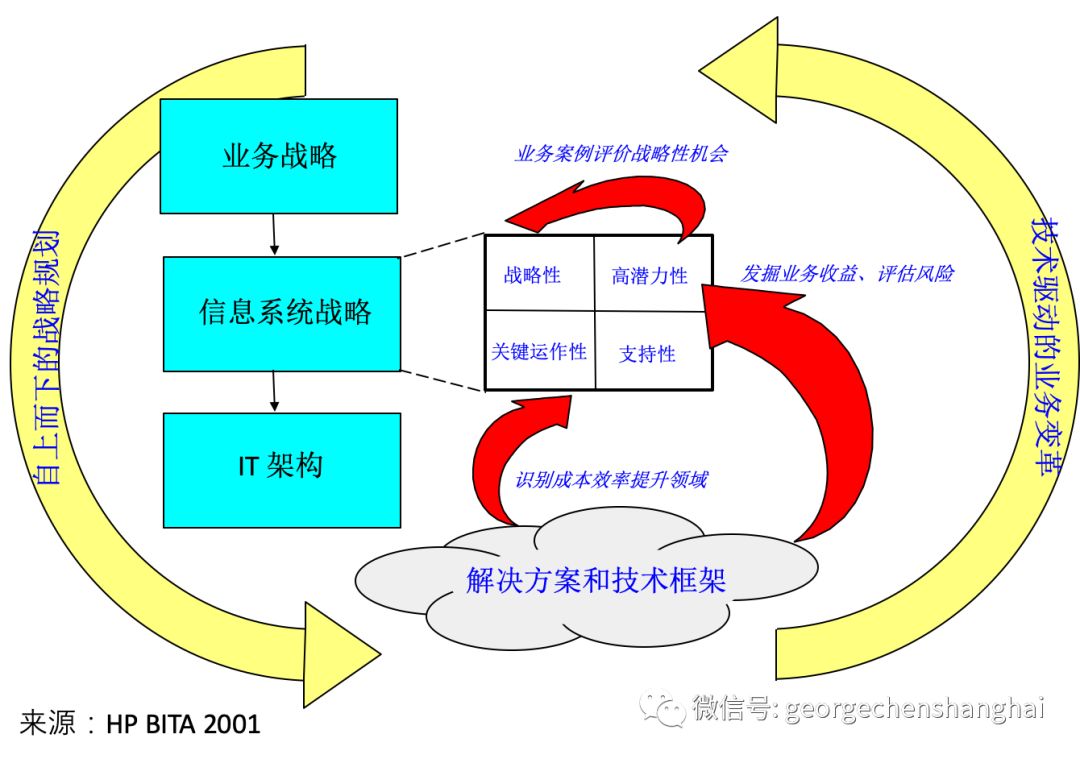
Based on such a framework, the method of enterprise information planning strategy is based on the following logic: business strategy determines information system (IS) strategy, and information system strategy determines information technology (IT) strategy:
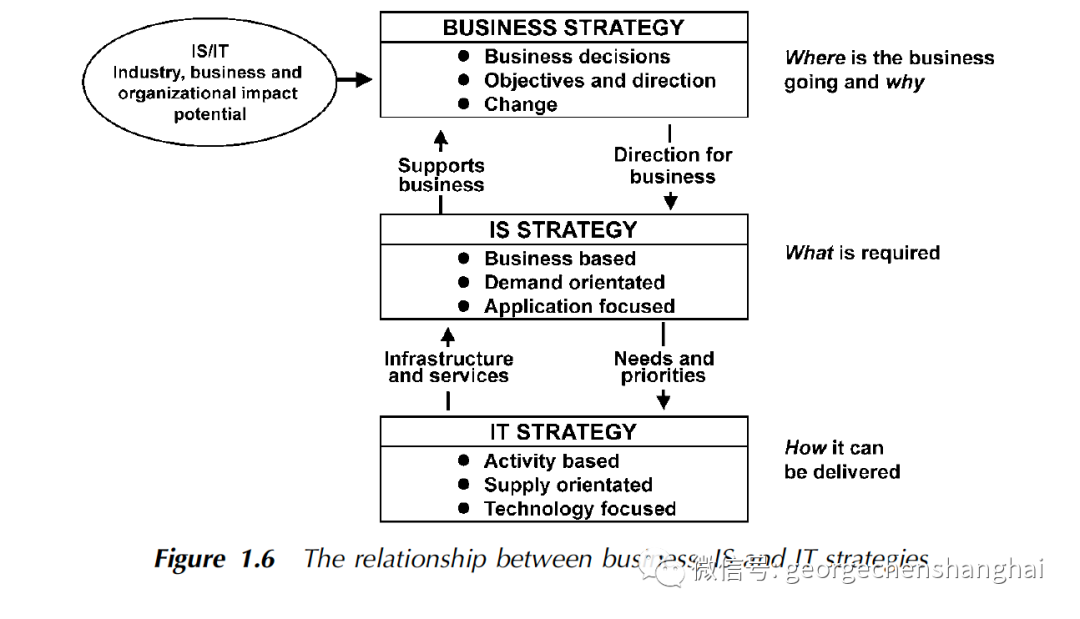
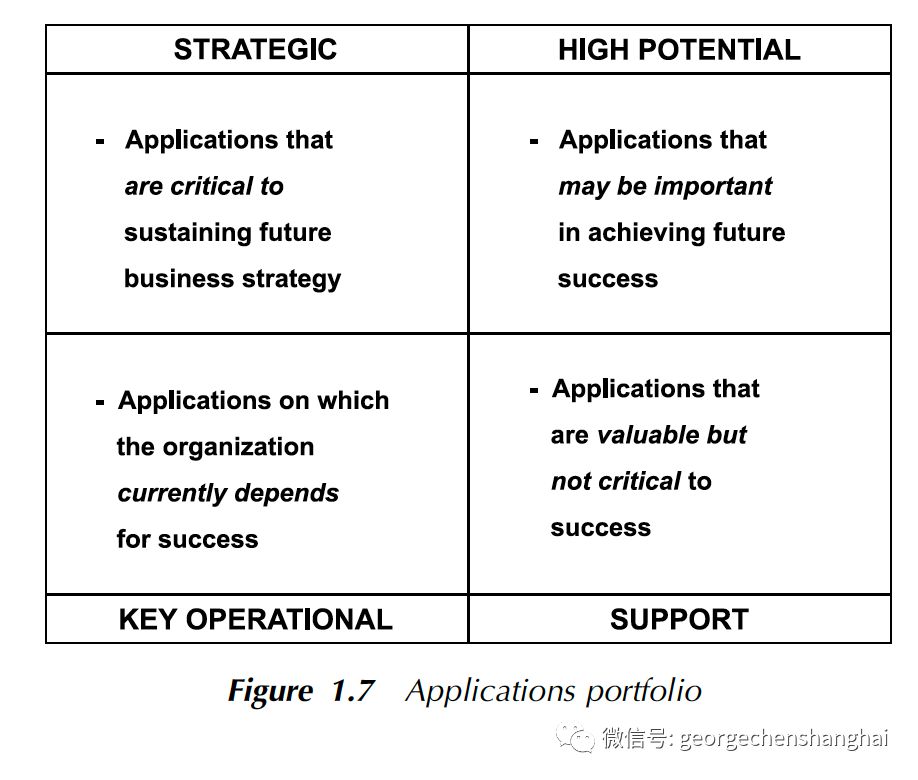
Among them, information system planning, that is, which systems or "software modules" an enterprise will install, is the most important link between business and technology. The enterprise application system portfolio includes the following applications:
-
Strategic: critical to supporting future business strategy
-
High potential: potentially useful in achieving future goals
-
Critical Operational: Systems on which current success depends
-
Supportive: The current business is very valuable and the unit is critical
Based on these academic theories, around 2000, management consulting companies and IT consulting companies at that time formed a methodology for information strategy consulting. I have seen the methodological systems of various companies. To be honest, they are mostly the same. The difference is between "tangyuan" and "yuanxiao". The quality of this type of project is mainly reflected in the depth of the consultant's understanding of the solution and the level of presentation to customers. It was at this time that I started learning to use an IT strategy consulting methodology called Business and IT Alignment (BITA) at HP:
As shown in the figure below, in terms of conceptual framework, the HP BITA method completely transplants and integrates the knowledge system in the above-mentioned John & Joe works:
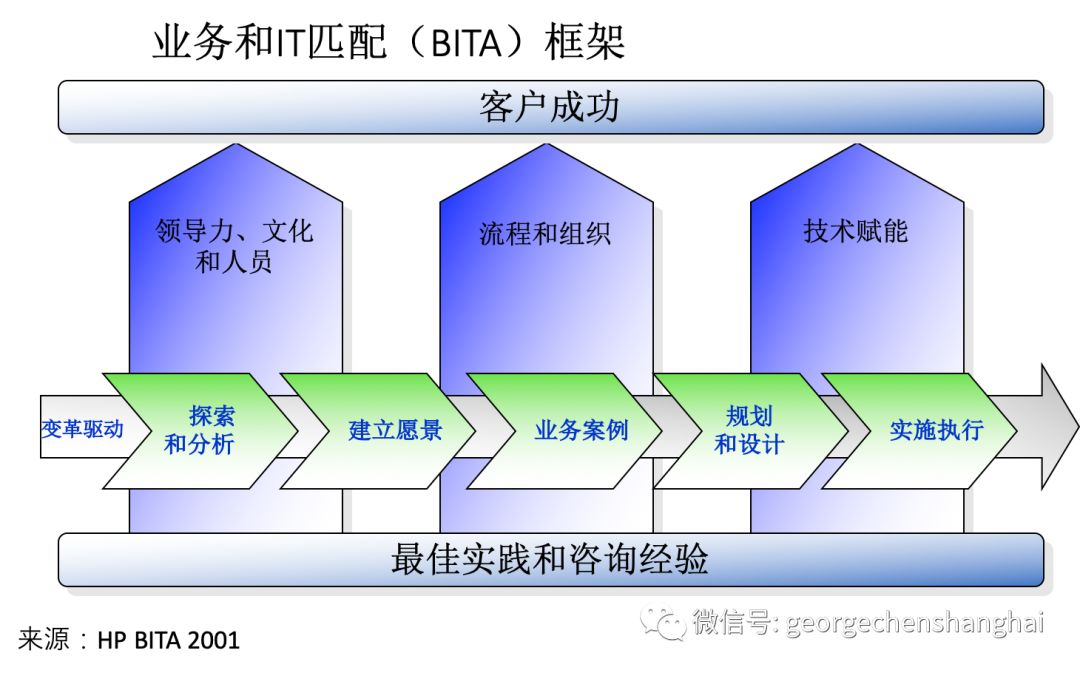
From the operational level of the consulting project, the methodological framework is based on the best practices of benchmark companies and the experience of consulting companies, starting from the three sections of information technology application: people, process and technology, referred to as PPT (people, process, technology). The specific planning process is:
-
Exploration and analysis: future business direction, existing IT/IS capabilities, gap analysis, transformation opportunity assessment, change readiness assessment
-
Establish a vision: transformation scenarios and route choices, business and IT roadmaps, success factors and measurement standards, possible success (could-be), and shared vision recognition
-
Business case: new business model and key processes, future organizational structure, IS application system portfolio, IT architecture framework, personnel skills and quality change plan, input-output analysis
-
Planning and Design: Transformation strategy, program charter, implementation plan roadmap, metrics and standards, training plan, communication plan
-
Implementation and execution: detailed project plan, system implementation, IT infrastructure, personnel training, effect evaluation
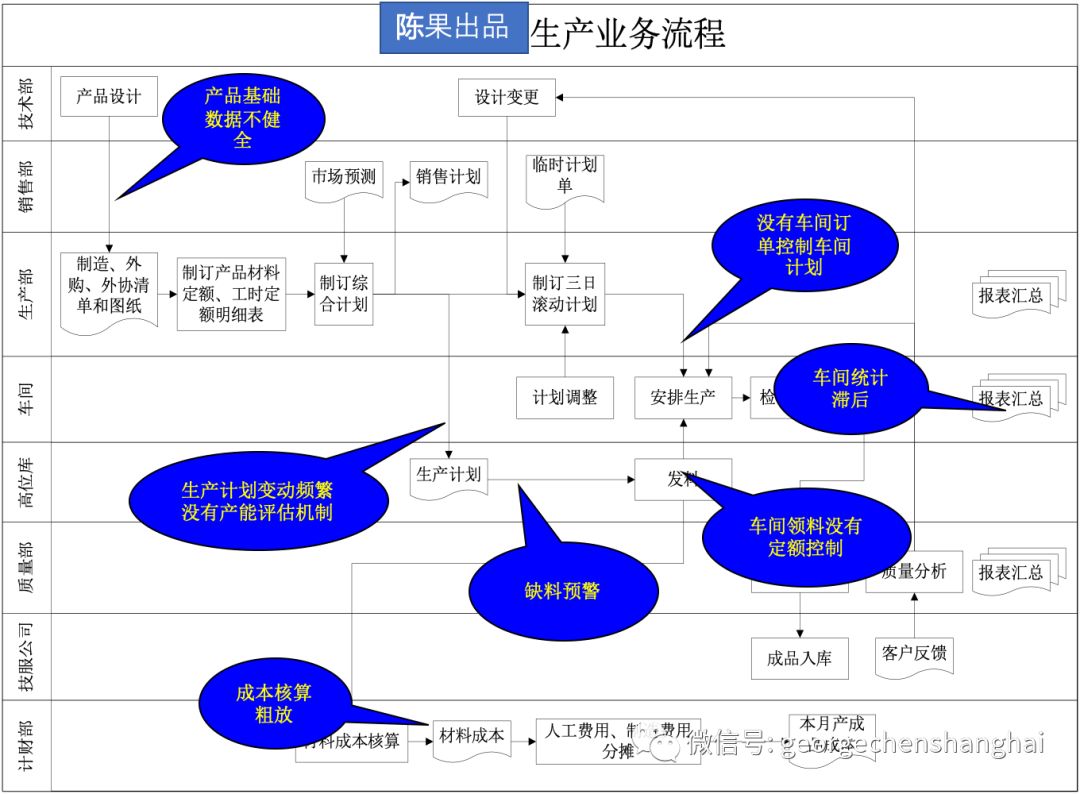
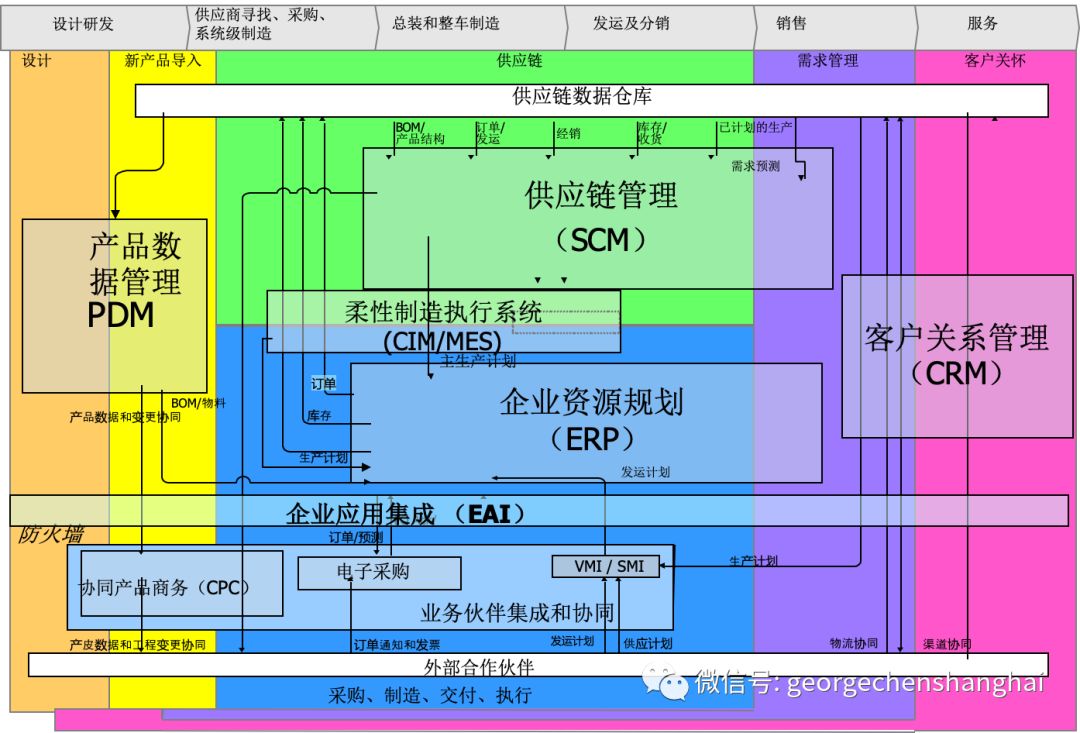
Nineteen years ago, I cooperated with another colleague and completed the IT planning of a manufacturing company in three weeks. The output of that project is still outdated today.
Get a feel for the production part of the business process diagnosis of that year:
Overall architecture diagram of application system:
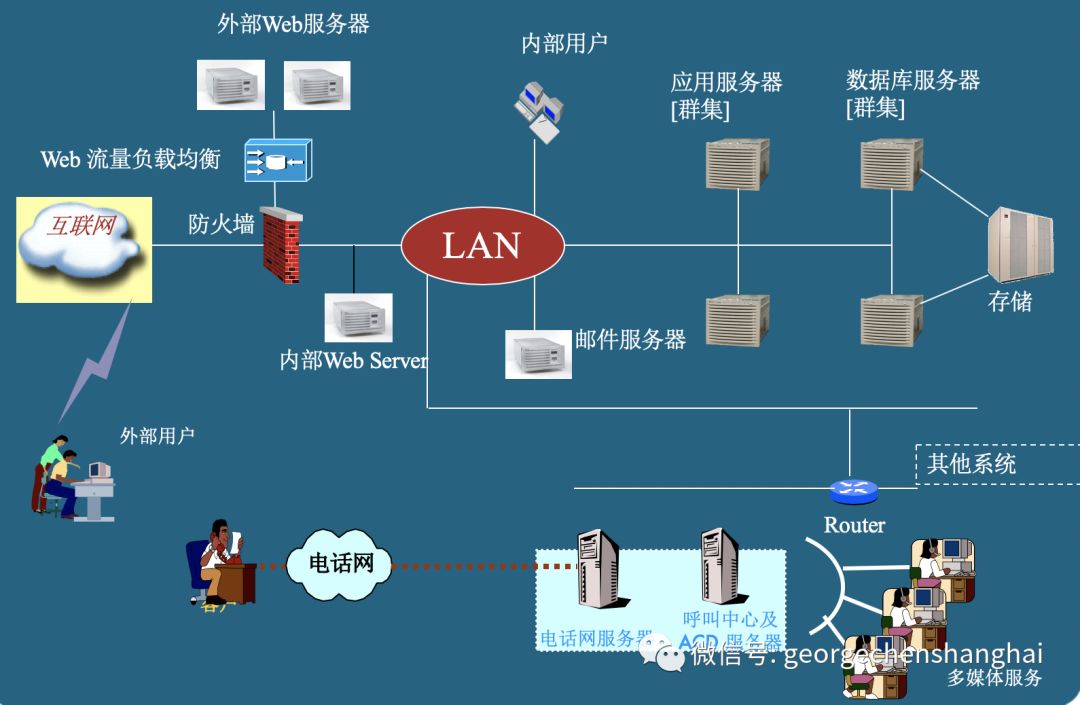
IT infrastructure planning was popular at that time as follows:
Next article preview:
Part II, Intermediate Phase: Enterprise Architecture and IT Governance
Part Three, Digital Phase: Design Thinking and Digital Transformation
Enterprise digital transformation, please pay attention

Machine-translated from the Chinese original 中国企业信息化战略规划方法演进(一) (published 2020-03-12). WeChat original ↗