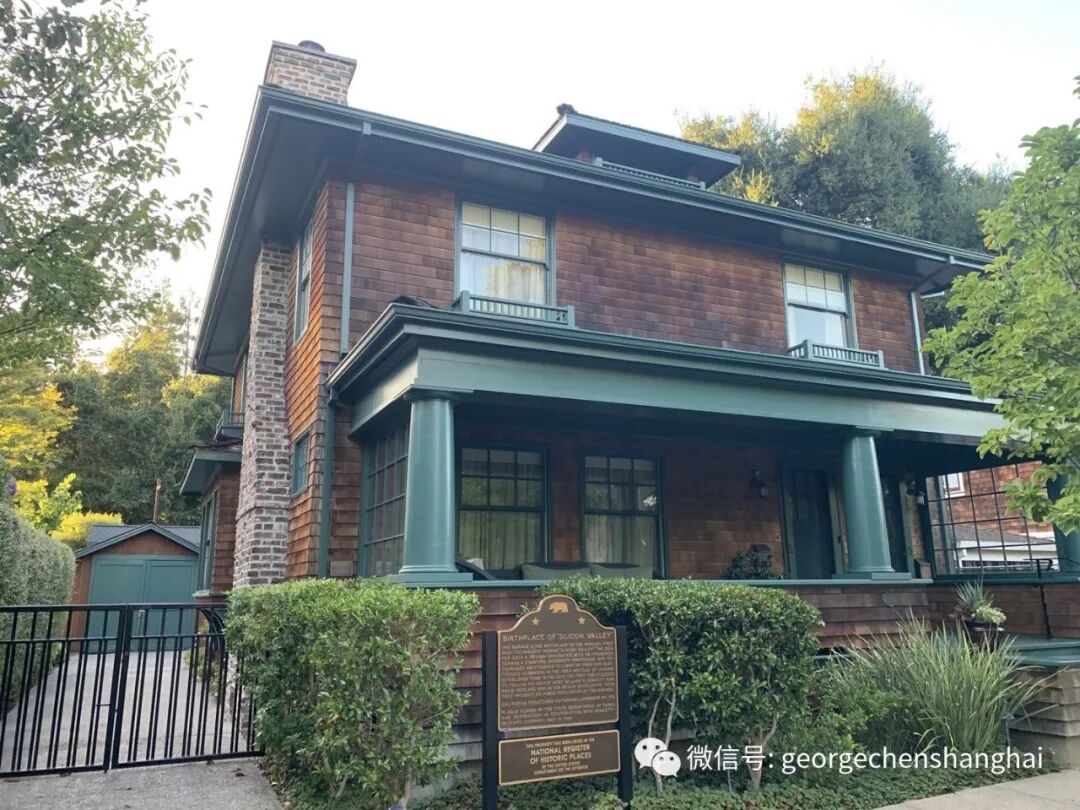
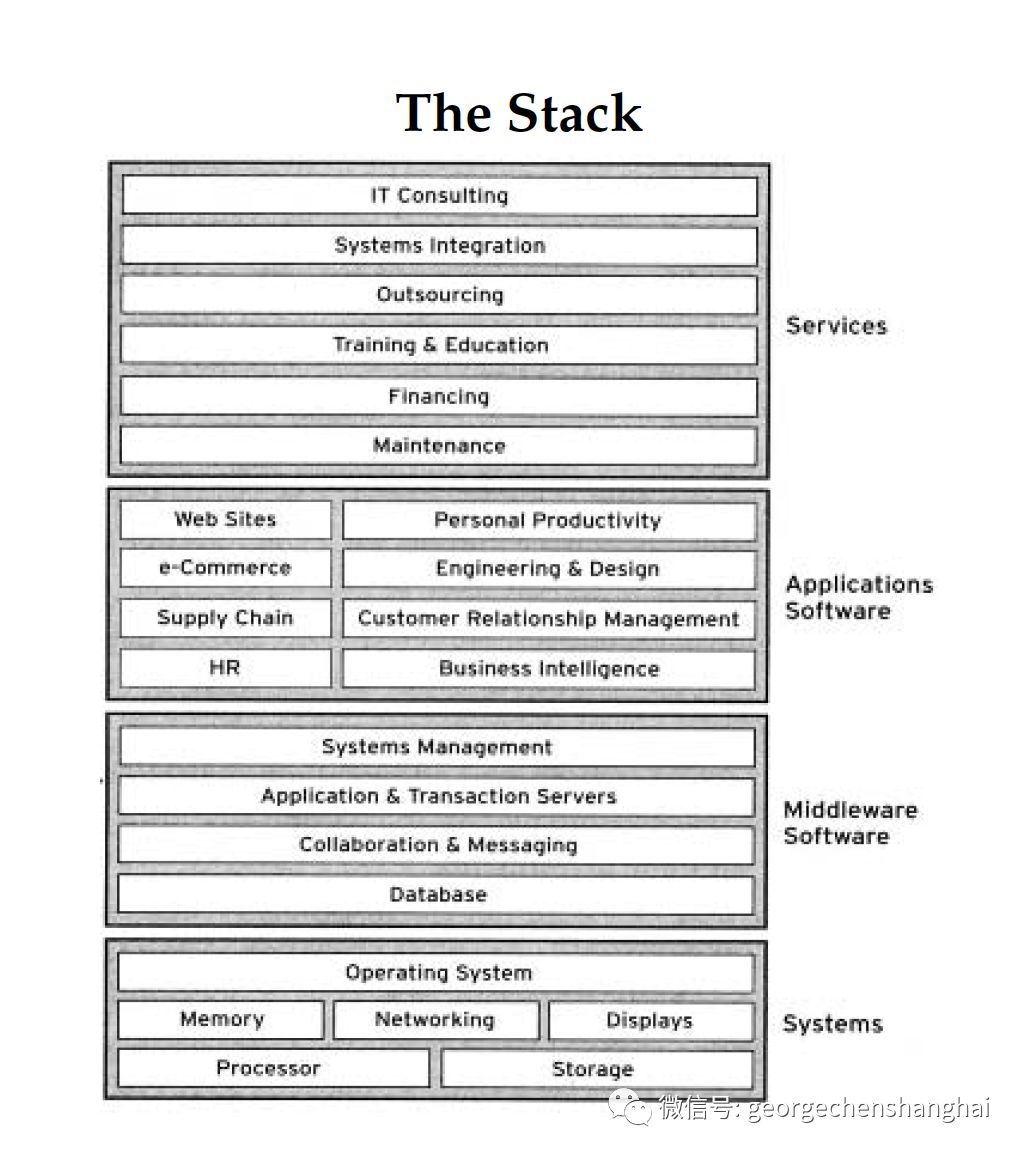
The previous article and the first half of this article are tributes to HP. The cover of this article is the birthplace of HP. In the late 1990s, the new IBM CEO Gerstner, who led the dancing elephant, proposed the strategy of transforming to IT services and described the business stack of the IT industry (as shown below). HP, which was still in its prime at the time, quickly made a competitive response strategy and developed a complete IT consulting method system.
Time has passed. Although HP has been spun off today and IBM has undergone another transformation, the IT planning methodologies developed by these two IT giants have had a profound impact on me and still have strong practical application value today.
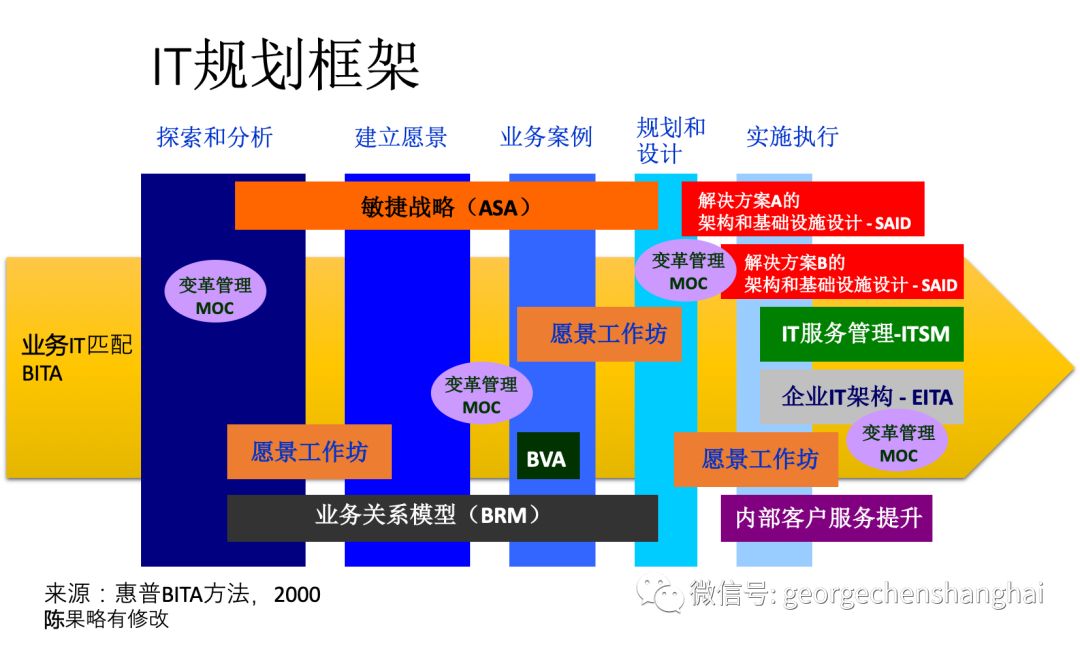
The previous article talked about "IT strategy" planning. Strategy is the general direction. However, in the actual business management and IT management of enterprises, the problems encountered are multifaceted. It is difficult to distinguish which problems are at the direction level and which are at the execution level. Twenty years ago, HP Consulting, where I work, designed a methodology system (picture below) that includes different consulting methods and service forms to meet the different needs of IT planning. BITA is the overall methodology that runs through the entire process, and each topic content module has a topic methodology. It should be noted that because HP Consulting is a pioneer in IT planning in the domestic market, BITA information is widely circulated on the Internet, but few people understand and study in depth the specific components behind BITA:
-
BITA - Information Systems and Information Technology (IS/IT) Roadmap for Change
-
TEBT (Technology enabled business transformation) workshop - in the form of a workshop to explore the vision, consensus and driving force related to IT construction
-
SAID (system architecture and infrastructure design) - information technology planning and information technology implementation planning for a specific solution
-
EITA (Enterprise IT architecture) - setting overall rules for IT
-
MOC (management of change) - a series of initiatives and actions to promote change
-
BVA (Business value assessment) - establishing a business case for input-output financial analysis
-
BRM (Business relationship model) - Use academic methods to evaluate and improve the relationship between business and IT
-
ASA (Agility Strategy Services) - In order to adapt to business agility, measure and plan from a business perspective to improve IT adaptability
Each of these components has specific operation methods when opened:
For example, SAID, which is "System architecture and infrastructure design"It is developed for a specific solution within the enterprise, such as the core banking system and telecom billing system. Its approach is positioned between ITSM and EA - ITSM is oriented to the middle and lower-level IT managers of the enterprise, EA is oriented to the enterprise's senior IT managers (such as CIO) and senior business managers, while SAID is oriented to the leaders and business stakeholders related to the solution, and usually covers the following content:
-
Application system integration architecture
-
Technology selection, configuration, infrastructure design
-
Availability, performance and capacity planning
-
Operation and maintenance support, backup/disaster recovery planning
-
Solution switching, installation, deployment planning
-
Solution development and testing environment
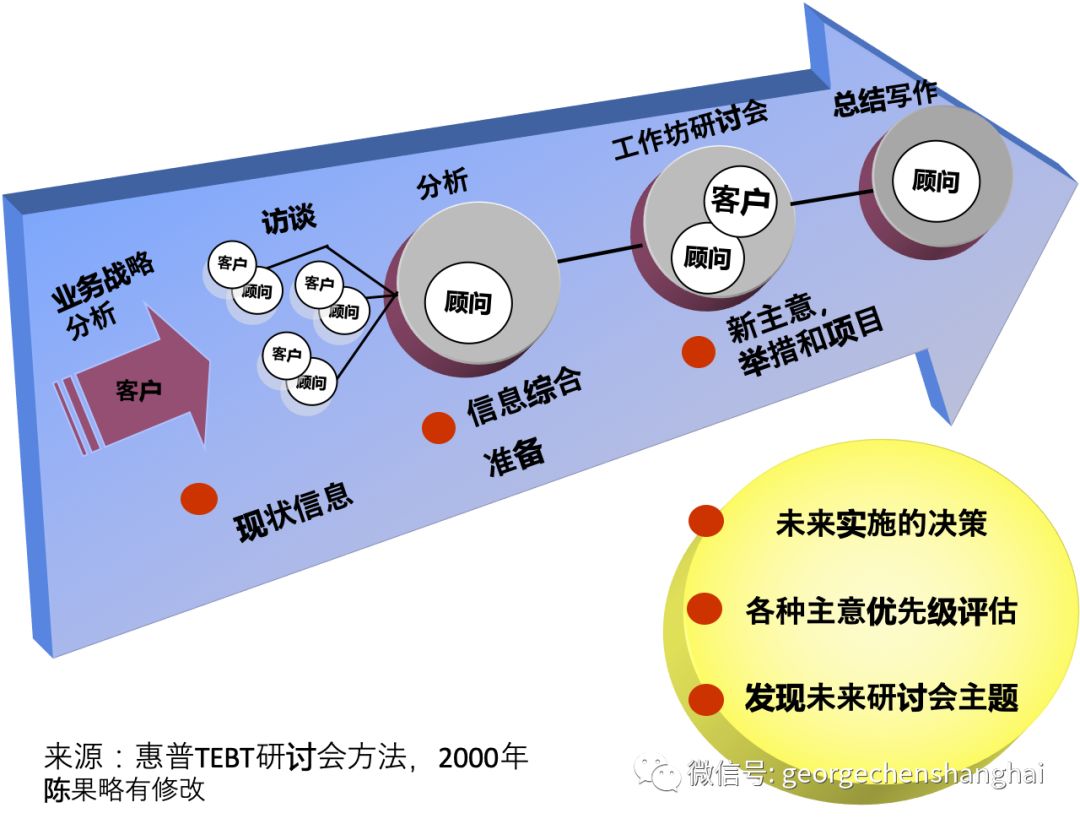
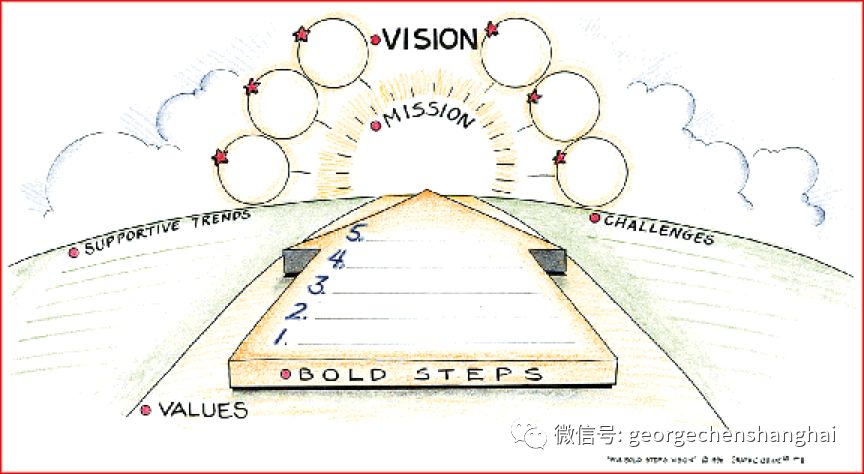
TEBT seminar i.e.Technology-Driven Business Transformation Workshop, in the form of seminars, from a relatively macro level, to explore and refine the customer team's vision and goals for the overall IT construction or a certain project, and to reach a consensus on the route and strategy. The process is as follows:
The figure below is an example of the output of the workshop vision:
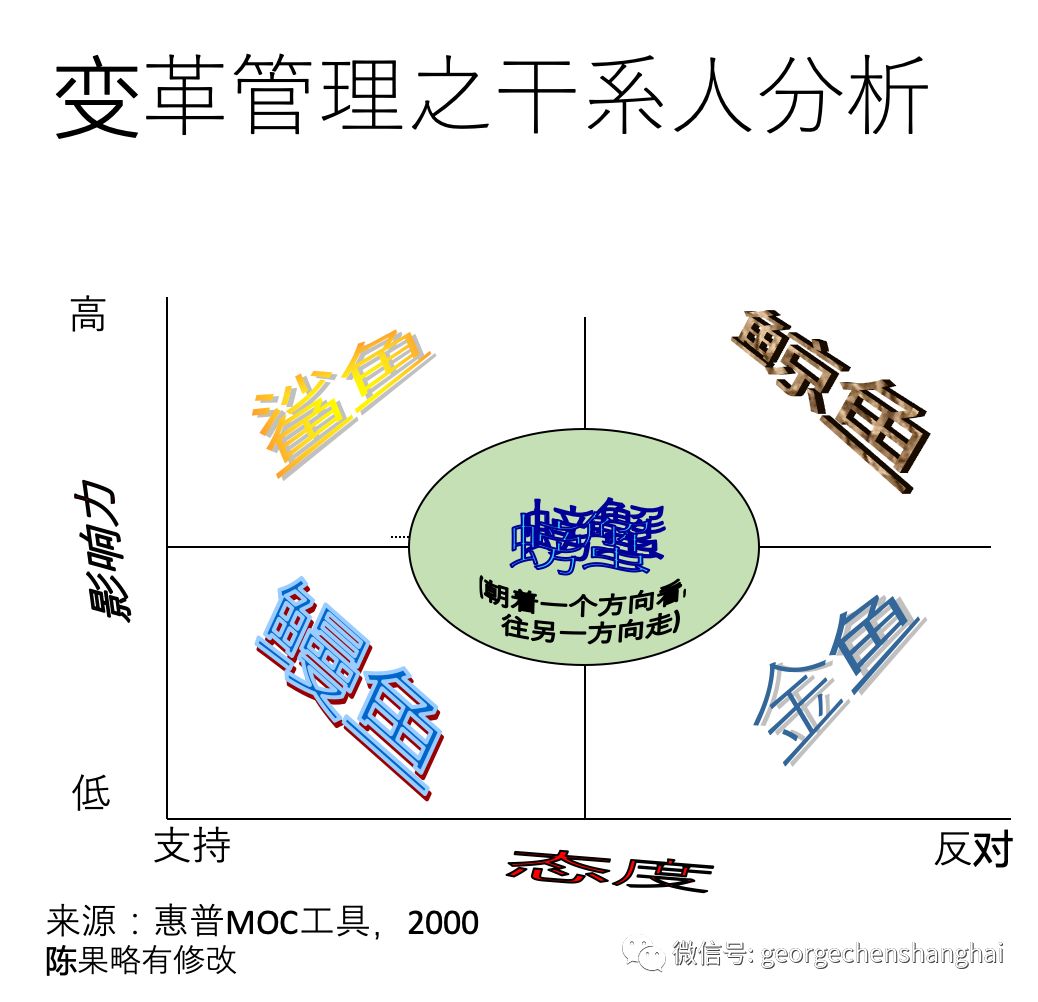
change management(MOC) is a common management method. In response to the changes in information technology applications, MOC has designed a structured framework that defines activities for the transformation of personnel concepts and behaviors at various stages of IT projects such as concept acceptance, project preparation, project execution, and solution implementation, and provides a series of tool kits, such as background analysis, concept change, concept explanation, change communication, team building, etc. The interesting "aquarium model" below is the tool I used when doing stakeholder analysis for IT change management:
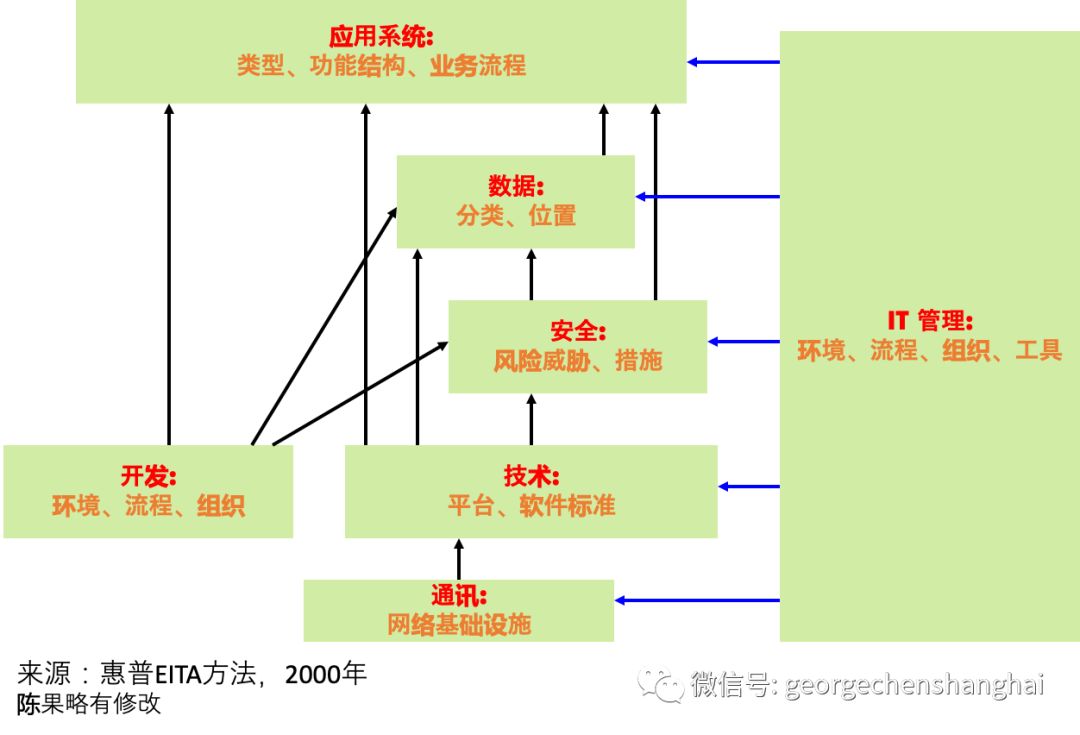
Enterprise IT architecture(EITA), this approach regards enterprise architecture as a continuous planning process, which can be compared to large-scale investment plans or urban construction planning. This process covers:
-
Set IT strategy and control investment decisions
-
Determine the principles, models and standards of the enterprise in terms of technology, application systems, data and information, IT organization and processes, etc.
-
To optimize the business value brought by IT, evaluate and select IT application opportunities
-
Matching organizational change and organizational culture
At that time, HP defined the scope of enterprise IT architecture as the following framework:
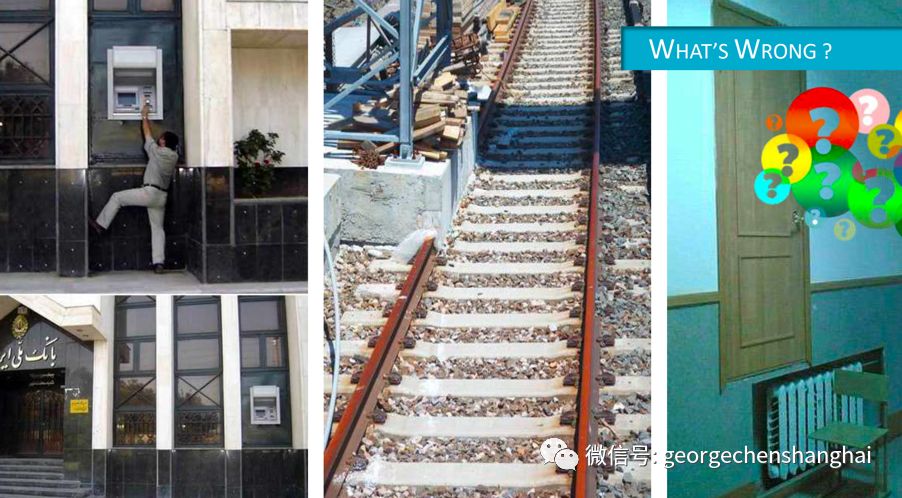
"Enterprise IT architecture" is just an IT concept, and "enterprise architecture"It starts from the perspective of strategy and control, and from the perspective of sharing between business and IT, to build a blueprint for the integration of business and IT. All IT project implementation must follow this blueprint, and this blueprint is called "enterprise architecture." The role of architecture is to solve the connection problem between "strategy" and "execution delivery". The word architecture comes from architecture. In architecture, if there is a lack of good architectural design or standardized architecture management, the following situation will occur:
The figure below illustrates the positioning of enterprise architecture. It connects the company's business and IT strategies upwards, and "implements" downwards through specific project implementation. It includes four aspects:
-
Business architecture: process, information, people, organization
-
IT architecture: application systems, data, technology
-
Transformation planning from existing architecture to future architecture
-
Concretely implement the project's management and control methods for compliance with the architecture.
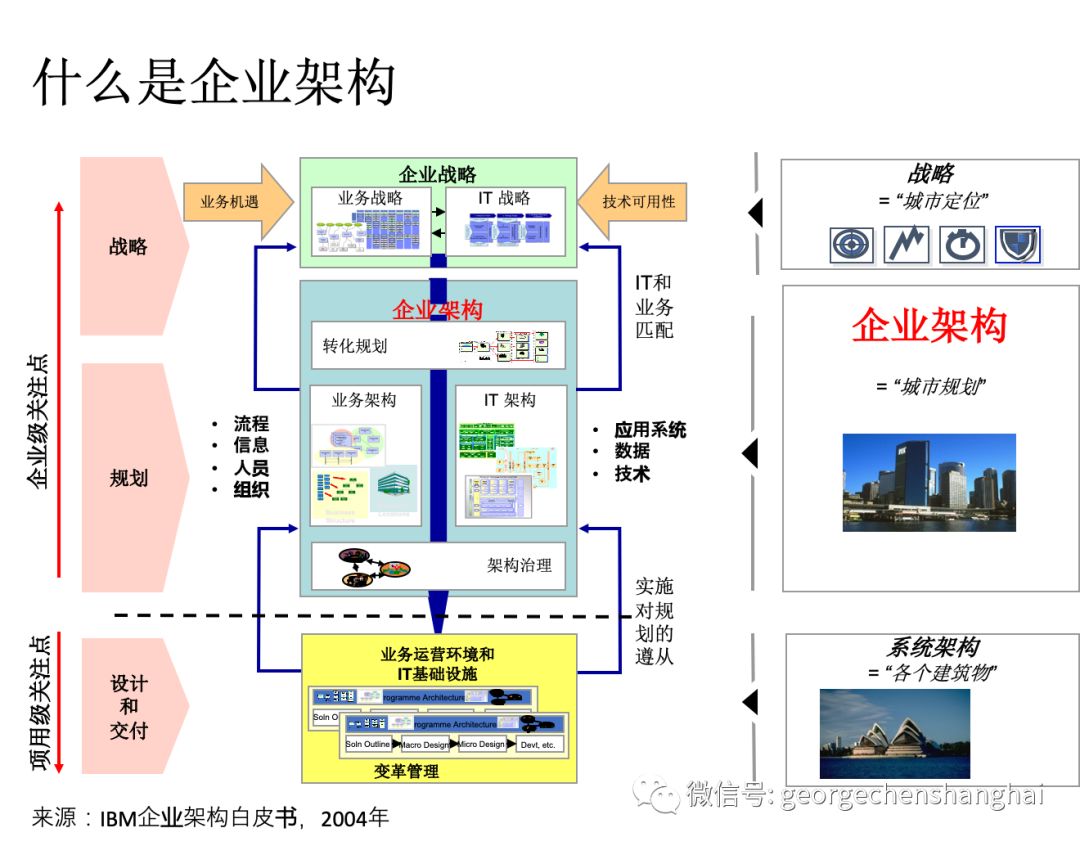
Perhaps due to the cultural preferences of the Chinese people, Chinese companies have always emphasized "landing". The IT strategic planning (ITSP) method is too abstract and macroscopic, while the "Enterprise IT Architecture" (EITA) is too technical, and the description of specific IT projects is too trivial. Therefore, enterprise architecture theory has gradually become the mainstream method of domestic IT planning since around 2010.
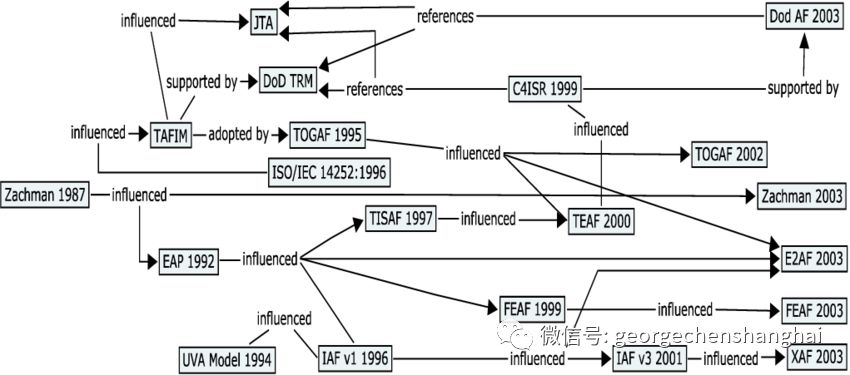
As a management specification, rigorous enterprise architecture first appeared in the U.S. military (i.e., C4ISR, DoD and other standards in the figure below) and the U.S. government (i.e., FEAF and other standards in the figure below). It originated in the 1990s and was widely accepted and adopted by IT companies, consulting firms and enterprises around 2005. It is a non-profit standardization organization Open initiated by Capgemini, HP, IBM, SAP., Oracle, and domestic manufacturers such as Huawei and Kingdee. The open framework proposed by the GroupTOGAF, and some IT consulting companies (such as Gartner, etc.) have also developed their own enterprise architecture framework.
The theoretical origins of these frameworks can be traced back to the "Zachman Model" proposed by Zachman, an IBM engineer at the time, in the late 1980s. Although there are evolutionary processes such as the following figure, and various schools learn from and influence each other, the overall ideas are similar:
There are two key parts to applying enterprise architecture to carry out IT planning. Although the forms of expression of each IT consulting company may be different, my personal opinion is that the content and essence are actually similar. They are:
First, the contents of enterprise architecture include:
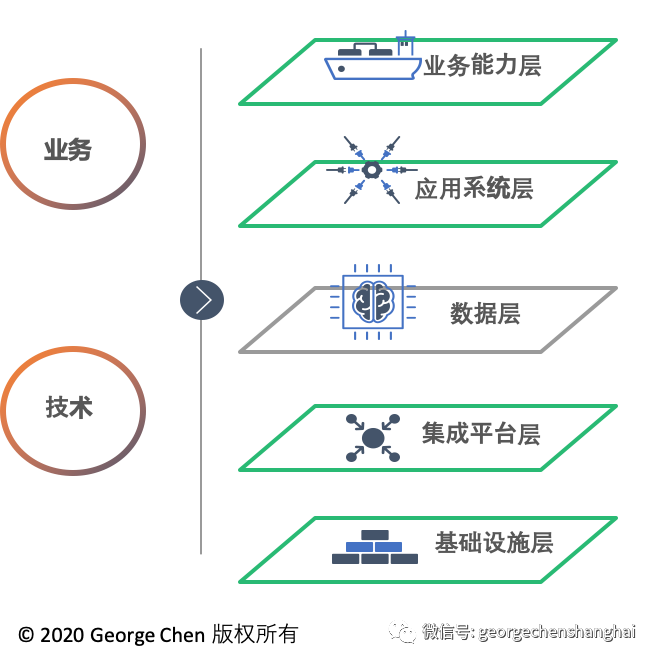
The objects described by the enterprise architecture, from business to technology, should establish connection relationships between layers, usually covering business capabilities, application systems, data, integration platforms, infrastructure, etc.:
The reference model of TOGAF's enterprise architecture content is as follows. The core is three layers: business architecture, information system architecture and technical architecture, and contains two principles: architectural guiding principles and implementation principles:
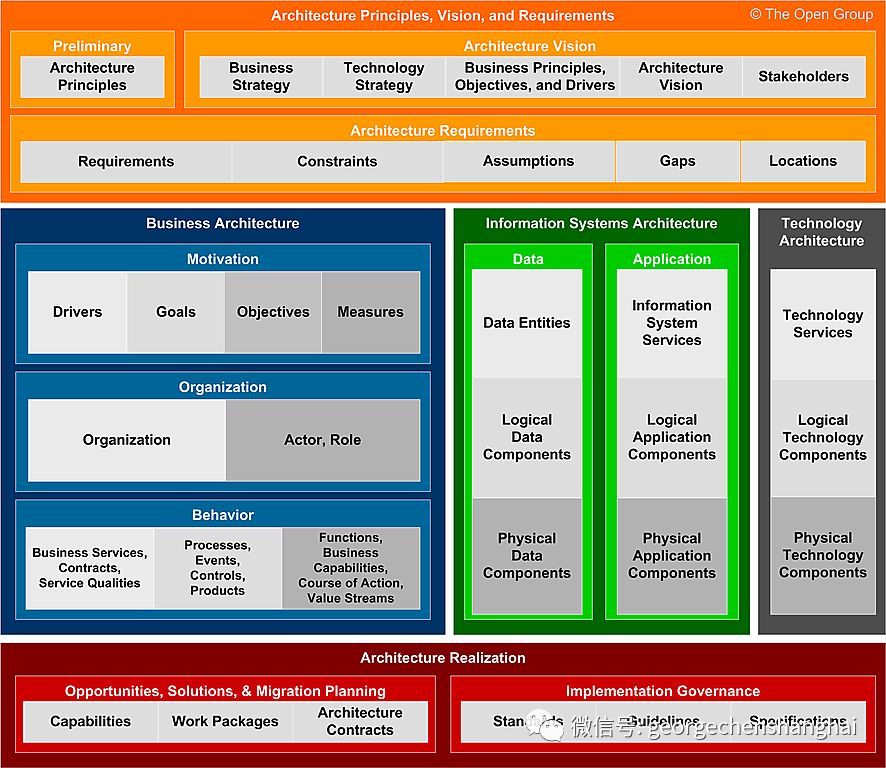
The EA content framework of various IT consulting companies is similar to the TOGAF reference framework. This is the version that Capgemini calls the Integrated Architecture Framework (IAF):
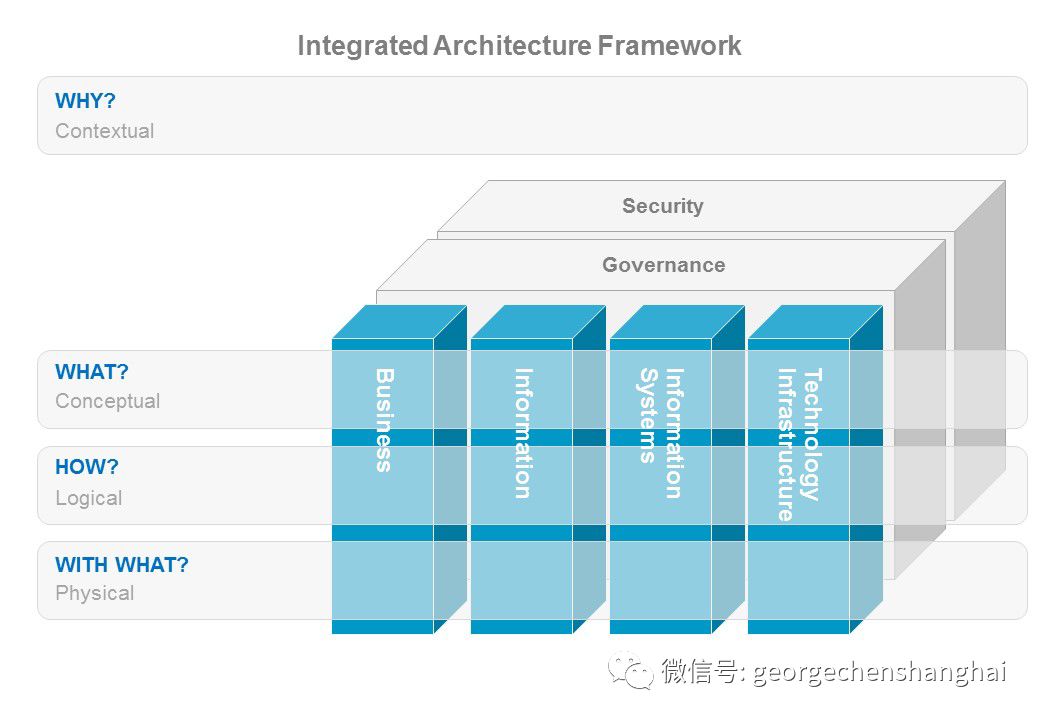
For those objects within the enterprise architecture, there are also some reference models for planning work. For example, to describe "business capabilities", the figure below is the government capability model framework released by the British government in 2012. Does this framework look familiar? It seems that the IBM CBM model is used:
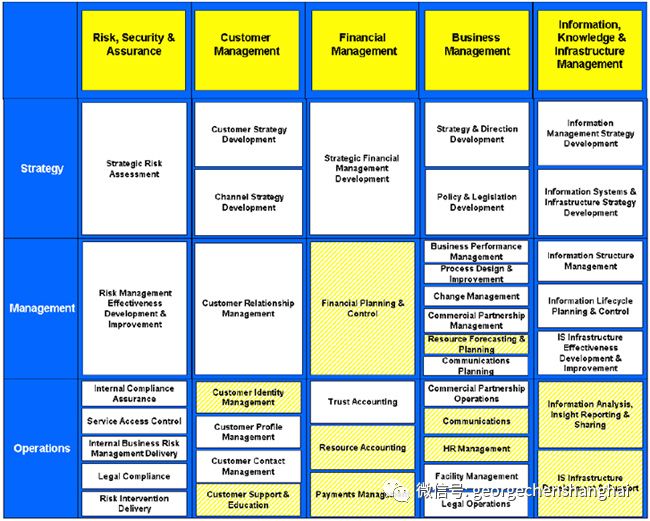
Source: United Kingdom Government Reference Architecture (UKRA) v1.0
Second, the process of forming and maintaining enterprise architecture:
Enterprise architecture requires continuous planning, transformation/implementation, modification/evolution, and the orderliness and controllability of the enterprise architecture life cycle must be ensured. Many organizations have also developed "Enterprise Architecture Maturity Model" to evaluate the level of enterprise architecture development and serve as a benchmark for architecture improvement. Enterprise architecture is a common management object of enterprise management. In recent years, we have even suggested that enterprises establish a specialized enterprise architecture management organization to lead the connection between business and IT.
The process of enterprise architecture formation and maintenance is:
-
Identify and define the goals, scope, and relevant stakeholders of enterprise architecture management
-
Establish a baseline of the current state of the enterprise architecture's content (i.e., business, data, applications, and technology)
-
Use the same framework as above to define the scope and architectural state of your goals
-
Identify key gaps between current architecture and target architecture
-
Promote relevant stakeholders to reach consensus and carry out the transformation and implementation of the architecture
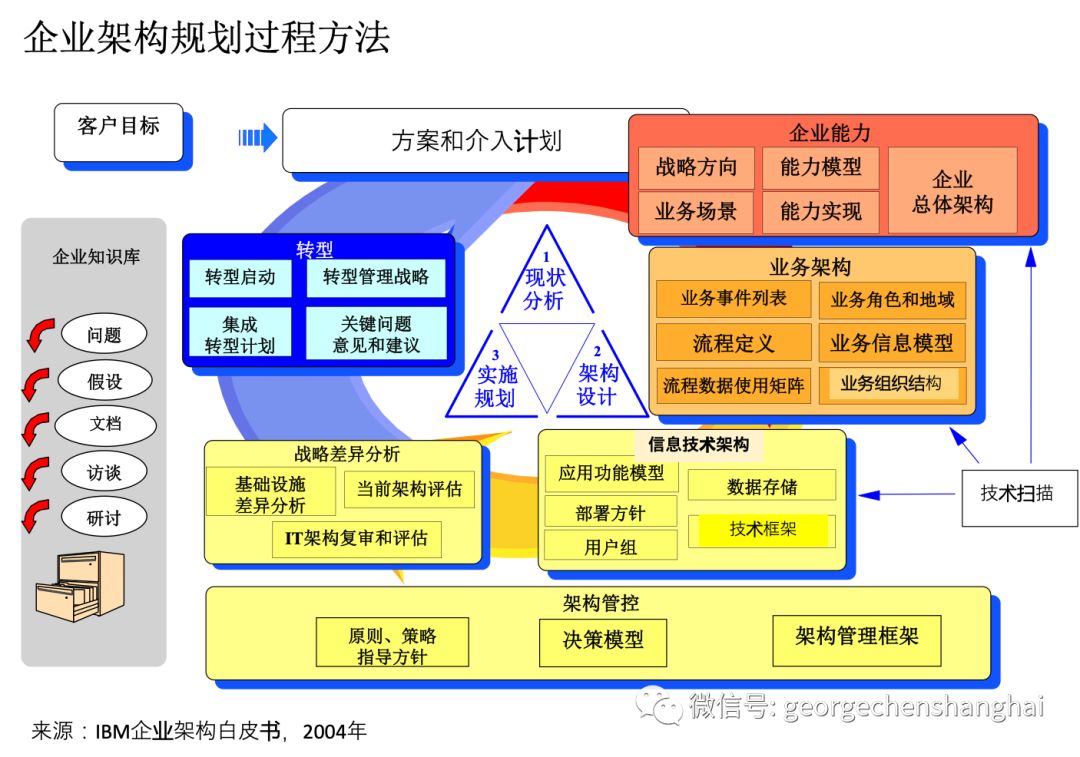
In the early years of the IBM EA system, the planning process was defined as follows:
The process described in the TOGAF standard Architecture Development Method that was gradually developed later is in line with the above framework:
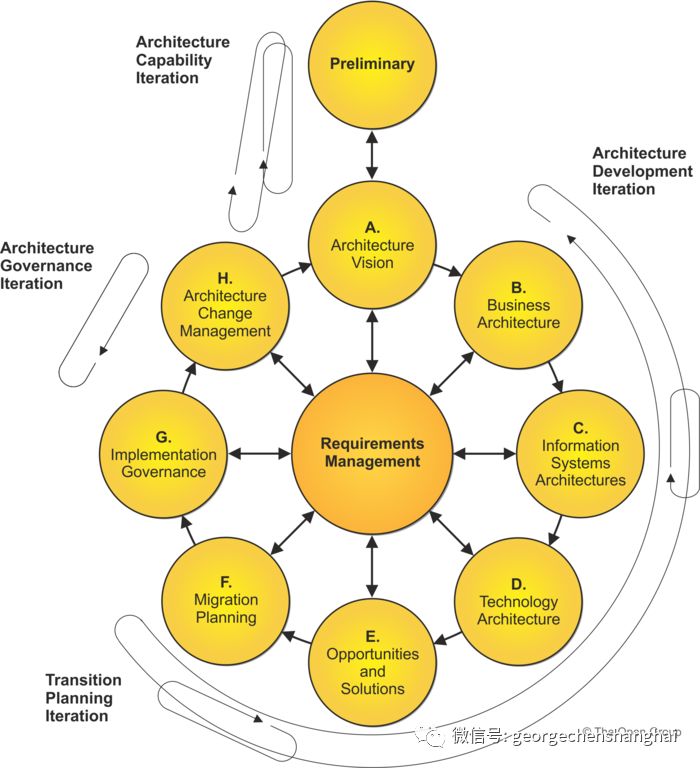
As a structural approach, I feel that it is a huge improvement over the enterprise architecture approach and the IT planning methodology of earlier years. Strictly speaking, enterprise architecture is not a methodology of "IT strategy", but a methodology of "IT strategy execution".
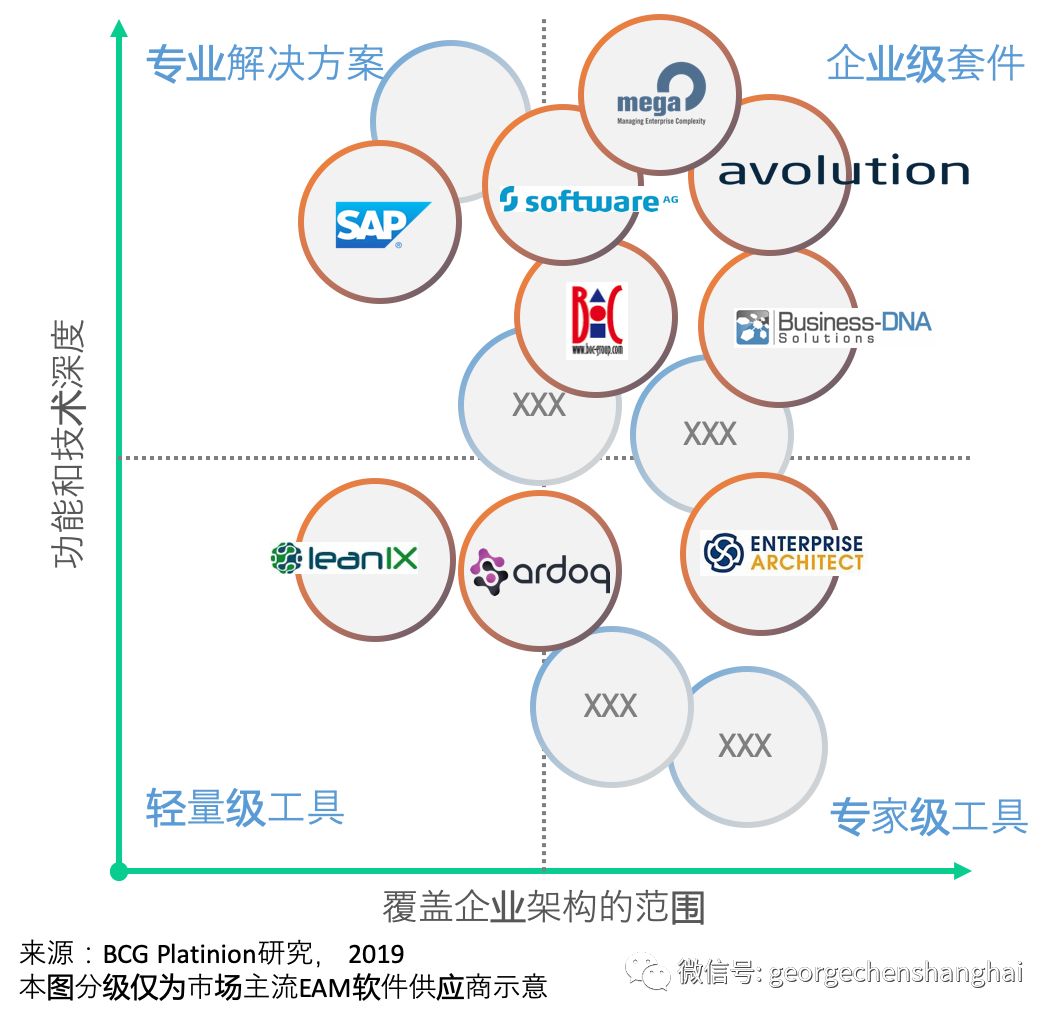
Large enterprises in Europe and the United States have paid more and more attention to enterprise architecture management in recent years, and there have even emerged to specifically support enterprise architecture management (EAM) software tools. If you only use EA as a conceptual method, it is more flexible to operate; while using EAM tools is very powerful and rigorous, it also increases the complexity of enterprise IT planning and execution management. The following enterprise architecture management tools that have emerged in Europe and the United States in recent years are widely used in the IT management of some government agencies and large enterprises in Europe and the United States. However, they do not seem to be well-known in China:
When it comes to the control of architecture management, it involves the organizational design and control of IT organizations. After 2000, the so-called "group management and control model" theory was once very popular in China. Affected by it, in the IT planning of large enterprises, the division of powers between the group and subordinate units, as well as the design of group IT organizations, IT operation management models, etc., are often the main tasks of planning, and even form special projects.
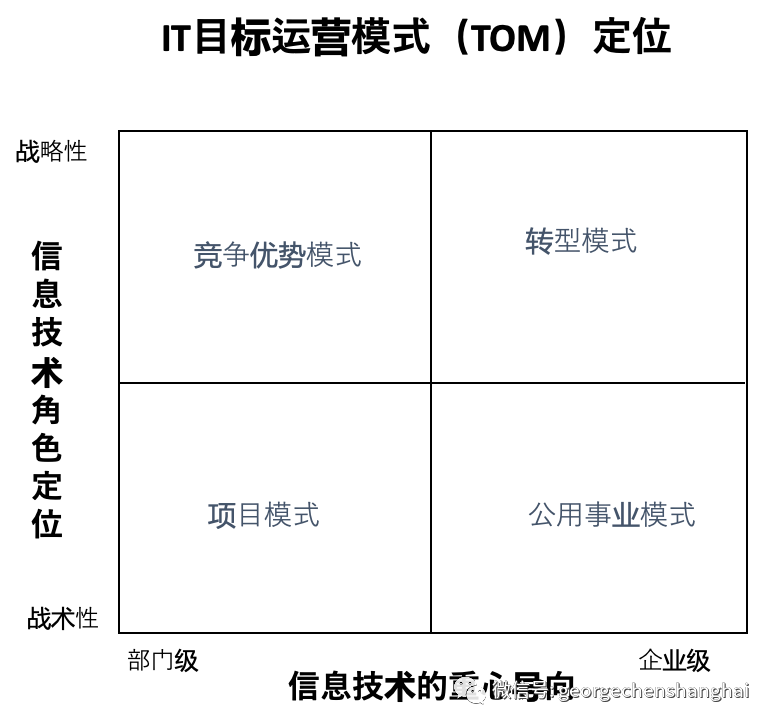
The IT management and control model depends on the strategic positioning of the IT target operating model within the enterprise, as shown in the figure below, namely:
-
Transformation model: IT plays a strategic role in the enterprise and fully covers enterprise-level applications
-
Utility model: IT is an auxiliary function of the enterprise and fully supports enterprise-level applications.
-
Competitive advantage model: Focus on developing strategic IT capabilities at the department level
-
Project model: Each department carries out projects that meet its own requirements
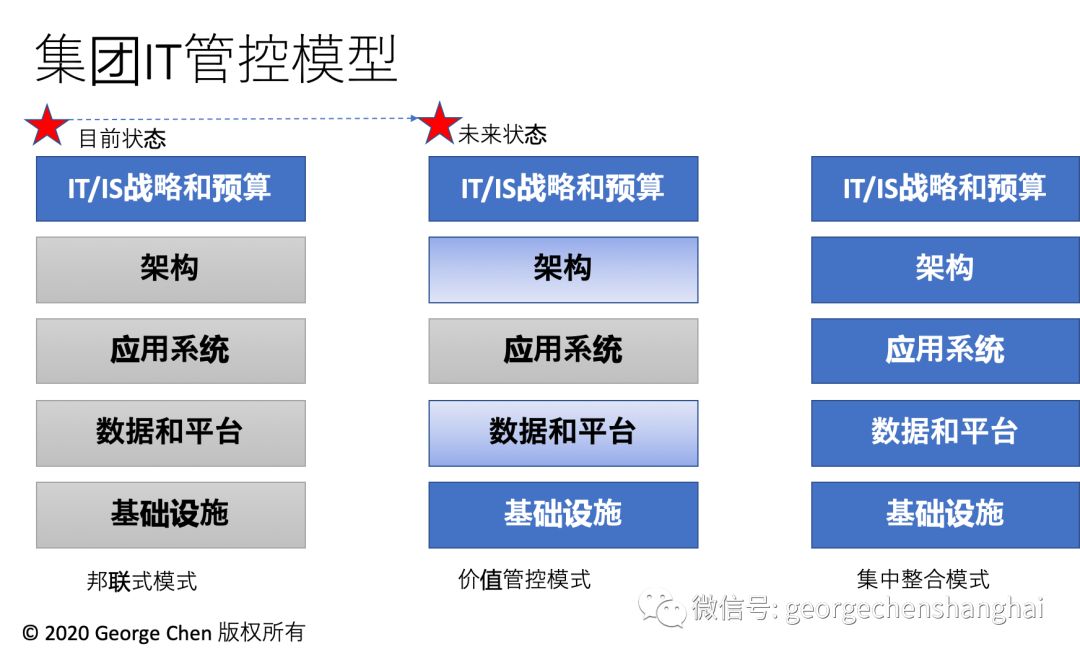
Within an enterprise, all management functional systems, such as strategy, human resources, finance, risk control, IT, etc., want to gain the company's attention and enter the company's core decision-making level. However, companies at different stages of development or with different market competition strategies may have different positions for IT organizations and IT operations. In the figure below, I have drawn a group IT operation model. At different levels from strategy to execution, from centralized management at the headquarters (indicated in blue) to decentralized management in each business unit (indicated in gray), there are several combinations:
The above briefly describes the second development stage of domestic IT planning. In the next issue, I will talk about the third stage: the digital transformation stage, focusing on the application of design thinking, middle-end architecture and agile transformation.
Related articles:
Evolution of Chinese Enterprise Information Strategic Planning Methods (1)
From informatization to digitalization—book recommendations for enterprise informatization strategic planning
Organizational management and HR management of IT departments in large enterprises
Enterprise digital transformation planning

Machine-translated from the Chinese original 中国企业信息化规划方法演进(二)—— 架构和管控 (published 2020-03-19). WeChat original ↗