
The terms “digitalization” and “digital transformation” have become popular since about 2015. I used to be quite entangled in the conceptual difference between "informatization" and "digitalization." I once thought that the difference between the two was: informatization represents back-end systems and revolves around business process management; digital represents digital products characterized by mobile APPs and revolves around user experience. Gartner's "dual-mode IT" happens to have a similar definition. Just like in the late 1990s, when I first entered this industry, I tried to clarify the difference between "computerization" and "information technology".
You can refer to the definitions of several related concepts of "digitalization" by the Open Group, an industry standardization organization:
Digital Technology
IT in the form of a product or service that is digitally consumable to create or enable business value.
Translated into Chinese: "Information technology (IT) is presented in the form of products or services that can be consumed digitally, thereby creating or empowering business value."
Therefore, there is a conceptual difference between DT and IT. If explained in the most popular and vivid way, I think DT has only two consumption presentation methods: mobile applications and the Internet of Things.
Digitalization
The application of digital technology to create additional business value within the primary value chain of enterprises.
Translated into Chinese: "In the main value chain of an enterprise, apply digital technology (DT) to create new business value."
Digitization
The conversion of analog information into digital form.
Translated into Chinese: "Convert analog information into digital form."
The two different English words above cannot be accurately expressed with the corresponding Chinese words. They can only be called "digital". Obviously the following "digitalization" is the basis of the above "digitalization" and the basis of the "digital twin" of a business or organization. Only by first "digitizing B" can we "digitize A". I have considered this proposition in some of my early articles:
Digital transformation requires “digitization” first
Retail digitalization: digital twins and interpersonal digitalization
Digital Transformation
The radical, fundamental change towards becoming a digital enterprise.
Radical, fundamental changes toward the digital enterprise.
It wasn't until the middle of last year that I read the new book "Digital Transformation" by Tom Siebel, a master in the field of modern enterprise information technology, that I completely let go of the entanglement. Tom is a true practitioner, and I believe what he says.
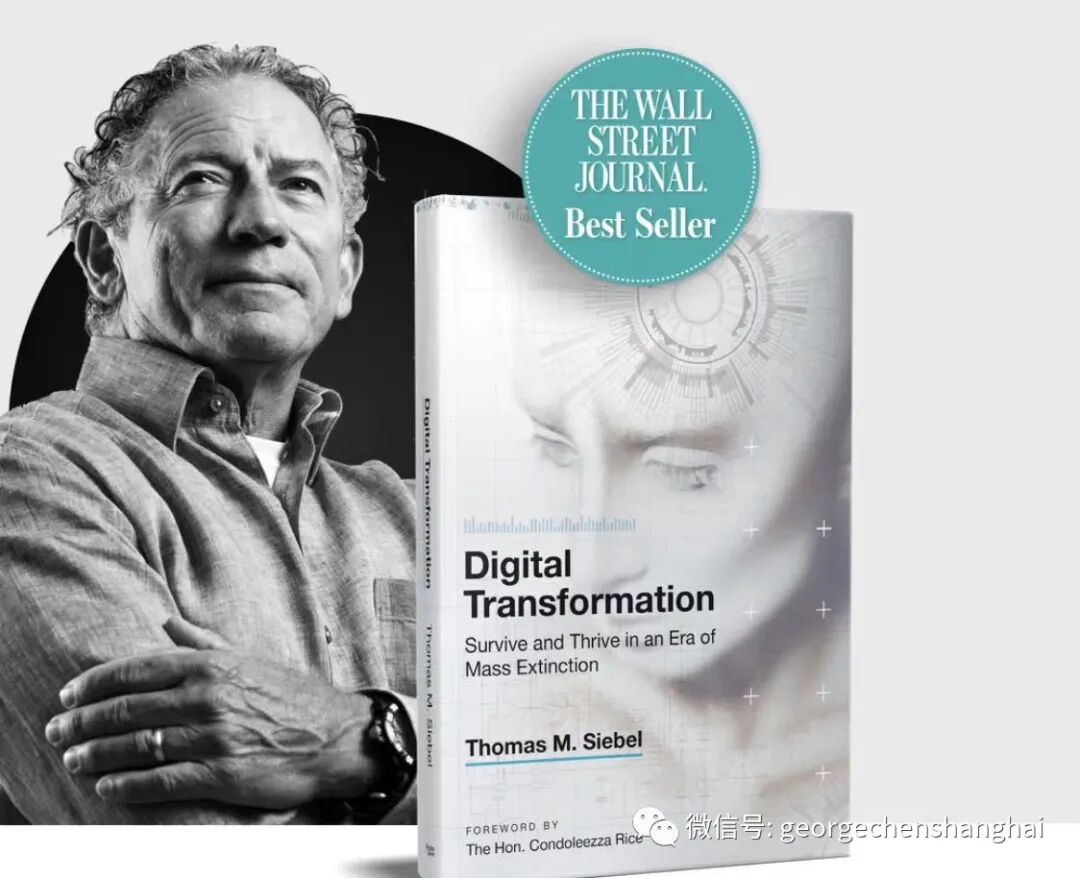
Tom Siebel did not deliberately draw a clear line between digital technology (DT) and information technology (IT) applications such as enterprise database technology and ERP/CRM in the past 30 years. Judging from his description, IT applications such as databases and ERP are in the early stages of enterprise digitalization. The marketing technology that has emerged in recent years is actually the marketing department of the enterprise. It is the last department to be digitized after finance, personnel, sales, operations, R&D and other departments. "Digital transformation" refers to the evolution of traditional enterprises as they harness the four major driving forces of cloud computing, big data, the Internet of Things, and artificial intelligence.
Internet companies are truly "native digital companies", such as Amazon, Google, Alibaba, and Tencent. The "digital transformation" of traditional companies refers to how traditional companies become the operating methods of Internet companies; the ultimate goal of digital transformation is to reconstruct business and industry. See my old article:
Strategic Thoughts | Only when these three conditions are met can it be called digital transformation
For example: Will interconnected, electric self-driving cars subvert the traditional automobile industry just because they use different driving technologies? In addition to traditional cars, the energy industry will obviously be subverted. Not only that - the police industry may also have to transform, because there will no longer be opportunities to catch drunk drivers; the insurance industry will also be subverted. Today, vehicle-related insurance accounts for 60% of the premium income of the property insurance industry. Will there be theft insurance and liability insurance for connected and driverless cars?
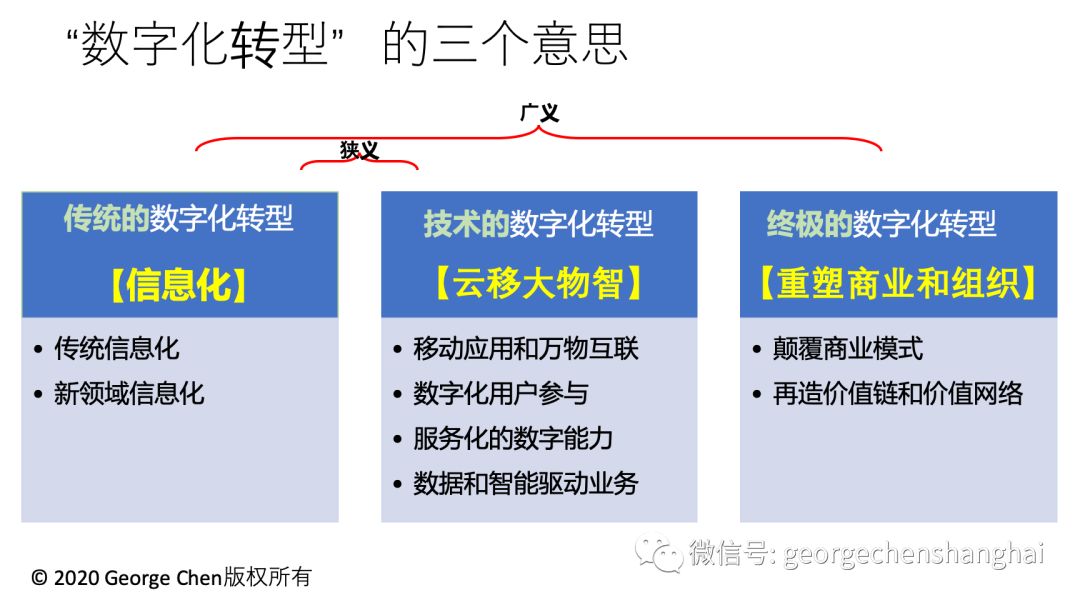
Therefore, when companies talk about "digital transformation" today, it should mean one of the following three meanings or a combination of several meanings:
-
Digital transformation in the traditional sense is not fundamentally different from “information technology”
-
Digital transformation in a technical sense refers to the transformation of enterprise information technology (IT) architecture into digital technology (DT) architecture, also called "architecture modernization" or "next-generation architecture". Under the new architecture:
-
Because of the use of mobile applications, the user interface is more user-friendly
-
Because of the use of cloud and new development methods, software deployment and update iterations are faster
-
Because of the use of big data technology, data analysis is more real-time and smarter.
-
Digital transformation in the ultimate sense is not essentially a technical issue, but a business strategy issue.
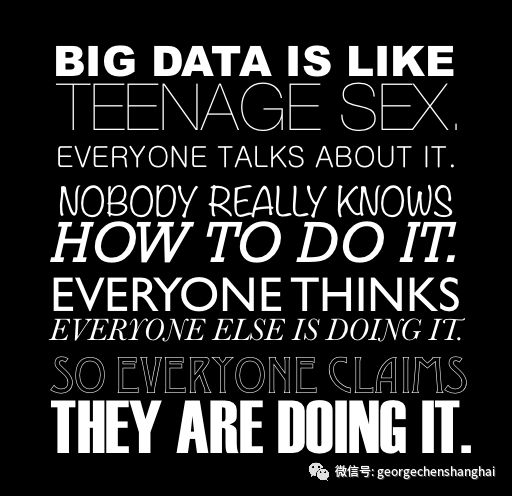
In the past few years, when discussing "digital transformation" with business leaders, I feel that not many business leaders truly have third-level thinking. Many business leaders are lost in the noise of "digital transformation" in society, feel uneasy and even fearful, and feel that they can't do it unless they change. To borrow a famous metaphor: Digital transformation is like a young man talking about sex: everyone talks about it logically, but no one really knows how to do it; everyone thinks that everyone else is doing it, so they claim that they are doing it too.
The above third level is a purely business strategy issue and has nothing to do with the purpose of this series of articles "IT planning". Let’s focus on the first two levels. The planning method at the first level has not changed from the methods introduced in my previous two articles. Let’s take a look at the methodological evolution of “IT planning” at the second level.
Compared with the past, information technology planning in the digital era has three important characteristics:
1. Transformation of enterprise-level technical architecture
The previous article introduced the "enterprise architecture" method. The principle that business determines technology has not changed. However, with the development of technology, DT and IT have undergone great changes in the technical architecture. See the old article:
Constructing a real-time enterprise | Digital transformation of enterprise architecture transformation
Digital transformation | Three core issues for digital implementation in the new era
Seven characteristics of “digital transformation” at the implementation level
From the perspective of planning framework, digital technology has produced many fashionable concepts, such as the "middle platform" that has become very popular recently, including "data middle platform" (referring to data analysis platform), "technical middle platform" (referring to enterprise-level PaaS) and business middle platform (referring to business microservices), etc., which can also be regarded as a school of new generation architecture theory. For my past articles about China and Taiwan, see:
Four core issues for digital implementation | Self-construction decision-making, modern architecture, middle-end empowerment and reshaping of talents
Splashing cold water | Abuse of the concept of "middle platform" is a false proposition for digital transformation
Through the fog of concepts | Pour cold water on "China and Taiwan"
What is data center | The architecture of enterprises using data to drive business
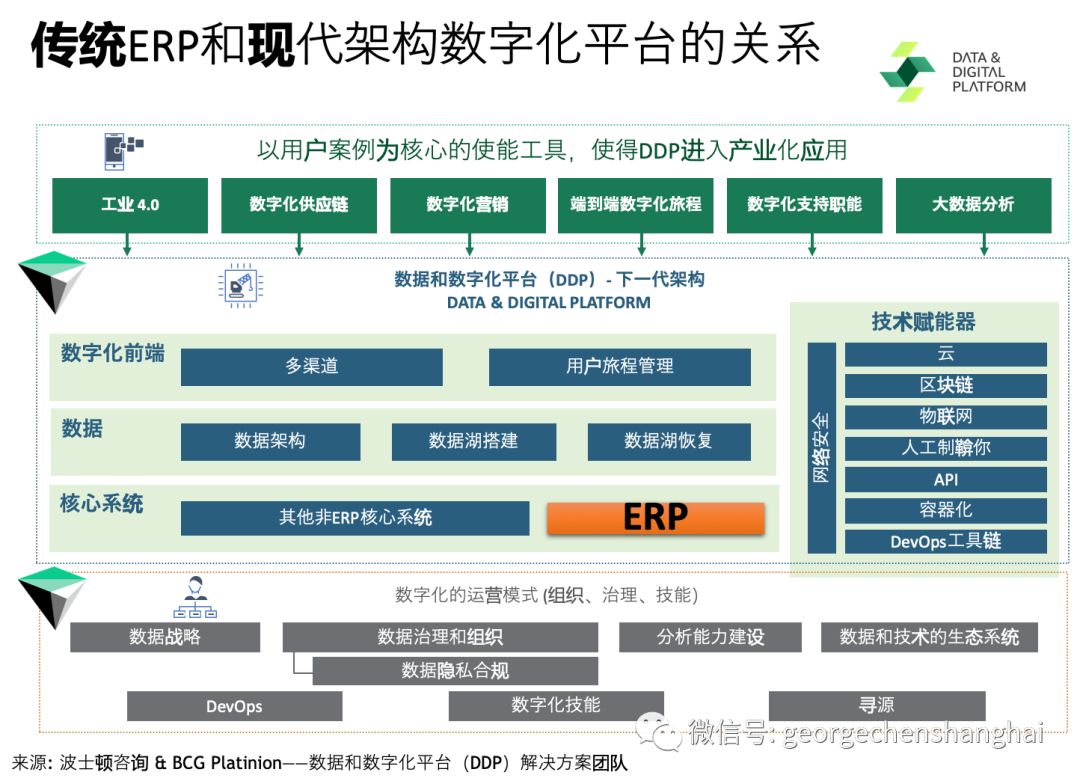
Some time ago, a business leader sent me a WeChat message and asked me to write a letter represented by SAP.Steady state systemwith middle platform architecturesensitive systemrelationship, what are the differences, and what are the characteristics of applications in different industries.
The relationship between traditional information systems, such as ERP and other core systems, and the new generation of digital platforms is clearly shown in the above planning framework diagram. They are "backend" systems, or belong to what Gartner calls a system of records, or a "steady-state system." The difference between them and the sensitive applications characterized by mobile APPs is as follows:
|
|
sensitive system |
Steady state system |
|
Business areas |
Business operations, data analysis, e-commerce and user interaction, employee collaboration and other non-critical enterprise activities |
Management systems, such as ERP, CRM, HCM; or core business systems, such as manufacturing execution systems, core banking systems, etc. |
|
Service objects |
For operating users; For external customers |
Operated by business personnel and ultimately served by managers |
|
Application value appeal |
user experience |
business process |
|
Data characteristics |
No continuous saving, low accuracy requirements |
Continuous storage, high consistency, accuracy and compliance requirements |
|
System life cycle |
short life cycle |
Long life cycle |
|
Version iteration |
Fast, continuously releasing new features and new versions |
Slow, usually measured in years |
|
invest |
The investment in a single system is very low and no complicated implementation is required |
A single system requires high investment and complex implementation |
|
Technical features |
Rapid development and deployment based on public cloud; microservice architecture based on "platform" |
Single application, the application system is tightly coupled internally and externally connected through services |
|
Development and implementation methods |
self-research |
Usually packaged software is used, but you can also develop it yourself |
It should be noted that the development of cloud, big data and artificial intelligence has caused great changes in the composition of the enterprise IT service stack (Stack) drawn by Gerstner mentioned in the previous article. Take the data layer of DDP as an example (the so-called "data middle platform"). Currently, the technology stack is relatively complex and suppliers are scattered. Enterprises need to do a lot of integration and development work. In recent years, when I consult on "digital planning" or "middle office planning" for enterprises, I will inevitably encounter the problem of "technology stack" selection. Tom Siebel describes it as follows:
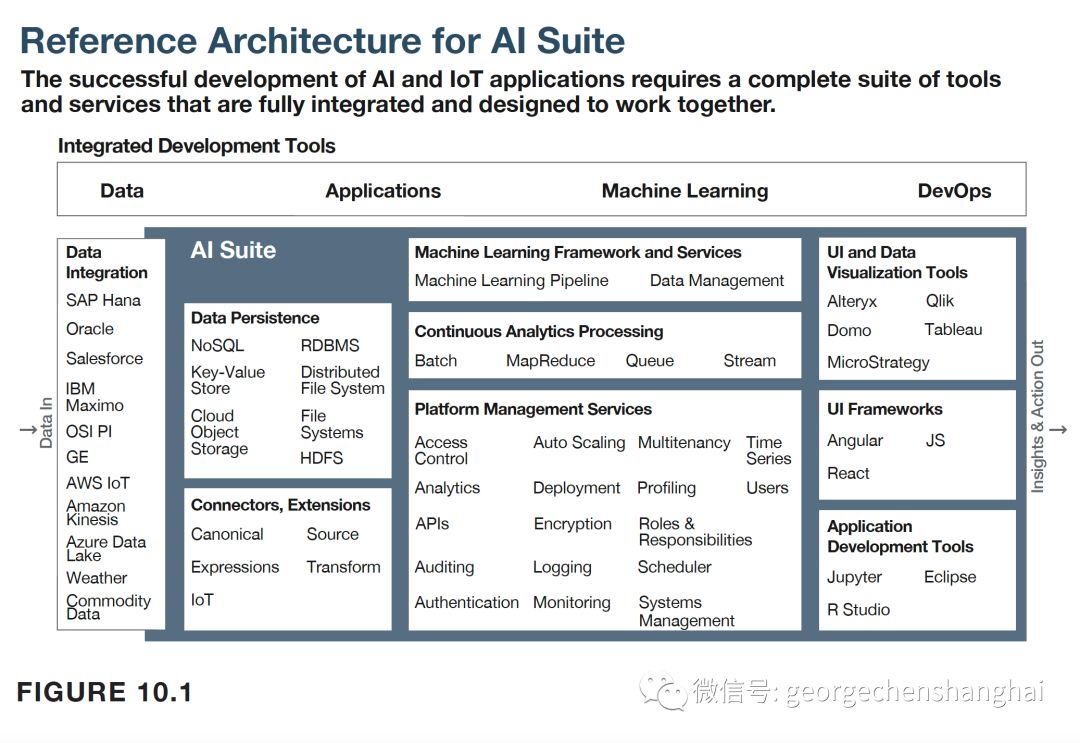
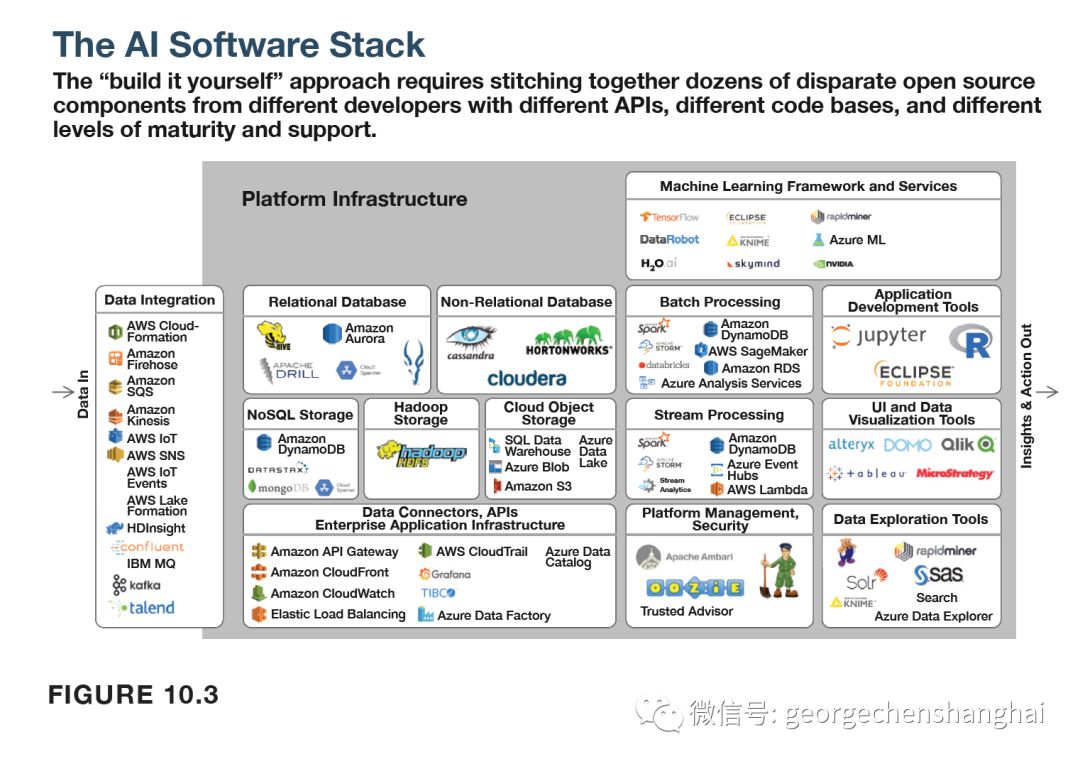
I also hold the consistent view that engaging in "middle platform" means self-developed products, which requires a large number of professional and technical personnel. In the short term, only pure technology companies or large enterprises have such capabilities; in the long term, perhaps all companies are technology companies.
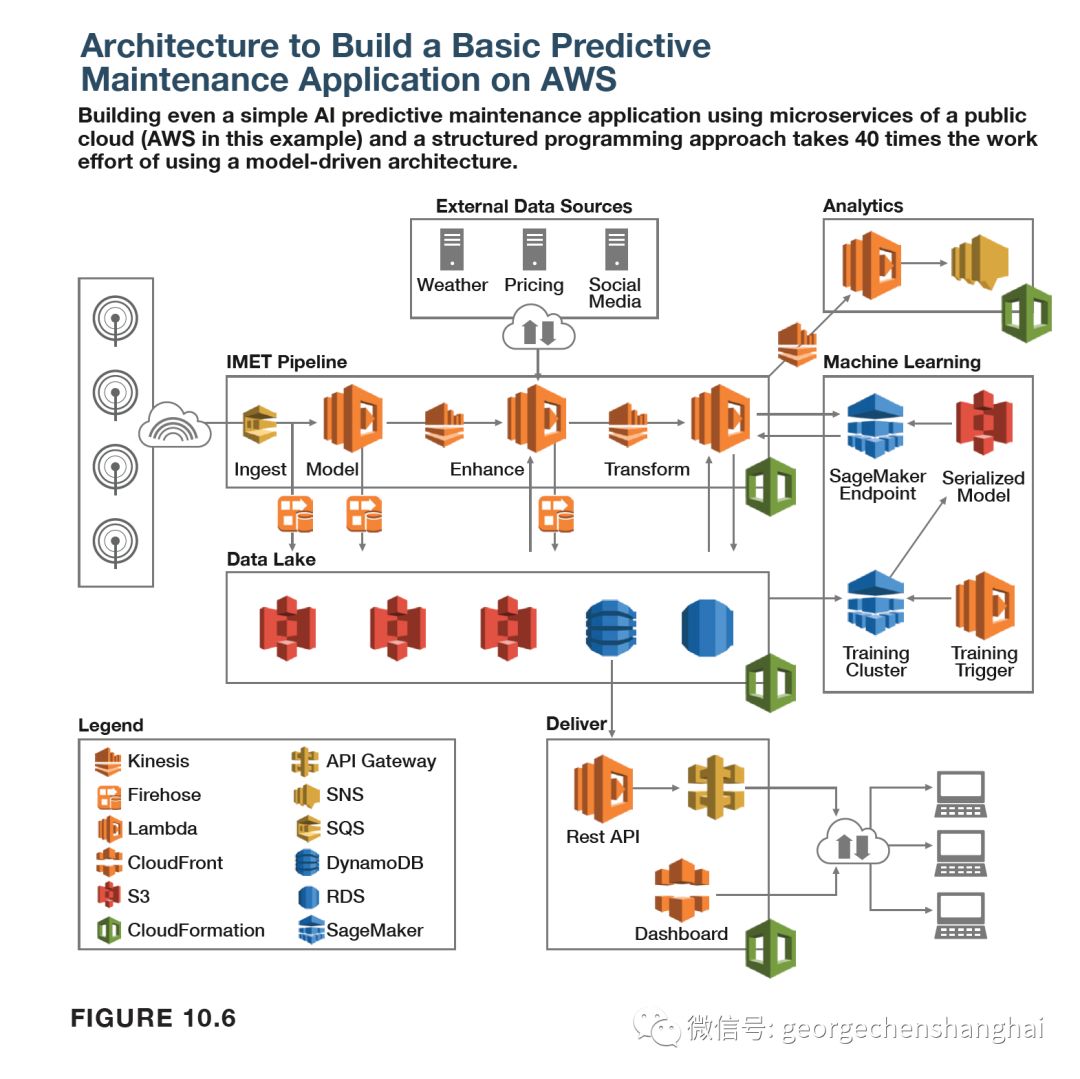
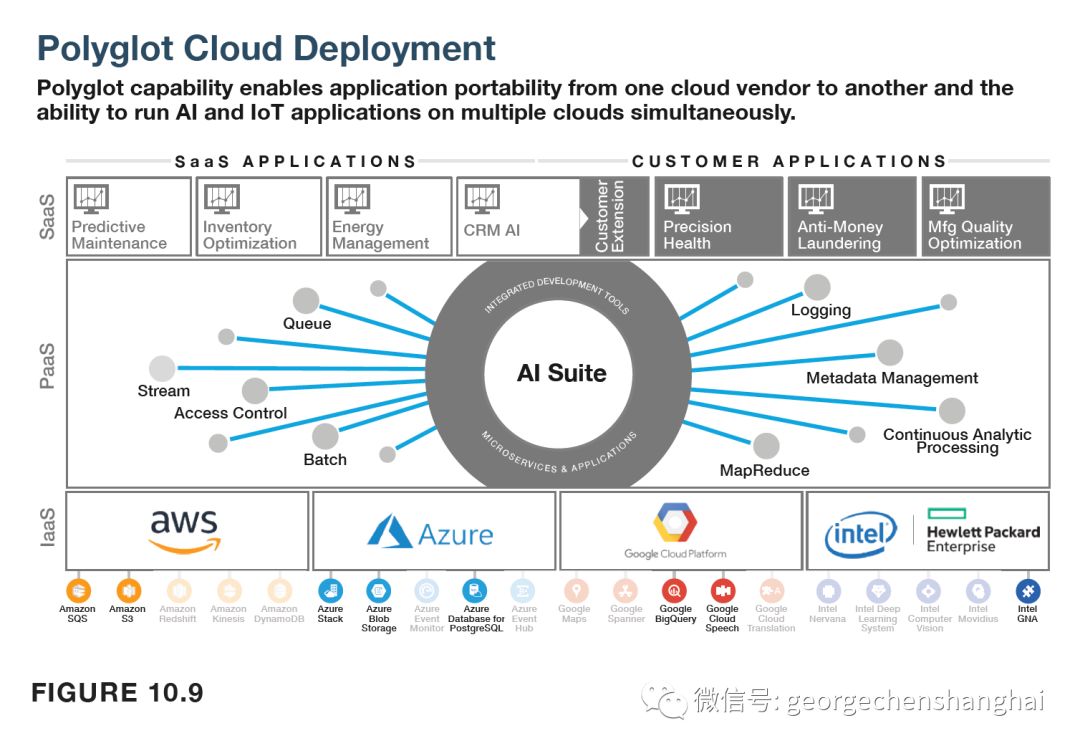
In his new book, Tom Siebel takes building a basic AI-based preventive maintenance application on AWS as an example. It is necessary to build several services of AWS in modules such as data access and transformation, data lake, data analysis, machine learning, and service delivery. This is what the architect has to do. I believe that the early "IT planning consultants" should also be "Cloud solution architects" today. Based on such an architecture, the amount of development is also very huge, and the integration is also very complex:
Tom Siebel is currently leading the startup of an artificial intelligence suite company based on the Internet of Things. Just like ERP and CRM suites that were ready to use out of the box 30 years ago and did not require self-development, today, artificial intelligence and the Internet of Things should also provide "suites" that are driven by business models and that business users do not need to consider the internal technical components.
He thinks,At that time, the biggest enemy of enterprise informatization was the enterprise CIO who wanted to develop everything by himself.; In the digital age, the role of CTO responsible for complex architecture and development management is becoming more and more important. The concept of a packaged enterprise-level AI platform outlined by Tom in the figure below: Based on multi-cloud management, flexibly mobilizes various basic cloud services, supports various standard SaaS and enterprise customized software, it should be a PaaS platform (also known as "middle platform") that includes various AI capabilities and functions, and provides an integrated development environment and microservices.
2. Enterprise-level digital product creation
In the digital era, in addition to the transformation of enterprise-level architecture, that is, the simplification of IT infrastructure and the establishment of a digital platform, another feature is the continuous creation of user experience-oriented digital products on the platform. The method of digital product creation is significantly different from traditional system development and implementation. The difference between the so-called waterfall style and agile style is no longer a top-down derivation (business process management, that is, management needs, with process management as the core), but a bottom-up (user's intuitive use, meeting the user's human needs, and experience as the core) exploratory style. Understood in this sense, the word "planning" itself has a top-down meaning. In the digital age, this meaning itself has been largely eliminated.
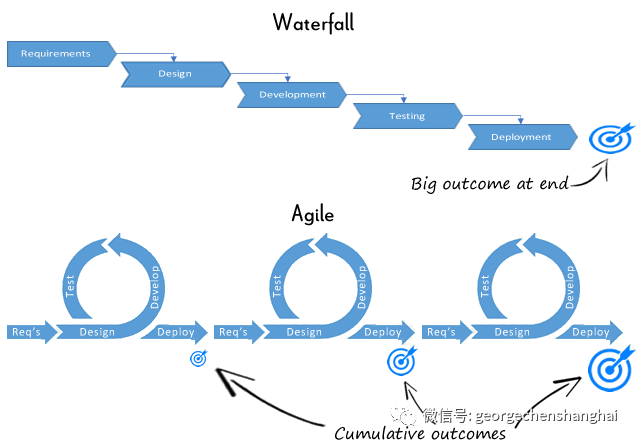
Planning for digital products involves three important methods: 1. Design thinking, 2. User journey, and 3. Product creation and architecture.
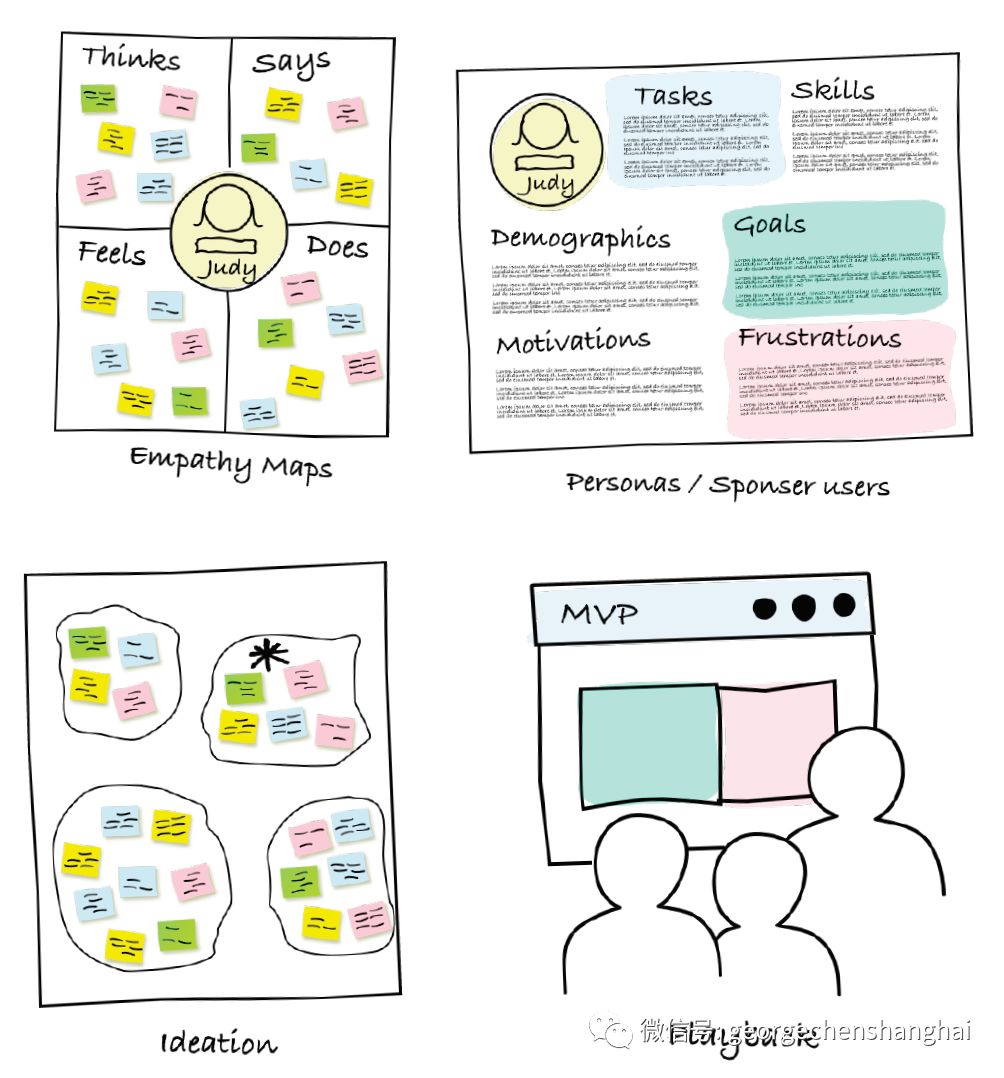
Enterprise-level design thinkingThe problem solved by the method is:
-
Understand users: In-depth understanding of users’ motivations, needs and frustrations so that products can inspire user joy
-
Define the Minimum Viable Product (MVP): Provide basic functions for the target group of people, laying the foundation for subsequent continuous iterations
-
Collaborative development team: During the development process, continuously obtain feedback from relevant stakeholders and target users, record the feedback, and solve the highest priority issues in each iteration
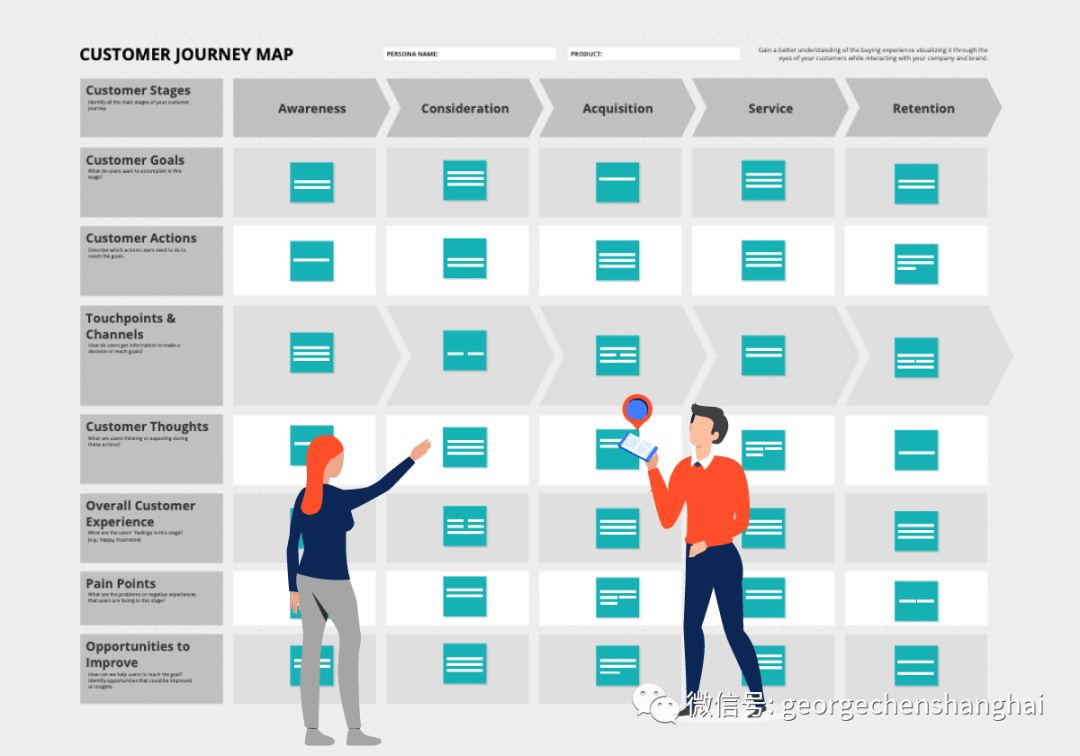
“user journey"It studies the digital touch points of target users from an operational perspective, and plans omni-channel digital means and big data integration strategies. It is mainly suitable for customer-oriented digital research, including consumer goods, retail, financial services and other fields.
Design thinking and user journey both belong to the category of "user experience strategy" (UX). The figure below is a user journey design methodology framework. In a user journey, it needs to include user portraits, timelines, emotional peaks, touch points, channels and other elements. The journey map is revised repeatedly to determine the digital method of touch points and the big data integration strategy for the entire journey.
User experience (UX) is an emerging consulting field, originating from disciplines such as service design and usability design developed from industrial design. In recent years, traditional IT consulting companies have been turning to digitalization. Many consulting companies have acquired a number of digital studio companies engaged in UX consulting and digital product development. In leading IT service companies such as IBM and Accenture, digital (Digital) services and traditional IT services belong to different business lines. UX consulting also injects new content into traditional IT planning. Join my old articles:
Digital transformation | How to merge consulting and design
Digital transformation without user experience design is like Tuo Xiang
Based on the design output, engineers and UX designers form agile teams to construct products in an agile way (such as team self-direction, continuous prioritization, etc.), and through continuous integration and delivery pipelines (referred to as CI/CD, which realizes small-batch multi-stage code delivery, code automation testing, etc. through the DevOps tool chain), to deliver digital products to a highly reliable, automatically managed and configured cloud production environment. Need cloudArchitectTo plan the use of public cloud services, or hybrid services of enterprise platforms and public clouds.UX strategic designers, full-stack engineers and architects are the three most important roles in enterprise-level digital transformation implementation projects in the digital era. This is very different from traditional information system development or implementation. This is also my current thinking on developing the team.. The figure below shows the digital product creation process:
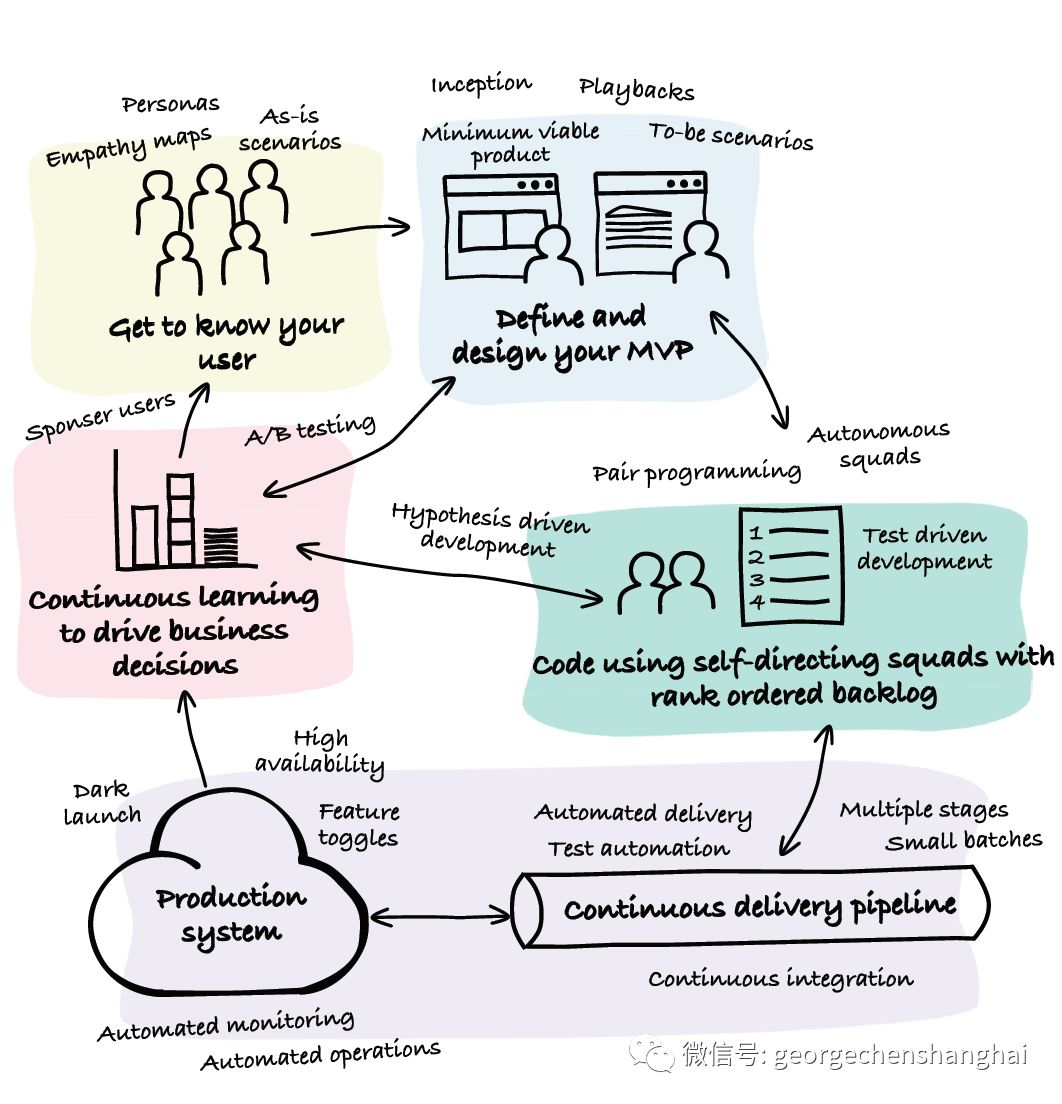
3. Digital innovation
Digital innovation itself is a business design topic. We use methods such as "Business Model Canvas" to conduct business design, and use methods such as "Agile Entrepreneurship" to carry out work. I have a more detailed introduction in the following article, which I will not expand on in this article:
The difference between “digital innovation” and “digital transformation”
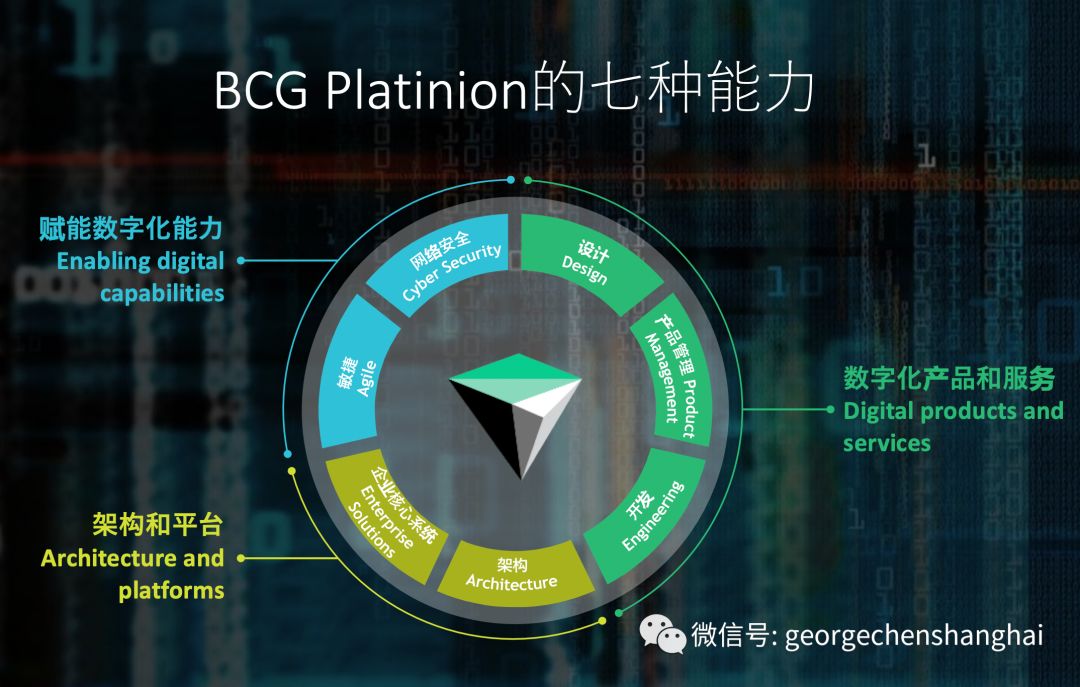
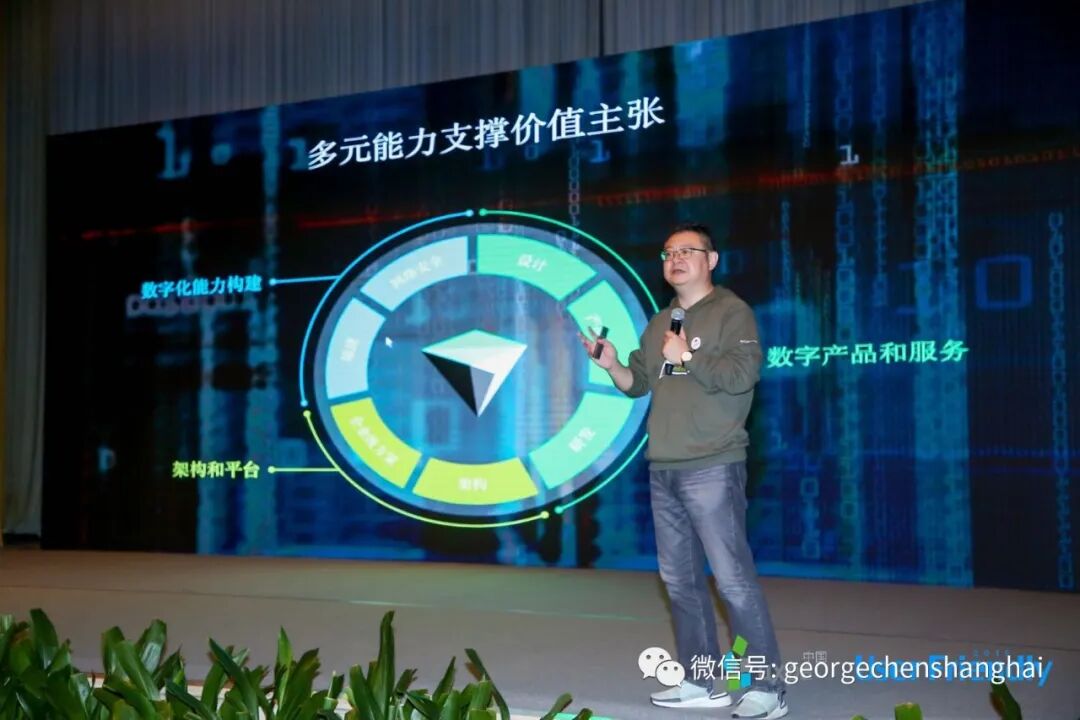
Finally, we can feel the pulse of the development from traditional informatization to the digital era from Boston Consulting Platinion's capacity building. It has inherited the planning capabilities of traditional enterprise core systems and opened up a series of new planning fields for the new generation of technology architecture. I have also gone from being a beginner in information planning theory 20 years ago to becoming a preacher of the new generation of information planning theory.
Series of articles:
Evolution of Chinese Enterprise Information Strategic Planning Methods (1)
Evolution of Chinese Enterprise Information Planning Methods (2) - Structure and Control
Digital transformation planning and implementation

Machine-translated from the Chinese original 中国企业信息化规划方法演进(三)——数字化转型 (published 2020-03-24). WeChat original ↗