0. 如何用自己的研究解决包括防疫在内的各类社会面临的问题。需要学界和工业界的共同努力。
计算神经科学与类脑智能教育部重点实验室2020年开放课题申请通知
记录0302|Cell 文章的 AI code, 为国内有兴趣使用的人分享
WHO研究路线图介绍及AI 潜在的应用场景
工作之余,如果有时间学习,下面的几份资料是比较好的资源。
1,图神经网络在线研讨会 2020 回放
直播间地址:
https://event.baai.ac.cn/academic-live/gnn-online-workshop-2020/
课件下载:
链接: https://pan.baidu.com/s/1Mj6i0I0jH5KF9MRpABwp1w 提取码: 45ns
唐老师的课件还需要再等等
2, 陶哲轩的傅里叶分析网课:
https://ccle.ucla.edu/mod/page/view.php?id=2840550
Zoom 直播:https://ucla.zoom.us/j/9264073849
菲尔兹奖得主陶哲轩开网课了!3月底线上开放
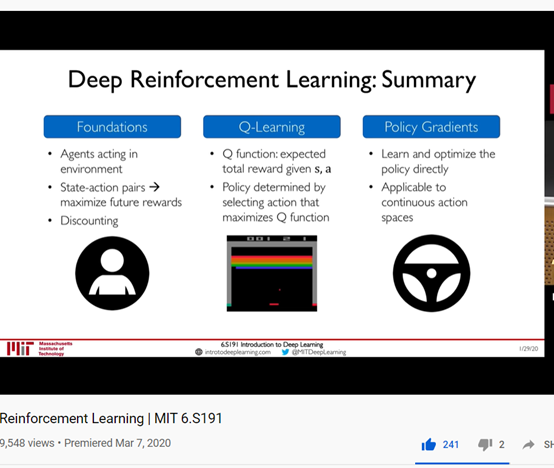
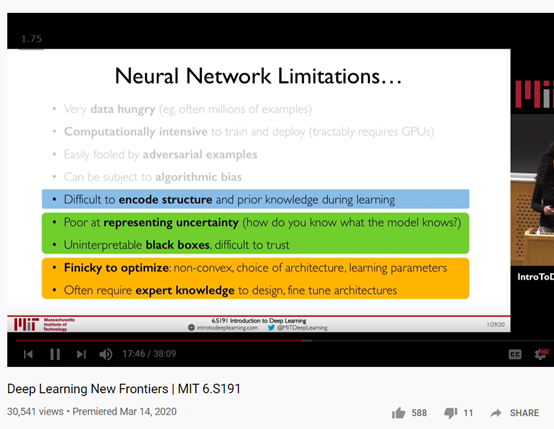
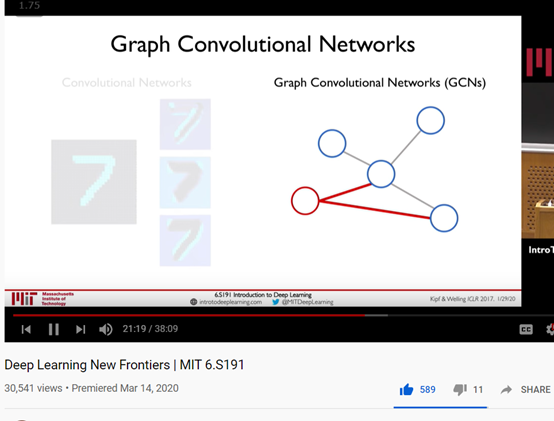
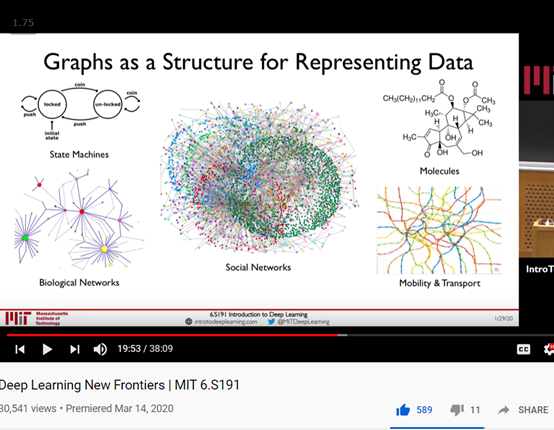
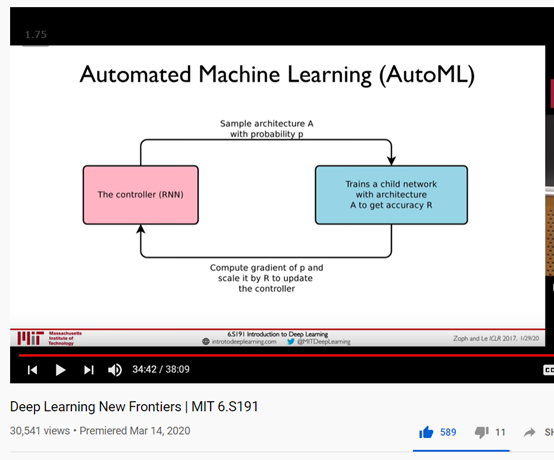
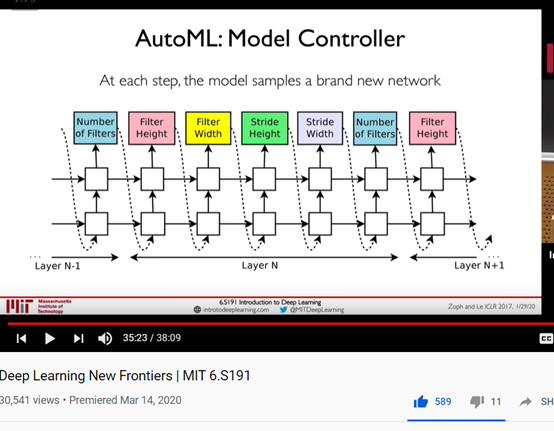
3,MIT的神经网络课程:
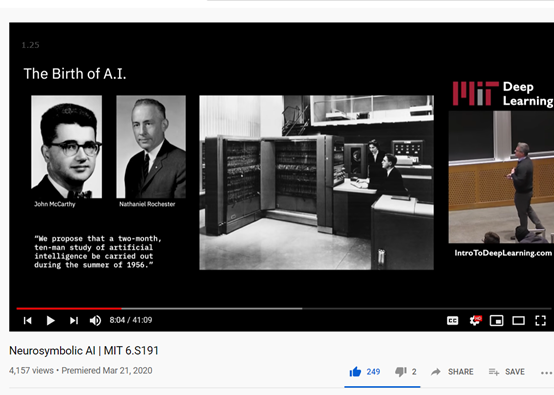
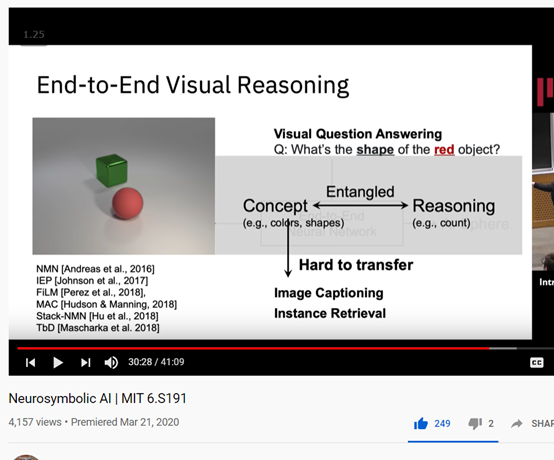
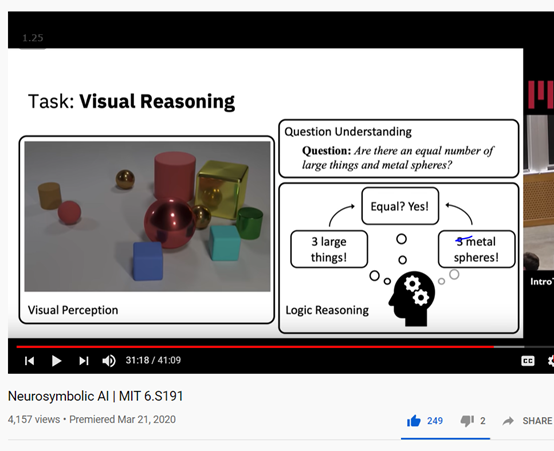
http://introtodeeplearning.com/
4.机器学习的数学理论机器学习的数学理论Speaker
Weinan E, Princeton University
Time
2020.04.14 09:00-10:00ZOOM
Conference ID:752-642-566
PIN Code:898565
Abstract
现代机器学习的核心问题是怎样有效地逼近一个高维空间的函数。传统的逼近论方法会导致维数灾难,这是对许多领域来说困惑了我们多年的问题。在这个演讲里,我们将介绍以下几方面的内容。
1. 怎样建立起一个数学理论?
这里的问题本身跟传统的数值分析基本一样。不同的是机器学习需要处理的核心问题是维数灾难。所以我们需要建立起一个高维数值分析理论,包括逼近论,先验和后验误差估计,优化理论等。这个理论会帮助我们理解什么样的模型和算法没有维数灾难。
2. 怎样formulate 一个好的机器学习的数学模型?
正确的方法是首先在连续的层面formulate 好的机器学习的模型,然后采用数值分析的想法,对这些连续模型作离散化而得到所需要的机器学习算法。我们发现许多神经网络模型,包括残差网络模型,都可以通过这种途径得到。
因为有一个好的连续模型作为背景,这样得到的机器学习模型和算法自然就有比较好的性质。
3. 实际应用中有一些比较奇怪的现象,比方说double descent。怎样解释这些现象?
实际应用中人们也没有按照前面所说的套路来做,那为什么其效果也还很好呢?
4. 哪些问题还有待解决?
The heart of modern machine learning is the approximation of high dimensional functions.
Traditional approaches, such as approximation by piecewise polynomials, wavelets, or other linear combinations of fixed basis functions, suffer from the curse of dimensionality. We will discuss representations and approximations that overcome this difficulty, as well as gradient flows that can be used to find the optimal approximation. We will see that at the continuous level, machine learning can be formulated as a series of reasonably nice variational and PDE-like problems.
Modern machine learning models/algorithms, such as the random feature and shallow/deep neural network models, can be viewed as special discretizations of such continuous problems.
At the theoretical level, we will present a framework that is suited for analyzing machine learning models and algorithms in high dimension, and present results that are free of the curse of dimensionality.
Finally, we will discuss the fundamental reasons that are responsible for the success of modern machine learning, as well as the subtleties and mysteries that still remain to be understood.
Bio
鄂维南,数学家,主要从事机器学习、计算数学、应用数学及其在力学、物理、化学和工程等领域中的应用等方面的研究。1999年成为普林斯顿大学数学系和应用数学及计算数学研究所教授;2011年当选为中国科学院院士;2012年入选美国数学学会会士。
来自:
https://ins.sjtu.edu.cn/seminars/2020/04/14/%E6%9C%BA%E5%99%A8%E5%AD%A6%E4%B9%A0%E7%9A%84%E6%95%B0%E5%AD%A6%E7%90%86%E8%AE%BA/1725?from=timeline&isappinstalled=0
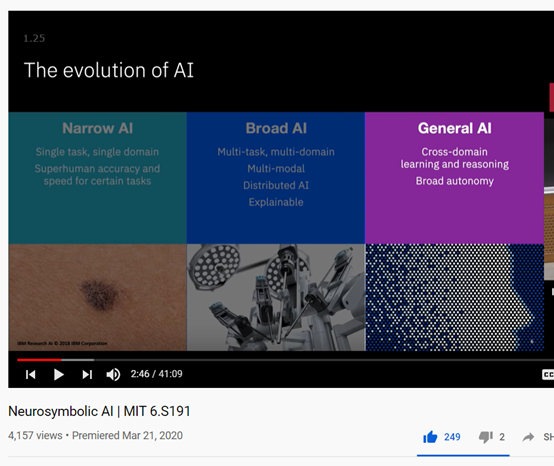
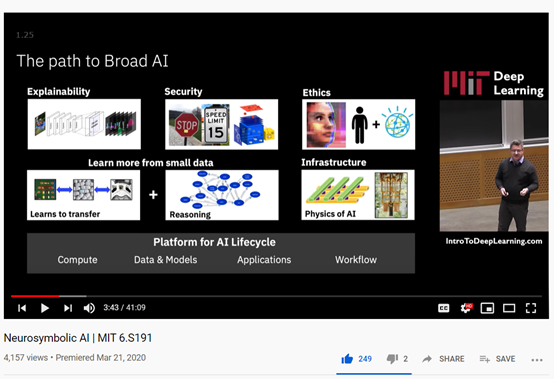
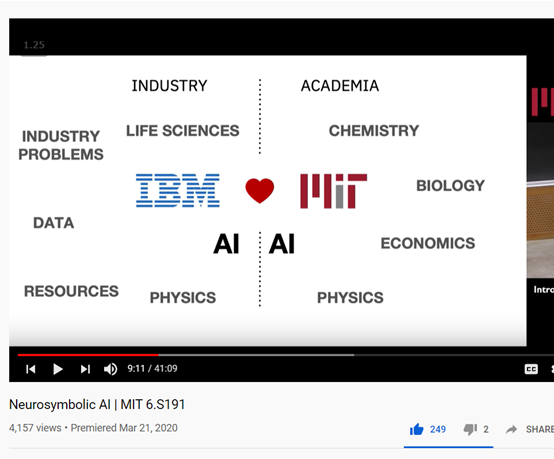
IBM and AI
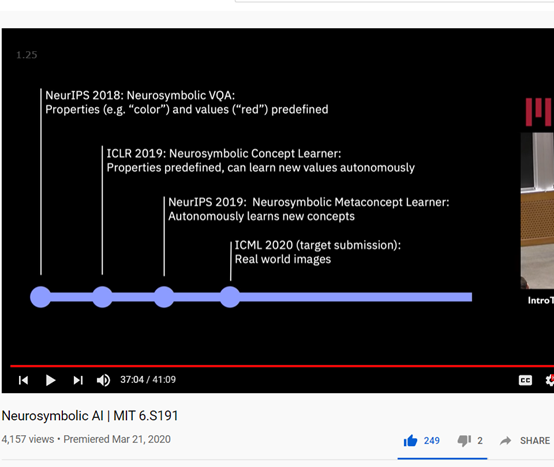
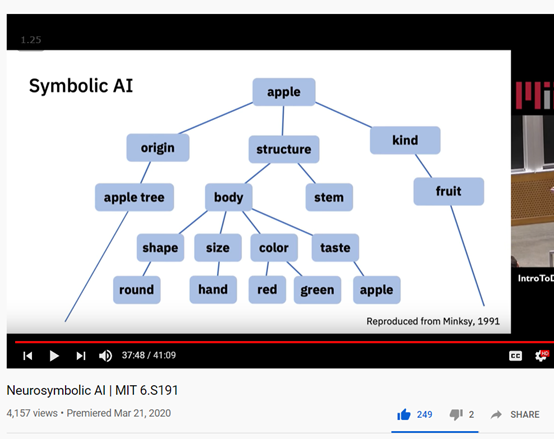
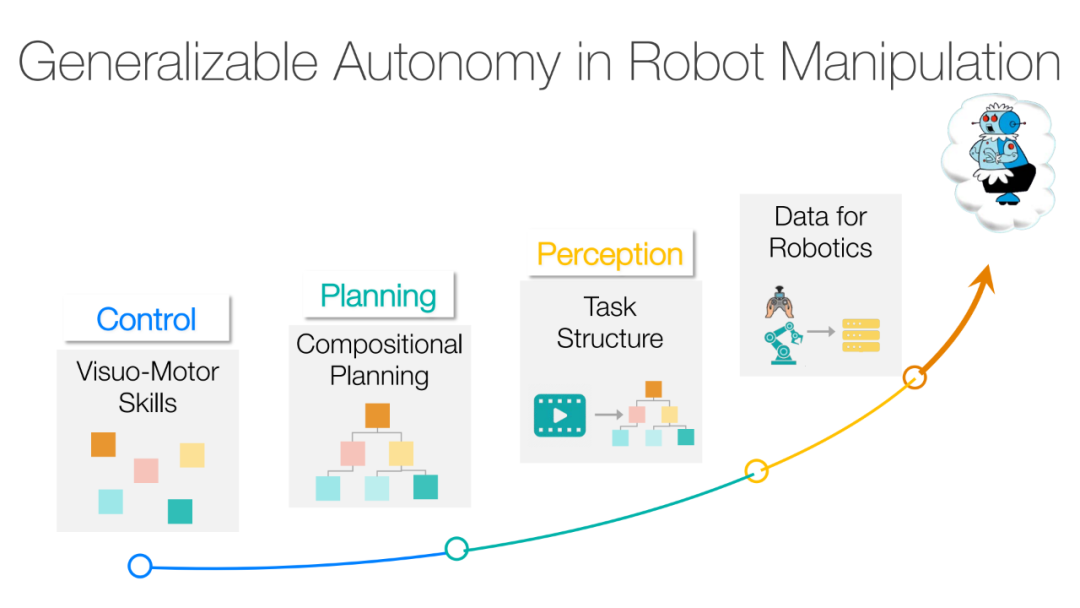
最近的一讲讲了机器人使用的一些学习方法:
http://introtodeeplearning.com/slides/6S191_MIT_DeepLearning_L8.pdf
转载自久章智能(微信公众号,久章智能于 2020-03-31 转载),内容保持原貌,版权归原作者及原账号所有。阅读原文 ↗