"Writing" and "not writing" at this moment
——About "Fang Fang's Diary" and others
Literary critic, professor of Chinese Department of Fudan University
1. “Fang Fang’s Diary” as a spiritual and cultural phenomenon
Writers, critics, or the so-called "intellectuals" and "cultural people" groups who usually have a high profile in the spotlight suddenly encountered an embarrassing topic due to the outbreak of the "new crown" epidemic, that is, how to view the writer Fang Fang's Wuhan Lockdown Diary (referred to as "Fang Fang's diary”)。
Around "Fang Fang's Diary", a series of "Touch the soul" asked.
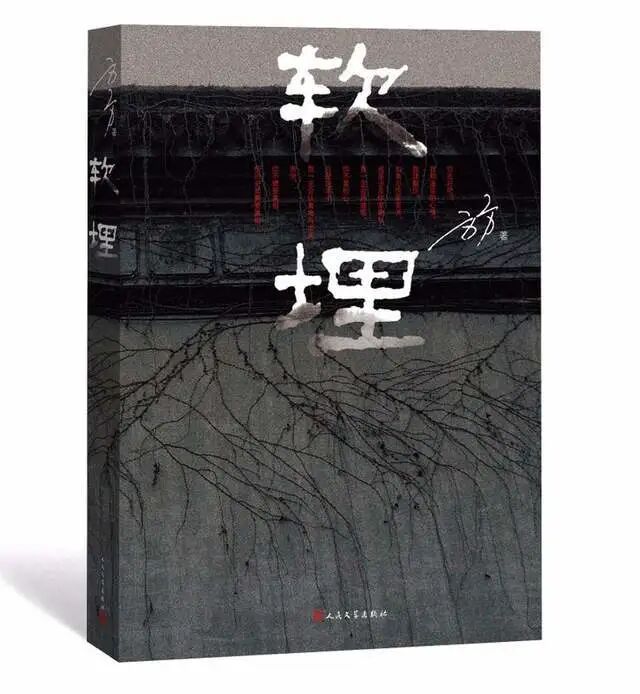
Of Fang Fang's works, I have only seen "Landscape", "Running Fire", and "Grandfather in Father's Heart". I have only read the others, and I have not watched many more. Following Ding Ling's "The Sun Shines on the Sanggan River", Zhao Shuli's "The Evil Cannot Suppress the Good", Gu Hua's "Furong Town", and Zhang Wei's "The Ancient Ship", Fang Fang rewrote the land reform novel "Soft Burial", which was taken off the shelves just after I wanted to read it.
It sounds a bit strange that a professional researcher of "modern and contemporary literature" has not read through the works of the important writer Fang Fang, but it is not surprising. In addition to the artificial limitations of "Soft Burial", there are subjective reasons for the researcher as well as objective reasons.
China is a literary superpower. There are too many writers, and they are generally very productive. Unless you are the editor-in-chief and organize people to work together to create a literary history, you can naturally complete a conceptual reading of all contemporary works. Otherwise, individual researchers can only do selective reading. I haven't written a review about Fang Fang yet, just because I don't have enough time.
This also reminds me once again that even within the scope of professionalism, we can only always cherish shortcomings because "If anyone thinks he knows something, he still does not know what he should know.”
Reading a work and writing a review are two different things. I read many authors over and over again and even wrote reading notes, but I just couldn’t write a review. If there is no excitement, or if what I want to say has been said very well by colleagues who are one step ahead of me, then there is no need to repeat it.
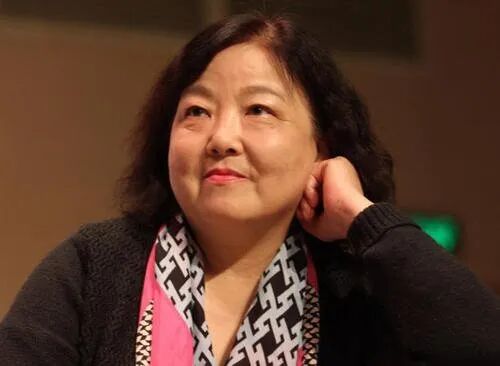
Writer Fang Fang
But "Fang Fang's Diary" is different from Fang Fang's other works. This is when she is in Wuhan, the hardest-hit area.Bypassing state-run media outlets such as the Yangtze River Daily that did nothing or even acted indiscriminately, when most fellow writers chose to remain silent, they directly wrote about the "epidemic" using their personal experiences, feelings and thoughts. This alone has no other outlets, and thus attracted the attention of countless readers.. It is said that a single article of her diary has received more than 40 million views. With reprints on Weibo, WeChat and other online platforms, the total number of views can reach 50 million.
The number of clicks and reads is not important. Another characteristic of "Fang Fang's Diary" is that at first, several articles were inexplicably blocked, and then they were criticized by some "readers" in a very consistent way: they did not write about "positive energy" but only about "dark sides", they complained about and discredited the local government, and some details were inaccurate. Even the author's position and intentions have been questioned, and many scary hats have been slapped on him. This aroused more and more readers to refute, forming a wave of "defending Fang Fang's diary".
In this case,"Fang Fang's Diary" has become an irrefutable spiritual and cultural phenomenon.. If educated people continue to be indifferent, it will be somewhat unjustifiable.
So first of all, it’s not because of what was written in the diary or how it was written, but because of the special publicity gathering effect during the epidemic that forced everyone to stay out of it.
"Fang Fang's Diary" finally quoted a passage from Paul to Timothy, his "true son" born in the spirit, which also attracted various discussions. I don't know if such a reference is appropriate. After all, they are two completely different contexts. But “all things work together for good.” If Fang Fang knew what the “good fight,” “the way to run,” “the faith,” and “the crown of righteousness” are, that would be wonderful. ButSo far, "Fang Fang's Diary" is just a perfect symbol with imperfect content. It clearly points to one point: in the face of a catastrophic disaster, do individuals have the right to speak to the public in their own way?
Regardless of whether you speak out on social media or not, you cannot remain silent in your heart when faced with such a symbol. But I want to emphasize again that it is not "Fang Fang's Diary" itself, but the various "opinions" involving public opinion and the truth inspired by the severe epidemic. Because of "Fang Fang's Diary", it has attracted more readers both inside and outside the literary circle to which the writer Fang Fang usually belongs.
Everyone wants to find out the rights and wrongs.
2. Stand in front of the mirror of the Internet, the pros and cons.
As most areas in Hubei gradually unblocked, Fang Fang announced on March 24 that he would temporarily close the diary after writing the 60th article. The good people quickly sorted out which "celebrities" had scolded Fang Fang and which "celebrities" had stood up to Fang Fang. This provided great convenience for readers who cared about this matter to sort out the ins and outs, right and wrong.
The first thing that touched me was not the diary itself (there are too many news and discussions on the Internet that are more eye-catching than "Fang Fang's Diary"), but the waves of "criticism" of "Fang Fang's Diary".
The ones who took the lead were the original besiegers of "Soft Burial". There is also an anonymous person who goes by the pseudonym "Middle School Student" (it is said to be a self-media writer in Shandong). Then came a doctor of philosophy from Peking University and Professor Zhang Yiwu, also from Peking University.
The people who attacked "Soft Burial" continued to attack the diary during such an epidemic. It can be said that they are persevering and persistent. His views and stance are extremely clear, so there is no need to say anything more. For example, he said that Fang Fang was "counter-revolutionary", while the opponent said that Fang Fang was "not counter-revolutionary". That's it. The remaining issues can be referred to the judicial and functional departments (if they are willing to accept them).
The article for Ph.D. in Philosophy from Peking University is too long, but apart from sending one hat after another to Fang Fang, there is no other content. The reason why there are still people who are willing to take a look is just because he has a Ph.D. in philosophy from Peking University.
Professor Zhang Yiwu of Peking University is a colleague of mine. He could not imagine how large the relics of so many deceased people would be when put together. However, he repeatedly struggled with the authenticity of "a bunch of mobile phone photos" and tried to use this as a breakthrough point to remove the fuel from the cauldron and deny "Fang Fang's Diary" in one fell swoop. This can only make people smile.
It's the one dedicated to Fang Fang"Made for middle school students"The open letter is full of twists and turns and arrogance, constantly accusing others of crimes, while pretending to be ignorant, begging for nothing, and stalking others with an innocent look on their face, thinking that they are getting the trick. It's really like seeing a ghost. What's even worse is that such a malicious "open letter" is disguised as a "middle school student." I wonder if the author has such a middle school student in his family or relatives or neighbors? Would he want his family or the middle school students he knew to do such insidious things? Kind-hearted people are worried, what if this "pseudo-middle school student body" really comes from a middle school student? You were so cold-blooded at a young age, and when you entered university, why didn't you raze all the 985, 211, and "double first-class" programs to the ground?
As for the opinions that affirm "Fang Fang's Diary", like "Fang Fang's Diary" itself, they are all bland and not new. It simply means that when many writers remained silent, Fang Fang stood up and bravely spoke a few words of truth, single-handedly gathering a wave of righteousness. Some details have not been verified, which is worth understanding, because the epidemic is severe and the writer himself has no possibility of conducting interviews everywhere. The main value of the diary is not accurate news reporting, but to provide spiritual companionship and encouragement to readers during the epidemic, to remind and call on local governments to pay attention to the shortcomings of prevention and control work, and to criticize the media for inadequate reporting. That's all. These are fair comments that stick to the bottom line of common sense. Only a handful of commentators were so excited that they could not help but overestimate the achievements of the diary, such as thinking that it could win the Nobel Prize for Literature (Fang Fang himself had never thought about such a thing).
In short, the opinions surrounding "Fang Fang's Diary", both positive and negative, have no profound truth and will not cause too many misunderstandings. Show each other's opinions and attitudes, that's all.
During the epidemic, the Internet was filled with a lot of false information, but if you really want to show your opinions and attitudes towards certain people and things, it still won't be too out of shape. Ordinary people cannot imagine how network technology will develop in the future, but according to its current speed, I am afraid that in the near future, the network will be like a mirror, not only reflecting the blurred image of the speaker, but also letting everyone know that we are "all naked and open."
3. Various “coronavirus writings” other than “Fang Fang’s Diary”
Fang Fang’s diary also led to a popular saying:Facing (going through) the epidemic, why is it that only Fang Fang writes straightly? What are the other Chinese writers, "intellectuals" and "cultural people" doing??
This cross-examination caused Fang Fang to overturn a boatload of people, pushing Fang Fang to the opposite side of "all ----" and "all ----" to the opposite of Fang Fang, allowing "all ----" to bear the moral pressure from Fang Fang alone, and also allowed "Fang Fang's Diary" to gain the backdrop of "collective silence". A friend kindly urged me: "Why don't you write something about the new coronavirus quickly? Writing after the epidemic is over is just an afterthought!" The writer Yan Lianke even said, "I have to thank Fang Fang for picking up writers and literature where they fell on the ground."
Is that true?
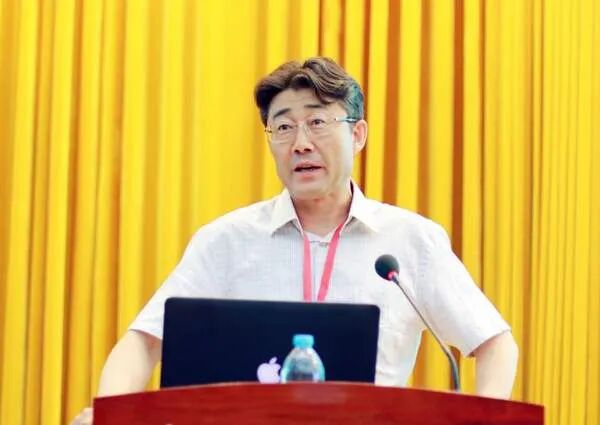
In fact, Fang Fang is not alone in insisting on “coronavirus writing”. Many novelists, poets and cultural figures are writing, but they are either the above-mentioned "siege style" and not worth reading; or they are like the "diary" of Wei Tianzhen, a scholar who was also in Wuhan, such as Chen Guoen, Liu Chuan'e, Tang Yiming, Ding Fan, Chen Jiaqi, Miao Huaiming, etc. Professors and writers Zhao Yu, Zhang Kangkang, Yan Lianke, and Li An defended Fang Fang, as did new poems by Lin Bai, Wang Jiaxin, Du Junfei, etc., old-style poems by professors Hu Xiaoming and Qian Zhixi, and philosophical essays by Tongji University professor and writer Zhang Sheng. All of these undoubtedly belong to "coronavirus writing", but because the "literary" and "academic" nature are too strong, or the argumentation logic is too bizarre (like my colleague Professor Luo Shuhua, who has found a unique way to defend it to the deathAcademician Gao Fu), the number of clicks cannot keep up with "Fangfang Diary". Poems and essays written by Du Junfei and Zhang Sheng that are harmless to humans and animals have been blocked repeatedly. Even so, the reading volume of these "coronavirus writings" in Moments and public accounts is still considerable.
Perhaps it is because of lessons learned from the 2003 SARS and the 2008 Wenchuan earthquake that most of the "SARS bodies" and "earthquake bodies" quickly turned into farce. After the outbreak of the "COVID-19", there were also many "gratitude bodies" and "carol bodies" as usual, but they went to where they should go almost as soon as they came out of the cage. This time, the Chinese writers did not act upon the news and take action. For this reason, even if they are not worthy of praise, they should at least be happy for them.
In addition to professional writers and cultural figures, there are too many wonderful “coronavirus writings” by “amateur authors” (let’s call them that) online. If nothing else, the large number of "whistle-blowing" posts in dozens of languages on March 11 and the following days, not to mention the countless comments about Dr. Li Wenliang being wronged and unfortunately dying of the disease, are destined to go down in history. If it is not so intolerant that it only recognizes the writings of professional writers as literature, then it is not true to say that the Chinese literary community has been "collectively silent" in the face of the epidemic.
Rather, the "new crown" has effectively changed (expanded) the territory of "literature", but it has not changed the basic definition of literature. Since the outbreak of the new coronavirus, we are not in a "silent China" where literature is absent and thousands of people are silent.
4. Various reasons for falling into “silence”
Only a small group of writers, critics, and scholars who are usually active are left to be “tortured.” They either remain silent, or they just play along and are content with "forwarding + commenting" in WeChat Moments. In fact, the collection of this type of writing is quite spectacular, but after all, it has never been like Fang Fang's insistence on on-site tracking and high-density writing for the public. In contrast to Fang Fang, this group was "silent" or did not speak loudly. They really need an explanation for themselves and others.
I don’t know about others, but for myself, as a researcher of “modern and contemporary literature”, experiencing the raging “coronavirus” across the country and even the world, it is impossible to have nothing to say. But there are thousands of words to say, and I don’t know where to start.
First of all, regarding the research and prevention and control of the "new crown", the right to speak should undoubtedly belong to specific functional departments and the majority of medical experts. There is no need for literary people to dictate. What we have to do is no different from the general public. The main thing is to work hard to protect our families and ourselves, keep in touch with relatives and friends more, encourage each other, and try our best to complete our duties during the epidemic ("online classes" will at least increase the workload of our teachers by three or four times).
Secondly, if you want to participate in discussions in the public speech space as a cultural person, you must start from the foundation of the overall civilization. But this one seems too stupid. The second one is that a whole set of words related to epidemic diseases such as filth, crime, repentance, forgiveness, isolation and treatment, gratitude and obedience, facing death, etc. naturally flow freely in the appropriate discourse space, but it is difficult to reconcile with the popular academic, literary and media language.
In the face of a global disaster of this magnitude, the foundation of civilization appears to be vulnerable. On the one hand, there is huge panic and despair, but on the other hand, there are complaints against each other, wanton "passing the blame", and even beggar-thy-neighbor and gloating about others' misfortunes that are constantly amplified and carnivalized. Some internationally renowned scholars have even begun to seriously reflect on and re-evaluate the relative merits of different cultures, customs, and systems in the face of the "coronavirus". It is as if they are standing on the ruins of an apocalyptic situation, and they are still comparing with great interest which broken bricks and tiles are more beautiful.
If all these spiritual phenomena are not elevated to the level of soul-examination, but only discuss modern medicine, social governance, media control, engage in economic forecasts, philosophical analysis, and compare the pros and cons of culture, customs, and systems, or look forward to the reconstruction of the international order after the epidemic, it will always feel inadequate.
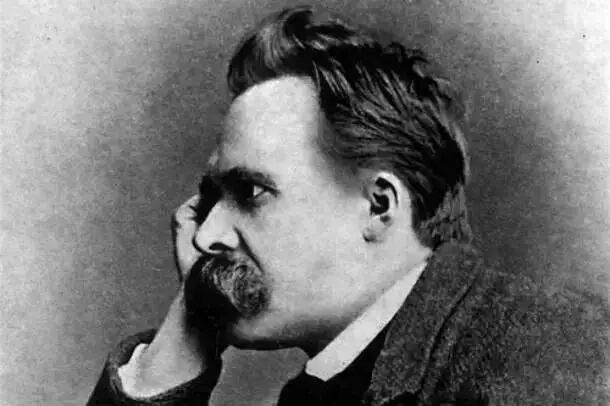
philosopher nietzsche
Nietzsche has long said that the essence of all international relations is the battle for the soul. His words are actually more realistic than "God is dead". But it is not easy to cross all these fields and rise to the level of soul examination and soul torture. The current Internet does not provide a platform for calm discussion or concern. It requires direct confrontation and direct expression of your opinions, likes and dislikes, and people who are willing to "discuss" or "worry" may not like the online debate method.
In shortThe "collective silence" in the intellectual community is due not only to the lack of appropriate language and speech space, but also to the inability of too narrow professional training to cope with the global disease crisis and secondary cultural chaos. This is the inevitable result of the intellectual community’s helpless retreat from the space of public opinion over the past few years and its retreat into professional academic circles.
But many times, people really don’t want to touch the wall of public opinion control anymore. All those in power “do not wear their swords in vain.”The visible struggle of flesh and blood throughout the ages always easily obscures the helplessness and rationality of daily obedience. Confucius' saying, "To speak to someone who cannot be spoken to is to make a mistake," can't it also be used as an excuse for silent people to comfort themselves?
The courage to speak out in protest is always commendable, and there are rights and reasons worth understanding for remaining silent.
5. “COVID-19 writing” can continue, but “anti-epidemic literature” does not need to be anxious
The situation with literature is different.
Indeed, "Articles are written together to suit the occasion; songs and poems are written together to suit the occasion.". Certain literary genres such as "essays" are "the nerves of induction, the limbs of offense and defense" and can be used as daggers and spears. Bai Juyi and Lu Xun are by no means the only two people who have done this in the history of Chinese literature.
Let’s talk about Lu Xun. On the day of the "March 18 Massacre", he responded in the essay "Flowerless Rose", and then wrote an "outrageous and angry" article like "In Memory of Mr. Liu Hezhen". Fang Fang inherited this tradition by putting aside the originally planned novella and writing "Diary" instead.
But there is another tradition in literature, which Lu Xun once said: "Songs should be followed by crying, which must be done after the pain is resolved." The purpose of silence at that time was to accumulate thoughts and feelings. "There is a season for everything, and a season for everything under the heaven". When it comes time to write, things will naturally fall into place. But even then, the events of the times reflected in the "articles" and the specific events referred to in the "poems" were not always so clear and clear.
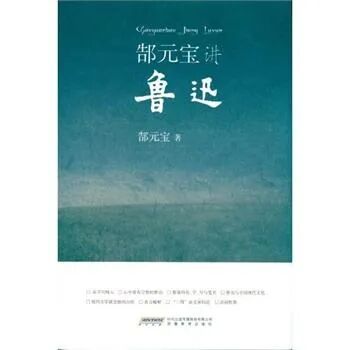
During the Revolution of 1911, Lu Xun did not immediately write literature reflecting the Revolution of 1911. Many years later, "Medicine" and "The True Story of Ah Q" were just side-notes. Lu Xun never wrote a whole article about the May Fourth Movement before or after the May Fourth Movement (or even throughout his life). In Guangzhou in 1927, Lu Xun even declared that there would be no true "revolutionary literature" in the revolutionary era, so that passionate young people asked: "Where is Mr. Lu Xun hiding?" It was two years after the death of the "Five Martyrs of the Left Alliance" that Lu Xun wrote "In Memory of Forgetting".
In the early days of the Anti-Japanese War, literati liked to go to the front line, but later most of them were declined by the military. The soldiers at the front were fighting at the same time as they had to take care of those with pens, which was indeed a bit overwhelming. Facing the eight (or fourteen) years of the Anti-Japanese War, the main debt that Chinese writers owed was not that they did not "enlist in articles" at that time, did not write poems horizontally, and immediately wrote "immortal works of the suffering years", but that after decades, they still did not write literary works worthy of that war.
This is true for the "Resistance War", and everything else can be analogized.
A nation should have the patience to continue waiting for the great "anti-war literature". At present, when the "anti-epidemic" is in full swing, "coronavirus writing" can continue to respond in a timely manner, but there is really no need to worry about when excellent "anti-epidemic literature" will emerge from it.
March 29, 2020
END
Click
Machine-translated from the Chinese original 郜元宝:此时此刻的“写”与“不写”——关于“方方日记”及其他 (published 2020-03-31). WeChat original ↗