|
The second is "reading", which is to find out the location of all genes on the chromosome and understand their functions.
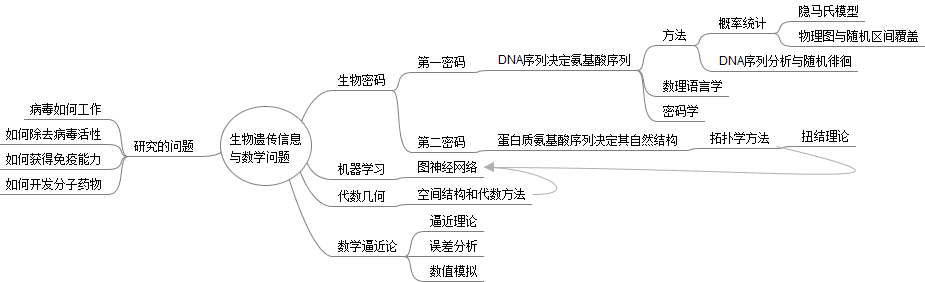
The data after the entire genome is sequenced can constitute a 1 million page book, with only 4 letters appearing repeatedly. How to process, store and analyze this data? This is no longer a problem that biologists can solve alone. It requires the intervention of other disciplines, especially mathematics and computer science. First, some of the most basic knowledge of molecular biology is introduced, and then it focuses on several issues in current human genome research and the mathematical methods and models used.
1. Background and basic knowledge
The basic unit of life is the cell, which is composed of cell membrane, cytoplasm and nucleus. Genetic information is stored in the nucleus. The human cell nucleus contains 23 pairs of chromosomes, which contain DNA (deoxyribonucleic acid) and proteins. DNA is compressed to one ten thousandth through helixing, twisting, folding, etc. and is combined with proteins to form chromosomes.
DNA is a macromolecule composed of two long chains in a helical structure. This helical structure was proposed by Watson and Crick in 1953 and won the Nobel Prize in 1962. It is one of the greatest scientific discoveries of the 20th century.
The segments on the DNA molecule that have biological functions are genes. Genes are composed of several nucleotides arranged in a certain order. Nucleotides are composed of phosphate groups, deoxyribose and bases. There are four different bases, namely: adenine, guanine, cytosine and thymine, represented by A, G, C and T respectively. Nucleotides are also divided into 4 types according to the different bases they contain. On the double strands of DNA, A and T appear in pairs, and G and C also appear in pairs, and each pair is called a base pair.
The genetic code is on the DNA chain. The code is composed of 4 different nucleotides arranged in a certain order, which can be seen as the 4 letters A, G, C, and T. It is estimated that human DNA contains about 3 billion codes, arranged to form at least 100,000 genes. The genetic code of the 20 amino acids that determine human proteins has been found. First, every 3 letters in A, G, C, and T are repeated into a codon, with a total of 43 = 64 codons. Each codon corresponds to an amino acid; but since there are only 20 amino acids, this correspondence can only be many-to-one. For example, AGA and AGG both correspond to arginine. This correspondence has been completely determined and is called a genetic code dictionary.
What makes people amazed is that all life forms in nature share this code. After determining how the triplet code is linearly connected on DNA, the structure of the gene encoding the protein was discovered. The location of these genes on DNA is called the coding region of DNA, which accounts for about 3% to 5% of the entire genome. The rest is commonly referred to as "junk" DNA. More than 40 years of research on the structure of DNA in the coding region has produced dozens of Nobel Prize winners. However, there may be more information contained in the "Junk" DNA. In short, the cell nucleus, chromosome, protein (containing amino acids), DNA (composed of nucleotides), and genes (have codons, which are triplet codes composed of A, G, C, and T).
In 1987, the United States started a human genome research project with two tasks: the first is "reading out", which is to study the sequence of all nucleotides in the human genome; the second is "reading", which is to find out the location of all genes on the chromosomes and understand their functions. In the language of mathematics, the most basic and direct result of the human genome project is to obtain a one-dimensional chain with a length of 3×10⁹ composed of four letters (A, G, C, T) that can be arranged repeatedly. After interpretation, people not only obtain static structural information, but also dynamic four-dimensional (space-time) regulatory information. Currently, about 20,000 full-length genes have been found internationally, and an average of 9 genes can be found every day. It is reported that Fudan University has invented a new technology and can find 15 genes every day. Scientists compare this plan to the Manhattan Project in the 1940s (research on atomic bombs and hydrogen bombs) and the Apollo Project (aerospace and moon landing) in the 1960s.
2. Several mathematical methods currently used in genome research
(1) Probabilistic and statistical methods
Probability statistics is one of the disciplines that entered the field of life science research earlier. As early as the 1940s and 1950s, Fisher and Wright used it to study quantitative genetics. Several examples are given below to illustrate its application in current human genetic research.
※2.1.1 Hidden Markov Model (HMM)
Hidden Markov Models are composed of two random variable sequences: one is an unobservable Markov chain {Yn: n≥0}, and the other is an observable random sequence {Xn: n≥0}. And it is known that there is the following connection between the two: n, and the conditional probability is known. {Yn, n≥0} is called a hidden Markov chain, and {Xn, n≥0} is called its observation chain.
Hidden Markov models have been widely used in speech recognition [2, 3] and began to be used in computational biology in the late 1980s. At present, hidden Markov models are widely used in many aspects of human genome research, such as DNA sequence alignment [4~6], gene finding [7,8], genetic mapping [9], physical mapping [10] and prediction of protein secondary structure [11], etc. The basic ideas of many of these applications are derived from the following Bayesian statistical analysis:
Consider the random model M = (S, PM), and use P (M | s) and P (s | M) to represent P (x comes from model M | x = s) and P (x = s |
(1) Identification problem: Now we observe a sequence s, what is the probability that this sequence comes from model M? According to the Bayes formula, in order to calculate P(M | s), two prior probabilities P(M) and P(s) need to be known. But it is often difficult to achieve in practical problems. You can take a step back and consider the following judgment issues.
(2) Discrimination problem: Consider another random model N = (S, PN). Based on the observed sequence s, determine whether s comes from M or N? At this time, the answer can be obtained by comparing the sizes of the two conditional probabilities P (M | s) and P (N | s). It can still be obtained by Bayes formula.
The following uses the "array arrangement problem of multiple DNA sequences" as an example to illustrate how to build a Hidden Markov Model (HMM) on DNA sequences.
Suppose there are r DNA sequences. Among them, an array arrangement of the sequences a1, a2,..., ar is defined as: inserting the gap symbol "-" (gap) at different positions in a1, a2,..., ar, so that it becomes L≥max{n1,..., nr}. Obviously, for the given sequence a1, a2,..., ar, there can be many different array arrangements. For example, they are all array arrangements of the sequences a=AGGT, b=ATGTG.
The purpose of introducing array permutations is to discuss the similarity between sequences. To this end, we define functions and find those permutations that minimize d(a1, a2, ..., ar), which are called "optimal array permutations". Since the number of all possible array permutations increases exponentially with the length of the sequence and the number of sequences, for example, when r = 2, n1 = n2 = L = 1 000, the number of all possible array permutations is approximately 10,600 [12]. It is unrealistic to directly compare one by one to obtain the optimal array arrangement, and other algorithms must be found. Recently, HHM has been used to solve this problem and good results have been obtained (see literature [4, 13]). The hidden Markov model (HMM) can be established as follows: the hidden Markov chain Yn has three states: M (pairing), I (insertion), and D (deletion); the observable sequence M) Generate a letter at this position. If it is insertion state I, insert a letter at this position with probability Pk(a | I). If it is deletion state D, delete the letter at position k. The transfer matrix of the hidden Markov chain Yn is P(yk+1 | yk). So when the hidden Markov chain Yn moves N+1 steps, two sequences can be obtained. One is the state sequence: y0 (start), y1, ..., yN, yN+1 = ML+1 (end) (not observable); the other is the letter sequence: x1, x2, ..., xV, V≤N (observable). When yi is M (pairing) or I (insertion), the generated letters are recorded as xli, then the probability distribution of the state sequence y=y0, y1,…,yn,yn+1 and the letter sequence x = x1, x2,…, xV is (where, therefore, the probability of the sequence x = x1, x2,…, xV appearing is). The unknown parameters k=0,…, N in the model can be estimated using the training set.
※2.1.2 Physical graph and random interval coverage issues
Mapping is a major task in the human genome research project. Mapping can determine the location of genes and other functional regions on the DNA sequence. The key diagrams are physical diagrams and genetic diagrams. The genetic diagram locates the relative positions of known genes on chromosomes through correlation analysis; the physical diagram locates a set of markers on chromosomes and estimates the mutual distance between them. Each marker point can be a known gene or not. A physical map of the entire human genome has now been constructed with 30 000 marker points, each located at an average distance of approximately 100 kb (kilobases).
In the process of making physical diagrams, the following random interval coverage problem is encountered: Suppose M is a given interval (equivalent to a chromosome), whose length is G; I is a set of random intervals, the distribution of the interval lengths of its elements is known; P is a set of random points, whose points are randomly distributed on the interval M. An interval is called anchored if it contains at least one element in P. Two intervals in I are called connected. If their intersection contains a point in P, all connected intervals are formed into a new interval with the smallest point in P they contain as the left endpoint and the largest point in P they contain as the right endpoint. is called a contig. The question is: How many elements in I and elements in P should be selected so that all contigs almost cover the interval M? For example, the average coverage ratio of M reaches 99%. This problem has been solved satisfactorily by Arratia et al. [14].
※2.1.3 Colon cancer and large deviations in medical discovery
Colon cancer is a disease in which genetic factors dominate, with a high incidence rate in some families and inheritance. In 1991, Kinzler et al. reported (see literature [13]) that colon cancer is related to mutations in a genetic gene called APC located on the long arm of chromosome 5. But further research later showed that people with APC gene mutations had very different levels of infection. A year later, Dove and colleagues found a similar population in mice, called Min, that was highly susceptible to colon tumors. They also found another population, AKR, that was resistant to colon tumors. In order to further clarify the reason, Lande et al. conducted a reverse generation hybridization experiment and analyzed the data obtained from the experiment to test whether colon tumors were related to a certain genetic gene. For a fixed position x on each chromosome, the statistic Z(x) is introduced. If there is no mutated gene on this chromosome, then at any position Lander et al. proved that Z(x) is an Ornstein-Uhlenbeck process with parameter X=2 in the problem they discussed. Reusing the results of Feingold et al. (see literature [15]), it can be seen that for sufficiently large t
where X(t) is the standard normal distribution function and G is the length of the chromosome. Using the above results, Lander et al. found that there is a special region on the fourth chromosome of mice that is related to colon tumors. The confidence level of the hypothesis test was 0.002 [16, 17].
※2.1.4 DNA sequence analysis and random wandering
The DNA sequence is a sequence composed of 4 letters A, G, C, and T. Voss and Li-Kakeko conducted spectrum analysis on this in 1992. In the same year, the work of Peng et al. revealed the existence of long-range correlation in DNA sequences, which aroused people's interest. The way to discover this correlation is to list the DNA sequence as a one-dimensional random wander: starting from the first base (i.e., the first letter), if it is a purine base (i.e., A or G), it will go one step to the negative, and if it is a pyrimidine base (i.e., C or T), it will go one step to the positive. Record the net displacement after n steps as fn, n =1, 2, …, L, L is the sequence length. Calculate the mean square error of the displacement in a window of length l, and then sum the entire sequence to obtain the Peng function F(l). They found that for certain sequences (so-called sequences with introns)
Therefore, it is believed that there is a long-range correlation between the bases in this sequence. Long-range correlation is a research hotspot in DNA sequence analysis, and it can appear at positions thousands of bases apart. Luo Liaofu tabulated DNA sequences as two-dimensional random wandering, and Zhang Chunting proposed a spatial curve representation of DNA sequences, both of which achieved good results (see literature [18]).
§2.2 Topological methods
The order in which the bases are arranged on DNA is called the primary structure of DNA. The double helix structure of double-stranded DNA is called the secondary structure of DNA. The central axis of the double helix (the line connecting the midpoints of each base pair) is also twisted into a spiral,called supercoiling, it can be knotted and is the third-level structure of DNA. The DNA molecular chains of the 46 chromosomes in human cells can reach up to 1.8 meters in length and are curled up in the nucleus, just like a 200-km-long fishing line squeezed into a basketball [19]. It is a very important issue to study the secondary and tertiary structures of DNA, the three-dimensional shape and behavior of double helices and axes, and their biological functions. Topology and geometry, especially knot theory, are powerful weapons for analyzing this problem.
In fact, around 1969, the American topologist Fuller studied closed band shapes at the request of molecular biologists studying DNA, and obtained essentially the same results as White's formula. Incidentally, proteins also have tertiary or even tertiary structures. The base sequence in DNA determines the primary structure of the protein, that is, the amino acid sequence. After synthesis, proteins spontaneously fold into a precise tertiary structure before they can perform functions such as catalysis, regulation, chemical transport, flow, and structural support. People call "DNA sequence determines amino acid sequence" the first code of life, and "protein amino acid sequence determines its natural structure" is called the second code. Deciphering the second code is of great significance, in which geometry and topology must be used (see literature [19]).
§2.3 Mathematical linguistics and cryptography methods
Language is a tool for humans to express and transmit information. Similarly, DNA sequences are also used to express and transmit human genetic information. Should DNA, a "heavenly book" written with 3 billion characters (A, G, C, T) with no punctuation or sentence breaks, also correspond to a certain "language"? If you can master its "language", you can understand it. American scientists Zipf and Shannon used two standard linguistic experiments to analyze DNA. The results of Zipf's experiment found that "Junk" DNA has the same characteristics as human language, that is, the logarithm of word frequency and the logarithm of word ranking are linearly related. The results of Shannon's experiment also showed that "Junk" DNA has a large degree of redundancy, which is consistent with human language, while the coding region of the DNA does not show any of the above language characteristics. Chen Runsheng et al. proposedAnalyzing DNA sequences using cryptographic methods, and achieved some good results. The mathematical study of language began with Chomsky, and it would be very meaningful to explore the transmission of genetic information from the perspective of formal language (see the article by Peng Shouli and Liu Ciquan in Section 3.3 of [18] for details).
3. Gene mutation
Genes are generally stable, but under the influence of internal and external factors, some genes will mutate or be damaged. Gene mutations can sometimes lead to genetic diseases, but they can also produce new populations, leading to evolution. Mutation and selection are the driving forces of evolution. Common mutations are base substitutions (such as A, G swap, C, T swap, etc.) and gene deletions, or various insertions, duplications, inversions, etc. So far, there has been much work discussing mutations induced by external sources, such as chemical mutagenesis, radiation, ultraviolet irradiation, etc. Do genetic mutations also have inherent randomness similar to quantum jumps? Monod believes that a mutation in DNA, as well as the overproduction, disappearance or functional change of a certain protein caused by the mutation, are essentially accidental. Intrinsic genetic mutations become the inherent noise of the cryptographic system. Mutations occur randomly in a population.
Monod also believed that the amino acid sequence of proteins is also random. He said, “If a certain protein contains 200 amino acid residues, even if the exact sequence of 199 is known, the remaining one cannot be predicted (see literature [20], p. 71). The probability of mutation occurring at the 1st, 2nd or 3rd position of the codon is different, and the 3rd position is more susceptible to mutation. From DNA to protein, there is uncertainty, resulting in Crick wobble. For example, the p53 gene is the most frequently mutated tumor suppressor gene, and its mutation can cause cancer; the p73 gene is similar, and the Tau gene is located on the short arm of chromosome 1 and is related to dementia. Regarding tumors, it is currently believed that they originate from certain gene changes, causing cell mutations and abnormal proliferation. A single gene change is not enough to form a tumor. The occurrence of tumors is the result of the point mutations of multiple genes in a certain sequence. For example, lung cancer mostly changes from G to T, and colon cancer mostly changes from G to A.
Regarding mathematical research on gene mutations, there are some probabilistic and statistical analyzes (see literature [1]), but a truly effective mathematical model has not yet been seen. Mutations are rare, and the mutation rate of higher organisms is about 5%-8%. Statistical physics studies high-probability events, while life sciences mostly deal with low-probability events. The emergence of life itself is a low-probability event.
In addition to genetic mutations, chromosomal aberrations can also occur. There are two main types of aberrations. One is chromosome number aberration, in which several chromosomes are added or lost; the other is chromosome structure aberration, in which chromosomes are broken. The broken fragment is not connected to the broken end and is lost; or the fragment is connected to the corresponding part of the homologous chromosome and repeated; or the fragment is inverted and connected to the broken end, causing the order to be reversed, etc. The result may cause congenital stupidity, leukemia, etc.
4. Conclusion
Nowadays, the amount of data on biological sequences (mainly DNA sequences, RNA sequences, protein amino acid sequences, etc.) obtained every day is increasing at an exponential rate. According to the usual methods of processing data in laboratories, only a very small part of this data can be processed.
On June 26, 2000, the International Human Genome Project Collaboration Group composed of the United States, Britain, Japan, France, Germany, and China simultaneously announced in six countries that the human genome working framework map (a sequence map covering 90% of the human genome) was completed. If we say,The human genome is a heavenly book that contains the secrets of human life, this work means that humans have deciphered most of the words in this book. This is another milestone in mankind's great journey of understanding itself and exploring the mysteries of life.
On February 15, 2001, the Human Genome Project collaboration group jointly published a paper titled "Preliminary Determination and Analysis of the Sequence of the Human Genome" in the world-famous scientific magazine "Nature", which showed that humans have initially understood part of the content of this heavenly book. The data after the entire genome is sequenced can constitute a 1 million page book, with only four letters appearing repeatedly, with no grammar or punctuation found. How is this data processed, stored and analyzed?
This is a difficult problem faced by mathematicians, physicists and biologists, and it is necessary to apply existing mathematical methods or even develop new mathematical methods and theories to meet this challenge. On the other hand, the highly developed genome-related databases and Internet technology enable scientists from all over the world to obtain information and data to be analyzed in a timely manner. Therefore, the basic conditions for engaging in theoretical research are similar to all scholars. We should seize this great opportunity.
Not long ago, the famous molecular biologist Gilbert, winner of the Nobel Prize, wrote an article in Nature and pointed out that molecular biology has now entered a stage of parallel development of experiment and theory. In fact, after more than 10 years of development, bioinformatics, an emerging discipline, has been formed by applying probability theory, mathematical statistics, computers and other disciplines to molecular biology. The main content and methods of its research can be found in the literature [21-23]. Mathematical ideas and methods have been widely used and successful in physics. It is believed that in the 21st century, its application in molecular biology will have a profound impact on the entire biological discipline.
|