At the beginning of 2020, it is time to look back on the past and look forward to the future. Over the years, our team has been adhering to its original intention to extend modern geometric topology theory to the field of computer science and apply it to engineering and medical fields. We believe that many of the most basic problems in engineering fields, especially open problems that have attracted the attention of engineers for many years but have not achieved substantial breakthroughs, have very profound geometric or topological theories behind them. The fundamental reason for the long-term stagnation of engineering problems is that engineers do not thoroughly understand the nature of the problem from a theoretical level, but try to use engineering thinking habits and methods to solve it. Ultimately, we must use cutting-edge, modern theories to explain it and find engineering solutions.
In 2019, we insisted on using optimal transmission theory to understand generative adversarial networks (GAN), especially using the regularity theory of the Monge-Ampère equation to explain the mode collapse problem; we used the representative class theory of complex fiber bundles to explain the quadrilateral grid singular point configuration problem in computer-aided design; at the same time, we used conformal geometry to extend topology optimization from Euclidean space to curved manifolds.
Deep learning and optimal transmission
In 2019, deep learning is still advancing rapidly, and theoretical progress lags behind seriously compared with the application level. We have worked closely with Mr. Yau over a long period of time to understand generative models using optimal transport and Monge-Ampere equation theory. We believe that the intrinsic reason for the success of deep learning is that this method can capture the essence of big data. The essential pattern of big data can be summarized as the following physics law: a type of natural data can be regarded as a probability distribution on a low-dimensional manifold embedded in a high-dimensional space. Deep learning has two main tasks: one is to learn the manifold structure, which is expressed as encoding and decoding mapping. The parameter space of the manifold is the latent space or feature space; the other is probability distribution transformation, which is to transform white noise into data distribution. The only function of a deep neural network is to express a continuous mapping between Euclidean spaces. Therefore, in the field of statistical deep learning, all data are represented as mappings, and probability distributions are also represented as mappings, that is, the transportation transformation (transportation map) from white noise to a given probability distribution. Therefore, statistical deep learning can be expressed by the category language, whose category is {probability distribution on manifolds, mapping between manifolds}.

The essence of learning manifold structure is to fit the encoding and decoding mappings, which can be understood using the classic function approximation theory, especially the theorem of Kolmogorov and Arnold: any continuous function can be expressed as



Here is a monotonically increasing function independent of, and dependent on. The activation function in deep learning can be understood as the purpose of training is to learn the function. However, the dynamic mechanism of the deep learning process is usually not clear at present, and there is no quantitative analysis theory for the convergence of the optimization process and the existence and uniqueness of the solution. In contrast, the learning process of reinforcement learning boils down to the compressed mapping fixed point theorem, and the theoretical framework is clearer.
Probability distribution transformation can be explained by the classic optimal transmission theory: there is an optimal transmission transformation between any two probability distributions, and its transmission cost defines the Wasserstein distance between distributions. The generator of GAN essentially calculates the optimal transmission transformation, and the generator calculates the Wasserstein distance. According to Brenier theory, the optimal transport map is the gradient map of the Brenier potential energy function, and the Brenier potential energy function satisfies the classic Monge-Ampere equation:
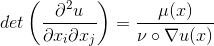
From the Minkowski and Alexandroff theories in convex differential geometry, the Monge-Ampere equation boils down to solving a special type of convex polyhedron. We developed a geometric algorithm based on the variational principle, transformed the optimal transmission problem into a convex optimization problem, and applied it to the GAN model, thereby making the black box transparent.
GAN training is very unstable, difficult to converge, and too sensitive to hyperparameters. When learning the distribution of multiple modes, often only some modes are learned and other modes are lost. After imposing rule terms, although GAN covers all modes, it will generate false samples. These phenomena are called so-called Mode Collapsing. Mode collapse is one of the main obstacles hindering the promotion of deep learning technology in practical applications. According to Brenier's polar decomposition theorem (Polar Decomposition), all probability transformations can be decomposed into the composite of optimal transmission mapping and measure-preserving automorphism. According to the regularity theory of the Monge-Ampere equation (such as the work of Wang Xujia and Figali), usually the overall optimal transmission map is discontinuous. But deep neural networks can only represent continuous mappings, and this essential contradiction reveals the underlying cause of pattern collapse.
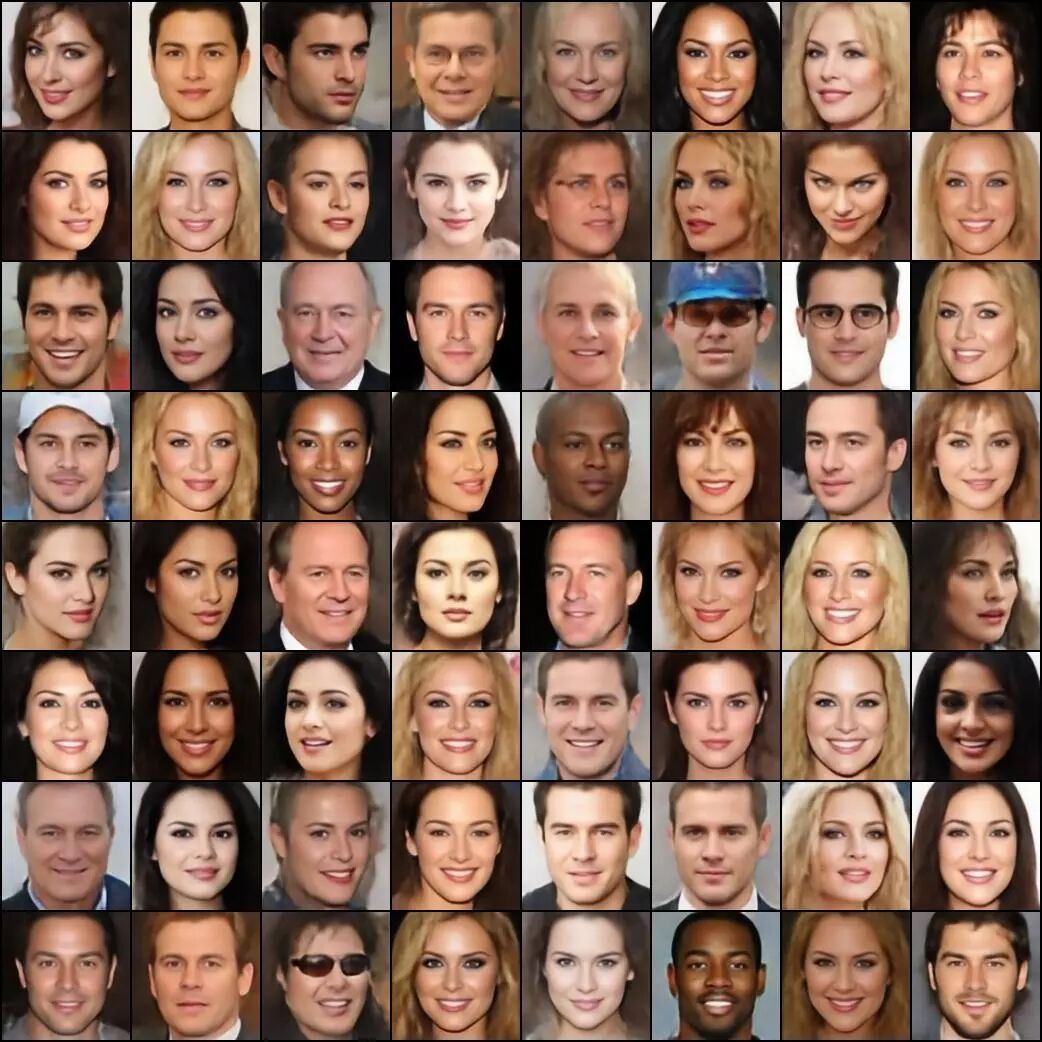
Figure 1. Face image generated by the geometric method based on optimal transmission.
For example, we use GAN to generate face images. Each face image is regarded as a point in high-dimensional space, and all face images form a point cloud distributed near a certain low-dimensional manifold. We use deep learning methods to reduce the dimensionality of the manifold to the latent space, and the density distribution of the point cloud on the manifold is mapped into a probability distribution in the latent space. We use optimal transmission mapping to transform white noise into the latent space distribution of data in the latent space. The set of discontinuous points of the optimal transmission map corresponds to the edge of the face image manifold, that is, the face image appears reasonable, but the probability of appearing in real life is zero. For example, all our training samples have either black eyes or blue eyes. Using this method we can find face images with one eye black and the other eye blue, which are located at the edge of the face image manifold.
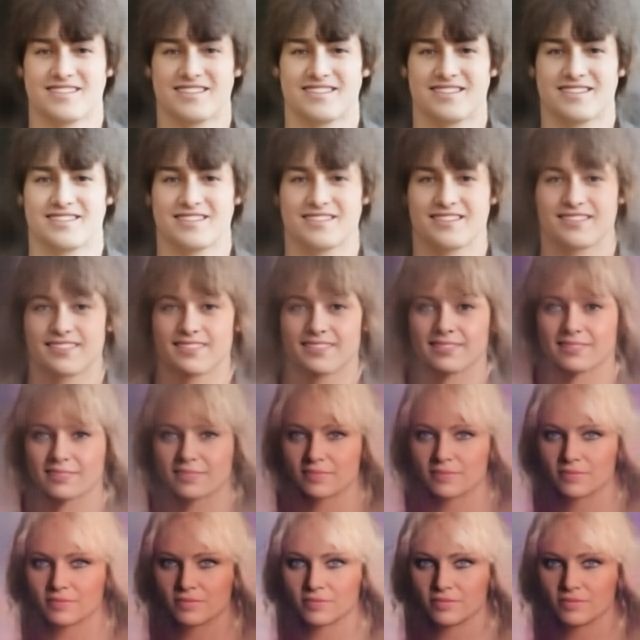
Figure 2. The edge of the face image manifold found based on the regularity theory of the Monge-Ampere equation.
During 2019, our team received a large number of emails from scholars around the world, asking for details of optimal transmission theories and algorithms, and discussing specific applications in various deep learning models. Many scholars have also sent us letters of thanks. They were inspired by our theory, applied optimal transmission to deep learning, and published it in top conferences and journals on deep learning. Not long ago, at the Tsinghua Sanya Mathematics Forum, Lao Gu met Professor Huang from Hunan University and Professor Tan from South China University of Technology. Professor Huang is engaged in theoretical research on the Monge-Ampère equation and the Minkowski problem, and Professor Tan studies the application of optimal transmission theory in deep learning. They have both made remarkable achievements in their respective fields. Lao Gu discussed relevant academic issues in depth with them, and once again felt the guidance of pure mathematical theory for practical engineering applications, and the promotion of pure theoretical research by the actual requirements of engineering. It seems that few such profound and abstract theories have spread so rapidly in the field of engineering. From the conference center, you can overlook Tianya Haijiao, a famous scenic spot in Sanya. Optimal transmission theory and deep learning made Lao Gu meet a close friend in Tianya Haijiao.
In addition to Mr. Qiu Chengtong's Monge-Ampere equation theory, our work also uses the optimal transmission theory results of Professor Cédric Villani, the 2010 Fields Medal winner, and the regularity theory results of partial differential equations by his student Professor Alessio Figalli, the 2018 Fields Medal winner. Professor Villani introduced our work at the New Frontiers in Mathematics 2018 conference in London [1]. Professor Figalli also quoted our work at the DEA2019 Conference (Dynamics, Equations and Applications) held in Poland [2]. The participation of mathematicians will greatly promote the development of artificial intelligence theory.
Computer Aided Design and Fiber Cluster Properties
Almost all the tools we use in our daily lives are products of computer-aided design and are represented as so-called spline surfaces. For example, a simple toothbrush is injection molded by a mold, and the metal mold is first expressed as a spline surface and then processed by a CNC machine tool. The premise of spline surface design is the generation of surface quadrilateral mesh, that is, the surface is divided into quadrilateral meshes. The vertices on the quadrilateral mesh whose topological degree is not equal to four are called singular points, and the position and topological degree of the singular points are called the configuration of the singular points. The key to quadrilateral mesh generation is how to determine the configuration of singular points, which is one of the most basic issues in the field of computer-aided design (CAD).
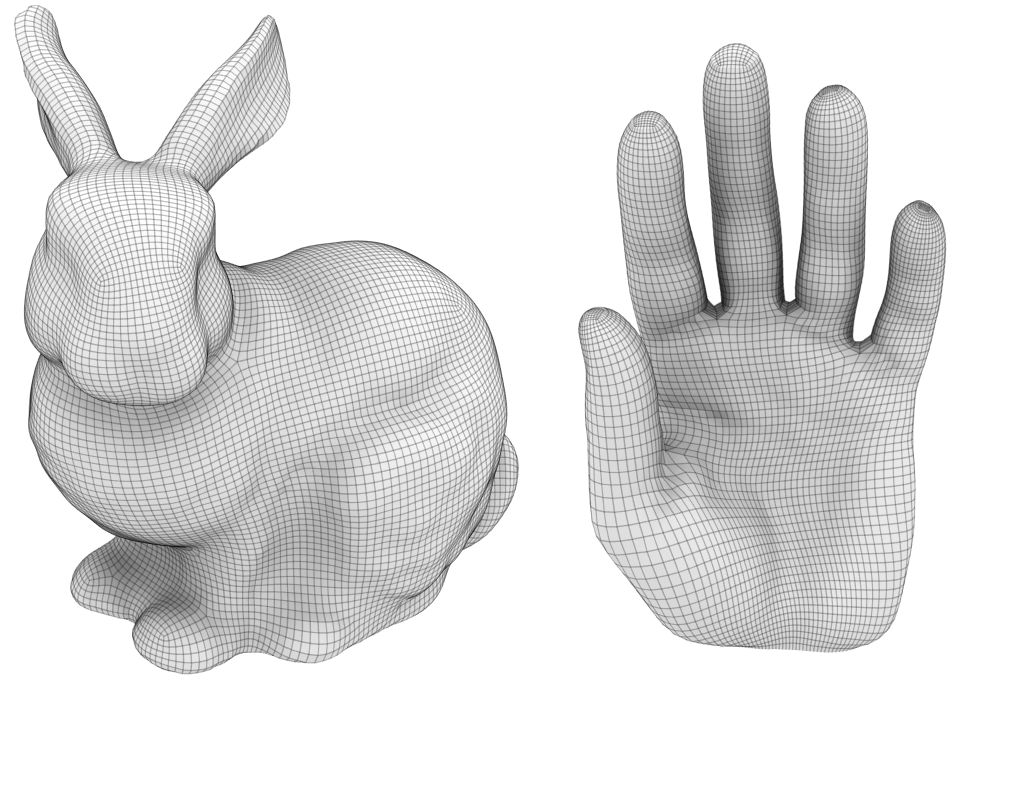
Figure 3. Surface quadrilateral meshing.
Although CAD is closely related to people's daily lives, there are many practitioners, and research in the field of CAD has a long history, this basic problem has not been fundamentally solved. Previous research mainly focused on the topological structure of surfaces, but in the real world all surfaces are Riemann surfaces and have conformal structures. Therefore, we believe that the essence of this problem lies in conformal geometry. We finally solved this problem using the representative class theory of polyline bundles. We have proved that each quadrilateral grid is equivalent to a meromorphic fourth differential on the Riemann surface, which can be regarded as a section of the fourth power of the holomorphic cotangent bundle of the Riemann surface, and the singular points (configurations) of the quadrilateral grid can be regarded as the representative class of this holomorphic line bundle. Therefore, different
The configurations of the singular points of the quadrilateral grid are equivalent to each other, that is, they differ by one principal divisor (the divisor of a certain global meromorphic function). Therefore, under the Abel-Jacobi mapping, the principal divisor is mapped to the zero point of the Jacobi cluster.
We are surrounded by industrial design products all day long, but we are unable to understand the basic problem of geometric design, the singular point configuration of the quadrilateral grid, which has troubled us for many years. Although we can choose to ignore it and live with it, or wait for others to reveal its secrets, we can never tolerate the chaos of thought. When we see through the essence of this problem, we find that its depth is far from elementary, and the problem cannot be solved without the representational class theory of polyline bundles. Perhaps this is the first profound application of the theory of polylinear bundles to date in the field of computer science.
As disciples of Mr. Chen Shengshen’s school, we are familiar with the theory of vector cluster representational classes. However, our original understanding of this theory was too superficial, and we never imagined that Chen’s class theory can be used to solve the most basic problems in the field of mechanical design. In the field of computer science, there is no precedent for applying polylinear bundle theory. Although engineers invented spline theory based on intuition and developed it into the basis of modern industry, from automobile manufacturing to aerospace, from CNC machine tools to daily necessities, we almost always rely on the results of spline theory, but its theoretical foundation is not perfect. In their daily design work, the majority of engineering designers still rely heavily on human spirituality to manually make up for theoretical flaws. People are accustomed to this and regard this manual skill as a "unique skill." Indicative class theory transforms this unique skill into a strict algorithm, replacing the spirituality of manual work with the iron laws of nature.
Topology optimization and conformal geometry
In 2019, our team and Professor Chen Shikui's team systematically extended the topology optimization method from the Euclidean plane to surfaces with Riemannian metrics. With the vigorous development of three-dimensional printing technology, topology optimization has increasingly become a hot spot in the field of mechanical design. The topology optimization method optimizes the layout of materials in the design space, so that the system performance can be optimized under the constraints of meeting given mechanical conditions. For example, in automobile design, on the premise of ensuring safety, how to optimize automobile parts to reduce the weight of the car body to achieve fuel saving, the key technology lies in topology optimization.
Topology optimization can be described as a variational problem in which the distribution density function of the material is an unknown function that satisfies specific partial differential equations and integral inequalities, and the optimization target is a certain energy functional. Traditional topology optimization methods boil down to solving differential equations in Euclidean space, such as using the finite element method or the level set method. However, in industrial practice, mechanical design components are often curved surfaces, which requires us to extend the topology optimization method from planes to curved surfaces, and from Euclidean space to Riemannian manifolds. Equivalently, we need to generalize traditional differential operators into covariant differential operators under the Riemannian metric.
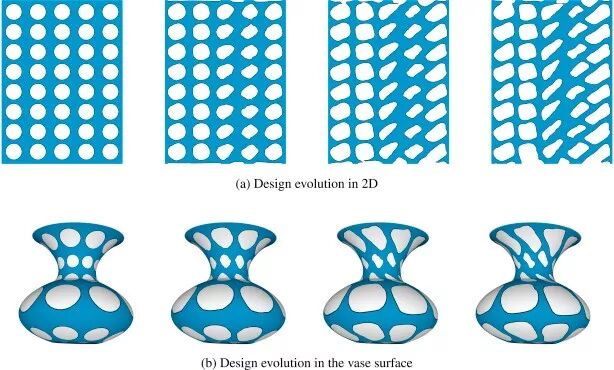
Figure 4. Topology optimization on curved surfaces.
Conformal geometry can map all surfaces with Riemannian metrics conformally to planar areas, convert the Riemannian metric into a scalar function, and the covariant differential operator has the most concise form, so that traditional topology optimization methods can be directly extended to curved surfaces. As shown in Figure 4, we use topology optimization method to design the reinforced structure of a vase. Using conformal mapping, we map the curved surface to a planar area and solve the differential equation on the plane.
This method is applicable to all surface shell structures, with automatic conversion of differential operators, complete theory, and efficient algorithm, and has great potential to be applied in industrial practice.
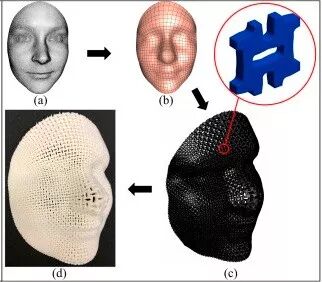
Figure 5. Metamaterial surface design.
The same approach works for metamaterial design on curved surfaces. Metamaterial design begins by designing the geometry of each unit, and then periodically repeats this unit to assemble the overall material. Metamaterials have special mechanical properties that are not available in natural materials. Traditional metamaterials are designed in Euclidean space. Through conformal geometry we can construct metamaterial surfaces. Figure 5 shows a human face surface composed of a two-dimensional negative Poisson's ratio metamaterial.
Macroscopic thermodynamic phenomena can be explained by microscopic Brownian motion. Conformal transformation maintains Brownian motion, so Laplace's equation and Poisson's equation are conformally invariant. Therefore, the heat conduction problem on the curved surface can be reduced to the heat conduction problem on the plane with the help of conformal mapping. It can be seen that in the field of engineering, any method that operates on a flat area can be extended to a curved surface with a Riemannian metric through the conformal geometry method. This rule is universal.
Thoughts
The biggest feeling in 2019 is that in order to solve basic problems in the engineering field, we must use advanced geometric topology theory. In the field of engineering, in order to solve practical problems in production, people use a large number of empirical methods and develop various algorithms that are not rigorous but are effective and are widely used in society. However, in order to prove the rigor of these methods, the theoretical tools required are not within the scope of current engineering science, and new mathematical concepts and theories need to be introduced. On the one hand, for students with an engineering background, learning and mastering modern theoretical tools requires a huge amount of time and energy; on the other hand, it is even more challenging to understand the basic issues in the engineering field and find appropriate theoretical tools. This kind of work is quite difficult. At the same time, it is not valued by the industry, and it is also a remote direction that deviates from the mainstream in academia. Therefore, many students in our team have turned to more practical and popular directions. However, we believe that solving basic problems has more long-term historical value than pursuing the number of published papers and indexes.
We expect that in the near future, the geometric algorithm of optimal transmission and the CAD algorithm based on polyline clusters will be adopted by the industry; we also expect that the optimal transmission theory will become a classic content of AI textbooks, and the theory of polyline clusters will become an indispensable chapter in CAD textbooks. We are confident about the future!
【1】https://www.youtube.com/watch?v=6DZjBcDfPHs
【2】https://www.youtube.com/watch?v=iLcOWynTRxw&t=2958s
Machine-translated from the Chinese original 基本工程问题是否需要前沿几何理论? (published 2020-05-03). WeChat original ↗