In the spring of March, everything revives. After spending the longest winter in our lives, spring is finally ushering in the bright sunshine and full of vitality. Because of the raging epidemic, the pace of life in New York has suddenly eased a lot, and my mood has become calmer, so I can calmly organize my manuscripts and concentrate on mathematical deductions and computer programming and debugging.
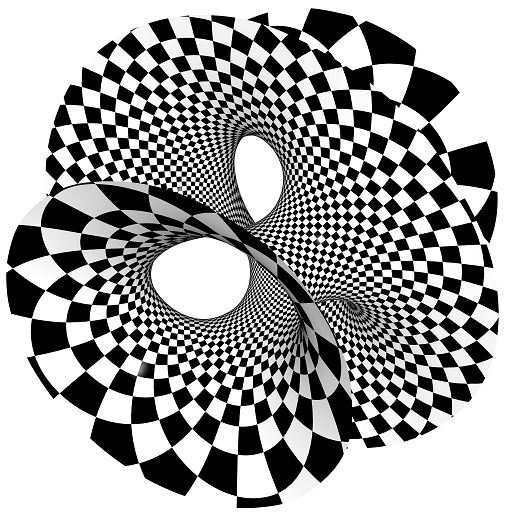
Picture used on the cover of the book: Costa’s conformal structure of minimal surfaces.
The textbook "Computational Conformal Geometry (Theoretical)" written by Mr. Qiu Chengtong and Gu Xianfeng for ten years has finally been completed and has entered the proofreading stage. It will be printed soon and will be jointly published by Higher Education Press and Boston International Press.
Ten years of sharpening a sword
In 2009, Mr. Yau established the Yau Center for Mathematical Sciences at Tsinghua University. Mr. Qiu worked hard and personally introduced mathematics talents from all over the world, from young talents to academic masters. He led all the scholars, teachers and students in the center to raise Tsinghua’s world ranking of mathematics to the top twenty in ten years, surpassing Peking University. Every summer, Mr. Qiu invites scholars from all over the world to give lectures at the center. Thanks to Mr. Qiu's favor, Mr. Gu has also taught the summer course "Computational Conformal Geometry" at the center for ten years.
The audience includes undergraduate and graduate students in mathematics, students in engineering fields such as computer, electronics, and automation, as well as peers from the industry, such as engineers from the Internet, animation, computer vision, AI and other fields, researchers in fluid mechanics, computational mechanics and other fields, professionals in medical imaging, hospitals and clinics, and professors and scholars from other universities. In particular, there are some students with a liberal arts background who audit this course out of the pursuit of aesthetics. Many listeners come from other cities such as Wuhan, Dalian, Kunming, and Hangzhou, so Gu arranges most of his courses on weekends. The summer heat in Beijing was unbearable, but the students worked tirelessly to gather together. Their blazing enthusiasm for learning and their sincere desire for the truth of nature moved Mr. Gu very much!
Computational conformal geometry involves many branches of mathematics, such as algebraic topology, complex variable functions, geometric measure theory, differential geometry, Riemann surface theory, geometric partial differential equations, Teichmuller theory, Ricci flow theory, etc.; at the same time, in terms of computer science, this course involves computational geometry, finite elements, numerical partial differential equations, optimization, digital geometry processing, computer-aided geometric design and other fields. Traditionally, each course here takes one semester of class time, and these branches are far apart. Many modern theories are scattered in various mathematics and computer science literature. Existing mathematics textbooks assume that readers already have considerable mathematical literacy, and no longer cover basic concepts and theories. They are out of the blue and unbridled, which discourages students with computer science backgrounds. Mathematics textbooks emphasize rigor and formality, without explaining the ins and outs, stories and evolution, especially the fundamental motivations and potential applications of introducing abstract concepts, which makes it confusing and difficult to understand deeply. Computer textbooks only give algorithms. They are vague about the mathematical theory on which the algorithm relies, the core idea of designing the algorithm, and the existence, uniqueness and stability of the algorithm's solution, which makes people know what is happening but not why.
Ten years ago, Mr. Qiu and Mr. Gu began to think about how to write a self-consistent and unified textbook. It would be based on elementary mathematics concepts, build high buildings from the ground, and use modern theory as the purpose. It would organically organize a large and rich knowledge system, run through many branches of mathematics, and span mathematics and computer science.
In order to accumulate materials, Mr. Gu opened the public account "Lao Gu Talks about Geometry", urging himself to record class lectures and insights in a timely manner, and at the same time obtain feedback from readers, make adjustments and improvements, in order to accumulate sand into a tower and gather a few feathers into a feather. After ten years of exploration and practice, combined with our own scientific research experience, we finally compiled this 600-page textbook, hoping to live up to expectations and benefit Sangzi.
This book has the following distinctive features:
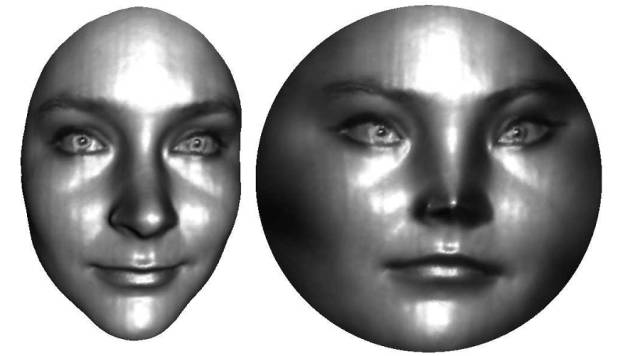
Figure 10.2 in the book Riemann mapping of the face surface.
Taking into account both theory and algorithmTraditional mathematics textbooks introduce concepts and theories, and their purpose is to promote the development of mathematics itself; and the purpose of this textbook is to take into account both the development of mathematics itself and the requirements of industrial practice. At the same time, as a scholar in the field of computer science, Gu knows that for an engineer with a computer background, the most sincere way to understand a set of theories is to write corresponding programs and gain insights and sublimations in designing data structures and modulation performance. Therefore, we strive to invent corresponding algorithms for the concepts and theories introduced to bridge abstract theory and practical applications.
For example, almost all complex variable function textbooks end with planar Riemann maps, but few calculation examples are given. Our textbook provides a variety of algorithms for surface Riemann mapping, including algorithms based on pure differential forms and methods based on Ricci flow. It also introduces the classic Schwartz-Christopher formula and the Zipper algorithm, and is accompanied by corresponding images, videos, and online demonstrations. After students have initially mastered these algorithms, they can apply Riemann mapping in their own fields, such as texture mapping in the field of animation and animation, three-dimensional face recognition in the field of computer vision, spline fitting in the CAD field, solving linear elastic problems in the CAM field, orthodontics in the medical field, etc.
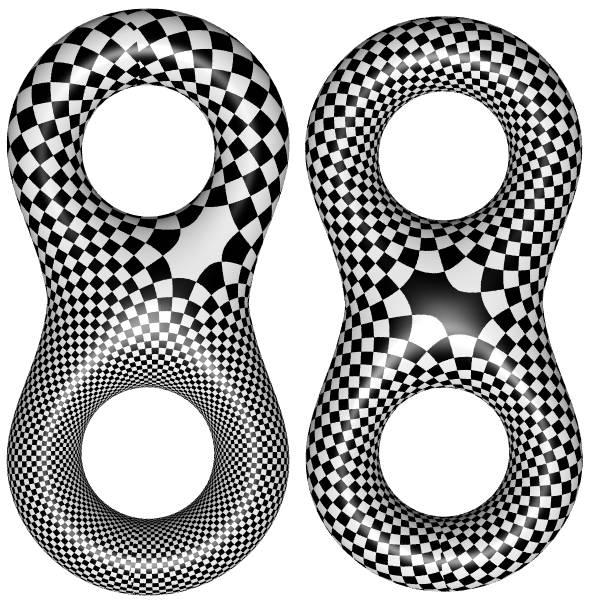
Figure 25.7 in the book The holomorphic 1-form on the Riemann surface constitutes a complex linear space.
Most concepts and theories in Riemann surface theory are far away from daily life experience and rely on abstract imagination. We have introduced the calculation methods of these abstract concepts in detail in the textbook. Figure 25.7 shows the calculation results of holomorphic differentials. In human history, Riemann discovered this concept 250 years ago, and our team first calculated this concept 20 years ago. Anyone who sees this image will immediately realize the essence of the pure differential. The center of the octagon in the figure is the zero point of the holomorphic differential, and the position of these zero points depends globally on the geometry of the surface and the overall topology of the holomorphic differential (cohomology class). By observing the changes in the zero point, we can understand the mystery of Abel-Jacobin theory and realize the essence of the pure line cluster representation class. I believe that when readers truly understand these theorems, they will be amazed that modern mathematicians can penetrate such profound truths in nature and establish such profound and beautiful mathematical theories without any intuitive experience and only by abstract thinking! What is even more surprising is that such an abstract theory actually has very practical applications: in machinery manufacturing, all surfaces are expressed as spline surfaces. T-Spline in engineering is equivalent to meromorphic fourth differential, and the singular points of T-Spline satisfy Abel's theorem, as shown in Figure 1.14.
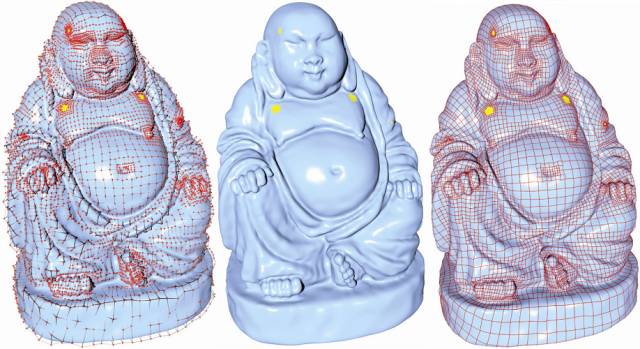
Figure 1.14 in the book: Maitreya spline surface.
Use war to support war, use learning to cultivate learningStudents cannot establish a rigorous and profound theoretical system in their minds overnight. The essence of profound and mysterious concepts can only be understood after they are actually applied. Therefore, after introducing abstract concepts and theories, we immediately give practical applications, allowing readers to think about how to apply the concepts they just learned to solve problems, so that they can experience the power of these concepts and theorems in actual combat.
For example, after we introduced the basic concepts of algebraic topological homotopy groups and homology groups, we immediately gave proofs of Brower fixed points and Lefschetz fixed points. Fixed point theory is of fundamental importance in proving the existence of solutions to equations. In the field of computer science, the existence and convergence proofs of many optimization algorithm solutions rely on fixed point theory.
Gu had a roommate at Tsinghua University who was deeply obsessed with Go during his college days. As the highest wisdom representative of Eastern civilization, Go has always been an extraordinary, mysterious and profound cultural symbol. My roommate at Tsinghua University has always been obsessed with using AI methods to conquer Go. This roommate was so energetic that he spent all his lunch breaks over the past five years designing AI Go programs. Decades later, "Alfa Dog" was born, defeating humans in one fell swoop. "Alpha Zero" abandoned the chess game accumulated by humans for thousands of years and ruthlessly shattered human vanity. Classmate Gu believes that this roommate who is obsessed with Go will have mixed feelings, sadness and joy. However, "Alfago" is based on the reinforcement learning algorithm, and the convergence proof of the reinforcement learning algorithm is based on the fixed point theory. From this point of view, the topological theory of fixed points is a part of nature, while the Go score is man-made. The AI expert system designed around the Go record was ultimately defeated by the AI reinforcement learning algorithm based on topological fixed points. It can be seen that mathematics is the correct way to understand nature, and you should learn more mathematics when you are young.
Conformal geometry has great practical value. One of the fundamental reasons is that most of the mappings (differential homeomorphisms) between surfaces in nature are quasi-conformal mappings, which are described by Teichmuller's quasi-conformal geometry theory. The conformal geometry algorithm introduced in the book can be directly generalized into a quasi-conformal mapping algorithm, as shown in Figure 28.3. Many applications in the fields of computational vision and medical imaging are based on quasi-conformal diffeomorphisms between surfaces.
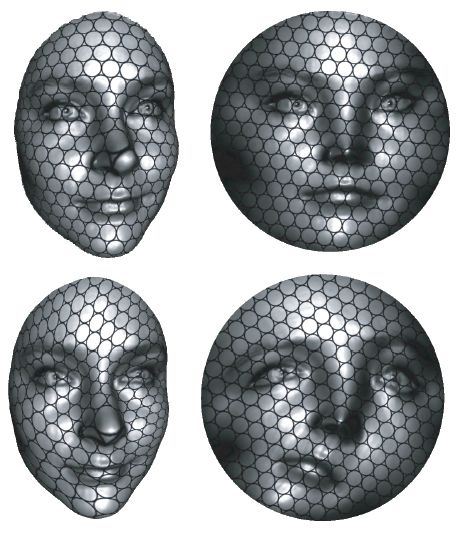
Figure 28.3 in the book compares conformal mapping and quasi-conformal mapping.
visual aestheticsAfter a long evolution of human beings, most of the neurons in the cerebral cortex are used to process visual information. Therefore, humans are born with strong geometric intuition and can instinctively realize the inner harmony of geometric structures. Therefore, we used modern computer graphics technology, combined with algorithms for calculating conformal geometry, to produce hundreds of illustrations, dozens of videos, and also prepared dozens of online demonstrations. By scanning the QR code, readers can view illustrations and watch videos on their mobile phones. In particular, they can interact with online demonstrations, observe geometric surfaces through zooming, translation, and rotation, and experience various geometric structures on the surface through texture mapping. Many natural geometric structures will cause strong aesthetic experience in humans. Through intuition, readers can quickly grasp the essence of abstract concepts.
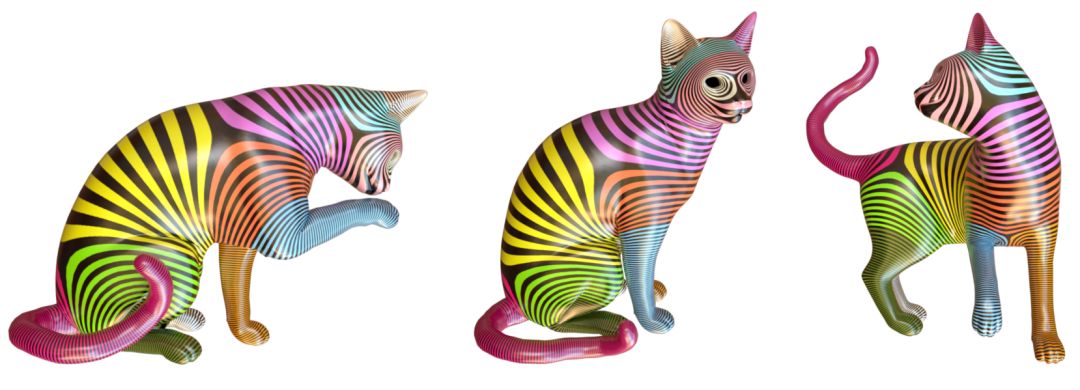
Figure 1.8 in the book shows leaf-like structures on curved surfaces.
For example, "harmony" is a basic concept in conformal geometry. Mr. Qiu once said that "the harmonic tangent vector field is the smoothest field, the smoothest field that cannot be added." Leaf-like structure is an abstract concept that is difficult to understand, and the relationship between leaf-like structure and holomorphic second differential is also a relatively profound theoretical result. The harmonious leaf-like structure has a strong sense of beauty. Anyone who sees the pattern in Figure 1.8 will immediately realize the inherent harmony and beauty of the harmonious leaf-like structure, and the introduction of this concept is natural. The relationship between the harmonic leaf structure and the holomorphic second differential is also emerging. Therefore, this concept is often used in architectural design, such as the Daxing International Airport designed by Hadid, whose concept is based on harmonious leaf-like structures.
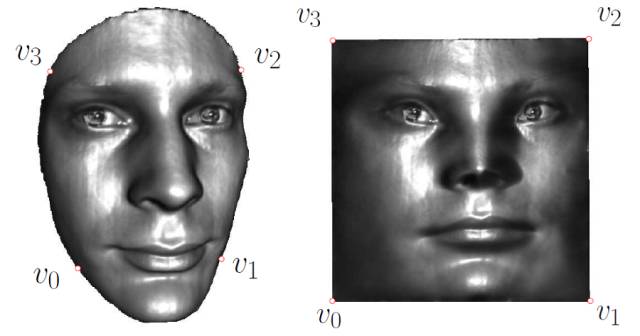
Figure 12.8 in the book shows the extreme length of a topological quadrilateral.
Continuous and discrete unityClassic conformal geometry theory is based on smooth manifolds, and a large number of calculus operations require the differentiable structure of the manifold. However, in the field of computer science, the basic data structures are discrete. For example, the commonly used surface representation in the fields of computer graphics and computational mechanics is the so-called triangular mesh. The triangular mesh is just a continuous surface. Classic mathematical concepts, such as absolute differential, curvature, connection, Riemannian metric tensor, etc., cannot be directly defined. Therefore, we need to systematically generalize classical geometric concepts and theorems to discrete cases.
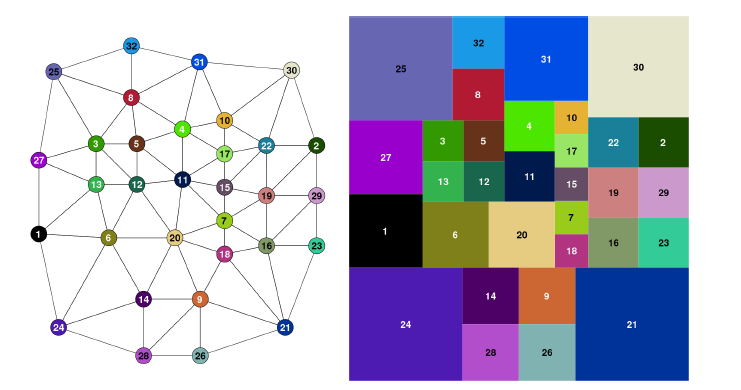
Figure 12.5 Block filling in the book.
There are two ideas here. One is to use discrete solutions to approximate continuity, such as using the classic finite element method to solve partial differential equations. The other is more essential and thorough, that is, we believe that the distinction between continuity and discreteness comes from the limitations of artificial theoretical tools. Nature does not distinguish between continuity and discreteness. Basic continuity geometry theorems must have discrete corresponding theorems. What we need to do is to discretize the entire theoretical system, rather than using discretization to approximate continuity.
For example, as shown in Figure 12.8, given a face surface and we fix four corner points on the boundary, there is a conformal mapping that maps the continuous surface to a flat rectangle. Figure 12.5 shows the corresponding discrete theorem. Given a planar graph with 4 vertices on the fixed boundary, if we replace each vertex with a square, there will be a set of side lengths of squares such that these squares are tightly filled in a planar rectangle. This textbook adopts the perspective of the discretization theoretical system, thereby establishing the discrete surface Ricci flow theory and the discrete single-valued theorem, as shown in Figure 1.5. Although the discrete theorem is more intuitive, its theoretical depth and proof skill are as good as those of the continuous case.
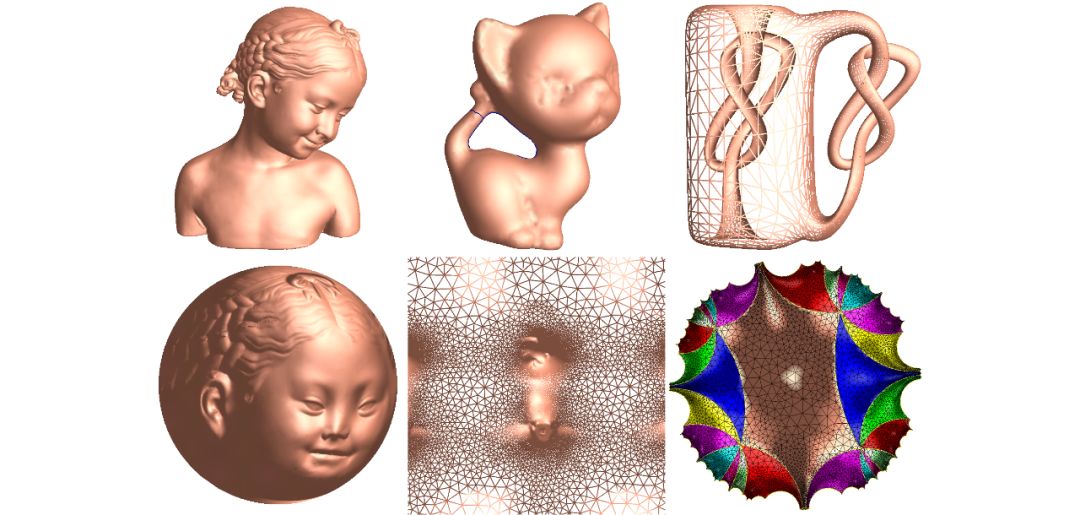
Figure 1.5 in the book shows the singularization theorem of discrete surfaces.
Original cutting edgeTraditional mathematics textbooks generally teach more classical theoretical content. Nearly one-third of the content of this textbook is the research results of the authors in the past twenty years. A lot of space in the book is used to explain the theory and algorithm of discrete surface Ricci flow, and gives a detailed proof of the discrete singularization theorem. This is the only textbook in this field in the world, so it is very original. Compared with tutorials that summarize various algorithms in the field of computer science, the algorithms in this book have a solid theoretical foundation and can withstand long-term historical tests.
Looking to the future
Any surface in the physical world has a natural conformal structure, and conformal geometry is a part of nature. The rise of computational conformal geometry is attributed to two main factors: one is the vigorous development of three-dimensional technology, especially the development of laser technology, DMD chips, TOF technology, and the maturity of medical imaging technologies such as CT and MRI, which make the acquisition of three-dimensional geometric data extremely convenient. However, three-dimensional geometric data analysis has become a technical bottleneck, and traditional linear methods are no longer adequate. Computational conformal geometry provides a powerful method suitable for registration, analysis and classification of large deformation surfaces. Compared with computational topology methods, conformal geometry provides more information and more accurate calculation results; compared with Riemannian geometry, conformal geometry is more flexible and can transform curved surfaces into planes, while the isometric transformation in Riemannian geometry cannot change the curvature and cannot handle general topological homeomorphisms. Another factor was the increase in computing power that made it practical to solve geometric partial differential equations.
As a basic geometric structure in nature, conformal structure has in-depth and extensive applications in many fields of engineering and medicine. In the past two decades, we have cooperated with scholars in many fields to increasingly promote the application of computational conformal geometry: we have cooperated with professors such as Paul Thompson, Chen Fanchang, Wang Yalin, Lei Leming, etc. to apply conformal geometry to the field of brain neuroscience and create conformal brain mapping algorithms; we have cooperated with Arie Kaufman cooperated with Professor Liang Zhengrong and applied it to the field of virtual colonoscopy; cooperated with Professor Qin Hong and applied it to the field of computer-aided design, creating the manifold spline theory; cooperated with Professor Gao Jie and applied it to the field of wireless sensor networks; cooperated with Professor Dimitris Samaras and applied it to 3D computer vision, especially surface registration and tracking; and cooperated with Professor Tom Tom Cooperate with Professors Hughes, Luo Zhongxuan, and Lei Na, and apply it to isogeometric analysis and computational mechanics; cooperate with Dr. Sihang, and apply it to the field of grid generation; cooperate with Professor Chen Shikui, and apply it to the fields of topology optimization and metamaterial design. Among them, the cancer diagnosis algorithm based on computational conformal geometry has been spread all over the world through the promotion of Siemens.
At present, the development of computational conformal geometry is in the ascendant, and there are still a large number of open problems in theory; at the same time, there is still room for improvement in various calculation methods, and a large number of calculation methods for abstract mathematical concepts are still unresolved; the thinking methods of computational conformal geometry are increasingly penetrating into other engineering and medical fields, and many imaginative applications are waiting to be developed and implemented by young people.
Contemporary society has a fine division of labor. From an engineering and technical perspective, we can simplify the social division of labor chain into: physicists, basic mathematicians, applied mathematicians, computer scientists, software engineers, and entrepreneurs. Physicists observe nature, look for laws, and express natural laws using partial differential equations; basic mathematicians prove the existence, uniqueness, and regularity of solutions to partial differential equations; applied mathematicians design variational methods, discrete approximation methods, iterative formats, prove convergence orders, and estimate accuracy errors; computer science Experts design efficient data structures, sophisticated algorithms, and parallel methods to improve calculation accuracy and efficiency; software engineers ensure high-quality algorithm implementation, design good user interfaces, exhaust various practical scenarios, and improve the stability and robustness of the system; entrepreneurs think about popular products and accurately position the market. Different roles in the social division of labor have very different values and cultural characteristics. For example, physicists emphasize physical intuition and do not care much about the rigor of mathematics; basic mathematicians emphasize the depth and aesthetic value of understanding problems, without any restrictions on complexity, but emphasize the discovery of laws that have not been discovered by predecessors; computer scientists are relatively tolerant of theoretical rigor, but computational complexity is a fatal factor, and they also emphasize the ability to solve problems that predecessors could not calculate. Every social division of labor requires talent and creativity, as well as accumulation and hard work. Traditional textbooks only focus on a certain step of this division of labor chain. This textbook covers these steps from basic mathematicians to computer scientists. We believe that cultivating cross-field generalists and promoting cooperation and integration in various fields are more suitable for the development of the times. We also plan to write another book "Computational Conformal Geometry (Programming)" in the near future, specifically to explain algorithm implementation details for computer scientists and software engineers.
On the other hand, in today's era, young people all hope to become entrepreneurs and put commercial value above scientific value. Therefore, society tends to be eager for quick success and quick profit, and is becoming increasingly noisy and impetuous. We hope that this textbook can give young people a perspective on the mysteries of nature, stimulate their strong curiosity and continuous aesthetic experience, and turn their illusory meditation into rigorous and harmonious logical thinking. When choosing a life path, they can face themselves honestly, follow their hearts, combine passion and career, integrate their short life into the eternity of nature, and contribute their youth to the development of human civilization!
Acknowledgments
We sincerely thank the editors Zhao Tianfu, Li Peng and He Jing from the Higher Education Press. They worked tirelessly to carefully review the entire manuscript, perfected the details, and improved the quality. We are grateful to Chen Wei, Wen Chengfeng and other students who carefully designed and implemented the algorithm and wrote the online demonstration program using WebGL. We sincerely thank all past and present collaborators, and all past and present students! We would like to express our sincere gratitude to all friends who provided help!
Due to the rushed preparation time, the textbook covers too much content, and the newly developed theories have not yet been distilled over the years. The current form of explanation can be further refined. There are many errors in the book, and I hope readers will criticize and correct them.
If you are interested in "Computational Conformal Geometry (Theoretical)", please leave a message in the background or email the author at [email protected].
Scan the QR code to experience the online demo:

Please give your valuable feedback.
Machine-translated from the Chinese original 十年磨一剑:《计算共形几何(理论篇)》即将出版 (published 2020-05-03). WeChat original ↗