time: July 4th to September 4th, every Saturday and Sunday morning 9:00-10:30AM Beijing time
link:Zoom Webinar ID:871 6057 8498
Password: 156302
Live broadcast:Station B live broadcast address online.conformalgeometry.org
web page:http://www3.cs.stonybrook.edu/~gu/lectures/2020/
Sponsored by: Tsinghua University Yau Shing-tung Mathematical Science Center, Beijing Yanqi Lake Institute of Applied Mathematics
Attend: Free and open to listeners worldwide
Computational conformal geometry online course WeChat discussion group:

For the past ten years, Lao Gu has taught the course "Computational Conformal Geometry" at the Yau Shing-tung Mathematics Center of Tsinghua University every summer vacation. This year, due to the impact of the epidemic, the course can only be taught online. On the one hand, online teaching greatly facilitates students' listening to lectures and expands the scale of teaching; on the other hand, due to the lack of direct interaction, it is impossible to get timely feedback on learning effects. At the same time, because there are many international students taking courses, the teaching language can only be mainly English, with Chinese as a supplement. Of course, students can still ask questions in Chinese and discuss them in the WeChat discussion group. In the past two days, many young people have actively joined the online class WeChat discussion group, and many people suggested that Lao Gu conduct live broadcasts at Station B. So our teaching assistant, Chen Wei, set up the live broadcast website of Station B. Students who cannot access Zoom can watch it through the live broadcast. Each lecture will be recorded, and the video will be uploaded to some websites and also to the webpage of this course. The handouts of each lecture will also be uploaded to the web page for everyone to download and read. The textbook chapters corresponding to each lecture are also marked on the webpage, so that everyone can read and study in a targeted manner. The lecture notes of the first lecture are already on the web page. You can have a rough understanding of the direct application of computational conformal geometry in computer graphics, computer vision, geometric modeling, medical imaging, networks and deep learning. If you have any questions, you can contact Lao Gu through the WeChat discussion group, leave a message on the public account, or email.
|
|
|
|
|
|
Figure 1. Maitreya Buddha’s Riemann map and optimal transmission map.
The course will release some algorithm libraries to facilitate everyone to implement the algorithms explained in the course and use them for future learning, scientific research and technology development. We plan to provide algorithms for conformal mapping and optimal transport. The optimal transmission mapping algorithm will be launched in cooperation with Dr. Sihang. Dr. Sihang is a senior expert at the Weierstrass Institute in Germany and an international authority in the field of mesh generation. The TetGen tetrahedral mesh generation software written by him is the fastest solid triangulation tool in the world. It is widely used in industry and academia and is well-known all over the world. Currently, these algorithms have profound applications in the fields of geometric modeling, computer graphics, computer vision, computational mechanics, etc. Especially in the field of deep learning, optimal transmission mapping plays a key role.
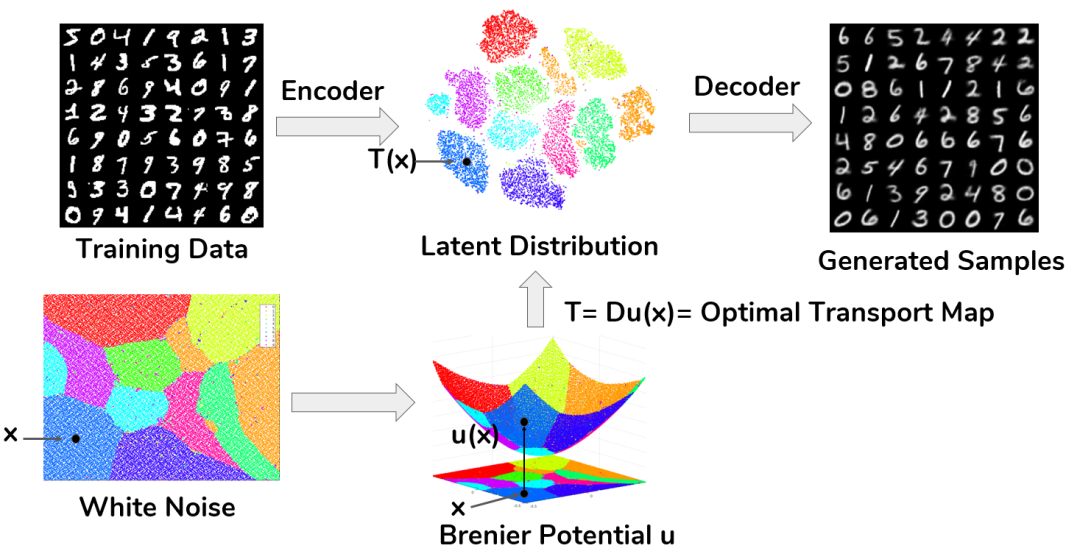
Figure 2. Generative model based on optimal transmission theory.
In his academic career of more than 20 years, Lao Gu has deeply experienced the rapid development of computer technology and the accelerating upgrading of computer algorithms. The changing times and the ebb and flow of technology have dazzled young people. The penetration of commercial operations into the academic world, roadshow-style academic reports, especially various self-media and individually customized reports based on statistical algorithms, have caused students to be bombarded mentally all day long. They gradually lost their way, fell into temptation, and wasted their youth in superficial tastes and frustrations.
After decades of accumulation of experience and lessons, Lao Gu is convinced that no matter how technology develops, the structure and truth of nature will never change. Computer programming languages will become obsolete in a few years, but once the language of geometric topology is finalized, it will last forever. Computer technology books from twenty years ago have long been swept into the dust of history, but mathematics books from twenty years ago remain timeless. Compared with the complicated and complex technical methods with numerous schools, the topological structure and geometric structure are clear and clear, and the mathematical processing techniques are relatively unified and concise. Wave after wave of technology often reinterprets the same mathematical theory using different algorithms. It can be seen that the steadfast needle in the technological torrent is the structure and theory of geometry and topology. For example, in almost all engineering fields and medical imaging fields, Morse function theory has been applied again and again, and thermonuclear theory has been repackaged again and again. Therefore, instead of chasing the trendy technology wave, it is better for young people to learn basic geometric topology, so that in the future life, they will not follow others' opinions, but truly create their own.
It is relatively difficult for inexperienced young people to learn geometric topology at the beginning, but once mastered, it will be unforgettable for life. It is easier for a relatively "mature" generation like Lao Gu to learn new knowledge, but it is difficult to form a deep impression and forget it quickly. Therefore, young people should live up to their youth and strive to learn some more eternally valuable and systematic knowledge. In fact, there is a paradox here. The division of labor in modern society is too fine, and engineering students are expected to skillfully implement algorithms instead of inventing difficult new algorithms. Spending a lot of time learning theories that cannot see results in the short term will generally be considered by both tutors and students as not worth the gain. For example, Lao Gu's students can roughly master the essence of optimal transmission theory in one semester; if they program and implement the algorithm from scratch, they will not be able to truly achieve the requirements of robustness and accuracy in two semesters. Students are eager to publish articles and find it difficult to spend time studying theory in their impatience. Due to the pressure of promotion, instructors also force students to start programming as early as possible. Once most students enter the industry, their knowledge structure is basically solidified. Without the guidance of experts around them, it is difficult to master a profound mathematical theory. Being able to calmly learn difficult and abstract geometric topology theory is actually a very rare luxury. Lao Gu has seen many young people cry with regret when they get their doctorate or master's degree in computer science, despite being employed by Wall Street and Silicon Valley. He has also seen many young people with golden collars on Wall Street who, while making money every day, still diligently study differential geometry and theoretical physics on their own.
|
|
|
Figure 2. Spline surfaces and Abelian-Jacobian theory in industrial CAD.
From another perspective, the development of industrial technology has strong path dependence. Due to the development of the times, the huge demand generated by the industry will give rise to imperfect technologies that will not be replaced for a long time. Although there are many practitioners, no one has really understood the mystery for decades, or lacks the motivation to clarify it. For example, the entire mechanical design and manufacturing industry is based on spline representation in geometric modeling. The key to setting up splines on general surfaces is the selection of singular points. For decades, countless people have used tools such as AutoCAD for industrial design throughout their lives. This key step is manually adjusted and implemented using human intelligence. No one has seen through the essence of this problem. Until recently, we finally realized that the configuration of singular points should satisfy the Abel-Jacobian theorem on the Riemann surface, which, if expressed in modern language, is the representational class theory of holopure line bundles. I believe that the difficult expressions of this professional mathematician cannot be understood by the majority of industrial designers, and the gap between abstract mathematics and practical applications needs to be bridged.
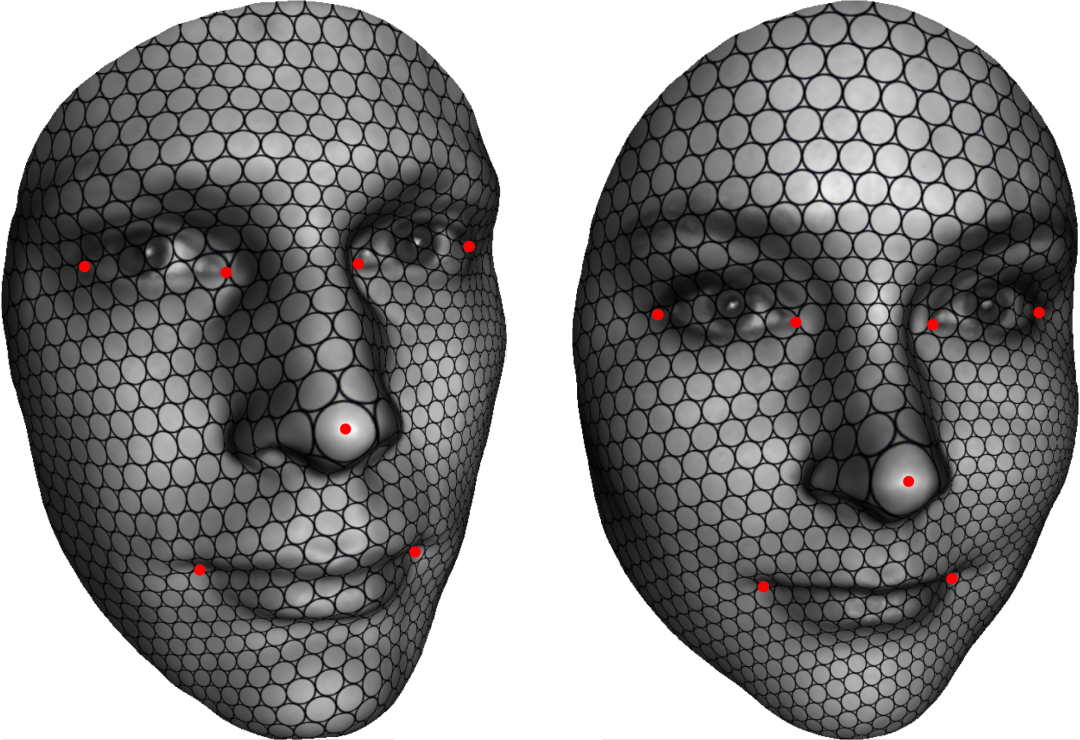
Figure 3. 3D face registration based on Teichmuller theory.
There are currently a large number of industrial products based on digital geometry processing of three-dimensional faces, and most of them are based on empirical algorithms. How to strictly find the mapping between facial surfaces, match the corresponding feature points, and minimize the geometric distortion induced by the mapping. The answer to this basic question requires the application of Teichmuller space theory.
|
|
|
Figure 4. Spherical embedding of planar graphs and hyperbolic embedding of non-planar graphs.
With the rise of graph networks, the issue of abstract graph embedding has become a hot topic again. The embedding problem of graphs is closely related to the singularization theorem of conformal geometry, which essentially defines some kind of Riemannian metric for a manifold or space. These issues, which have been of renewed concern in the engineering and academic circles, can be analyzed from the perspective of conformal geometry, thereby proposing deeper insights and more productive calculation methods. The theory and algorithms for solving these problems are taught in our lectures.
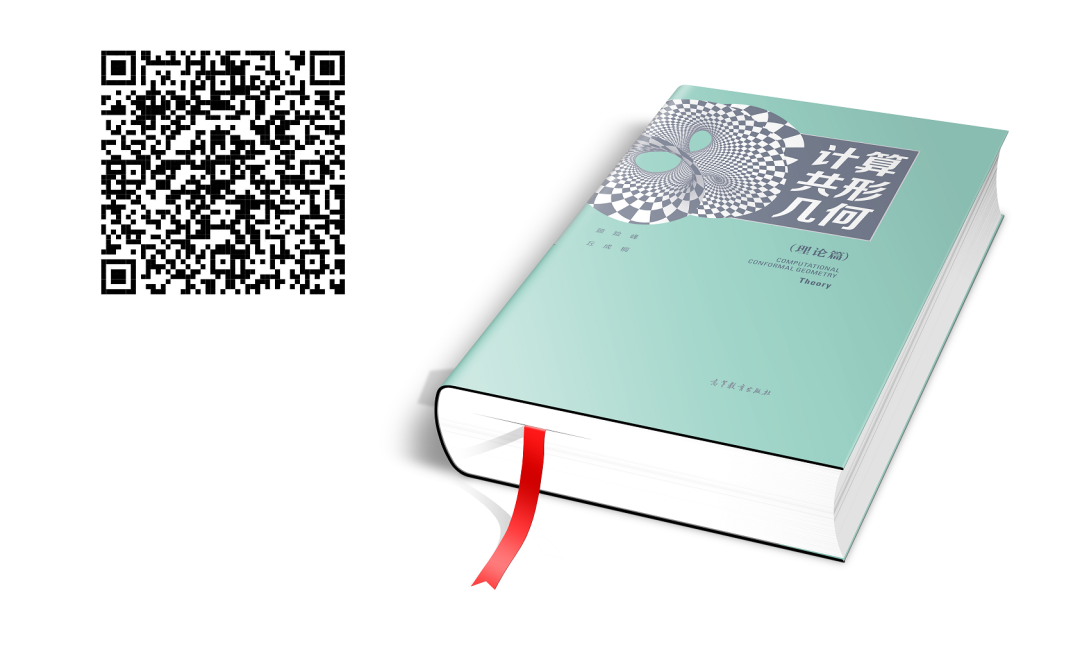
Figure 5. Course materials.
The textbooks we wrote ourselves are very unique. Nearly one-third of the theorems were proved by us for the first time in the world after more than ten years of hard work. Most of the algorithms were implemented by us for the first time in history. In the past few decades, we have had fierce competition with mathematicians and computer scientists from Germany, Israel, France, Russia, the United States and other countries, and the smoke is still filled today. So far, this is the only monograph that systematically explains these new theorems and algorithms. We hope that more young people will join our fighting team and carry forward these theories and algorithms! Due to Lao Gu's limited knowledge and ability, the book was written in a hurry. Everyone is welcome to criticize and point out the errors and deficiencies in the book.
We hope that through this learning process, when students encounter practical problems in the future, they can first determine whether the category of the problem is topology, conformal geometry, Riemannian geometry or differential geometry? Then consider what mathematical tools should be used to analyze and solve it? What are the capabilities and inherent flaws of these tools? Thus, they will have a more far-reaching vision in their respective fields and make substantial contributions to the development of science and technology and social civilization!
Once again, everyone is welcome to visit us for guidance tomorrow on Zoom or in the live broadcast room of Station B!
Machine-translated from the Chinese original 计算共形几何暑假网上课程(2) (published 2020-07-04). WeChat original ↗