
Everyone who implements enterprise information systems understands this truth: "Business process" is the prerequisite for information system design and development, and information systems must be used to implement "business process". More than ten years ago, there was a wave of implementation in the domestic information system implementation community.Business process management system (BPM for short)The craze at that time was: use professional process management tools to carry out "business process modeling", and use software engineering tools to automatically realize the configuration of software systems in the implementation of information systems (such as SAP ERP); or in the case of self-developed business systems, use BPM to drive the automatic generation of software codes.
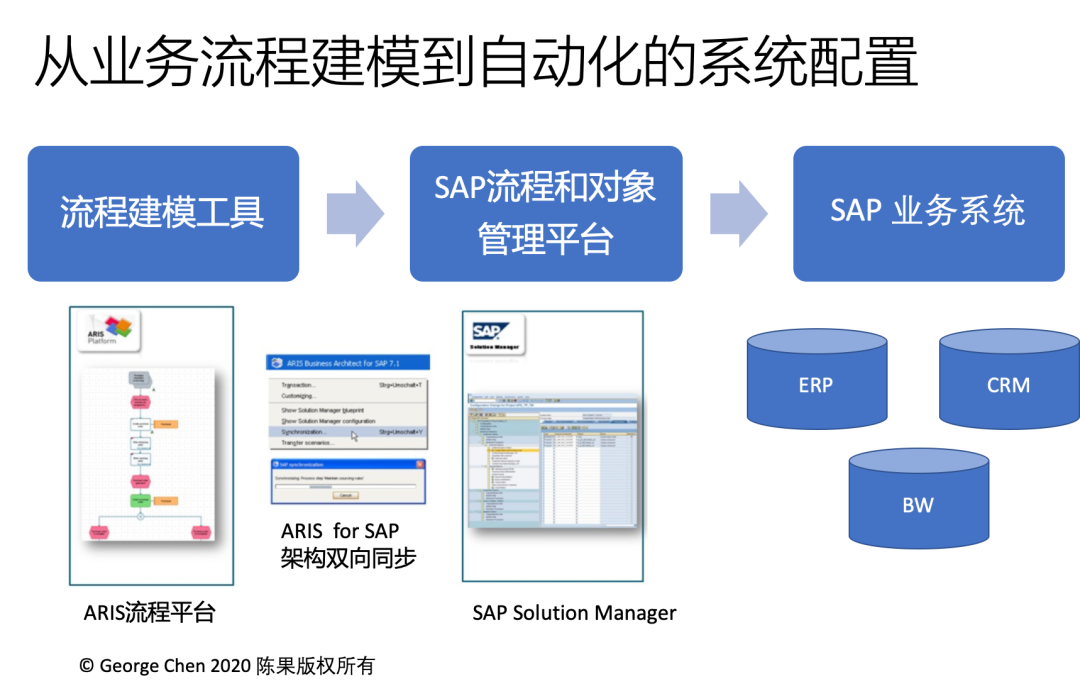
Around 2005, the process modeling tool ARIS of the German Ids Scheer Company, which claimed to be perfectly integrated with SAP, suddenly emerged in the domestic ERP implementation community. At that time, I participated in the SAP ERP implementation projects of several large state-owned enterprises, and the enterprises all required ARIS to conduct business process modeling and achieve the integration of process modeling and system configuration. The connection relationship principle between ARIS process modeling-SAP Solution manager configuration management-actual SAP business system, as shown in the figure above.
During that time, with the rise of the BPM theory craze, IBM, Oracle and some foreign BPM software were used as "management software" in the domestic market and were favored by corporate managers. It also led to the rise of domestic BPM companies such as Yanhuang Interactive and K2.
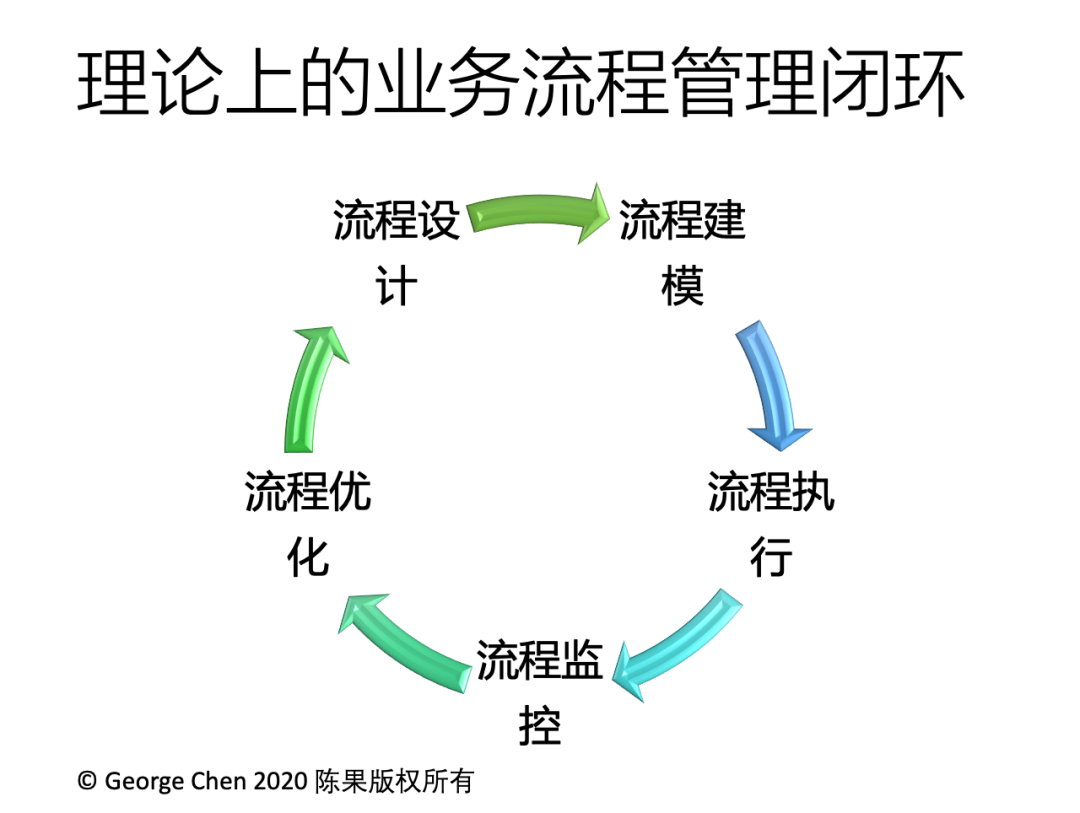
However, more than ten years have passed, and I have observed that the reality of IT applications in many enterprises has severely beaten those consultants and academic experts who dreamed of realizing closed-loop automation of "business process management". The application of so-called "BPM software" in most enterprises is actually just a workflow software. The current situation of enterprise business process management is:
· The actual business processes of the enterprise are invisible
· It is basically impossible to achieve automatic development or configuration of BPM-driven information systems.
· The business process drawn by BPM and the business process in the actual information system are two different things.
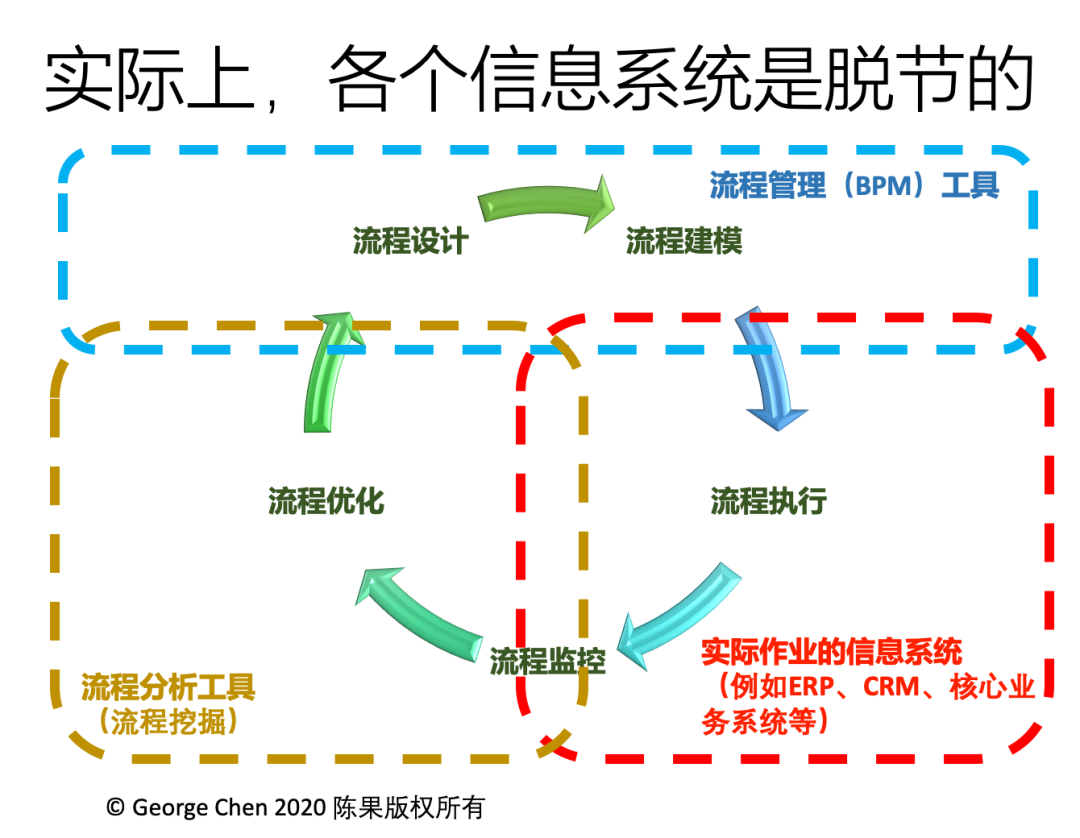
Large enterprises all dream of having an information system that can visualize the enterprise's end-to-end processes. This sequence from process design to implementation doesn't work. Is there any other way?
“Process mining”Just to answer this question. Its idea is to put together the "process data" at the business process activity level to display the business process itself. The main goal of process mining is to obtain and analyze available data sources, summarize the data, and form visual information in the form of "flow charts" of business processes to show business leaders the process performance (KPI) and process compliance to assist decision-making.
Simply put, "process mining" is the opposite of traditional top-down BPM. It is a bottom-up process that extracts instance information from actual running business systems. This instance information includes transaction operations, message delivery, etc. in each information system, and displays and analyzes processes. In the opposite direction of "business process design", some people call it "business process restoration”。
Process mining can reversely improve information system configuration or system development. Today's emerging process automation robot (RPA) applications can determine the configuration and functions of RPA robots based on the results of process mining.
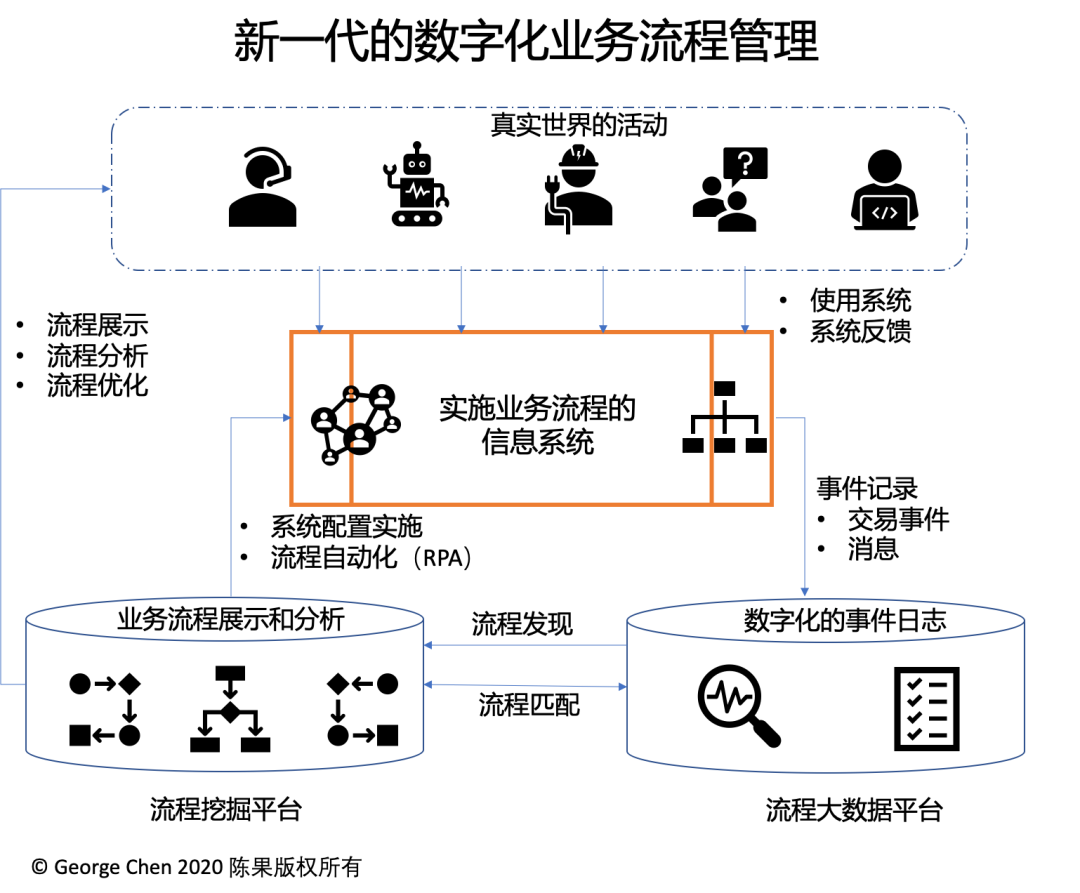
Based on the architecture above: the "process mining" process is divided into three steps:
-
Extract process event data from various systems, convert the event data into event log (Event log), and put it on a big data platform
-
Analyze, discover, and model these process big data, and display process analysis results and process models; this mining process is an optimization iterative process, and data extraction is optimized based on the analysis of mining results.
-
Mining and analysis itself need to combine machine learning and artificial intelligence to not only provide process optimization suggestions, but also improve the efficiency of process mining iterations.
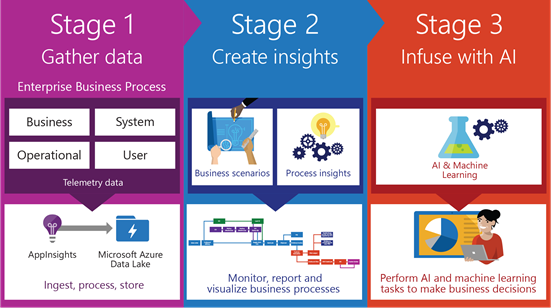
https://www.microsoft.com/en-us/itshowcase/how-microsoft-uses-process-mining-to-accelerate-digital-transformation
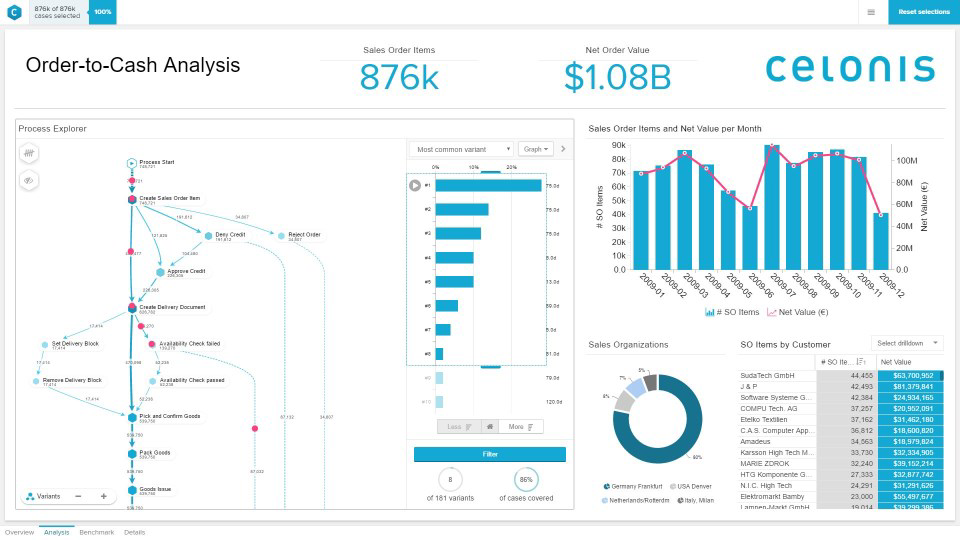
Process mining is an emerging digital transformation application field. The following figure is an example of Celonis, a leading supplier in this field, showing process restoration (left) and process efficiency analysis (right):
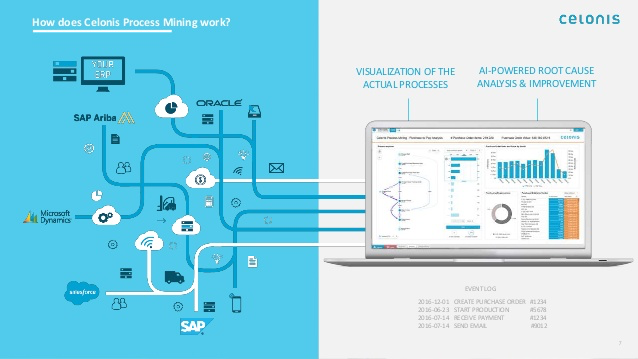
The working principle of Celonis is to extract process data from ERP, CRM and other enterprise systems of SAP, Oracle, Microsoft and other brands, and display the analysis results as shown above:
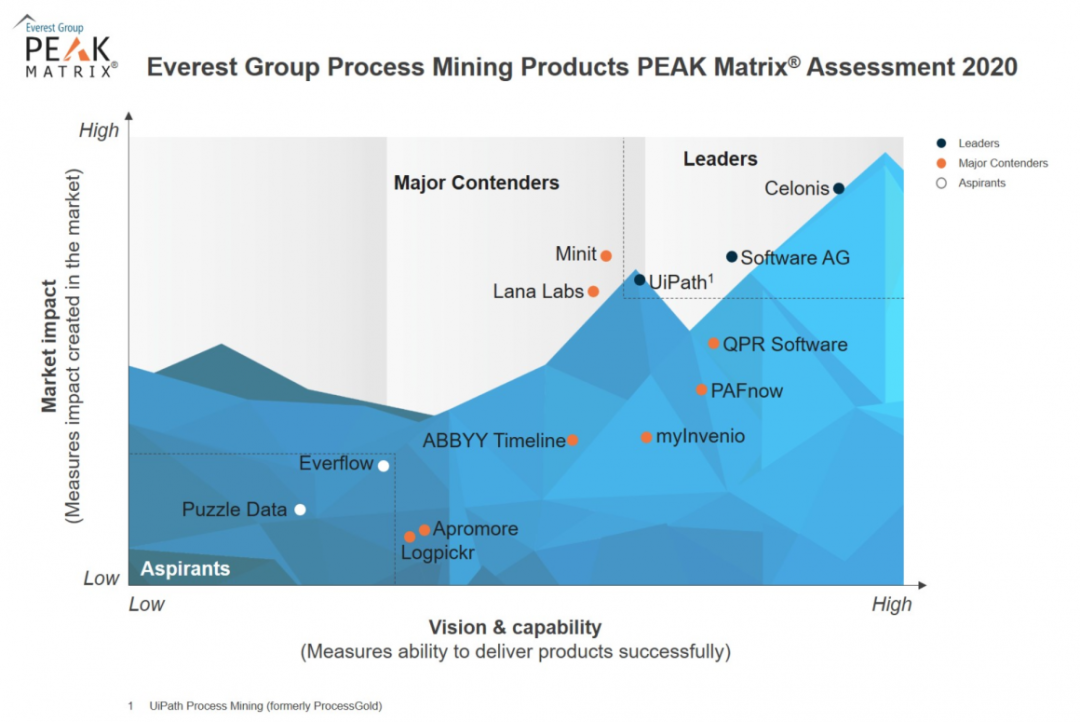
In the field of process mining, leading suppliers include: Celonis, an emerging German startup company endorsed by SAP, SoftwareAG, the parent company of the old business process management software ARIS, UiPath, a robotic process automation software (RPA) company, etc. The following figure is the evaluation of vendors in this field by the IT evaluation agency Everest Group:
Domestic BPM vendors have also entered this field, such as K2, which was selected for Gartner BPM vendor evaluation. Process mining solutions have also been launched:
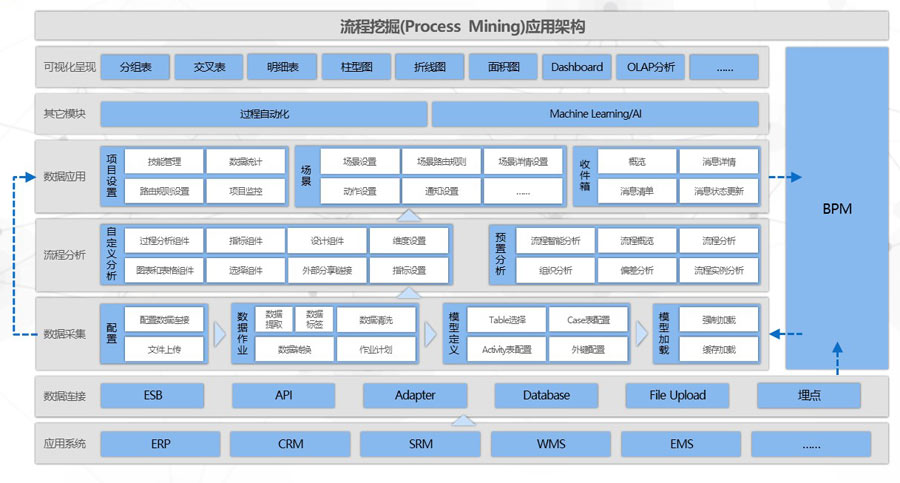
In short, with the support of big data and artificial intelligence, "process mining" may be the ultimate solution for enterprise business process management in digital transformation.

The picture above and the cover photo are the works of @十国MR.
More articles on enterprise business process management:
FCT model | Governance system for business processes and data of large enterprises
It is useless to conduct detailed business process design consultation before system implementation.
From business processes to knowledge management to automation | Getting out of the business process jungle
Digital transformation, please pay attention

Machine-translated from the Chinese original 流程挖掘 | 数字化业务流程管理的终极方案 (published 2020-09-29). WeChat original ↗