
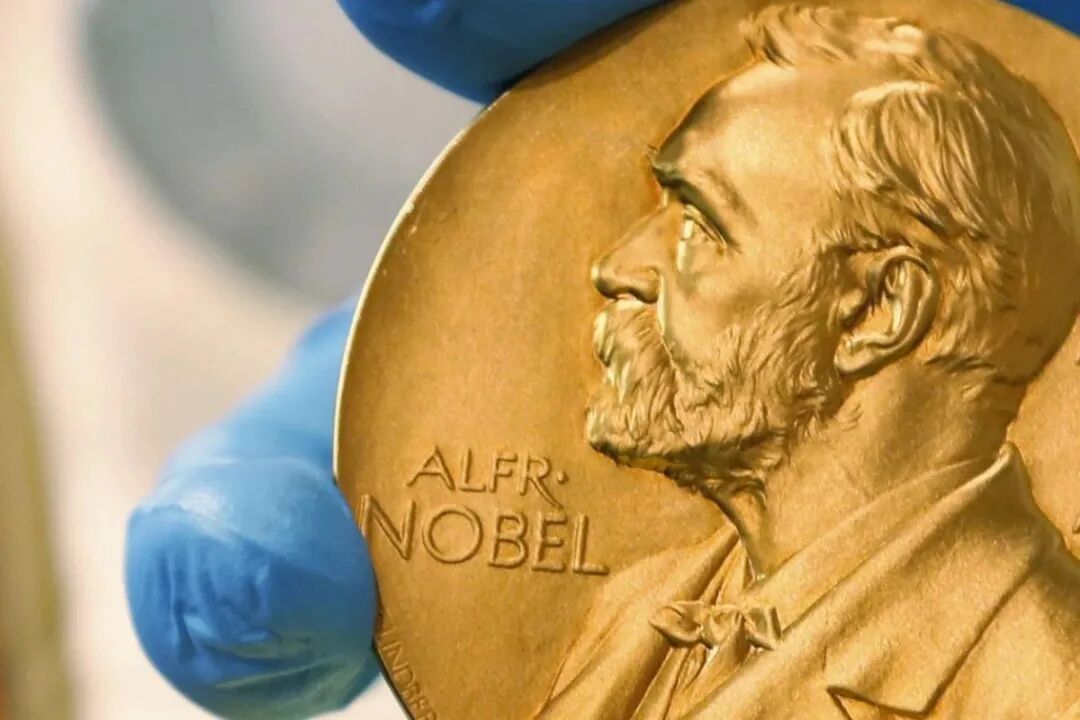
On October 9, 2020, after this year’s Nobel Prize for Scientists was announced, perhaps because the eight winners were taken by Western countries led by the United States (this is the norm and will be difficult to change for a long time), Professor Wang Yuanfeng of Beijing Jiaotong University published an article in the Global Times: "Are the Nobel Prizes becoming more and more "outdated"? ”, the main idea is: after nearly 120 years of history, the Nobel Prize seems a bit old and cannot keep up with the times.
As soon as this article was published, it aroused heated debate. Some people bluntly pointed out: "This is a blatant anti-scientific noise."[1]
Although many of Professor Wang's arguments are not worth refuting. For example, in order to demonstrate that "the evaluation rules and results of the Nobel Prize have not kept up with the times," he provided a set of data showing that the proportion of women among Nobel Prize winners is too low: As of 2019, of all 597 science prizes awarded, only 54 were awarded to women, that is, the proportion of women winning prizes was 9%. So, is this ratio low?
The latest research shows that among the 2,411 academicians of the two academies who represent the highest academic titles in science, engineering and technology in contemporary China, there are only 123 female academicians, accounting for only 5% of the total. [2] Another example is that among the 33 winners of the country’s highest science award so far, except for Tu Youyou, not one is a female scientist, which means that the proportion of women winning awards is 3%. If 9% of the Nobel Prize winners are women, it is evidence that "the evaluation rules and results of the Nobel Prize have not kept up with the times" and are "sex discrimination". Then, wouldn't the evaluation rules for academicians of the two academies and the country's highest science awards become "almanac" and typical "sex discrimination"?
In fact, 9% of female scientists who have won certain scientific awards or high honors is not low. At least in China, what Professor Wang cited is a "counterexample." In scientific argumentation, it is taboo for the author to cite "counterexamples" himself. One can imagine the seriousness with which Professor Wang wrote this article!
However, this article still does not want to discuss whether the Nobel Prize is objective, fair, scientific, and authoritative, because some people may say that discussing Western rules based on Western values is unconvincing. I will only explain it from the Chinese government and the public, especially the two honors that the country has repeatedly bestowed on Nobel Prize winner Tu Youyou.
Although China is a relatively late and relatively small country that has won the Nobel Prize in Science, its interest in the Nobel Prize is probably no less than that of other major countries. There are numerous relevant articles or reports. Among the people, a Nobel Prize complex with Chinese characteristics has already been formed (Jin Junqi said). Temples also pay special attention to it. In October 2015, Tu Youyou won the Nobel Prize in Physiology or Medicine, and the whole country celebrated! Because this award has three great significances to New China: "Chinese", "cultivated by New China", and "made domestically"! It can also be described as a breakthrough in relevant constraints! Therefore, the national level gives Tu Youyou supreme honor. After Tu Youyou won the Nobel Prize, she not only won the highest national science award in 2016 as quickly as possible (2015 may not have been procedurally available), but she also became the first batch of recipients of the "Medal of the Republic" in 2019. There are only 5 people in the country who hold both honors at the same time!
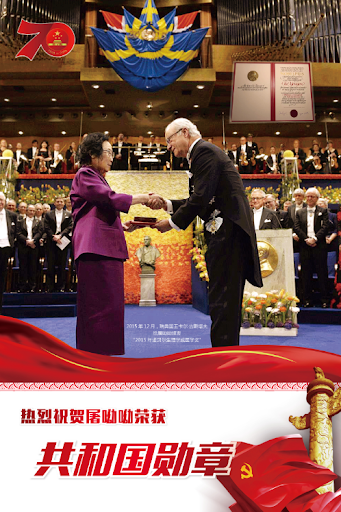
As early as when Tu Youyou won the country's highest science award, people discovered that the special significance of this move "lies in breaking the unwritten convention that the highest science and technology award has always been awarded to academicians" (Xiong Bingqi said), and this meaning is also suitable for scientist winners in the "Medal of the Republic" (Yuan Longping and Zhong Nanshan are both academicians of the Academy of Engineering). I would also like to point out that among the 33 winners of the National Top Science Award, except for the 2011 winner Wu Liangyong, who may have been special in his major (architecture and urban planning), before winning the National Top Science Award, he only won private awards such as the Tan Kah Kee Science Award and the Ho Leong Ho Lee Foundation Science and Technology Progress Award. Before winning the country's highest science award, the remaining 31 had all won national science and technology awards (at least more than three awards per capita before 2010[3]), as well as private awards such as the Tan Kah Kee Science Award, the Ho Leung Ho Lee Foundation Award, the Qiu Shi Science Award, and the international Shaw Award. Only before Tu Youyou won the country's highest science award, she had never won any national science and technology awards in her own name, nor had she won any folk science awards. In other words, before 33 scientists won the country’s highest science award, Tu Youyou was the only one who had never won any type of domestic science award, which was once again an exception. Coupled with the fact that she is the only woman, it is really three breakthroughs.
One prize wins a hundred prizes! Tu Youyou has won two of the most glorious crowns in contemporary China with one Nobel Prize. Who and which prize can compete with her? Isn’t this enough to show that Nobel Prize winners in science have a supreme status in China, and no other award can compare with them in terms of scientific awards? It can even be said that which Nobel Prize winner in science can receive the highest courtesy from the country like Tu Youyou? I think this is not only the country’s respect for Nobel Prize winner Ms. Tu Youyou, but also the Chinese government’s respect for the Nobel Prize and science, as well as its broad humanistic mind.
In addition, based on the analysis of nine recipients of the Republic Medal, including Shen Jilan, the only re-elected representative of the 13th National People's Congress, Sun Jiadong, the winner of the "Two Bombs and One Satellite" Merit Medal, and Zhong Nanshan, who made outstanding contributions in the fight against the COVID-19 epidemic, the background of the Republic Medal is that of people's heroes and national defense defenders, and is a high expression of the mainstream values of the People's Republic of China and the national will.
Therefore, we don’t care whether the outdated argument of the Nobel Prize in Science is “anti-science”, but it at least deviates from the mainstream values of our country today. Should we abandon it?
2020-10-19
Note
[1]https://baijiahao.baidu.com/s? id=1680609641667658289&wfr=spider&for=pc Visited on 2020-10-19.
[2] Wu Hong et al.: "Analysis of Academician Groups and Characteristics and Their Impact on Economic and Social Development", "China Science and Technology Resources Guide", Volume 52, Issue 1, January 2020.
[3] See Zhao Ming: "Research on the National Recognition Mechanism for Outstanding Scientists", PhD thesis of "University of Science and Technology of China" (2012).
[About the author] Shen Dengmiao, born in 1957 in Cixi City, Zhejiang Province, is an independent scholar. He is mainly engaged in the research of educational history and historical human geography. He is the author of the book "The Fire of Culture" (a collection of essays). He puts forward the original theory that "it is difficult for one generation to become a scholar", thus solving the "Qian Xuesen Question".
ScholarScholar
Machine-translated from the Chinese original 一奖胜百奖!诺贝尔科学奖在中国仍有至高无上的地位 (published 2020-10-29). WeChat original ↗