Lecture 2: The path to realizing Made in China 2025
Driven by the national policies of "mass entrepreneurship and innovation" and "Internet +", the existing manufacturing industry has been comprehensively improved in terms of technology, products and services. This lecture starts from two perspectives: technology and methodology, and describes how to achieve the goal of "Made in China 2025". Manufacturing is a highly complex giant system, and the final tangible product will be restricted by design, materials, processes, quality, and delivery. By revealing the weaknesses of China's existing manufacturing companies and through in-depth analysis of the integration of informatization and informatization methodologies, we can tell manufacturing companies how to solve their pain points in a targeted manner. This article uses typical cases of certain enterprises in digital transformation to inspire and broaden the ideas of transformation and upgrading of other manufacturing enterprises. Efficiently building information systems, making deep use of information-based digital assets, and comprehensively promoting quality and efficiency improvements in all aspects of the entire life cycle of manufacturing products are the inevitable paths that manufacturing companies must take. It is an illusion to avoid difficulties and achieve success in one step through shortcuts and detours. We must overcome various obstacles and move forward through solid working methods and hard work.
Section 1 Upgrading the integration of informatization and informatization
1. Integration of informatization and informatization is a long-term development strategy
The integration of informatization and industrialization is a high-level and in-depth combination of informatization and industrialization. It refers to using informatization to drive industrialization, using industrialization to promote informatization, and taking a new industrialization path. Industrialization is divided into four stages. The first stage is mechanization, where machines replace manpower and animal power; then there is industrial electrification, which promotes the division of labor of industrial enterprises on a large scale and the deployment across large-scale geographical areas. The widespread application of electricity promotes the overall development of industry; the third stage is industrial automation. Automated equipment control technology, automated product processing technology, and automated production line control technology are all widely used. Automation improves production efficiency, reduces industrial demand for manpower, increases worker output, promotes the emergence of industrial white-collar workers, and provides higher-paying jobs and a large number of positions that rely on knowledge work. The fourth stage is industrial informatization. Industrial processes are abstracted into the digital space. People's operations on information in the digital space can be materialized into the actions of equipment and production lines. The production of industrial products can be driven and completed from the information side. Informatization is the process in which information technology and information products continue to expand their participation in industrial production. Therefore, informatization and industrialization themselves are processes that drive each other to improve and grow. Contemporary electronic information and communication technology is widely used in all aspects of industrial production, and informatization has become a conventional means of management for industrial enterprises. The informatization process and the industrialization process are no longer independent of each other, and they are no longer a unilateral driving and promoting relationship. Instead, the two are integrated with each other at various levels such as technology, products, and management, and are inseparable from each other; they have also spawned new industries such as industrial electronics, industrial software, and industrial information services. The core of the integration of informatization and informatization is that informatization supports the realization of industrialization and promotes the generation and development of sustainable competitiveness of enterprises. The integration of informatization and informatization is an inevitable outcome of the development of industrialization and informatization. The Ministry of Industry and Information Technology has given a lot of guidance and promotion in the process of promoting the integration of informatization and informatization. At present, industrialization is accelerating from mechanization and automation to digitalization, networking, and intelligence. Informatization is accelerating the evolution from computers, Internet, and mobile Internet to cloud computing, big data, and artificial intelligence. It is promoting the integration of information technology from the single application of information technology in a single business link, to the comprehensive integration of information technology and business systems, and then to the integrated innovation of business and development models. Collaborative innovation can drive the integrated and coordinated development of various industries and enterprises.
2. Two methods for the integration of informatization and informatization
From the perspective of development model, the evaluation framework issued to enterprises by the Industrialization and Integration Integration Service Alliance can be seen in the figure below. This picture is divided into two parts: the left side talks about the process and staged jumps of capacity building for the integration of informatization and informatization, and the right side talks about effectiveness and benefit assessment.
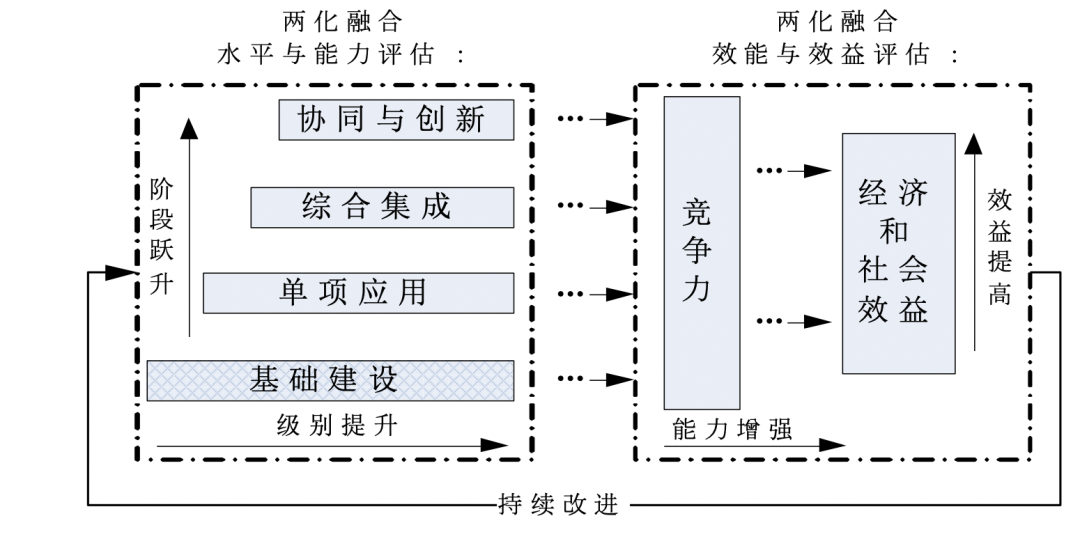
Figure 2 Assessment framework for integration of informatization and informatization (GBT+23020-2013) [42]
The left side of Figure 2 shows the staged development steps of the integration of informatization and informatization: from infrastructure construction to single application, then comprehensive integration to collaborative innovation. Each stage will produce a certain degree of corporate competitiveness, and this corporate competitiveness can produce obvious economic and social benefits. After the effect of efficiency improvement unfolds, enterprises can feed back the development of the integration of informatization and informatization to a greater extent, achieving sustainable development and continuous improvement in a cyclical manner. The left side guides the construction of integration of informatization and informatization, and the right side talks about evaluating the construction effect.
The methodology of following the stage jump here is a good reference model. The actual cycle of the integration of informatization and informatization will be step-by-step according to the company's own situation. A large part of the energy will be spent on software selection and the selection cycle of the landing consulting company. Figure 3 below shows the information system framework that needs to be built for the integration of informatization and informatization in enterprises. It is generally divided into three levels: factory connection and automation layer; factory optimization and execution layer; and enterprise operation collaboration layer. Based on this framework, enterprises build smart factories that integrate mobile applications, big data, intelligent analysis and Internet of Things technologies.
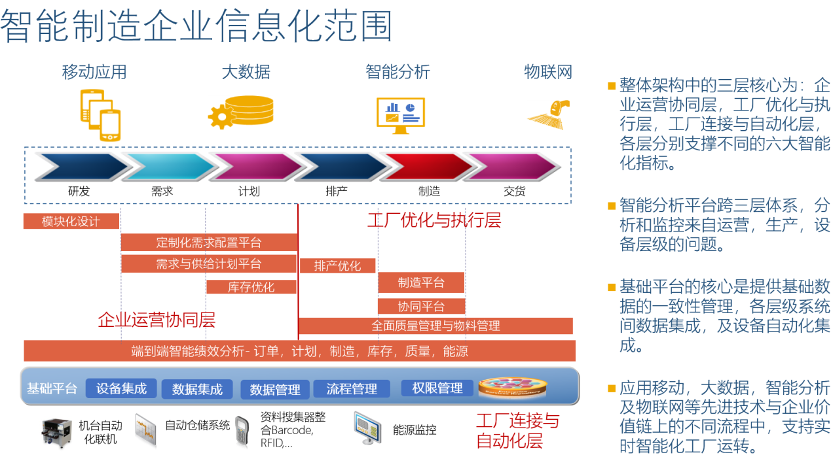
Figure 3 Scope of informatization of intelligent manufacturing enterprises【43】
The above is the logical abstraction of enterprise informatization, but enterprises still have two choices on the road to practical enterprise informatization: The first is the informatization methodology using packaged software derived from various Western developed countries in the 1990s: starting from the management and financial core, gradually extending downward, weaving a dense internal network structure of enterprise informatization. The second is based on the new technology method produced by the Internet + digital economy - the "Industrial Internet" method. This method can start from the most basic materials, equipment, and products to carry out enterprise informatization. Of course, it is different from the implementation of packaged software on the enterprise side. This method requires more powerful data analysis, software development, and iteration capabilities, and must be oriented by enterprise capabilities. For example, the company's ability to deliver, transport, produce, improve product quality, etc.
3. Enterprise informatization of procurement package software
The implementation of many packaged software has gradually become popular and developed in domestic enterprises since the 1990s. It was the first foreign-funded enterprises and joint ventures to do ERP.19System implementation and promotion use software from the United States and Germany. The four major international accounting firms have also followed this trend and launched their own information management consulting and implementation services. Later, domestic software companies saw this trend and developed their own domestic brand of ERP software and promoted, sold and implemented it across the country. On a smaller scale, there is also a trend of accounting computerization - the use of computer software for accounting. This trend will merge with the popularization of ERP software within 1-2 years. The ERP software system will prepare preliminary information data for the enterprise, mainly for the management of finance, income, expenses, materials, assets, sales, procurement, and personnel. ERP software can provide enterprises with a summary of basic information. After the ERP system is purchased, implemented and used, there will be more enterprise information requirements. The most common ones are the four types of software SRM as shown below55、CRM13、PLM44、SCM51. If you observe carefully, you will see that these software all end with management as the keyword. The commonality of the four software is that it provides the recording and management capabilities of enterprise-related business, that is to say, they are all designed and used from the perspective of management information transparency and internal personnel of the enterprise working together using the information system.
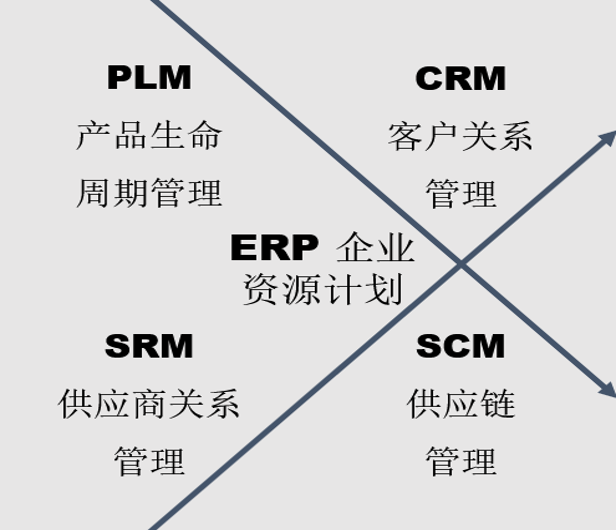
Figure 4 Enterprise information application relationship [44]
There are two arrows on Figure 4 that reflect the two work dimensions of the enterprise. From the lower left to the upper right are the two ends of financial supply and demand. All manufacturing companies buy certain materials, services and then sell certain products and services; from the upper left to the lower right is the internal value chain of the enterprise, which is from the dimensions of design and development, manufacturing, transportation, and delivery. Traditionally, all deployment of these software would take an enterprise 3-4 years and cost several million to tens of millions or hundreds of millions of yuan. Moreover, it is difficult for small enterprises to engage in the construction of such a large and comprehensive information system in terms of finance, personnel and time. Even if the construction of these systems is completed, it will be difficult for manufacturing companies to improve productivity from these systems and upgrade to more advanced manufacturing industries. The biggest effect is only to complete the definition and implementation of corporate standard management processes and form a set of stable operating practices. Why can't such huge corporate investment lead to manufacturing upgrades? Because the upgrading of the manufacturing industry has its own inherent rules, that is, breakthroughs in materials, production processes, and product performance must be made to achieve the upgrading of the manufacturing industry. In addition to serving management-level cadres and allowing them to save human communication time and physical costs in traditional work, the above systems do not directly affect materials, process methods and product performance. Since 2016, there have been more and more use cases in China, from ministries and commissions to enterprises, to use information technology from Internet-type companies to transform and develop traditional manufacturing industries. Of course, it is undeniable that traditional informatization based on packaged software provides enterprises with unparalleled internal information transparency, and also provides considerable optimization, simplification, solidification and automation of management processes. In addition to the management information systems mentioned above, there are also production-level information systems, such as MES.25Manufacturing Execution Systems. However, most MES systems collect information about the production process and provide production progress, status, raw materials, labor and equipment consumption and operation times, etc., mainly to provide information transparency at the production management level. It is worth noting that the scope of the package software is often within the enterprise intranet. In other words, whether it is technical implementation or practical application, the focus of the package software is still on the information and processes within the enterprise, as well as the corresponding management. Rarely can it span and integrate within a single enterprise.
4. Use Internet technology to independently innovate informatization
From the 1990s to the beginning of this century, a large number of Internet companies emerged around the world. These Internet companies made large-scale use of the communication capabilities provided by the Internet infrastructure and the evolving information storage, processing and computing capabilities. They also used the constantly developing new software technology to provide unparalleled computing power and data exchange capabilities. They also created many new economic forms for the world. The earliest business model that emerged was the advertising business brought by the Internet search services of Yahoo, Baidu and Google, which directly used Internet search engine technology to connect information searchers and information publishers. In the late 1990s, multimedia social software that connected everyone appeared in social networking. After connecting people, these social software have produced many new applications such as interactive communication, video calls, online games, chat rooms, etc. In the field facing the final consumer, Internet technology is booming, gradually moving from personal entertainment communication to e-commerce and online finance. Nowadays, it is difficult to imagine any company or bank that produces consumer products without an official website, online store or online banking system. Internet technology has begun to strongly penetrate into the daily lives of individual consumers, and has also become the most important part of the operation and development of many Internet companies. Manufacturing companies and general industrial companies can fully use Internet technology to build enterprise information systems or platforms to promote the extension of industrial manufacturing to the high end of the value chain. The following are several common scenarios in which Internet technology platforms are used to enhance the sustainable competitiveness of enterprises, which are also scenarios where commercialization has been relatively concentrated in recent years. Innovation in using Internet technology to build enterprise information systems is developing rapidly.
-
Workgroup Productivity Platform
In fact, a problem that everyone often encounters at work is communication and delivery. There are two types of communication, real-time and non-real-time. Voice calls and video calls are all real-time communications, and participants can receive information almost simultaneously. Email, QQ60The voice, text, pictures, videos and attachments transmitted by , WeChat, etc. are not real-time, and the recipient receives the information after a delay. Nowadays, many Internet companies have launched instant messaging or work group efficiency software that can support both real-time and non-real-time communication between point-to-point and multi-point. These software have greatly improved the communication efficiency of the organization. Regardless of the same place or different places, everyone can maintain communication at any time, exchange opinions, and make decisions and actions based on full communication. Various workgroup efficiency platform software currently launched support proprietary deployment by various large and small enterprises, and can form a fast interactive efficiency platform for enterprises and downstream ecological chains.
-
Collaborative design platform
Internet technology can greatly promote collaboration on the product design side. When designing product structures and processes, many companies will use computers and Internet-supported collaborative work combined with advanced manufacturing technology to effectively support the product design process. This research field not only requires knowledge and experience in different fields, but also requires an effective mechanism to comprehensively coordinate these knowledge and experiences to integrate different design tasks. People participating in collaborative design may belong to the same enterprise or different enterprises; different departments within the same enterprise are in different locations, so collaborative design must be carried out in a distributed manner with network support, which is a basic feature of collaborative design. In collaborative design, people often interact with each other. The interaction may be real-time, such as collaborative modeling and collaborative annotation; or it may be non-real-time, such as the document design change process. Developers must use different interaction methods based on their needs. Collaborative design is an important direction for technological updates in the current design industry and an inevitable trend in the development of design technology. There are two technical branches: one is mainly suitable for 3D BIM collaboration of large public buildings and complex structures; the second is mainly suitable for 2D CAD collaboration of ordinary buildings and residences. Through collaborative design, unified design standards are established, including layers, colors, line types, printing styles, etc. On this basis, all design majors and personnel design on a unified platform, thereby reducing errors, omissions, collisions, and defects caused by poor or untimely communication between current majors (and within majors). It truly achieves the consistency of all drawing information units, realizes automatic modification of all modifications in one place, and improves design efficiency and design quality. Collaborative design also plays an important role in the standardized management of design projects, including progress management, unified management of design documents, personnel load management, approval process management, automatic batch printing, classified archiving, etc. At the same time, collaborative design can also be used in conjunction with business models such as crowdfunding, making "mass entrepreneurship" more likely to change.
-
Remote equipment operation warning and maintenance platform
In recent years, with the development of the new energy industry, more and more wind farms and solar farms have appeared in remote areas with remote populations. The cost of equipment maintenance using conventional inspection and reporting systems and processes is extremely high, so remote equipment operation warning and maintenance (referred to as "remote operation and maintenance") technology emerged as the times require. Remote operation and maintenance requires three basic conditions: rich product knowledge accumulation, deep digital product foundation, and efficient, confidential and reliable remote communication. Utilizing current Internet of Things technology and Internet software technology, service companies that operate and maintain wind farms and solar farms can simultaneously connect thousands of terminal devices in service, and use geographical information, warehousing information, personnel information, and equipment information to issue the most efficient operation and maintenance instructions to relevant warehouses, personnel, and sites. Tour routes can be pre-designed before the maintenance team goes out to provide larger-scale facility operation and maintenance with lower personnel costs, component costs, logistics costs, and line patrol costs. Not only remote operation and maintenance networks for wind power and solar power equipment, but also for automobiles, engineering vehicles, and various load-carrying vehicles are also rapidly forming and developing.
In addition to the above scenarios, there are many scenarios emerging in the "mass entrepreneurship and innovation" wave of "industry + Internet" and "manufacturing + Internet". These new scenarios have the following characteristics.
-
There are almost no “ready-to-use” complete sets of software on the market, requiring customized development by enterprise entities.
-
Highly dependent on public network communication capabilities and bandwidth for remote and mobile communications
-
As the main body of information generation, digital equipment devices are directly connected to the Internet. The equipment devices can rely on their own sensors to generate digital information directly or after a small amount of local calculations, and then transmit it to the Internet within a certain time interval.
-
Software system development basically uses open source or privatized open source Internet technologies: distributed computing, distributed big data, encryption and decryption algorithms, cloud computing, etc.
-
It often directly serves the productivity improvement, cost reduction, consumption reduction, and production increase of a certain production activity. It serves more applications rather than management. It can provide information transparency for management. Simply put, "emphasis on production, light on management."
Internet communication technology and Internet software technology can greatly promote the development of domestic industry and manufacturing, and can also provide a considerable degree of high-end jobs and improve the productivity of individual labor forces. It is the current development trend of informatization for all types of enterprises in China. At the same time, an additional benefit is that by using public and open technologies, enterprises can reduce the procurement costs of software authorization from international software giants. This can also well promote the accumulation and precipitation of independent intellectual property rights and proprietary technologies in the domestic Internet software industry, and help the entire ecosystem move towards high-end manufacturing. It is conducive to the integrated innovation of cross-field industries, collaborative innovation across the upstream and downstream of the industry chain, and inside and outside the industry chain, and drives the integrated and coordinated development of various industries and enterprises.
5. Building the Industrial Internet
To solve the problem of overall promotion of complex industrial chains, the recognized method in domestic and foreign industries is to build industrial alliances and industrial Internet, leading upstream and downstream, through the formulation and strict implementation of quality standards, assembly standards, testing standards, and acceptance standards, through market-based means to preserve the good and eliminate the bad, and through the organizational and management capabilities of a strong value chain to identify and promote supporting manufacturers that can improve productivity and deliver high-quality products from the ranks of fake and shoddy goods suppliers. What the domestic supply chain cannot provide temporarily can be supported by industry enterprise alliances, industry funds and national special funds to drive the development of import substitutes. The prerequisite for all this work is to have a unified working mechanism for interconnection. Through the Internet, product supporting manufacturers can receive various product-related standards and receive the needs of the previous company to arrange plans, adjust production capacity, order materials, and issue production instructions to the next company. Internet software systems and platforms are the best means to promote industrial collaboration and improvement. Of course, in the years before the Internet, the industries of foreign automobile powers also used telephones, emails, and faxes to achieve industrial coordination. At present, Chinese companies are doing this, but this kind of collaboration has problems such as heavy traces of human intervention, slow information transmission, and high possibility of distortion and misunderstanding. Collaboration based on the Internet and information software will solidify and accelerate industrial collaboration and produce truly high-efficiency organizations and high-efficiency collaborative production. Internet technology has widely connected enterprises, making it easier to implement industry standards, product standards, quality standards, acceptance standards, and delivery standards, and it is easier to improve the quality and performance of final products. The Internetization of manufacturing has become a general trend, and all companies committed to moving into high-end manufacturing must join this trend without hesitation. Because once the collaborative manufacturing model is put into market practice, the current huge, parasitic channels and e-commerce industries that use information asymmetry to gain profits in the manufacturing industry will become dispensable in the face of the great manufacturing industry, and may eventually be weakened into regional warehousing and transportation service enterprises. The final consumer can place an order directly with the manufacturing manufacturer to obtain the final product, and the manufacturing industry with efficient collaborative manufacturing can deliver multiple or even single items that consumers need on time, according to quality and quantity, without any increase in cost. Taking the path of manufacturing plus the Internet is an inevitable path for the manufacturing industry to increase profit margins, standardize industry standards, reduce production costs, and shorten delivery times. Whether it is to achieve coordinated development of the industrial chain, to improve quality and improve product structure, or to improve industrial asset utilization, reduce investment waste, and accelerate the efficiency of the real economy, we must lay a solid foundation for digitalization. After the emergence of these digital industrial Internet platforms, the industry can comprehensively and collaboratively build an industrial Internet that serves the entire society through interconnected and efficient enterprise-level industrial Internet platforms.
Section 2 China’s Method: Manufacturing + Internet
1. Industrial e-commerce 8·
2. Massive digital economy
Digital economy refers to a series of economic activities that use digital knowledge and information as key production factors, use modern information networks as important carriers, and use the effective use of information and communication technology as an important driving force for efficiency improvement and economic structure optimization. With the rapid development of information and communication technology and the widespread popularization of information and communication applications, the digital economy has suddenly emerged. Compared with the sluggish demand and crisis-ridden downturn of traditional industries, its strong development momentum is extremely dazzling. The digital economy, represented by mobile communications, cloud computing, big data, the Internet of Things, virtual reality, etc., is growing vigorously and has become a new engine for economic development. The overall scale of my country's digital economy industry is showing a good trend of steady growth. In April 2018, the China Academy of Information and Communications Technology released the 2018 "China Digital Economy Development and Employment White Paper" [30]. The China Academy of Information and Communications Technology estimated that the total volume of my country's digital economy [36] reached 27.2 trillion yuan in 2017, with a year-on-year nominal growth of more than 20. 3%, accounting for 32.9% of GDP. The digital economy has become the core driving force for economic growth in recent years, and the scale of China's digital economy has ranked second in the world. The scale of the integration part of the digital economy is 21 trillion yuan, a nominal growth of 20.9% year-on-year. The proportion of the integration part in the digital economy has increased from 49% in 2005 to 77.4% in 2017, and the proportion in GDP has increased from 7% in 2005 to 25.4% in 2017. The contribution of the integration part to the growth of the digital economy is as high as 79.2%. The international competitiveness of companies engaged in the digital economy continues to rise. Three Chinese companies have entered the top 10 global listed Internet companies by market value, 10 companies have entered the top 30, and 5 ICT manufacturing companies have entered the world's top 500. The number of Internet users has reached 710 million, and the Internet penetration rate has reached 51.7%. Various Internet public service applications have achieved user growth, and the number of users of online taxi booking and online government services has exceeded the 100 million mark. The digital economy is creating a hot development scene for the Chinese economy.
At the G20 Hangzhou Summit in September 2016, General Secretary Xi Jinping pointed out in the opening speech of the summit [8] (September 4, 2016), “We should innovate development methods and tap growth momentum. The G20 should adjust its policy thinking to pay equal attention to short-term policies and medium- and long-term policies, and to pay equal attention to demand-side management and supply-side reform. This year, we have already The "G20 Blueprint for Innovative Growth" reached a consensus and unanimously decided to open up a new path for the world economy and expand new boundaries through innovation, structural reform, new industrial revolution, digital economy and other new methods. We must continue in this direction to help the world economy completely get rid of the situation of weak recovery and fragile growth, and lay a solid foundation for the world economy to usher in a new round of growth and prosperity." It was directly announced on the world stage that China would open up a new path for economic development and take the path of digital economy. In April 2016, General Secretary Xi Jinping said at a conference on network security and informatization that "information flow should be used to drive technology flow, capital flow, talent flow, and material flow, promote the optimization of resource allocation, promote the improvement of total factor productivity, and play a positive role in promoting innovative development, transforming economic development methods, and adjusting economic structure." 【4】The economic movement in the information space is a brand new virgin land in the 21st century. Our country is currently basically on the same starting line as the world's powerful countries. The party and government of our country have the foresight to realize that by grasping the laws of information movement in the information world, it can react on the production activities of the real world and drive the elements of the real economy to mobilize, move and provide positive feedback at a higher level to serve the production activities of social and economic development.
3. Comprehensive integrated development
In May 2016, the State Council issued the "Guiding Opinions on Deepening the Integrated Development of Manufacturing and the Internet" [5]. The opinion points out that manufacturing is the mainstay of the national economy and the main battlefield for the implementation of the "Internet +" action. Promoting the integration of manufacturing and the Internet is conducive to forming superposition effects, aggregation effects, and multiplication effects, and accelerating the transformation of new and old development momentum and production systems. We should focus on stimulating the innovation vitality, development potential and transformation motivation of manufacturing enterprises, focus on building a "mass entrepreneurship and innovation" platform for the integration of manufacturing and the Internet, and focus on the key links of the integration of manufacturing and the Internet to actively cultivate new models and new business formats, strengthen information technology industry support, improve information security guarantees, consolidate the foundation for integrated development, create a new ecosystem for integrated development, fully unleash the power of "Internet +", develop a new economy, and accelerate the promotion of "Made in China" quality and efficiency upgrades.
The opinions proposed that we should adhere to the innovation drive to stimulate new momentum for transformation; adhere to integrated development to promote new manufacturing models; adhere to industry-specific policies to cultivate new competitive advantages; adhere to the main body of enterprises to build a new development environment. By 2018, the penetration rate of Internet "mass entrepreneurship and innovation" platforms for key enterprises in key manufacturing industries will reach 80%, becoming a new source of energy to promote the transformation and upgrading of the manufacturing industry. Significant progress will be made in the digitalization, networking, and intelligence of the manufacturing industry; by 2025, we will strive to achieve a basically complete "mass entrepreneurship and innovation" system for the integration of manufacturing and the Internet, the new model of integrated development will be widely popularized, a new manufacturing system will be basically formed, and the comprehensive competitiveness of the manufacturing industry will be greatly improved.
The opinions clarified seven main tasks for deepening the integrated development of manufacturing and the Internet, including building an Internet "mass entrepreneurship and innovation" platform for manufacturing enterprises, promoting Internet companies to build a "mass entrepreneurship and innovation" service system for manufacturing, supporting cross-border integration of manufacturing companies and Internet companies, cultivating new models of integration of manufacturing and the Internet, strengthening basic support for integrated development, enhancing the solution capabilities of integrated development systems, and improving the security level of industrial information systems. Promote the digital economy and utilize informatization. At this point, the strategic decision and strategic blueprint for the integrated development of Internet technology and manufacturing have been fully launched by our government and leadership, demonstrating the strong strategic ambition to use information technology to transform, integrate, enhance manufacturing and integrated development to promote the national economy.
Section 3 The Emergence of the Industrial Internet
After going through mechanization, electrification, automation and informatization, in the 21st century, the development of industry and manufacturing has gradually moved towards digitalization, Internet and intelligence. Thanks to the comprehensive progress of electronic information technology, software technology, semiconductor processing technology and new material technology, the consumption and production of the entire society have undergone changes in many aspects such as miniaturization, networking, digitization, and intelligence. Digital sensors have become light and easy to carry and install, consume enough energy to be installed once and work for a long time, and the cost has been relatively reduced to the point where they can be afforded and used in large quantities; the communication cost of the whole society has dropped significantly, everyone is online, everything is online, and everything is interconnected; computer capabilities have been greatly improved, and big data algorithms, distributed storage systems and large-scale computing technologies have been fully promoted and popularized; these three trends directly shape the material and technological foundation for the emergence and development of the "industrial Internet".
On November 19, 2017, the "Guiding Opinions of the State Council on Deepening the "Internet + Advanced Manufacturing" and Developing the Industrial Internet" (this section is referred to as the "Opinions") was released. The "Opinions" describe the new situation of the development of the times, "The innovative development of the Internet and the new industrial revolution are at the intersection of history. Developed countries have seized the opportunities of the new round of industrial revolution, accelerated the layout of the industrial Internet around core standards, technologies, and platforms, and built a new digital-driven industrial ecology. International competition among countries to participate in the development of the industrial Internet is becoming increasingly fierce." The "Opinions" pointed out that a new round of technological revolution and industrial transformation is booming around the world. As the product of the deep integration of new generation information technology and manufacturing, the Industrial Internet has increasingly become a key support for the new industrial revolution and an important cornerstone for deepening "Internet + advanced manufacturing", exerting a comprehensive, deep-seated, and revolutionary impact on future industrial development. The Industrial Internet systematically builds three major functional systems of network, platform, and security, creates a new network infrastructure that fully interconnects people, machines, and things, and forms emerging business formats and application models for intelligent development. It is an important foundation for promoting the construction of a manufacturing power and a network power, and is a strong support for building a moderately prosperous society in an all-round way and building a powerful modern socialist country. The construction and development of the industrial Internet is my country's only choice to seize the commanding heights of international manufacturing competition and the initiative in digital economic development. It must make great efforts to tackle key problems and promote it. The Industrial Internet is another revolution in production after the Internet profoundly changed social life. It is not simply value transfer, but through deep integration, creating increments and doing ‘addition’. The integration of industrialization and informatization represented by the Industrial Internet is the key model of industrial development in major countries in the world, and it is also the battlefield of industrial games. Increase efforts to tackle key common technologies and improve product and solution supply capabilities.
To develop the industrial Internet, technology is the core and integration is the key. Using the Industrial Internet to accelerate the transformation of manufacturing to intelligence will ultimately come down to "integration." The China Industrial Internet Industry Alliance pointed out that network, data and security are the three cores of the system architecture. "Network" is the supporting foundation for industrial system interconnection and data transmission and exchange, "data" is the core driver of industrial intelligence, and "security" is an important prerequisite for network, data and industrial integration applications. After analyzing and understanding the business needs of local manufacturing and various enterprises, the China Industrial Internet Industry Alliance partially absorbed the industrial Internet and "Industry 4.0" reference architectures of international peers and proposed my country's industrial Internet system architecture. See:
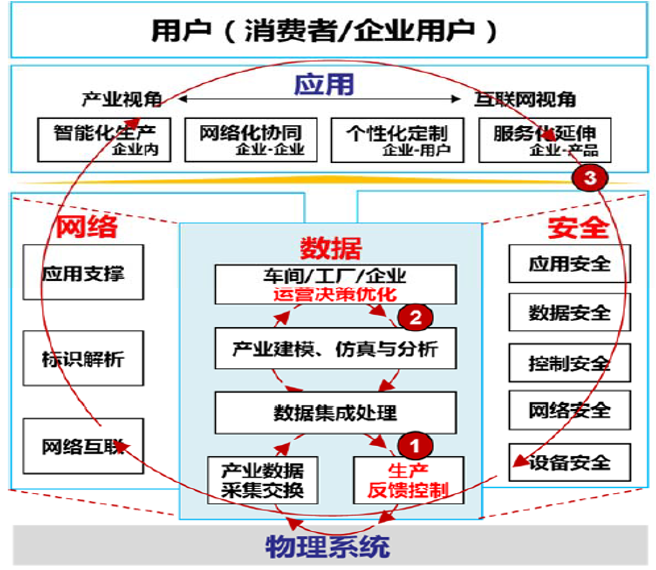
Figure 7 China Industrial Internet System Architecture
1. Industrial Internet
As the name suggests, "Industrial Internet" is the "Internet" for industrial purposes, and the "platform" is the aggregated structure of network, data, and software implementation of these industrial Internets. As the product of the deep integration of the new generation of information and communication technology and manufacturing, the Industrial Internet will drive tremendous changes in China's manufacturing production methods, corporate organizations, and product models. Major manufacturing powers in the world basically regard system architecture as an important starting point for the development of industrial Internet or intelligent manufacturing. The Industrial Internet is an industrial and application ecology formed by the deep integration of the Internet and new generation information technology with global industrial systems; the Industrial Internet is the infrastructure for the development of industrial intelligence, a network that realizes ubiquitous connections between industrial elements, control systems, information systems, and people; the core of the Industrial Internet is the platform, which realizes the integration, processing, and analysis of massive industrial data through cloud and industrial big data; the Industrial Internet is a new model and new business format that can realize various intelligent production, networked collaboration, and service-oriented extension. The essence of the Industrial Internet is data first and comprehensive interconnection. On the basis of comprehensive interconnection, data flow forms intelligent changes, forming new models and new business formats. Compared with the civilian or consumer Internet, the Industrial Internet places more emphasis on data accuracy and real-time performance, on strong and high-performance connections, on security guarantees and participant trajectory records, and on integration, analysis, and modeling based on a variety of data. The Industrial Internet will eventually provide an intelligent large-scale system.
Internet users in the consumer field can access a large amount of Internet data, conduct business transactions and personal financial transactions through the Internet, and can download and run numerous personal learning, entertainment and productivity software. The current development in this area in the industrial field is still very insufficient. As General Secretary Xi Jinping said at the 19th National Congress, "Socialism with Chinese characteristics has entered a new era, and the principal contradiction in our society has been transformed into the contradiction between the people's growing needs for a better life and unbalanced and inadequate development." Similarly, from the perspective of the growth of the Internet itself and the digital foundation and digital development promotion provided by the Internet to the social economy, the development of Internet network infrastructure in the consumer and industrial fields, network application scenarios and cases, the number and users of network application software, and the innovation of commercial value and product innovation brought by the Internet are all very unbalanced and inadequate. Based on this basic fact, my country's industrial Internet has an extremely broad space for development. Once it is correctly guided and produces a positive feedback effect, it can amplify strong social and economic benefits and better serve the strategic goal of "building a prosperous, democratic, civilized, harmonious and beautiful socialist modern power". On March 5, 2018, the first session of the 13th National People's Congress opened in the Great Hall of the People in Beijing. Premier Li Keqiang delivered a government work report. [9] In the report, suggestions were made for government work in 2018 and clearly pointed out the development of industrial Internet platforms. The original text is as follows:
"Accelerate the construction of a manufacturing power. Promote the development of integrated circuits, fifth-generation mobile communications, aircraft engines, new energy vehicles, new materials and other industries, implement special projects for equipment with major shortcomings, develop industrial Internet platforms, and create a "Made in China 2025" demonstration zone. Significantly reduce industrial production licenses, strengthen product quality supervision. Carry out comprehensive quality improvement actions, promote benchmarking with international advanced levels, promote the spirit of craftsmanship, and create a quality revolution made in China." [9]
2. Industrial Internet Platform
You can first understand the industrial Internet platform logically.
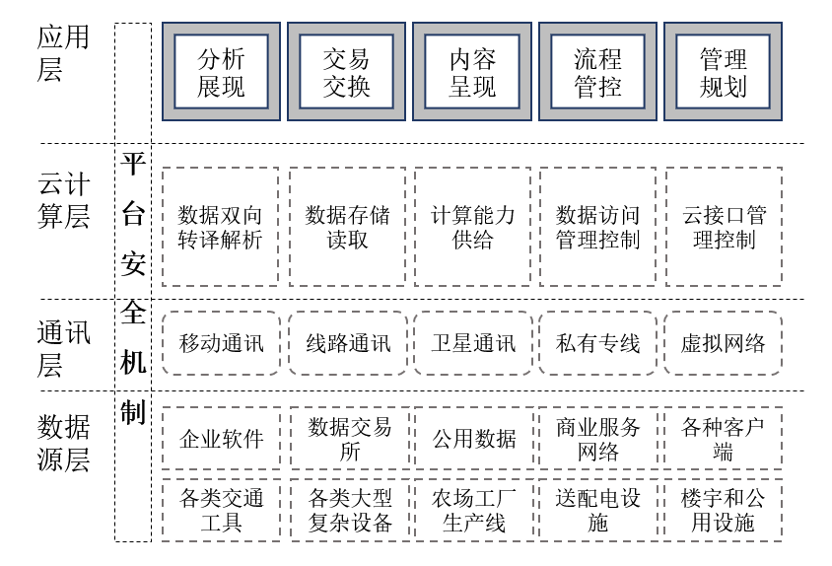
Figure 8 Industrial Internet logical architecture [45]
The Industrial Internet solves system-wide problems. The top layer of the industrial Internet architecture is applications, the bottom layer is composed of data sources and communication networks, and the middle layer is the cloud computing layer, which provides rich possibilities for platform development, integration and collaboration. The interconnection of communication networks is the foundation; data sources are the core. With data sources as the core, common industrial intelligent scenarios such as intelligent production control, intelligent operations, and decision-making optimization can be formed. Security is an important guarantee for the industrial Internet at all levels. The detailed breakdown includes transmission security, data security, access security, operation security, as well as overall security strategy, security tracking, security audit, etc.
Let’s talk about data sources first, which is the source of data. Data can be collected from entities in the physical world, such as cars and airplanes; it can also be large industrial equipment, such as blast furnaces, substations, etc.; it can also be large farms, airports, parking lots, etc.; it can also be network facilities such as water networks, power grids, and three-dimensional high-rise buildings, stations, etc., to name a few. There is also a type of data source that is already digitized, such as databases, software data accumulated in enterprises, public weather, transportation, population, etc. Of course, it can also be commercial applications on the Internet such as Taobao, JD.com, finding steel prices for steel mesh, website webpage addresses that appear in certain keywords crawled out by crawlers, etc. The last data source relies on user input, such as clicking on a picture or video on a mobile phone, entering a card number, mobile phone number, etc. These are all ubiquitous data sources.
The existence of data alone has no value. It is valuable only when the data is delivered to the users who want to consume it through communication. The original internal informatization of enterprises was all about straight-through data consumption. For example, the sales price and quantity list of the sales department is sent to finance, and the payment from finance is sent to purchasing, etc. Things are different after the emergence of the industrial Internet platform. Everyone submits data directly to the platform, and the client that consumes information can obtain it from the platform without using the original data source. However, no matter how information flows, communication methods are inseparable from the communication layer. Mobile communication is the combination of the familiar mobile phone and Internet data card. It is the most popular data communication method and the most common civilian communication method that is most easily interfered, blocked, and intercepted. Of course, there are many methods of fixed line communication, which are relatively safe and stable, and are more suitable for large-volume data communications; while satellite communications often cover places far away from civilized facilities in the wild, are relatively expensive, slow, and have low bandwidth, and are more suitable for field missions. A dedicated line is a higher level of line communication. It is a dedicated line with standard bandwidth. It has less data transmission interference, less competition, and guaranteed communication quality. It is also relatively expensive. Virtual networks use software technology to process data in various technologies and then transmit it to the other party through non-specific lines. It is cheaper than dedicated lines but can ensure a certain degree of data privacy. However, the speed and bandwidth will be affected by network congestion.
Once the data is aggregated into the platform, the format and code of the original data are converted into plain text through data pre-storage, pre-processing and translation analysis. Due to the diverse industrial protocol languages, data privacy, and high security requirements, industrial data is compressed and transmitted in order to save bandwidth, so it must undergo certain processing before it can be read. Moreover, some cloud computing infrastructure will also compress or encrypt data before storing it, so translation and analysis are functions that all cloud computing platforms must have. The next step is to store and read data. Since cloud computing provides limited memory resources most of the time, most of the time the computing system needs to frequently read data and store calculation results, which uses many types of technologies. Next is the provision of computing power, as small as a few virtual CPUs12, as many as tens of thousands, but basically it is the ability to calculate data. Cloud computing can provide computing power on demand. This is the biggest advantage of cloud computing. Just like the electricity meter and lines at home can provide a certain amp of power output in a restricted manner. Due to the source of data, the confidentiality level of data, the freedom of data owners and data users on the platform are all restricted. This is a bit like the entrance and exit of rooms in a hotel with an access control system. The access control of data on the platform is the access control system of the data platform. Cloud interfaces are the same thing as cloud services that everyone often talks about. These cloud services are developed by programmers on the cloud platform and will be called by various applications. Such calls need to be orderly, controllable, trackable and managed. This system is a must for the platform, because the final cloud service must be measured and accounted through this.
Finally, there is the application layer at the top, which is the part that users care about most and use most. In summary, there are five types. 1. Analysis and presentation is to turn data into images. People's ability to read numbers is very limited, but a picture is much simpler. We can quickly see trends, heights, sizes, light and shade, etc. 2. Transaction exchange refers to the record of transaction exchange behavior between platform participants. The last thing we use on Taobao is basically to form a transaction and exchange. 3. The content presentation is easy to understand, which means reading books and pictures. We usually go online to read pictures, books and news. On the industrial Internet platform, what we see may be design drawings, quotations, product pictures, product function introductions, etc. 4. Process control refers to the control of an industrial process, such as turning on a switch, closing a valve, opening a pipeline, agreeing to a contract, and entering a design draft. These all belong to process control. 5. Management planning refers to the behavior of setting quantitative limits that is common in business and management, such as opening a credit limit on a credit card, entering a team's monthly travel limit for December, setting the total power supply of a power grid to commercial facilities, etc. These management plans are often macroscopic and require collaborative work and full communication between multiple parties and across organizations. The biggest role of the Industrial Internet is that it can create efficiency through collaborative work across industries, organizations, geography and time, and cultural and administrative boundaries. This enables the entire industrial action body to be fully informed and to take correct actions and reactions based on the information.
3. Industrial Internet platform software architecture
In 2017, the Industrial Internet Industry Alliance organized and compiled the "Industrial Internet Platform White Paper". The white paper comprehensively explained the industrial Internet platform system architecture and key elements, technical system, industrial system, application scenarios and cases, development suggestions, etc. [15] Industrial Internet platforms are highly dependent on cloud computing technology and software systems. "Cloud" is a virtual concept, which is to connect to a remote server through the Internet to obtain its computing, storage or data services. Cloud is a metaphor for network and Internet. It mainly has the characteristics of strong computing power, strong scalability, low cost, high reliability and on-demand services. According to the different services provided, cloud services can be divided into the following three categories or levels:
-
Infrastructure as a Service (IaaS) 22 )
-
Platform as a Service (PaaS 40 )
-
Software as a Service (SaaS) 49 )
These three categories and three-tier cloud services are reflected in the industrial Internet platform architecture.
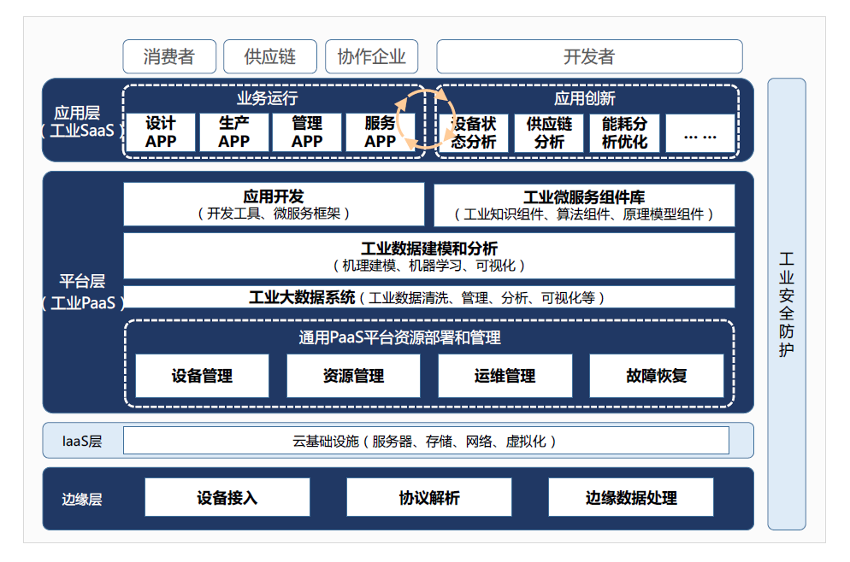
Figure 9 Industrial Internet Software Architecture Diagram – Industrial Internet White Paper (2017) Page 21 [46]
The lowest layer is the edge layer, which is used to connect industrial equipment. Device access is mainly responsible for converting current and voltage measurements into numerical quantities through physical interfaces, network ports, serial ports, etc.; or through analog-to-digital converters. The sensor is also an abstract analog-to-digital conversion device, mini and highly integrated. It can read the values generated by the equipment system, such as temperature, vibration, humidity, sound, gas concentration, etc. These values can be transmitted via some communication protocol. Protocol parsing refers to parsing and converting original data into clear code. There are many types of edge data processing. The edge here refers to processing close to the edge of the device. Cloud computing capabilities are not used. The computer (which may be a general-purpose computer or a computer motherboard without a monitor, keyboard and mouse) is used to perform encryption, modulation, data cleaning, data compression, data code conversion, format conversion, etc. Generally speaking, what the edge does is to collect data, prepare the data and then enter the transmission state, and then transmit it to the IAAS layer of cloud computing. In addition, some edge computing is related to the control and interaction of the device.
The data at the IAAS layer has been written into storage. This storage may be distributed on a physical server, or may be distributed in multiple storage devices on multiple servers through the network. Logically, you can ignore the specific location of the data. The ability to view, read, store and calculate is the capability provided by IAAS layer cloud computing.
The PAAS layer is mainly for programmers, that is, program developers. Based on different industrial problems, programmers can use different conventional algorithms, mathematical logic, big data algorithms or artificial intelligence algorithms to find out key data, patterns, symptoms, and principles from the data, and then output these calculation results in the form of microservices (a large number of two-way data interfaces with consumable and understandable data). The PAAS layer also has its own management controls, including management of data sources (inclusion and elimination), management of programmer behavior, allocation of cloud computing and storage resources, basic system operation and maintenance, fault handling, and ensuring the healthy operation of the environment, etc. Here are some common microservice scenarios:
-
Basic query, performs batch query and comparison of data based on parameter variables input by the user, and outputs a complete set of query results. This is the basic operation of most computer systems
-
Data processing, simplifying or aggregating certain types of data according to input conditions to form a new data series for subsequent calculation operations.
-
Forming a chart into a table is to obtain a data series based on the above two operations, and then use some or more mathematical methods to give the basic data of the chart and output it to a specific application.
-
Logical judgment is based on the above operations and mathematical operations, as well as some data comparisons, and finally reaches a certain conclusion. This conclusion is not necessarily a closed answer. In many cases, it can be a probability result and a possible multiple-choice result. Through microservices, these results can be read and judged by humans, allowing users to make better decisions.
-
Transaction records, which are the most common operations in business systems, are to record the content of repetitive business activities confirmed by humans into the computer system. They are often accompanied by record writing operations, and there are also operations such as data compression, distributed storage, data encryption, etc., as well as recording operation time, operating terminals, operators, and a series of incidental information based on data audit requirements, legal compliance requirements, and security policies.
The top layer is the cloud application SAAS layer, which is the user interface and interface layer for users to directly read and operate. The applications we usually open on mobile phones and tablets are basically the same. Desktop computer programs are gradually becoming SAAS. The most common Microsoft Windows and office suite software have begun to be forced to cloud technology. SAAS software has much lower requirements for users. Generally, apart from simple installation and login, the rest is about how to use the software. SAAS minimizes the computing resources, technical strength and long-term operation and maintenance technical work that users have to invest. SAAS software is generally paid according to the number of users and usage time and volume. Traditional software used by industrial users includes CAD66、CAM67、BIM68、ERP、CRM、SRM、MES、APS6、WMS58Various software involves product design simulation, manufacturing, site architectural design simulation, enterprise resource planning, customer relationship management, supplier relationship management, manufacturing execution system, advanced detailed scheduling, and warehouse management systems are gradually moving toward cloud and SAAS. Generally speaking, the initial investment cost of SAAS software is low and the time to get started is short, which can reduce the enterprise's early equipment asset investment and talent investment in information software. Although the market provided by the industrial industry for these general software is large enough, the greatest value of the Industrial Internet is to provide cheap, efficient and high-availability SAAS applications in some niche fields based on the accumulation of specific professional knowledge. Here is an example. The largest painted surface in automobile production is the front cover of the car. The quality requirements for this painted surface are very high. The traditional process relies on manual visual observation to judge whether the quality of the paint is good or not. This has two major disadvantages: one is a poor working environment and long-term exposure to volatile and low-toxic gases, which is harmful to workers. , even if personal protection and gas respirator masks are provided, it is a very difficult and uncomfortable working environment; secondly, the human brain will be tired and adaptive. After long-term observation, it will self-train and psychological hints, which will either amplify the sensitivity of the inspection or reduce the sensitivity. The direct result will be a slowdown and delay in the production line rhythm or the missed detection of substandard products off the line. Now there is intelligent spray paint quality inspection software, which uses standard procedures to take pictures of the spray painted surface under standard lighting conditions. The software will automatically enlarge the photo, self-learn to scan continuous color blocks, scan the effective imaging area of the entire photo throughout the entire process, and judge whether the spray painted surface is qualified according to the threshold set by image recognition. The speed basically reaches second-level feedback, which is fast and accurate. It can also accumulate calculation methods and experience results in the long term. Once this single specific application is rolled out across all car production plants, the efficiency gains and reduction in injuries will be considerable. Taking advantage of the architectural advantages of the industrial Internet platform, in theory, such a software supplier can serve automobile companies across the country, providing the best price and highest level of service. Here we can summarize the four elements that are most effective in leveraging the advantages of the industrial Internet platform: extensive connectivity, knowledge accumulation, innovative applications, and cloud services. Of course, there are many similar SAAS applications that can be made in the industrial field, which requires our business community, academia, engineering community, and software community to integrate and innovate more frequently and extensively across borders, industries, and regions. The Industrial Internet platform can provide a real-time and extensive data base for everyone to do digital innovation. The Industrial Internet platform has complete computing capabilities and computing methods to meet the realization of various modern computing methods. The Industrial Internet platform can also bring together various innovative entities in industry, academia and research to work together, each providing the best and most valuable parts to form the most efficient and extensive application service output. For a big manufacturing country like my country, if all kinds of manufacturing enterprises in the entire society can fully access the industry The Internet platform uses the latest digital products and application results to improve production efficiency, technology and quality levels; through sincere collaboration, exchange of needs, and vigorously reducing sluggish assets accumulated in the supply chain and production links, it will greatly improve the productivity, material resources, and energy utilization of the whole society, and create better product and service categories for the society; industrial enterprises can ultimately provide high-quality, environmentally friendly, green and safe industrial product service delivery while energy and material consumption remain the same or even reduced.
Section 4 Practical Cases of Industrial Internet in my country
This section will introduce four typical cases in the field of industrial Internet. It involves key technical elements and production manifestations of various advanced manufacturing industries such as Internet of Things technology, automation control technology, remote device data collection, big data analysis, personalized product design and delivery, and single-piece production. The four typical scenarios of the Industrial Internet are: 1. Production process optimization for industrial sites; 2. Management decision-making optimization for enterprise operations; 3. Resource optimization allocation and collaboration for socialized production; 4. Management and service optimization for the entire product life cycle. The following cases are all reflected and involved, and I hope it will inspire readers.
1. Yangshan Port Phase IV Intelligent Terminal
As the world's largest single terminal with the highest degree of comprehensive automation, Yangshan Port is the shining point of Shanghai Yangshan Port Phase IV Terminal. [18] Yangshan Port Phase IV Terminal maintains unique quietness and orderliness amidst busy operations: a large crane lifts the containers on the ship, and then gently places them on the automatic guided transport vehicle (AGV)3), AGV3Carrying huge containers to the yard, except for the orderly and hard-working automated equipment, the original workers on the dock have disappeared. Only in the office can you see the new generation of information-based dock workers. Since the opening of Yangshan Port in June 2018, the terminal has operated an average of 6-7 ships every day, and the production operation has been stable and efficient. Yangshan Port Phase IV Intelligent Terminal consists of two major systems, one is a software system. The software system has two important subsystems: the command and dispatch system is the "brain" of the terminal; the independently developed equipment control system is the "heart" of the terminal. The second is the hardware system. The equipment invested in the opening of Yangshan Port Phase IV Terminal in 2017 includes 10 quay cranes (large cranes), 30 rail cranes, and 50 automated guided vehicles. In the future, equipment will be gradually added, and the number of AGV guided vehicles alone will reach 130. With 10 quay cranes, there are 10 operating lines. Through calculation, the route planning module in the dispatching system directs all operations from the shipside to the yard, the crane to the AGV guided vehicle, the guided vehicle to the yard, and the guided vehicle connecting to the rail crane. All loading, unloading, transportation and production processes are seamlessly connected through real-time control systems. This system has a margin when designing. Not only can it plan for the most complex situations, but its algorithm can also be continuously iteratively optimized.
The Yangshan Port automatic terminal is constructed by Zhenhua Port Machinery. The entire project is divided into four stages: equipment manufacturing, software development, integration testing, and official opening of the port. Over the past two years or so, Zhenhua has had hundreds of technicians involved in the construction of the automation system for the fourth phase of the terminal. From the perspective of independent innovation, AGV guided vehicles are the most dazzling innovation of automated terminals. AGV guided vehicles are the main force in container handling. They fully realize the collaboration between the cloud system and local software and automatically control the direction of unmanned driving. The most important thing is the reliability and weather resistance of the vehicle. No matter what the weather and temperature are, it works non-stop, from the seaside to the yard, 24 hours a day. The third generation guided vehicles are currently in use. It took ZPMC many years to develop this type of domestically produced guided vehicle with completely independent intellectual property rights. After the opening of Yangshan Port Phase IV Terminal, Zhenhua team deployed a team of 45 people to engage in professional equipment system operation and maintenance cycle operations: first, responsible for the maintenance of automation systems and equipment; second, ensuring the debugging of newly added systems and equipment to ensure continued growth in production capacity; third, continuously optimizing the entire equipment hardware system and software system, and inputting new design requirements for the development of future system solutions.
The long cycle of the Yangshan Port Phase IV project lasts for 5 years. Through the efforts of many participants, Zhenhua Automated Intelligent Terminal has become world-renowned. Yangshan Port Phase IV fully automated unmanned terminal is a typical case in which the manufacturing industry has transformed into a manufacturing service industry through the development of new Internet of Things production systems and the development of intelligent products to form intelligent terminal production service capabilities.
2. Treeroot Internet integration of industry and finance [19] [20] [21]
In early 2017, Sany Heavy Industry's IoT team started a business and established Shugen Internet Technology Co., Ltd., and Shugen Internet launched the "Root Cloud" platform. Based on Sany Heavy Industry’s experience in equipment manufacturing and remote operation and maintenance of equipment vehicles, Shugen Internet specializes in the development and application construction of industrial Internet platforms. At present, the focus is on equipment vehicle health management, equipment vehicle consumption and residual value management, and providing comprehensive solutions and new information and financial services from equipment end to industrial Internet platform.
The "Root Cloud" platform mainly has three functions:
-
Intelligent Internet of Things: Through vehicle-mounted front-mounted sensors, vehicle control systems, data transmission equipment and other sensing and communication equipment, the data of various engineering equipment that has been shipped out of the factory is collected and analyzed, and then transmitted to the cloud.
-
Big data and cloud computing: For massive equipment data, we provide services such as cleaning and governance data, privacy and security management, and stable and reliable cloud computing result output. We build an industrial big data operation monitoring and display system based on industrial experience and knowledge.
-
SaaS 49 Applications and solutions: Provide end-to-end solutions and plug-and-play cloud applications for user enterprises. It can provide developers with a variety of development components and innovate new software applications.
At present, the "Root Cloud" platform can provide enterprises with industrial application services such as asset management, intelligent services, and predictive maintenance. At the same time, industrial chain financial innovation is carried out based on this platform, and products such as insurance and maintenance have been put into practice to serve insurance companies and financial institutions and improve their risk management and financial service capabilities. Jiulong Insurance, a subsidiary of Sany Group, is the main partner in jointly launching extended warranty products for excavators.
The "Genyun" industrial Internet platform can gather a large amount of equipment and vehicle data to help banks comprehensively monitor collateral. Through data connectivity with upstream and downstream enterprises in the supply chain, it can help insurance companies understand the health status and user behavior of vehicles or special equipment. After the insurance company has this information, it can achieve accurate pricing of insurance and make the price more competitive in the insurance market. Users of equipped vehicles are supported to use first and pay later.
3. Haier Intelligent Manufacturing【22】
Machine-translated from the Chinese original 领导干部读本 | 中国制造2025和工业互联网(二) (published 2020-10-29). WeChat original ↗