
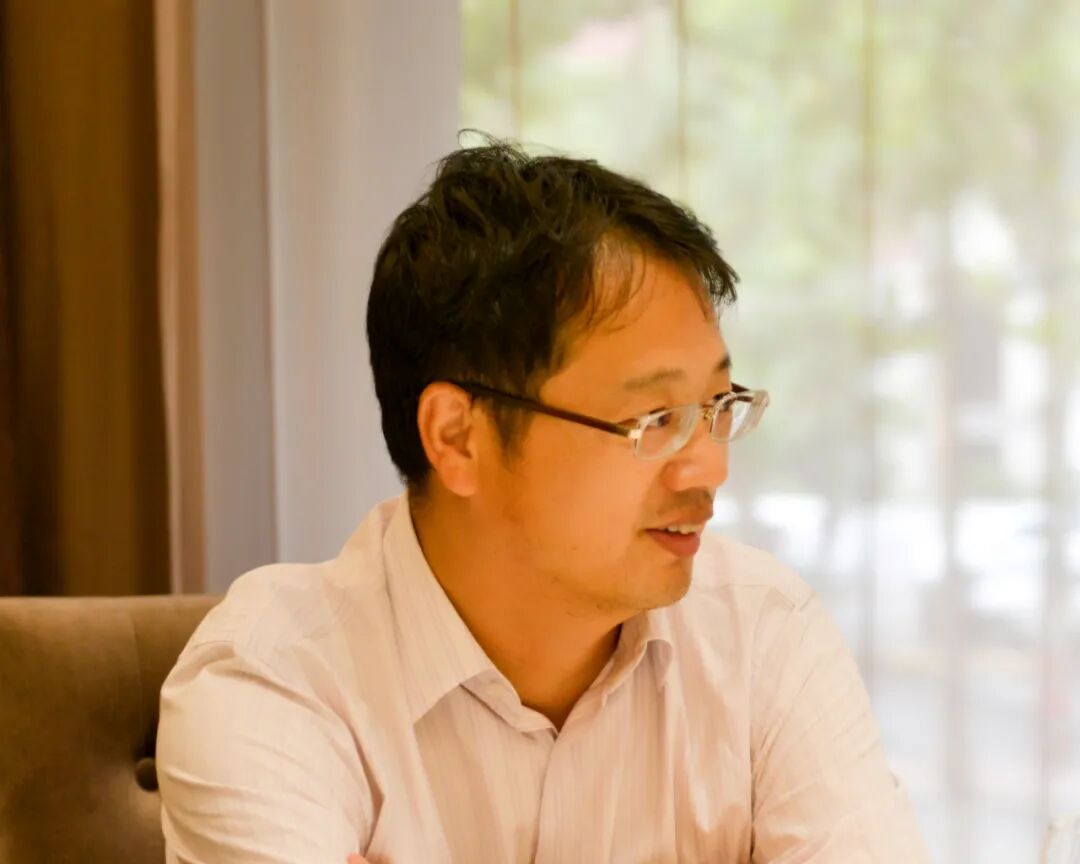
Lu Wenhao, in Xi'an in 2018 (photo by Liu Hongchang)
Editor's note: In the process of pursuing modernization, China has encountered endless ups and downs and agitation over the past century, and has inevitably drifted away from tradition. The countryside, as the carrier and symbol of "tradition", has also been helplessly declining and decadent. At present, as we weave "nostalgia" to restore lost memories, a top-down movement to revitalize and rebuild rural areas is gradually unfolding driven by national policies. At the same time, cities are growing crazily at an unprecedented speed, with high-rise buildings lined up one after another, vehicles flowing continuously, and 200 million migrant workers traveling between urban and rural areas. Cities and villages, with the former prospering and the latter declining, continue to play out the dynamic drama of the dual opposition between urban and rural areas since modern times. From the coordinated development of urban and rural areas to the integrated development of urban and rural areas and then to the integrated development of urban and rural areas, policymakers and thinkers are working hard to improve or even eliminate the insufficient and unbalanced development situation between urban and rural areas. Tracing back to its roots, the problems we are experiencing today began more than a hundred years ago. In the first half of the 20th century, Wu Jingchao, a forward-looking sociologist, started from the reality of China's poverty and weakness at that time, and referred to the economic and social development experience of advanced European and American countries. He clearly proposed that China should take urbanization and industrialization as the leader and drive the process of rural modernization. He conducted in-depth research on the necessity and possibility of taking this path as well as several problems that will arise. In order to commemorate this ideological pioneer, and to provide ideological resources for the problems we face today, the Commercial Press recently published Wu Jingchao's selected essays on urbanization, industrialization and urban-rural relations - "Urban Consciousness and National Future". On the occasion of the release of this new book, the Editorial Department of Scholars specially interviewed the editor of the book, Mr. Lv Wenhao, an associate researcher at the Institute of Modern History of the Chinese Academy of Social Sciences, and asked him about his thoughts on the selection of this book, some important discussions of Mr. Wu Jingchao, and the current status of document collection and research on Mr. Wu Jingchao in domestic academic circles. He also gave some basic introductions to readers from the editor's personal perspective.
Interview with scholars:Lu Wenhao is an associate researcher at the Institute of Modern History, Chinese Academy of Social Sciences. He graduated from the Department of Sociology of Peking University in 2003 with a doctorate. His professional research directions include modern Chinese cultural history, intellectual history, social history, sociological history, etc. He has authored books such as "Illustrated Biography of Pan Guangdan" and "Pan Guangdan in the History of Modern Chinese Thought".
Interviewer:Sun Xuqian, hereinafter referred to as "scholar".
Scholar: In the postscript of your recently published book "Urban Consciousness and National Future," you defined Wu Jingchao as "a forward-looking sociologist who should not be forgotten." The beginning of the article also introduced Wu Jingchao's various achievements and his participation in quite a few debates. When did such an active sociologist begin to be forgotten, and why was he forgotten?
Lu Wenhao:The reasons why Wu Jingchao was "forgotten" can be analyzed from multiple angles.
First, his thinking was ahead of his time, and few people before had realized the importance of the issues he discussed.For example, he advocated the combination of socialism and market economy, rejecting the socialist planned economy that was popular at the time and later dominated the practice of socialist construction; he advocated the establishment of a minimum wage law, the collection of progressive income tax and inheritance tax, and the government's establishment of public utilities to "equalize the rich and the poor"; he introduced the West to provide workers with unemployment insurance, illness insurance, etc. He hopes that relevant parties in China can pay attention to and learn from the experience of disease insurance, disaster pensions, and old-age pensions; he introduced the implementation of compulsory education laws (compulsory education laws) and family allowances in the West to eliminate social inequality caused by family origin; he saw the possible changes in marriage and family in the future from the openness of sharing of family responsibilities and sexual relations in Western societies.
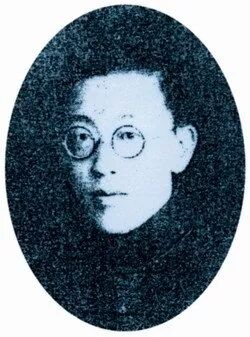
Wu Jingchao (1901-1968), sociologist (Source Network)
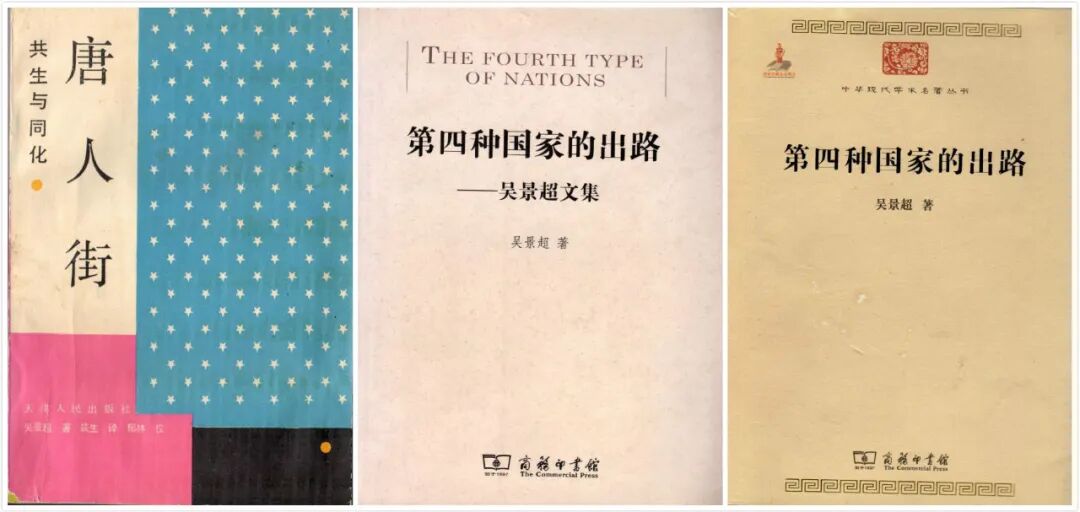
Second, his writings have not been systematically compiled and republished for a long time, making it difficult for contemporary readers to understand his ideas.Over the past 40 years of reform and opening up, only the following three types of Wu Jingchao’s writings have been translated, compiled and published:
(1) "Chinatown: Assimilation and Symbiosis", translated by Zhu Sheng, edited by Yu Lin, Tianjin People's Publishing House, 1991 edition;
(2) "The Fourth Way Out for a Country - Collected Works of Wu Jingchao", Commercial Press, 2008 edition;
(3) "The Fourth Way Out for a Country", 2010 edition of the "Modern Chinese Academic Masterpieces" series of The Commercial Press.
Compared with his vast writings, only a small part has been republished. If readers cannot read his works, how can they appreciate his ideological style?
When did such an active sociologist begin to be forgotten? I want to start from 1957 when he was mistakenly classified as a rightist. Over the years, some people have recognized the value of his ideas and begun to do some research. However, these studies are too few in number, not many of high quality, and not widely disseminated among the public. Therefore, ordinary readers may find this name a bit unfamiliar.
Scholar: How did you “discover” Wu Jingchao?
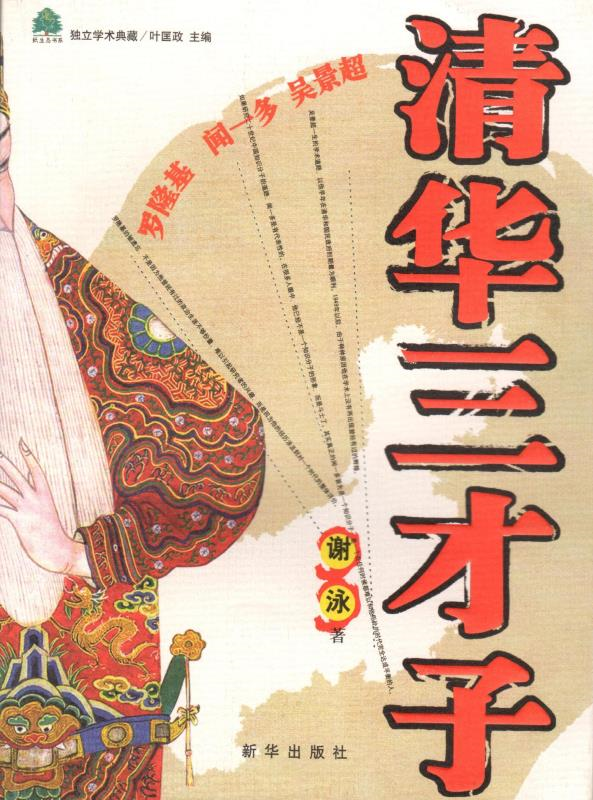
Lu Wenhao:I came into contact with Wu Jingchao’s writings while studying the history of Chinese sociology, especially Pan Guangdan’s social thought. In the first few years, my contact with Wu Jingchao was partial and fragmentary, and did not attract any special attention. In those years, I collected some of Wu Jingchao's writings and read some of them, but my main focus was on their "historical value" for the issues I was studying. What touched me during this period were the article "Mr. Wu Jingchao's Academic Thoughts and Academic Style" by Professor Pang Shaotang of Nanjing University [Journal of Nanjing University (Philosophy, Humanities and Social Sciences Edition), Issue 5, 2004] and Chapter 3 "Scholar Wu Jingchao" of Mr. Xie Yong's "Three Talents of Tsinghua" (Xinhua Publishing House, 2005). The two seniors have keen observations on the development trends and crux of Chinese society over the past century.Their evaluation of Wu Jingchao exceeded my expectations. However, their discussions contained some "preconceptions" and emotional overtones, and they could not completely convince me from a theoretical perspective.
Limited to the materials I saw at that time, I tended to believe that the industrialized urbanization advocated by Wu Jingchao has become a reality in the contemporary era. His writings mainly have historical value and have limited reference value for contemporary scholars. When Yang Fang, a reporter from China Youth Daily, interviewed me over the phone in 2008, what I said was roughly the meaning above, which she understood and transformed into this statement: "A few years ago, Lu Wenhao was invited by the Social Sciences Literature Press to publish a set of Wu Jingchao's But it had to be abandoned in the end, mainly because there were not many manuscripts of academic value." (Our reporter Yang Fang: "Wu Jingchao: Wasted Talent," China Youth Daily, May 7, 2008, page 12)
My opinions written by the reporter are somewhat different from my original intention, but the reason why this happened is that she probably captured my implication that Wu Jingchao's writings have limited significance at the moment. Later, I read several articles by Wei Chunhui, who was then an associate professor at East China University of Science and Technology, discussing the value of Wu Jingchao’s thoughts. In particular, her explanation of Wu Jingchao’s pioneering views on socialist market economy aroused my interest in further exploration. I once read Wu Jingchao's historical research paper carefully and was deeply moved by his clear thinking and delicate analysis. Around this time, I began to intensify my work based on the information I had collected in the past. I also spent a lot of time studying the information over and over again. After reading it, I felt that he was indeed a sociologist and intellectual who should not be "forgotten".Wu Jingchao's writings are not eye-catching at first glance. The language is simple and straightforward, and the views are straight to the point. There is no deep twists and turns; but if you read it carefully and attentively, you will appreciate the depth of his care and follow his train of thought to appreciate his style of thought.
Scholar: Could you please briefly introduce Mr. Wu Jingchao’s writings and the corresponding arrangement?
Lu Wenhao:Wu Jingchao’s main works include the following 11 types:
(1) "Urban Sociology", World Book Company 1929 edition;
(2) "The Biological Basis of Society", World Book Company, 1930 edition;
(3) "Social Organization", World Book Company 1931 edition;
(4) "The Fourth Way Out for a Country", Shanghai Commercial Press, 1937 edition;
(5) "The Path to China's Industrialization", Changsha Commercial Press, 1938 edition;
(6) "The Road to China's Economic Construction", Chongqing Commercial Press, 1943 edition;
(7) "Wartime Economic Scales", China Cultural Service, 1944 edition;
(8) "Refugees after the Disaster", Shanghai Commercial Press, 1947 edition;
(9) "Developing the National Economy in a Planned and Proportional Way", China Youth Publishing House, 1955 edition;
(10) "Planned Acquisition and Planned Supply during the Industrialization Period of the Soviet Union", Popular Books Press, 1955 edition;
(11) "Chinatown: Assimilation and Symbiosis", translated by Zhu Sheng, edited by Yu Lin, Tianjin People's Publishing House, 1991 edition.
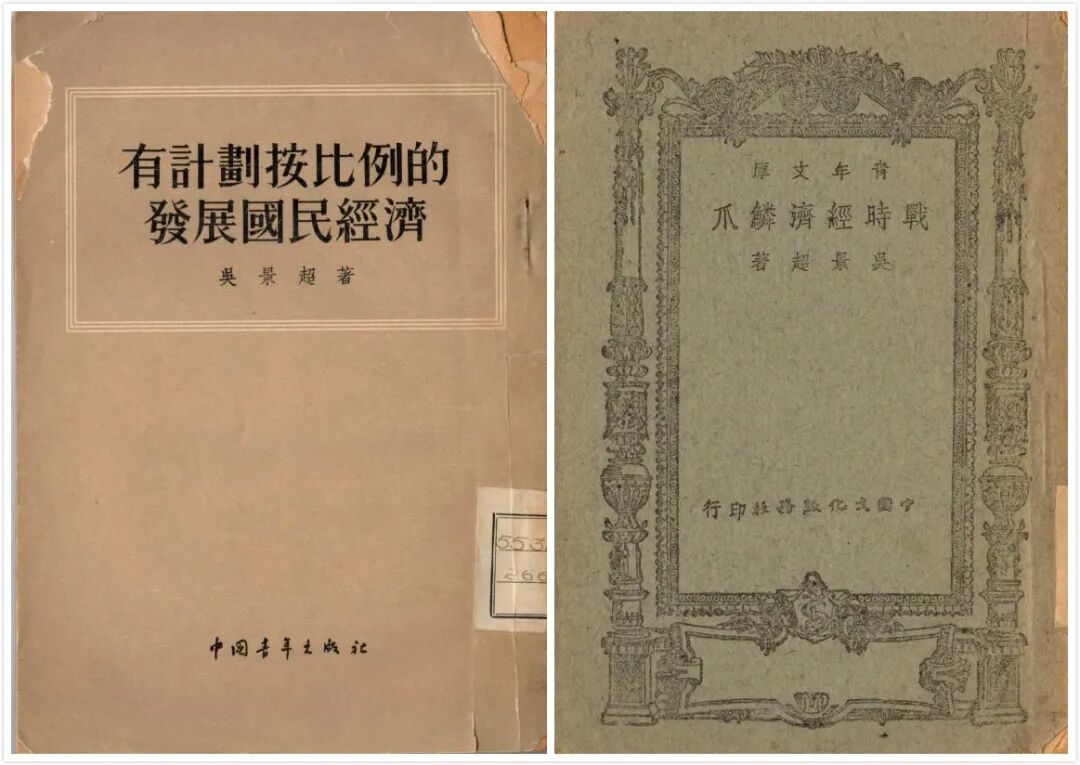
Most of these works are short in length, and many of them are collections of newspaper articles on a certain theme. Mr. Wu Jingchao's writing career was closely related to many newspapers and periodicals. It can be said that his main writings appeared in the form of newspaper and periodical articles. Its scope is very broad, including poetry, prose, novels, current reviews, book reviews, etc. in the early years. Later, it mainly focused on academic and rational discussions of social and economic issues. Over the years, I have spent a lot of time collecting and sorting out Mr. Wu Jingchao's writings. Now I have roughly collected them all, and the total number of words is estimated to be about 2.5 million words. Over the years, I have been promoting the publication of "The Complete Works of Wu Jingchao", and now I have some ideas.
Scholar: Because Mr. Wu Jingchao has ten years of official experience in the Executive Yuan of the National Government, you used the term "bureaucratically organized intellectual" to evaluate Mr. Wu. However, Mr. Wu "has always been aloof from the bureaucracy in which he is embedded, maintaining his true nature as a scholar." Many intellectuals with similar experiences find it difficult to "be clearer outside the mountains than at home." How does Mr. Wu Jingchao integrate the two?
Lu Wenhao:The background of Wu Jingchao's participation in government work was the trend of scholars entering politics in the mid-1930s. At that time, he was a member of the intellectual group of the Independent Review headed by Hu Shi. There are two generations of intellectuals in the Independent Review. The main members of the older generation include Hu Shi, Weng Wenhao, Ding Wenjiang, Jiang Tingfu, Ren Hongjun, Chen Hengzhe and his wife, etc.; Wu Jingchao is 10 years younger than Hu Shi, and belongs to the younger generation. Similar to him is Chen Zhimai, a professor in the Department of Political Science of Tsinghua University. Both of them write well and have editing talents. When Hu Shi is not in Peking, he often entrusts the editorial affairs of the Independent Review to one of them. Weng Wenhao and Jiang Tingfu first joined the government, and Wu Jingchao was recommended by them. When they entered politics, they expected to be "guest mentors", hoping to do something for the government.
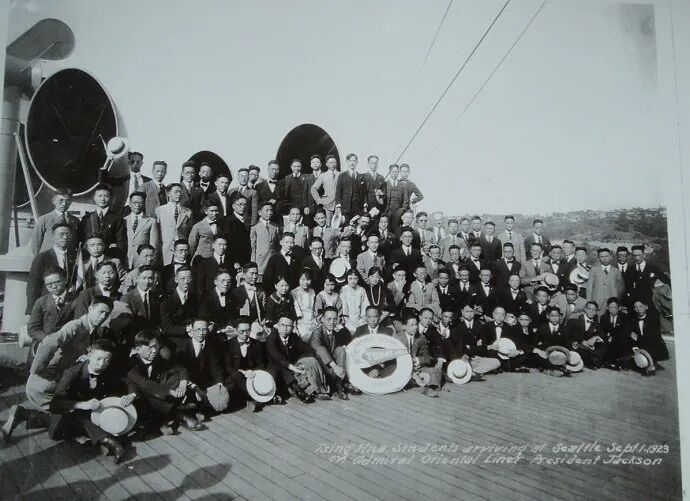
Students from the Class of 1923 of Tsinghua School took a group photo on the deck before leaving for the United States (Internet picture)
Shortly after Wu Jingchao arrived in Nanjing, Hu Shi wrote a letter to Weng Wenhao, Jiang Tingfu and Wu Jingchao, saying: "As for you friends (including Mr. Jimei and Brother Ji Gao, etc.), I absolutely believe that you are 'cleaner when you are out of the mountains than in the mountains.' However, I always feel that what is needed more at this time is a group of friends and ministers who can "face the court disputes", so I always hope that all brothers will work hard to educate the The work of the chief (educational leader) will be fruitful if he perseveres. The two offices of the Executive Yuan should become a 'shogunate', and everyone should treat themselves as guests and teachers, speak out when they have to, and fight when they have to. Don't make Yang Chengzhai laugh at others." ("Selected Correspondence of Hu Shi" (Part 2) compiled by the Institute of Modern History, Chinese Academy of Social Sciences, Zhonghua Book Company, 1979, pp. 302-303)
But after entering the government, they found that they were not familiar with the official way of dealing with people, and they did not have their own team. They were an isolated "clean stream" in the bureaucracy. When Wu Jingchao worked in the government, he mainly did research work, paperwork, and editing work. During this period, although his self-identity still belonged to an independent group of intellectuals, the change in identity made him consciously study some specific issues in China's economic construction at that time, providing academic basis for the government's decision-making. During his political career, he could be called a "bureaucrat-organized intellectual." After returning to the Department of Sociology of Tsinghua University in March 1947, his scale of speech expanded, which is why critical articles such as "A Tyranny Is More Fierce Than a Tiger" appeared. The reason why he is in the bureaucracy and does not join in the bureaucracy is thatHe and the intellectual group of the "Independent Review" to which he belongs are ideal and ambitious. They hope to influence leaders and influence the actual decision-making of the government through leaders. If their ambition fails, they can at least return to academia and have an escape route.Wu Jingchao published quite a lot of articles while working in the government. At this time, because he came into contact with a lot of actual situations and practical materials, he no longer basically learned from literature and materials as in the past, and his vision and realm were further improved.
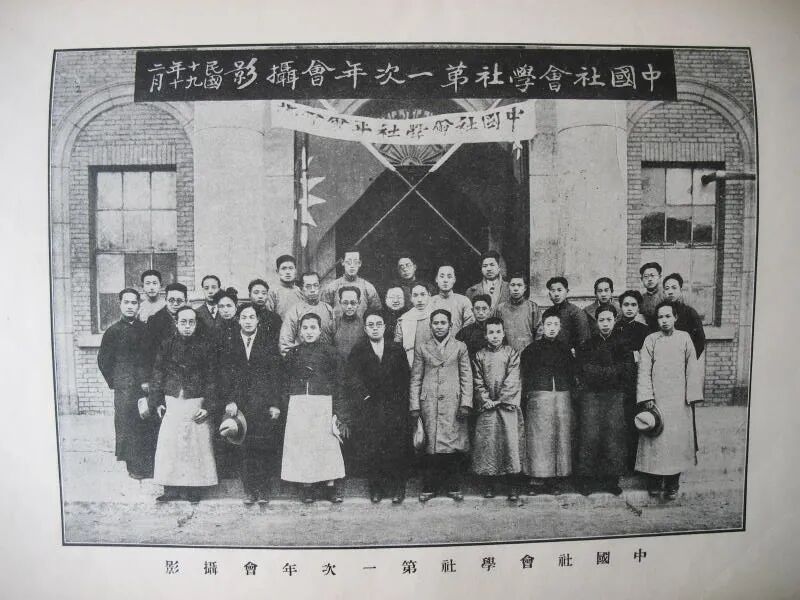
In 1930, the first annual meeting of the Chinese Sociological Society (Photo source: "Journal of Sociology" Volume 2 Issue 3, April 1931)
The tall and thin man wearing glasses in the back row is Wu Jingchao
Scholar: The two most distinctive keywords in Mr. Wu Jingchao’s thoughts are “urban consciousness” and “national future.” What is the biggest inspiration that Mr. Wu Jingchao’s thoughts on urban and industrialization construction give today?
Lu Wenhao:Wu Jingchao himself has not compiled a book on "Urban Consciousness and National Future". The title of the book was extracted by me as the editor. I chose this title based on my understanding of Wu Jingchao's thoughts. Both key words are derived from Wu Jingchao's own discussion. What this title means is that although Wu Jingchao learned authentic urban sociology research methods from the Chicago School and introduced them in China from time to time, his urban sociology research is not just satisfied with detailed and classified thematic research on urban communities. He is concerned about the larger issue, that is, how to relieve rural areas through urban development, promote rural areas, and achieve coordinated development of urban and rural areas. With Wu Jingchao's knowledge and talents, if he conducts specific urban community research, he will become an urban sociology expert with a high reputation in the academic world. However,His ambition is not here. People of his generation have deep feelings of patriotism and salvation, and they all want to do something for this country through their own efforts.Today, of course, there is a shortage of experts in specific urban social research, but macro-level research like Wu Jingchao's, which focuses on the overall situation and pursues the coordinated development of urban and rural areas, is still very important.This may be the greatest inspiration that Mr. Wu Jingchao’s thoughts on urban and industrialization construction bring to today’s readers.
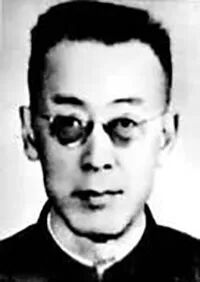
Wu Jingchao after middle age (Internet picture)
Scholar: Much of your research focuses on exploring the ideological value of sociologists such as Pan Guangdan, Fei Xiaotong, Wu Jingchao, and Chen Da. Do you think sociologists, as a group of intellectuals, have the greatest characteristics and value compared to other types of intellectuals?
Lu Wenhao:As a group of intellectuals, sociologists have some special features. They pay attention to social reality and have first-hand research on social reality. Their judgments are not based on fragmentary facts and personal feelings, but are supported by a large number of objective facts and data. Unlike humanistic intellectuals, there is only an indirect connection between professional research and social concern. They hope to use their professional research to influence government decision-making and participate in the process of social change. These sociologists have had some influence on government social policies to varying degrees. But what I want to point out in particular is that their research is not to blindly cater to the ideas of government dignitaries and passively provide rational arguments for government decision-making. They put forward opinions based on their own professional research, and if the government is willing to accept it, they will actively cooperate. If the government does not accept it, they will repeatedly dissuade them. If the dissuasion fails, they will express their opinions on the public opinion platform. For this situation, you can refer to a paper I published last year, "The Combination of National Conditions Awareness and Scientific Awareness—Chen Da's Exploration and Debate on the National Census Plan" ("Jianghan Forum" Issue 11, 2019). The same is true for Wu Jingchao. During his ten years in politics, he concentrated on studying China's economic construction path, which is consistent with the decision-making direction of high-level government officials. After returning to academia after the war, he continued to deepen his research on China's economic construction path from a theoretical perspective. His purpose was still to provide advice and suggestions for China's future development path. Unfortunately, the current situation is turbulent and the conditions for large-scale social and economic construction are not met. But these explorations by Wu Jingchao are still very valuable. This is an ideological legacy worth cherishing.
Scholar: Mr. Fei Xiaotong once proposed the "national future" of developing rural handicrafts, while Mr. Wu Jingchao emphasized the need to take the road of "industrialization" and "urbanization." The book also includes Mr. Wu Jingchao's refutation of Mr. Fei Xiaotong ("The Future of Chinese Handicrafts"). How do you evaluate these two roads?
Lu Wenhao:To be precise, Mr. Fei Xiaotong refers to "rural handicraft industry" and "rural industry" as "rural industry". However, he sometimes emphasized "rural handicrafts" and sometimes "rural industry," giving the impression that he failed to make a clear distinction between the two concepts. He did this because he considered the complexity of China's rural social reality, where both forms exist.
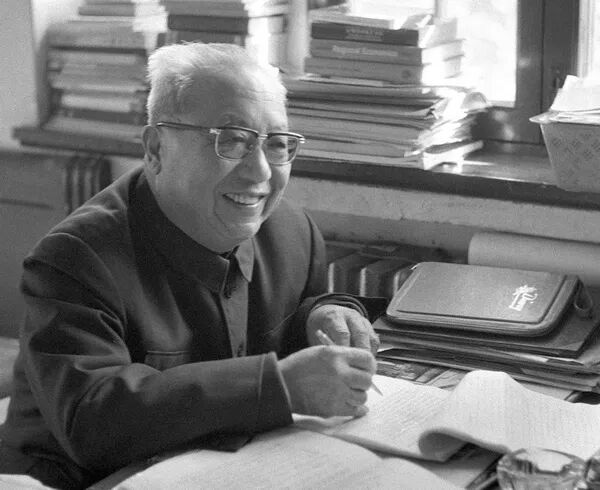
Fei Xiaotong (November 2, 1910 - April 24, 2005)
At that time, although the rural handicraft industry was slightly in decline due to the impact of imported products and urban daily necessities from abroad, it was still a viable production method in the vast inland. Inland rural areas relied on the traditional economic structure of complementing agriculture and industry for thousands of years to survive. Although the number of "rural industries" that used electricity as power was small at that time, in terms of long-term development prospects, it represented the development direction of Chinese society in a long historical period. In Mr. Fei's eyes, except for a few heavy industries such as steel that cannot be placed in rural areas, various daily necessities manufacturing industries such as textiles, clothing, shoemaking, oil extraction, sugar refining, etc. can all be developed in rural society relying on the use of electricity. Mr. Fei promoted rural industry as the “national future” for two reasons.
On the one hand, Mr. Fei considered that it would take two or three generations of hard work to achieve industrialization in China at that time. He believed that Mr. Wu Jingchao’s idea of “developing industry to relieve the countryside” was a little slow and unreliable, and developing rural industry could increase farmers’ income and avoid the loss of young and middle-aged manpower and land rights in rural areas to the city; on the other hand, Mr. Fei He is nostalgic for the interpersonal relationships, etiquette and customs of traditional society, and is repelled by the indifference of interpersonal relationships in Western industrial society and the phenomenon that machines use labor to make life less interesting. He hopes that China will make use of modern machines without destroying China's inherent social structure. "A society without customs and traditions" is not the ideal society in his mind.
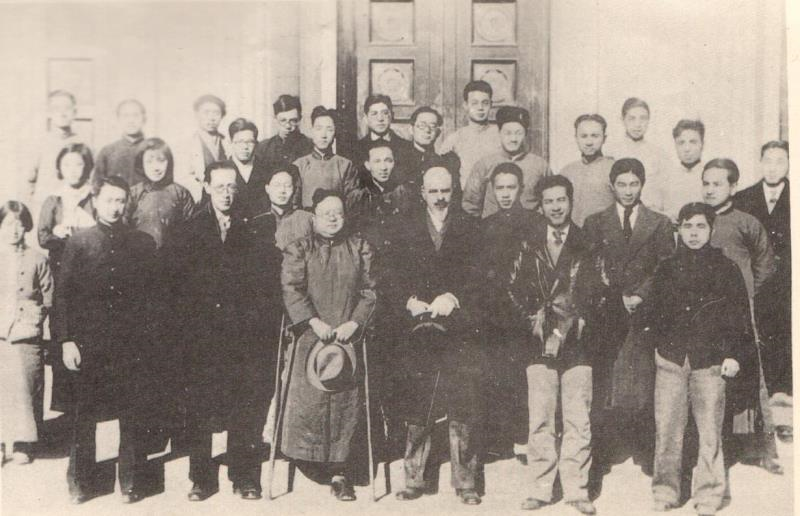
Teachers and students of the Sociology Department of Tsinghua University in front of the Tsinghua Auditorium in March 1935. Front row, second from left, Wu Jingchao, third from left, Pan Guangdan, fourth from left, Shi Luguo (Russian professor, Fei Xiaotong’s mentor when he was a graduate student in the Department of Sociology, Tsinghua University)
I previously believed in an article that the debate between Mr. Fei Xiaotong and Mr. Wu Jingchao "represented the highest level of Chinese sociologists' exploration of China's economic construction path at that time." "Although the prescriptions for China's development path at that time were different, the difference was only of stage significance, that is, Fei focused more on the feasibility of reality, while Wu focused more on the systematic and comprehensive nature of the plan itself." ( Lu Wenhao: "The Academic Friendship between Wu Jingchao and Fei Xiaotong", "Expo" 2013 Issue 4) Judging from our hindsight, Mr. Fei's ideas played an important role in the early stages of China's industrialization and urbanization. On the one hand, it solved the problem of food and clothing and increased income for the vast rural population. On the other hand, it greatly reduced the pressure on cities during a period when the city's ability to absorb labor was weak. However, after a period of industrialization and urbanization, the problem of food and clothing has been basically solved, and the demand for labor in cities has increased sharply, making accelerating urbanization an important issue of the times. At this time, the shortcomings of rural industrial technology, backwardness, serious pollution, and low competitiveness have become more and more obvious. The current situation has forced us to enter a new stage of development.
In the past two decades, China's urbanization has developed at an unprecedented rate. Rural society has changed from the lively scene of the past, leaving only the elderly, women and children behind, looking lifeless. Therefore, the Party Central Committee has proposed a strategy to revitalize the countryside and achieve integrated development of urban and rural areas.Judging from the development situation in these years, Mr. Wu Jingchao’s idea of industrialization and urbanization, using urban development to drive rural areas, feed back rural areas, and even realize new communities mixed with workers and farmers, resonates more with current readers.Some of Mr. Wu Jingchao’s views are not his own. He is familiar with the experiences and lessons of industrialization and urbanization in Western countries. He has collected a large amount of information to study the problems that will arise in this process and the solutions. Some of the methods he proposed have been fully realized, some have been partially realized, and some have yet to be realized. This is the main reason why we can still resonate with his articles written seventy or eighty years ago.
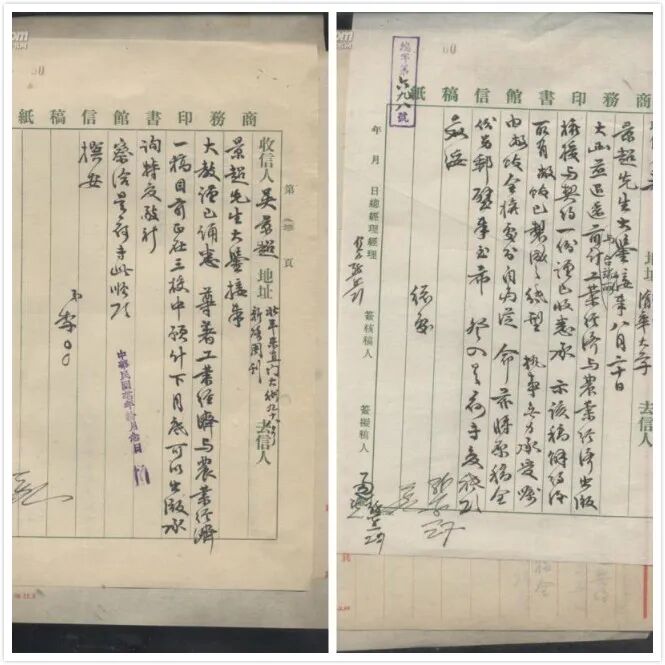
Letter from the Editorial Department of the Commercial Press to Wu Jingchao in 1948 (Internet picture)
Nowadays, some people have various "nostalgia" arguments in view of the reality of rural decline. Mr. Wu Jingchao also faced such a problem back then. He analyzed why it was "difficult for intellectuals to go to the countryside" and what methods and channels were available to enable intellectuals to serve the countryside. He clearly fought back against those who advocated that intellectuals go to the countryside and "go back to the countryside." His attitude is clear. The trend of intellectuals gathering in cities is an unstoppable historical trend. To solve China's problems, we must take the road of industrialization and urbanization. Nostalgic for the past and seeking a way out only in tradition will not work.Now looking at Mr. Wu Jingchao's early discussions, we have to say that in the era he lived in, his ideas were the voice of a few people in the wilderness; in the present we live in, they are not only prophetic, but also critical of certain sentimentalisms that are currently popular.
Scholar: Finally, could you please introduce your future research direction and focus?
Lu Wenhao:My research fields over the years have mostly been in the history of Chinese sociology and social thought. Pan Guangdan, Wu Jingchao, Chen Da, Li Jinghan, Fei Xiaotong and others are all within my scope of attention. I am very interested in the knowledge and personality of these sociological predecessors. Studying their thoughts, speeches and practical actions has enabled me to understand the situation of that generation of intellectuals, especially the situation of the intellectuals who are sociologists you mentioned above. Studying them has had a subtle influence on my life and work. It has made me understand that there are many temptations in reality, but I must think clearly about which things can be done, which things cannot be done, and what kind of person I want to be. Personal emotions are one thing, but entering a state of research is another. The choice of research topics must take into account the laws of the academic world. I did study some sociologists, but this kind of character research is not a study of the characters themselves, but a reflection of one aspect of the society at that time through the actions of these characters in a certain aspect.
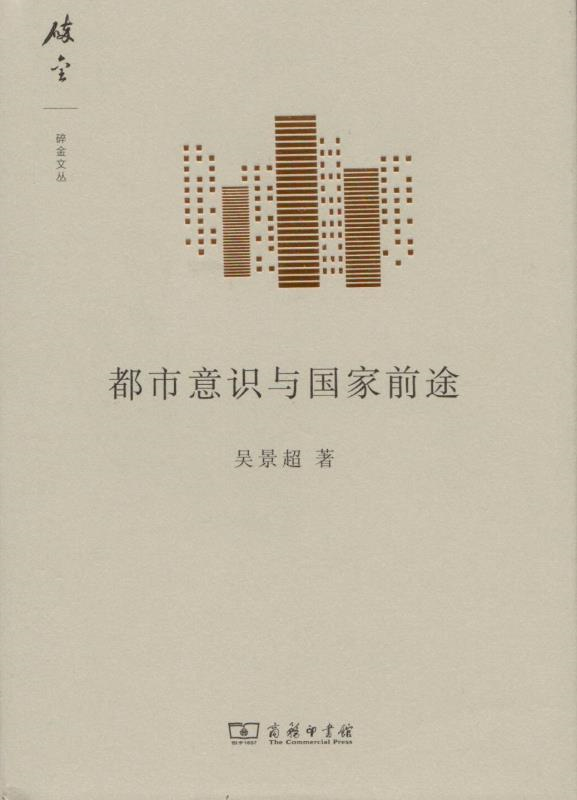
"Urban Consciousness and National Future" written by Wu Jingchao and edited by Lu Wenhao, August 2020 edition of The Commercial Press
In the next few years, I will also do some special research on the history of sociology and social thought, write some research papers, or explain a certain prominent aspect of a certain figure, or use a certain issue as a clue to connect the words and actions of these figures. A research I am doing in the past few years is "Historical Investigation of Modern China's Population Census", and there are three papers that have been published or will be published soon (Lu Wenhao: "The Obscured Glory - Li Jinghan and the Study of Modern China's Population Survey", "Journal of Tsinghua University" (Philosophy and Social Sciences Edition) 2018 Issue 5; Lu Wenhao: "National Conditions Awareness and Science" The combination of academic consciousness - Chen Da’s exploration and debate on the national census plan, "Jianghan Forum", Issue 11, 2019; Lu Wenhao: "Institutions, Systems and Operations: A Review of the National Household Census from 1931 to 1945", "Journal of Theory", Issue 6, 2020, will be published soon.), and plans to write a few more articles and compile them into a small book. This book mainly discusses the census planning and practice made by successive governments in modern China, the research of academic groups and individual scholars on how to implement the census in China, and the cooperation and disagreements between the above two aspects. This research is still ongoing.
When rebuilding sociology in the early days of reform and opening up, the emphasis was on drawing on contemporary Western scholarship, but there was no time to systematically sort out the results of the older generation of Chinese sociologists. In recent years, many scholars have realized the importance of sorting out the academic history of Chinese sociology, and some results of document compilation and special research have appeared one after another. The "Urban Consciousness and National Future" I compiled this time is also a small attempt in this series. Currently, I am promoting the compilation and publication of "The Complete Works of Wu Jingchao", hoping to comprehensively present the life history of Wu Jingchao as a sociologist and an intellectual. I hope to get support and help from friends in the academic and publishing circles.
ScholarScholar
Machine-translated from the Chinese original 社会学家吴景超,他的主张是少数人在旷野中的呼声 (published 2020-11-03). WeChat original ↗