Some time ago, a chain service company was preparing to develop an information system for its own use. Due to compliance and financial supervision requirements, every business transaction in each of their stores every day must be entered into a system controlled by government agencies. The business owner was confused about how to avoid repeated operations between his own system and the government system and avoid unnecessary manual workload, so he came to discuss with me.
I said that RPA solves this problem - store business personnel only need to operate in one system, and the robot will automatically enter it into another system.
Robotic Process Automation (RPA for short) is a technology that simulates and replaces manual operation activities on the computer desktop; these activities are usually repeated operations and rule-based activities; software programs can be preset to control "robot" operations.
Typical homework activities include:
-
Open application
-
open form
-
Select data fields
-
Enter data
-
Compare and examine data
-
Switch between apps
-
copy/paste
-
activation processing
-
enforce rules
There are three conditions for robotic process automation:

1. The process is mechanically repetitive and all process deviations are clearly defined.

2. The process is based on rules. The rules are exhaustively defined and there is no ambiguity.

3. The input information must be digital. The robot software itself can also assist in the digital conversion of the input information, such as using image recognition (OCR) or speech recognition, and artificial intelligence (AI). Of course, the accuracy of the recognition is limited.
Capturing desktop images to identify operating points and using preset scripts to simulate manual and automated foreground operations is not a new technology. For example, in SAP ERP more than ten years ago, for system process operation testing, batch data import/export, etc., the commonly used screen operations simulated CATT or background operation scripts LSMW/BDC. I think it is a form of RPA; in Excel, writing a macro (Macro) with VBA to simulate a series of operations is similar.
Early domestic RPA manufacturers were transformed from automatic operation software for capturing and identifying interface elements (such as buttons, selection boxes and other controls) and writing scripts, such as:
-
A certain RPA platform was formerly a keyboard and mouse simulation tool for online game leveling.
-
A certain RPA was formerly a tool for financial institutions to perform automatic operation and maintenance of IT systems.
-
The automated customer service tools used by some Taobao stores have also transformed into RPA
Frankly speaking, the technical threshold for completing the core functions of RPA is not high, and there are countless small RPA software companies on the market. In its application, enterprise-level RPA coexists with the enterprise's existing process management system and other process-related business processing information systems (such as core business systems, ERP, etc.), and relies mostly on the support of image recognition, artificial intelligence and other technologies.
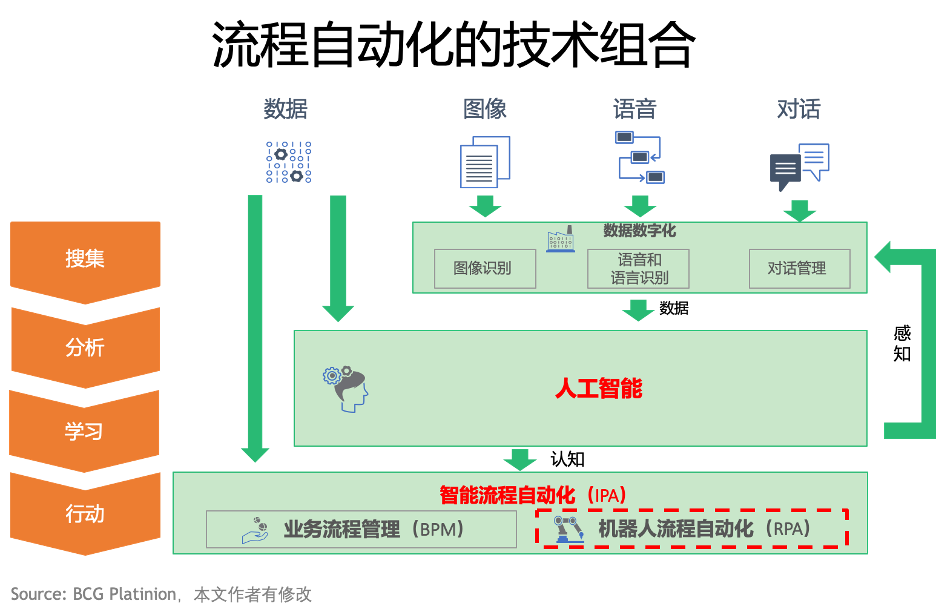
Here, two basic concepts need to be clarified:
1. The relationship between BPM and RPA:
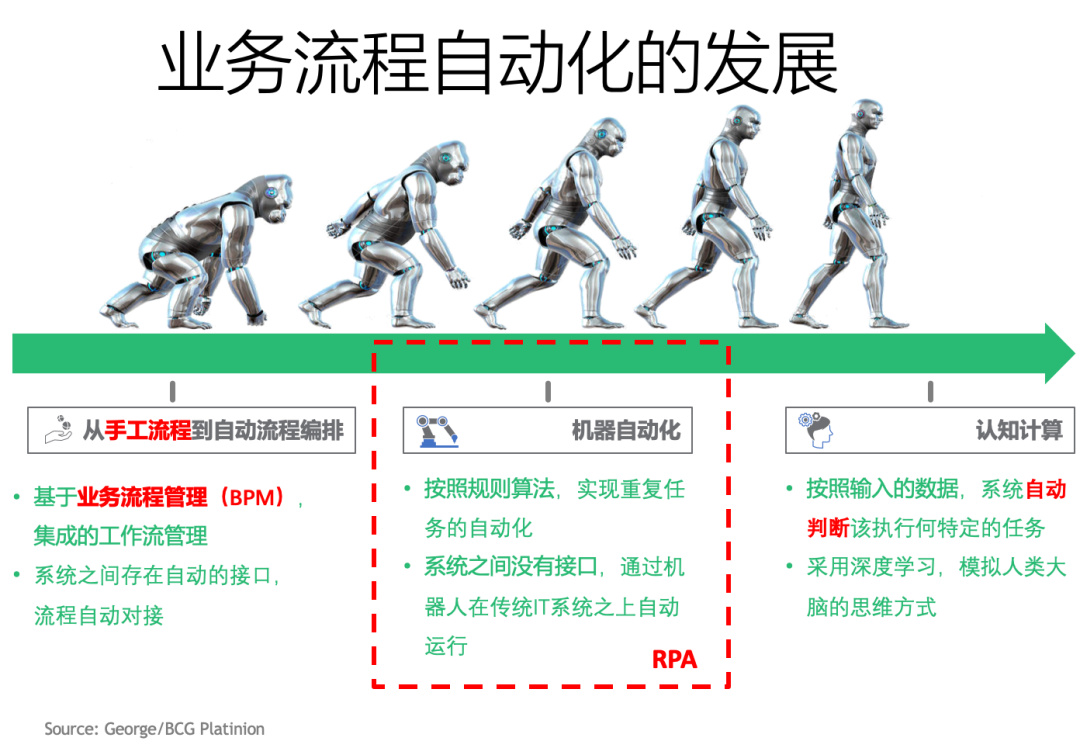
First of all, RPA focuses on using robots to complete simple, repetitive inter-system activities between core systems without automated interfaces and internal and external websites. It can be considered a replacement for manual process activities and does not require changes to existing systems (called "non-intrusive"). It is simple and fast to implement.
BPM focuses on the automation of enterprise end-to-end processes, which involves relatively complex changes and requires the transformation of existing systems to achieve automatic integration between systems based on application interfaces (APIs).
Secondly, we must also see that BPM and RPA are complementary and should be used together - RPA can achieve things that do not have interfaces.
Automatic integration between systems helps improve the integrity and execution efficiency of BPM; BPM can automatically route processes to human operations, connect with external customers, or resolve process exceptions that RPA cannot handle.
2. The relationship between AI and RPA:
RPA itself only processes preset simple rules and does not have artificial intelligence capabilities. The information input of RPA requires the digitization of data, which can be widely used in current mainstream AI technologies. For example, in many financial RPA scenarios, identifying and Extracting financial data, such as invoice processing, tax declaration, etc., requires the use of image recognition technology. For example, extracting information from unstructured text to form formatted input data also requires the use of natural language processing (NLP). For example, extracting information from contract text and automatically inputting it into the contract approval system, or extracting information from resume text and inputting it into the human resources management system.
The use of machine learning and deep learning of artificial intelligence can simulate human cognition and thinking, and can also supplement the wisdom that robots lack. Based on information input, it can automatically judge the tasks to be performed rather than based on rules, and handle exceptions. Combining AI and RPA is called "Intelligent Process Automation (IPA)".
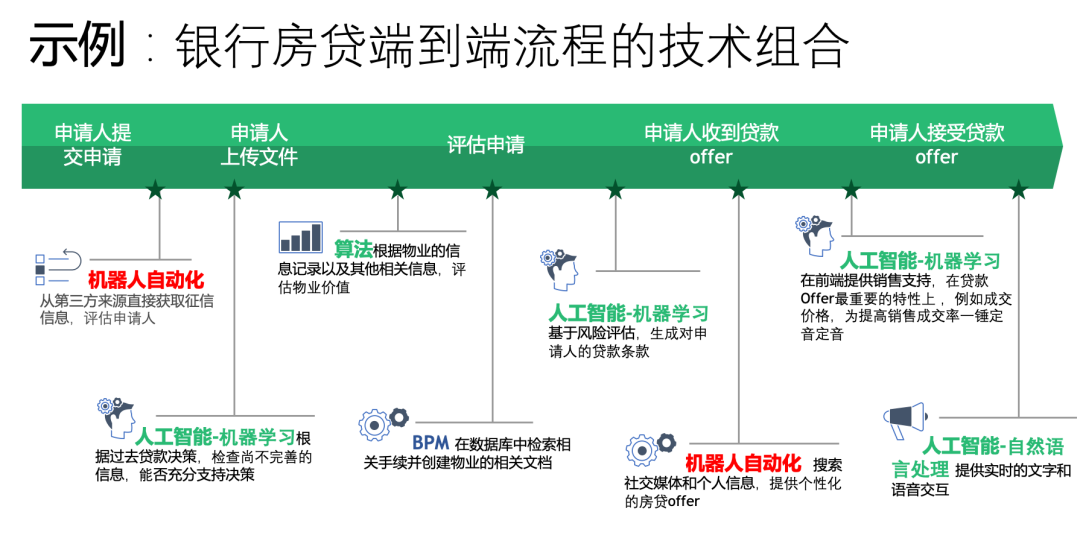
RPA, BPM, and AI are constantly integrating, and the mainstream RPA vendors on the market are more or less intersecting with BPM and AI solutions. In the actual end-to-end business process automation of enterprises, RPA, BPM, and AI are mostly used in combination, for example:
RPA has many application scenarios and is widely used in functional areas such as finance, taxation, human resources, procurement, and customer service. Some RPA vendors provide general enterprise-level RPA platforms that can be configured into any process of the enterprise, called "general RPA". Some focus on providing RPA solutions for specific business scenarios, such as tax robots for corporate tax filing, IT system operation and maintenance robots, software testing robots, document writing robots, human resources management recruitment process robots, etc., which have better accuracy and efficiency in specific fields, called "vertical field RPA".
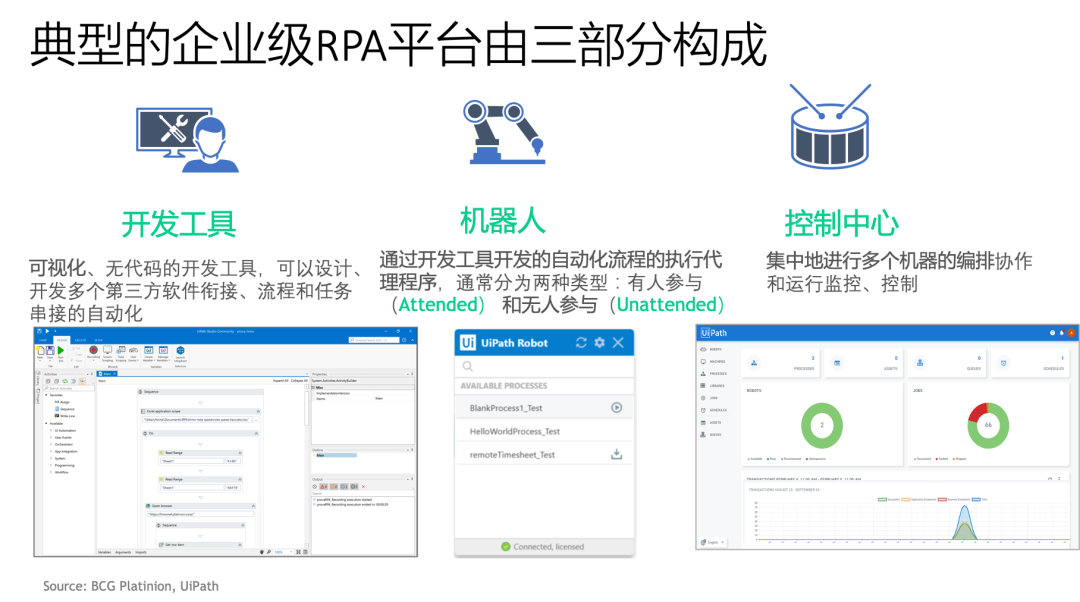
Domestic RPA development is very popular. Due to the demonstration effect of UiPath, a leading foreign RPA manufacturer, which has raised multiple rounds of financing within a year in the past two years, and its valuation has soared from US$2 billion to US$7 billion, in addition to the aforementioned early RPA that was transformed from a desktop operation script program, technology entrepreneurs and investors have flocked to the RPA market to compete for the runway; UiPath is also the main imitation target of current domestic RPA manufacturers and enterprise users.
Different from the transformed small-scale RPA, many new domestic RPA manufacturers are targeting general-purpose RPA for large organizations:
The following is an ad break
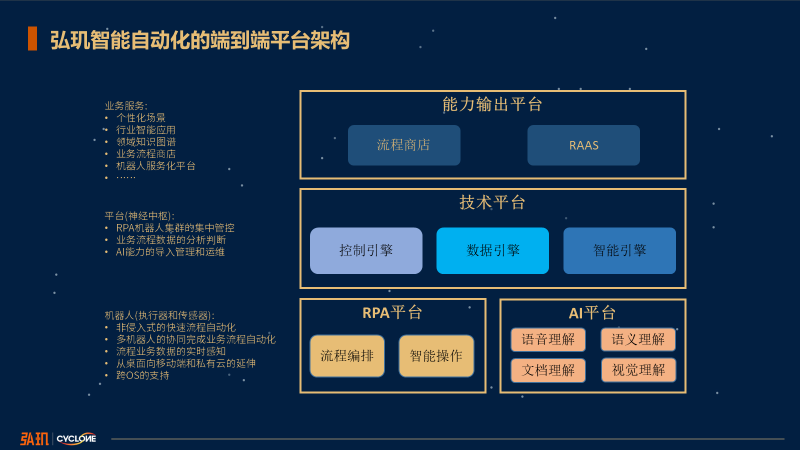
For example, Cyclone is a typical example of emerging RPA startups. Since its inception, it has targeted central and state-owned enterprises, as well as banks and governments, as its target market. This is an area that international companies may find difficult to enter due to policy restrictions. In addition to RPA products, Hongji has also released data platform, AI platform and other products to form a broader intelligent process automation (IPA) platform. In September 2020, Hongji announced that it had successfully raised nearly US$40 million in Series B financing.
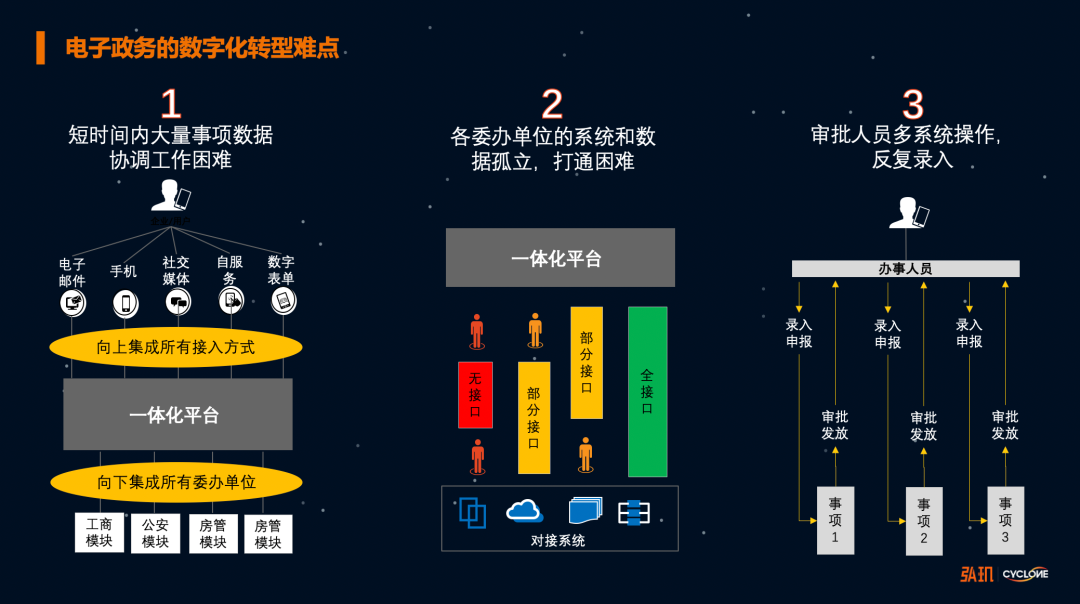
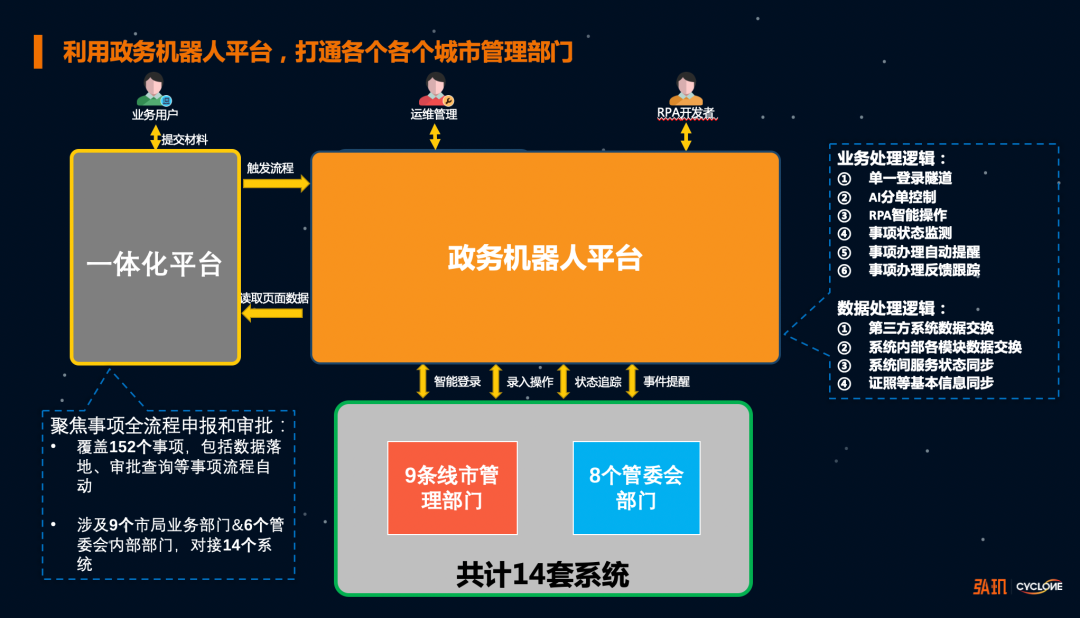
Take e-government applications as an example: Although various cities are building an integrated e-government platform with "one-stop service", however, it is difficult to automatically connect this platform with many government departments or vertical management units belonging to different systems without APIs, requiring a lot of repeated manual operations:
Hongji’s RPA+AI platform solutions are as follows:
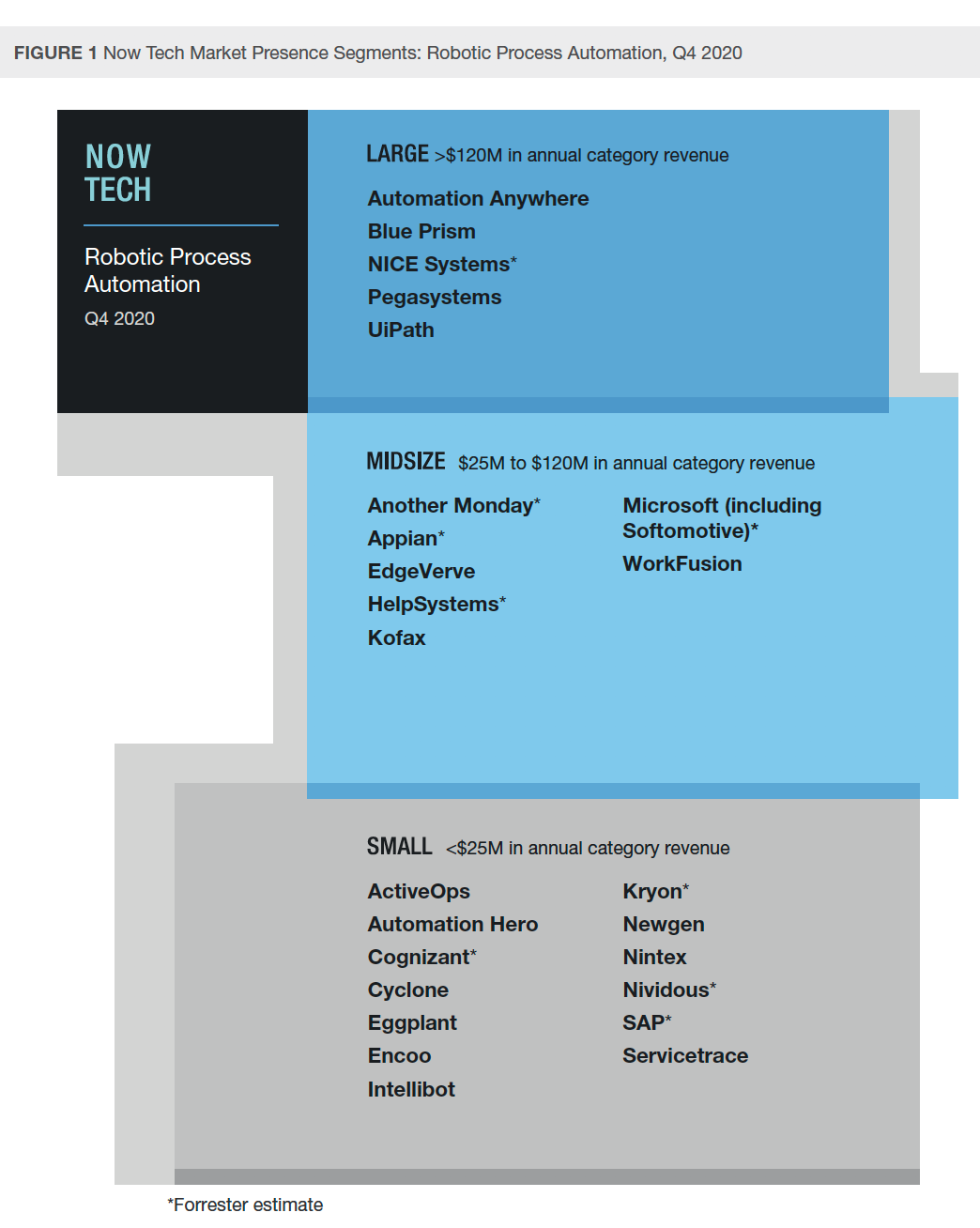
Cyclone was also selected into the latest list of global RPA vendors by IT evaluation agency Forrester, and is one of the two domestic vendors selected:
Shanghai Hongji Information Technology Co., Ltd.Founded in 2015, it is a well-known RPA software and solution provider in China. Its main business is the development and sales of artificial intelligence software products with independent copyrights and intellectual property rights - Cyclone RPA (Robotic Process Automation). Cyclone RPA is being widely used in finance, banking, insurance, power, energy, government, public safety, manufacturing, retail, logistics, high-tech and other industries. The company is headquartered in Shanghai and currently has branches and offices in dozens of cities at home and abroad, including Beijing, Shenzhen, Guangzhou, Chengdu, Nanjing, Hangzhou, Wuxi, Xi'an, and Singapore, and has set up an R&D center in Silicon Valley in the United States. The commercial territory has expanded to markets such as Greater China, Japan, and Southeast Asia.

commercial end
In addition to specialized RPA software suppliers, companies such as China Merchants Group and Suning have independently developed RPA in their own business practices and packaged it into commercial solutions for external sales. Cloud platforms such as Alibaba have also launched RPA software.
RPA itself is considered a "semi-automatic" system integration tool. From a development perspective, the boundaries with business process management (BPM) platforms and process automation low-code development platforms are becoming increasingly blurred, and these can all be classified as part of the PaaS cloud platform (commonly known as "middle platform"). It can be observed that recently, major cloud platform manufacturers have all stopped playing RPA:
-
In November 2018, SAP announced the acquisition of French RPA company Contextor
-
On May 19, 2020, Microsoft announced the acquisition of British RPA startup Softomotive
-
On July 8, 2020, IBM announced the acquisition of RPA vendor WDG Automation
-
In September 2020, Google launched the automation product App Sheet Automation on its cloud platform Google Cloud
It can be considered that the development of RPA by major manufacturers covers the "last mile" of process automation based on cloud platforms. Microsoft RPA belongs to the automated workflow (Power Automate), one of the three core functions of the low-code cloud platform Power Platform in Microsoft's four clouds (the other three are basic cloud Azure, office cloud Office 365, and enterprise software cloud Dynamics 365). The other two functions are data insights (Power BI) and application construction (Power Apps).
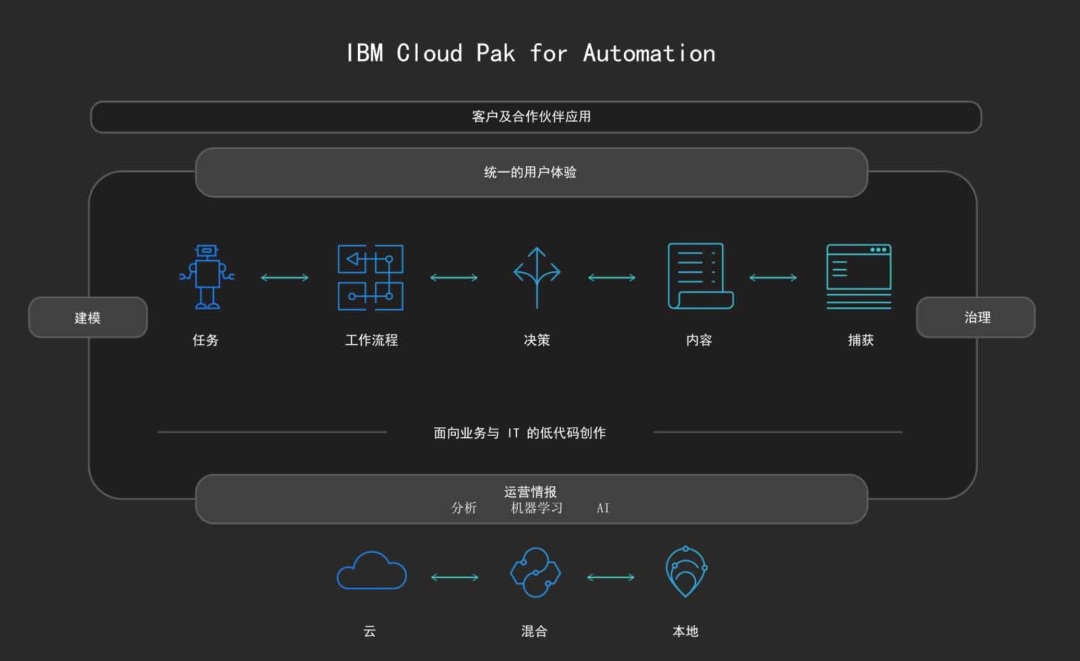
IBM's RPA product strategy is similar to this - I estimate that the RPA software just acquired by IBM should be integrated into the process automation suite of IBM's new generation cloud platform suite Cloud Pak:
As major manufacturers enter the market one after another, I think it will take some time to see how long RPA can exist independently as a software category; in the future, it is possible that RPA will not exist alone, but will be integrated into cloud platforms or low-code development software.
Finally, let me talk about how enterprises apply RPA:
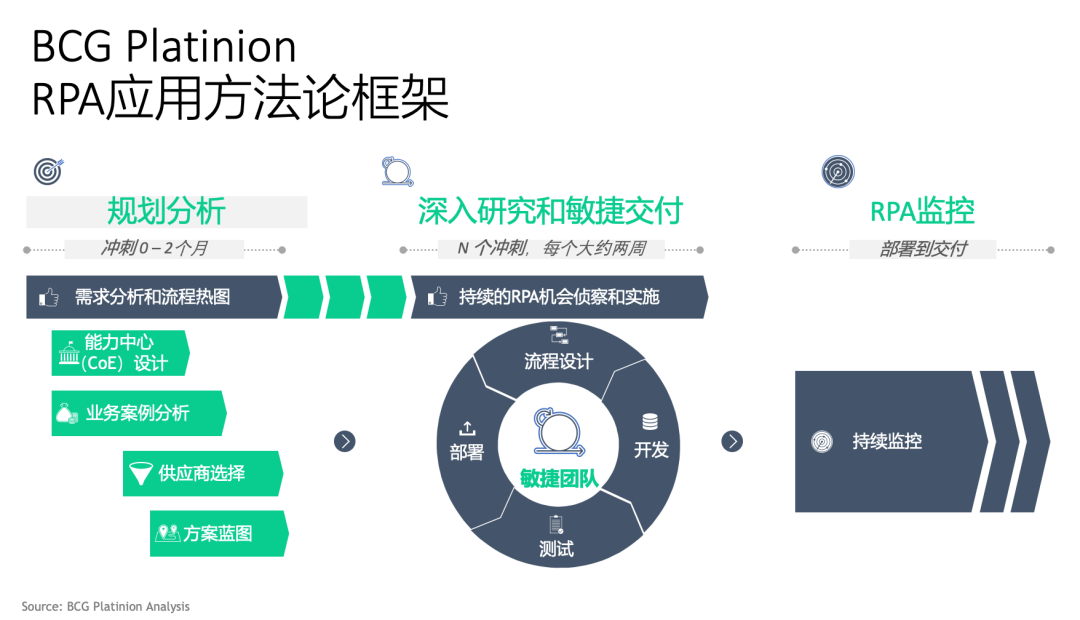
The first is the planning stage - companies can conduct an overall assessment of business processes and find areas with the strongest need for process automation, such as using a "process heat map":
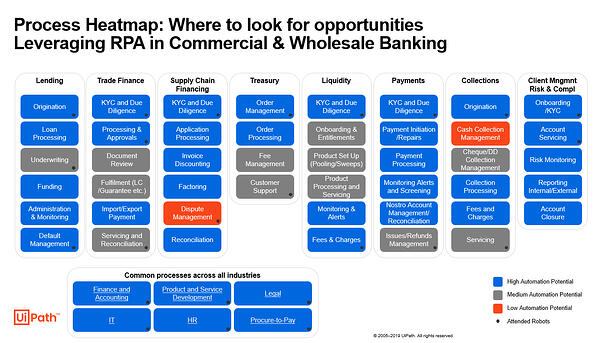
An evaluation matrix like this can be used to select the highest priority RPA use cases:
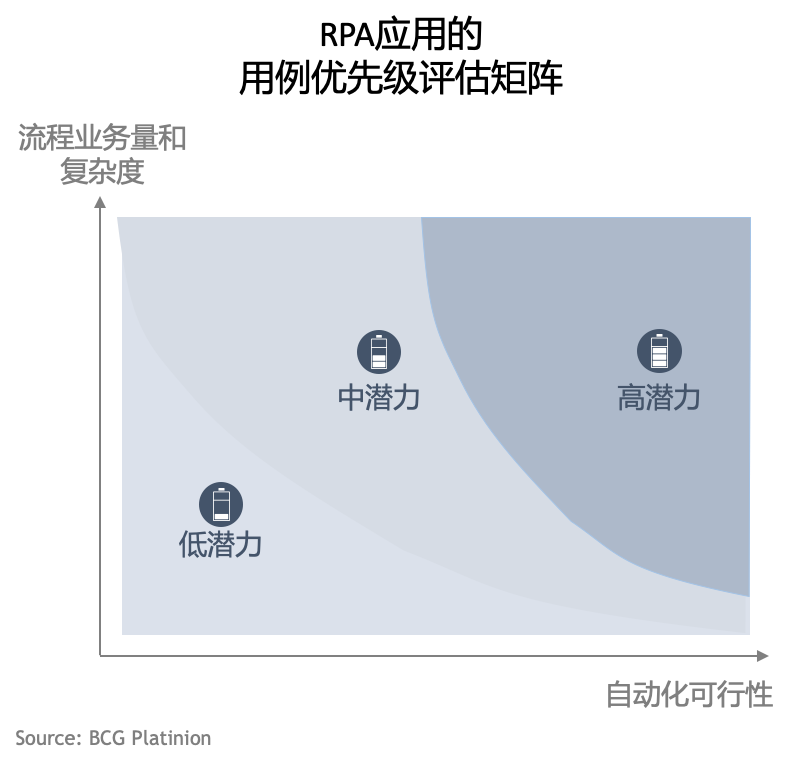
RPA is a new thing for enterprises and can empower many business functions within the enterprise. Therefore, in terms of operation model and organizational guarantee, enterprises should establish an RPA competency center (COE). Specifically, the RPA competency center covers the following work contents:
-
RPA Budgeting and Supplier Relationship Management
-
RPA application demand management
-
RPA architecture design
-
RPA development
-
Operations and support
-
RPA knowledge management and training
In large organizations, RPA COE can operate in a centralized mode (Centralized), a federated mode (Federated) with one central COE and multiple sub-COEs, or it can be decentralized in various business units.
RPA is a typical "digital product" and its implementation should be delivered in an agile way:
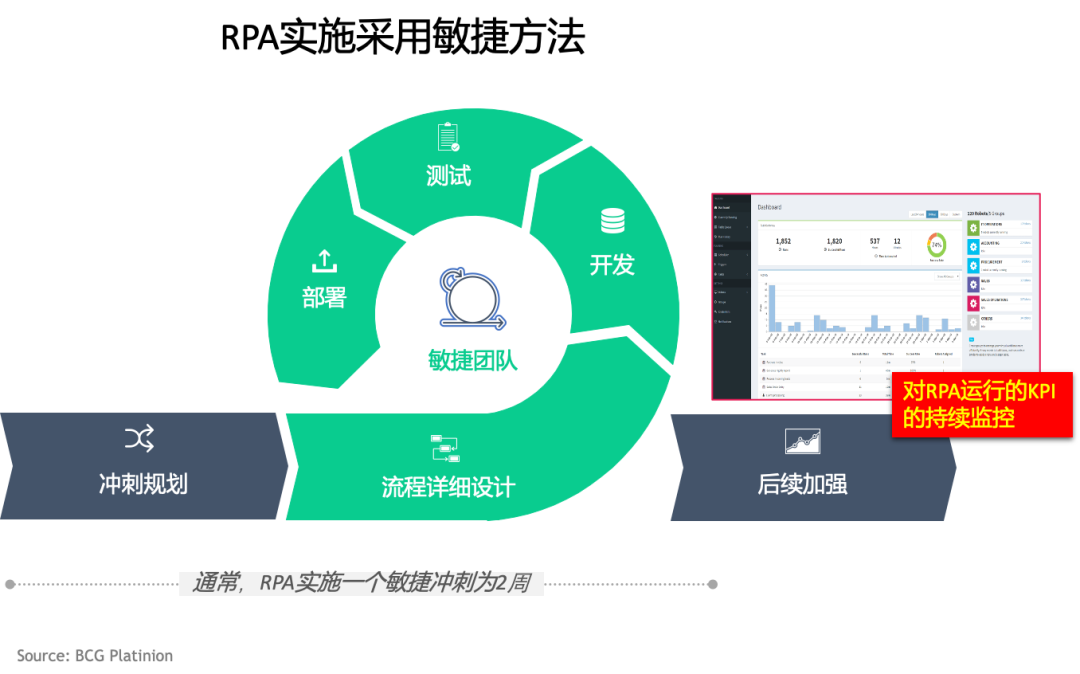
Digital transformation, please pay attention

Machine-translated from the Chinese original 机器人流程自动化(RPA)的趋势展望及应用方法 (published 2020-11-16). WeChat original ↗