Digital product creation must be based on a design method centered on human experience. Some are called "Design thinking", some are called "Human Centered Design", and some are called strategic experience design. In my opinion, these terms all mean the same thing.
The end-to-end experience design process for digital product creation is roughly divided into the following five steps:
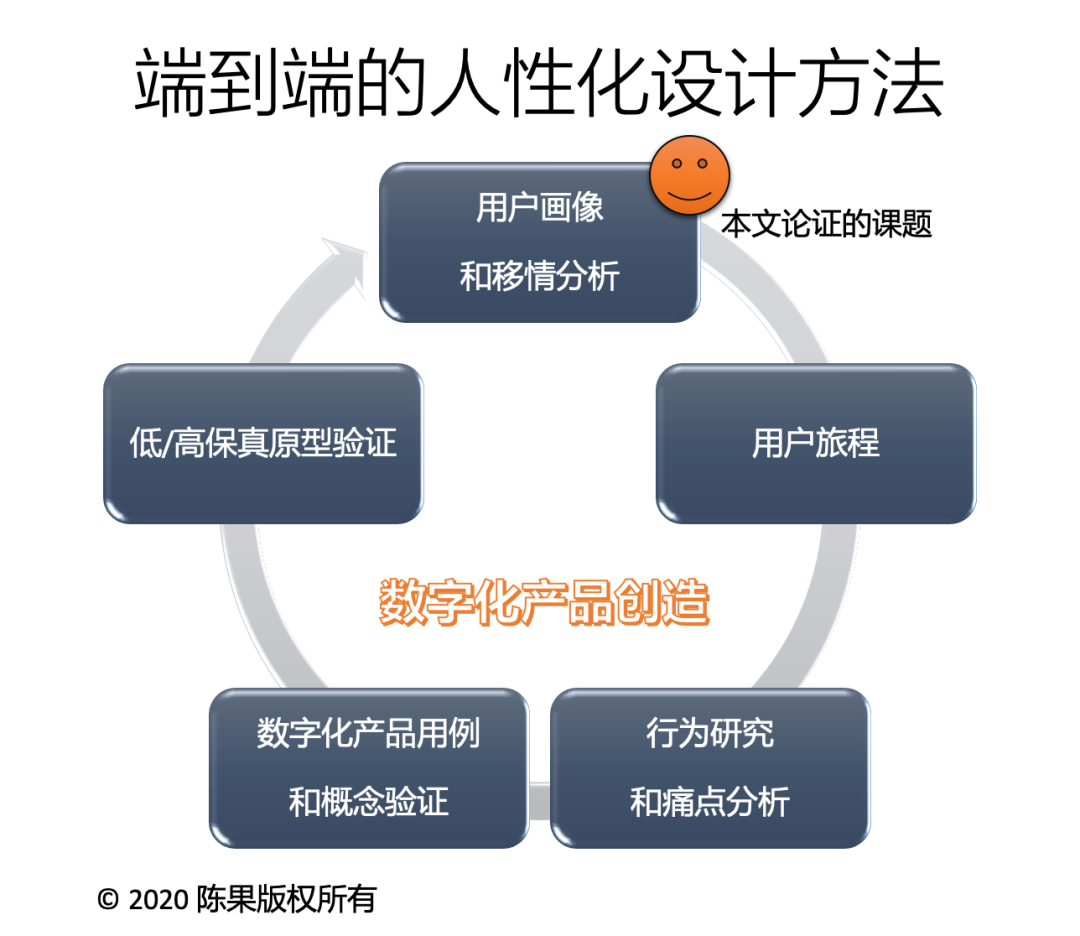
Step One: Persona and Empathy Analysis
Step 2: Draw a user journey map (journey map). The user journey emphasizes the complete end-to-end process. For example, in marketing, the user journey of customers from "brand awareness, trial experience, purchase/payment, use, sharing", or in human resources management, the user journey of employees from "entry to retirement", including the user journey of a series of links such as "applying, joining, being evaluated, career development, retirement".
Step 3: Study user behavior during the user journey and explore the pain points of user experience
Step 4: Design corresponding use cases of digital products for the highest-priority user pain points, and conduct preliminary verification of the concept.
Step 5: Further screen the use cases, create low-fidelity and high-fidelity prototypes, and carry out prototype testing (Prototyping).
Clearly understanding users and carrying out journey description, behavioral research and product design for target users are the basic elements of the design process.Premise. So how to determine typical users? User portraits are not simply based on demographic characteristics (age, gender, occupation, income, place of birth, place of residence) or transaction characteristics (such as purchase frequency, purchase price, etc.). I think identifying user portraits is a process that combines art (behavioral insights) and technology (big data analysis).
Designers have their own methods for user classification (archetype). For example, Xiaocan Tea conducts user research with the experience thinking team and positions Xiaocan Tea’s target customers as:Younger white-collar elites and upstarts who don’t know much about tea., namely "Tea Xiaobai".

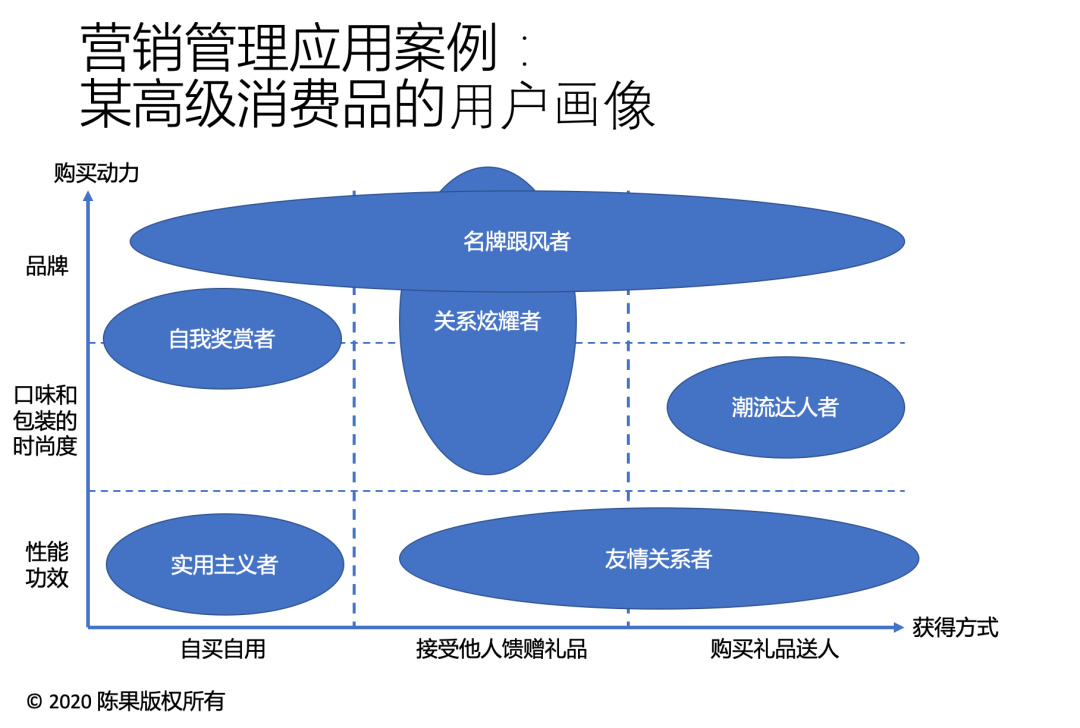
In my own consulting practice, I often use two-dimensional coordinate modeling to segment objects to locate user portraits; I can also use data analysis methods to verify classification. Here are two examples:
For a certain high-end consumer goods company, I distinguished user types with different characteristics from the two dimensions of purchase driving force and acquisition methods. For each type of user, the user journey and user pain points are different:
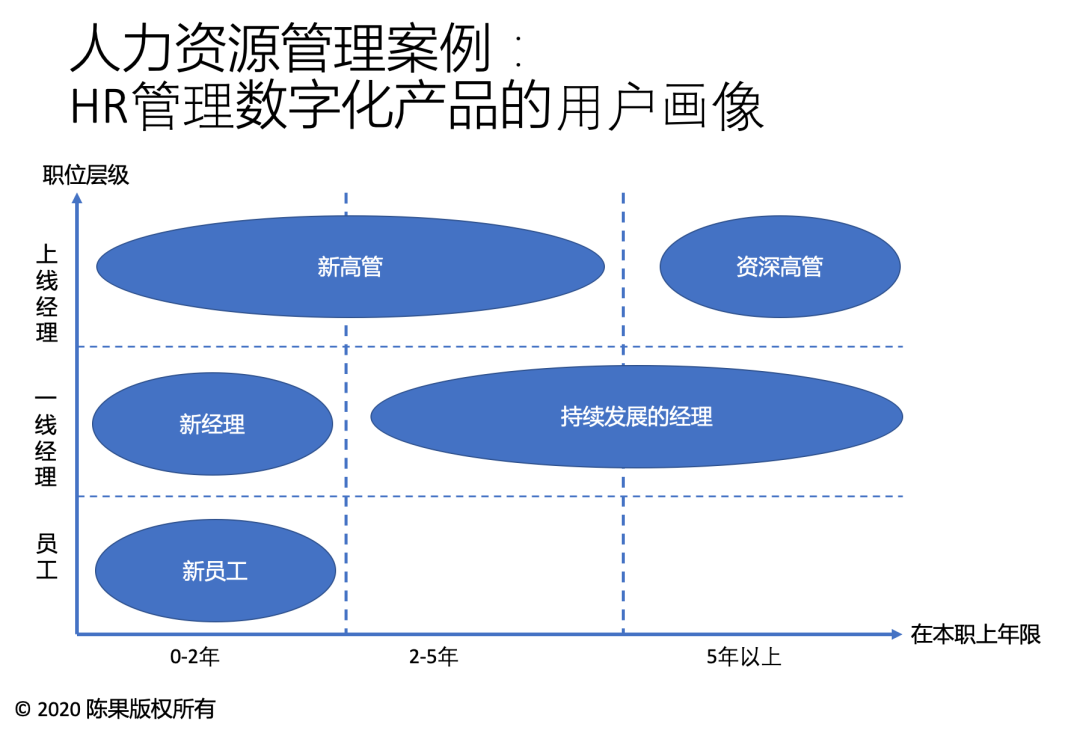
In the field of digital products for human resources, for example, digital services for leadership empowerment, the pain points for new managers are usually basic management skills, such as employee coaching feedback, company personnel policies, etc., the pain points for new executives are usually strategic thinking, executive behavior, etc., and the pain points for senior executives are usually how to master culture shaping, transformation and change, etc. In this way, our digital products can provide a better user experience.
Old article reference:
The first priority of digital transformation|IT systems must add humanized design to constitute digital products
Digital transformation | How to merge consulting and design
Digital transformation without user experience design is like Tuo Xiang
Design Thinking | A Class Tool
From human resources management to employee experience management
Digital Innovation | The difference between enterprise system APP and digital products
Marketing Strategy | Human Consumption, Consumer Behavior and Countermeasures with Chinese Characteristics
Digital transformation, please pay attention

Machine-translated from the Chinese original 设计方法 | 用户画像在营销和HR的数字化的应用 (published 2020-11-21). WeChat original ↗