Hundreds of years later, if mankind is still not destroyed by artificial intelligence, when writing modern history, perhaps the most appropriate summary is "technological explosion".
worries and hopes
In recent years, commercial capital has fueled the development of technology. Many technologies that challenge the bottom line of mankind are subverting human society: such as the monopoly of Internet giants, DNA editing, human embryo cloning, artificial intelligence gaming, etc. According to the philosophical concepts of believers in technological Darwinism, the fundamental principles of civilization lie in survival and technological explosion, which will inevitably lead to a chain of suspicion and the law of the dark forest. Human beings will ultimately be unable to escape the fate of mutual destruction. Out of human greed and fear, commercial organizations have increasingly increased their efforts to develop these technologies, starting an artificial intelligence arms race. Hawking and Musk have long issued a warning: The explosion of technology is pushing mankind into an abyss of destruction.
As scholars in science and engineering, no matter what their subjective wishes are, objectively they have no choice. They are all caught up in the tide of the times, hijacked by human greed and fear, and devote their entire lives to the contemporary technological explosion. Everyone is asking themselves: Is this pursuing the welfare of mankind, or is it contributing to evil? Are we improving the world for future generations, or are we destroying it? The vast majority of people tend to believe that technology itself is neutral and can do good or evil. What matters is how human society is organized and how to ensure its reasonable use. In fact, the entire human race has already compromised with each other under the shadow of nuclear deterrence and has coexisted peacefully for decades. It is believed that the brilliance of human reason can defeat greed and fear, allowing the species of Homo sapiens to survive and continue.
Systems and Gears
One of the core reasons for the explosion of modern technology is the large-scale popularization and application of computer technology, which has partially replaced human intellectual labor. Before the advent of computers, the knowledge accumulated by mankind could only be passed on through books. Each engineer had to study hard to master difficult knowledge and apply it in social practice. After the advent of computers, knowledge was transformed into software tools. Each engineer did not have to understand this knowledge. He only needed to be proficient in the use of software to use it in practice. This has led to an explosion in the application of knowledge (and an exponential decline in people's desire to learn difficult knowledge). Therefore, a basic paradigm in the process of technology explosion is: determining market demand, finding theoretical solutions, converting basic theories into algorithms, engineering improvements and improvements, and practical testing and promotion.
Society is a huge and sophisticated machine, roaring day and night, operating in a coordinated manner; the individual is a tiny gear, and the fine social division of labor fixes the position and role of the gear, further limiting the gear's vision. Each gear can only peek into the adjacent part of the system, but cannot fully understand the operation of the entire system. In the modern social system, the role assigned to universities is mainly to find theoretical solutions and convert basic theories into algorithms. The other steps are mainly completed by the industry and business circles. It is true that many technological breakthroughs are due to the long-term accumulation and gradual improvement of engineering skills in the industry; however, the industry generally tends to apply mature and reliable technologies and is afraid of taking radical risks; at the same time, because the industry focuses on short-term commercial interests, it will not devote all its efforts to the development of technologies that have long-term potential but are ineffective in the near future. As a result, the vast majority of new technologies have their origins in universities.
The several technological innovations that Lao Gu was fortunate enough to participate in were not based on the evolution and accumulation of engineering, but on fundamental theoretical insights that completely changed the process flow. They were all based on modern topology and geometric theory; each time they were discussed with Mr. Qiu Chengtong and completed under his guidance. This is different from the engineering method-based innovation approach of most engineering staff.
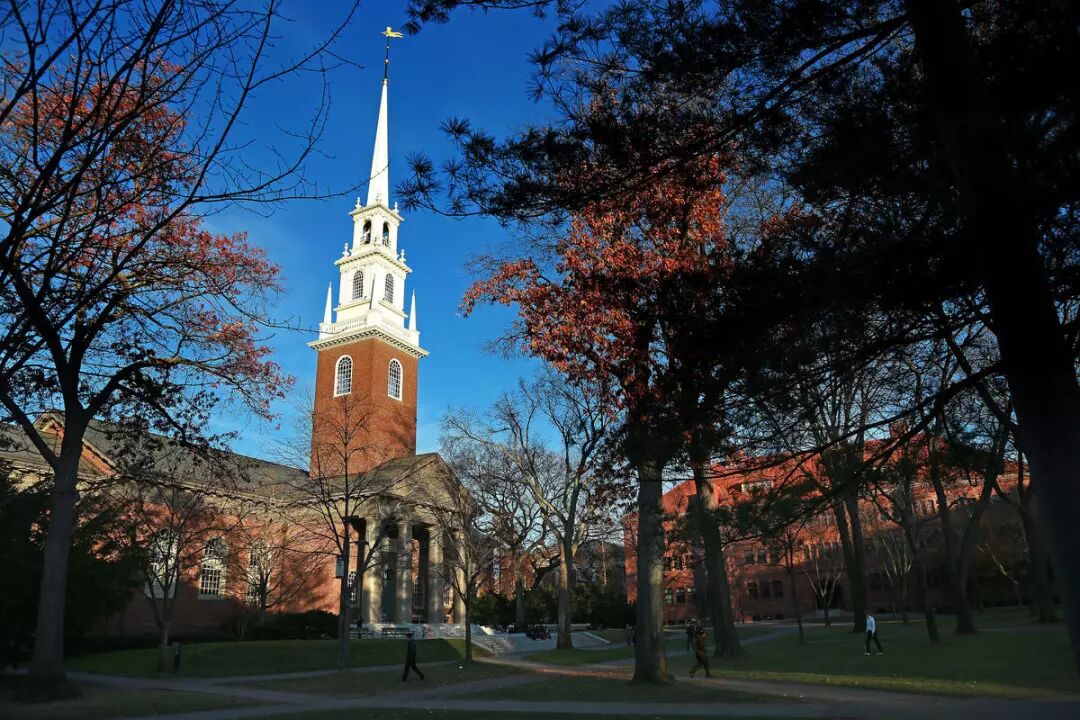
Harvard campus.
Harvard talks
Nearly twenty years after graduation, Lao Gu drives to Harvard almost every month to visit his mentor, Mr. Qiu Chengtong. All the way through the vast world of New York, Fontainebleau in Connecticut, and the vast sea peaks of Massachusetts, we arrived at the ancient and quiet Harvard campus. The Charles River is still sparkling, reflecting the Harvard campus, with its red walls and white windows, and the dome of the tower; ivy is climbing on the wall, with vigorous branches but full of vitality. The ivy leaves are mottled with dark green, and occasionally the breeze blows, causing the vine leaves to stir up waves. The bells of Harvard Church sounded melodious and ethereal, the setting sun shone slantingly, and the eyes were full of golden light. Time stopped and the years were quiet. Walking through the Harvard campus in the dusk, the scenery remains the same, as if it were the next day, life is like a dream, and there are many joys.
Every time I go back to Harvard to see Mr. Qiu, I feel as peaceful and comfortable as returning to my spiritual home. One wall of Mr. Qiu's office is covered with long floor-to-ceiling windows, which offer a bird's-eye view of Harvard Campus or the spire of Harvard Cathedral. The other wall is a huge blackboard filled with mathematical symbols. The other walls are filled with bookshelves filled with various mathematical monographs. The setting sun filled the office, making everything sparkle. Almost every day from early morning to midnight, Mr. Qiu spends time in his office thinking about the basic structure of nature and the fundamental principles that govern the universe. The conversation with Mr. Qiu does not need to be circuitous or pretentious, nor does it need to exaggerate the atmosphere or vent emotions. It only needs to explain the essence clearly and accurately. Mr. Qiu's answer was also concise and to the point, but every word was crucial! Every time I talk to Mr. Qiu, I will let go of the troubles of the world, and my body and mind will be bathed in the radiance of holy mathematics. Here, there are only naked and frank mathematical theorems with far-reaching implications, and natural structures that are profound, vast, majestic and majestic. Whenever Lao Gu felt that his soul had fallen in the world of mortals, and he became increasingly disgusted with the wretchedness and mediocrity of intrigues and intrigues, he would come to see Mr. Qiu for a spiritual baptism.
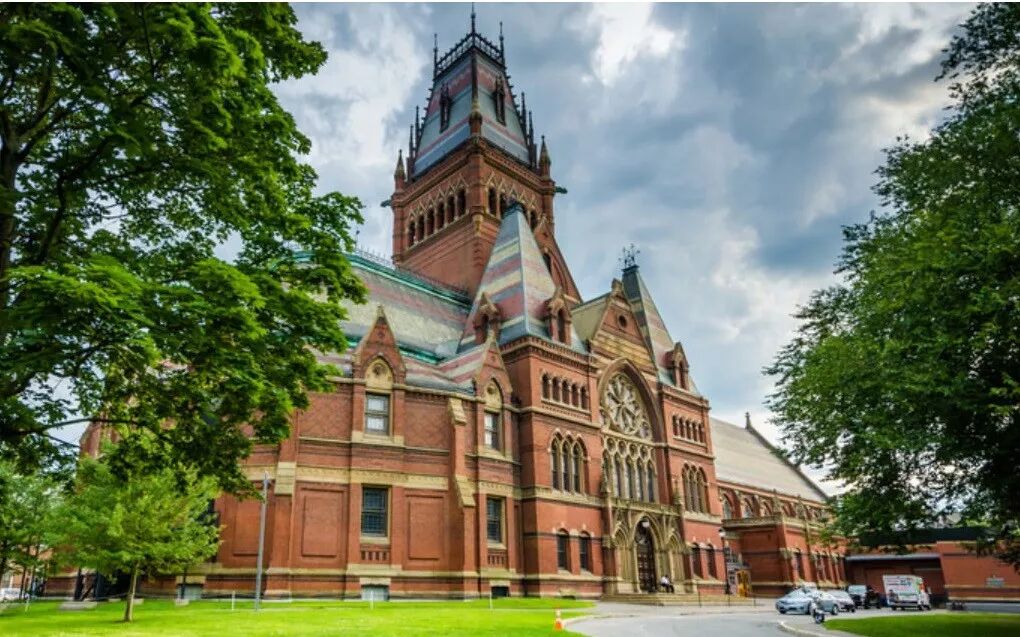
Harvard campus.
Mr. Qiu is very concerned about the latest developments in the technical field. Every time we meet, the two questions Mr. Qiu must ask are: "What are the most fundamental problems in this field?" and "Are these fundamental problems mature enough to be accurately described in mathematical language?"
artificial intelligence
I went to meet Mr. Qiu several times and discussed artificial intelligence and deep learning with him. Mr. Gu Xiangqiu explained that "the fundamental problem of deep learning at present is that there is no generally accepted theoretical explanation, which is the so-called black box problem. In practical applications, deep learning requires massive data, and collecting high-quality labeled data has become a bottleneck. The most popular direction in 2017 is the so-called anti-biological research This model can automatically generate data, which is expected to overcome bottlenecks. The principle of GAN is to use two neural networks to interact with each other and improve together. "Mr. Qiu asked, "Does the GAN model have a relatively mature mathematical description?" Lao Gu replied, "The discriminator of GAN is mainly. It is to calculate the distance between two probability measures; the generator of GAN transforms the Gaussian distribution into the data probability distribution. "Mr. Qiu thought for a moment. "You can try it using the optimal transmission theory. This is equivalent to solving the Monge-Ampere equation." "The scale of deep learning problems is huge, and the Monge-Ampere equation is high. What are the theoretical solutions to nonlinearity? "The Monge-Ampere equation has its origins in the Minkov problem and the Alexander problem. There is a variational method based on geometry." So, Mr. Qiu explained the geometric viewpoint of the Alexander problem and the Monge-Ampere equation in detail on the blackboard. Later, we and other collaborators clarified the geometric variation principle of the Monge-Ampere equation, gave a structural proof of the Alexander problem, and published it in a mathematical journal. At the same time, we discovered a blind spot about the GAN model: Currently, mainstream scholars believe that it is the competition between two neural networks that gives GAN its magical power. On the contrary, Mr. Qiu's theory reveals that the solution of the discriminator and the solution of the generator are equivalent to each other. After the discriminator is trained, the generator can be obtained directly without training. In other words, competition between the two neural networks is not necessary. Lao Gu and his collaborators compiled this insight into a paper and posted it online. A few months later, Lao Gu came to Harvard to discuss the Monge-Ampere equation with Mr. Qiu. During lunch, Mr. Qiu mentioned that he was proving the Calabi conjecture by solving the complex Monge-Ampere equation, using a continuous method. Then Mr. Qiu explained the details of this method on paper. This work attracted the attention of the French mathematician Mr. Villani, a Fields Medal winner, an expert in optimal transmission theory, and currently a member of the French Parliament. During the French President's visit to China, Mr. Villani organized and chaired the China-France Artificial Intelligence Summit and invited Lao Gu to join the discussion.
computational mechanics
Many years ago, Lao Gu’s friend Professor Tom Sederberg, the father of T-splines, invited Lao Gu to attend a conference hosted by a naval institution in Washington DC. The theme of the conference was computational mechanics. The topics discussed were the design of aircraft and submarines, especially the implosion calculation of submarines (that is, after the submarine dives deeply, excessive hydraulic pressure will cause the submarine to collapse from the outside). Professor Sederberg introduced Professor Tom Hughes to Lao Gu. Professor Hughes is the founder of computational mechanics in the United States and an academician of the three academies (National Academy of Sciences, Academy of Sciences and Arts, and Academy of Engineering). Professor Hughes told Lao Gu that Boeing conducts a large number of mechanical calculations, which require the generation of high-quality meshes. 60%-70% of the company's time and funds are spent on mesh generation. The calculation quality requirements for problems such as submarine implosion and thin shell deformation are very high. The mainstream at that time was finite element calculation, and he ambitiously hoped to establish a new theoretical framework and calculation system, using volume splines to replace finite elements, the so-called isogeometric analysis method. However, although the IGA method has a grand theory, its foundation is unstable because there is no rigorous and mature method to establish volume splines, so he approached Professor Sederberg. Professor Sederberg recommended Lao Gu to Professor Hughes. After some investigation, Lao Gu learned that this problem boiled down to the "Holy Grid" problem, a classic problem in the field of grid generation. William Thurston, another Fields Medal winner, had thought about this problem and gave a theorem about the weak form of this problem. This problem has not been solved for decades, and even a basic theory has not been established.
Later, Professor Sederberg personally came to Harvard to visit Mr. Qiu and explained the problem and its background in detail. Mr. Qiu told Lao Gu that this problem has deep roots in the leaf structure theory of curved surfaces and is closely related to the holomorphic quadratic differential of the Riemann surface. He also suggested that Lao Gu study the train track theory of Thurston and Curtis McMullen, because this theory "uses a combination method to study leaf structures, and then studies Teichmuller space theory." After Lao Gu studied for a stage, he encountered some difficulties and slowed down. A few years later, McMullen won the Fields Medal, and his student Maryam Mirzakhani followed the path and became the first female Fields Medalist in history. This touched Lao Gu very much, so he continues to study this theory to this day. One year, Lao Gu visited Dalian University of Technology, one of the centers of computational mechanics in China, and met Professor Guan Zhenqun. Professor Guan has been engaged in research on grid generation for many years, and once again discussed the sacred grid issue with Lao Gu. At this time, Lao Gu realized the fundamental importance of this issue in the field of computational mechanics.
Lao Gu asked Mr. Qiu for advice again, and Mr. Qiu told Lao Gu that he should learn Strebel's theory. Strebel proposed a variational method that can be used to solve the holomorphic quadratic differential of surfaces, and then obtain leaf-like structures. After hard work, we found that this variational method is difficult to convert into a computer algorithm, and the research once again entered a dilemma. At this time, Mr. Qiu held the Tsinghua Mathematics Annual Conference in Sanya, Hainan. Mr. Qiu's disciple Richard Schoen gave a report at the conference and mentioned the generalized harmonic mapping theory. Schoen once extended Mr. Qiu's classic harmonic mapping theory to the negative curvature metric space. There is a direct and profound connection between generalized harmonic mapping and Strebel's holomorphic quadratic differential. Finally, along this path, Lao Gu and his collaborators solved the construction problem of leaf-like structures, thus laying a theoretical foundation for the solution of the sacred grid.
Professor Hughes was very excited after hearing the news and immediately sent Lao Gu a large amount of testing data, from propellers to human aorta. We used the leaf structure theory to obtain the sacred grid, and Professor Hughes converted the sacred grid into volume splines for IGA calculations. Professor Hughes praised this as one of the biggest breakthroughs in the IGA field.
medical images
The medical school and the computer department of Lao Gu's school have close cooperation. Doctors often find some urgent problems that need to be solved in medical practice and actively seek the help of computer scientists. Rectal cancer is a frequently occurring disease, but the cycle from polyps to cancer is long. Colonoscopy can detect lesions and treat them promptly. However, the traditional optical colonoscopy method is relatively invasive. The patient requires general anesthesia. The intestinal wall muscles of the elderly are weak and prone to complications. The virtual colonoscopy method uses CT images to reconstruct the rectal surface, detect polyps on the digital model, and monitor changes. It is non-invasive, does not require anesthesia, and has no risks. The virtual colonoscopy approach presents numerous algorithmic challenges.
First, due to errors in image segmentation, the reconstructed surface has a large number of spurious ring handles, the so-called topological noise. These false ring stems are so small and so twisted that they are difficult to detect directly with the human eye. Mr. Qiu's suggestion is to calculate the surface homotopy group, look for non-trivial simple closed curves to discover these topological noises, and then perform topological surgery. Secondly, there are many folds on the curved surface of the rectum. If polyps are hidden in the folds, it is difficult to be discovered by optical enteroscopy. This requires a method of flattening the rectal surface, thereby opening up all folds. Here, we adopt the holomorphic differential method proposed by Mr. Qiu. In practical applications, this method is very effective and gradually becomes widely accepted. Our patent was licensed to Siemens, and Siemens' R&D department recruited three doctoral students from our laboratory to gradually improve the virtual colonoscopy algorithm. Today, Lao Gu has seen Siemens CT scanning equipment in many hospitals in North America, Hong Kong and China, and our algorithms are used internally.
We further extend the algorithm to organ surfaces with more complex topology. In many cases, it is necessary to obtain smooth bijections between surfaces to obtain accurate comparisons. When Lao Gu asked Mr. Qiu for advice, Mr. Qiu suggested using harmonious mapping. "Hybrid mapping is a mapping that is extremely smooth." In order to ensure that the mapping is diffeomorphism, Mr. Qiu also said, "I had a result when I was young: if the Riemannian metric on the target surface induces negative curvature, the harmonic mapping with degree one is diffeomorphism." "How to construct a negative curvature metric on the target surface?" "You can use Bergman metric, Find the canonical basis of the homotopy group and find its dual holomorphic basis. Each holomorphic form corresponds to a straight metric with singular points, and then just add up these straight metrics. "This method has a wide range of applications and is a powerful tool for solving topologically complex surface registration problems.
In order to minimize the distortion of surface mapping, Mr. Qiu suggested applying Teichmuller mapping theory. "You should transform the Riemannian metric on the target surface so that the harmonic energy of the harmonic mapping reaches the maximum. The harmonic map obtained at this time is the Teichmuller map, and the corresponding Riemannian metric is the metric of the holomorphic quadratic differential induced by the Teichmuller map." For the study of the cerebral cortex, Mr. Qiu suggested using the nonlinear heat flow method to calculate the harmonic Mapping, "If the Hopf differential induced by a mapping is holomorphic, then the mapping is harmonic; if the Hopf differential is 0, then the mapping is conformal. The holomorphic differential on the sphere is 0, so the harmonic mapping must be conformal." This method is widely used in the field of medical imaging and neuroscience, and has become the most commonly used method for cerebral cortex comparison.
computer graphics
Around 2001, the graphics processor GPU came out, causing the gaming industry to face a revolution. However, texture mapping technology was not yet mature at that time. The so-called texture mapping is to find the continuous bijection from the curved surface to the plane area, thereby pulling the texture image on the plane back to the curved surface, that is, surface parameterization. At that time, complex topological surfaces could only be divided into topological disks, and then each topological disk was parameterized. This method is essentially a local parameterization method. At that time, how to perform global parameterization became a research hotspot in the academic community.
When Lao Gu asked Mr. Qiu for advice, Mr. Qiu was very excited to see that conformal mapping could be realized by computers. He then pointed out that the global method was equivalent to the holomorphic differential form and that Hodge's theory should be applied. Hodge's theory essentially states that the solution space dimension of elliptical partial differential equations is related to the topology of the manifold. Subsequently, Mr. Qiu explained de Rham cohomology, harmonic differential form group, and Hodge decomposition theorem in depth. At that time, Lao Gu did not fully understand homology, so Mr. Qiu took the trouble to explain it many times. Finally, we finally turned this approach into a practical algorithm. In the following ten years, under the leadership of Mr. Qiu, we expanded it step by step, and finally could calculate conformal invariants and canonical mappings of all compact surfaces. In the industry, this algorithm is also used. For example, Blizzard's texture mapping uses this algorithm.
Machinery manufacturing field
In the precision CNC machine tool market, Germany accounts for 60% and Japan accounts for 40%. Japan's Morishi Seiko has a branch in Davis, California, and has recruited Lao Gu's students. Their technical director invited Lao Gu to visit and demonstrated their world-leading multi-axis CNC machining technology at the time. During the communication with them, they mentioned a fundamental issue in the field of computer-aided design: how to design a global second-order smooth spline surface. The traditional spline theory is based on affine geometry. If we can directly extend the traditional spline theory to a general manifold, then the manifold itself must have an affine structure.
Lao Gu and Mr. Qiu have discussed various geometric structure issues of manifolds in detail. Mr. Qiu pointed out that the existence of affine structures on curved surfaces is restricted by topology, but the real projective structure of curved surfaces has no topological obstacles. Mr. Qiu and Professor Zheng Shaoyuan have made great achievements in affine differential geometry. Mr. Qiu explained the key concepts and theorems of affine differential geometry in detail, and then asked Lao Gu to study the work of his senior brother John Loftin. Loftin established an essential connection between the real projective structure of the surface, the conformal structure of the surface and the holomorphic section of the triple standard bundle, thus giving a description of the Goldman space of the real projective structure.
Lao Gu has had in-depth discussions with world-class experts in the field of CAD in the computer industry, such as Professor deBroor, the father of B-Spline, and Professor Sederberg, the father of T-Spline. They said that when the spline theory was first invented, it was mainly engineers and applied mathematicians. At that time, the level of industrial processing was low, the mechanical parts processed were topologically simple, there was no long-term vision, and there was no awareness of the essential topological obstacles. At that time, they were optimistic that through engineering efforts, people would eventually find a clever way to achieve a globally smooth spline surface. Following the invention of CNC machine tool technology at MIT, the machinery manufacturing industry has advanced rapidly, and assembly lines worth hundreds of millions of dollars have been built. The underlying technology cannot be changed.
This incident made Lao Gu realize the limitations of technological evolution. In order to obtain local optimality, the industry does not actively seek global optimality. Ignoring the long-term value, conflicts gradually accumulate, and finally become passive. Although the industry has financial and human resources unmatched by academia, the most critical technical foundation and substantive breakthroughs still come from far-sighted scholars.
Rich curvature flow
In the late 1990s, Professor Richard Hamilton would fly to Boston from New York every week to discuss with Mr. Qiu all night long. Professor Hamilton is a suave man with a look full of brilliance and a very lethal look. He claims to have a girlfriend in every city. At that time, Lao Gu was still studying at Harvard, and he was very puzzled: Why did Mr. Qiu pay so much attention to such an unknown prodigal? Soon, Mr. Qiu called on everyone to devote themselves to studying Hamilton's Li Qiliu, and sent his disciples to Hamilton for further study. Soon afterwards, Ricci flow became popular in the study of three-manifold topology.
Mr. Qiu told Lao Gu that Ritchie flow was the best way to construct the Riemannian metric using curvature. Today, the mainstream in the field of finite element is to calculate functions on the Euclidean space region. The idea of calculating metric tensors on manifolds is too advanced and can be described as groundbreaking without exaggeration. Mr. Qiu once told Lao Gu that many difficult topological problems will become very simple if appropriate Riemannian metrics are added. This is the core idea of geometric topology. Later, we encountered the so-called shortest word problem in computational topology: given the basis of the homotopy group and a closed curve, how to find the shortest word representation of the homotopy class of this curve? If this problem is explained based on algebraic topology, it is an NP-hard problem, but if it is coupled with a hyperbolic metric, it becomes a polynomial complexity problem. To construct a hyperbolic metric, the most effective one currently is the Ritchie flow method.
We have encountered the problem of finding appropriate Riemannian metrics in almost all engineering fields, and the Ricsch flow method is invincible. Surface registration, shape classification in 3D computer vision, shape analysis in medical images, surface metamaterial design in mechanical engineering, routing design in networks, etc., almost all geometric topology related problems are ultimately related to the construction of Riemannian metrics.
Understanding misunderstandings
In the process of contacting students, Lao Gu found that students with engineering training background often have some misunderstandings:
Some students believe that advanced mathematics is too far away from real life. They only see the application of simple mathematics and do not see the practical value of modern abstract mathematics. They also believe that the technological explosion is mainly due to the improvement of hardware manufacturing processes and has nothing to do with mathematics. While Lao Gu was studying for his Ph.D., Jim Blinn, one of the leading figures in the field of computer graphics, wrote a classic book in the field of graphics. In the book, he claimed that "all problems in graphics can be solved by finding the inverse of a matrix." This sentence is very misleading. Blinn's original intention was to say that all nonlinear calculations ultimately boil down to matrix operations, but many students mistakenly understand that mastering linear algebra means they fully understand all problems in this field. In fact, if you know matrix operations, you can become an excellent programmer and implement other people's algorithms, but you cannot propose new algorithms. In fact, in all games produced by Blizzard and in Pixar's animated movies, texture mapping and surface parameterization algorithms are always inseparable. These algorithms all come from Mr. Qiu's geometric analysis methods. Today, all over the world, almost all medical imaging equipment in hospitals have algorithms we invented, especially for the diagnosis of neurological diseases and virtual colonoscopy. The method of geometric analysis is actually closely related to people's daily life.
There are also some students who believe that artificial intelligence and machine learning are revolutionizing the entire field of science. The palace of knowledge previously built with logical causality will collapse and will be replaced by statistical correlation learning algorithms. On the one hand, we have seen many technological breakthroughs based on big data and statistical learning methods, which are currently very popular and advancing rapidly. On the other hand, we also realize that statistical methods have inherent limitations. Human beings will not be satisfied with knowing what is happening but not knowing why. With the deepening of understanding, statistical explanation will inevitably give way to more precise logical deduction and mathematical analysis. At the same time, we have also seen that the essence of statistical learning methods is also controlled by classical geometric theory. For example, the core essence of the adversarial generative network (GAN) introduced earlier can be explained by the optimal transmission theory and is governed by the Monge-Ampère equation.
Some students also believe that the skill set required by companies to hire programmers is programming ability, and mathematical accomplishment is insignificant. Therefore, they regard doctoral studies as a professional training process and devote themselves wholeheartedly to machine learning. In fact, this view is relatively short-sighted. Programming skills are important, and machine learning is well-paid. But what is more important in the long run is deep thinking, deep mathematical ability. In the age of technological explosion, computer languages and technologies are updated frequently, and without truly unique core capabilities, it is very easy to be abandoned by the times. Some of Lao Gu's students entered Wall Street after graduation and were eliminated after working for only ten years. Computer languages and popular techniques change too fast, and business bubbles make society too impetuous, but natural structures and mathematical theorems remain unchanged and remain unchanged forever. When you are young, instead of drifting with the crowd and blindly following hot topics, it is better to concentrate on meditation and delve into modern geometric theory.
historical mission
In the past two decades, under the guidance of Mr. Qiu, Lao Gu, his collaborators, and students have been involved in many engineering fields, such as computer vision, computer graphics, medical imaging, computational mechanics, mechanical design, networks, etc. The core of these engineering fields deal with topology and geometry problems, so the basic problems in these fields must be solved with modern geometric theory. Promoting geometric analysis to engineering practice has always been a historical mission that Lao Gu keeps in mind!
At present, the combination of geometric analysis and engineering practice has several difficulties: first, the difficulty of communication between the two parties. The development of pure mathematics to this day is very rigorous and obscure, and it is very difficult to actually master the mathematical language. Because the establishment of each concept requires long-term meditation, it is very difficult to achieve in-depth communication without a deep understanding of the concept. Seeing an abstract concept countless times does not help much in internalizing understanding. But this is where humans are better than artificial intelligence. Profound abstract concepts are not based on the law of large numbers, nor are they based on exhaustion and pruning. If one day, artificial intelligence proposes a truly profound abstract concept, then humans will really be in doom. Secondly, classical geometric analysis is based on the differential structure of manifolds. The data structure on the computer is only continuous but not smooth, which brings essential difficulties to the conversion from theory to algorithm. This difficulty is not an engineering level difficulty, but a theoretical level difficulty. Then there is the aspect of social organization. We believe that geometric analysis can be used to solve many basic problems in the engineering field, but there is a lack of communication channels. Several basic problems that Lao Gu encountered were all due to the chance to meet top experts in those fields. In a general academic environment, it is relatively difficult for basic mathematicians to find similar fundamental problems.
Based on personal experience and experience, Lao Gu believes that these difficulties will gradually be overcome with the development of the times. Fundamentally speaking, one of the fundamental sources of the technological explosion is the widespread application of modern topological and geometric theories through computers, in other words, the "superficial computer materialization" of "profound mathematical ideas". Well, from a mathematical point of view, the two main schools of dealing with geometry are algebraic geometry and geometric analysis founded by Mr. Qiu. Algebraic geometry is mainly based on symbolic calculations and is used for automatic proof of machine theorems. It has not yet been widely used in engineering applications. Geometric analysis uses partial differential equations to solve geometric problems and is currently the most powerful calculation method. All the methods we introduce in this article are based on geometric analysis. However, due to the difficulty of geometric analysis theory, scholars and engineers in the engineering field have not actively embraced geometric analysis. We believe that with the development of technology, the natural structures touched by technology will become more and more in-depth, and profound geometric analysis theory will inevitably be used in the engineering field. This is not based on subjective consciousness. It is foreseeable that the more violent the technological explosion, the more popular the theory of geometric analysis will be, the more prosperous the technological ecology will be, and the more the beauty of geometric analysis will be deeply rooted in people's hearts.
For decades, Mr. Qiu selflessly taught Lao Gu many profound geometric theories and showed him the most majestic and magnificent landscapes of the natural universe. He also taught Lao Gu the principles of studying and being a human being. He taught Lao Gu many times: "The most difficult part of dealing with people is not to act impulsively. It is admirable to sacrifice one's life to become a benevolent person, but the most difficult thing throughout the ages is to be able to resist the temptation of fame and fortune!" Lao Gu has always remembered it in his heart. Just now, Mr. Qiu sent a letter to all his disciples, urging everyone:
"Never Don't forget your original intention and keep your mission in mind!"
Machine-translated from the Chinese original 技术爆炸的亲历观察 (published 2021-06-02). WeChat original ↗