Recently, I was shocked to hear that Senior Brother Shi Wanxiong died of a heart attack at an early age, which makes people sigh with regret and infinite sadness: the world has lost another talented mathematician. Mr. Qiu Chengtong wrote a eulogy, which was touching and full of sorrow and regret. Mr. Qiu gave senior brother Wanxiong a very high academic evaluation. He praised his knowledge as first-class and made fundamental contributions to Ricci flow in solving Poincare conjecture and geometric conjecture. Hamilton, the inventor of the Ricci flow, also spoke highly of his brother's work: "Wan Xiong's work is the key to all the limit argument methods used by Perelman and me."
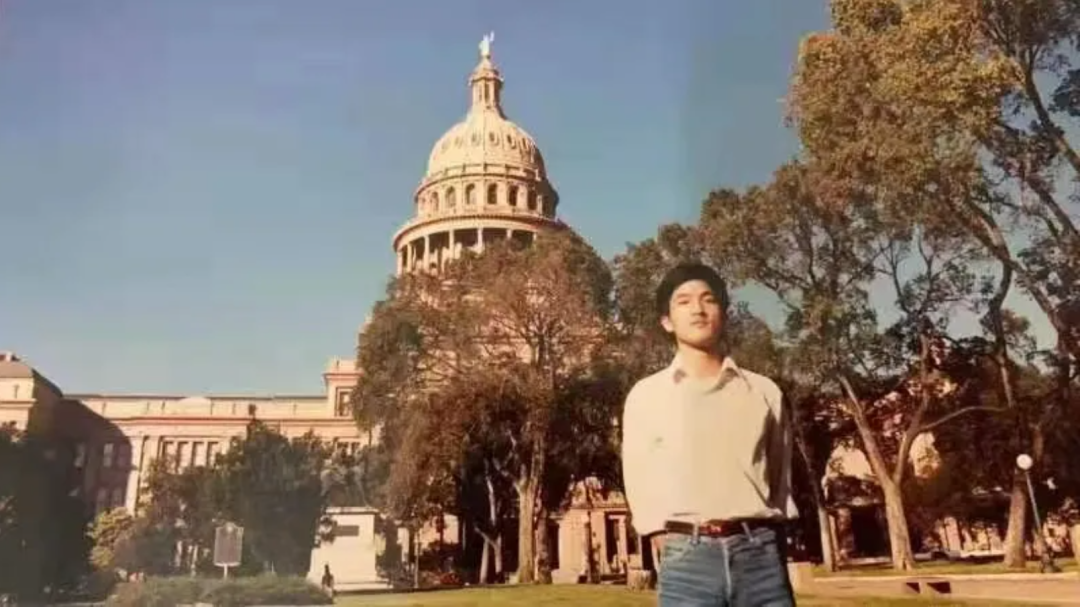
Pure mathematicians have always been wandering on the edge of the unknown world of mankind, challenging the limits of human intelligence throughout their lives. They are all fearless brave men who move forward indomitably; warriors who dare to abandon everything for the sake of truth and eternity! In order to break through ideological and intellectual barriers and break away from the shackles of traditional prejudices, most of them are indifferent to fame and fortune, stand alone, and appear to be unrestrained and unruly in the secular world. As a result, they are often severely injured by reality. Brother Shi is such a tragic hero.
In the history of mathematics, such examples abound. If you go to Paris today, you will see the names of French mathematicians engraved in gold on the Eiffel Tower; wandering on the streets of Paris and Lyon, you will inadvertently see streets named after French mathematicians; on the day of a French boy's coming-of-age ceremony, his parents will give him a copy of the manuscript of an ancient French mathematician's paper. In the field of computer science, French scholars’ enthusiasm for optimal transmission theory and their defense of the invention rights of French mathematicians are obvious to all. The historical contributions of French mathematicians have long been integrated into the core of French national culture. And all this is because France did not treat their greatest genius in the history of the nation well - Galois. Human beings have been trying to find root-finding formulas for higher-order polynomial equations for thousands of years. Countless mathematicians have spent their lives trying to find the root formula and found nothing. Galois broke through the limits of human thought, developed the idea of group theory, and gained insight into the equivalence relationship between the existence of root-finding formulas and the solvability of symmetry groups. He not only solved this eternal problem, but also used the idea of group theory to advance mathematics to the modern stage. However, his thoughts were ahead of his time. Those academic leaders who were conservative in thinking but occupied academic power did not understand his thoughts due to arrogance and laziness. Instead, they teased and ridiculed him and deprived him of the opportunity to study. Galois became politically radical as a result, and was eventually plotted by his opponents to commit suicide in a duel to defend his honor. He hastily wrote down the outline of the proof the night before the duel and entrusted his friends to keep it for him. Although his friend did not understand Galois's thoughts, he worked tirelessly and finally handed the manuscript to the discerning Liouville decades later, thus making Galois's glorious thoughts known to the world. Every time I explain the solution to the Rubik's Cube to young friends, I can't help but mention Galois.
Equally lamentable is the Norwegian genius Abel. Abel, a young genius born in a remote country, proved that there is no root finding formula for quintic equations, developed the theory of elliptic functions, and established the Abel-Jacobi theory on the Riemann surface. These are all great and ground-breaking theorems. The theory of elliptic functions is closely related to the proof of Fermat's theorem, and the Abel-Jacobi theorem is the theoretical cornerstone of modern digital manufacturing.
Young Abel wandered to the academic centers of Europe in search of academic friends and career dignitaries. In Berlin and Göttingen, he did not receive the appreciation he deserved; in Paris, the manuscript he submitted was ignored by Cauchy and he was infected with fatal tuberculosis. But he met the noble man in his life, August Crelle. Although August did not understand his thoughts, he believed in his talent and was always keen to publish his work. After the failed visit, Abel was exhausted physically and mentally. He died of illness soon after returning to his hometown. Two days later, the appointment letter from the University of Berlin arrived. Every time I teach the students the Abel-Jacobi theory, I always feel sad for Abel.
Modern society has become more and more civilized, but it still does not treat pure mathematicians well. When the author first came to Harvard to study, the core issue in the field of algebra was Fermat's theorem, and the core issue in the field of topology was the topology of 3-manifolds, namely Poincaré's conjecture and Thurston's geometrization conjecture. At that time, under the leadership of Mr. Qiu, the brothers and sisters were studying hard on the Ricci flow theory. Hamilton flew from New York to Harvard every week to discuss the deduction with Mr. Qiu without eating or sleeping. Whenever human science encounters a major obstacle, there will always be someone who uses Gödel's incompleteness theorem to promote agnosticism. There was a fashionable saying at that time: Fermat's theorem does not conflict with the current mathematical system whether it is true or not, or Fermat's theorem is correct but its proof cannot be completed within the axiom system of modern mathematics. Everyone is familiar with the later story. Andrew Wiles hid in a Princeton attic for 7 years, thus proving Fermat's theorem in one fell swoop. In fact, the real history is far more complicated than this story. The initial proof given by Wiles was flawed. In order to make up for this flaw, Wiles tried his best, and the huge pressure of public opinion almost caused him to have a nervous breakdown. At that time, Wiles chose to ask his former student Richard Taylor for help. Taylor and Wiles jointly completed Wiles' theorem, and the whole story had a perfect ending. (Richard Taylor is the author’s senior brother-in-law, and his wife, Christine Taylor, was Mr. Qiu’s female disciple at the time.) The general public often only remembers the winner in the end and ignores the sacrifices that turned the tide of the war in the great battle. Just as the core idea of proving Poincaré's conjecture is the Ricci flow invented by Hamilton, the core idea of proving Fermat's theorem comes from Yutaka Taniyama, and Taniyama is even more of a tragic hero. Historically, Taniyama was the first to break through the limits of mathematical thinking at that time. He realized that "all elliptic curves are modular." Although he had insight into the secret of heaven, he could not complete the proof overnight, and the society at that time could not tolerate his desperate enthusiasm. In the end, he chose to cross the sea to die in his early thirties. A week later, his heartbroken fiancée Suzuki also committed suicide and chased him away. Taniyama Yutaka's good friend Shimura lived up to his friend's trust and finally made Taniyama's thoughts known to the world. Wiles proved part of Taniyama's conjecture, thus completing the proof of Fermat's last theorem.
The development of the times always exceeds people's wildest imagination. Decades later, a mysterious figure who called himself Satoshi Nakamoto published an article "Bitcoin: A Peer-to-Peer Electronic Cash System", which instantly detonated the world. Satoshi Nakamoto also formally declared an encryption algorithm based on elliptic curve arithmetic, which provided a theoretical and application basis for Bitcoin. This gives the author reason to believe that Satoshi Nakamoto designed this popular item in memory of Yutaka Taniyama. For a time, various wealth myths emerged one after another. The author met everyone from top scientists to private capitalists, and they were all crazy about it. Once an investor showed off to the author that he chartered a Boeing plane to transport servers to the Arctic region for mining, because the cold weather and abundant water there brought cheap electricity and a good cooling system. At one time, more than half of the world's computing resources were used in mining. Greedy human nature, crazy waste, how many people know about Gu Shan and his conjecture? Every hot GPU chip distributed around the world is offering incense to the tragic heroes of mathematics and paying homage to their spirits in heaven.
Until recent years, the research on 3-manifold topology has come to an end. In particular, the proofs of the virtual Haken manifold conjecture and the virtual fibrosis conjecture became the final chapter of this magnificent epic. The outline of the overall picture of 3-manifold topology that humans have gone through a lot of hard work is as follows: every closed 3-manifold has a unique way to perform prime decomposition (that is, cut along the spherical surface, the interior of these spheres is not a solid sphere in the 3-manifold). Each orientable prime 3-manifold can be cut along an incompressible torus (that is, any cycle cannot be reduced to a point on the torus, and it cannot be reduced to a point on the prime manifold). The interior of each torus has a specific geometric structure and a limited volume. There are a total of eight standard geometric structures, the most abundant of which is the hyperbolic geometric structure (that is, the Riemannian metric with a cross-sectional curvature of -1). Furthermore, the hyperbolic 3-manifold here all has a finite overlapping space. This space is a fiber cluster defined on the circumference with the curved surface as the fiber. The geometry in this image is derived from Ricci flow. Brother Wanxiong's groundbreaking work established the basic theory of Ricci flow in non-compact spaces, and made fundamental contributions to solving Poincaré's conjecture and geometric conjecture for Ricci flow.
|
|
|
|
|
|
Under the leadership of Mr. Qiu, the author and his collaborators have been committed to extending the theory of Ricci flow to the discrete manifold case, transforming the profound basic theory into computational methods [1], and thus applying it to the engineering and medical fields. We have completed the Ricci flow for two-dimensional manifolds, and are currently focusing on the three-manifold case. So far, the most widespread impact of Ricci flow on social life is virtual colonoscopy technology. In 2008, President Obama recommended this technology to all people and demonstrated it personally. This technology has significantly reduced the incidence of colorectal cancer, widely improved people's health and quality of life, and indeed saved many lives. This is due to the theoretical contribution of senior colleagues. Compared with the extensive and profound 3-manifold topology theory, we believe that the current application level is still at the initial stage, and the era is still waiting for the "Satoshi Nakamoto" of 3-manifold theory.
In the worldly life, the senior brother is often miserable and miserable; but in the world of mathematics, he is a real prince, full of talents and will leave his name in history! Although he was indifferent to fame and wealth throughout his life and was penniless when he died, his genius thoughts left precious spiritual wealth for the Chinese nation and all mankind!
May senior brother be able to continue to appreciate the magnificence of geometry and pursue the eternity of the universe in heaven!
-
Gu Xianfeng and Qiu Chengtong, Computational Conformal Geometry - Theory, Higher Education Press, 2020.
Machine-translated from the Chinese original 悲剧英雄 - 纪念师兄施皖雄 (published 2021-10-15). WeChat original ↗