Last year, the company I currently work for officially launched Workday as a new generation HR management platform. From the user's perspective, this is a typical enterprise digitalization process - new functions are continuously iteratively released during use, and the newly released performance management functions are used for the first time in these days. In the past ten years or so, when I worked for the first two companies, I went through the process of Workday going online. I felt that although Workday's core HR functions are very powerful, the user experience is not very good. Due to the characteristics of our industry, our company should be the company that pays the most attention to talent management in the world. Therefore, I am very curious about how Workday, a standard SaaS product, can handle our company's complex and powerful talent management process.
The general logic of our company's talent management process is: employees spend most of their time working on projects, so their work evaluations are all project-centered, while annual performance and career development are evaluated through a calibrated group: project leaders give feedback and evaluations based on the employee's current position qualification standards and actual project performance; at the end of a performance cycle, the employee's "career development representative" summarizes the current feedback and evaluation information and submits it to the corresponding talent evaluation committee for review and decision-making.
This process is quite different from the performance management logic of the standard Workday human resources management system. For example, the data models and business processes of job qualifications, evaluation standards, personal development plans, etc. are different from the standard system logic. However, employees' personnel information, organization and rank information, etc. should come from the HR core system.
In the past few days, I have been practicing the performance management process this year. Judging from the experience of using the new system, I feel that it has perfectly replaced the old system and manual processes in the past. Many functions have been made very detailed, such as the time control points of the review meeting, the automatic display of the Jiugong chart calibration, etc. have been built into the system. The interface of this application is marked "Powered by Workday Extend", indicating that it uses Workday's latest low-code PaaS development platform; from a user's perspective, I can feel that this platform, which has just been launched for more than a year, has given Workday a lot of application space.
In 2015, when I was in charge of the human resources cloud consulting business of a consulting company, I studied methods to implement Workday’s functional expansion development. At that time, Salesforce was the only large SaaS company in the industry claiming to provide native PaaS. It was said that Workday was about to launch a PaaS service, and some people even called it Work.com. However, no one around me had seen this thing. Now that I think about it, it may be a joke after the name of salesforce's force.com.
On July 11, 2017, at Workday's annual partner conference, Workday's chief technical architect revealed a preview version of the "Workday Cloud Platform" PaaS platform, and a small number of partners are trying to develop on this platform.
Until May 26, 2020, Workday announced that the "Workday Cloud Platform" was renamed to two products, the low-code development PaaS platform Workday Extend and "Workday Integrated Cloud", and officially announced the public release (GA) of the former.
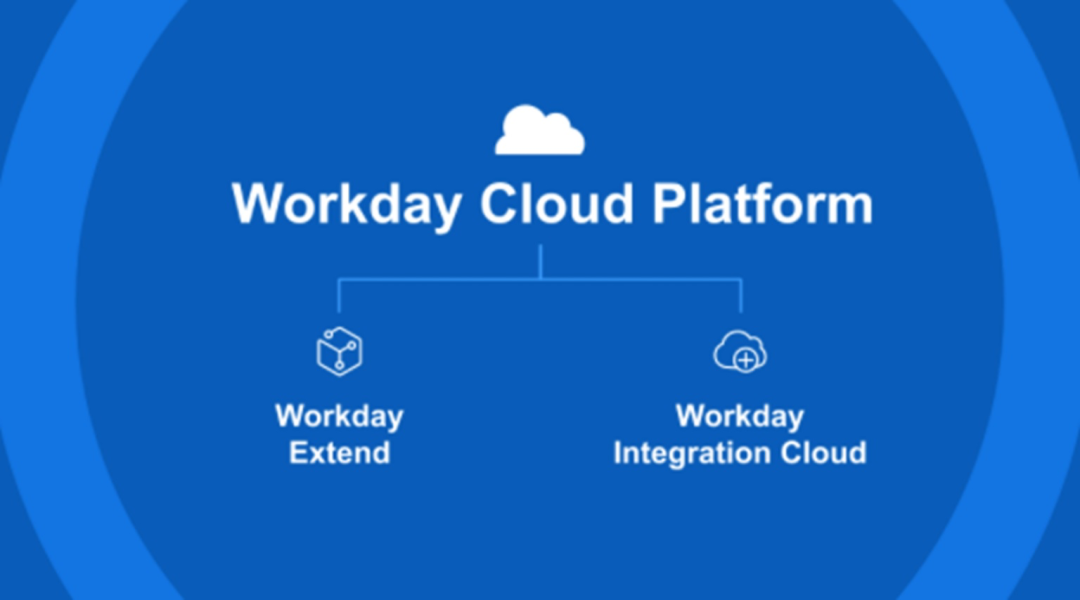
In the Workday environment, the user interface of applications developed by Workday Extend looks like the native style of Workday. It can not only use the data model of the Workday core, but also call Workday itself and any third-party API to create extended data models and workflows.
Workday Extend is a typical low-code development platform that provides development tools such as visual programming, writing plug-ins, and command lines.
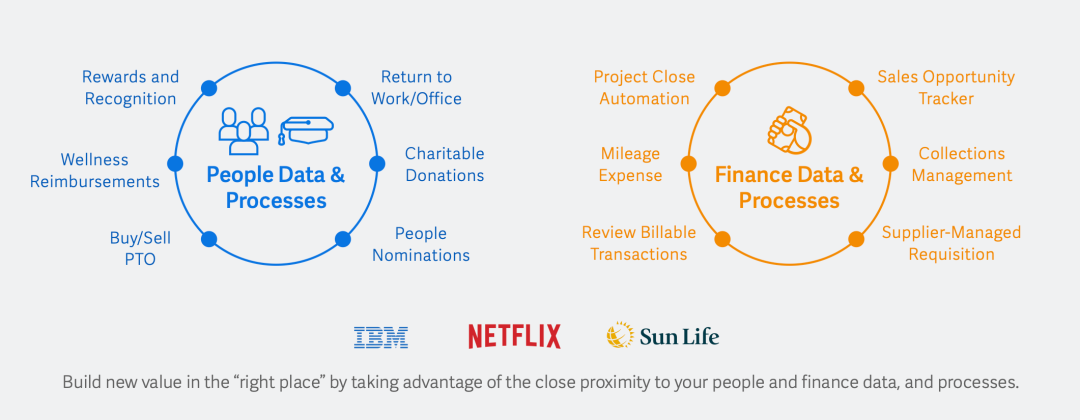
Among the early application cases of Extend officially promoted by Workday, large companies such as IBM, Netflix and Sunlife were the earliest adopters. For example, in the human resources application, it generates a certificate of return to the office based on vaccination status, and in the financial application, it handles financial transaction processes such as employee reimbursement and accounts payable payment applications.
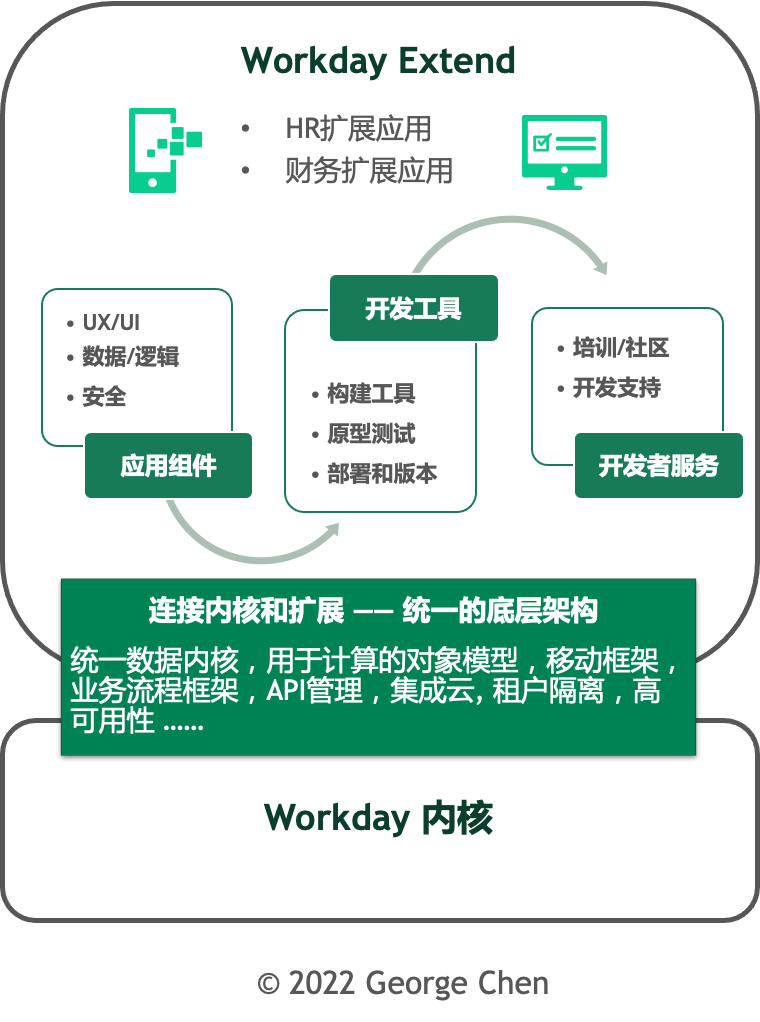
From an architectural point of view, Workday Extend and the native Workday core functions are built on a unified technical architecture, providing a series of low-code development application components/templates, development and operation tools, and developer services:
Based on the above understanding, the inspiration that Workday’s PaaS development in recent years has given me is:
1. The development of low-code development PaaS (aPaaS) by large SaaS companies is inevitable to improve user agility and continuously adapt to organizational changes and application iteration needs;
2. aPaaS still requires professional system integration companies to implement it. SaaS companies can only promote aPaaS applications by developing ecological partners;
3. Workday’s aPaaS took 5 to 6 years from the concept to the official GA release. It is still a new thing in the market today. At present, there are not many heavy users like our company. It is said that the implementation price and platform usage fee are not cheap. my country's top domestic ERP and HCM manufacturers are transforming into "cloud platforms", but they are changing their faces quickly and changing their positions at the drop of a hat. We should carefully study the process of Workday's several years of sharpening its sword.
4. Low-code development is currently a hot spot in the market. It remains to be seen whether it can exist independently as a software category, or whether it must be attached to large core systems such as SAP, Salesforce, and Workday as an extension of the core system.
Machine-translated from the Chinese original 从Workday用户角度,看SaaS公司的低代码PaaS化进程 (published 2022-04-14). WeChat original ↗