Linus Torvalds is a very powerful programmer because he has two world-famous works: Linux and Git.
If we talk about technical ability alone, there is one person who may be better than Linus.
When I looked at the project list on his homepage, I felt like my head was going to explode.
He developed the famous simulator QEMU and the audio and video processing library FFmpeg. These two alone surpass most programmers. He also wrote a C compiler, OpenGL implementation, LTE soft base station, JS engine, made Linux run in the browser, and even set a world record for calculating pi...
In other words, this guy jumps around in the fields of operating systems, simulators, multimedia, computer graphics, compilers, programming languages, communications, and even mathematics, and develops a piece of software in one year that I can't write in my lifetime!
The programs he writes are always several orders of magnitude smaller and faster than other programs!
Isn't this too perverted? !
I have to admit that there are indeed geniuses in this world.
He is French programmer Fabrice Bellard.

Let's take a look at his amazing journey.
1 · Compression software
Fabrice Bellard was born in Grenoble, a small city in southeastern France. When he was in high school at the age of 17, he found that his computer hard drive was small and expensive. He thought about how to save hard drive space, so he developed a compression program LZEXE in assembly language.
LZEXE has excellent compression effect. His friends also copied it and put it on BBS. It became popular all of a sudden and became one of the most popular compression tools in the DOS era.
In 1996, at the age of 24, he wrote a Java virtual machine that could compile Java code into C code for execution.
2 · Pi algorithm
In 1997, he became interested in the calculation of pi. By improving the Bailey–Borwein–Plouffe formula, he proposed the fastest algorithm for calculating pi, which greatly reduced the time complexity.
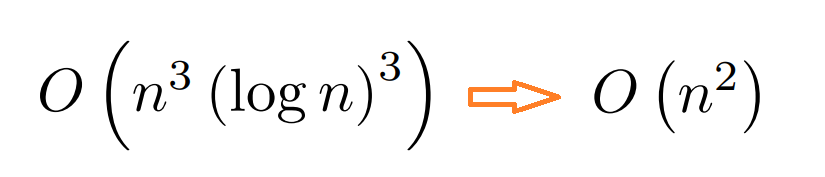
Since then he has established his reputation in the mathematics community, and the new algorithm was named Bellard's formula.
3 · TinyGL (computer graphics)
In 1998, when Bellard was developing a virtual reality engine project, he needed to use OpenGL, which is a cross-language and cross-platform API for rendering 2D and 3D vector graphics. The open source implementation of OpenGL is Mesa. Bellard felt that Mesa was too slow, so he wrote one himself, which is TinyGL.
TinyGL implements a subset of OpenGL that is much faster, takes up far fewer resources, and is orders of magnitude smaller than either Mesa or other commercial implementations (such as Solaris OpenWin OpenGL), and Bellard once again demonstrates his superior skills at writing efficient C code.
4 · FFmpeg (audio video multimedia)
In 2000, under the pseudonym Gérard Lantau, he started one of his most important and widely recognized projects: FFmpeg.

FFmpeg is a veritable "Swiss Army Knife" of digital video and audio. It is ubiquitous in video software and commercial websites: VLC, YouTube, iTunes. I don't need to introduce its power.
5 · C Language Obfuscation Competition
Shortly after creating FFmpeg, Bellard submitted two entries to the International C Code Obfuscation Contest (IOCCC) in 2000 and 2001, and won two consecutive awards.
You know, IOCCC is the most creative C language obfuscation competition. It is the best stage for programmers to fully demonstrate their intelligence. It is very impressive to win once, and Bellard easily won it twice.
Below is Bellard's award-winning work in 2000, which used fast Fourier transform to calculate the largest known prime number (2^6972593-1) in a shorter time
int m = 754974721, N, t[1 << 22], a, *p, i, e = 1 << 22, j, s, b, c, U;
f (d)
{
 for (s = 1 << 23; s; s /= 2, d = d * 1LL * d % m)
 if (s < N)
 for (p = t; p < t + N; p += s)
 for (i = s, c = 1; i; i--)
 b = *p + p[s], p[s] = (m + *p - p[s]) *
 1LL * c % m, *p++ = b % m, c = c * 1LL * d % m;
 for (j = 0; i < N - 1;)
 {
 for (s = N / 2; !((j ^= s) & s); s /= 2);
 if (++i < j)
 a = t[i], t[i] = t[j], t[j] = a;
 }
}

main ()
{
 *t = 2;
 U = N = 1;
 while (e /= 2)
 {
 N *= 2;
 U = U * 1LL * (m + 1) / 2 % m;
 f (362);
 for (p = t; p < t + N;)
 *p++ = (*p * 1LL ** p % m) * U % m;
 f (415027540);
 for (a = 0, p = t; p < t + N;)
 a += (6972593 & e ? 2 : 1) ** p, *p++ = a % 10, a /= 10;
 }
 while (!*--p);
 t[0]--;
 while (p >= t)
 printf ("%d", *p--);
}
6 · TinyCC (the fastest compiler)
There is also a spin-off from the 2001 competition: TinyCC, the world's fastest and smallest C compiler, orders of magnitude smaller than most other C compilers.
In order to prove the power of TinyCC, Bellard developed a TCCBoot with only 138K based on TinyCC. It can compile the Linux kernel and start it in less than 15 seconds, which is really scary.
7 · QEMU (emulator)
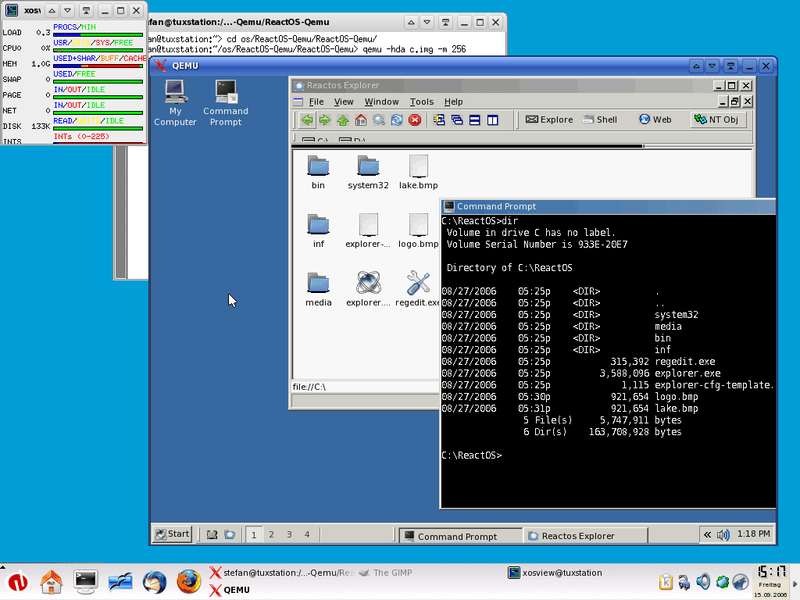
In 2005, Bellard released another explosive project, QEMU, which is an open source simulator that can use software to simulate CPU, memory, and I/O devices, giving the operating system the illusion of running in hardware.
You can think about it, developing such software requires not only an extremely good understanding of the operating system, but also an extremely extensive knowledge of hardware. There are many details, and the difficulty is even higher than that of the operating system.
8 · Create a world record for PI
In 2009, Bellard went to play mathematics again. He announced that he had reduced pi to 2.7 trillion decimal places, using only an ordinary PC, setting a world record.
The previous world record was set by the T2K Open supercomputer ranked 47th in the world. Bellard's desktop computer costs less than 2,000 euros and has only a configuration of: 2.93GHz Core i7 CPU, 6GB memory, and 7.5TB hard drive.
One person plus a computer actually defeated a supercomputer.
9 · JSLinux (emulator)
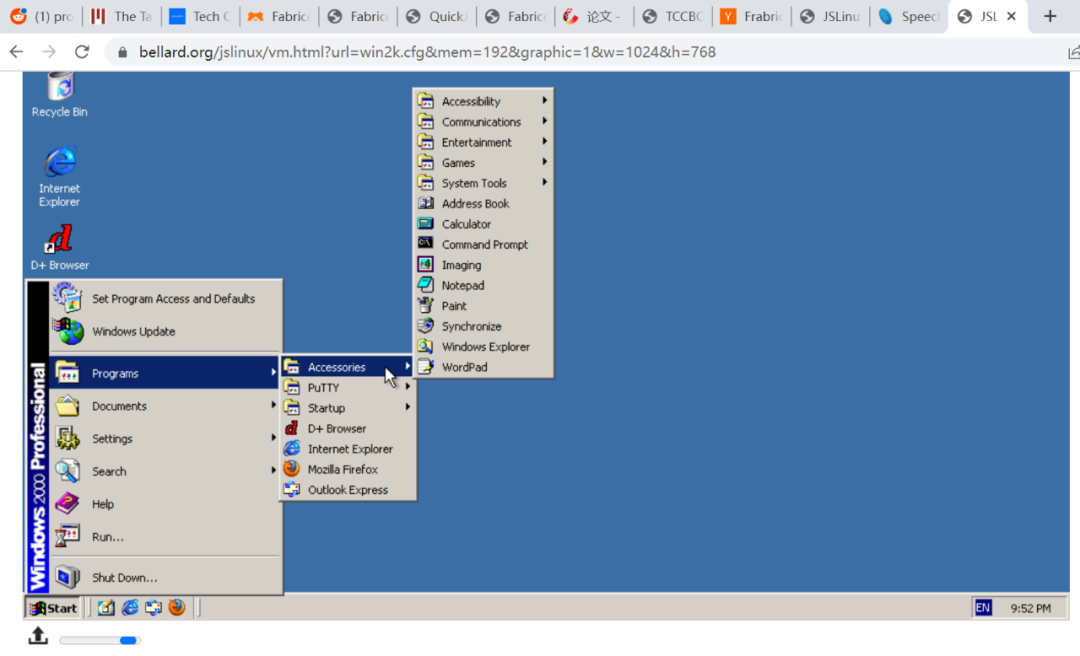
In 2011, his interest turned to JavaScript again, and he actually wrote a PC simulator in JavaScript so that Linux and Windows could run in the browser.
This simulator emulates a 32-bit x86-compatible processor, an 8259 programmable interrupt controller, an 8254 programmable interrupt timer, and a 16450 UART.
It not only supports the command line, but also supports the graphical interface. Seeing Windows 2000 actually running in the browser, the shocking feeling can only be described as holy shit!
10 · LTE soft base station (communication)
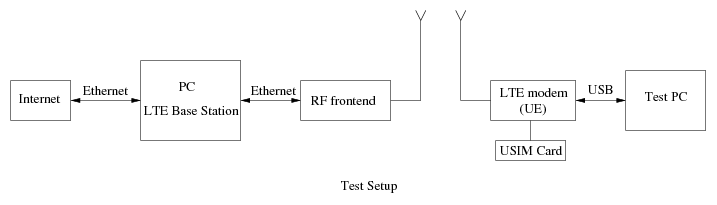
In 2012, Bellard's interest shifted again. It took one person 10 months to implement an extremely efficient LTE soft base station on a PC. Supports LTE TDD/FDD, NB-IoT, eMTC, and can support up to 5 carriers 2x2 MIMO or 3 carriers 4x4 MIMO.
All this requires is a PC with an i7 4-core CPU.
11 · QuickJS (JavaScript interpreter)
In 2019, Bellard released QuickJS, an embedded JavaScript execution engine.
QuickJS supports ES2020, is small and easy to embed, has only a few C files, and no other external dependencies.
It runs very fast, completing 69,000 ECMAScript tests in 95 seconds on a single-core CPU.
I just selected some of the software developed by Bellard, and there are many more on his website bellard.org. The most shocking thing is that these software cover various fields of computer science and are very different.
Bellard gives the impression that he can easily enter a field that he finds interesting, become an expert in this field, leave a software that others are willing to spend years maintaining, and then leave lightly and move into the next field.
When someone asked him why he studied so many different things, he said: I hate doing the same thing all the time, so I have to switch to different projects to play...
Just for fun, this is Linus's slogan. It seems that the pursuit of all the great gods is the same.
Bellard is not interested in money or fame (as evidenced by his use of pseudonyms to do open source projects). He rarely gives interviews to the media. There is very little information about him on the Internet, and he is far less famous than Linus.
But if you take a look at his humble profile, bellard.org, and see the amazing depth and breadth of the projects, you'll be absolutely blown away.
Bellard must have traveled back in time, or must have been programmed in God Mode.

Machine-translated from the Chinese original 比Linus更厉害的程序员,这家伙一定是穿越回来的! (published 2023-01-08). WeChat original ↗