
A leading domestic optimizer software manufacturer discussed with me one of their confusions: The manufacturer originally made optimization decision-making software based on artificial intelligence to solve optimization and solution algorithms for enterprises' supply chains, labor force, network layout, etc. However, in the process of going to market, the actual business needs of enterprise customers are often not local algorithm problems, but systemic problems such as the entire supply chain management, labor management, network management, etc., which require overall digital solutions, so they have to provide large-scale system development and integration for enterprises, both consulting and implementation.
For example, the supply chain management of those enterprises does not even include basic arithmetic problems such as addition, subtraction, multiplication and division, and it is impossible to use advanced mathematical tools such as calculus and probability theory. Software companies originally only made CPUs, but what the company wanted was a computer. Software manufacturers were embarrassed. They obviously produced CPUs, but in order to meet customer requirements they had to bite the bullet and produce computers.
I found that many domestic artificial intelligence companies have encountered similar challenges. They were originally working on tools, but turned into working on complete systems and comprehensive solutions.
Since the 1980s, enterprise management information systems have academically divided systems from transaction to analysis, from data input to information output into transaction processing systems (TPS), management information systems (MIS), decision support systems (DSS) and high-level information systems (EIS):
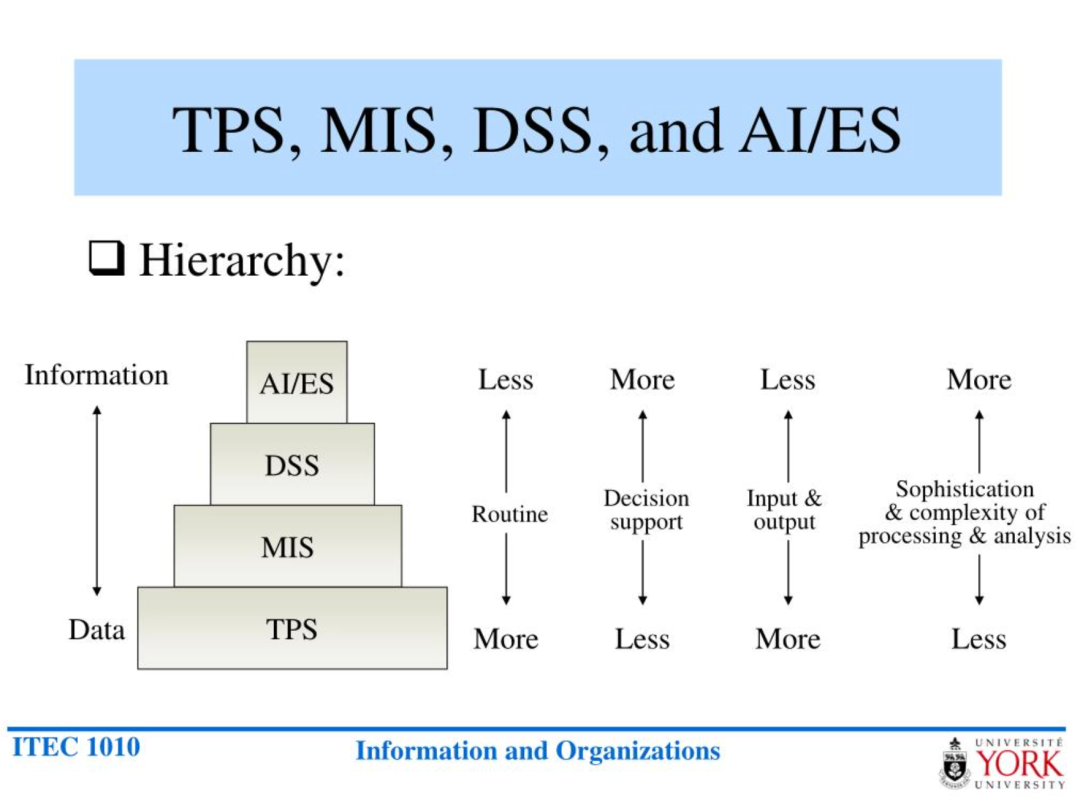
That is to say, job records, data analysis and optimization decision-making are constructed separately according to the process of data generation and use. This architecture is related to the capabilities of early information technology, forming the so-called separation of OLTP and OLAP. For example, the information system of the fashion retail industry is vertically separated like this:
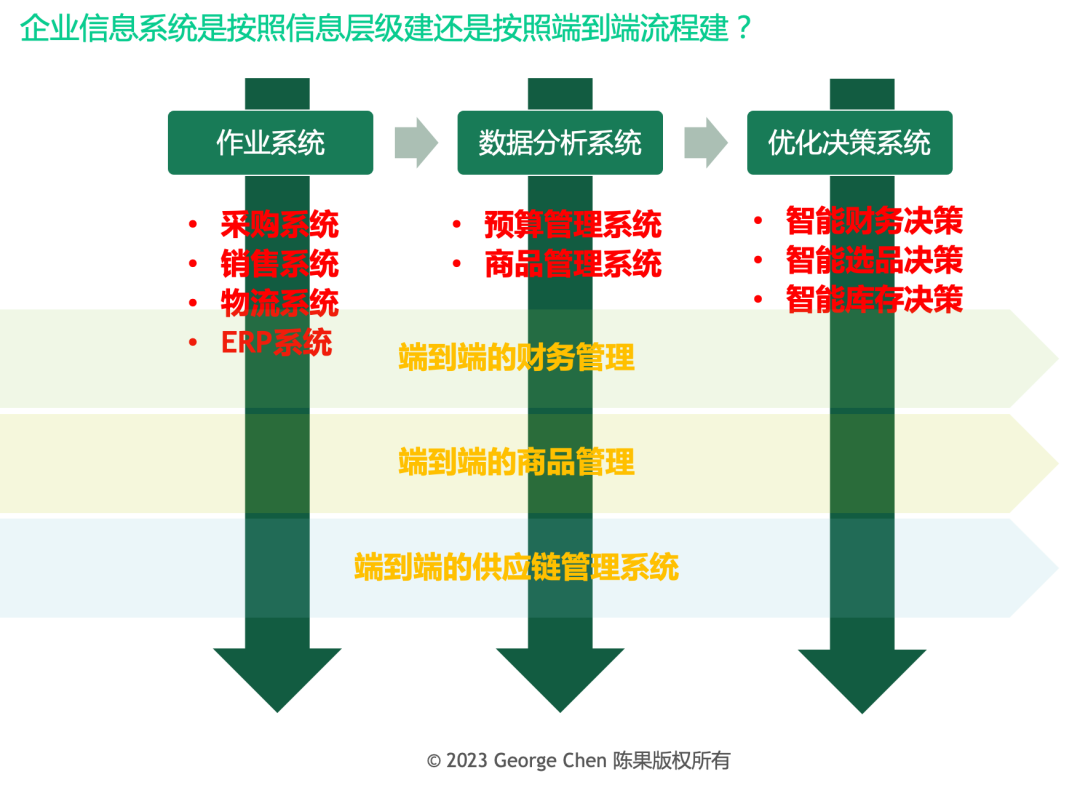
However, with the development of big data, cloud-native architecture, artificial intelligence and other technologies, today information systems have begun to form a trend of OLAP/OLTP integration. So is it possible for the software system of enterprise solutions to break the vertical segmentation model in the figure above, and form a model of end-to-end process processing such as finance, commodities, supply chain, etc., to achieve real-time integration of business transactions, data analysis and intelligent decision-making?
I proposed this product trend last year in the article "Market Opportunities for Enterprise Digital Intelligence Software | Is OLAP a Business Application or a Technology Platform?" I recently observed a progress case of the application of artificial intelligence in the fashion industry, which prompted me to continue thinking: Is there really a new round of product reshaping for enterprise solutions?
Seven years ago, when the craze for enterprise applications of artificial intelligence had just begun, I predicted the application of artificial intelligence technologies in the fashion field based on machine learning and neural networks, image/video/music multi-modal data fusion, identifying fashion trends, assisting designers in design, buyer selection and product planning (see "Cognitive Fashion and Presidential Prediction: Those Computers Between Mortals and Gods", "Human Insight Cloud Technology - Black Technology in Retail and Marketing")
At that time, I believed that the intelligent capabilities of "cognitive fashion" were not point-based applications, but should empower clothing companies' end-to-end product management processes such as design, development, procurement planning, and supply chain. This process traditionally involves a series of IT systems such as product lifecycle management (PLM), merchandise planning management (Merchandising and assortment planning, built into MAP), and supply chain management. (See "IT Platform to Drive Fast Fashion Creativity - Shoes and Clothing Retail PLM (Part 1)" "IT Platform to Drive Fast Fashion Creativity ——Shoes and Clothing Retail PLM (Part 2)" "IT Application Development of Retail Merchandise Management (RAMA)"), using artificial intelligence's insights into fashion to reshape the processes of these systems. Therefore, I proposed a "Chen Guo Model" in 2016:
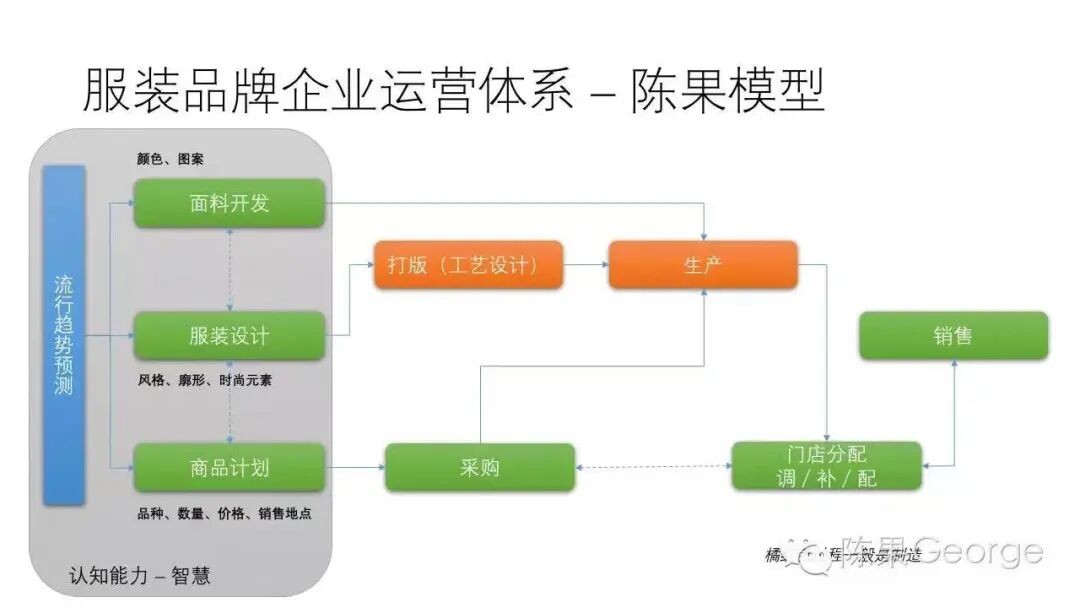
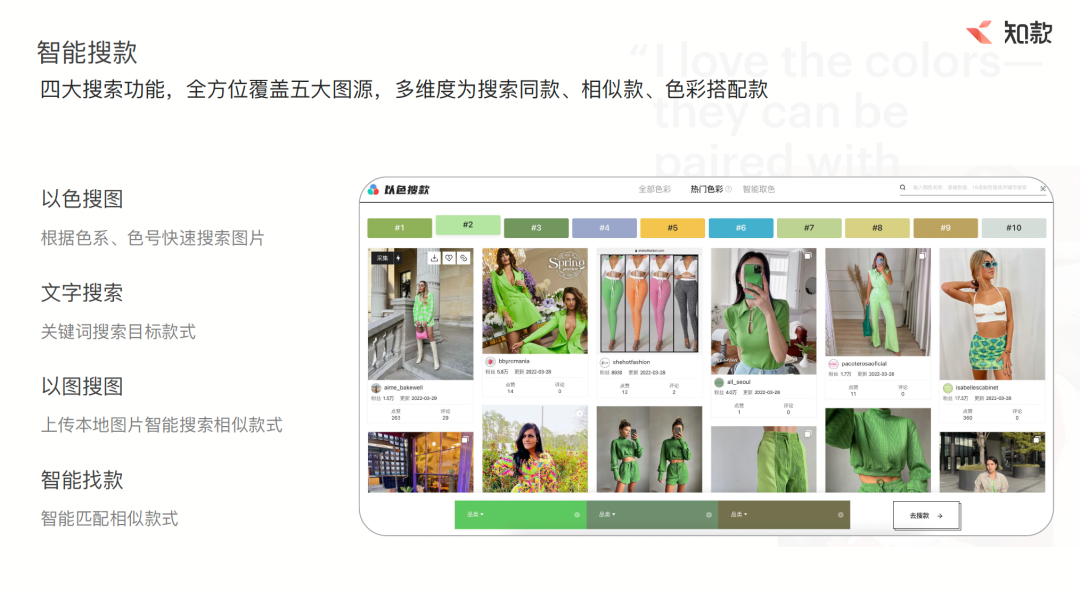
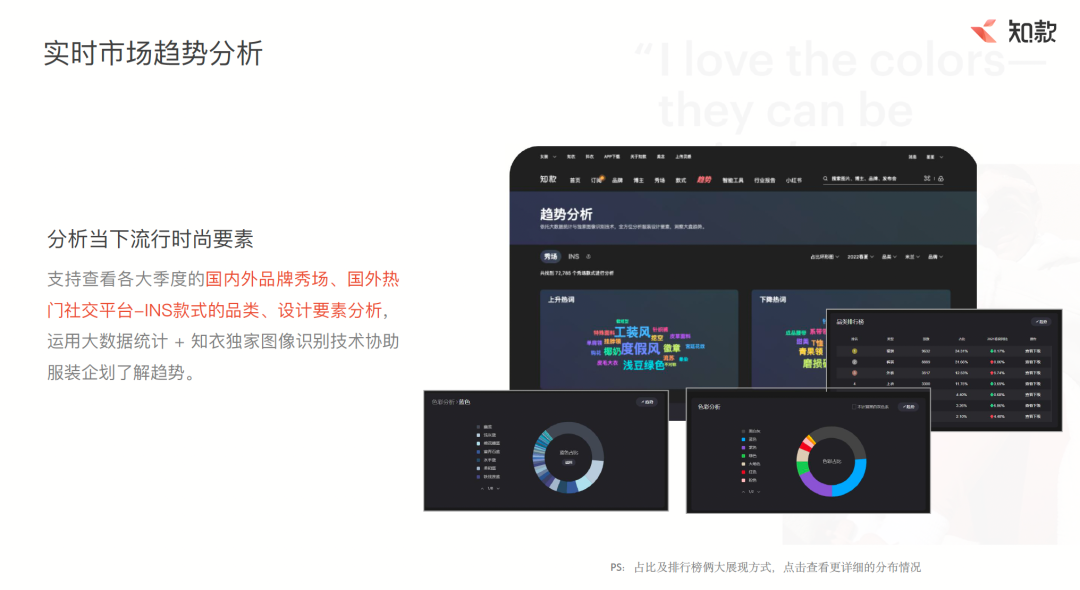
Recently, I was very pleased to see that a technology startup company in HangzhouActually, I have basically realized all the things I boasted about 7 years ago.——They provide a set of solutions for clothing style search and fashion trend analysis based on artificial intelligence and big data, covering image sources from websites, Weibo, Taobao/Tmall, Xiaohongshu, Douyin, INS and other domestic and foreign Internet open ranges or closed social platforms, as well as fashion shows, wholesale and retail markets, street photography and other fashion images:
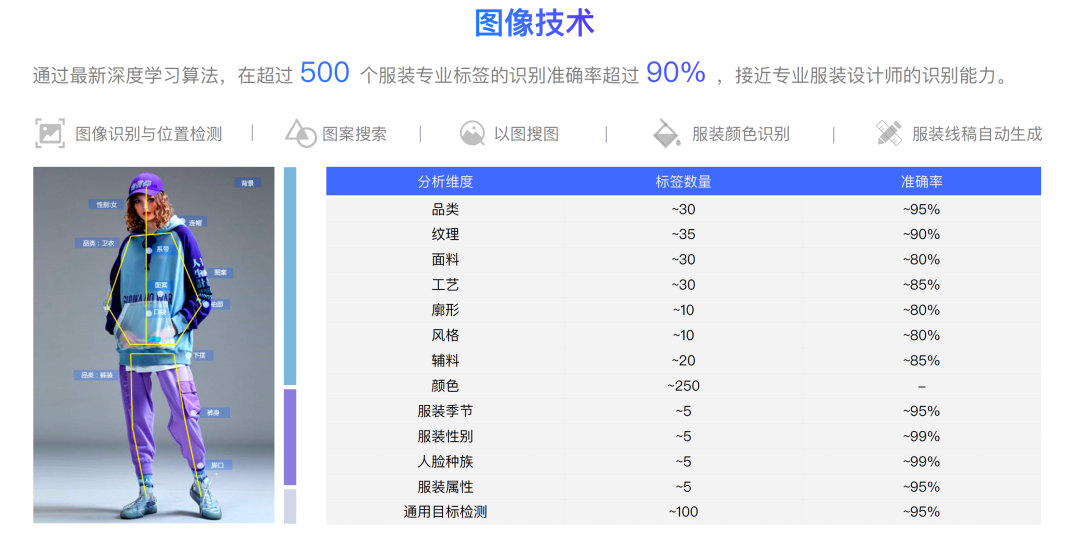
The company's digital products based on these intelligent analyzes can solve a series of business problems of fashion companies such as product planning, platform operations, and supply chain:
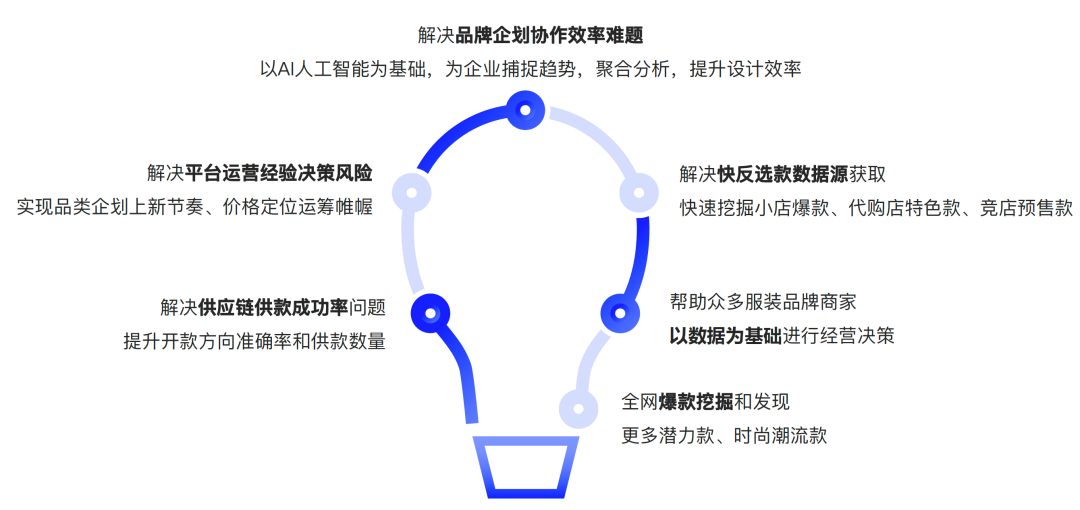
These solutions are completely consistent with my vision of the application scenarios of "cognitive fashion" 7 years ago. However, it is a little regrettable that I feel that these technologies I have seen are point solutions, and I have not seen examples of using these capabilities to reconstruct PLM, MAP, and SCM systems in the traditional clothing industry to achieve end-to-end intelligent processes.
In "Vision and Practice (2) | Artificial Intelligence Changes CRM/ERP", I talked about two ideas of using artificial intelligence to reconstruct enterprise ERP and CRM, which are actually point applications; similarly, I also wrote about examples of using artificial intelligence to innovate financial analysis in "BI and Artificial Intelligence Applications | Are there any opportunities for "intelligent strategic finance" in China? 》, however, I have not seen such innovative intelligent financial software completely reshape the accounting system, ERP system and EPM system in the traditional financial management field.
Using artificial intelligence to re-engineer ERP is a major feature of next-generation ERP ("How Enterprises Move to Next-Gen ERP"). There are many artificial intelligence startups on the market, and many of them are making point applications. If these artificial intelligence companies can enter the core system reengineering, or even upgrade to directly dominate the next generation of enterprise core systems (such as ERP), I think this may be the king of product strategies for artificial intelligence companies.
Other related articles:
Digital intelligent management system|Strategic performance, production and sales collaboration, customer experience, intelligent operation and maintenance
AI Transforms ERP | The Underworld Brother and Artificial Intelligence
Popular science on the digital intelligence development stage of enterprises | Even ERP is not done well, let’s build a crude AI
Rethinking “Next Generation ERP”
Smart retail supported by artificial intelligence (1)|Smart promotion plan
Artificial Intelligence Application|Discussing Intelligent Assistants from the Digital Transformation of News Spokespersons
Business Simulation | The most popular business management software for science students
Machine-translated from the Chinese original 认知时尚从吹牛到落地|人工智能改造企业解决方案的产品策略 (published 2023-02-28). WeChat original ↗