world congress on basic sciences
In mid-to-late July 2023, the first International Congress of Basic Sciences (International Congress of Basic Sciences) initiated by Mr. Qiu Chengtong was held in Beijing. The conference invited a Nobel Prize winner, eight Fields Medal winners and three Turing Award winners, which was an unprecedented event. The author met Mr. Qiu, whom I had not seen for many years, David Mumford (master of algebraic geometry, Fields Medal winner), Richard Hamilton (inventor of Ricci flow) and many other geometry masters, as well as many mathematician and computer scientist friends. The author was also invited to give a plenary report, mainly reporting on the recent work in explainable AI in cooperation with Mr. Qiu:Optimal transmission theory and AI generation model from a geometric perspective。
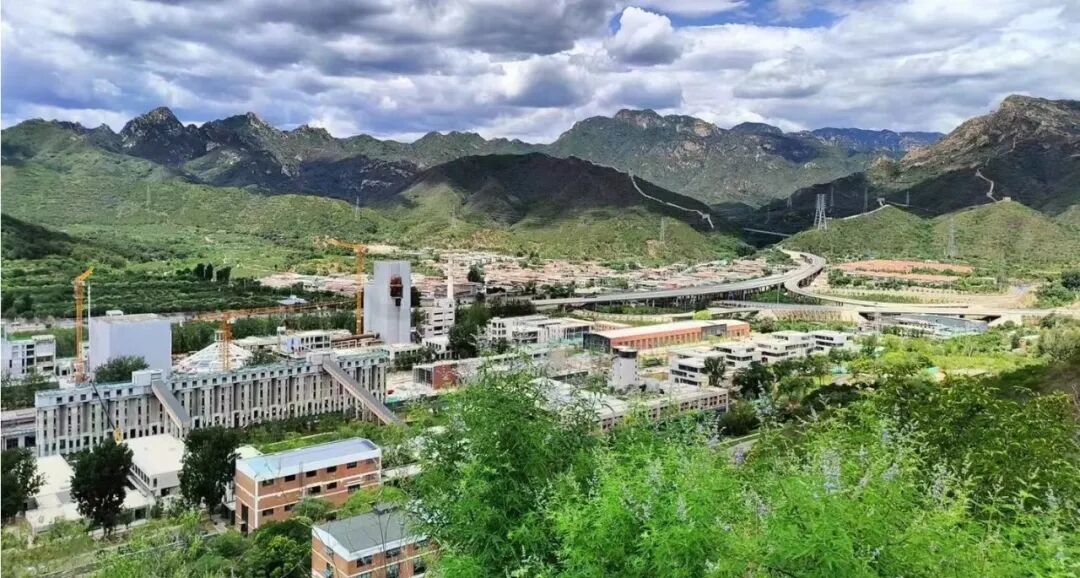
Fig 1. Beijing Yanqi Lake Institute of Applied Mathematics, Beijing Institute of Mathematical Sciences and Applications (photo by Liu Yi)
The conference was held on the banks of Yanqi Lake in Huairou, where the scenery is beautiful and the climate is pleasant. When the author was giving a report at the conference, the vast mountains were right outside the window, and the Great Wall was winding on the mountains. There were many wonderful reports at the conference. In all the reports that the author listened to, Mr. Qiu Chengtong’s name was almost everywhere. Many conference reports are very enlightening for computer algorithms: for example, Professor Bobenko's team at the University of Berlin in Germany generalized the discrete Ricci flow in our calculation of conformal geometry, thereby obtaining the generalized discrete single-valued theorem; Wang Academician Xu Jia explained the existence, uniqueness and regularity results of the generalized solution to the Monge-Ampère equation, which were mutually verified with the spherical optimal transmission algorithm explained in our class; Professor Yu Guoliang explained how to use the index theorem of the spin bundle Dirac operator to prove Gromov's multiplicity Hedron conjecture explains the rigidity of convex polyhedron from another perspective; Professor Aggarwal of Columbia University reported on the arithmetic asymptotic estimation in the Teichmuller space composed of quadrilateral mesh surfaces, which is related to our Abel-J The acobi theorem and structured grid theory are closely related; Professor Lin Yong and Mr. Qiu extended the discrete Ricci flow to the graph (Graph), proved the existence and uniqueness of the normalized flow solution, and greatly expanded the engineering applications of Ricci flow, etc.
At the meeting, the author also met Mr. Deng Yushan, the manager of Qin Lixin of Boston International Publishing House, and learned that the two volumes of "Collected Papers of Qiu Chengtong on Applied Mathematics" edited by the author have been published. These two collections of papers summarize nearly 100 papers by Mr. Qiu in the field of applied mathematics, covering many fields such as computational conformal geometry, computer graphics, computer vision, computer-aided design (CAD), medical images, networks, control theory, numerical partial differential equations, etc. For friends in the engineering field, it is worth cherishing and learning.
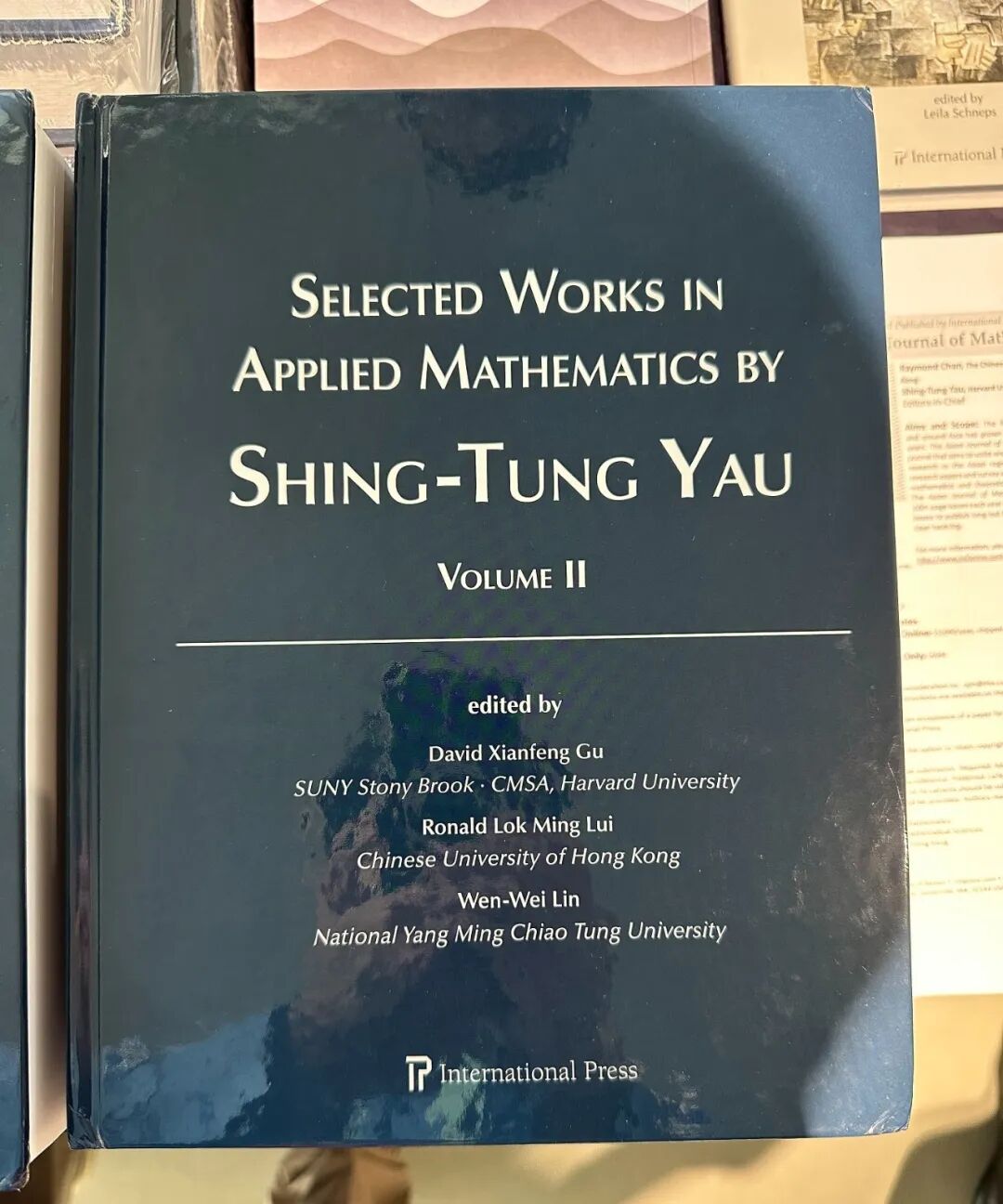
Fig 2. "Collected Papers of Yau Shing-Tung on Applied Mathematics".
The author also met Zhao Tianfu, editor-in-chief of Higher Education Press, at the conference, and learned that more than 5,000 copies of the tutorial "Computational Conformal Geometry - Theory" written by Mr. Qiu and the author have been ordered. Editor-in-Chief Zhao invited the author to write a few more monographs, especially "Computational Conformal Geometry - Algorithms". The author is deeply moved by the readers’ enthusiasm for learning.
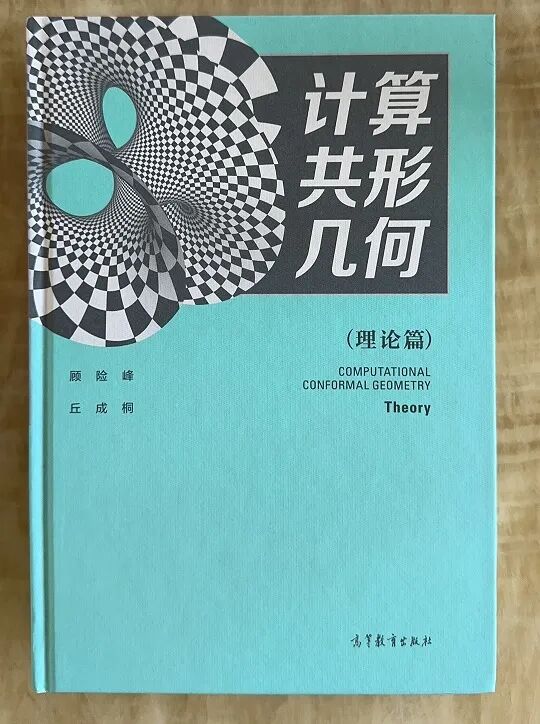
Fig 3. Textbook "Computational Conformal Geometry - Theory" co-authored with Mr. Qiu Chengtong.
Tsinghua years
Mr. Yau Shing-tung has devoted himself to the development of mathematics education in China for many years, and has established mathematical science centers in many universities, including Tsinghua University, Zhejiang University, Southeast University, Chinese University of Hong Kong, Taiwan Jiao Tong University, etc. This allows many young students to be exposed to the forefront of international mathematics and gain valuable opportunities for further study, so that they can show their talents and achieve careers in the field of mathematics. The author often meets young Chinese mathematics professors at many international conferences. When talking about their academic experiences, they often encounter rare opportunities through Mr. Qiu's center at critical moments in their lives, and eventually become mathematics professors and teach around the world. The Mathematics Center of Zhejiang University has held many world-class academic activities and invited a large number of top international mathematicians to give lectures. Many of the outstanding young Chinese mathematicians at home and abroad have studied at the Mathematics Center of Zhejiang University and started their mathematical journey there, and many of them have become internationally renowned mathematicians. Not long ago, the author met a professor from the University of Texas at a mathematics conference in New Jersey. He started his career at the Mathematics Center of Zhejiang University. He sincerely thanked Mr. Qiu and Brother Liu Kefeng from the bottom of his heart.

Fig 4. Moonlight over Tsinghua Lotus Pond.
For the past ten years, Mr. Qiu has convened a group of overseas scholars to give lectures at the Shing-tung Yau Mathematical Sciences Center of Tsinghua University every summer. Out of gratitude to my alma mater, the author returns to Tsinghua every year to teach "Computational Conformal Geometry". During the epidemic, courses were moved online and the teaching language became bilingual in English and Chinese to facilitate students from all over the world to attend classes. Mr. Qiu also visited online classes in person many times to answer questions from students. In many cases, the number of listeners listening to online live broadcasts reaches tens of thousands.
Considering that Tsinghua University focuses on engineering science, and the audience is mostly students with engineering backgrounds, the author chose a course that emphasizes both basic mathematical theory and computer algorithms. On the one hand, historically, the development of computer science has lagged far behind mathematics, and many modern mathematical ideas and methods have not yet penetrated into the computer field; but on the other hand, computer science has developed extremely rapidly, and many fundamental problems in the engineering field must use modern topology and geometry. But today, the computer science education system does not include the necessary modern topological geometry knowledge, and the trained students cannot meet the needs of the ever-changing technological market. We hope that the course "Computational Conformal Geometry" can make up for the shortcomings in this aspect, explore the mathematical principles of core issues in different engineering fields, and help young students expand their horizons, enhance their foundation, hone their abilities, and understand the beauty and structure of mathematics.
Mathematics mainly studies various structures in nature and the internal relationships between various structures. Engineering problems mainly focus on surfaces and solids in the real physical world, and use partial differential equations to describe various physical phenomena. Surfaces in the physical world naturally have topological structures, Riemannian metric structures, conformal structures, and equidistant embedded structures of surfaces in Euclidean space. The corresponding theoretical subjects are algebraic topology, Riemannian geometry, Riemannian surface theory and surface differential geometry. Therefore, our Computational Conformal Geometry course covers algebraic topology, Riemannian geometry, Riemannian surface theory and differential geometry courses in basic mathematics undergraduate courses. At the same time, in order to explain the calculation methods, we also introduce some graduate-level mathematics courses, including harmonic mapping theory, Teichmuller space theory, and surface Ricci flow theory. In recent years, with the vigorous development of AI, we have systematically introduced the Minkowski-Alexandrov theory in convex differential geometry, and the equivalent Monge-Kantorovich-Brenier optimal transmission theory.
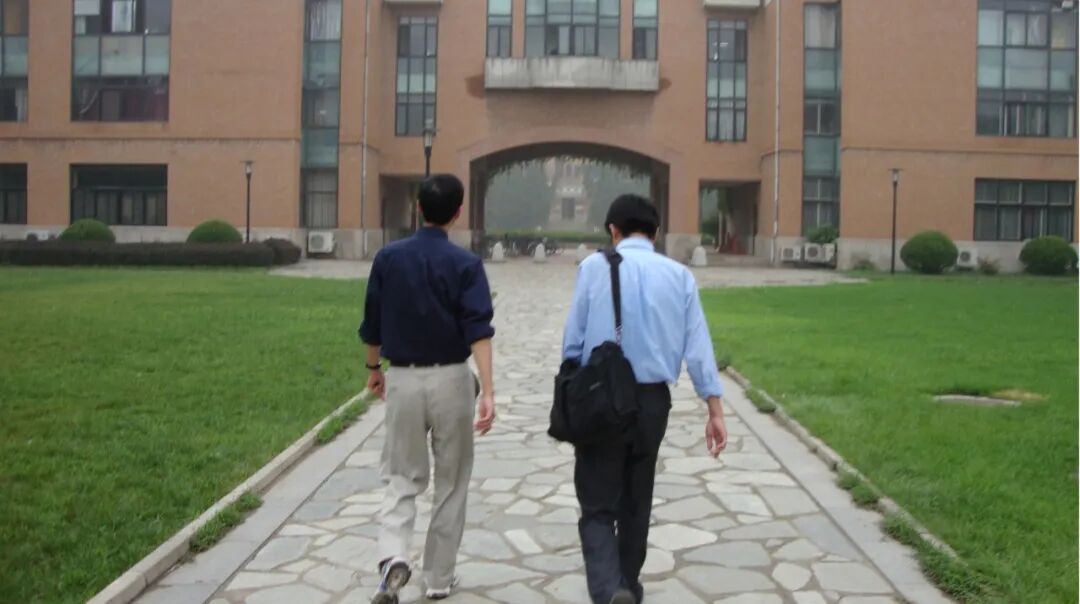
Fig 5. In the summer vacation of 2013, I went to the Department of Mathematics of Tsinghua University to teach "Computational Conformal Geometry" with Professor Luo Feng.
In different years, we explain relevant knowledge accordingly according to the hot topics of science and technology at that time. For example, when the metaverse was hot, we introduced geometric image algorithms based on conformal mapping; when autonomous driving emerged, we introduced 3D vision and point cloud reconstruction algorithms; when Daxing Airport was completed and Zaha Hadid's curve design became popular across the country, we introduced curved surfaces The leaf-like structure and the Riemann surface holomorphic quadratic differential algorithm; when financial big data was booming, we introduced the theory and algorithm of persistent coherence; in the past two years, CAD/CAE has become a hot topic in science and technology again, and the structured grid is equivalent to the global cross-section of a certain fiber bundle. We focus on introducing the theory of fiber bundle representation, etc.
From the perspective of engineering calculations, traditional computational algebra methods, such as the Grobner basis method, and numerical partial differential equation calculation methods, such as the finite element method and the finite volume method, cannot calculate the core invariants in these topological and geometric structures. Therefore, we introduce newly developed theories and algorithms in the course "Computational Conformal Geometry". In algebraic topology, we introduced the calculation methods of homotopy groups, simple homology groups, and persistent homology groups; in Riemannian geometry, we introduced the Hodge decomposition algorithm, harmonic differential de Rham cohomology group algorithm, surface harmonic mapping algorithm, geodesic algorithm; in convex differential geometry, we introduced the solution to the Minkowski problem of reconstructing a convex surface from Gaussian curvature, and the Ale method of reconstructing an open convex surface from Gaussian curvature. The solution to the xandrov problem, the solution to the design problem of reflecting mirrors and transmitting mirrors, these algorithms are equivalent to the solutions to the optimal transmission problem; in the Riemannian surface theory, the core are two types of algorithms: one is the discrete surface Ricci flow algorithm based on the singularization theorem. This type of algorithm is so far the only algorithm that can obtain the Riemannian metric through the target Gaussian curvature, and most engineering geometry problems ultimately boil down to the problem of obtaining a certain Riemannian metric with special properties. Therefore, this type of algorithm is of fundamental importance; another type of algorithm is the method of calculating Abel differentials based on the Abel-Jacobi theory: the calculation of various conformal mappings and conformal invariants is ultimately reduced to the calculation of holomorphic forms; various leaf-like structures on the surface are boiled down to the calculation of holomorphic second differentials; various real projective structures on the surface are boiled down to the calculation of holomorphic third differentials; the quadrilateral mesh on the surface is boiled down to the calculation of meromorphic fourth differentials on the Riemann surface, and so on. We assign these main algorithms as homework so that students can deepen their understanding of theory through C++ programming and at the same time enhance their engineering ability to deal with practical geometric problems.
During my lectures at Tsinghua University, the author had in-depth exchanges and joint research with other scholars and classmates. Under the leadership of Mr. Qiu, the theory and algorithms for calculating conformal geometry have been gradually developed and improved. We have completed the algorithm of discrete surface Ricci flow around 2012, but the theoretical proof of the existence, uniqueness and convergence of the discrete surface Ricci flow solution was not published in the Journal of Differential Geometry until 2018. Although the proof process went through many twists and turns, we are convinced that this algorithm is of fundamental importance, so all the costs are worth it. During the lecture period at Tsinghua University, we also published the geometric variation theory of optimal transmission mapping, which was extended from Euclidean geometry to spherical geometry. At present, this theory explains the generative model in AIGC. In recent years, we have gradually established a theoretical basis for gridding for the camp and proved the corresponding index theorem.
Engineering science?
Recently, some articles on the Internet have criticized the scientificization of domestic engineering education, which means that engineering students learn too much theoretical knowledge and lack practical practical ability. In this regard, the author believes that it should be considered dialectically. The author has been conducting research and practice in the field of computer science for a long time, and I personally feel that the solution to fundamental problems in many engineering fields lies in the introduction of profound mathematical theories, rather than relying on traditional knowledge in the field. The foundations of many engineering fields have stagnated for decades, often because the essential issues are not clearly understood from a theoretical level.
The author studied in the Department of Computer Science and Technology of Tsinghua University for his undergraduate degree. At that time, many senior teachers were developing domestic CAD systems. The author is fortunate to systematically learn relevant knowledge in the CAD field. At that time, the author had many questions about the spline theory of CAD, but was unable to give definite answers. Many years later, after accumulating a certain amount of theoretical knowledge of topological geometry, the author was able to give a relatively rigorous answer.
First of all, traditional spline surfaces are generated by tensor products through spline curves, and therefore are defined on surface quadrilateral meshes. So, is there a spline construction defined on a general triangulation of a surface? The answer is yes, traditional spline construction is based on Blossom theory. Historically, Dahmen, Micchelli, and Seidel once extended Blossom theory to plane triangulation, so that it can be defined on surface triangulation. This construction is called a DMS spline.
Secondly, the defect of the spline surface lies in the so-called singular point. The smoothness of the surface becomes worse at the singular point, which brings huge troubles to the subsequent CAE and CAM. How to eliminate singular points as much as possible has become a long-term goal in the field of CAD. On the surface, it seems that the singular points of traditional spline surfaces are topological quantities brought by surface quadrilateral meshing. So, can DMS splines defined on surface triangulation eliminate singular points? The answer is no, because both traditional splines and DMS splines are based on Blossom theory, and the essence of Blossom is to rely on affine invariants to construct spline functions. If the surface has an affine structure (that is, an atlas of the surface, and all coordinate transformation functions are affine transformations), then a spline function with no singular points globally can be defined. However, there are global topological obstacles to the existence of surface affine structures. Therefore, Blossom-based splines cannot avoid singular points. As a result, DMS splines have little practical value and have not been adopted by the industry.
Later, Sederberge invented the T-spline, which became the biggest advancement in the field of CAD in the past twenty years. T-splines are also based on affine invariants of surfaces, so singular points are unavoidable. Sederberg once asked the author whether there is some secret law behind these singular points, and whether it can be described by some kind of differential or integral equation. The author and his collaborators finally answered this question: the singular points of a globally smooth T-spline surface should satisfy the Abel-Jacobi equation in the field of algebraic curves.
This question is closely related to an old question in the field of structured mesh generation: why is there no quadrilateral meshing with only two singular points on the tire surface, one with degree 3 and the other with degree 5? Engineers in the field of mesh generation have recognized this problem since the 1970s, but have never had a straightforward answer. This paradoxical chaotic state has caused structured grid generation to always rely on a large number of manual adjustments. The author has discussed this issue with many experts and scholars in the CAD/CAE field. Most people think that this is a combinatorial problem. Few people can truly understand that this is a conformal geometry (algebraic geometry) problem. They have no idea about the Abel-Jacobi theory (i.e., the representative class theory of holopure line bundles). The author has discussed with experts and scholars such as Tom Sederberg and Tom Hughes. They are all quite frank and admit that they cannot understand, but they all give full respect and support. Tom Hughes firmly believed in the scientific nature of our theory and convinced Beta-CAE to actively cooperate with us to apply this theory to numerical simulations of car collisions (Fig 9).
progress of the times
In the past ten years, with the rapid development of society, a large number of new concepts and technologies have penetrated into people's daily lives. Some of the mathematical concepts presented in Computational Conformal Geometry that were originally very abstract have now become familiar.
|
|
|
Fig 6. The optimal transmission mapping is equivalent to solving the Mong-Ampere equation.
Mr. Chen Shengshen once said: The Monge-Ampère equation is the most nonlinear among all partial differential equations. Mr. Qiu Chengtong once used the Monge-Ampere equation to solve the Calabi conjecture, the positive mass conjecture and so on. The Alexandroff problem in convex differential geometry solves a convex surface from Gaussian curvature, which is equivalent to solving the Monge-Ampere problem; the Brenier theory of optimal transmission reduces the optimal transmission mapping to solving the Monge-Ampere equation, and is thus equivalent to the Alexandroff problem. Inspired by the Alexandroff problem, we developed a geometric variation method for the Monge-Ampere equation. AIGC has become the focus of the times last year and this year, and various generative models in AI can ultimately be explained by optimal transmission theory, and model collapse in AI can be attributed to the regularity of solutions to the Monge-Ampere equation. So, overnight, throughout the computer field, Monge-Ampere equation, optimal transmission became buzzwords. The interpretable generation model proposed by the author and Mr. Qiu has been applied to the next generation of mobile phones by Google’s research department.
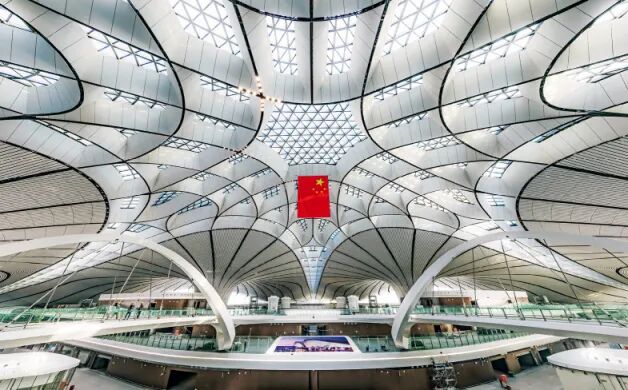
Fig 7. Daxing International Airport dome design, based on curved leaf structure theory (China Today).
Daxing International Airport boldly adopts Zaha Hadid-style design. The steel beam wiring pattern on the dome is very similar to the foliation of the curved surface. All leaf-like structures on the surface are equivalent to the horizontal locus of holomorphic quadratic differentials on the surface. The calculation of holomorphic quadratic differentials can be obtained by graph-valued harmonic mapping.
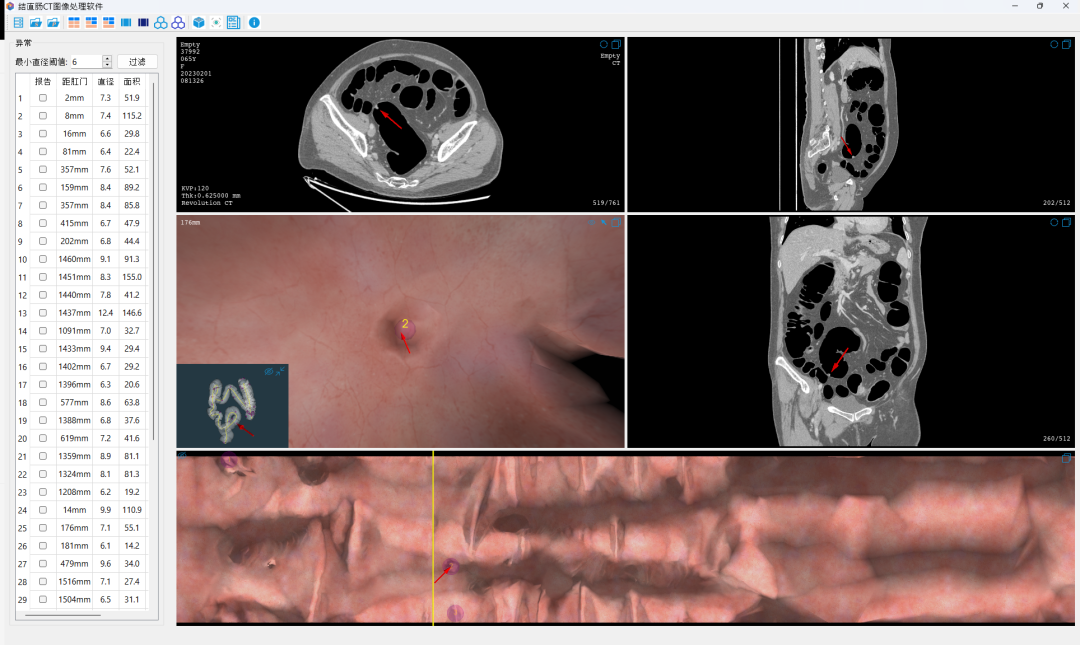
Fig 8. Virtual colonoscopy technology, based on Abel differential theory of Riemann surfaces.
Virtual colonoscopy technology is used for rectal cancer screening and is currently widely used around the world. In recent years, the governments of Japan and South Korea have encouraged middle-aged and elderly people to undergo such routine physical examinations and provide universal health insurance. The localization of polyps and the registration between rectal surfaces all rely on the calculation of the holomorphic form.
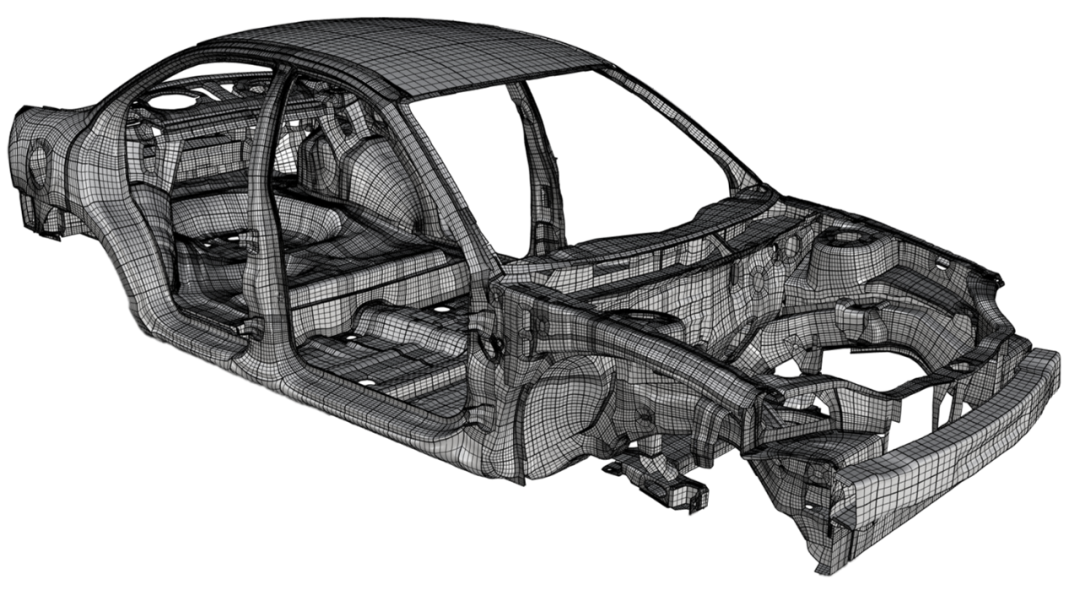
Fig 9 Numerical simulation of car collision, the structured grid is based on Abel-Jaobi theory.
In the field of CAD/CAE, isogeometric analysis methods (isogeometric analysis) have developed significantly in the past decade. The king of numerical simulation is car collision simulation. The author and the team of Tom Hughes (the inventor of IGA) cooperated with Beta-CAE Company to complete the white-body collision simulation of a car using IGA method for the first time in the world, which was about three months behind Honda. The preprocessing of the IGA method requires improving the initial cropped CAD model into a watertight overall NURBS model, and this comes down to the generation of surface regular quadrilateral meshes, that is, the calculation of special meromorphic fourth differentials.
spread of geometric ideas
After more than ten years of persistence, according to incomplete statistics, there are probably hundreds of thousands of young people who have taken the "Computational Conformal Geometry" course. Due to the difficulty of the course, many students have taken this course many times. The author often meets former students all over the world, in universities across mainland China and high-tech companies in Beijing, Shanghai, Shenzhen and other cities: Tencent, Alibaba, NetEase, ByteDance, Yundao, etc.; in Silicon Valley, Seattle, New York, Austin in North America, Google, Amazon, Facebook, Microsoft, Beta-CAE, Cadence, Ansys, etc.; in Paris, France, Amsterdam, the Netherlands, etc. Many students often contact the author online to ask questions related to the course. For example, during this meeting in Beijing, classmate Wang Yuanguang braved heavy rain from the city to come to Yanqi Lake to discuss. Student Wang printed out all the lecture notes, carefully marked the questions on them, and wrote down his thoughts. Since we have not been able to meet each other during the epidemic, Mr. Wang prepared hundreds of questions and discussed them in detail one by one. During his honeymoon, Hong, a student in the field of biopharmaceuticals, traveled across mountains and seas and drove from Boston to New York with his wife to discuss conformal geometry issues with the author. Hong carefully edited and organized the class notes using Latex and provided them with exquisite illustrations, which moved me very much. At the Cadence Research Institute in Texas, the author met a Fudan physics graduate who was recruited by the company to conduct CAE research because he learned computational conformal geometry. He asked the author about the details of the discrete surface Ricci flow algorithm for industrial applications in mesh generation. A professor from the Automotive Department of Jilin University also asked the author about the computational details of the Ricci flow, which successfully solved a long-standing open problem in the processing and molding of automobile body shells. The author is deeply moved by the students' tireless pursuit of learning, and sincerely hopes that "Computational Conformal Geometry" can help them succeed in their life journey.
With the progress of society and the prosperity of science, people have become more rational. During this domestic visit, the author felt that in terms of choice of university majors, computer majors are gradually cooling down, and mathematics majors are beginning to be more popular. The author comes from a third- and fourth-tier coastal city with relatively backward culture and education. In the past few decades, there have been almost no professional mathematicians here. During this trip to visit relatives, many relatives and friends asked me how their children can further their studies in mathematics. During a dinner party, someone suddenly asked me to explain in a few words "what topology is and what its use is." This made me deeply gratified. The author replied as follows: "In recent years, as computer chips have approached the physical limit, people have attached great importance to topological insulators and quantum computing, because they are disruptive technologies that are expected to break Moore's Law. Topological insulators are based on the quantum Hall effect, and the mathematical explanation of the quantum Hall effect is fiber clusters The Chen Shengshen representative class. However, the noise in quantum computing is too large, and people are applying kink theory to design quantum algorithms to eliminate the influence of noise. The physical interpretation of kink invariants is achieved through the Chen Shengshen-Simons representative class. This shows the importance of topology to modern technology.
This year, I plan to continue the online "Computational Conformal Geometry Course" starting from the second week of August, every Monday and Thursday at 8:30 pm. The Tencent conference number is: 883 2148 2191, and the live broadcast URL of Station B is: http://online.conformalgeometry.org/. I look forward to appreciating the thrilling beauty of modern mathematics and exploring the profound and mysterious secrets of nature with all my classmates!
Machine-translated from the Chinese original 计算共形几何,十年风雨 (published 2023-09-04). WeChat original ↗