
Many groups, teams, alliances and other formal or informal work collaboration organizations will be formed inside or outside the enterprise, and information technology can be used to support such work collaboration.
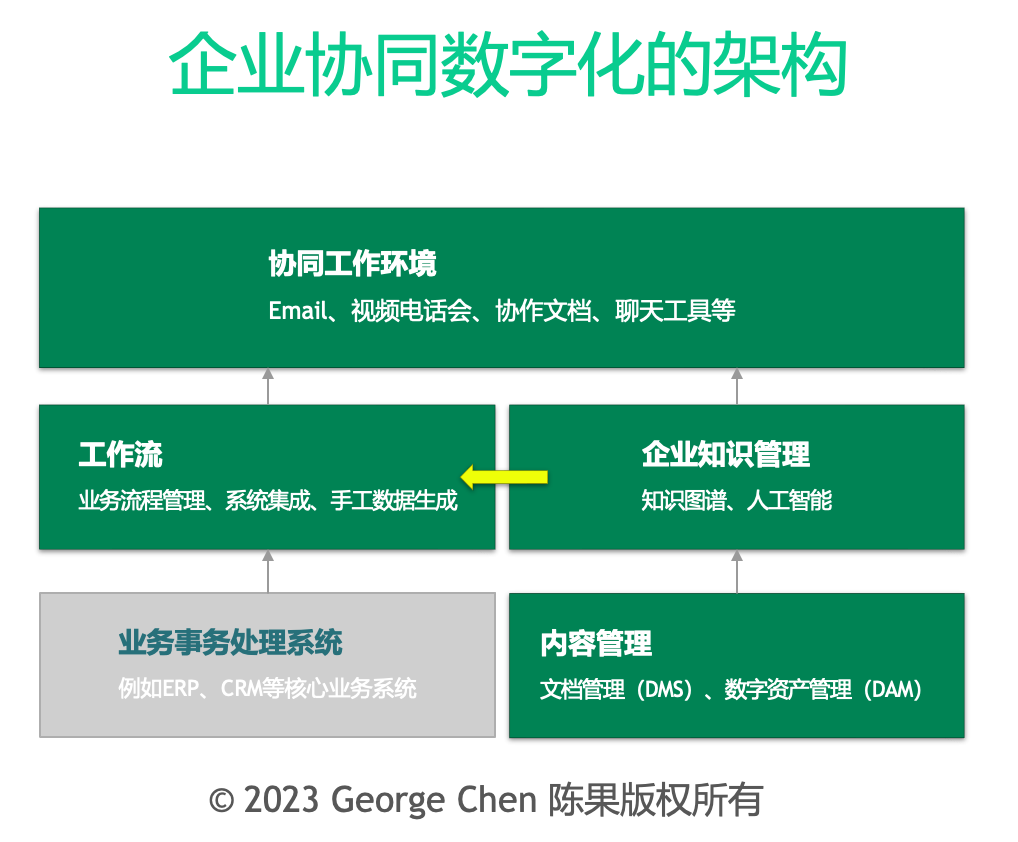
Digital tools related to collaboration include:
1. Digital user tools in a collaborative work environment
2. Workflow management
3. Enterprise knowledge management
4. Enterprise content management (see "IT Archeology | The Originator of Enterprise-level Internet Software")
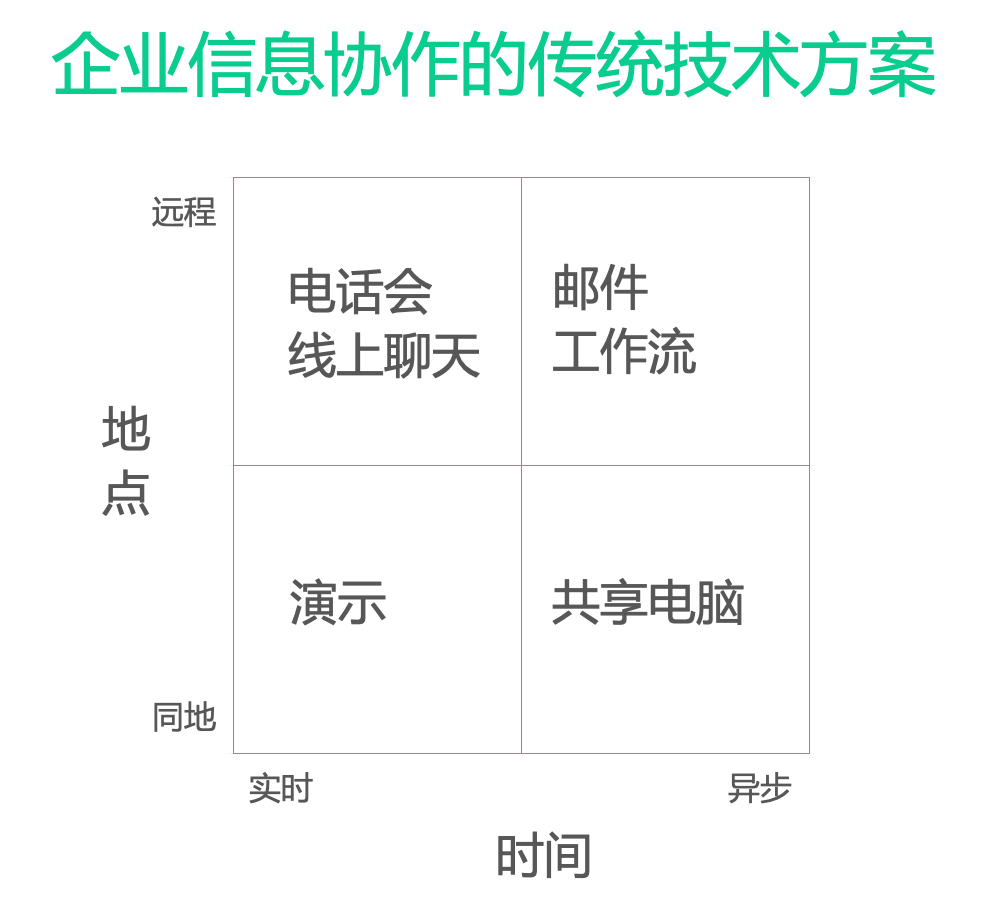
Traditional enterprise collaboration software is also called "groupware". Groupware is divided into several types based on location and time. The difference between email/workflow and instant messaging tools (IM) is the synchronization of information response. It is generally believed that Chinese enterprises prefer workflow to email for asynchronous communication, and they also prefer real-time unstructured collaboration to asynchronous structured collaboration. However, in recent years, with the popularity of video conferencing and remote working, the difference between remote and co-located has become increasingly blurred:
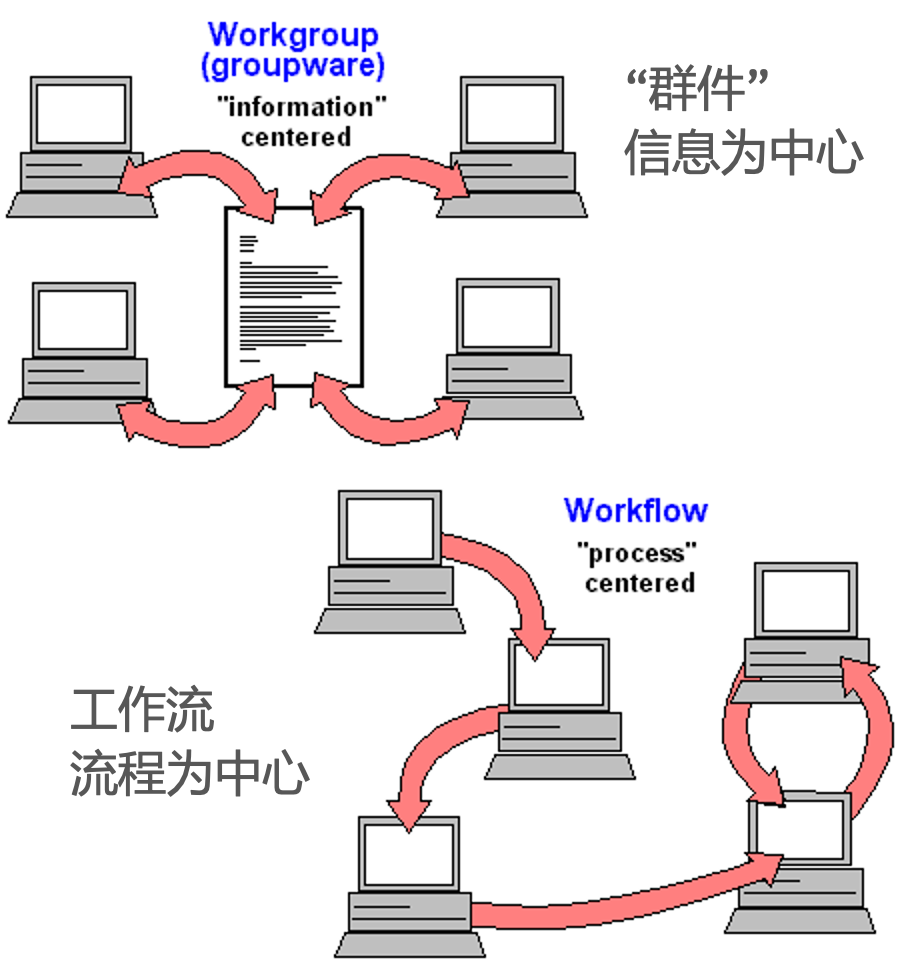
When people participate in information sharing, each participant generates and processes information. There are two main ways of information collaboration:
- Unstructured information collaboration:Information flows within the scope of authority control, and everyone can read and feedback freely. There are no fixed task sequences and business rules, including document sharing, whiteboards, projection presentations, forum socialization, etc. For example, "Feishu Documents" is a typical unstructured information collaboration. At the same time, Feishu also provides Feishu forms and background workflow mechanisms for structured collaboration. See "I read Feishu Part 2 | Integrating applications into the business of advanced organizations"
- Structured information collaboration:Information is relayed and transmitted. The relay method reflects the business rules of the enterprise. This rule is hard-coded knowledge. This knowledge is called "business process". Email is a form of information relay transmission. It belongs to the workflow model in terms of information collaboration mode. Compared with the principles of workflow software, emails are processed through email software clients (such as Outlook), while workflows are generally processed in browsers or mobile APPs.
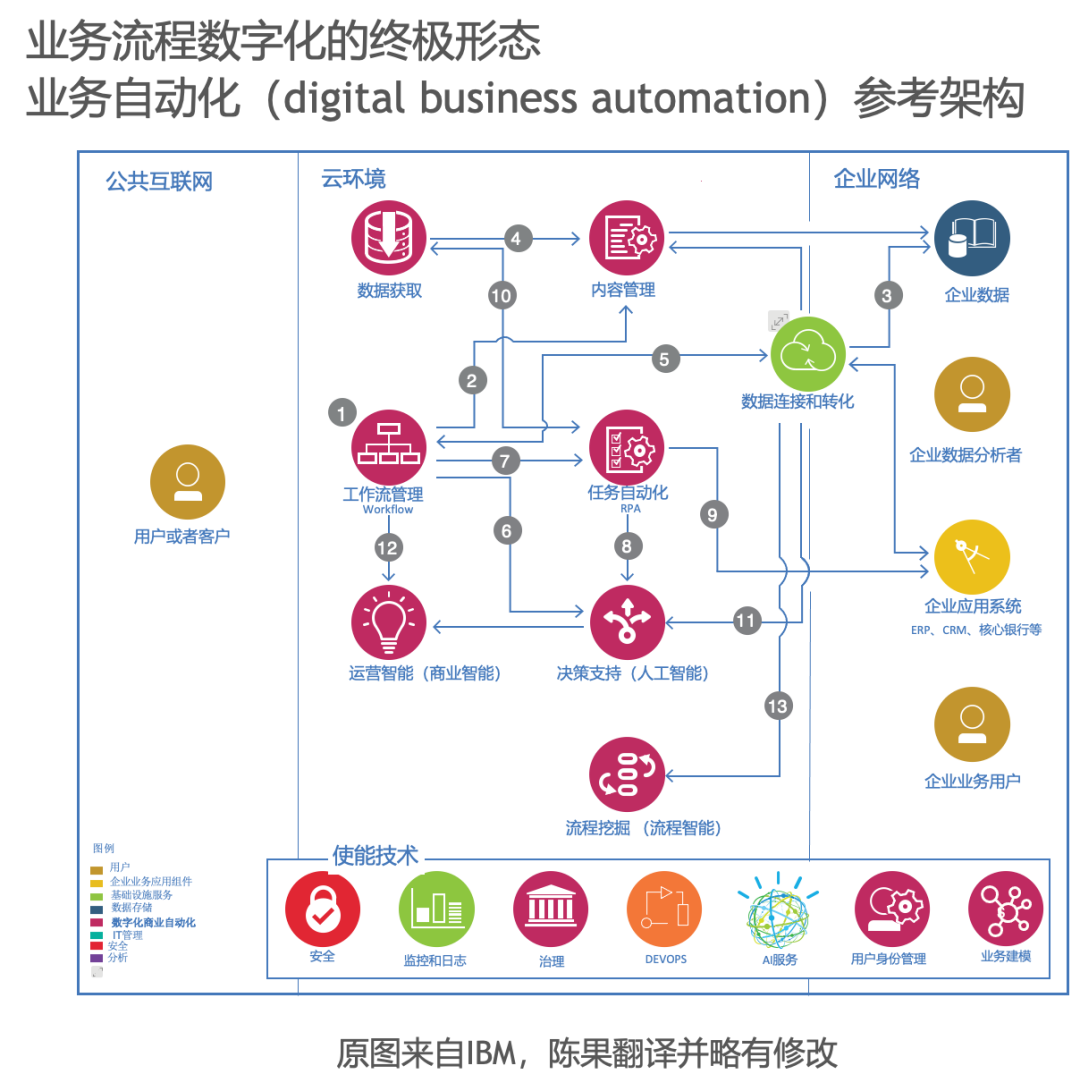
Workflow software is a digital implementation of business process management (BPM) and is usually divided into three categories:
- Integration-centric:Realize automatic operation of steps within the system, or automatic information transmission across systems, so as to achieve automatic operation of workflow with less human participation. Implementation methods include automatic robots (RPA), application program interfaces (API), etc.
- People-centric:For task execution that requires human participation, such as manual approval, tasks are assigned according to personnel roles in the process, and tasks are automatically pushed to personnel in corresponding roles according to workflow rules. For example, the workflow engines that come with large-scale ERPs are all centered on personnel roles and task assignments, and are suitable for processes that require internal control and responsibility traces.
- Document-centric:The workflow revolves around a specific document. For example, the sales contract process is carried out around the "sales contract" document, including the creation, review, approval, etc. of prices, business terms, legal terms, etc. For example, IBM Lotus Notes Domino and OpenText are typical document center databases and workflows. This method is suitable for handling standardized, repetitive, and transactional processes such as shared service centers.
Today, digital and structured workflow (workflow) has developed into the so-called "hyper-automation" in the complex environment of large enterprises, combining the above three digital business process forms. When human users operate digital tasks, business intelligence-based information support and artificial intelligence operation assistance greatly improve the intelligence and efficiency of process operations.
Machine-translated from the Chinese original 组织协作数字化 | 电子邮件、飞书文档和超自动化 (published 2023-09-11). WeChat original ↗