Thank you to the Standing Committee of the National People's Congress for publishing the "Public Security Management Punishment Law (Revised Draft)" and soliciting opinions from the whole country. This gave me the opportunity to write down the opinion and reasons for "Please delete paragraph (2) (3) of Article 34" in accordance with the law, and successfully submitted the electronic text to the Standing Committee of the National People's Congress at 17:00 on September 30, 2023. Due to the limited space of the electronic text, the entire manuscript has not been recorded. The entire manuscript is now published here to report to those who care.
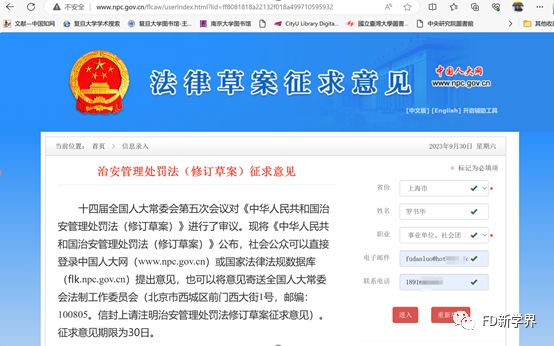
Original text of Article 34 (2) (3) of the "Public Security Management Punishment Law (Revised Draft)":
Article 34 Anyone who commits any of the following acts shall be detained for not less than five days but not more than ten days, or shall be fined not less than one thousand yuan but not more than three thousand yuan; if the circumstances are more serious, he shall be detained for not less than ten days but not more than fifteen days, and may also be fined not more than five thousand yuan:
(2) In public places or forcing others to wear or wear clothing or symbols that harm the spirit of the Chinese nation or hurt the feelings of the Chinese nation;
(3) Producing, disseminating, publicizing, and disseminating articles or remarks that are detrimental to the spirit of the Chinese nation and hurt the feelings of the Chinese nation;
Opinions on Article 34 (2) (3):
Please delete paragraph (2) (3) of Article 34.
The reasons are as follows:
First, what is the Chinese national spirit? There is neither a definite academic basis nor a reliable legal basis. There are different opinions and different opinions, so it is difficult to be accurate. Zhang Dainian believed that the spirit of the Chinese nation is concentrated in the following five aspects: "Heaven moves vigorously, and a gentleman strives for self-improvement." There are four aspects: "rational spirit", "free spirit", "realistic spirit" and "resilient spirit"; Luo Shuhua, the author of this article, believes that "don't do to others what others don't want; don't do to me what I don't want; don't do to me what I don't want; respect the strong and pity the weak, compete with each other; be open and inclusive, be honest and abide by the rules" is the core of the Chinese national spirit. They each have their own emphasis, not to mention that there are various opinions beyond them.
Secondly, the Chinese nation stands erect in the east of the world. Thousands of years of wind and frost have forged its unyielding bones and tempered its broad-minded, generous, strong and persevering spirit. Even the powerful ships and artillery of the West have only damaged my body, hair and skin, but cannot damage my spirit. How can a mere piece of clothing or a few sips of saliva harm the Chinese nation? Dress casually, speak as one pleases, don’t like people who are praised, and don’t get angry when people are criticized. If something is wrong, change it, and if it’s not, encourage it. This is the basic attitude and spirit of the Chinese nation in terms of clothing, clothing, and speech. If you let people talk, the sky won't fall; if you let people wear clothes, the earth won't sink. This is the proper meaning of cultural self-confidence. It is absurd and disrespectful to think that a certain piece of clothing or a few gossips will damage the spirit and emotions of the Chinese nation. There is a tendency to regard the Chinese nation as the sick man of East Asia and a weak giant baby. Moreover, the Chinese national spirit is a historical and intangible spiritual existence. Even if someone wants to harm it through clothing and speech, how can they carry out the harm and how can they achieve the purpose of harm?
Thirdly, "Chinese nation" is a community of all ethnic groups and an abstract noun composed of the Chinese people. Its emotions are strong and strong, upright and high-spirited, and not fragile and sensitive to the point of resenting road rage at the slightest disturbance. If the Chinese nation is implemented as a specific individual, whether the same clothes and remarks will cause emotional harm to the recipient depends to a large extent on the sensitive zone and sensitivity of the recipient, which will inevitably leave citizens and law enforcement officers at a loss. Some people feel their "national sentiments" are hurt when they see or hear their distasteful clothes and remarks. Some people feel hurt when they hear criticism and self-criticism. Even when some people hear praise, they think the other person is being sarcastic and are hurt. On the other hand, if these people's emotions are not hurt if they are pleasing to the eye and ears, the emotions of those who wear the clothes and speak will be hurt. This is an irresolvable paradox.
Fourth, for any "damage", the extent of the damage must be discernible. Conversely, if the extent of the damage cannot be seen, it is difficult to say that there is "damage". For example, injuries to the body include minor injuries, light injuries, and serious injuries, each with its own classification, and the law will determine the crime accordingly. If the spirit and feelings of the Chinese nation can really be "damaged" by individual people's remarks about clothing, then what entities and facts are used to distinguish whether the degree of damage is minor damage, minor damage, or serious damage, and based on this to determine the crime and punishment of the offender? Article 5 of these Regulations clearly states: “Public security management penalties must be based on facts and be commensurate with the nature, circumstances and degree of social harm of violations of public security management.”
Fifth, can personal clothing, signs, items, and speech be used as the basis for determining punishment? As we all know, modern law, regardless of conviction or punishment, is based on deeds regardless of intentions. What is punished is the "deed" of the crime and the "deed" of the punishment, which is the behavior that has been "started" and "implemented". Except for remarks that are action-oriented or preparatory to a criminal plan or remarks that insult one's personality and reputation, clothing, symbols, and remarks are just thoughts and emotions rather than "actions", "starting" and "implementation", and cannot be criminalized or punished. If these symbols and remarks that have not yet become "practical" and can be interpreted in multiple ways can be used as the basis for conviction, there is the danger of creating a prison of words, speech, clothing, symbols, and objects.
Sixth, assuming that clothing, symbols, objects, and speech really have the magical power to "hurt" the national spirit and emotions, then, among the countless clothing, symbols, objects, and speech, how to identify which ones have this magical power? Suits, leather shoes, tunic suits, T-shirts, underwear, police uniforms, and even all clothing other than cotton, linen, and leather are mostly imported from abroad or contain foreign elements. How to determine which clothing items are subject to fines? The same is true for Coke, McDonald's, KFC, imported food, reinforced concrete houses, cars, trains, airplanes, electric lights, mobile phones, computers, imported items and components, mathematics, physics, chemistry, foreign languages, Western medicine, and foreign investment. There is no guarantee that they will not hurt some people's "national sentiments." In turn, Japanese kimonos are closely related to Hanfu. So, are Japanese kimonos considered clothing that can hurt feelings? It can be seen that it is very difficult to distinguish harmful and harmless clothing items.
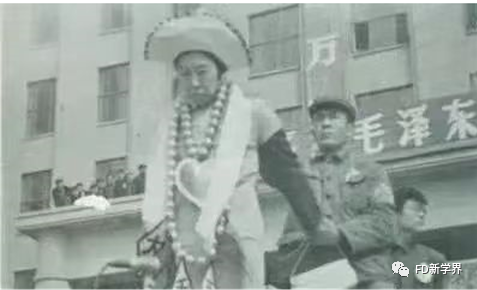
Seventh, as mentioned above, it is very difficult and controversial for experts and scholars to distinguish between harmful and harmless clothing, etc., and to judge whether the spirit and feelings of the Chinese nation have been harmed. It is up to grassroots police and law enforcement officers to complete such a difficult task. The result will inevitably be to embarrass the police, intensify conflicts between the police and the people, and trigger the masses to fight against the masses, and Chinese people to fight against Chinese people. Article 1 of these Regulations reads: “This Law is enacted in order to maintain social order, ensure public security, protect the legitimate rights and interests of citizens, legal persons and other organizations, and regulate and ensure that public security organs and their people’s police perform their public security management duties in accordance with the law.” Such a result is obviously contrary to the purpose of this Law. I remember back then, the wife of the Chinese President Wang Guangmei wore a necklace when she visited Myanmar. After returning home, she was forced to wear several large ping-pong strings and was paraded and criticized. The promulgation of such regulations may lead to a recurrence of similar tragedies. The Xi'an U-shaped lock incident, the Suzhou COSPLAY incident, the high-speed rail chokehold incident, and the Huzhou Ultraman incident on September 28, 2023 all show that this worry is not alarmist.
Eighth, if clothing items (especially clothing items containing the culture of other countries) will harm the local national spirit and feelings, in order to reduce this possible harm, the best way is to completely exclude all clothing and items containing foreign elements. This may encourage a closed-door mentality and a xenophobic mentality.
Ninth, the xenophobic mentality directly contradicts the country’s overseas dissemination policy of excellent Chinese culture. "Don't do to others what you don't want others to do to you." Since we regard foreign funds, items, and culture as potential harm, of course it is not appropriate to allow our country's funds, items, and culture to "harm" the people of other countries.
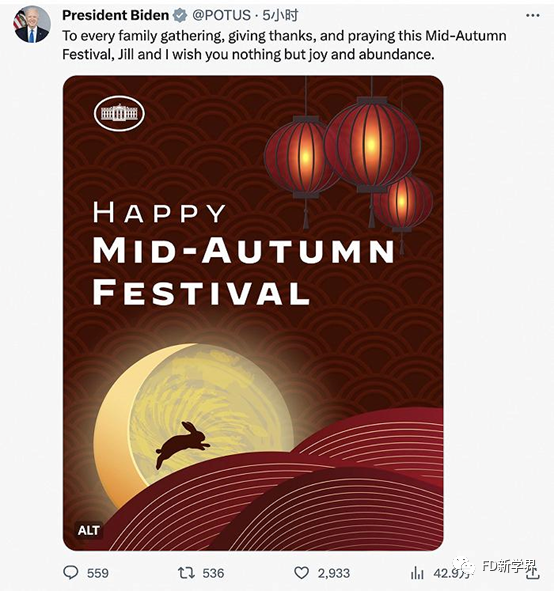
Tenth, the xenophobic mentality is completely opposite to the country’s propaganda and affirmation of foreigners’ love for Chinese culture. Since we have a positive attitude towards foreigners welcoming Chinese culture and empathize with our own hearts, the spread of foreign culture in the country should of course also be welcomed. Yesterday, on the Mid-Autumn Festival, US President Biden wished the Chinese people a happy holiday, which was appreciated by the Chinese people.
Eleventh, the law is the lowest and clearer moral standard. The legal bottom line should be whether the behavior harms the person/regime, property, personality/national character of the other party. On this baseline, we should seek common ground while reserving differences as much as possible, and be harmonious but different. Loving the country and safeguarding national rights and interests are certainly worthy of recognition, but they require joint efforts in all fields of law, ethics, culture and education. What is legal belongs to law, what is moral belongs to morality, what is cultural and educational belongs to cultural education, each performs its own duties.
12. Regarding the national spirit and national sentiments, the top priority is to allow more citizens to correctly understand the essence of patriotism. It is necessary to let more citizens know that the essence of patriotism is to make more practical contributions to the country, society and the people. They mainly include: improving one's cognitive level and working hard to do one's job well; respecting the wishes and freedom of others and doing what one can to help those in need; doing one's best to create spiritual wealth, material wealth, employment opportunities, increasing one's own income, and paying more taxes to the country; patriotism is not an empty slogan; unless they are preventing the occurrence and continuation of incidents that infringe upon the body, property or personality, non-law enforcement personnel have no right to use coercive means to interfere with the freedom of speech and deeds of others.
Machine-translated from the Chinese original 罗书华:我对《治安管理处罚法》第三十四条的十二点意见 (published 2023-11-13). WeChat original ↗