We are in "What is each block in the process called?" 》In discussing the process model, the smallest granularity when it comes to process activities is Task. Readers may think that the process mining mentioned by Mr. Guo (see "Four Talks on Process Mining | Process Mining Helps China's Management Consulting Industry Achieve Transformation and Upgrading") sounds great, but what about those processes, activities and tasks that occur outside the business system? In this case, there is no event log available. Then nothing can be done? For example, in the process of "putting an elephant into the refrigerator", if the refrigerator is an information system, it can record when the refrigerator door is opened and closed, but it does not know when I pinched the elephant with my hand. Task mining is here to solve this problem. Task mining uses technology to collect user desktop activity data and all other behaviors that may be digitized. It can be said to be an understanding of the details of process activities. Together with process mining, it can help enterprises obtain the most comprehensive and in-depth view of process operation as possible, ultimately supporting enterprise automation.
As mentioned earlier, event logs can tell a business when a purchase order was created, approved, and completed and sent, but it does not include the related actions that need to be performed on the computer desktop to perform this work. For example, there are employees filling out purchase orders, checking amounts to ensure their accuracy, and matching receipts to invoices. This activity occurs outside the system that processes purchase orders, but is critical to understanding the purchase order process. Task mining takes these insights into account and can add some additional insights, such as the amount of time employees spend finding the information they need to complete a purchase order task via email.
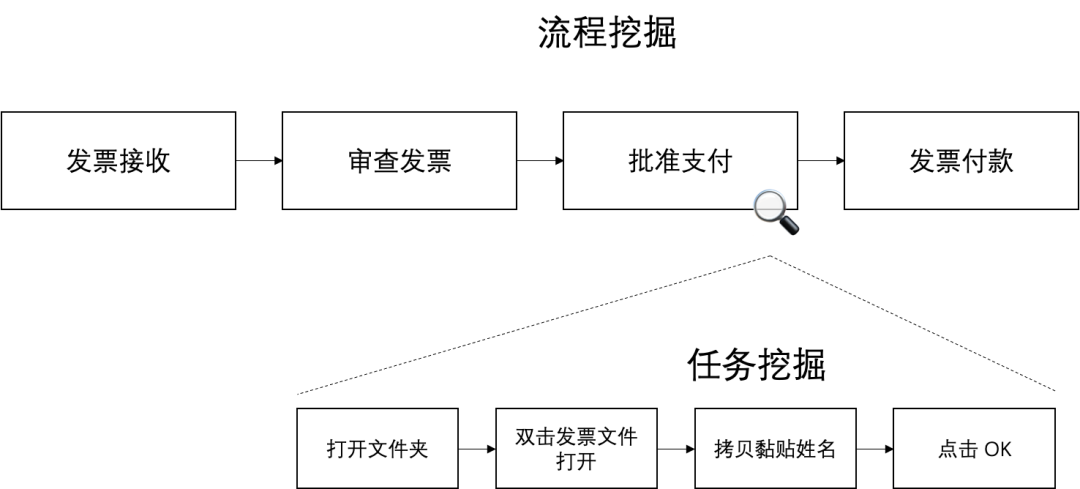
The data source of process mining is the event log in the system, while the data source of task mining is mainly the operational footprints from the user's work end. Its principle involves capturing and analyzing the user's interactive behavior when performing tasks in the computer system, which requires some ingenious skills and technologies. For example, Optical Character Recognition (OCR) technology that extracts text from scanned documents, video recognition and other IoT technologies are widely used in task mining. These technologies are combined with natural language processing (NLP) and based on the support of machine learning algorithms to understand the operations performed by business personnel on the desktop and find out the patterns that affect business results. The specific mechanism is:
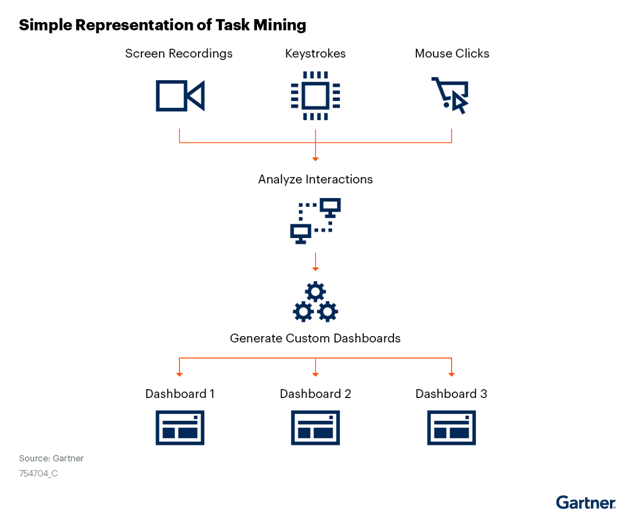
1. Capture data: mainly the data of computer desktop operation actions such as mouse clicks, keyboard input, window switching, scrolling, screenshots and other actions, as well as the timestamp of each action, to create a sequence of events at the user activity level.
2. Add business context: This is where OCR comes into play, collecting all the text and numbers on the screen, adding what is happening to the business context meaning, helping to form a description of the user's task based on the commands the user executed, the tools used, the frequency of operations, etc.
3. Activity clustering: Use NLP and artificial intelligence technology to understand each action and cluster the actions into a general activity to which they belong, such as: "Find supplier information on the order"
4. Match business data: Based on the identified action information, which may include common operation sequences, usage habits of specific tools, etc., the task mining software can associate what the user is doing with specific business data in the enterprise information system, discover the patterns and rules of the user when performing tasks, and allow the enterprise to truly understand how actions affect business results.
5. Task model construction: Based on the mined patterns, identify and describe the specific tasks performed by users. This helps to understand how users complete specific tasks, possibly building a model of task execution to better understand and visualize the user's operation process. This can be a task-level flowchart or other form of presentation, which helps the organization understand and improve user interaction experience and operational efficiency.
6. Combination of task mining and process mining: The goal of task mining is to help understand the user's workflow in the digital environment, thereby improving system design, user interface and workflow, ultimately improving business process efficiency and quality, and realizing process automation.
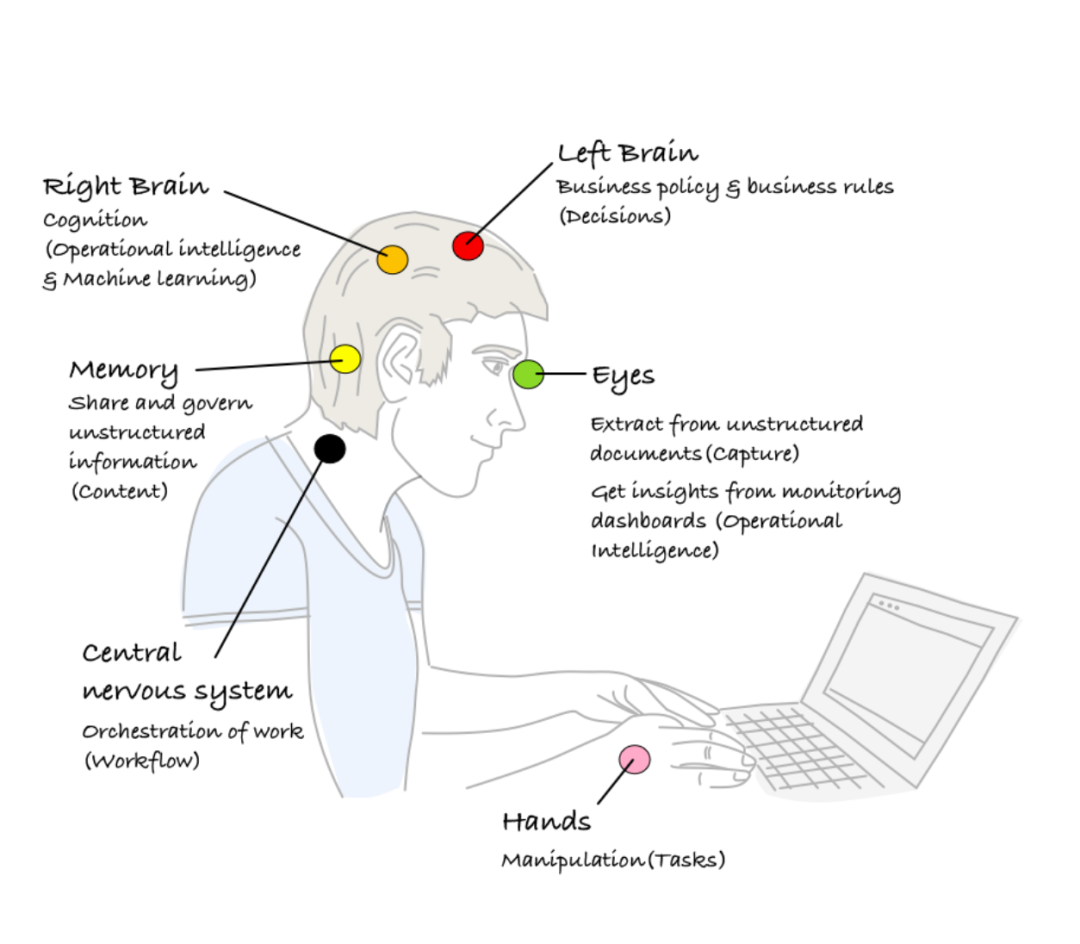
I really like this principle of enterprise automation proposed by IBM:
|
|
human work behavior |
Corresponding business automation technology |
|
hand |
operate computer |
Task mining, software robots RPA and digital workers, API |
|
eyes |
Capture information from unstructured documents Observe monitoring dashboards and gain operational insights |
Document digitization operational intelligence |
|
left brain |
Business policies and business rules |
Decision engine, operational intelligence |
|
right brain |
From feeling to knowing |
machine learning |
|
memory |
Manage, share and convert unstructured information into structured information |
Intelligent content service |
|
central nervous system |
Arrange, promote and coordinate work |
Workflow automation |
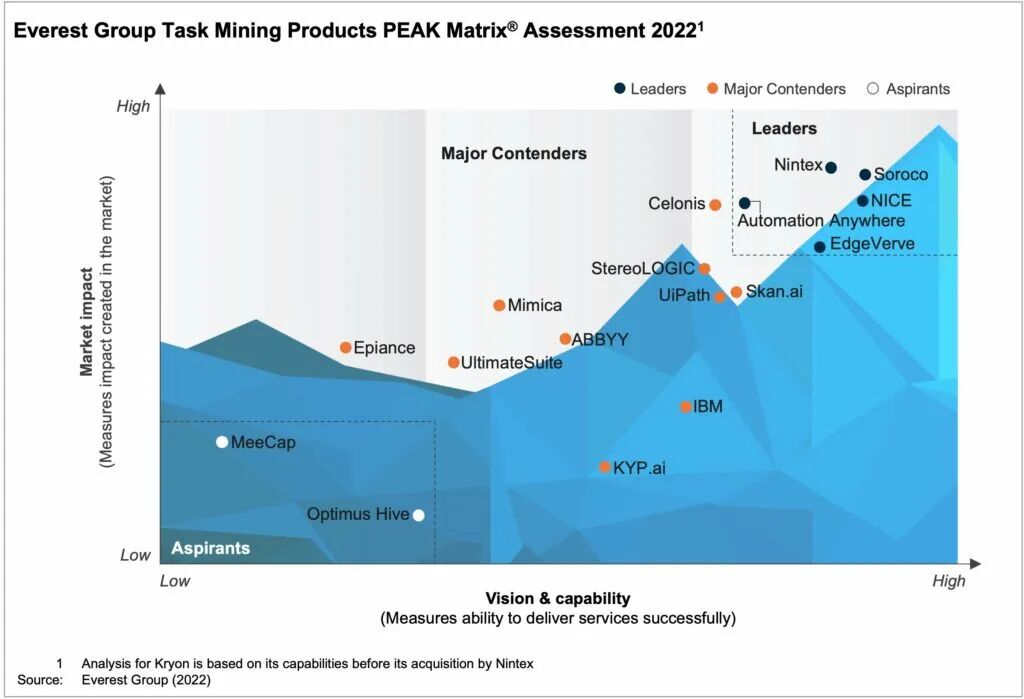
The figure below shows the ranking of task mining suppliers currently on the market:
Today's business automation driven by digitalization and artificial intelligence is actually an extension of the digital era of Western scientific management for hundreds of years. Today's process mining and task mining were realized a hundred years ago by management consultants and scientific management experts, using movie cameras.
Back when film was first invented, photographers used it to study human movement, and here’s a photo from 1914:
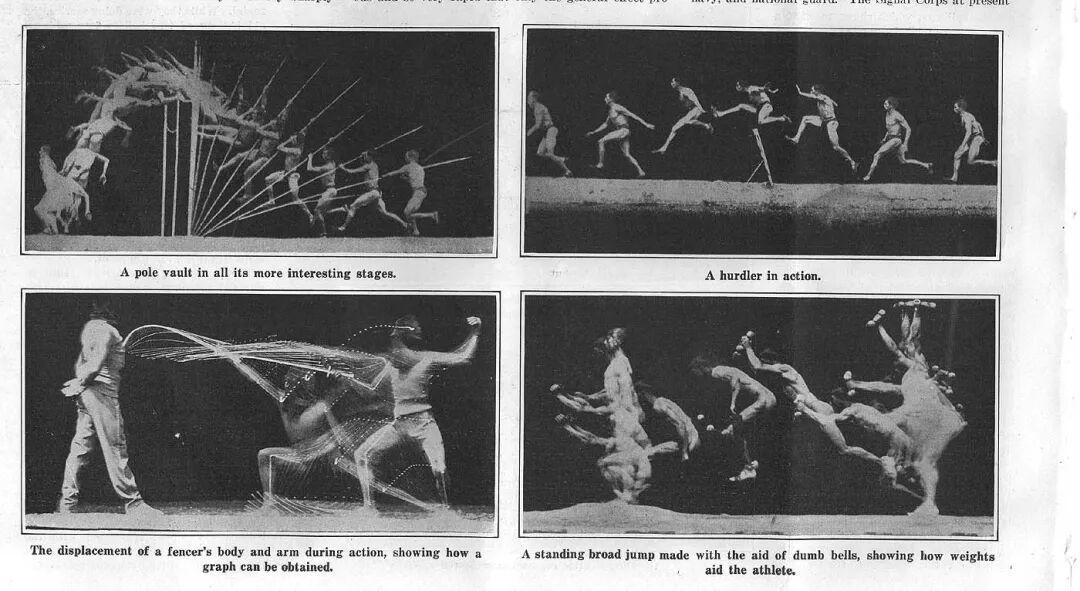
Taylor and Ford revealed the principles of activity decomposition and division of labor in business processes. Their approach was to treat people as machines. Their successors delved into a wider range of human behavior and personnel involvement in process research, emphasizing human interaction around processes, workflows, activities, and tasks. This also extended from manufacturing to non-manufacturing industries such as buildings, hospitals, and public services.
While Taylor's subordinate and apprentice Henry Laurence Gantt was building cars at Ford, he invented a graphical method for work planning and task tracking, the "Gantt chart" that is still commonly used today. Gantt used this method to manage multiple major infrastructure projects, including the construction of the famous Hoover Dam in the United States. During the same period, Frank B. Gilbreth, who was admitted to MIT with excellent grades but became a mason because he had no money to pay for tuition, invented the flow chart.
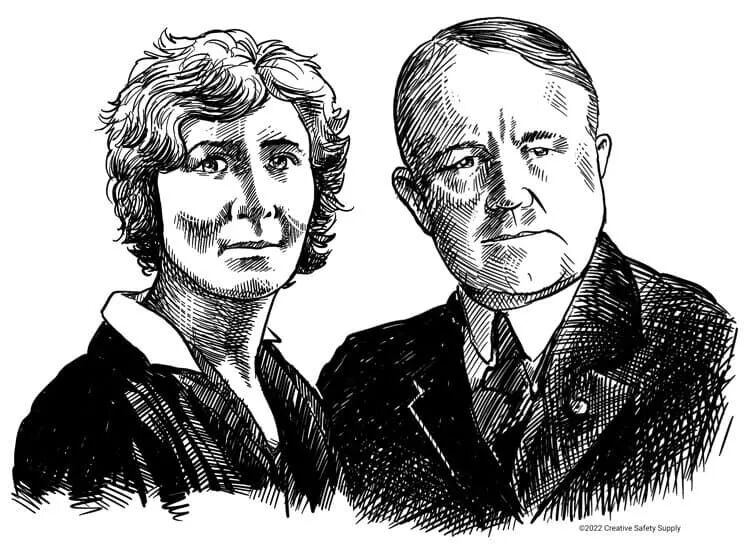
He discovered that some bricklayers were more efficient in building construction. By studying and recording the movements associated with the workers, he found that in order to complete specific bricklaying tasks, one could optimize the operation process, such as adjusting the position of the scaffolding and optimizing the placement of bricks and mortar, to reduce the number of movements required. Gilbreth used movies to film workers' bricklaying movements and divided hand movements into 17 small standard movements; he was the first to introduce film photography into management research. Unlike Taylor who used stopwatches to study workers' movements in order to shorten time, the film method was to reduce the number of unnecessary movements. Gilbreth used this method to study the surgical process during World War I. He was the first to suggest that surgical nurses act as "caddies" for surgeons, handing surgical instruments to the surgeon during operations. He also used film research to develop methods for wounded soldiers to manage their daily activities and help injured soldiers recover. In order to monitor processes and actions in the work environment, he developed the "flow diagram" or "flow chart", which was released at the ASME meeting in 1921 and became the earliest tool to use a structured method to record and analyze processes.
Frank Gilbreth's wife, Lillian Evelyn Moller, was the first woman in the United States to receive a doctorate in psychology and was known as the "First Lady of Management." Lillian not only gave birth to a dozen 12 children for Frank, but also helped Gilbreth promote scientific management methods and apply psychology to industrial environments. She actively used movie cameras to analyze movements and invented ergonomic office furniture, which can be called the "mother of business processes." The Gilbreths are perhaps the most famous husband-and-wife team in the history of management.
Gilbreth's successor was Allan H. Mogensen (also known as Mogy), who was famous for popularizing flow charts in the 1930s and also inherited Gilbreth's film study method. This kind of management consulting work was called "industrial engineering", and later "process engineering" or "business process engineering" came from the same line. Mogensen's flowchart is called the "Job Simplification Method."
Work simplification aims to improve work efficiency by simplifying and optimizing work processes. Its core idea is to: decompose complex processes into smaller, more manageable subtasks to reduce the complexity of each task; simplify work processes, eliminate unnecessary steps, develop process standards and specifications, and improve efficiency and consistency; introduce appropriate tools and technologies to automate or simplify tasks and reduce the complexity of manual work; provide employee training and allow employees to actively participate in work design so that they can understand the work process and perform tasks more effectively.
Although Mogensen's previous studies on Taylorism and Gilbrethian Action have played a great role in improving production efficiency, some workers still believe that this is a way for employers and managers to take advantage of them, and it has not fundamentally eased labor conflicts, and some workers have even disrupted the process.
Mogensen inherited the methods of Taylor and Gilbreth. The "Continuous Improvement Work Simplification Method" he invented was designed to systematically excavate, summarize, and apply the common sense of employees in the enterprise. "Flowchart" is a tool for refining and writing process common sense. Mogensen believed that the people who performed the tasks, not the managers who gave the orders, were the ones best suited to improve the tasks. He views people on the job site as his most important resource when it comes to continuous process improvement. By involving every worker in process design, whether production or administrative, Mogensen achieved two goals: reducing resistance to implementing scientific management methods and gaining a commitment to process improvements.
To sum up, when we talk about digital transformation today, engineer thinking and humanized process optimization ideas should be what we should learn most from abroad.
Machine-translated from the Chinese original 一百年业务流程改进史 | 从电影摄影到数字化的任务挖掘 (published 2023-11-22). WeChat original ↗