Exclusive interview with Dr. Yin Wotao, head of the Decision Intelligence Laboratory of Alibaba Damo Academy and former tenured professor of the Department of Mathematics at UCLA
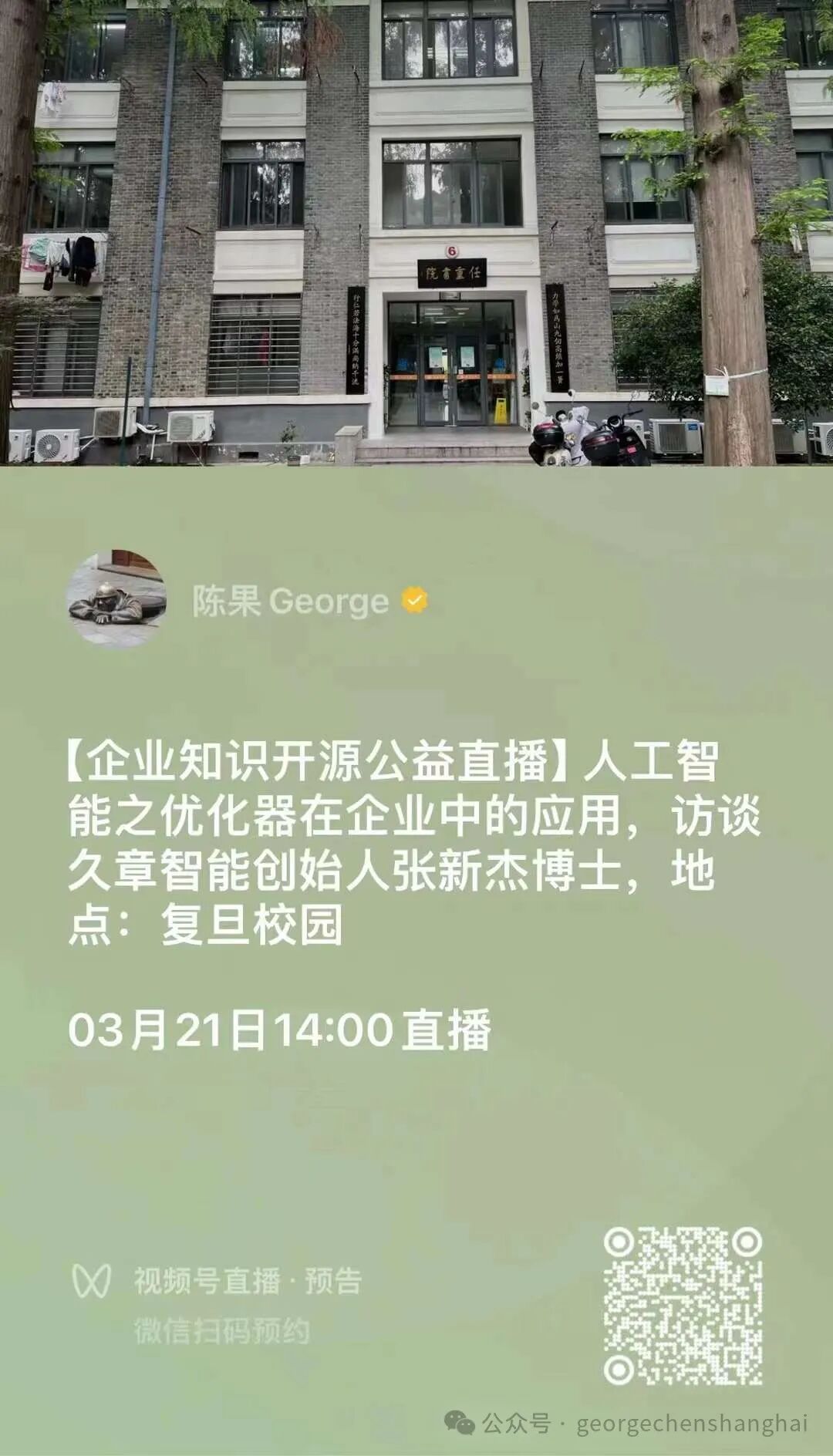
Today in Yanyuan on the Fudan campus, my live broadcast was launched for the first time, talking about the application of artificial intelligence "optimizer" in enterprises.

When discussing this topic on the Fudan campus, I have to start with the logic of the professional setting of the School of Management when I was in Fudan.
From 1988 to 1992, Fudan School of Management had three departments: Management Science, Economic Management and Statistical Operations Research. Among them, Management Science and Statistical Operations Research were enrolled in science subjects, while Economic Management was a liberal arts department. Management science is divided into two professional classes: scientific management and management information system. I am a scientific management major in the Department of Management Science.
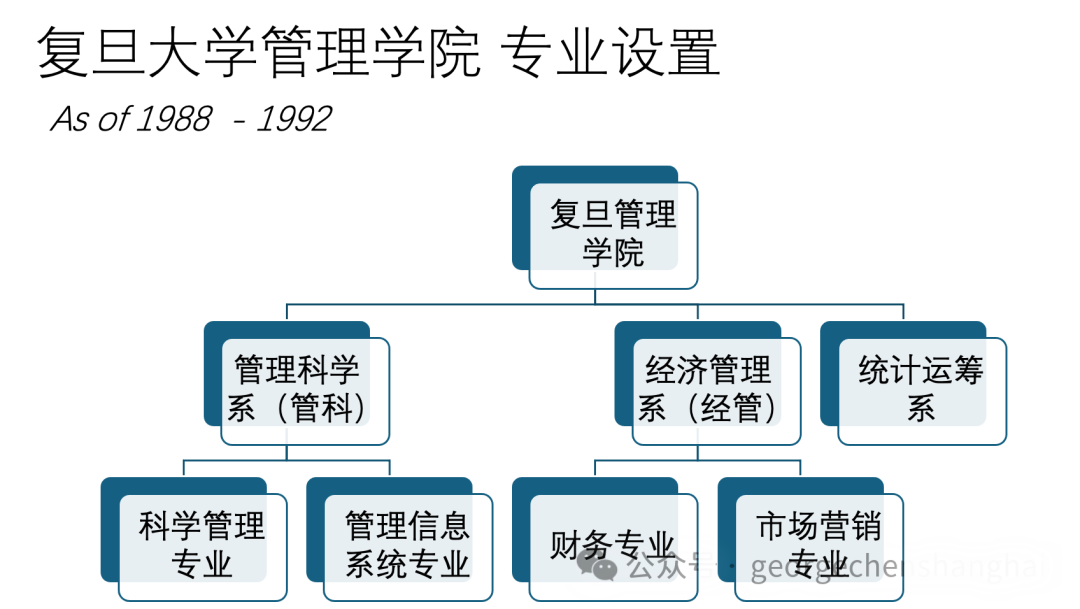
In 1988, just a few years after China started its reform and opening up, the professional settings of the School of Management reflected the basic ideas of modern enterprise management:
-Marketing and finance (later developed into the accounting department) are considered the liberal arts side of business management, emphasizing rules, creativity and interpersonal interaction
-The source of scientific management that I studied is scientific management, which is a discipline pioneered by Taylor. It is actually the operation management of enterprises (see "Chinese enterprises need to popularize the basic concepts of operation management")
- Management information system is the information record of enterprise management and operation. In fact, it is the construction of enterprise core information system represented by ERP later.
-Statistical operations research is the application of mathematics in business management. The English origin of the word operations research is Operations research. The translation should be "operations research". It is literally an extension of mathematical analysis of "scientific management". I don't know which genius translated it into the word "operations research". However, there is no connection with "scientific management" in the Chinese language.
Statistics and operations research use data to support management decisions, so "scientific management" is the basis of its management methods, while "management information system" is the basis of data. The "Department of Management Science" and the "Department of Statistical Operations Research" have a close causal relationship. Today, the so-called "statistical operations research" is called "artificial intelligence", but this word has a fashionable word abroad, called "data science", which is my son's current university major, and my son can be regarded as inheriting his father's career (see "Chinese high school students, won 50,000+ stars on GitHub").
There is a difference between the two words "statistics" and "operations research" in the "Department of Statistical Operations Research", which corresponds to the three schools of artificial intelligence (or data science) applied in enterprises:
1. Based on statistical principles:
Computers are used to learn statistical rules to deduce the possible results when similar scenarios occur, so this genre is also called "machine learning". Machine learning has derived various subdivided genres, such as deep learning, reinforcement learning, etc. Today's generative AI, image recognition, prediction (recommendation, risk control, etc.) are all of this genre, used to discover patterns to solve uncertainty problems, which is also the mainstream of current AI enterprise applications. A simple explanation of the basic principle of text, image and video generation based on generative AI is that when a text/pixel appears, the next text/pixel that should appear is inferred based on the statistical rules of the specific scene context; or the risk control of credit cards, when a specific event occurs (for example, the card owner has never been abroad, the credit card is suddenly swiped overseas), the risk factors are determined based on statistical rules.
2. Based on optimization decisions:
That is, the operations research method, that is, resource allocation and decision-making optimization under constrained conditions for determined goals, such as logistics network optimization, supply chain planning optimization, labor scheduling optimization, marketing plan optimization, power grid maintenance optimization, etc., belong to this school. Although this is a very old management science and technology, its current practical popularity is not as good as the previous one. It is also the main topic of my live broadcast today;
3. Complex system simulation:
This is another field of enterprise artificial intelligence besides statistics and operations research. I have introduced it in the articles "Business Simulation | The Best Enterprise Management Software for Science Students" and "Enterprise Operations GPS Navigation | Process Simulation and Process Digital Twins". For example, predicting the victory of the Russian-Ukrainian war, or the impact of the Russian-Ukrainian war on oil prices, is a probability calculation based on the correlation of influencing events. The "system dynamics" I studied at Fudan is a representative algorithm of this school. For example, the optimization of store layout, optimization of factory production line layout, prediction of the efficacy of new drugs after they are launched, and the effectiveness of pollution control strategies can all be processed using simulation technology. At present, this genre has relatively few practical applications in enterprises. Compared with the large models in the hustle and bustle, it seems a bit niche.
If you think this live broadcast topic of mine is interesting, you can continue to do it in the future. After the live broadcast, I met Mr. Hua, an old professor from the Department of Mathematics at Fudan University on campus and paid tribute to my seniors🫡

Machine-translated from the Chinese original 在复旦校园谈人工智能在企业中的应用 (published 2024-03-27). WeChat original ↗