Combined with GS matching and everyone’s abilities and interests, we can determine the best time and space for cooperation.
Dynamic matching, planning, and management of resources are as follows:
-
When the demand comes, release the demand and the need for skills
-
Teams can be formed based on ability, time, interest, etc. (refer to the course scheduling system and GS matching here)
-
Dynamically adjust resource scheduling when the supply and demand of resources changes.
Drucker: The essence of management is to inspire goodwill and potential
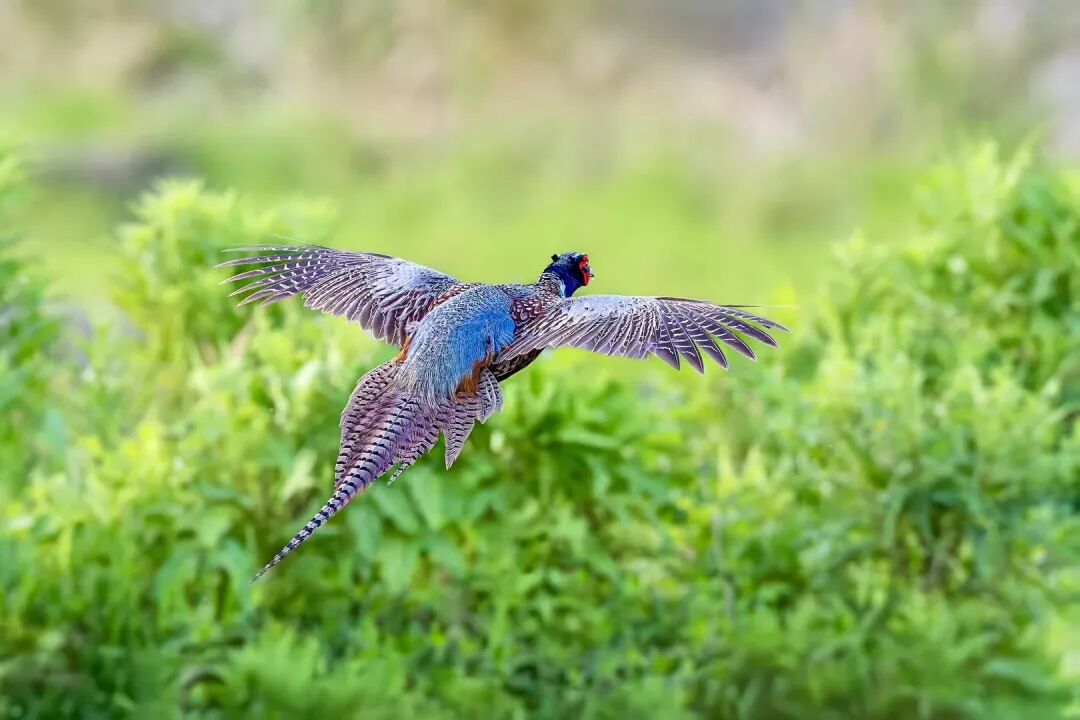
What I Have Lived For / What I Have Lived For
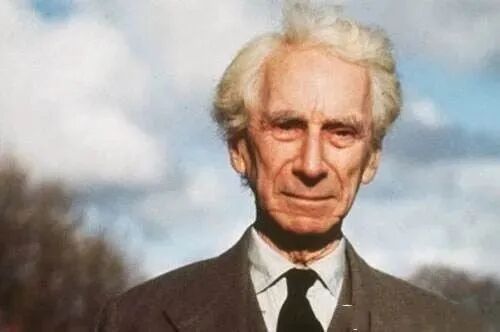
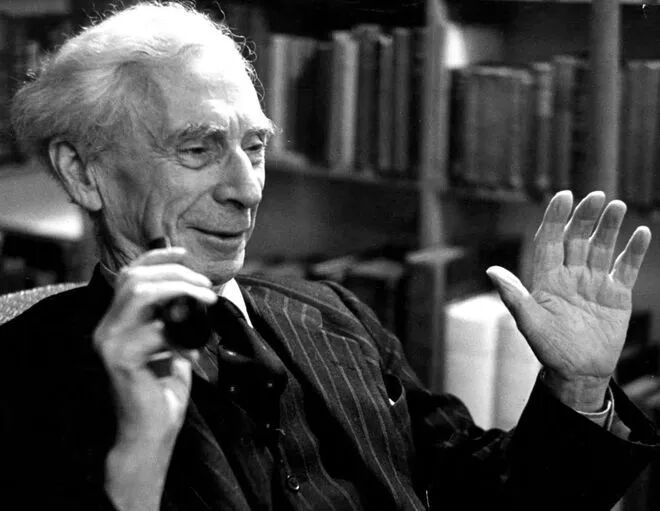
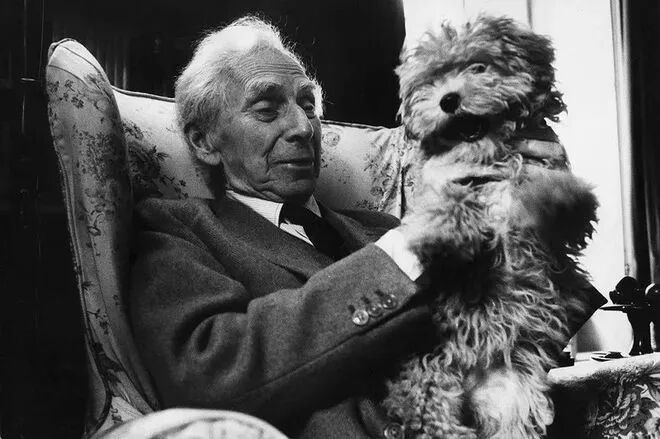
Bertrand Russell / Bertrand Russell
Quoted from: https://www.hjenglish.com/fanyi/p96845/
Three passions, simple but overwhelmingly strong, have governed my life: the longing for love, the search for knowledge, and unbearable pity for the suffering of mankind. These passions, like great winds, have blown me hither and thither, in a wayward course, over a deep ocean of anguish, reaching to the very verge of despair.
My life has been dominated by three simple yet infinitely powerful passions: the desire for love, the search for knowledge, and unquenchable pity for human suffering. These passions are like strong winds, blowing me in all directions, passing through the sea of pain, forcing me to the edge of despair.
I have sought love, first, because it brings ecstasy---ecstasy so great that I would often have sacrificed all the rest of my life for a few hours for this joy. I have sought it, next, because it relieves loneliness---that terrible loneliness in which one shivering consciousness looks over the rim of the world into the cold unfathomable lifeless abyss. I have sought it, finally, because in the union of love I have seen, in a mystic miniature, the prefiguring vision of the heaven that saints and poets have imagined. This is what I sought, and though it might seem too good for human life, this is what---at least---I have found.
I seek love, first, because it fascinates my heart, an indescribable and wonderful intoxication that makes me willing to spend all the rest of my life in exchange for even a few hours of such happiness. I have sought love, also, because it relieves psychological loneliness in which I feel a trembling in my soul, as if I were standing at the edge of the world into the cold, bottomless abyss of death. I seek love because in the union I witness I see a vision of the heaven for which sages and poets longed. This is what I am looking for. Although it seems a bit out of reach in a person's life, at least it is what I have learned throughout my life.
With equal passion I have sought knowledge. I have wished to understand the hearts of men. I have wished to know why the stars shine. And I have tried to apprehend the Pythagorean power by which number holds sway above the flux. A little of this, but not much, I have achieved.
I seek knowledge with the same passion. I wish I could understand the human mind, I wish I could know why the stars twinkle. I tried to understand the idea of "number is everything" admired by Pythagoras. I've figured out a little bit of it, although not a lot.
Love and knowledge, so far as they were possible, led upward toward the heavens. But always pity brought me back to earth. Echoes of cries of pain reverberate in my heart. Children in famine, victims tortured by oppressors, helpless old people a hated burden to their sons, and the whole world of loneliness, poverty, and pain make a mockery of what human life should be. I long to alleviate the evil, but I cannot, and I too suffer.
Love and knowledge use their power to lead people to heaven. But sympathy always drags people back to the world. The cry of pain echoed in my heart. Starving children, oppressed refugees, a world of poverty and pain are all a cruel mockery of the good life that humans long for. I long to be able to lessen the evil, but there is nothing I can do, and I cannot escape its torment.
This has been my life. I have found it worth living, and would gladly live it again if the chance were offered me.
This is my life. I have found value in it. And I would love to live it again if given the chance.
About the author:
Bertrand Russell (1872-1970) was a twentieth-century British philosopher, mathematician, logician, and historian. He was an atheist or agnostic. He was also one of the most famous and influential scholars and pacifist social activists in the West in the last century. He was the winner of the Nobel Prize for Literature in 1950. Russell is also considered to have founded analytic philosophy together with Frege, Wittgenstein, and Whitehead. Principia Mathematica, which he co-authored with Whitehead, had a huge impact on logic, mathematics, set theory, linguistics and analytic philosophy. In 1950, Russell won the Nobel Prize for Literature in recognition of his "diverse and important writings and his continued pursuit of humanitarian ideals and freedom of thought."
Poetry Appreciation: Meditation
meditation
Mu Dan
Why are we, the spirits of all things,
The encounter is not as good as a small tree?
Today you shake it and smile superiorly,
Tomorrow it will turn into soil under the roots.
Why are these words written by hand?
Is it actually longer and stronger than this hand?
They will throw away their rotten hands,
And exist silently on a piece of tattered paper.
Therefore, I have lived proudly for decades,
As if he had been the director of all things,
In fact, under their long-term order
I will only be a little actor for a while.
Hold the fountain of life in my hands,
I just think it comes fresh,
It's strong wine, fresh foam,
Inject my running, labor, and adventure.
It’s like a garden that no one has ever visited before
It will be shown in front of me.
But now, suddenly facing the grave,
I look back at the past with cold eyes,
I saw that all the joys and sorrows it had irrigated were lost in an eternal desert, and then I realized that all my efforts
But he completed his ordinary life.
Quoted from the Internet
Shall We Choose Death?
Bertrand Russell
I am speaking not as a Briton, not as a European, not as a member of a western democracy, but as a human being, a member of the species Man, whose continued existence is in doubt. The world is full of conflicts: Jews and Arabs; Indians and Pakistanis; white men and Negroes in Africa; and, overshadowing all minor conflicts, the titanic struggle between communism and anticommunism.
I speak not as an Englishman, as a European, as a member of a Western democracy, but as a human being, a member of a human race that does not know whether it can survive. The world was full of struggles: Jews and Arabs; Indians and Palestinians; whites and blacks in Africa; and the great struggle between communism and anti-communism that dwarfed all the minor conflicts.
Almost everybody who is politically conscious has strong feelings about one or more of these issues; but I want you, if you can, to set aside such feelings for the moment and consider yourself only as a member of a biological species which has had a remarkable history and whose disappearance none of us can desire. I shall try to say no single word which should appeal to one group rather than to another. All, equally, are in peril, and, if the peril is understood, there is hope that they may collectively avert it. We have to learn to think in a new way. We have to learn to ask ourselves not what steps can be taken to give military victory to whatever group we prefer, for there no longer are such steps. The question we have to ask ourselves is: What steps can be taken to prevent a military contest of which the issue must be disastrous to all sides?
Nearly every politically conscious person feels strongly about such matters; but I hope you, if you can, will put those feelings aside for a moment and see yourselves simply as members of a creature with a remarkable history that no one wishes to die. I will try not to say a word that might pander to one group of people and snub another. Everyone, regardless of one another, is in danger; if everyone sees the danger, there is hope that they can unite to avert it. We must learn new ways of thinking. We must learn not to ask ourselves what measures can be taken to achieve military victory for our favored groups of people, because there are no longer such measures. The question we must ask ourselves is: What can be done to avoid a military race that would surely be catastrophic for all parties?
The general public, and even many men in positions of authority, have not realized what would be involved in a war with hydrogen bombs. The general public still thinks in terms of the obliteration of cities. It is understood that the new bombs are more powerful than the old and that, while one atomic bomb could obliterate Hiroshima, one hydrogen bomb could obliterate the largest cities such as London, New York, and Moscow. No doubt in a hydrogen-bomb war great cities would be obliterated. But this is one of the minor disasters that would have to be faced. If everybody in London, New York, and Moscow were exterminated, the world might, in the course of a few centuries, recover from the blow.
Ordinary people, and even many in power, had no idea what a hydrogen bomb war would entail. Ordinary people still think in terms of the destruction of cities. It goes without saying that the new bombs are more powerful than the old ones - an atomic bomb could destroy Hiroshima, while a hydrogen bomb could destroy such metropolises as London, New York and Fisker. There is no doubt that a hydrogen bomb war would destroy large cities. But this is just one of the minor disasters the world must face. If the Huadonians, New Yorkers, and Muscovites were all extinct, it might take centuries for the world to recover from this catastrophe.
But we now know, especially since the Bikini test, that hydrogen bombs can gradually spread destruction over a much wider area than had been supposed. It is stated on very good authority that a bomb can now be manufactured which will be 25,000 times as powerful as that which destroyed Hiroshima. Such a bomb, if exploded near the ground or under water, sends radioactive particles into the upper air. They sink gradually and reach the surface of the earth in the form of a deadly dust or rain. It was this dust which infected the Japanese fishermen and their catch of fish although they were outside what American experts believed to be the danger zone. No one knows how widely such lethal radioactive particles might be diffused, but the best authorities are unanimous in saying that a war with hydrogen bombs is quite likely to put an end to the human race. It is feared that if many hydrogen bombs are used there will be universal death - sudden only for a fortunate minority, but for the majority a slow torture of disease and disintegration...
But we now know, especially since the Bikini test, that hydrogen bombs can gradually spread their devastation over a much wider area than expected. According to very authoritative sources, it is now possible to create a bomb that is 25,000 times more powerful than the bomb that destroyed Hiroshima. If such a bomb exploded near the ground or underwater, it would send radioactive particles into the upper atmosphere. These particles gradually fall and reach the Earth's surface as toxic dust or rain. It was this dust that infected Japanese fishermen and the fish they caught, even though they were not within the danger zone identified by U.S. experts. No one knows how such deadly radioactive particles could spread so widely, but the highest authorities in the field agree that a hydrogen bomb war is almost synonymous with the annihilation of the human race. If many hydrogen bombs were used, death would probably come to the world - sudden death for only a lucky few, but chronic suffering of disease and disintegration for the majority...
Here, then, is the problem which I present to you, stark and dreadful and inescapable: Shall we put an end to the human race1 or shall mankind renounce war? People will not face this alternative because it is so difficult to abolish war. The abolition of war will demand distasteful limitations of national sovereignty. But what perhaps impedes understanding of the situation more than anything else is that the term 'mankind' feels vague and abstract.
Here, I want to ask you a straightforward, unpleasant and unavoidable question: Should we eliminate mankind, or should mankind abandon war? People are unwilling to face this choice because it is too difficult to eliminate war. War of elimination requires an objectionable restriction of national sovereignty. However, the term "human being" gives people a vague and abstract feeling, which may hinder understanding of this situation more than anything else.
People scarcely realize in imagination that the danger is to themselves and their children and their grandchildren, and not only to a dimly apprehended humanity' And so they hope that perhaps war may be allowed to continue provided modern weapons are prohibited. I am afraid this hope is illusory. Whatever agreements not to use hydrogen bombs had been reached in time of peace, they would no longer be considered binding in time of war, and both sides would set to work to manufacture hydrogen bombs as soon as war broke out, for if one side manufactured the bombs and the other did not, the side that manufactured them would inevitably be victorious...
Men have scarcely used their imaginations to realize that this danger is directed not only to humanity as they vaguely understand it, but to themselves and their descendants. So they believed that as long as the use of modern weapons was prohibited, the war might be allowed to continue. I'm afraid this wish is just a fantasy. Any agreement not to use hydrogen bombs is reached in peacetime. In wartime, such an agreement is considered non-binding. Once war breaks out, both sides will start to build hydrogen bombs, because if one side makes a hydrogen bomb and the other side does not, the side that builds the hydrogen bomb will inevitably win...
As geological time is reckoned, Man has so far existed only for a very short period one million years at the most. What he has achieved, especially during the last 6,000 years, is something utterly new in the history of the Cosmos, so far at least as we are acquainted with it. For countless ages the sun rose and set, the moon waxed and waned, the stars shone in the night, but it was only with the coming of Man that these things were understood.
Calculated according to geological time, human beings have only existed for a very short period of time so far - 1 million years at most. At least as far as what we know about the universe is concerned, the understanding that humans have achieved in the last 6,000 years, especially, is something completely new in the history of the universe. The sun rises and sets, the moon waxes and wanes, and the stars in the night sky twinkle. Countless years have passed like this. It was only after the emergence of human beings that these were understood.
In the great world of astronomy and in the little world of the atom, Man has unveiled secrets which might have been thought undiscoverable. In art and literature and religion, some men have shown a sublimity of feeling which makes the species worth preserving. Is all this to end in trivial horror because so few are able to think of Man rather than of this or that group of men? Is our race so destitute of wisdom, so incapable of impartial love, so blind even to the simplest dictates of self-preservation, that the last proof of its silly cleverness is to be the extermination of all life on our planet? - for it will be not only men who will perish, but also the animals, whom no one can accuse of communism or anticommunism.
In the macroscopic world of astronomy and the microscopic world of atoms, humans have uncovered secrets that might have been previously thought impossible to reveal. In the fields of art, literature, and religion, some people display a noble feeling that makes people understand that human beings are worthy of preservation. Could it all end in worthless acts of terror because few people can think of humanity as a whole more than this or that group of people? Is mankind so lacking in wisdom, so lacking in selfless love, so blind that it cannot even hear the simplest command of self-preservation, so that it will finally prove its lack of reason by exterminating all life on the earth? ——Because non-resident people will be eliminated, and animals will also be eliminated, and no one can accuse them of being communist or anti-communist.
I cannot believe that this is to be the end. I would have men forget their quarrels for a moment and reflect that, if they will allow themselves to survive, there is every reason to expect the triumphs of the future to exceed immeasurably the triumphs of the past. There lies before us, if we choose, continual progress in happiness, knowledge, and wisdom. Shall we, instead, choose death, because we cannot forget our quarrels? I appeal, as a human being to human beings: remember your humanity, and forget the rest. If you can do so, the way lies open to a new Paradise; if you cannot, nothing lies before you but universal death.
I can't believe it ended like this. If people want to survive, they should temporarily forget their quarrels and reflect. People have thousands of reasons to expect future achievements to greatly exceed past achievements. If we choose, then what lies ahead of us is the continuous growth of happiness, knowledge and wisdom. Can we choose death over a quarrel because we can't forget it? As a human being, I appeal to all of you: remember your humanity and forget the rest. If you can do this, the road to a new paradise will be clear; if you cannot, all that lies before you is the destruction of the world.
Quote from:
https://www.163.com/dy/article/GFGDMMCD0538A6EL.html
Machine-translated from the Chinese original 0,资源动态供需匹配平台1,黄仁勋演讲 2,苏姿丰答记者问 ,3,李祥宇练拳视频, 4,生活意义的讨论 (published 2024-06-05). WeChat original ↗