In the early summer of 2024, the spring semester has just ended. Many old friends come to Boston and New York for scientific inspections or business visits. Tsinghua alumni in New York also spontaneously organized to celebrate the 113th birthday of their alma mater and catch up with old friends. In Manhattan, alumni of Tsinghua University and Peking University opened theme bars, which were nicknamed Tsinghua Canteen and Peking University Canteen by local natives. They became famous in New York for a while, attracting so many guests that it was hard to find one. After many twists and turns, we finally made a reservation at the Hutaoli Music Tavern under the Empire State Building in the dining hall of Peking University. Here, there is a bar and dance floor, singing and dancing, good wine and delicious food, and people drinking and drinking. On the stage, the resident singer under the spotlight, dressed in a white dress, sang Lennon's "Imagine" and Carpenter's "Yesterday Once More" while playing. The lingering and pathos lyrics were laser-projected onto the stairs and walls. It was nostalgic, melancholy, inexplicably sad, and had the atmosphere of Yanyuan in the old days.
The old friends were full of enthusiasm and glowing faces, exchanging life experiences and discussing the current situation in the world. Everyone is worried about the disruptive development of AI and hopes to choose an academic direction for the younger generation that is difficult to be replaced by AI. At the same time, they are also hesitant about whether their children should pursue a PhD. The author tends to believe that most shallow intellectual work will soon be undertaken by AI. Young people should try their best to learn more profound science and engineering directions during their studies to ensure long-term core competitiveness.
Recently, the author has met many old friends who have been working on the front line of the technology industry and are industry leaders in their fields. They have keen insight and foresight into the development of modern science and technology, have great respect for basic science, have been tirelessly studying breakthroughs in recent mathematical theories, and strive to integrate into the industries in which they work. For example, the author accompanied a friend to visit the Gold Coast of Long Island. During the chat, I learned that this friend spent an hour every day after finishing his work at midnight to study the Ricci curvature flow theory; another friend has been studying hard for many years, trying to understand the inner principles behind the kink; there is also an alumnus who always spends his spare time tracking the endless AI theories and trying to explain the AI mechanism from a mathematical level. The author is very impressed and moved by the scientific literacy and taste of these friends, as well as their unremitting pursuit of science. At the same time, the in-depth ideological exchanges with these friends convinced the author that with such a group of backbones, the take-off of China's science and technology industry is just around the corner!
Many old friends have asked me what I have been doing recently. In fact, my research work has always centered on the same theme:Calculation problem of Riemannian metric, this is a problem between basic mathematics and applied mathematics. On the one hand, it has strong theoretical and aesthetic value, and on the other hand, it also has huge practical value. The Riemannian metric is the core concept of differential geometry. Calculating the Riemannian metric is naturally of fundamental importance and inherently difficult. Many basic problems in engineering fields, such as surface texture mapping in computer graphics, morphological recognition in computer vision, dynamic tracking, autonomous driving, geometric modeling in industrial software, mesh generation, and basic problems in the field of medical images, such as organ registration, cancer diagnosis, etc., ultimately boil down to obtaining some kind of Riemannian metric. However, traditional numerical calculation methods, such as the finite element method, finite volume method, etc., cannot be directly used to calculate the Riemannian metric. In the past twenty years, the author's research work has been trying to discover new theories and invent new algorithms to calculate Riemannian metrics. The final theoretical tool comes from the geometric analysis method founded by Mr. Qiu Chengtong, which is to solve nonlinear partial differential equations on Riemannian manifolds.
The calculation problem of Riemannian metric can be simply summarized into the following questions: 1. Given the topology, how to calculate the standard Riemannian metric of the manifold, such as the constant curvature metric; 2. Given the curvature, how to calculate the Riemannian metric that satisfies the curvature condition; 3. Given specific conditions, such as the Harmonic group, how to calculate the Riemannian metric that satisfies the condition; 4. Given the Riemannian metric, how to calculate the isometric embedding of the manifold. For manifolds of different dimensions, manifolds of different topologies, and problems with different requirements, we need to use different basic theories and different calculation methods. Moreover, these problems are far from being solved, whether at the level of basic theory or practical algorithms, and require continued exploration by basic mathematicians, applied mathematicians, computer scientists, and engineers.
Calculation of Surface Metrics
The calculation problem of Riemannian metrics on curved surfaces is currently relatively mature, and the theoretical basis of its basic mathematics was laid more than a hundred years ago: Felix Klein and Henri Poincare respectively proposed the single-valued conjecture of the Riemann surface (algebraic curve) in 1883 and 1882, respectively, and Poincare and Koebe gave rigorous proofs in 1907. The surface univaluation theorem states that any surface with a Riemannian metric can be conformally deformed into a constant Gaussian curvature surface; in other words, any surface with a metric can (periodically) be conformally mapped to one of three standard spaces: the unit sphere (zero genus surface), the Euclidean plane (one genus surface), and the hyperbolic disk (high genus surface). Although this theorem is very old, it is still difficult for ordinary people without professional mathematics background to understand it. The most essential obstacle is that although the hyperboloid exists objectively, it cannot be realized in a three-dimensional real space. Therefore, it cannot be perceived by human senses and can only rely on abstract thinking.
Calculation of the metric of convex surfaces
The Riemannian metric calculation problem for convex surfaces is relatively simple. Its basic theory was established by the Russian school in the 1950s, mainly including the Minkowski problem, the Alexandrov problem and the Weyl problem. The high-dimensional promotion was completed by Mr. Qiu Chengtong, Nirenberg, and Pogorelov in the 1970s.
Minkowski problem: Given a smooth convex surface embedded in a three-dimensional Euclidean space, through Gaussian mapping, we map any point on the surface to the unit normal vector at that point. Due to the convexity of the surface, the Gaussian mapping is a differential homeomorphism. We can parameterize convex surfaces with Gaussian spheres. We forward the Gaussian curvature of the surface onto the Gaussian sphere through Gaussian mapping, and obtain a positive function on the sphere. If a Gaussian curvature function is defined on a Gaussian sphere, how can we inversely find the shape of the convex surface (and thereby obtain the Riemannian metric of the surface)?
After discretization, the Minkowski problem is equivalent to given the normal vector and area of each face of the convex polyhedron, and inversely finding the convex polyhedron. We set the height of each face as a variable, and the weighted sum of height and area as a constant to maximize the volume of the polyhedron, so that the convex polyhedron can be obtained.
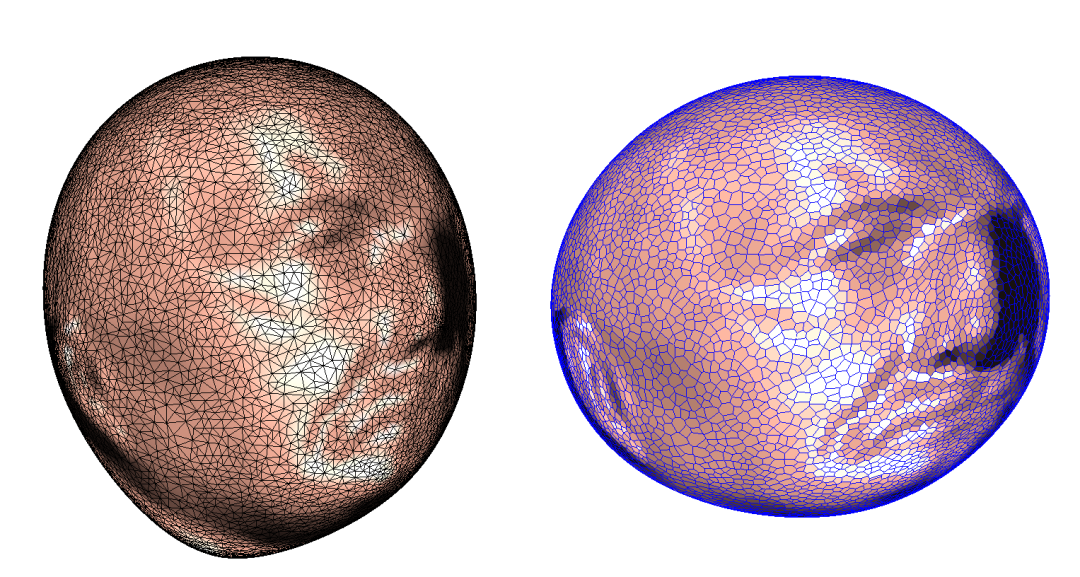
Figure 1. Solving the Alexander problem using spherical optimal transport mapping: inverse solution of convex surfaces through Gaussian curvature.
Alexander problem: Assuming that the origin is inside the convex surface, we use polar coordinates to represent the convex surface, that is, the convex surface is represented as a radial function defined on the unit sphere. We consider the Gaussian curvature of a convex surface as a positive function defined on the unit sphere. If you are given a Gaussian curvature function defined on the unit sphere, how can you inversely find the shape of a convex surface (and thus obtain the Riemannian metric of the surface)?
Alexander's proof of the existence of a solution relied on algebraic topological methods rather than constructive algorithms. The author's team gave a constructive algorithm for the Alexander problem in 2019. Surprisingly, the Alexander problem of convex differential geometry is equivalent to the spherical optimal transmission problem in probability statistics, and the optimal transmission theory is the theoretical basis of generative AI. As shown in Figure 1, two measures are defined on the unit sphere, one is the measure defined by Gaussian curvature, and the other is the traditional Hausdorff measure. There is a unique optimal transmission map that most economically transforms one measure into another measure, and this transmission map is given by the generalized gradient map of a certain convex radial function. This convex radial function is the solution to the Alexander problem. Moreover, this theorem can be directly extended to any dimension.
Weil problem: Given a Riemannian metric on the unit sphere that satisfies the constant positive Gaussian curvature, find the isometric embedding of the surface in the three-dimensional Euclidean space. Weil's problem is more difficult than Alexander's problem because the parameterization of the surface is undetermined, and all possible surface parameterizations constitute the diffeomorphism group of the sphere, which is too large. The discretization of this problem is formulated as follows: We have a triangular mesh with zero genus (two-dimensional simplicial complex). Given the side length such that the triangle inequality is satisfied on each face, and the discrete Gaussian curvature of each vertex is positive, find the coordinates of each vertex in the three-dimensional Euclidean space so that the length of each side is equal to the Euclidean distance between the two vertices. An embedded algorithm idea is as follows: Suppose we obtain the implementation of a triangular mesh in Euclidean space, then its interior is a convex polyhedron. Select the center of the polyhedron and connect straight lines from the center to each vertex. The polyhedron is divided into multiple tetrahedrons, and each triangle corresponds to a polyhedron. Instead, construct a tetrahedron for each triangle in the mesh that satisfies the compatibility condition that the lengths of the sides connecting the same vertex to the center in different tetrahedrons are equal to each other, and then glue all the tetrahedrons into a Euclidean three-dimensional manifold with cone singularities. We set the distance from the vertex to the center as a variable, defined in that all Euclidean measures with cone singular points form a finite-dimensional space. Examine the Hilbert-Einstein energy defined on this space. The gradient of the Hilbert-Einstein energy is the discrete Ricci curvature defined on each edge. The difficulty is that this energy is neither strictly convex nor strictly concave, but along a specific path in the space constituted by the Euclidean metric, the Hessein matrix of the Hilbert-Einstein energy is non-singular, and the mapping of internal edge lengths to discrete Ricci curvatures is reversible. We can solve inversely and find the interior side length via zero Ricci curvature.
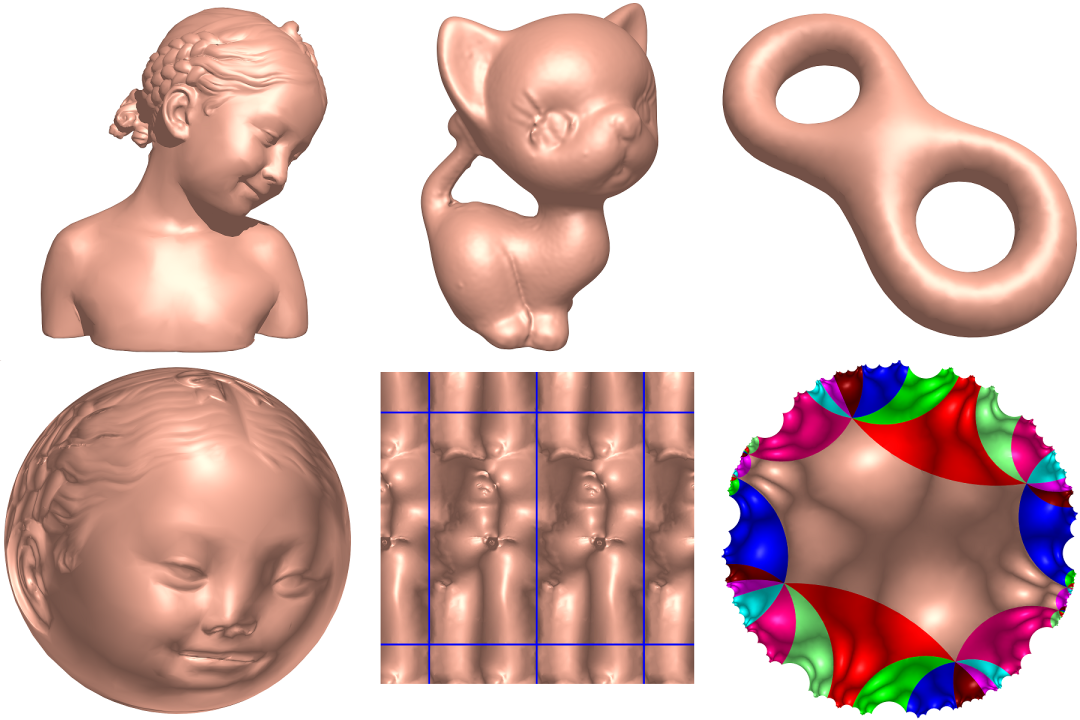
Figure 2. Surface singularization theorem.
Surface single value measurement
The single-valued theorem is the most important and basic theorem in surface differential geometry. Therefore, finding a calculation method for the single-valued Riemannian metric has always been a goal pursued by mathematicians and computer scientists. The author began research in this area during his doctoral studies under the guidance of Mr. Qiu Chengtong. In the past two decades, scholars from the German school, the French school, the American school, the Israeli school and the Chinese school have launched extremely fierce competition. Finally, Chinese scholars led by Mr. Qiu Chengtong published a complete proof of the discrete singularization theorem in the Journal of Differential Geometry in 2018, thus formally laying the theoretical foundation of the algorithm. In the long academic competition, the author and his collaborators have gone through a rugged and winding road of exploration, and also experienced unimaginable plunders and plunders from other schools of thought. The whole process has been ups and downs and thrilling. Fortunately, 110 years after the basic theorem was proved, a strict discrete algorithm was invented, which once again verified that the basic theory is forward-looking, and it often takes decades or even hundreds of years to go from theory to technology.
forclosed surface with zero genus, under the guidance of Mr. Qiu, the author proposed a method based on the surface harmonic mapping theory to solve the constant curvature metric in his doctoral thesis. Specifically, the Gaussian mapping of the surface is first calculated, then the Laplacian of the mapping is calculated, the mapping is adjusted to reduce the harmonic energy, and at the same time, the Möbius mapping is used to keep the center of mass of the mapping image at the center of the unit sphere. Finally, we get a unique harmonic mapping. The Hopf differential of this harmonic mapping is a holomorphic quadratic differential, and the holomorphic quadratic differential of a zero-genus closed surface must be 0, so the harmonic mapping must be a conformal mapping.
forClosed surface with genus unity, Mr. Qiu and the author also invented a completely pure differential algorithm based on Hodge theory in their doctoral thesis. Hodge's theory is the great theorem connecting topology and analysis: in every de Rham cohomology class, there exists a unique harmonic differential form. We can obtain the basis of the cohomology group of the surface by computational topology methods, and then obtain the corresponding harmonic differential form by solving elliptical linear partial differential equations in a given cohomology class. Every harmonic differential form has a conjugate harmonic differential, and together they form a holomorphic differential form. The Riemannian metric induced by holomorphic differentiation is the single-valued metric of the surface, that is, the Euclidean metric.
forHigh genus closed surface, the situation is much more complex, and the harmonic mapping theory and Hodge theory cannot directly give algorithms. In order to prove the Poincaré conjecture, in the late 1970s, with the suggestion and cooperation of Mr. Qiu, Professor Richard Hamilton proposed the Ricci Flow theory. Ricci flow deforms the Riemannian metric according to the curvature, so that the deformation speed is proportional to the current curvature. The evolution of the curvature over time satisfies the diffusion-reaction equation. If the diffusion term is dominant, the curvature will converge to a constant value; if the reaction term is dominant, a curvature explosion phenomenon will occur at certain points of the manifold within a limited time. At this time, we will cut the manifold along the explosion point (surgery), and then use Ricci flow to deform each piece after the cut. Professor Hamilton in 1982 and my senior brother Ben Chow in 1991 proved that surface Ricci flow will eventually converge to a constant curvature metric. After years of exploration, we have extended the surface Ricci flow theory from smooth manifolds to discrete manifolds. In 2018, we proved that discrete surface Ricci flow will converge to a hyperbolic metric. At this time, 36 years have passed since Professor Hamilton's theoretical work.
In the early 1980s, Bill Thurston also thought about similar problems in order to study the topology of three-dimensional manifolds. He used the circle packing method to give an algorithm for single-valued measurement in the combined sense. However, Thurston's method has two limitations: First, given an arbitrary discrete surface with an initial Riemannian metric and an initial triangulation, we cannot find a disc filling that matches it; more seriously, if the target curvature does not satisfy a series of combination inequalities, then the disc filling method cannot give the target Riemannian metric. Therefore, Thurston's method cannot really meet the requirements of practical applications. For decades, scholars from many schools have tried various improvement methods to ensure the existence of the solution, and there have been numerous papers, but they have been unable to achieve a real breakthrough. The author and his collaborators later realized the key to the problem: all traditional methods keep the triangulation fixed during the Ricci flow process; and from a geometric perspective, the Riemann metric is the essence, and the triangulation is subordinate to the metric and should change with the change of the metric. During the Ricci flow process, the triangulation should evolve naturally. After the change of thinking, all theoretical problems are easily solved. The discrete surface Ricci flow theory we established is applicable to any complex topology and more general target curvature. As long as the target curvature satisfies the Gauss-Bonnet theorem, then the Ricci flow will definitely calculate a conformal metric that meets the requirements.
Riemannian metric that satisfies the harmony condition
In recent years, with the rise of the new energy automobile industry, the field of industrial software, namely CAD/CAE, has received increasing attention. A basic problem in the field of CAD/CAE is to construct a structured quadrilateral mesh of a complex surface, which is equivalent to calculating a conformal straight metric with cone singular points of the surface, so that the harmony group of this metric satisfies certain conditions. Since the birth of CAD technology in the 1970s, this problem has been plaguing the huge manufacturing industry, and countless applied mathematicians and engineers have been looking for differential equations satisfied by the singular points of the quadrilateral mesh. Around 2021, the author's team discovered that this problem is equivalent to the fully pure line cluster representation problem on the Riemann surface, and thus solved it using the Abelian-Jacobian theory in algebraic curves plus the Ricci flow theory. In fact, Abelian theory was born in the 1820s, which once again proves the forward-looking nature of basic mathematics. At the same time, it took more than 50 years for this basic problem in the CAD/CAE field to be solved, which also proves the inherent difficulty of thoroughly understanding the basic problems in the engineering field and finding appropriate theoretical tools to solve them.
Riemannian metric calculation for three-dimensional manifolds
The three-dimensional manifold case can be regarded as a direct generalization of the surface case, but it is much more complicated at both the theoretical and algorithmic levels. The main reason is that most three-dimensional manifolds cannot be realized in the real world. Daily life experience does not help to establish the intuition of three-dimensional manifold theory. Trying to understand the theorem of three-dimensional manifolds requires strong spatial imagination and relatively in-depth background knowledge of topological geometry. Many times, when intuition has not yet been established, logical reasoning can only be relied upon.
The early research method of three-manifold topology was mainly combination. The idea was to cut a manifold along a specific curved surface to obtain two pieces. The topology of each piece was simpler than the original manifold. This requires that the divided surface satisfies the so-called incompressibility condition, that is, if there is a circle on the surface that can be reduced to a point on the background three-dimensional manifold, then the circle can also be reduced to a point on the surface. This is equivalent to an inclusion mapping that maps the fundamental group of the surface onto the fundamental group of the three-dimensional manifold. This group homomorphism is injective. We recursively cut each piece until no incompressible surface can be found. This divide-and-conquer strategy still fails to provide a profound understanding of the topology of three-dimensional manifolds. Another method is the Dehn operation, which is to dig out a solid tire from the three-dimensional manifold, twist the tire surface and then glue it back, thus changing the topology of the manifold. Starting from the three-dimensional sphere, through Dehn's operation, we can generate all closed 3-manifolds.
In the 1980s, Thurston proposed a geometricization program to help understand topology through geometry, completely revolutionizing the entire field of three-dimensional manifold topology. The geometric program of three-dimensional manifolds is the generalization of the surface singularization theorem: the three-dimensional manifold is first cut along the sphere (the inside and outside of the sphere are not three-dimensional disks) and decomposed into the so-called prime manifold. Milnor proved the uniqueness of this decomposition. The prime three-dimensional manifold is then cut along the incompressible torus (tire surface) (JSJ decomposition), and the final three-dimensional manifold can be equipped with one of eight standard geometries. Thurston himself proved the geometrization conjecture in the case of Haken manifolds. Hamilton proposed a program based on Ricci flow with surgery to prove the geometrization conjecture. In 2003, Perelman proved the geometrization conjecture along Hamilton's program, but lacked key details of the proof.
From a computational perspective, the core of the prime manifold decomposition and JSJ decomposition algorithms is to find the incompressible sphere and torus, which can be obtained through a combination method. However, the current algorithm represents the three-dimensional manifold as a simple complex (tetrahedral mesh), and then calculates all possible regular surfaces and selects the incompressible surfaces. The number of regular surfaces is exponentially related to the number of tetrahedrons, so the complexity of this combination algorithm is NP. Finding efficient algorithms for incompressible surfaces is currently a major bottleneck. The next step is to calculate the standard Riemannian metric on the edged three-dimensional manifold obtained after JSJ decomposition.
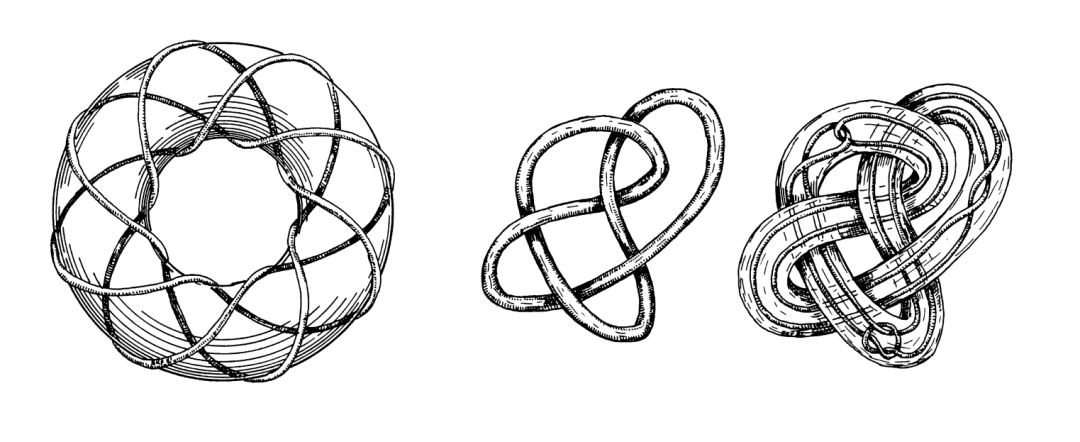
Figure 3. Torus kink and satellite kink.
Thurston gave the following classic algorithm: The boundary of the three-dimensional manifold after JSJ decomposition is a topological torus. In most cases, the standard Riemannian metric is a hyperbolic metric with finite volume, completeness, and a cusp. The neighborhood boundary of the cusp is the boundary torus of the 3-manifold. The hyperbolic metric is restricted to the boundary torus and becomes a Euclidean metric. The boundary torus is the horosphere in the three-dimensional hyperbolic space. Thurston triangulated the 3-manifold to obtain an ideal hyperbolic tetrahedron. The vertices of the ideal tetrahedron are all at infinity. After gluing, these vertices form the cusps of the 3-manifold. Then, the vertices of each ideal hyperbolic tetrahedron are cut off with a horosphere to obtain a truncated ideal hyperbolic tetrahedron. After gluing, the removed vertex neighborhoods form a solid tire, whose boundary is a topological torus with a Euclidean straightness metric. The deformation space composed of all possible ideal hyperbolic tetrahedrons is two-dimensional, and each ideal hyperbolic tetrahedron is represented by a complex variable. All ideal hyperbolic tetrahedrons satisfy two conditions after bonding: curvature condition and completeness condition. The so-called curvature condition means that the discrete Ricci curvature on each edge of the hyperbolic tetrahedral grid obtained after bonding is zero; the so-called complete condition means that the truncated parts of the ideal hyperbolic tetrahedron form a torus after bonding, and the hyperbolic metric is limited to the single-valued Euclidean metric of the torus. We use these two conditions to establish a system of algebraic equations for all complex variables. Thurston proved that this system of algebraic equations has a finite number of solutions. By solving this system of algebraic equations, we obtain the hyperbolic metric of the 3-manifold.
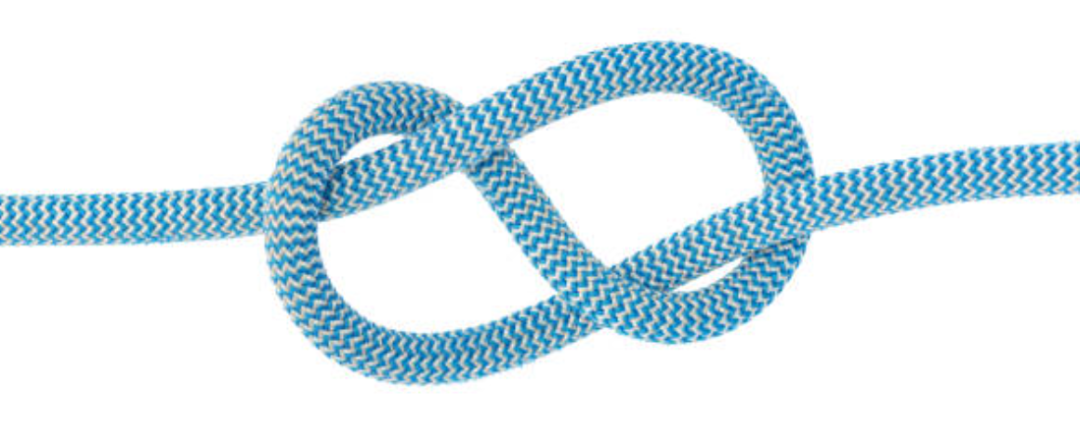
Figure 4. The simplest hyperbolic twist: the figure-8 twist.
The Thurston method has had great success in studying the topology of kinks. Kink has always been a core research topic in low-dimensional topology. How to judge whether two kink are essentially the same (i.e., the same trace problem of kink) actually exceeds human intuitive experience. Thurston proved that with the exception of the so-called torus kinks and satellite kinks (shown in Figure 3), the complement spaces of all kinks are hyperbolic and can be identified by the hyperbolic geometry of the complement spaces. For example, Figure 4 shows a classic figure-of-eight knot (the two ends are connected at infinity) commonly used in mountain climbing. After digging out this kink in the entire three-dimensional Euclidean space, the remaining space is a hyperbolic three-dimensional manifold.
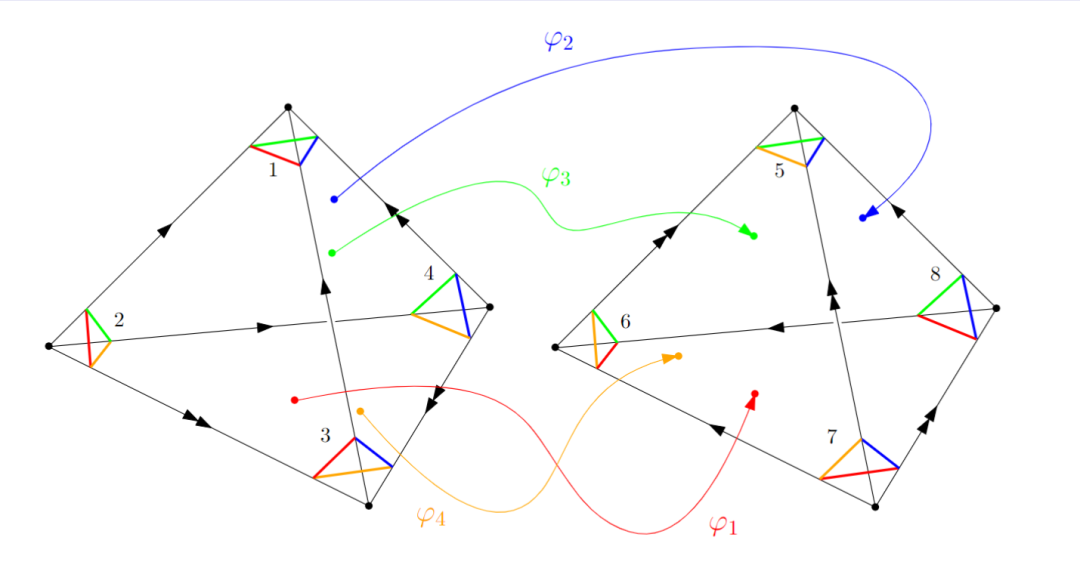
Figure 4. Triangulation of the 8-figure kink complement space.
Thurston saw that the figure-eight kink complement space can be formed by the gluing of two truncated tetrahedrons. Figure 4 shows the gluing method of these two tetrahedrons. Two faces of the same color are glued together, and two edges with the same number and direction of arrows on the glued faces are glued together. The tetrahedral mesh obtained after such twisting and gluing has only one vertex and two edges. Everyone who is new to 3-manifold topology is extremely shocked when they see for the first time that the figure-8 kink complement space can be triangulated in this way. Thurston's spatial insights are incredible.
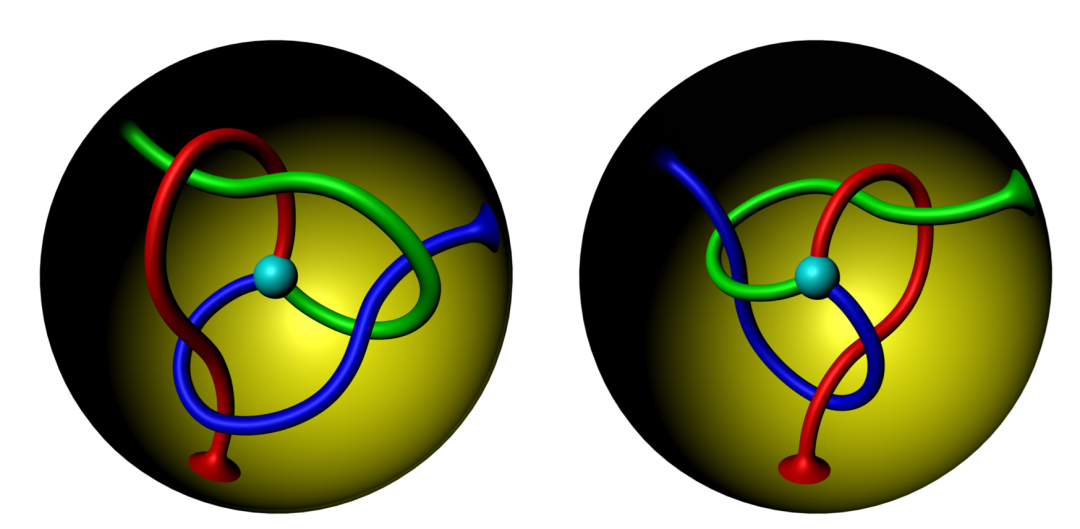
Figure 5. The solid ball digs 3 wormholes, and the boundary of the hyperbolic 3-manifold is a complete hyperbolic surface.
The discrete surface Ricci flow method can also be extended to the case of three-dimensional manifolds. For example, for a hyperbolic three-dimensional manifold whose boundary is a complete hyperbolic surface (shown in Figure 5), the author's team proposed a discrete 3-manifold Ricci flow method to calculate the hyperbolic metric. First, we triangulate the 3D manifold into hyperbolic tetrahedrons, but truncate each vertex with a hyperbolic plane. We set all side lengths as unknown variables, optimize the Hilbert-Einstein energy, and its gradient flow is the discrete Ricci curvature flow. Ricci flow finally gives the hyperbolic structure of the 3-manifold, as shown in Figure 6. This method can be extended to more general hyperbolic three-manifolds. In particular, discrete surface Ricci flow is essentially optimizing the Hilbert-Einstein energy on special hyperbolic three-dimensional manifolds.
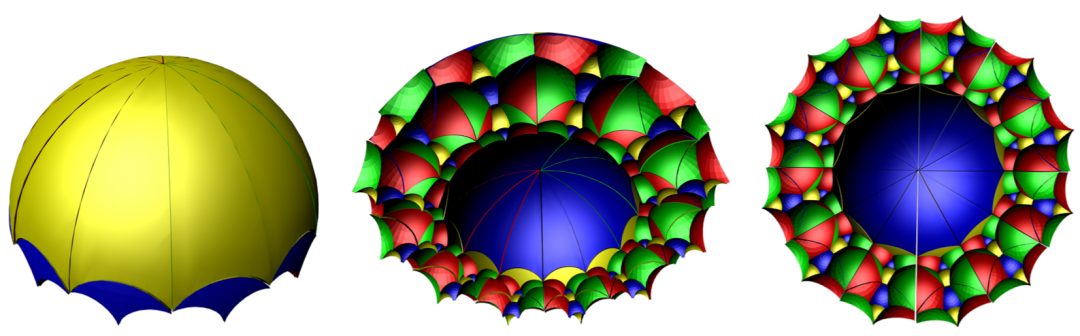
Figure 6. Hyperbolic structure of 3-manifold obtained from Ricci flow.
Similar to the discrete surface Ricci flow theory before 2018, the Riemannian metric calculation of three-dimensional manifolds faces the same problem: how to choose the appropriate triangulation! If the triangulation is selected appropriately, the Thurston algorithm or the Ricci flow algorithm will converge to the standard metric; otherwise, degenerate tetrahedrons will appear during the optimization process and the algorithm will terminate. At present, even for kink's complementary space, whether a good triangulation exists is not theoretically conclusive, and there is no guarantee at the algorithm level. Research in this field still has a long way to go. On the other hand, because the three-dimensional manifold theory is relatively difficult and the algorithm is not yet mature, it has not yet found key applications in the industry. However, I believe that the final solution to some difficult basic problems in the CAD/CAE field must involve the calculation of the Riemannian metric of three-dimensional manifolds.
Comparison of Riemannian metric calculation methods for two-dimensional and three-dimensional manifolds
Fixed the topology of the two-dimensional surface, all Riemannian metrics can be divided into conformal equivalence classes, and all conformal equivalence classes constitute a finite-dimensional space, that is, Teichmuller space. Within each conformal equivalence class, there is a unique unique metric. Three-dimensional manifolds have so-called Mostow stiffness, that is, the standard Riemannian metric is determined by their topology. A more precise formulation is a hyperbolic 3-manifold with finite volume, whose geometry is determined by its fundamental group. For a hyperbolic 3-manifold with a boundary, its internal hyperbolic structure is determined by the conformal structure of its boundary surface. Therefore, for surface calculations, we need high-density triangulation with an initial Riemannian metric to determine its conformal structure; for closed 3-manifolds, we do not need an initial metric and try to simplify the triangulation. According to the rigidity theorem, as long as the topology of the manifold remains unchanged, the calculated hyperbolic metric will also remain unchanged. But for 3-manifolds with edges, we need high-density triangulation and initial metric of the boundary to determine the conformal structure of the boundary, so that the hyperbolic metric inside the 3-manifold can be calculated from the conformal structure of the boundary surface.
Summary
The Riemannian metric is the core concept of differential geometry, and the calculation of the Riemannian metric is of fundamental importance. Focusing on this topic, we need to deeply understand and master various mathematical theories, and extend traditional theories from smooth manifolds to discrete manifolds, and deepen from topology-based existence proofs to variation-based constructive proofs.
In the past ten years, the author has held an open course on "Computational Conformal Geometry" every summer to explain related theories and algorithms. This year, the whole world is focusing on the new energy automobile industry, driving the rapid development of the CAD/CAE field. Various companies in industrial software are recruiting talents with geometric abilities. The geometric algorithms we have discussed are gradually being adopted by the industry and integrated into the standard geometry processing flow. In order to further solve more in-depth problems, if time permits, we will appropriately add the Riemannian metric calculation content of three-dimensional manifolds this year.
Machine-translated from the Chinese original 浅谈黎曼度量的计算问题 (published 2024-06-05). WeChat original ↗