Since the summer of 2024, the author, entrusted by Mr. Qiu Chengtong, has been teaching the "Computational Conformal Geometry Course" online. The focus of the course is the generalization of the Ricci flow invented by Richard Hamilton to the discrete case, and Thurston's geometrization program for three-dimensional manifolds proved by the Ricci flow theory. Yesterday, teaching assistant Dr. Liu Yi suddenly conveyed the bad news, which shocked the author and deeply lamented that mankind has lost another great soul.
In the late 1990s, the author followed Mr. Qiu Chengtong to study for a doctorate at Harvard University. Every weekend a professor would fly from New York to Boston and stay up all night with Mr. Yau discussing geometry problems. The lights in Mr. Qiu's office were turned off until midnight, and the blackboard was filled with profound and complex formulas and geometric figures. Every day at noon, Mr. Qiu invited the professor to have lunch, accompanied by Mr. Qiu's students. This professor is handsome and handsome, with extremely bright eyes. He is unforgettable and impressive at first sight. (The author has met many mathematicians in my life. Because their thoughts are pure and profound, they all have clear and bright eyes, such as Professor Zheng Shaoyuan, Zhang Yitang, etc.) Many times, we go to the Yanjing Restaurant adjacent to the Harvard campus. The boss of Yanjing was very familiar with Mr. Qiu and greeted Jingpianer in Cantonese. Later I learned that the boss of Yanjing is a descendant of Yunnan Wang Longyun, who has been running the catering industry in Boston all year round. There is another restaurant near Harvard that we often visit, called Changshu. It is said that its owner is Manchu Aixinjueluo. This professor was extremely funny and talked endlessly at the dinner table, expressing his sincere love for mathematics and his passion for life. I vaguely remember that sometimes he brought his girlfriend to visit Mr. Qiu, but every time his girlfriend was different. Wandering with him in Harvard Square, he has bright eyes and high spirits, and women often come over to chat with him. This professor was Hamilton. At that time, he had already made the Ricci flow, but it was not yet understood by the world. Later, he became famous all over the world and became an effective member of the geometric analysis school founded by Mr. Qiu, completely rewriting the landscape of geometric analysis and low-dimensional topology.
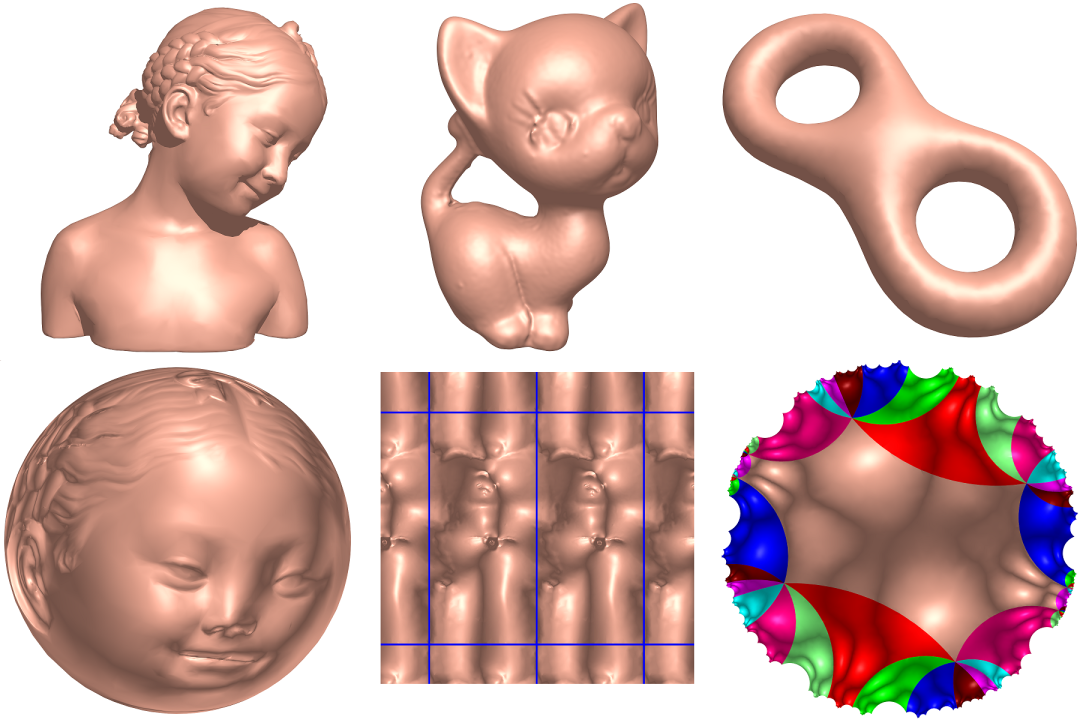
Fig1. Surface singularization theorem.
In the past half century or so, the most eye-catching conjecture in mathematics is the Poincaré conjecture (that is, a simply connected finite closed three-dimensional manifold is a sphere), and mathematicians have proposed various programs to try to solve it. Early methods focused on algebra and reduced the topology of three-dimensional manifolds to topological surgery based on kink theory. Although they made great progress, they only converted the complexity of three-manifold topology into the complexity of kink, and could not completely overcome the problem itself. Mr. Qiu was not optimistic about this direction at the time. He believed that this approach was not "natural". Mr. Qiu's Berkeley classmate Professor Thurston proposed a method of using geometry to study topology, which involves topological decomposition of three-manifolds to obtain basic component units. Each component unit can be equipped with standard geometry, and then the initial manifold is studied through the decomposition of the manifold to the final geometry of each unit. This idea may be inspired by the surface univaluation theorem. In the 1910s, Koebe and Poincaré proved that any surface with a closed Riemannian metric, depending on its topology, can be equipped with one of three standard Riemannian metrics (constant curvature metrics), that is, spherical geometry, Euclidean geometry, and hyperbolic geometry (and the standard metric is conformally equivalent to the initial metric). Thurston's geometrization program is to generalize it. The basic combination unit of a three-dimensional manifold can be equipped with one of the eight standard geometries (there is no conformal equivalence relationship between the standard metric and the initial metric). The geometrization program includes the Poincaré conjecture, but how to find the standard Riemannian metric of the three-manifold has become the core difficulty. Mr. Qiu has long proposed that geometric analysis should be used to overcome this problem through the theory of partial differential equations on Riemannian manifolds. For example, Mr. Qiu used the minimal surface theory to study the essential surface inside the three-manifold to detect its topological information. Hamilton's genius came up with the idea of Ricci curvature flow, which made Mr. Qiu's idea come true.
|
|
|
Fig 2. Hyperbolic three-manifold, Thurston’s apple.
In the theory of thermodynamics, the phenomenon of thermal diffusion is described by the heat flow equation. There is a temperature field on the object. The gradient field of the temperature function gives the heat flow field. The divergence of the heat flow at each point (that is, the divergence of the temperature gradient, the Laplacian of the temperature) gives the rate of change of heat, which is proportional to the rate of change of temperature. Temperature evolves with time, and when time goes to infinity, the temperature tends to a constant value. It is said that Hamilton loved surfing. Once when he was surfing near the coast of San Diego, he saw the waves hitting the rocks and the waves splashing, and he suddenly realized the Ricci flow: We let the Riemannian metric be analogous to temperature, and the second-order derivative of temperature is the Hessian matrix, whose trace (trac e) is Laplace, the second derivative of the metric tensor is the section curvature tensor, and the trace of the section curvature tensor is the Ricci curvature tensor. We make the change rate of the metric tensor with time equal to the Ricci curvature tensor. The evolution of the curvature follows the nonlinear heat equation and eventually tends to a constant value. Hamilton told Mr. Qiu about the idea of Ricci flow. Mr. Qiu immediately recognized the great potential of this idea and unswervingly advocated using this method to prove the Poincaré conjecture. Mr. Qiu ordered the author's seniors to devote all their efforts to the study of Ricci flow, and sent his student Ben Chow to Hamilton for training. He also asked his students at the time, the author's seniors Cao Huaidong, Bando, etc. to attend Hamilton's courses.
In 2002, Mr. Qiu visited California, and the author followed Mr. Qiu to Los Angeles. Mr. Qiu gave a series of lectures at UCLA, Irvine, and California Institute of Technology, including the discrete Hodge decomposition theory and algorithm that he guided the author to complete. The discrete Hodge decomposition theory essentially extends the classical finite element theory from the function space to the differential form space of the manifold, discretizing the external differential theory. Mr. Qiu collaborated with UCLA Dean Chen Fanchang and Paul Thompson to apply this method to the study of brain neuropathology. The author and Mr. Qiu's postdoctoral fellow Wang Yalin jointly designed algorithms, wrote programs, and conducted experiments. Senior brother Liu Kefeng was a mathematics professor at UCLA at the time. He celebrated Mr. Qiu’s birthday at home, and Ben Chow came from San Diego to celebrate his birthday. At that time, Hamilton and Ben proved the convergence of surface Ricci flow, thereby giving a new proof method for the Koebe-Poincare singularization theorem. Ben Chow brought me a recently completed paper. He collaborated with Professor Luo Feng from Rutgers University, trying to integrate the surface Ricci flow with the classic Thurston disk filling theory, and extend the Ricci flow to the discrete surface case. From then on, the author began to study discrete Ricci flow theory and algorithms.
The Ricci flow on a three-dimensional manifold will have singular points, that is, within a finite time, the curvature at some points on the manifold tends to infinity, and the Ricci flow is interrupted. This is called curvature explosion. A natural idea is to cut the manifold at singular points and apply Ricci flow to each branch. This requires proving that the total number of singular points in the entire process is limited. In the cooperation between Hamilton and Mr. Qiu, they encountered some kind of cigar-shaped singular point problem, which they could not overcome for a long time. Around 2002, Perelman, a Russian mathematician who had studied with Hamilton, made a breakthrough. Based on the idea of Ricci flow he learned from Hamilton, he creatively applied a similar Lee-Yau estimation to rule out the existence of cigar-shaped singular points, thus successfully solving the curvature explosion problem. At the same time, he discovered that the Ricci flow is a gradient flow of some kind of entropic energy, which can be understood from the perspective of variational method, thus proving the Poincaré conjecture. Furthermore, the development of Ricci flow theory completely solved Thurston's geometrization conjecture.
In 2004, the author came to New York to teach, and still maintained frequent academic exchanges with Mr. Qiu. At the same time, he worked closely with Professor Luo Feng to conduct in-depth research on the theory of Ricci flow on discrete surfaces. From a theoretical perspective, we hope to extend the classic smooth surface unification theorem to the discrete case; from an algorithmic perspective, we hope to invent some practical algorithms to design Riemannian metrics through curvature. The core concepts of differential geometry are Riemannian metric and curvature. Similarly, in fields such as engineering and medical imaging, as long as topology and geometry are involved, the core problem often boils down to how to obtain the Riemannian metric that satisfies specific conditions. Before the emergence of Ricci flow theory, the most effective calculation method was the finite element method (finite volume, boundary element method, etc.). These methods were widely used in multi-physics simulations and became the basis of modern industrial software. However, the finite element method solves numerical partial differential equations under a fixed geometric background, and what we hope to obtain is the geometric background (Riemannian metric) itself. The corresponding geometric partial differential equation is highly nonlinear, and traditional methods are ineffective. The emerging Ricci flow has become the preferred solution for calculating Riemannian metrics. At that time, mathematicians and computer scientists in many countries were competing with all their strength to develop new computing models based on Ricci flow theory, which could be measured by curvature.
|
|
|
Fig 3. Conformal brain mapping technology.
We have invented algorithms that are used in a wide range of engineering and medical fields. For example, the conformal brain mapping method in brain neuroscience conformally maps the cerebral cortex surface onto the unit sphere, thereby registering the cerebral cortex scanned at different times, quantitatively estimating the atrophy rate, and early diagnosing Alzheimer's disease; in the field of cancer diagnosis, the virtual colonoscopy method conformally maps the patient's rectal curved surface onto a plane, thereby opening the rectal folds, calibrating polyps, and registering the rectal curved surfaces scanned at different times to monitor the growth of polyps and prevent rectal cancer. In the film and game industries, texture mapping technology was adopted by Blizzard, and geometric image technology was adopted by Unreal Engine 5. Nanite virtual geometry technology was developed to achieve high-speed large scene rendering. The core of these technologies requires finding a specific Riemannian metric, and the discrete Ricci flow algorithm is the most powerful computing tool.
In medical applications, we often need to register two human organ surfaces, that is, to find a diffeomorphism to minimize geometric distortion. This is called a Teichmuller Map in differential geometry. In Hamilton's doctoral thesis, he gave a theory based on the calculus of variations, which allowed the Tessimiller map to be obtained. Under the guidance of Mr. Qiu, the author and Professor Lei Leming, Mr. Qiu’s postdoctoral fellow, transformed Hamilton’s method into a practical algorithm, which is widely used in the field of medical images.
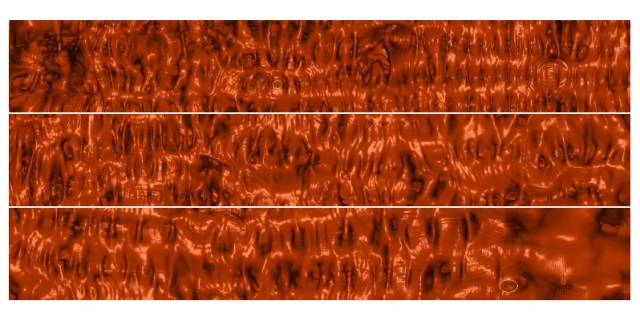
Fig 4. Virtual colonoscopy technology.
Theoretically, scholars around the world have developed many methods of discrete Ricci flow, but until 2014, there was no method that could guarantee the existence of the solution, and all algorithms would collapse during the flow process. During the summer visit to Qiu Mathematics Center of Tsinghua University in 2013, our team achieved a breakthrough. Just as continuous Ricci flow requires topological surgery at the right moment, discrete Ricci flow must also perform topological surgery at critical moments. We completed the theoretical proof and submitted the paper in 2014. However, our competitors delayed reviewing our paper for 4 years, and it was not until 2018 that the paper was accepted by the Journal of Differential Geometry. The discrete surface Ricci flow we established can guarantee the existence, uniqueness and convergence of the solution. The discrete surface Ricci flow is a gradient flow of discrete entropy energy, and the discrete entropy energy is a globally strictly convex energy that can be efficiently optimized using Newton's method. In recent years, the discrete surface Ricci flow theory has been closely related to the Alexander rigidity theorem of hyperbolic three-dimensional manifolds, and the discrete entropy energy is equivalent to a specific Hilbert-Einstein functional.
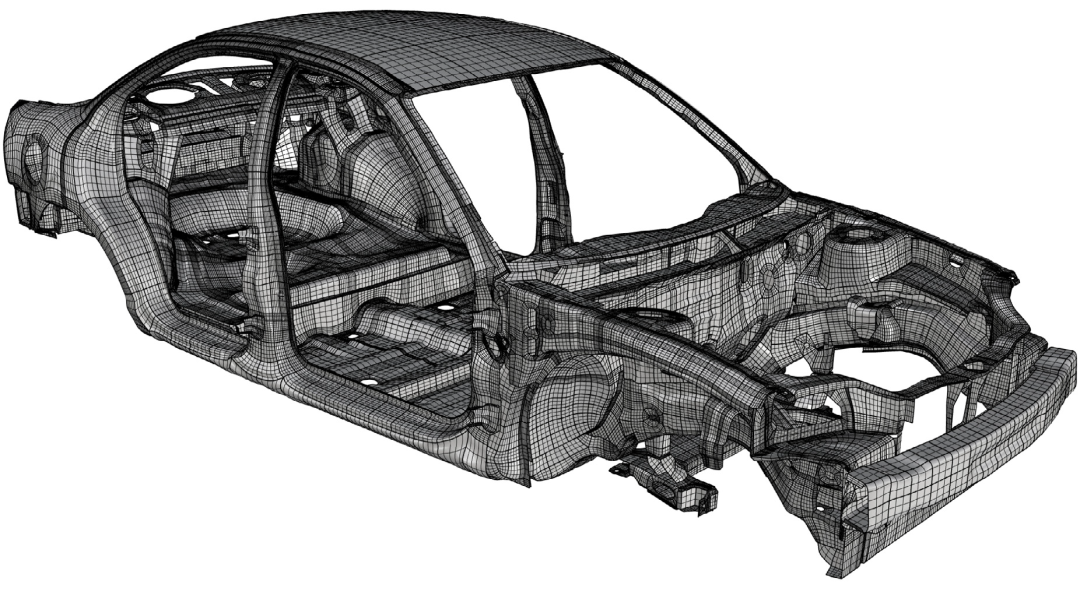
Fig. 5 Structured grid generation.
In recent years, the landscape of the industrial software field has undergone earth-shaking changes. Cadence acquired BetaCAE, Synopsis acquired Ansys, and the CAE industry is experiencing a great technological revolution. In the process of multi-physics simulation, the real technical bottleneck lies in geometry, especially mesh generation, which has become the core difficulty. Traditional unstructured surface mesh generation cannot guarantee mesh quality, while the Ricci flow method maps the surface conformally to a plane, and the mesh generation of the plane has quality assurance, so that it can be pulled back to the surface to obtain a high-quality surface mesh. Structured mesh generation has always relied on manual adjustment of singular point settings. By combining algebraic geometry methods with Ricci flow methods, we can obtain automatically generated high-quality structured meshes. These breakthroughs in industrial technology and medical technology essentially rely on Hamilton's genius invention: Ricci flow!
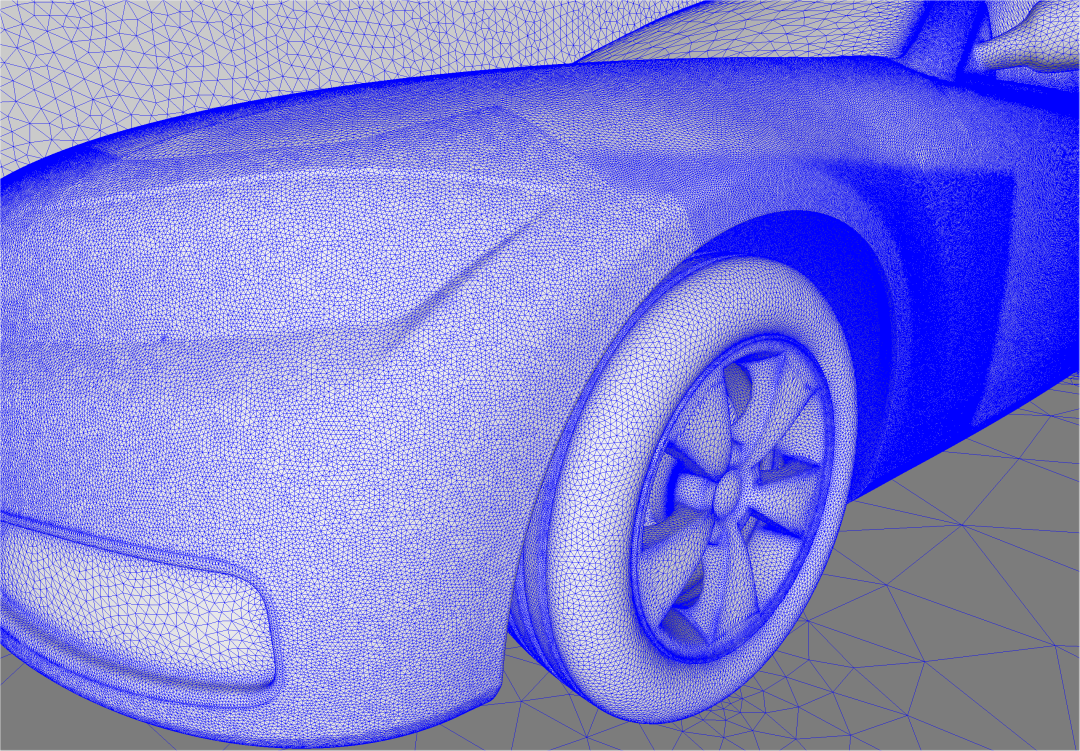
Fig. 6 Unstructured grid generation.
Today, when we open any textbook on three-dimensional manifolds, the core is Thurston's geometrization theorem. Most books will clearly state that this theorem was first obtained by Perelman's application of Ricci flow, but the credit of Hamilton is unclear. That's not fair to Hamilton. The Nobel Prize attaches great importance to the source of ideas and often awards awards to the proposers of new ideas and new methods, rather than just rewarding those who carry forward new ideas. Perelman won the Millennium Prize for solving the Poincaré Conjecture. However, Perelman believed that Hamilton's contribution was equal to his own and declined the honor. Hamilton did not care about fame and fortune. He always upheld his love for mathematical truth and insisted on using his own methods to understand and prove Thurston's geometric program until he fell into a coma and was hospitalized. Hamilton also highly praised the contribution of Chinese mathematicians to proving the Poincaré conjecture: "A great conjecture cannot be completed by one person. Chinese mathematicians can hold their heads high and don't have to be humble."
The last time the author saw Hamilton was in Yanqi Lake, Beijing, in 2023, at the World Basic Science Conference hosted by Mr. Qiu. Although Hamilton was faltering, his eyes were still shining and full of passion. At the Basic Science Conference in July this year, Hamilton received the Basic Science Lifetime Achievement Award, which brought a perfect end to his academic career.
In the past few days, the author has further improved the algorithm of discrete Ricci flow, often working all night long to write modulation programs, hoping to reach industrial level and be popularized in the industrial field as soon as possible. As the only method currently capable of calculating the Riemannian metric through curvature, Ricci flow is bound to bring a substantial revolution to the industry. I hope this day will come soon to comfort Hamilton’s soul in heaven.
Although Hamilton is no longer with us, his thoughts will live on in the world forever!
Machine-translated from the Chinese original 怀念理查德·哈密尔顿教授 (published 2024-10-08). WeChat original ↗