Recently, through the introduction of Mr. Gu Xin, global vice president and general manager of the multiphysics simulation division of Cadence, and Mr. Lu Chuanlin, director of multiphysics system analysis and R&D, the author was fortunate to visit a number of leaders in the CAE field: Pointwise in Fort Worth, Texas, USA, BETA CAE in Thessaloniki, Greece, and NUMECA in Brussels, Belgium. Poitnwise focuses on the aviation field and conducts simulations for aircraft designed by Boeing, Lockheed Martin, Northrop Grumman and other companies; BETA CAE is deeply involved in the automotive industry and serves companies such as Mercedes-Benz, BMW, and BYD; NUMECA has a long-standing reputation in the turbine industry. Through on-site inspections and face-to-face communication, the author has an in-depth understanding of the frontiers and development directions of geometric processing in the field of CAE, and is deeply impressed by the potential value of modern differential geometry in the field of CAE.
Pointwise in Texas
Texas is famous for its cowboy culture. Texas cultural symbols include the Lone Star, the Longhorn Cow, Tenjano music, etc. UT Austin uses the Longhorn bull as its school emblem, which is very domineering. When I first visited UT Austin, I mistakenly thought that longhorns were similar to unicorns and were some kind of myth. It wasn’t until I visited the Cowboy Town (Stock Yard) in Fort Worth and witnessed the Texas Longhorn Parade that I was shocked and believed it to be true. It is said that the longhorn cattle were introduced to the Americas by Spanish colonists and gradually became a wild breed during years of war. They mixed with local bison and evolved into a unique breed in more than 500 years in order to withstand the heat and wild beasts. An adult bull's horns can reach more than three-quarters of its body length and have lost their function as fighting weapons, retaining only their aesthetic value in reproductive competition. This reflects from the side the survival pressure and alienation that this quality has experienced in the process of evolution, and reminds the author of the involution of the academic world. Texas barbecue is also world-famous. The unique grilling technology keeps the beef delicious and juicy, and the price is low. I think its inherent quality is on par with New York steak.

Figure 1. Texas Longhorn cattle. (Internet)
It is said that Fort Worth is one of the aviation manufacturing centers in the United States and is also the headquarters of Pointwise. The 2025 International Grid Conference will be held here. The author once again met many old friends in the field of grid generation in academia, such as Dr. Sihang, the author of Tetgen, Professor Reina, Professor Jessica Zhang, Professor Wang Wenping, Professor Guo Xiaohu, etc., especially Professor Jorg Peter from the University of Florida. Professor Peter is a direct disciple of de Boor, the founder of the CAD field, and a leading figure in the field of computer-aided geometric design. The author admires Jorg very much because he never chases trends and has been solving the core problem in the CAD field for decades: constructing splines on topologically complex surfaces. He has not many articles, and his published indicators are unremarkable, but he has won many field awards. The spline surface singular point algorithm he created has long been widely used and has become a standard. The author has always believed that Jorg is a true scholar who can abandon vanity and focus on solving the most difficult core problems. Every time we meet, he tells me that his ideal is to use quadratic polynomial surfaces to construct curvature smooth splines on complex surfaces. Many years ago, the author had an in-depth discussion with him on this issue. The author believes that the traditional spline theory (the so-called blooming blossom theory) is based on affine geometric invariants. If the spline theory can be directly generalized on the surface, then the surface needs to have a so-called affine structure: Assume it is a topological surface with an open cover, and establish a local coordinate card for each open set. If, then there is a local coordinate transformation
However, a closed surface like the Chen class theory does not have an overall affine structure, which has become a fundamental difficulty in the entire CAD and CAE fields. Many years ago, Jorg was not convinced by the author's point of view. He believed that the field of CAD did not require overly abstract modern mathematical theories, only some basic polynomial algebra and local differential geometry. However, after years of trying, Jorg agreed with the author's views on global splines and affine structures, and gave an elementary proof. However, Jorg felt that his proof was not rigorous and hoped to use the author's proof. However, he consulted many classic definitions and asked ChatGPT, but he could not fully understand the intuitive meaning of liaison and the proof given by the author using liaison. When we generalize the directional derivatives of vector fields to manifolds, we need to introduce the concept of parallel movement to define covariant differentiation. The representation in local coordinates requires the use of Christoffel symbols: given the tangent vector field, , the covariant differentiation is
From this, the local coordinate transformation of the Christoffel symbol is:
Here the second derivative of the local coordinates appears on the right side. If the surface has an affine structure, then the second term on the right disappears and we can define a special connection as a whole. The Riemann curvature tensor is expressed as
equivalent
Here is the Riemannian metric tensor, Gauss curvature, which is derived from zero and is derived from the Gauss-Bonnet theorem
We get that the Euler characteristic of the surface is zero, and if the surface is closed, the genus is one. The key to the proof here is to use affine atlases to construct flat connections and obtain surface topology. The method of abstractly defining contacts is far from practical engineering experience.
The current surface spline construction is to generalize the curve spline through the tensor product method. For example, the Bezier surface is defined as
This requires constructing a quadrilateral mesh of the entire surface. The theoretical basis for the overall quadrilateral meshing of a surface has not been established. Until recently, the author's team pointed out that the quadrilateral meshing of a surface is equivalent to the overall meromorphic intercept of a specific holopure line bundle on the Riemann surface. Its singular points are the representative class of the holopure line bundle and satisfy the complex equations in algebraic geometry. That is, the surface quadrilateral mesh is equivalent to a certain overall meromorphic intercept of the holomorphic line bundle. Then, for the meromorphic intercept of the holomorphic cotangent bundle on the Riemann surface, the following equation holds:
Here is the Abelian-Jacobian map from the Riemann surface to the Jacobian variety. Jorg has studied smooth structures near singular points of spline surfaces all his life. This time he and the author discussed in depth the intuitive geometric significance of Abelian theory. Similar to abstract connections, the representative class of pure line bundles is also far away from intuition. Although it plays a decisive role in CAD applications all the time, through the accumulation of daily experience of engineers and designers, they may be able to establish some unique know-how, but they cannot reach strict theoretical heights. During an in-depth exchange with the founder of Pointwise, the core technology they showed could only generate a quadrilateral-dominated hybrid mesh, always leaving a few triangles inside the surface and unable to achieve an overall quadrilateral mesh. Therefore, the design of their solvers must deal with the special case of hybrid grids, which increases the burden of algorithm design and reduces efficiency. And this is precisely because they only have local continuation algorithms and do not master the overall representational class theory.
Pointwise engineers told the author that the aircraft design and production cycle lasts about ten years, requiring a large amount of simulation to replace physical experiments such as wind tunnels. In computational fluid dynamics, although there are various algorithms based on unstructured grids, structured grids will increase efficiency and reduce errors. They currently only have unstructured mesh and hybrid mesh generation technology, and cannot achieve global structured generation of surfaces and solids. They are very eager to automatically generate structured grids.
BETA CAE in Greece
Thessaloniki is a port city on the Aegean Sea. It is the second largest economic and cultural center in Greece and a major transportation hub in Southeast Europe. It is known for its large collection of Byzantine architectural masterpieces as well as some important Ottoman and Jewish buildings. Thessaloniki was once an important city in the ancient Kingdom of Macedon. Its name comes from Thessalonike, the half-sister of Alexander the Great, and it was founded in 315 BC. After the decline of the Kingdom of Macedonia, Thessaloniki became the seat of the newly established province of Macedonia of the Roman Republic in 148 BC, and became a free city of the Roman Republic in 41 BC. By 395, the Roman Empire was divided into eastern and western parts (the capitals were Constantinople and Rome respectively). Thessaloniki was under the control of the Eastern Roman Empire. Its importance was second only to the capital Constantinople and it was one of the two most important commercial centers of Byzantium. The Ottomans captured Thessaloniki in 1387 but lost the city after the Battle of Ankara with the Timurid Empire in 1402. However, the Byzantine Empire was unable to resist the Ottoman Empire and was forced to sell Thessaloniki to the Republic of Venice. On March 29, 1430, the Ottoman Empire captured Thessaloniki again and maintained its rule until 1912. On November 9, 1912, during the First Balkan War, the Ottoman garrison of Thessaloniki surrendered to Greek forces. The next day, Bulgarian troops arrived and claimed the city as belonging to Bulgaria, thus entering a period of condominium administration. On March 18, 1913, King George I of Greece was assassinated in Thessaloniki. The Ottoman Empire was defeated, and the Second Balkan War broke out immediately due to territorial disputes between the former allies. The Treaty of Bucharest signed on August 10, 1913 finally determined the ownership of Thessaloniki. Dimitris of BETA CAE (almost most Greek men are called Dimitris) told the author that Thessaloniki has gone through many vicissitudes of life and has too much history. Thessaloniki is to Greece what Taiwan is to China.
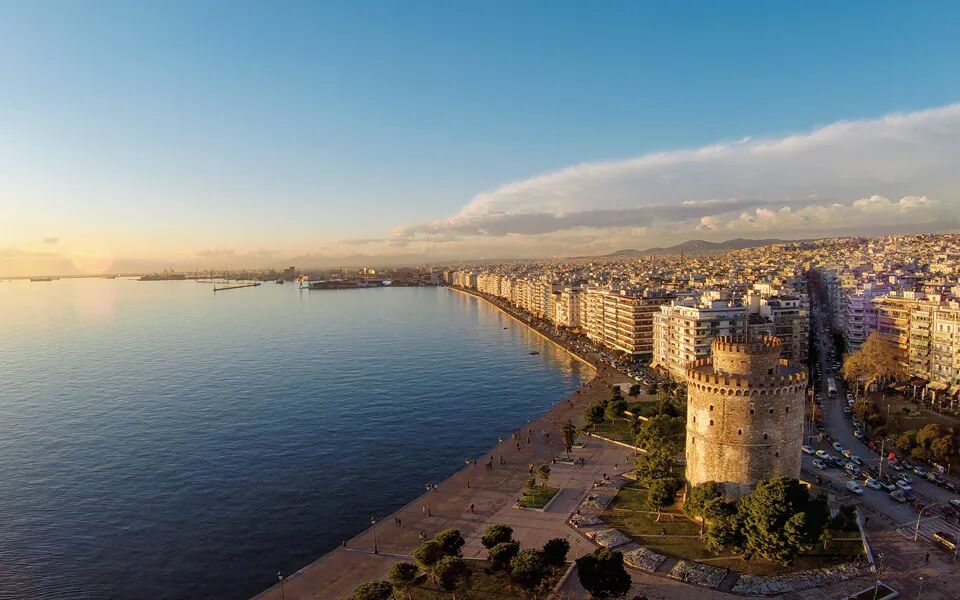
Figure 2. Thessaloniki’s waterfront (Internet).
The author was walking in the seaside square of Thessaloniki. The sky was lightly raining. The surrounding buildings had Greek-style columns and Islamic-style decorations on the side walls. Street performers played various instruments, including accordions, trombones, and guitars, and sang sentimental songs. Several clowns performed various tricks around the children. A white fortress stands on the seaside, and the ancient city wall winds up on the North Mountain in the distance. After the Thracians invaded the outskirts of the city in 55 BC, Thessaloniki built a city wall with a fortress at the end of the city wall extending into the Aegean Sea. There are several bronze statues in the square, depicting a woman carrying weapons and food to support the guerrillas against the Turkish invasion. There are various restaurants around, mainly serving Greek-style seafood and Turkish-style barbecue. We chose a local restaurant with "ten tables" and tasted famous local dishes. Greece is famous for its food culture, and its seafood is the best in the world. The seafood ingredients here are very fresh and lightly seasoned, mainly using home-produced olive oil, in order to highlight the umami flavor of the ingredients themselves. In Thessaloniki, the author tasted various fish and shellfish in the Aegean Sea, squid flowers, oysters, sea urchins, and special seaweed with unique flavors. The seafood here has not been frozen, perfectly retaining its natural taste. For example, the squid I have eaten over the years has been cooked in Teppanyaki or Sichuan spicy hot pot with heavy oil and salt, and it has only texture and no taste. The squid in Thessaloniki reminded me of childhood memories and allowed me to experience the long-lost natural flavor. Greek wines also have a mellow taste and a long aftertaste. There is a grape grown under strong sunlight that produces very sweet red wine.
Thessaloniki is full of historical sites from the Eastern Roman, Byzantine, Ottoman and other periods. Near the seaside square, there are ancient buildings from Eastern Rome of the previous year. They stand tall and tall in a typical Roman style. They are built alternately with red bricks and stones. The roof is a typical dome-shaped arch structure, and the stone corners are mixed with bronze plates. We often encounter various monuments on the roadside, such as the majestic Arc de Triomphe and the white marble reliefs that have become blurred after thousands of years of weathering; the huge red-brick Orthodox church was converted into a mosque during the Ottoman period, with a white minaret built next to it. They are all now abandoned and submerged in the torrent of history. The Hagia Sophia Church in the city center has a history of more than 1,200 years. It has survived many wars and earthquakes and has remained intact. The icons inside the church are very old. They all have Greek faces. The painting techniques are very old, and they are all pre-Renaissance art styles. There is a golden coffin on display in the church, and many Greek girls kiss the icon and the golden coffin devoutly. Thessaloniki was also an early center of Christianity. On his second missionary journey, the apostle Paul preached in the city’s largest synagogue. Paul wrote two letters to the Christian community in Thessaloniki, known as 1 Thessalonians and 2 Thessalonians (Epistle to the Thessalonians) in the New Testament. In 380 AD, Roman Emperor Theodosius I issued the Edict of Salonika here, establishing Christianity as the state religion of the Roman Empire and abolishing non-Christian customs such as the ancient Olympic Games.
In the dusk of night, the author came to the National Aristotle University. Surrounded by mountains and sea, this place is the origin of Aristotle’s spark of spreading ideological civilization. However, Greece, which has experienced an economic crisis, is still depressed. The exterior buildings and internal equipment of Aristotle University look relatively old and dilapidated, with graffiti everywhere, which is shocking. But thirty years ago, two mechanical professors in this university led several of their students to start a business. After going through many hardships, they established a monument in the field of CAE, the Greek national treasure company BETA CAE. Today, BETA CAE is located on the outskirts of Thessaloniki, surrounded by olive trees and mountains, overlooking the Aegean Sea and Mount Olympus across the sea. The company currently has nearly five hundred people and recruits a large number of graduates from Aristotle University every year. Aircraft engines and various racing car skeletons are displayed in the company's hall. The author had in-depth technical exchanges with the founders and engineers of BETA CAE. BETA CAE's geometric pre-processing technology is very powerful. Almost all well-known automobile companies in the world use their pre-processing tool ANSA, with annual revenue exceeding US$100 million. Geometry preprocessing mainly includes "dirty geometry" processing and mesh generation.
Since general surfaces do not have affine structures, classic NURBS cannot be directly defined on complex topological surfaces. CAD designers can only design in pieces and then put them together. Professor Jorg Peters once explained to the author that under normal circumstances, designers use so-called clipping splines to design surfaces, which requires calculating the intersection line of two spline surfaces. Jorg believes that this kind of geometric operation will bring essential errors. First, the surface intersection has an algebraic order of hundreds, but cubic approximation is often used in engineering, which brings errors. At the same time, the parameter representation of the intersection line on the two spline surfaces is also approximated by cubic curves. Therefore, all three curves have errors. Furthermore, designers mistakenly believe that the geometric algorithms in design software automatically give accurate representations, so they do not pay too much attention to reducing errors during the design process. Industrial products such as automobiles and airplanes designed in this way look very complete and smooth; however, after magnification and inspection, different NURBS surface patches are intertwined, full of gaps and overlaps, which is called dirty geometry. In industrial simulation, the input model needs to meet water tightness conditions, tangent planes or curvature continuity conditions. How to repair dirty geometry has become an important issue in the CAE industry. After decades of accumulation, BETA CAE has developed powerful software tools to allow engineers to perform manual repairs. ANSA also has powerful mesh generation capabilities, and its surface triangular mesh and solid tetrahedral mesh generation quality are industry standards. The author introduced them to our Ricci flow method, which is currently the only algorithm that can design the Riemannian metric based on curvature.
Ricci flow can conformally map a three-dimensional surface to a planar area, thereby converting a three-dimensional geometric problem into a two-dimensional planar problem. For example, through the Delaunay triangulation algorithm of the plane, we can generate a triangular mesh of the surface. The BETA CAE research team has been tracking the academic research work of my team. They purchased my Ricci flow monograph 8 years ago and have been copying and studying the corresponding algorithms. However, for structured meshes, their technology can only generate hybrid meshes and cannot generate full quadrilateral surface meshes. Their team has been studying the quadrilateral grid theory and algorithm proposed by the author's team, and asked many questions about the fully pure line constellation class.
The author also introduced them to the theory and method of structured grid generation based on the Riemann-Rohe theorem. The meromorphic function on the complex plane can be directly extended to the Riemannian surface, and its zero-pole points and their order can be defined by its Laurent expansion. Meromorphic differentials can also be defined similarly. The so-called divisor is a linear combination of integer coefficients of a limited number of points on the Riemann surface, which is used to express the zero and pole points of meromorphic functions. Given a divisor, all meromorphic functions whose zero and pole points fall in constitute a linear space, denoted as , and all meromorphic differentials whose zero and pole points fall in form another linear space, denoted as , Riemann-Roch theorem asserts
Here is the genus of the surface. This theorem can determine the dimension of special meromorphic differential spaces. For example, a quadrilateral grid in which all singular points satisfy certain conditions constitutes the dimensionality of the space. This theory allows us to select the optimal quad mesh based on the application.
The author saw Professor Tom Hughes's three-volume masterpiece "Computational Mechanics" in the office of a founder of BETA CAE. The founder also admired the isogeometric analysis method founded by Professor Hughes. Hughes himself has publicly stated many times that the theory and engineering algorithms of the isogeometric analysis method are relatively complete, and the real bottleneck lies in the generation of structured hexahedral meshes. Many technical directors of BETA CAE are convinced that the hexahedral mesh algorithm is crucial. There has been controversy in the academic community: many schools of thought believe that structured hexahedral grids are not necessary, and unstructured tetrahedral grids are practical enough. At the same time, academia publishes many papers every year on hexahedral mesh generation, but none of them meet the practical requirements of the industry. They are all very interested in the hexahedral mesh generation algorithm developed by the author's team based on the surface leaf structure theory, and believe that this direction has potential. At the same time, they also began to explore the direction of topology optimization and apply this technology to automobile weight reduction. They are mainly based on the traditional SIMP method and achieve the design purpose by optimizing the material distribution density. However, the results obtained in this way do not have clear boundary surfaces and need to be denoised. In particular, they require grid-to-spline surface conversion technology, which requires the generation of an overall structured quadrilateral mesh for the surface. Their current technology cannot achieve this.
BETA CAE has many long-term stable customers. They told the author that the automobile design and production cycle is about 4 years, and each new model is based on local adjustments and optimizations of old models. In order to ensure safety, each iteration is relatively conservative, and each improvement requires a large amount of simulation. New models need to pass very demanding standards for verification. Physical experiments are very expensive and require the destruction of several real cars, so numerical simulation is essential. To this end, every car company has trained a large number of simulation engineers. The design of various parameters and working conditions of simulation software are very complex and require years of accumulation. Therefore, car companies will not easily improve simulation software unless they have to. Each car company's ANSA usage fees amount to hundreds of thousands of dollars, so BETA's revenue is very stable.
The founders of BETA CAE are all from the Mechanical Department of Aristotle University, and they have a teacher-student relationship. Many years of entrepreneurial career have united them to overcome difficulties together and forged a deep friendship. Often this Dimitris is the best man of another Dimitris, and the other Dimitris is the godfather of the Dimitris' daughter. Now they have achieved great business success. Each founder is worth over 100 million. He has established a Greek national treasure company and has become a legend.
NUMECA in Brussels

Figure 3. Flowering season in Brussels.
Brussels, the capital of Belgium, is an international city. Almost all residents here speak three languages: French, Dutch and English, and the culture is also very diverse. The urban architecture of Brussels combines the styles of different eras and countries. It is a dazzling array of buildings and is very distinctive. There are ancient trams in the city, and ancient buildings of various styles on both sides, very much like Boston's Lighthouse Street. The weather in Brussels is relatively cold, often hazy, rainy and foggy. The various vegetation in the royal hunting grounds are lush and green, and ancient trees tower into the clouds. At this time, the flowers are blooming in spring, and the cherry blossoms and magnolias on the roadside are in full bloom, and the whole city is immersed in a sea of flowers. The food here is also very international. The restaurants include French foie gras, German beef kidney (called kidney flower in Chinese), Japanese fish sashimi, French raw beef tartare, and Belgian lark. Brussels is famous for its beer culture. It is said that there is a bar with thousands of brands of beer, and each beer is equipped with its own glass. The best-tasting beer is the beer brewed in the monastery, which is more than twice as pure as other brands. The monks only hand-brew a small amount of beer, which is just enough to sustain their lives. Its quality is unmatched by other industrially produced beers. There is also a type of beer here that was originally only shipped to India in colonial times. In order to resist high temperatures and extend the shelf life, the amount of hops used in the beer is twice that of normal beer. The author tried Belgium's very famous Dwarf beer, which indeed tasted mellow. There is a seafood restaurant in Brussels, and its signature seafood stew is very famous. The huge ice tray is filled with various shellfish, shrimp, oysters, scallops, mussels, conches, clams and lobsters from different sea areas. Among them, the North Sea gray shrimp is a local specialty, and the sea red shrimp is plumper than those in the Bohai Sea or New York.
NUMECA was also founded by a professor specializing in turbines and has specialized in simulation in the turbine field for decades. Many airlines use their technology solutions for annual fees of hundreds of thousands of dollars. The author has had in-depth exchanges with NUMECA engineers. They have profound insights and rich experience on many issues. The academic community prefers the Lattice Boltzman Method (LBM) method for computational fluid dynamics (CFD), and the author asked them for their opinions. They believe that although the current LBM method is said to be good at handling flow-night mixing, its computational efficiency is low and it is not mature enough to handle complex situations involving phase changes. They have reservations about topology optimization. The core reason is that the stress on turbine blades is very large. Current metal 3D printing technology cannot produce blades that meet the strength, so the design generated by topology optimization cannot be manufactured. They also have reservations about whether AI technology can defeat human programmers, because in the field of turbine simulation, a lot of physical intuition and mathematical foundations are required. AI can help initially predict calculation results, but it cannot replace accurate simulation. They have written multiple versions of computational fluid dynamics algorithms, initially based on structured hexahedral meshes, and later on unstructured meshes and hybrid meshes. They believe that the most computationally efficient and accurate method is the structured grid, but generating the overall structured grid is still the most difficult problem, and they are forced to resort to hybrid grids. Similarly, their grid generation algorithm is based on spatial octree decomposition. Currently, there are only hybrid grid generation algorithms and cannot obtain an overall structured grid. They believe that converting the initial clipped NURBS-based CAD model with dirty geometry into an overall watertight CAD model has great application value; the algorithm for unfolding curved surfaces is very critical; and the algorithm for generating a full hexahedral mesh has always been a core problem in the turbine simulation industry. The author introduced to them the surface mesh generation based on Ricci flow, the surface quadrilateral mesh generation based on the fully pure line cluster representation class, and the hexahedral mesh generation method based on the surface leaf-like structure. They all expressed strong interest and desire for cooperation.
As the Holy Grail problem in the field of mesh generation, hexahedral mesh generation is inherently difficult. Although there are currently many empirical algorithms, their strict theoretical foundation has not yet been established. Many fundamental questions remain to be answered: For example, what are the equations satisfied by a singular collection of hexahedral meshes? The author believes that some recent theories and methods developed in low-dimensional topology can help to understand this issue more thoroughly. For example, Thurston once proposed the virtual Haken conjecture: the finite multiple cover of the hyperbolic 3-manifold is Haken's, that is, there is an essential two-dimensional surface embedded inside the 3-manifold. The so-called essential surface satisfies the following conditions: If a circle cannot be reduced to a point on the surface, then it cannot be reduced to a point inside the 3-manifold. There are many immersed essential surfaces inside the hyperbolic 3-manifold. The essence of the virtual Haken conjecture is that there is a finite-weight cover of the 3-manifold, which unfolds the curled and self-intersecting essential surfaces into embedded surfaces. Mathematicians have proved the virtual Haken conjecture, and the theories and methods developed by it are of essential help in understanding the curling and intersection of internal surfaces of 3-manifolds.
Summary
I would like to thank Mr. Gu Xin, global vice president and general manager of the multiphysics simulation division of Cadence, and Mr. Lu Chuanlin, director of multiphysics system analysis and R&D, for providing me with such a rare learning opportunity and having an in-depth understanding of the industrial frontier in the field of CAE. Pointwise, BEAT CAE, and NUMECA are all rooted in the theoretical foundation of finite element. They benefit from the dividends of the times with the rapid development of the automotive and aviation fields, and they are also advancing with the times to develop new methods and solve new challenges. This trip enabled the author to further understand the core difficulties in the field of grid generation and see the potential value of modern mathematical theories, especially Ricci flow theory, holopure line cluster theory, and 3-manifold topology theory, to the CAE field. Applying these theories to engineering practice still requires long-term and arduous efforts. On the streets of Brussels, the author saw BYD cars. Pointwise, BETA CAE and NUMECA engineers all agree that China's automobile industry is subverting the world's automobile industry, and China's CAE industry will surely take off. The tide of the times is unstoppable, and the future is promising!
Machine-translated from the Chinese original 现代微分几何在CAE工业中的潜在应用 (published 2025-04-18). WeChat original ↗