Written by | Zhou Shuyi, Pan Ying
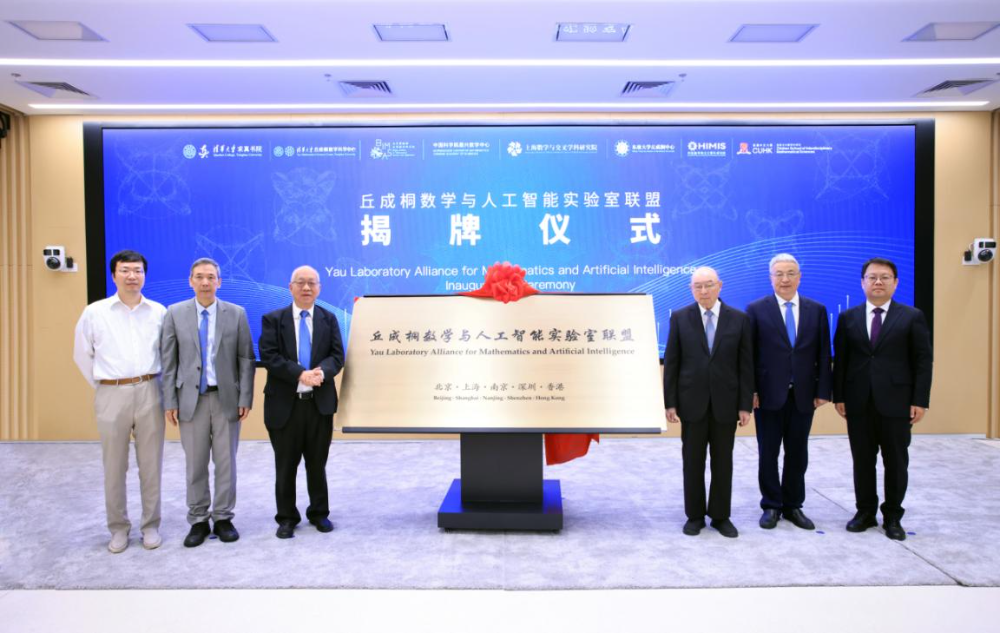
In addition, "Back to Basics" noted that a new journal on AI-Assisted Mathematics, led by Mr. Qiu Chengtong, will be released in early 2027. The journal is called "Journal of AI-Assisted Mathematics" and was founded and edited by Qiu Chengtong. The journal will bring together the world's top scholars, focus on the in-depth integration of artificial intelligence and mathematics, and create a flagship academic brand with international influence in the intersection of AI and mathematics.
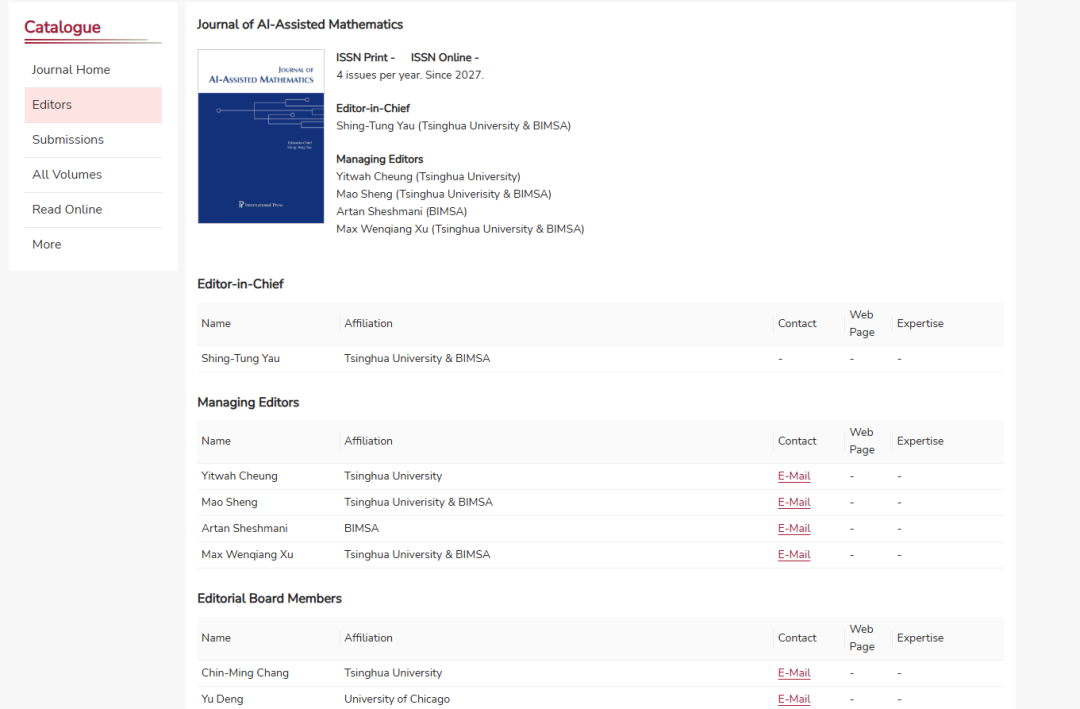
International Press of Boston has listed new issues on its official websiteJournal of AI-Assisted Mathematics
"There are now a large number of people in Europe and the United States participating in large companies such as OpenAI and DeepMind. They are not dozens of people, but thousands of scholars helping." Qiu Chengtong said that when anthropologists use AI, they are receiving help from machines, but machines are also absorbing the essence of human problems and increasing the capabilities of machines. "The most cutting-edge research is not abstract research, because it will change the most basic practices of AI itself." Qiu Chengtong said worriedly: "The resources we need are far from enough, whether it is funds or machines. Now the most advanced AI in the world is not allowed to be used in China. ChatGPT and so on are not allowed to be used in China, which is very detrimental to us."
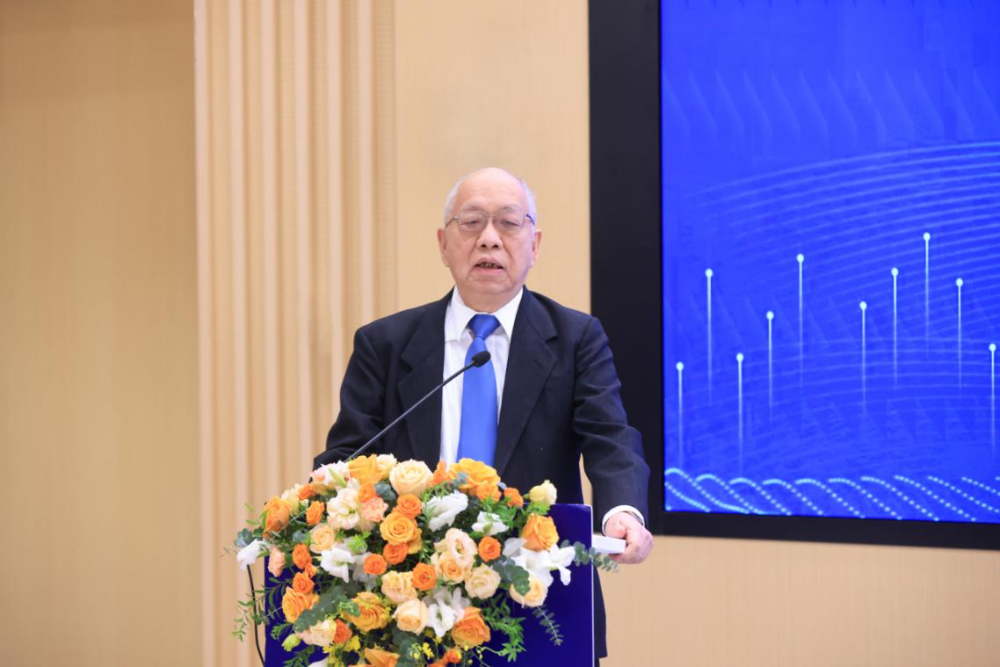
AI is still not truly original, and the direction of mathematics still depends on humans.
Although he is shocked by the progress of AI research capabilities, Yau still believes that machines lack the creativity to open up new directions in mathematics. When "Back to Basics" asked, "If mathematical intuition comes from the refining of a large amount of experience, then is it possible for an AI that has read more mathematical proofs than any human to obtain mathematical intuition that surpasses humans?" Qiu Chengtong replied: "The most cutting-edge creative ability cannot be achieved by just looking at the past." He said that the knowledge accumulated in the past can help, but it is still not enough to produce real originality.
"Find important problems and create the frontier of mathematics. How to do this, AI doesn't understand." In his view, AI can effectively solve given problems, but discovering truly important new problems and judging the direction of mathematical development still require the creativity of mathematicians.
Although international AI giants represented by OpenAI have released research results on many major mathematical issues (although the release mechanism is highly controversial), Qiu Chengtong said that these giants are looking for the most cutting-edge scholars in the world, such as professors from Harvard University, Princeton, and Stanford. The academic focus is still in academia rather than industry.
There are multiple sharp conflicts between business logic and academic culture
During the media exchange session that day, many experts expressed their opinions on the impact of AI on mathematics. Academician Xi Nanhua, President of the Chinese Mathematical Society, talked about the recent controversy surrounding OpenAI’s mathematical results and pointed out that OpenAI, as a corporate and capital force, first hopes to demonstrate its technical strength. There is a conflict between business logic and the long-term academic culture of the mathematics community. Even if mathematicians publish preprints that have not been peer-reviewed, they must be responsible for them; companies are not subject to the same academic ethics. The cost of publishing wrong papers is very low, and there is even a practice of "picking peaches and grabbing turf". Xi Nanhua described the current situation as "the old order has been lost, and the new order has not yet emerged." The mathematics community needs to gradually establish new rules while integrating with AI.
Ho Xu-wah, Vice Chairman of the International Mathematical Union and President of the Hong Kong Mathematical Society, pointed out that the progress of artificial intelligence in mathematical research has brought a lot of impact and confusion. Some mathematical results published by AI lack sufficient checks, and verifying their correctness may leave a lot of extra work for mathematicians; he hopes the alliance will promote discussions on what standards human-machine collaboration results should meet before they can be published. He has a positive attitude towards the participation of artificial intelligence in mathematical research and believes that the improvement of research capabilities can help mathematicians fully release their imagination, carry out more exploration, and dare to ask more difficult questions. Laboratory alliances bring together researchers from different fields and institutions, creating good opportunities for mathematicians to explore together.
Educational training and evaluation mechanisms are also facing changes. Tian Tian, an academician of the Chinese Academy of Sciences, believes that traditional homework, examinations and even the way students are evaluated based on papers are all affected by AI. In the future, more emphasis should be placed on in-depth understanding of knowledge, students' creativity, and the ability to judge the cutting-edge direction of mathematics. Xu Wenqiang, associate professor at Tsinghua Yau Mathematical Science Center, said that Qiuzhen Academy encourages students to get in touch with cutting-edge issues earlier under the guidance of teachers and postdoctoral fellows, and repeatedly reminds them to test whether they truly understand the answers obtained with the help of AI.

Related reading

1. Fields Medal winner Dimini Copan: I don’t use AI for creative work
2. When AI giants begin to enclose territory in mathematics, mathematicians must find the right way forward.
3. Human mathematicians finally stepped into the quagmire of history
4.AI continues to set new prime number distance records, why is the final 2 still out of reach?
5. Exclusive conversation: AI is changing mathematics research, and a Chinese undergraduate is at the forefront

Recent recommendations

1. A mythical version of the chicken and rabbit problem actually contains profound cutting-edge physics
2. In the AI era, what is mathematics that truly belongs to humans?
3. Why do more and more scientific research funds start to draw lots to decide who gets the funds?
4. Exclusive interview with Zhang Shouwu and Yuan Xinyi: How a rejected paper grew into a popular foundational theory
5. Wang Hong, Deng Yu and Peking University Mathematics: What kind of soil is needed for the growth of top talents?
Special tips
1. "Back to Basics" provides a monthly search function. Follow the official account and reply with the four-digit year + month, such as "1903", to get the content directory for March 2019, and so on.
Machine-translated from the Chinese original 丘成桐警示:国际AI巨头在数学上指数级进化,中国学者必须告别“线性追赶” (published 2026-10-19). WeChat original ↗