We compiled a list of mathematics teachers (Appendix) from the archives of Fudan University from 1905 to 1937, including the student directory and the list of previous faculty members. It can be seen that although there are three or four mathematics teachers every year, there is only one mathematics professor, and the rest are mathematics teachers in the middle school or experimental middle school or preparatory school. There are only five mathematics professors who have taught in the past 32 years. Their achievements in their professional fields have been recorded in history, and they have also contributed to Fudan's basic teaching.
Mathematics is the foundation of all subjects, and mathematics is a compulsory course for students of liberal arts and sciences. In the 1905 "Fudan Public School Constitution", it is stipulated that both the first part of Zhengzhai (preparation for political and legal subjects, liberal arts, and business universities) and the second part (preparation for science, engineering, and agricultural universities) will take mathematics as a compulsory course. In the 1913 charter, it was stipulated that language and mathematics were compulsory courses for grades one to four of the middle school department. Mathematics courses for the three years of preparatory school were spherical trigonometry and advanced algebra in the first year, analytic geometry in the second year, and calculus in the third year. In the charter of 1915, there was an undergraduate degree in arts and sciences. It is stipulated that the first-year liberal arts mathematics courses are advanced algebra, the second-year students are analytic geometry, and the third-year students are calculus. The first grade of science is analytic geometry, the second grade is calculus, and the third grade is differential equations and applied mathematics. The school has very high requirements for mathematics courses, but due to financial constraints, it cannot hire many professors. The principal has tried his best to hire high-level famous professors to teach basic public mathematics courses throughout the school. This was the school’s positioning of mathematics at that time.
The first professor who came to Fudan to teach calculus and other courses was Mr. Zhu Baofen, courtesy name Zixiang, from Shanghai. He studied at Shanghai Yucai School in his early years, and later studied in the United States at his own expense. From 1906 to 1910, he studied at Cornell University in the Department of Electrical Engineering and received a bachelor's degree. After returning to China in 1912, Zhu Baofen, together with Liu Jingshan, Yang Yinhang and others, initiated the organization of an association for students studying in the United States. They kept in touch and socialized, and used the Global Chinese Students Association as a gathering place. The then president of Fudan, Li Denghui, was the president of the Global Chinese Students Association, and Zhu Baokang, Zhu Baofen’s brother, served as the director-general. In 1914, Mr. Li Tenghui had just been the principal of Fudan Public School for a year. The school was in a difficult period, especially in recruiting science teachers. Zhu Baofen, who graduated from a prestigious American school, was hired as a professor of mathematics and physics. There may be some factors related to the personal friendship between the Zhu brothers and Principal Li. He taught at Fudan from 1914 to the spring of 1918. In the spring of 1919, Zhu Baofen was hired by the Ministry of Communications and left Shanghai to work as a technician in the Department of Technology.
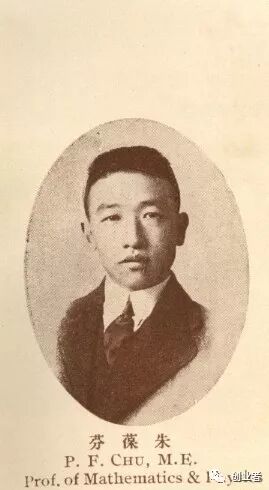
In September 1917, the school board of directors decided to rename Fudan Public School a university, but science still only had two years of preparatory courses. In the summer of 1918, Mr. Zhu Baofen left Fudan. Since August, two professors have been teaching mathematics at Fudan University. They are Zhu Wenxin and Jin Wenzhu.
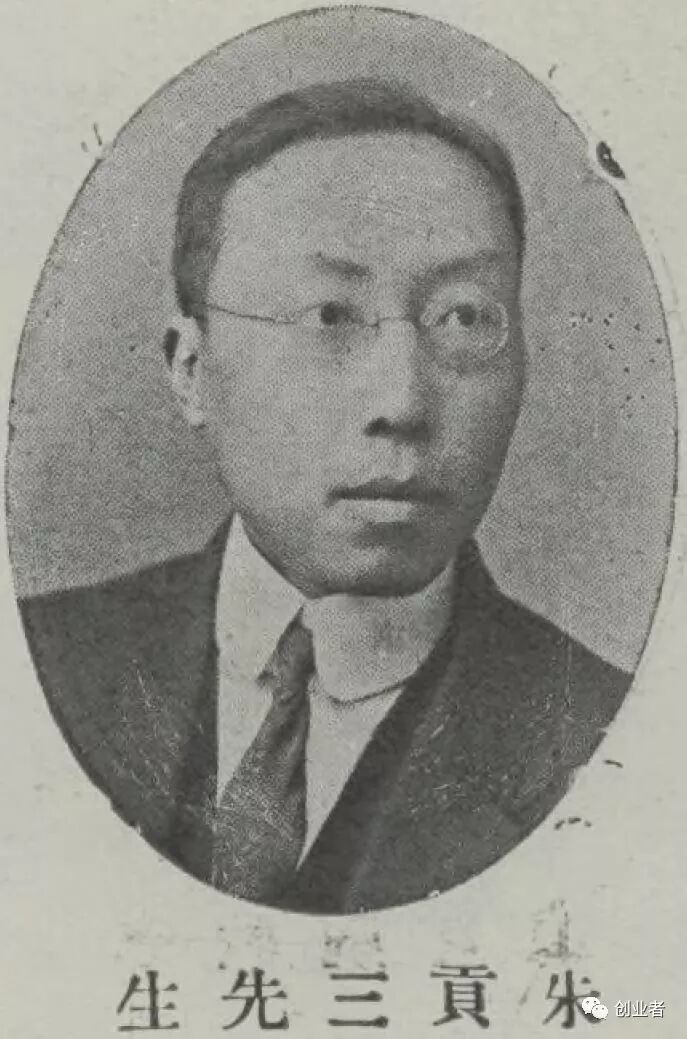
Zhu Wenxin, courtesy name Gongsan, was born in Kunshan, Jiangsu Province. He was a scholar when he was young and studied at Suzhou Chinese and Western School. In 1905, he founded Suzhou Girls' School with Liu Yazi and others. In 1907, he received official scholarship and went to the University of Wisconsin in the United States to study astronomy, mathematics and physics, and received a bachelor's degree. After returning to China, he took charge of the school affairs of Nanyang Road and Mine School. In 1915, Zhu Wenxin joined the Global Chinese Students Association founded by Mr. Li Tenghui and was the strongest supporter of the association. From the autumn of 1918 to the spring of 1920, he served as a professor at Fudan University, teaching calculus and other courses. The mathematical works he edited include: "Differential Equations (English Edition)" (Commercial Press, 1915), "Graphic Algebra" (first edition by Nanyang Road and Mine School, 1915; reprinted by The Commercial Press, 1916), and "Collection of Arithmetic Formulas (English Pocket Edition)" (Zhonghua Book Company, 1919). He is mainly engaged in astronomy research and is a famous modern astronomer in my country.
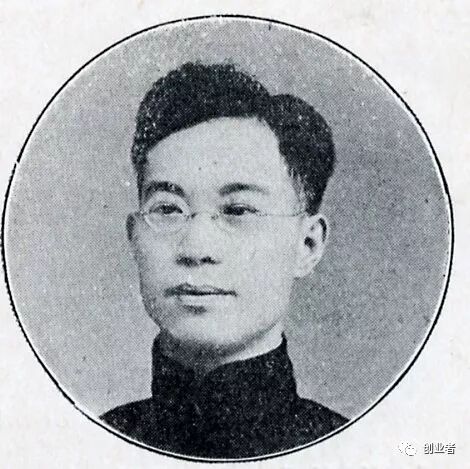
Jin Wenzhu, courtesy name Tongyin, was born in Xiushui, Zhejiang Province. Graduated from Fudan Public School in 1910 and was one of the top five students in the school's practical subjects that year. Later, he entered the Civil Engineering Department of Peiyang University and received a bachelor's degree in science. In 1918, he was hired as a professor of mathematics at Fudan University, teaching analytic geometry and other courses. Since 1922, Mr. Jin Wenzhu has been the director of science at Fudan University. In June of the following year, he was awarded an honorary Master of Science degree by his alma mater, Fudan University. Later he founded the Department of Civil Engineering of Fudan University, where he served as department director and school secretary-general. After liberation, he was transferred to the dean of Qingdao Institute of Technology. In 1956, he was classified as a first-class professor.
Article 2 of the 1920 charter stipulates that the school is divided into three departments: Chinese, university, and middle school. Graduated from high school in four years. The university is divided into preparatory and undergraduate level two. After two years of preparatory studies, you can advance to the undergraduate program. After two years of undergraduate study, you can get a bachelor's degree. After another two years, you can get a master's degree. Article 38 stipulates: All students must pass the examination in Chinese, English, and Mathematics before being promoted. Those who fail or fail the examination will not be allowed to take the make-up examination unless they have reasonable reasons and are approved by the school's promotion review committee. This once again clarifies the status of mathematics as an important basic subject in the whole school. However, funding is more difficult and it has been unable to hire more mathematics professors.
There was a science charter in 1924. The charter clearly states that Undergraduate Director Kim Man-soo was appointed. Article 4 The undergraduate program is divided into three departments: (1) Department of Mathematics and Physics, (2) Department of Chemistry, and (3) Department of Engineering. Although the charter stipulates that there are three departments, Jin Wenzhu's article "The Current Situation and Future of Science at Fudan" ("Fudan Annual", 1924, p. 250) describes Fudan's science as follows: "In the autumn of 1923, the name preparatory department was abolished, and the Department of Civil Engineering was established to meet the needs of society and respond to the aspirations of students internally." "The fourth grade was still the Department of Engineering. The disciplines are divided into three categories: railway, municipal administration, and construction, so that students can choose. In addition to the engineering department, the mathematics, physics and chemistry departments have been established in the third year. From now on, the subjects studied by students in the first and second years are all required. When entering the third and fourth years, the three departments are divided into three categories. "It can be seen that even if there is a mathematics and physics department, the requirements for mathematical physics are still basic courses. It is stipulated that students after the third grade can choose to major in mathematics and physics, but in fact this is not done. Mr. Kim Man-soo has planned to develop the Department of Civil Engineering. From the student directory in the spring of 1930, we can see that students were recorded by department. Under the science department, there were the Department of Chemistry, the Department of Biology, and the Department of Civil Engineering. In the spring of 1931, Mr. Kim Wen-soo himself changed the subject he taught from mathematics to civil engineering.
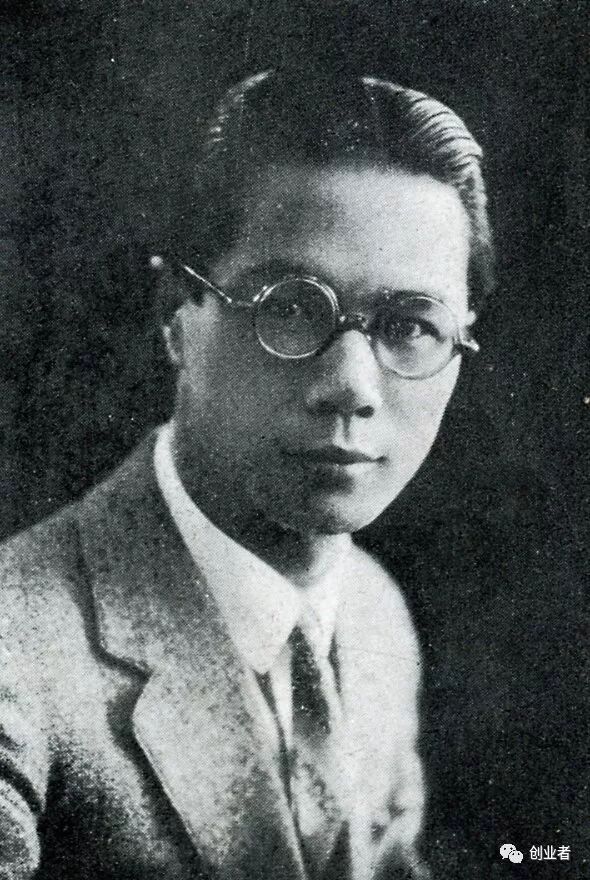
In the autumn of 1927, Mr. Tang Yanyi came to Fudan as a part-time professor of mathematics and physics. Tang Yanyi, courtesy name Lefu, was born in Shaoxian County, Zhejiang Province. In the spring of 1921, Tang Yanyi transferred to the fourth grade of Fudan Middle School and later entered the preparatory course of college. While in school, he excelled in his homework and was especially good at art. In the autumn of 1923, he went abroad to the United States to specialize in science. He received a bachelor's degree in science from the University of Washington and a master's degree in mathematics from the University of Michigan. In 1926, he was appointed professor at Jinan University and concurrently as professor at Fudan University. As Mr. Jin Wenzhu gradually turned to civil engineering, Mr. Tang Yanyi's classes gradually turned to mathematics. He taught students the course of differential equations. In 1935, the Chinese Mathematical Society was established in Shanghai. Tang Yanyi was elected as the accountant of the board of directors and served as an editorial board member of the Journal of Mathematics.
In the autumn of 1935, Mr. Tang Yanyi left Fudan. Mr. Chu Fengyi came to Fudan to teach. Chu Fengyi, courtesy name Hanlai, was born in Jiaxing, Zhejiang. He studied in France in 1920 and graduated from the Department of Mathematics at the University of Nancy. In 1924, he entered the University of Berlin in Germany to study economics. Mr. Chu specializes in statistics. From 1935 to 1937, he taught business mathematics at Fudan University. His mathematical works include: "Commercial Arithmetic" (1934, Commercial Press), "Investment Mathematics" (1936, Commercial Press), "Quick Calculation" (1939, Xuehai Publishing House). Among them, the book "Investment Mathematics" "refers to various investment mathematics published by Germany, France and Japan, and considers domestic laws and customs to discuss various important investment mathematics in detail. Regarding interest, the three principles of annuities and bonds are discussed in detail." In 1946, Mr. Chu Fengyi was reinstated as a full-time professor in the Department of Statistics of Fudan University. In 1952, he was transferred to Shanghai University of Finance and Economics. In 1956, he was rated as a second-level professor.
Appendix Mathematics teachers in the early years of Fudan University (1905--1937)
| name | word | Birthplace | Graduation school major | Serve courses | While in school |
| Zhang Dachun | chrysanthemum | Jiaxing, Zhejiang | Secretary General of Shanghai Special First Court | arithmetic | 1905 |
| Chen Qinbin | Jianru | Min County, Fujian | Beiyang Naval Academy Driving Course | arithmetic | 1909─1914 |
| Bi Zhi'an | Jingqian | Jiangsu Jinshan | The second category of higher education in our school | arithmetic | 1910─1927 |
| Hong Weixiong | Jiren | Wujiang, Jiangsu | Jiangnan Higher School Gezhike | arithmetic | 1913─1927 |
| Zhu Baofen | Zixiang | Shanghai | Bachelor of Mechanical Science, Cornell University, USA | arithmetic | 1914─1918 |
| Chen Xianzhang | Binchen | He County, Anhui | Graduated from middle school in this school, with preparatory education | arithmetic | 1914─1918 |
| Zhu Wenxin | Gongzo | Kunshan, Jiangsu | Bachelor of Science, University of Wisconsin, USA | Calculus and High Algebra | 1918─1919 |
| Kim Man-soo | Tong Yin | Xiushui, Zhejiang | Graduated from the Civil Engineering Department of Peiyang University Honorary Master of the University |
analytic geometry triangle |
1918─ |
| Ye Bingfu | Ji Chun |
|
Bachelor of Science | Mathematics | 1918─1921 |
| Tang Wujie |
|
Guangdong Jiaoling | Bachelor's degree from Massachusetts Institute of Technology | solid geometry | 1925─1926 |
| Tao Zailiang |
|
Wuxi, Jiangsu |
|
Geometry | 1925─1926 |
| He Benshou | Kyohiko | Jiangdan disciples | Bachelor of Commerce | Arithmetic | 1925─1927 |
| Yang Zheming | Yi Zen | Xuancheng, Anhui | Bachelor of Science | Trigonometric Algebra | 1926─ |
| Zhou Weiqun |
|
|
Graduated from Beijing Normal University in Mathematics and Science | Advanced Algebra analytic geometry |
1926 |
| Tang Yanyi |
|
Shaoxian County, Zhejiang Province |
Bachelor of Science, University of Washington Master of Science in Mathematics from the University of Michigan |
physics,mathematics | 1927─1935 |
| Wang Shiyi | Gangson | Fujian Minhou | Bachelor of Science from Peking University | analytic geometry solid geometry |
1927─ |
| Sheng Zuchu |
|
Meixian, Guangdong | Bachelor of Commerce | Geometry | 1927─ |
| Jiang Ruzhou |
|
Haimen, Jiangsu | Graduated from the Department of Electrical Engineering of Jiaotong University | analytic geometry high algebra |
1927─ |
| Dong Bohao | Xilin | Zhejiang Yongjia | Bachelor of Arts | Geometry | 1930─ |
| Yuan Huaixin |
|
Haimen, Jiangsu | Bachelor of Science, Soochow University | Mathematics | 1932─ |
| Yang Jingcai |
|
Shanghai | Bachelor's degree from Tianjin Nankai University | High School Analytical Geometry | 1933─1934 |
| Xu Xiang | Yuancai | Jiangyin, Jiangsu | Graduated from National Peking University | Mathematics | 1933─ |
| Chen Zunshi |
|
Xiaoshan, Zhejiang | Graduated from the University of Hong Kong | Geometry | 1934─ |
| Chu Fengyi | Han Lai | Jiaxing, Zhejiang | Department of Economics, DeBerlin University Graduated from the Department of Mathematics, University of Nancy, France |
Business Mathematics | 1935─1937 |
| Cao Jiyu |
|
Changsha, Hunan | Bachelor of Science | triangle | 1935─ |
| Zhang Yaohai |
|
Jiangsu Songjiang | Graduated from the Department of Electrical Engineering, University of London, UK | analytic geometry Cartography |
1936─ |
| Pan Qidong |
|
Jiangsu Wuxian | University of Illinois Engineering | high algebra | 1936─ |
(Contained in Fudan University History Newsletter Issue 120, 2017.5.31)
Hua Xuanji (School of Mathematics) Chen Qiming (Archives)
Machine-translated from the Chinese original 复旦早期的五位数学教授 (published 2019-06-19). WeChat original ↗