0. How to use your own research to solve various problems facing society, including epidemic prevention. It requires joint efforts from academia and industry.
Notice of application for 2020 open projects of the Key Laboratory of Computational Neuroscience and Brain-inspired Intelligence of the Ministry of Education
Record the AI code of the 0302|Cell article and share it with those in China who are interested in using it.
Introduction to WHO research roadmap and potential application scenarios of AI
After work, if you have time to study, the following materials are better resources.
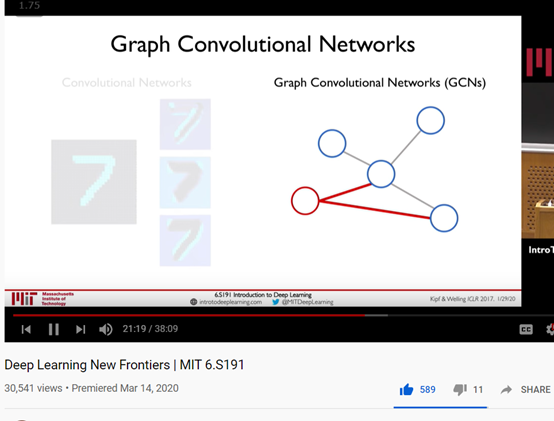
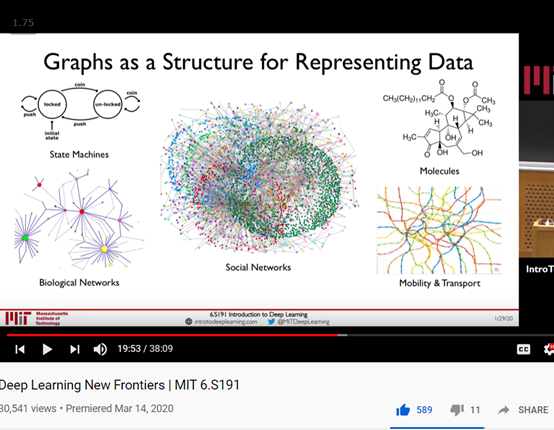
1. Graph Neural Network Online Workshop 2020 Replay
Live broadcast room address:
https://event.baai.ac.cn/academic-live/gnn-online-workshop-2020/
Courseware download:
Link: https://pan.baidu.com/s/1Mj6i0I0jH5KF9MRpABwp1w Extraction code: 45ns
Teacher Tang’s courseware still needs to wait.
2. Terence Tao’s Fourier Analysis online course:
https://ccle.ucla.edu/mod/page/view.php?id=2840550
Zoom live broadcast: https://ucla.zoom.us/j/9264073849
Fields Medal winner Terence Tao starts online classes! Open online at the end of March
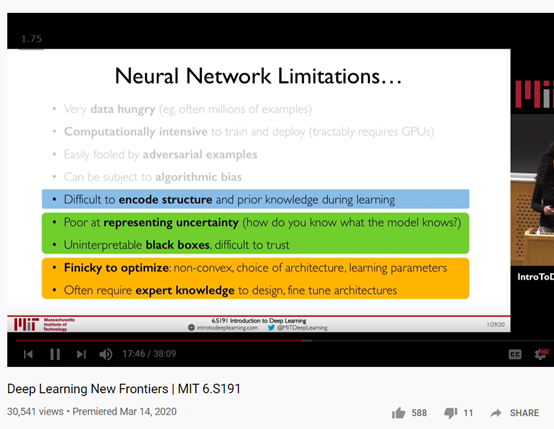
3. MIT’s neural network course:
http://introtodeeplearning.com/
4. Mathematical Theory of Machine Learning Mathematical Theory of Machine Learning Speaker
Weinan E, Princeton University
Time
2020.04.14 09:00-10:00ZOOM
Conference ID:752-642-566
PIN Code:898565
Abstract
The core problem of modern machine learning is how to effectively approximate a function in a high-dimensional space. Traditional approximation theory methods can lead to the curse of dimensionality, which is a problem that has puzzled us for many years in many fields. In this speech, we will introduce the following aspects.
1. How to establish a mathematical theory?
The problem itself here is basically the same as traditional numerical analysis. The difference is that the core problem that machine learning needs to deal with is the curse of dimensionality. Therefore, we need to establish a high-dimensional numerical analysis theory, including approximation theory, prior and posterior error estimation, optimization theory, etc. This theory will help us understand what models and algorithms are free from the curse of dimensionality.
2. How to formulate a good mathematical model of machine learning?
The correct method is to first formulate good machine learning models at the continuous level, and then use the idea of numerical analysis to discretize these continuous models to obtain the required machine learning algorithms. We found that many neural network models, including residual network models, can be obtained through this approach.
Because there is a good continuous model as the background, the machine learning models and algorithms obtained in this way naturally have better properties.
3. There are some strange phenomena in practical applications, such as double descent. How to explain these phenomena?
In actual applications, people do not follow the routine mentioned above, so why is the effect still very good?
4. What issues remain to be resolved?
The heart of modern machine learning is the approximation of high dimensional functions.
Traditional approaches, such as approximation by piecewise polynomials, wavelets, or other linear combinations of fixed basis functions, suffer from the curse of dimensionality. We will discuss representations and approximations that overcome this difficulty, as well as gradient flows that can be used to find the optimal approximation. We will see that at the continuous level, machine learning can be formulated as a series of reasonably nice variational and PDE-like problems.
Modern machine learning models/algorithms, such as the random feature and shallow/deep neural network models, can be viewed as special discretizations of such continuous problems.
At the theoretical level, we will present a framework that is suited for analyzing machine learning models and algorithms in high dimension, and present results that are free of the curse of dimensionality.
Finally, we will discuss the fundamental reasons that are responsible for the success of modern machine learning, as well as the subtleties and mysteries that still remain to be understood.
Bio
E Weinan, a mathematician, is mainly engaged in research on machine learning, computational mathematics, applied mathematics and their applications in the fields of mechanics, physics, chemistry and engineering. In 1999, he became a professor in the Department of Mathematics and the Institute of Applied and Computational Mathematics of Princeton University; in 2011, he was elected as an academician of the Chinese Academy of Sciences; in 2012, he was elected as a fellow of the American Mathematical Society.
From:
https://ins.sjtu.edu.cn/seminars/2020/04/14/%E6%9C%BA%E5%99%A8%E5%AD%A6%E4%B9%A0%E7%9A%84%E6%95%B0%E5%AD%A6%E7%90%86%E8%AE%BA/1725?from=timeline&isappinstalled=0
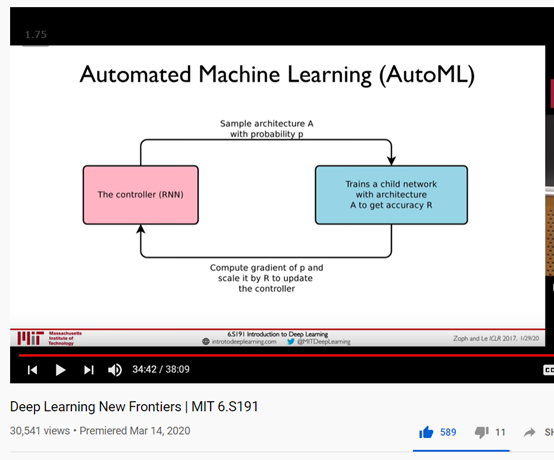
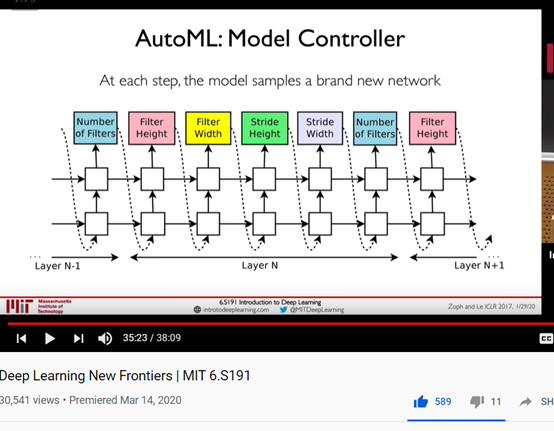
IBM and AI
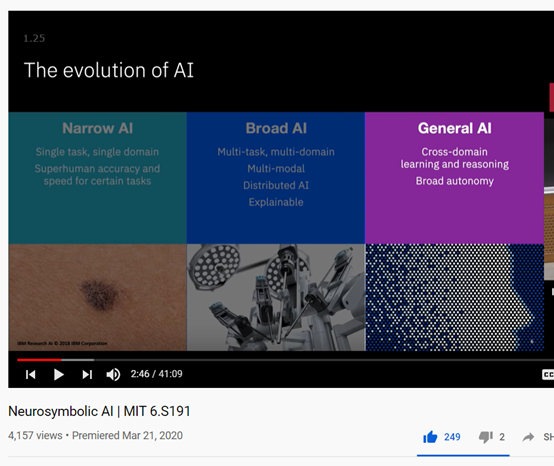
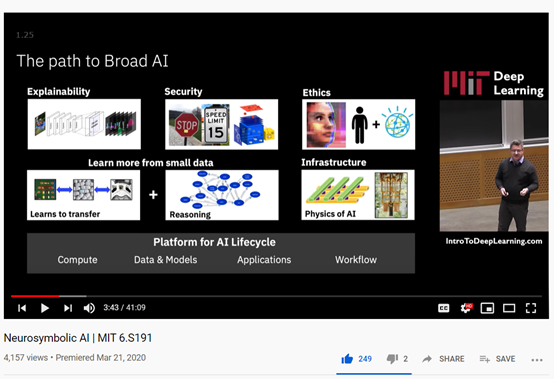
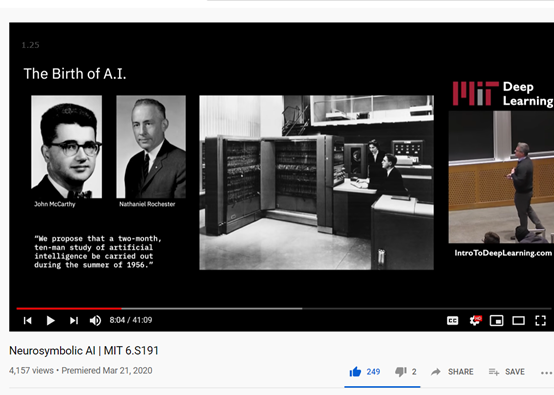
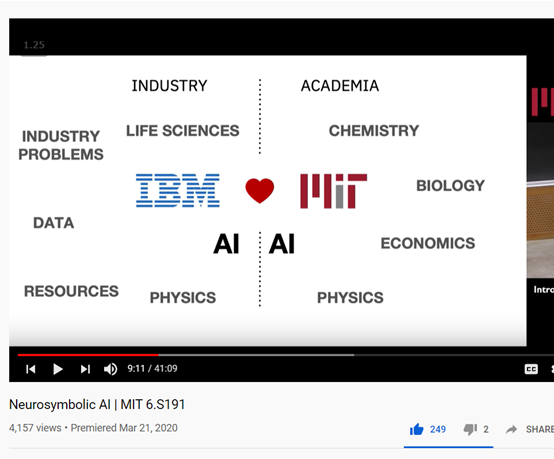
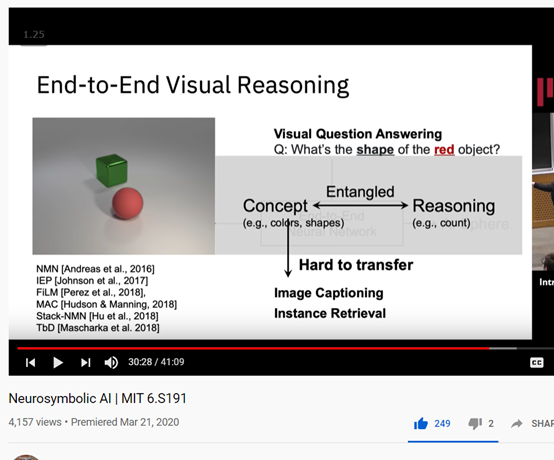
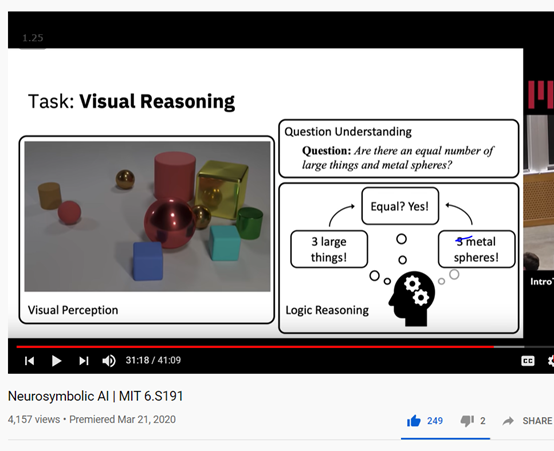
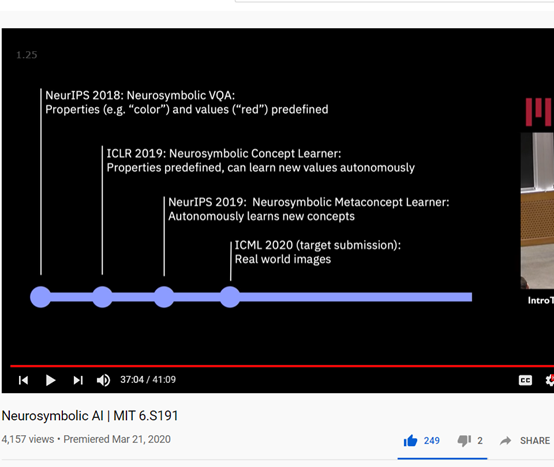
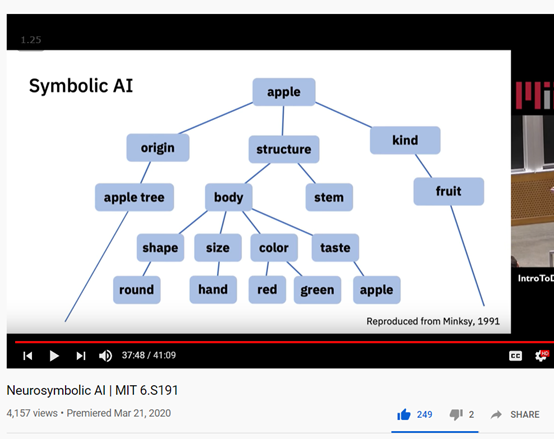
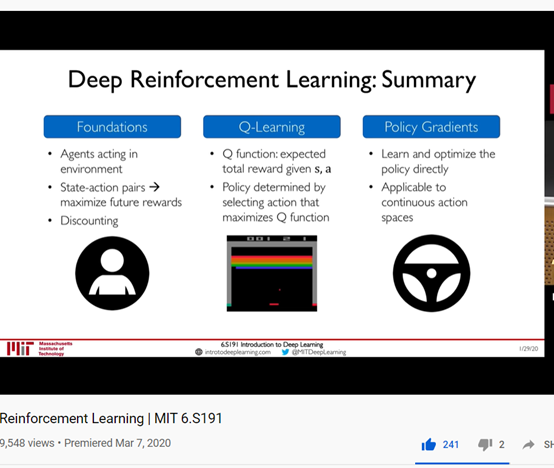
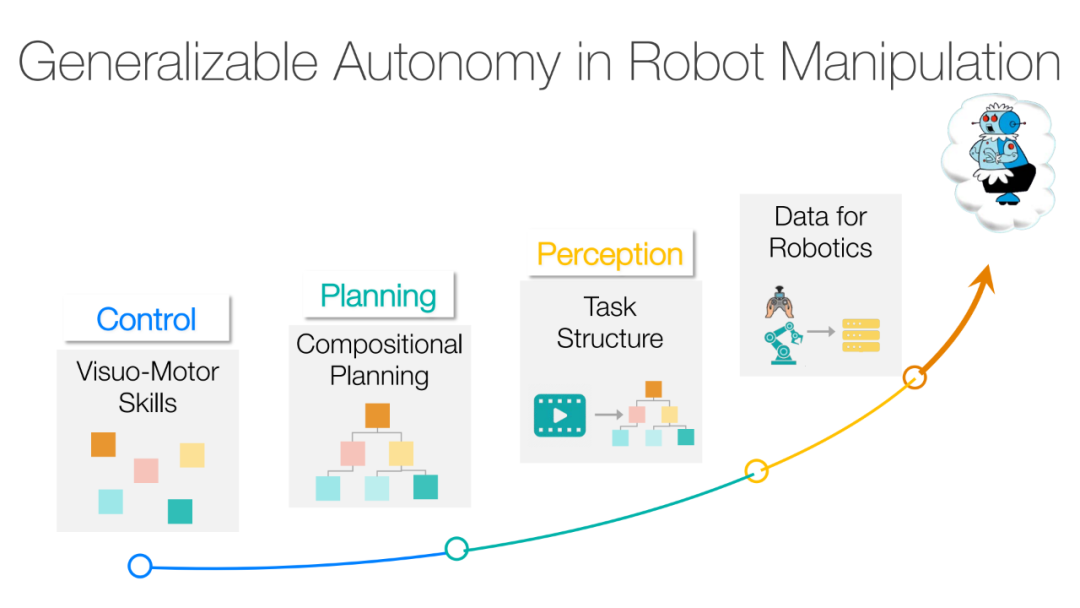
A recent lecture talked about some learning methods used by robots:
http://introtodeeplearning.com/slides/6S191_MIT_DeepLearning_L8.pdf
Machine-translated from the Chinese original 类脑开放课题申请|图神经网络| 陶哲轩的傅里叶分析网课 | MIT神经网络课程|机器学习的数学理论 (published 2020-03-31). WeChat original ↗