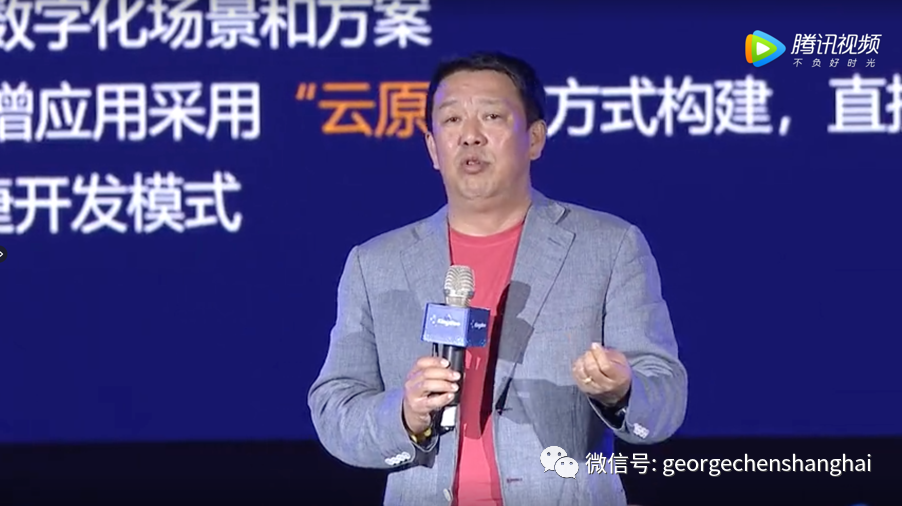
I saw a good video this morning. Huawei’s CIO shared Huawei’s digital transformation experience on a forum. The specific content will not be repeated here. If you are interested, you can click on the link👇:
In the post-epidemic era, Huawei’s digital transformation practice
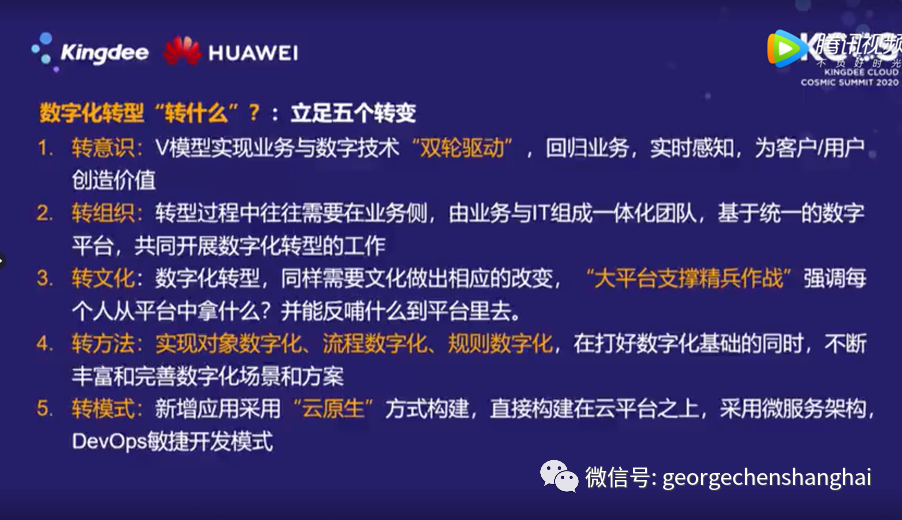
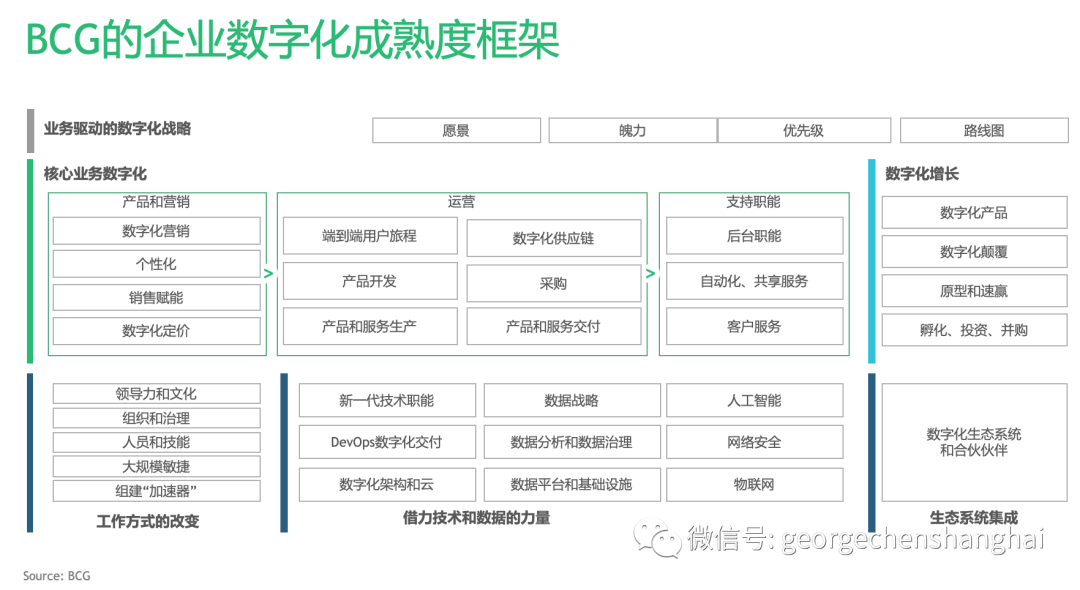
Compared with the “five transformations” of digital transformation mentioned by Mr. Tao, compared with the digital transformation framework of the consulting company, there is a clear conceptual correspondence:
My understanding of Huawei’s “Five Transformations” is:
“Transforming Consciousness”: Business-Driven Digital Strategy
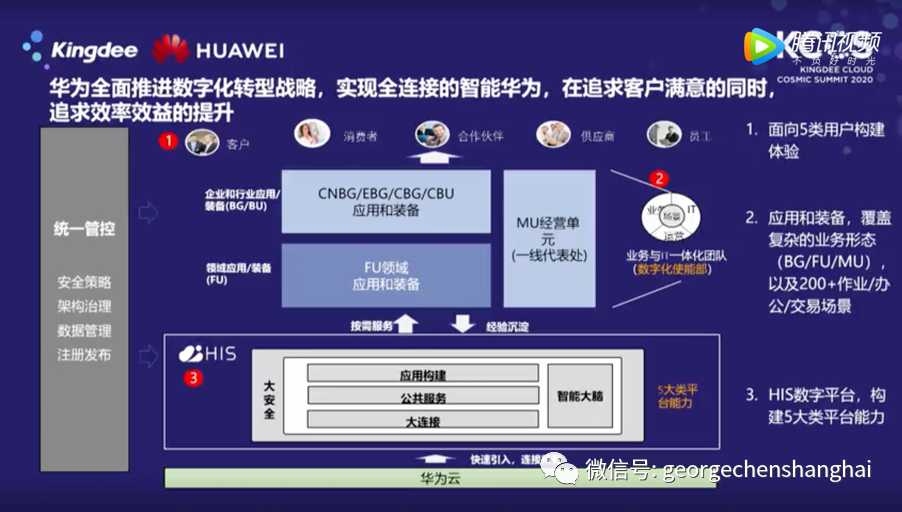
"Transforming the organization" and "transforming the culture": The core idea is the change in the way of working, that is, agile transformation, including the reshaping of enterprise relationships such as support for platform and business front-end collaboration, IT and business collaboration, etc.
"Transfer method": This is a description of the architecture layer, using digital foundations, that is, processes, rules, etc., to support digital front-ends, that is, scenarios and solutions.
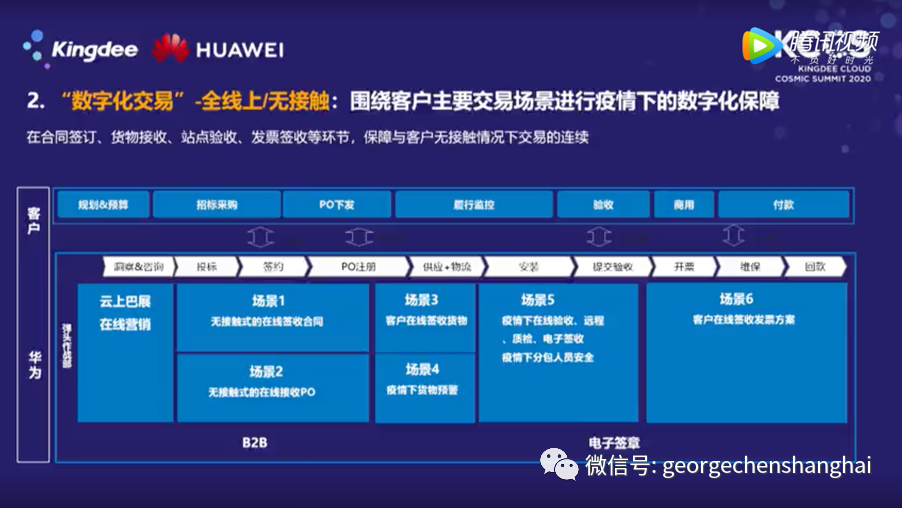
"Transformation model": This is a description of the technical layer, that is, building an enterprise-level cloud platform and adopting a cloud-native architecture.
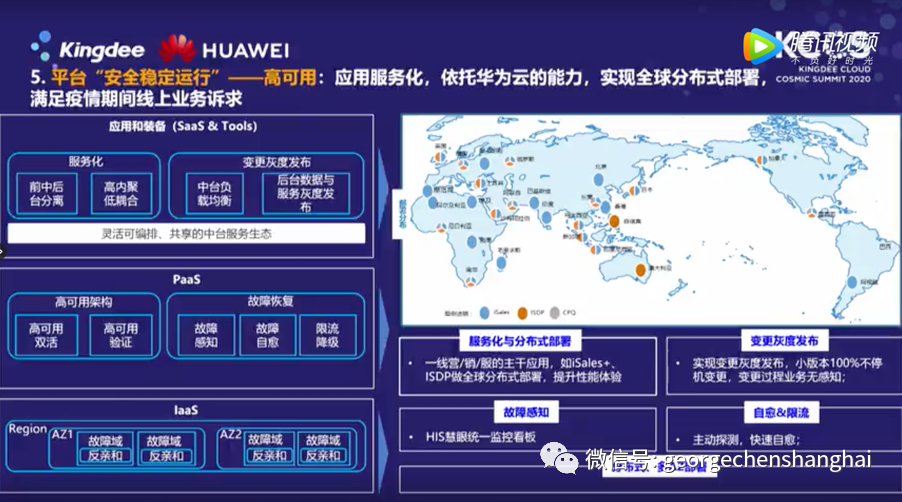
The many articles I have written on enterprise digital transformation in the past period all echo these concepts.
Discussing the middle platform again | DDP brings about a revolution in enterprise core systems
Digital Innovation | The difference between enterprise system APP and digital products
Evolution of Chinese Enterprise Information Planning Methods (3) - Digital Transformation
Thoughts on the real bottlenecks of digital transformation of traditional enterprises
Four core issues for digital implementation | Self-construction decision-making, modern architecture, middle-end empowerment and reshaping of talents
Constructing a real-time enterprise | Digital transformation of enterprise architecture transformation
Digital transformation | Three core issues for digital implementation in the new era
The Chinese business community has always been keen to imitate Huawei. However, no company has ever imitated Huawei. This is true even when it comes to digital transformation.
Mr. Tao said in his speech that optimizing and migrating Huawei's ERP to the cloud is not easy. The important thing is to manage the existing system well. Huawei began ERP construction in the late 1990s, and subsequently invested heavily in systematization and standardization of business processes, supporting Huawei's global revenue of US$100 billion and business scale of more than 1,700 companies. Most Chinese companies are still far behind Huawei in terms of process-oriented management and integrated operations culture; what's more, Huawei itself is an IT company, and its architecture is based on Huawei's own technical system.
Migrating a 100-billion-dollar business from traditional ERP to the cloud is equivalent to replacing the engine of an aircraft flying in the sky. This matter is actually very complicated. It is how to evaluate the relationship between future development and the existing system, and more importantly, to manage the existing system well.
Therefore, drawing on Huawei’s digital transformation experience, Chinese companies’ digital transformation must be combined with their ownBusiness scale, management maturity, organizational management and control model, cultural inheritanceIn actual situations, specifically, there are three paths:
1. From heavy to cloud:
That is Huawei's path, which is to transform the architecture based on the stable core systems and business systems accumulated over the past many years, from "chimney-style" functional systems to continuous application decoupling, platformization, and cloud migration. This model is suitable for large enterprises with huge self-owned IT human resources.
2. Overtaking on curves:
Enterprises with relatively weak traditional informatization foundations can use current mainstream cloud technologies to achieve the "five transformations" mentioned above in one step. This model requires the company's own business model to have strong "digital native" characteristics, close to the characteristics of an Internet company, and at the same time have strong organizational flexibility and enterprise structure management capabilities, as well as strong self-owned IT human resources.
3. Get started with the basics:
For enterprises whose business models and organizational cultures are difficult to achieve a digital revolution in the short term, and where it is impossible to maintain a large IT team, especially small and medium-sized enterprises, "it is better to retreat and build a network than to fish in the abyss" and first solve the basic problem of process digitization (i.e. informatization). To learn from Huawei, you only need to be energetic and start from your own reality.
Machine-translated from the Chinese original 从华为数字化转型的五个抓手看中国企业数字化转型的三条路径 (published 2020-06-08). WeChat original ↗