In recent days, Alphafold2 has become very popular, giving us a hint that new tools may greatly help biologists and liberate their work in certain aspects (such as protein structure prediction). There are many articles discussing this.
Today's interdisciplinary cooperation and the combination of industry, academia, and research need to be explored and tried.
We have established an interest group, hoping to establish interdisciplinary communication and exchanges, starting from structural biology, and solving some biological mysteries through various methods and approaches. It would be even better if it can help deal with the health and social crisis caused by the current COVID-19.
Anyone with research interests in the following areas is welcome to join.
-
Research Alphafold2
-
molecular dynamics
-
condensed matter physics
-
Category logic
-
Topology, manifolds (kink theory and Jones polynomials)
-
machine learning
-
structural biology
-
Compute conformal geometry
Combined together, explore protein structure and function.
At the beginning of the year, Jo Marchant [1] and others used AI to identify new types of antibiotics from scratch without using any human assumptions, and the effects were further verified by scientists.
In the future, whether machine learning can also predict protein structures with certain functions without relying on assumptions based on the knowledge of structural biologists can then be verified by structural biologists. This could change the paradigm of structural biology research.
The computational conformal geometry algorithm invented by Gu Xianfeng [3] and others has already had preliminary applications in virtual colonoscopy and brain map analysis. It should be helpful in helping reconstruct three-dimensional images. For example, it helps cryo-et[2] realize three-dimensional structure reconstruction. : "The central section theorem means that the Fourier transform of an object projected in a certain direction is equal to the section perpendicular to the projection direction in the three-dimensional Fourier transform of the object. According to the central section theorem, we take 41 photos from different angles and perform Fourier transform on these photos to get We can obtain the information of 41 sections in the three-dimensional Fourier space of this object. We can then perform an inverse transformation on the three-dimensional Fourier space filled with information, so we can obtain the three-dimensional structure of the cell or protein through cryo-ET technology.”
Agree with Yan Ning’s point of view, structural biology or biology is the core element [5]:
Seeing the structure itself and knowing what your research object looks like can be called a discovery, but the "discovery" I just mentioned refers specifically to those magical existences or breathtaking mechanisms in nature that are beyond imagination and revealed through the structure. One of my favorite examples in lectures is the spliceosome structure of Shi Yigong's group. Why? Because it combines almost all the exciting elements and challenges in structural biology discovery.
First, before the structure of the spliceosome is known, many components of the spliceosome are even unknown. Different from traditional structural biology, you first know what you want to study, and then you have to figure out their structure - the electron microscope analysis of the spliceosome is after seeing the density map, you have no idea what it is, and you need to identify the components through mass spectrometry and other means. I have predicted since 2015 that the combination of electron microscopy and mass spectrometry will become an important means of biological research discovery. In the era of electron microscopy, there are more and more such examples. For example, mass spectrometry is not enough for the huge phycobilisome structure developed by Professor Sui Senfang of Tsinghua University. In order to understand the components, they even sequenced the genome first.
Second, how do dozens or hundreds of proteins work together to break a few seemingly simple RNAs into a ribozyme reaction center that cooperates with a few small metal ions? Among the vast bases, how do they connect at the right time and the right place, cut out introns (introns), and connect exons (exons)? Just for this "scissors" and "crochet hook", for the process of a few milliseconds, the dozens or hundreds of components of such a giant thing have to be separated and reassembled. This process is really magical.
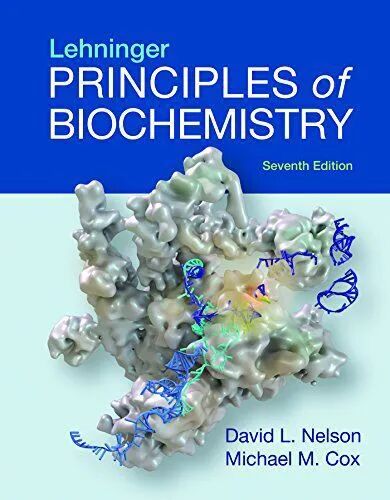
Lehninger Principles of Biochemistry
The current experimental methods of structural biology can only obtain static 3D photos. In order to reveal this movie, it is necessary to continuously obtain 3D photos of intermediate states. The more frames, the more accurate the movie. But even so, the dynamic problem in this process, simply put, the speed of change, is still not something that can be revealed by current structural biology experimental methods, and needs to be explored with the help of more biophysical technologies and computational biology methods.
Although my own work is not as cool as the spliceosome, it is a process of how voltage-gated sodium ion channels sense changes in membrane potential and open and close doors. It sounds simple, but we have been working on it for three years and are still at a loss. In addition, the two articles we published this yearPNASThe paper actually represents another direction of efforts in structural biology: applying external forces (electric fields, magnetic fields, waves of various lengths...) to biological macromolecules during experimental operations.
Perhaps due to the limitations of my own professional field, the shock that AlphaFold has brought to me so far cannot catch up with the revolution of cryo-electron microscopy, which liberates us from technical struggles and can focus on the biological discoveries brought about by the structure itself.
AlphaFold's most successful predictions so far are for single-chain molecules. Of course, predicting high-precision structures of complexes should not be a problem in the future. Compared to its contribution to protein folding, I hope that AI can help Molecular Dynamics Simulation. For structural biology, this field is in urgent need of progress.
I personally believe that life is the most magical existence on earth. There are so many unknowns to explore, and any technological progress is an opportunity. What I should consider is how to use new technologies to my advantage, to ask and explore more interesting questions.
However, even if AI can predict the dynamics of biological macromolecules, there should be more interesting work for structural biologists and biologists to do. Just like physicists' research on what elementary particles are. [9]
We can combine different technologies to encode current biological information [7]. Combined with some basic principles, these encoded information are given a certain structure, and the "Jones polynomial" in structural biology is explored and established [9].
1. Record the AI code of the 0302|Cell article and share it with those in China who are interested in using it.
2. The next breakthrough in structural biology: cryo-ET
3. Review: Computational Conformal Geometry Behind Modern Technologies
Articles about Alphafold2:
4. Wang Liming: What does it mean that artificial intelligence has made another breakthrough in predicting protein structure? | Mountain patrol report
5. Comments by Yan Ning and others: AI accurately predicts protein structure, where will structural biology go?
6. DeepMind: Software application of AlphaFold protein prediction model
7. JCIM | Three-dimensional molecular force field fingerprint based on deep capsule network
8. Mathematical Modeling 12: Knots and Jones Polynomials
9. Physicists still have no standard answer to this most basic question.
Machine-translated from the Chinese original 结构生物学兴趣小组,学习Alphafold2 (published 2020-12-07). WeChat original ↗