When looking at "Alexander Polynomials and Jones Polynomials in Kink", I saw a wonderful structural diagram. Share it. (See Figure 1)
Yesterday I saw an article commemorating Jones published by the "Mathematical Humanities" public account, and I would like to repost it here to commemorate the mathematician's contributions to biology, physics, mathematics and other disciplines.
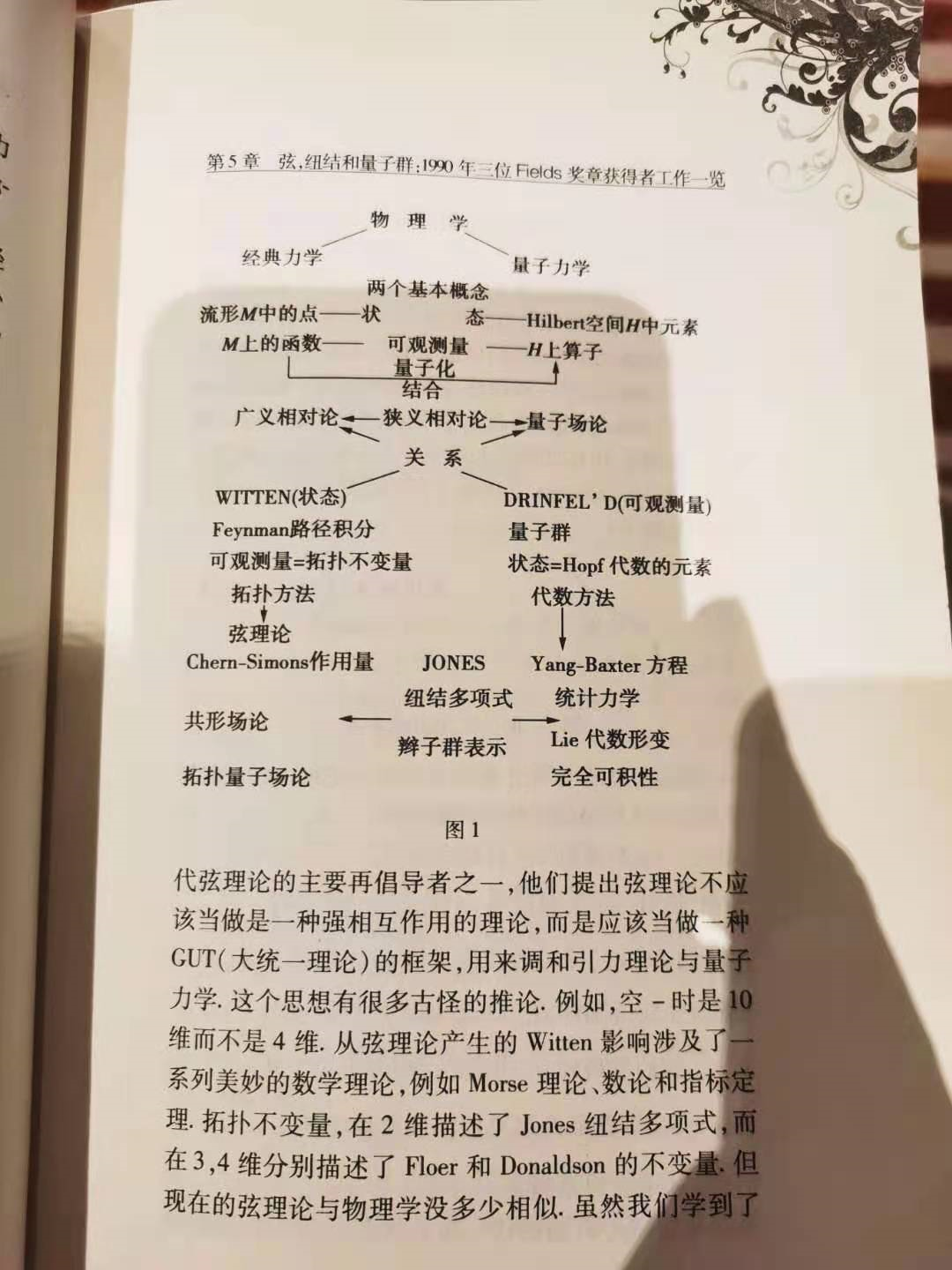
Figure 1
Some of Jones' work includes:
"Jones' work in the 1980s not only established a close connection between operator algebra and kink theory, but also triggered connections between multiple mathematical fields such as low-dimensional topology, quantum groups, representation theory, and statistical physics and quantum field theory. At that time, Michael Atiyah organized a seminar at the Institute for Advanced Study in Princeton, hoping to find a connection between low-dimensional topology and representation theory, but there was no progress, and Jones The work is exactly what they are pursuing. With the joint efforts of many mathematicians and physicists, the fields of mathematics and physics are once again integrated and flourishing. Mathematics and physics complement each other, and many emerging cross-fields are born, such as quantum topology. The most representative one is Edward Witten’s interpretation of Jones polynomials as path integrals in topological quantum field theory.”
Guess 1,
The force and angle between the bonds will determine the direction and magnitude of the torsion, which will in turn determine the topological relationship described by White's formula: Lk(B) = Tw(B) + Wr(B), and these are related to energy.
Guess 2,
It can combine with topoisomerase and, under the guidance of magnetic particles, achieve the ability to change genes by changing the structure of chromosomal DNA (refer to Figure 4, pages 106-107 in the book).
Guess 3,
Add some topological invariant information to machine learning, and bring topological invariants such as White's formula into learning and iteration through Lagrange multipliers. Through this constraint, the dimensionality of the target manifold to be learned is reduced.
Some potential topological invariants:
-
White formula
-
Jones polynomial
-
Energy spectrum (under certain temperature and environmental conditions, energy remains unchanged)
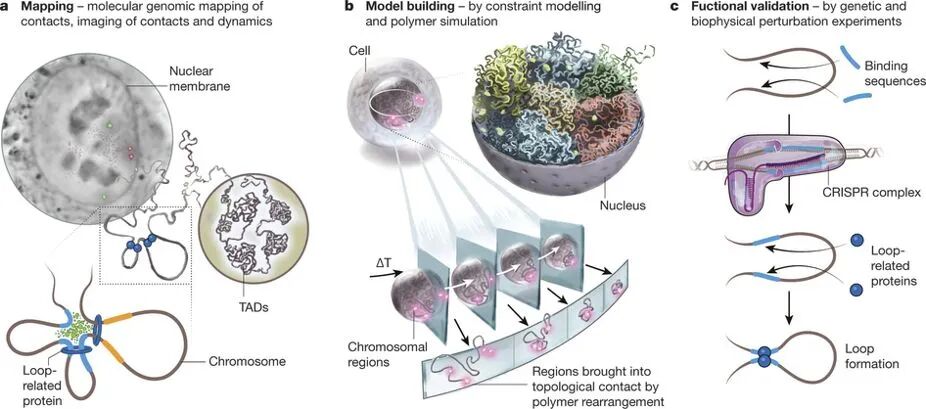
Figure 2, taken from (https://www.4dnucleome.org/)
Today, I listened to Teacher Li Tianhu’s online lecture and mentioned the 4D nucleome (four-dimensional nucleome project) launched in the United States and Europe in 2015.
Research content of 4dnucleome (4):
The project encompasses three components. a, Experimental mapping approaches are used to measure a range of aspects of the spatial organization of the genome, including chromatin loops, domains, nuclear bodies and so on. b, Computational and modelling approaches are used to interpret experimental observations and build (dynamic) spatial models of the nucleus. c, Perturbation experiments, for example, using CRISPR–Cas9-mediated genome engineering, are used for functional validation. In these studies chromatin structures are altered, for example, by removing chromatin loops, creating novel loops at defined positions or tethering regulatory components in selected regions to test their architectural function. These perturbation studies can be complemented with functional studies, for example, analysis of gene expression to assess the functional implications of chromatin folding. The nucleus image (a) shows live cell CRISPR labelling of specific loci on human chromosomes 1 and 13 and is provided by H. Ma and T. Pederson.

Figure 3

Figure 4
1. Vaughan Jones (1952 -- 2020)
2. Structural biology interest group, learning Alphafold2
3,https://commonfund.nih.gov/4Dnucleome
4,https://www.4dnucleome.org/
5,https://www.nature.com/articles/nature23884
Machine-translated from the Chinese original 4d nucleome 项目与扭结多项式的若干笔记更新-12/14 (published 2020-12-14). WeChat original ↗