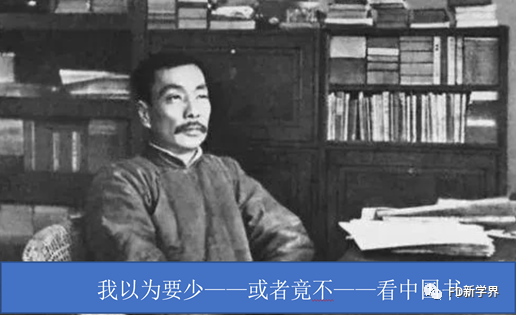
Nearly a hundred years ago, in 1925, when Mr. Lu Xun was asked by the Beijing News supplement to provide a list of "must-read books for young people", he replied: "I have never paid attention to it, so I can't tell you now." The implication is that there is no book that must be read. Perhaps he was worried that others would not understand his meaning, so he added categorically in the following article: "I thought we should read less Chinese books and more foreign books." ("Beijing News Supplement" February 21, 1925)
此论发表后,有因恨而攻讦者,有因爱而周护者。 In this regard, Mr. Lu Xun clearly stated: "Last year, I advocated that young people should read less Chinese books, or not read Chinese books at all. This was the truth gained at the cost of a lot of pain. It was by no means a casual, joking, or angry statement." ("Written Behind the Grave", 1926) It seems that Lu Xun's words were serious, serious, thoughtful, and meaningful. Perhaps we can understand its true meaning only by connecting "Diary of a Madman" written in 1918 with the narrative in which "I opened the history and looked it up. There is no chronology in this history, and the words 'benevolence, justice and morality' are written on each crooked leaf. I couldn't sleep, so I read carefully for half the night, and then I saw the words between the words. The two words written all over the book are 'cannibalism'" can we understand its true meaning.
Of course, in the face of such a huge space-time object that is thousands of years old, no matter how serious, serious, thoughtful, and meaningful the judgment and speech are, it is difficult to be completely round and watertight. The books in this huge space-time object are also very complicated and entangled existences. To put it simply, there are differences between the officially approved books of the Four Books and the Four Treasures and the unrefined books that are excluded from the Four Books and the Four Treasures. And even unconventional books like novels have various appearances, and their spirit is not unique.
Just a few years before he advocated "not reading or even not reading Chinese books," Mr. Lu Xun himself was reading ancient Chinese novels and wrote the first history of novels in history, "A Brief History of Chinese Novels." In 1920, he delivered a famous lecture on "The Historical Changes of Chinese Novels" at the then Northwestern University. When talking about "Dream of Red Mansions", he also said something cruel that may make Cao Xueqin a close friend:
Since the release of "Dream of Red Mansions", traditional thinking and writing methods have been broken.
Combining the aforementioned sayings of "reading less or not reading Chinese books" and "eating people", this sentence may be translated into:
The word "cannibal" is written everywhere in the cracks of traditional Chinese books, but "A Dream of Red Mansions" has the word "cannibalism" written everywhere in the cracks.The word "人".
You should read less or no Chinese books, but at least read "A Dream of Red Mansions".
If you can only take one book with you when you travel to the end of the world, take "Dream of Red Mansions" with you.
1. At least at the ideological level, there are indeed two worlds in "A Dream of Red Mansions"
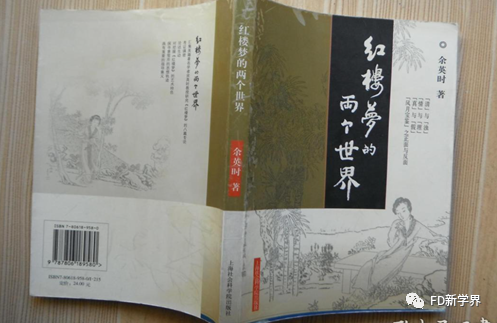
Of course, as an encyclopedia-like masterpiece that has shaped hundreds of characters and is 7 to 8 million words long, "A Dream of Red Mansions" is not that simple, single or simple in terms of thinking or writing, but a complex, profound and special structure. Since Song Qi and Yu Yingshi, commentators have often said that "A Dream of Red Mansions" creates or contains two worlds: one is the world of Jia's family and the other is the world of Grand View Garden; one is the world of men and the other is the world of daughters; "Daughters are flesh and blood made of water, Men are flesh and blood made of mud; when I see my daughter, I feel refreshed, and when I see a man, I feel turbid and stinky." Therefore, we can also say that there is a pure world and the other is a turbid world; by extension, some people also say that one is the real world and the other is the ideal world.
The Grand View Garden was built on the site of the original Huifang Garden in Dongfu. Even if there is a wall to isolate it, there are still connected gates. The characters in it also moved from outside the garden and eventually walked out of the garden. There are also pure ones among men and there are dirty ones among women. Besides, "daughters are made of flesh and blood made of water, and men are made of flesh and blood made of mud." There is another sentence: "When a girl is unmarried, she is a priceless pearl; after she is married, she develops many bad problems for some reason. Although it is a pearl, it has no luster and color and is a dead pearl; as she gets older, what changes is not the pearl, but the eyes of a fish." Even in the Grand View Garden, there must be the atmosphere of fireworks and worldly travels. In other words, at the geographical level, the level of character activities, the level of social life, and even the level of narrative and structure, dividing "A Dream of Red Mansions" into two worlds is inevitably disconnected. However, there is probably not much objection to saying that "A Dream of Red Mansions" and its author are divided into two worlds and two cultures on a spiritual and ideological level.
The social structures, character lives, and books as cultural carriers of these two worlds are very different and even contradictory.
2. Jia’s Mansion: There is never a choice whether to be a slave or not
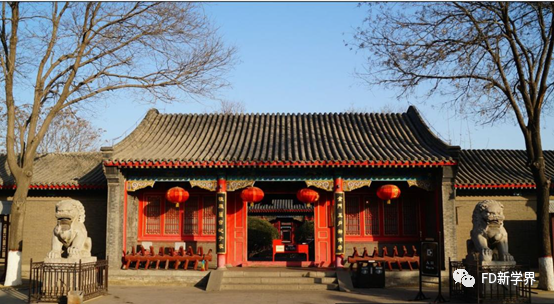
Jia's society is a typical vertical hierarchical structure. The relationship between people is nothing more than the relationship between master and slave, that is, the authoritative relationship of master and being dominated, restraining and being restrained, controlling and being controlled, conquering and submitting, commanding and obeying, leading and following, binding and dependence, assimilation and melting, beneficence and gratitude. The so-called "Three Cardinal Guidelines" of "the king is the guideline for the ministers, the father is the guideline for the sons, and the husband is the guideline for the wife" is the most concise outline of that social structure. Its essence is "the king wants his ministers to die, and the ministers have to die." When Concubine Yuan returned to the province, the old grandmother Jia Mu had to "kneel down on the roadside" and the old father Jia Zheng could only "go outside the curtain to say hello" tremblingly, which shows the majesty of Jun Gang; Baoyu and Jia Huan saw Jia Zheng like a mouse seeing a cat, which shows the power of father Gang. The entire society outside the Jia Mansion or the Grand View Garden is nothing more than the expansion and generalization of this authoritarian relationship.
More importantly, in the entire Jia family, except for Jia Mu, who is more than ten thousand people, and in the entire society, except for the emperor, everyone is dominated, suppressed and controlled. They are all surrenders, obedient, followers, dependents and grateful ones. Everyone is a slave. However, instead of wanting to get rid of and escape this kind of slavery, they enjoy it, enjoy it endlessly, "like it very much", and can't ask for it. Just like the Liu family, they decided to let their daughter Wuer become a slave in Yihongyuan. Mr. Lu Xun said that China's history is nothing more than two eras: one is an era when one is temporarily a slave; the other is an era when one wants to be a slave but cannot. As far as the society of the same era is concerned, it can probably be said that ancient Chinese society is nothing more than two types of people: one is a slave who is temporarily stable; the other is a slave who wants to be but has not.
Of course, this cannot mean that the young masters and servants of Jia Mansion are so ignorant. On the contrary, they are very smart or shrewd. The reason is obvious. In the final analysis, it is not up to anyone to choose whether to be a slave or not. Historically, there has never been a choice of whether to be a slave or not. At most, it is only a choice of how to be a slave. If you don't become a slave, you must die! Mrs. Xing acts as a matchmaker for her husband. Is this of her own free will? Not necessarily, as Mrs. It's so pleasurable to be tortured at the same time! Just like Jia Zheng, in front of Baoyu, he could live or die, but as soon as Jia Mu came tremblingly, he immediately became frightened and did not dare to sweat. How can this roller coaster-like excitement of highs and lows be enjoyed by walking on the ground? Thirdly, their heads have long been filled with the idea that being loyal and filial and being a slave is the most noble and enjoyable thought in the world. "Mr. Jiao is walking on his feet, and his feet are higher than your head. Who does Mr. Jiao have in his eyes in the past twenty years? Don't talk about you bastards!" Listen to Jiao Da's words, and then look at Baoyu's words of "Literary advice, military battle", you can know: You don't understand the taste of the slave family! If anyone has whims and other happiness besides this, then he is truly committing rebellion, committing treason and committing a crime worthy of death!
The vertical hierarchical structure of the Jia family or the society outside the garden is directly related to the relationship between masters and slaves, and their life goals and styles. In terms of its goals, in the words of Xiangyun persuading Baoyu, they are "succeeding in study", "becoming an official" and "economic career". In the words that can often be heard from Baoyu's mouth, it is "fame", which has been transformed into today's common sayings, that is, "promoting and making a fortune", "getting ahead" and "successful career". In terms of its method, it is to grab, compete and fight, and to put the stakeholders to death by any means. The younger brother Jia Huan "always secretly plotted" against Baoyu, "to burn his eyes with hot oil." Aunt Zhao used Ma Daopo's magic to directly kill Baoyu and Sister Feng. It belongs to me Huan'er. "The No. 1 scholar, official title, and property all belong to the monarch in name, but in fact it seems that anyone can touch them. At the same time, they are all scarce, limited, and fixed non-renewable resources. If you have it, it is not mine, and if you have mine, it is not yours. It is better to have mine but not yours than to have yours and not mine; it is better to have me and not you than to have you and not me. To put it in Aunt Zhao's mind, instead of "having someone else manipulate our mother to death," it would be better for me to ask Ma Daopo to manipulate their siblings to death first. In such a social and psychological structure, anyone who has a different stance, different interests, different opinions, and different ideas from one's own are dissidents, threats, and enemies. As a result, other than life and death, there is only one path left: conquest and submission, assimilation and melting, and servitude and servitude. Moreover, the closer the relationship and the closer the distance, the more likely it is that we will become enemies. "We are a family of flesh and blood. We are not like black-eyed chickens. We wish you could eat me and I can eat you!" This is a true portrayal of Jia's society.
This is the truth of Jia's society, a truth that no one wants to face, and a truth that no one can know. No slave wants to be called a slave who takes orders and is dependent on others, just like Ming Yan couldn't hear Jin Rong calling herself a "slave boy". On the other hand, as the ruler of the world, I also do not want my subjects to see clearly the truth of mastering and being dominated, conquering and surrender, lest some restless people have different ideas. So some people changed it into a nice term, called "loyal ministers and filial sons". Others said that the king is the people and the people should be the king. Of course, some people would pour some cold water from time to time, saying that some water can carry or capsize a boat. The king is wise and his ministers are virtuous, the father is kind and the son is filial, benevolence, justice, etiquette, wisdom and trust are all gentle words of advice. These words are what Jia Zheng asked to "explain clearly and memorize" the Four Books and Five Classics taught by Jia Dairu in the school. As soon as these words and books came out, the truth about mastering and being dominated, conquering and surrendering, enslaving and being enslaved was completely covered up. As soon as this kind of books and culture came out, the world suddenly became so beautiful. In addition, reading these books can at least find a way to get into the profession and "earn some respect with the master", so everyone happily reads other people's books, washes their own brains, and happily becomes glorious slaves, holding their heads high and "discipline to the death in literature and fight to the death in force".
3. Grand View Garden: My voice is my decision
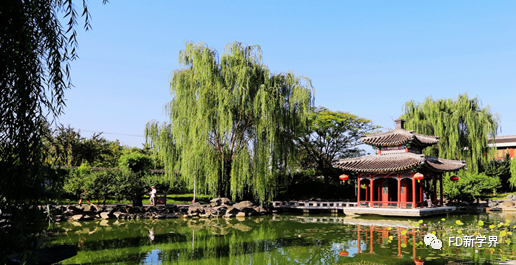
The Grand View Garden is a very special setting in "A Dream of Red Mansions". It is not the back garden in "The Peony Pavilion" for the owners to wander and rest in their free time. It is a newly built independent kingdom on the occasion of Princess Yuan's marriage visit. It is the daughter's world outside the Jia Mansion. From the 17th to the 78th chapter, the Grand View Garden is the main stage for the characters in "A Dream of Red Mansions", and its position in the novel is even more central than the Jia Mansion.
This is a special world different from Jia's family. In this world, there are no ancestors, no masters, no ladies, no hierarchy, no masters and no slaves. Qingwen, Xiren, Zijuan, Ying'er, Cuimo, Siqi, Shishu, Ruhua, Lingguan, etc. are certainly maids and slaves and are subject to the laws of the Jia family. However, in the reality of the Grand View Garden, there is no distinction between masters and slaves, and no regular constraints. Everyone is on an equal footing, and on weekdays, they are just "brothers and sisters" and "among the same people in this room, who is more noble than the other?" If there are slaves in the Grand View Garden, that slave can only be Baoyu who "is always willing to serve as a servant for the maids"; if we say that there are masters and masters in the Grand View Garden, then all the daughters in the garden are masters and masters. People make their own decisions about their own bodies, their own voices, and their own wishes. If they are not happy, even if "the empress passes it on to us", if they don't sing, they won't sing. Even if Baoyu wants to listen to Niao Qingsi, there is no way; if there are "three cardinal principles" here, then it is also a brand new "three cardinal principles": "I am my cardinal, you are yours, each is his own cardinal." This is a world completely different from the enslaved and dependent world of the Jia family, a world of independence, freedom, self-respect and respect for others.
The residents of this world each have their own appearance, character, temper, speech, thoughts and concepts, and each has their own goals. It can be said that everyone is an "alien" to others. Precisely because they each have their own ambitions and world, they do not need to compete for the same limited resources, but rather they peck and tear each other apart like black-eyed chickens, fighting to the death. If they also have the same goal, then this goal is just to play music, chess, calligraphy, painting, poetry, wine and tea. Once people shift from the competition for official career and economy to the competition for music, chess, calligraphy, painting, poetry, wine and tea, and once people's identity changes from national thieves to pure poets, then whether they are poets or poems, they immediately become a competitive relationship of competition, stimulation, and mutual growth, rather than a hostile relationship of me and you. A cloud drives a cloud, a tree awakens a tree, and a poem leads to more poems. Take a look at "Luxue'an's Competing for Coupled Poems". The daughters were eating venison while competing for their lives. The result was that the twelve daughters worked together to complete a long poem that could only have one, but not two. Li Bai and Du Fu could not help but connect three poems at the same time. You can know that poetry has infinite space. Competition will not eliminate poems and poets, but will make the space for poems and poets wider and more beautiful.
At times, it seems inevitable that they will be at odds with each other. For example, the Chai and Dai between Baoyu, Baochai and Daiyu are like this. According to the general understanding, love is exclusive. There is only one Baoyu. If it belongs to Daiyu, it cannot belong to Baochai. On the contrary, if it belongs to Baochai, it cannot belong to Daiyu. In other words, Baochai and Daiyu can only have a relationship of love rivals. Moreover, these two people seem to be opposites in appearance, personality and thoughts. One is Peony and Yang Fei, the other is Willow Swallow; one is bright and charming, the other is graceful; one has a collection of poems and books in her belly, and the other is full of energy; one is sarcastic, and the other pretends to be stupid and clumsy... Although Baochai and Daiyu also have sourness, fights, quarrels, and stories, the entanglement between them is just an end. As for superficial lawsuits such as "I came at an unlucky time. If I had known she was coming, I wouldn't have come", "So this is called pleading under a thorn bush! You have learned a lot about it, but I don't know what it means to plead guilty under a thorn tree." They did not develop in the direction of a love triangle or a palace fight drama, nor did they lead to mutual harm between you and me. The usual fight between Chai and Dai turned into an embrace between Chai and Dai. The alien turned out to be a confidant, and the love rival turned out to be a best friend. Even Baoyu marveled: "When did Meng Guang take over the Liang Hong case?" "It turns out that he took over the case from the time when the child's mouth was not blocked."
Correspondingly, the books in the Grand View Garden are also in sharp contrast with the Jia Mansion. The Jia family asked to read ancient texts such as the Four Books and Five Classics, but Baoyu avoided it, thinking that "there are no books except 'Ming Ming De'. They are all compiled by the predecessors who could not understand the saints' books, so they came up with their own ideas and compiled them together." In fact, the words "Ming Ming De" are probably just polite words, right? The books Baoyu read were only "ancient and modern novels, the side stories of Feiyan, Hede, Wu Zetian, and Yang Guifei, and the legendary novels." Baochai also read "The Western Chamber," "Pipa," and "One Hundred Species of Yuan Ren." In short, what they read and what they wanted to read were all those books that were not tolerated by the times and did not meet the standards of elegance. They were idle books and informal books, and the way they completed their reading was all sneaky.
4. He is not a bad person, Cao Xueqin doesn’t like him
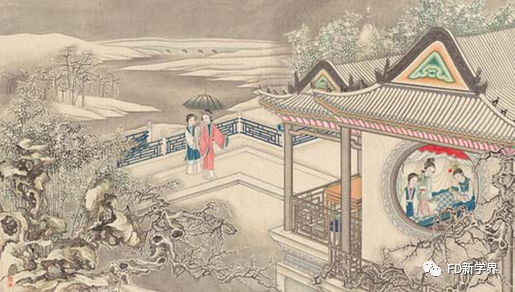
This is how "Dream of Red Mansions" breaks the traditional thinking and writing methods. There has never been a work that created such two worlds, and there has never been any work that has so clearly revealed the Jia Mansion, a world of masters and slaves who are dominated, and no one has imagined and described a social scene like the Grand View Garden where one's own voice makes the decision - perhaps in the author's opinion, tomorrow's society should be like this.
Any of these achievements is a remarkable achievement. However, in my opinion, what is even more difficult to match in "Dream of Red Mansions" is the author's stance and attitude, vision and heart.
According to the general method of writing novels, when you describe two different worlds and two sets of opposing characters, the two characters must be in a state of irreconcilable struggle or fighting. This is not only a social reality, but also a stipulation of the structure of the novel. A novel about confrontation without fighting is almost unimaginable, just like a football game without the pursuit of victory or defeat is unimaginable. You only need to look at the battles in the other three of the Four Great Classics, "Three Kingdoms", "Water Margin", "Journey to the West" and "The Plum in the Golden Lotus", to understand this fact and truth. However, "A Dream of Red Mansions" is different. Not only is there no life-or-death struggle between Chai Dai and Xi Qing in the Grand View Garden, but even the final decline of the Grand View Garden, although it originated from the impact of the Jia family, can hardly be directly attributed to that kind of tangible struggle. Baoyu and Jia Zheng are indeed the two opposite ends of "A Dream of Red Mansions". There is also a chapter in the book about "Bao Yu is punished by all kinds of unfaithful people". However, there is not a sharp conflict between the two people or the two forces. Jia Zheng punishes Bao Yu, but Bao Yu chooses to completely accept the punishment. Although he was as afraid of his father as a mouse is afraid of a cat, this fear did not turn into resentment. Instead, he maintained his courtesy towards his father. Even if his father was not in the house, he would dismount his horse and walk when he passed by his study on horseback. Although Jia Zheng also had a vicious attack on Baoyu, for him, this was just a means of education. At most, it was a poisonous hand, not a fatal hand. At the last moment when Baoyu left the world, "bareheaded, barefooted, with a gorilla felt cloak on his body, he bowed down to Jia Zheng", bowed four times, and floated away on the shore, while Jia Zheng also "hurried to catch up regardless of the slippery ground." This was not only the farewell of father and son, but also their reconciliation, or fundamentally, the two of them had always kept each other in their hearts and could not bear to be separated.
In such a structure, it is not difficult to feel the author's fundamental views on novels, people and social structure. He seems to be looking for other possibilities besides the either-or, you-without-self life. Chai Dai's embrace and Zheng Yu's farewell are all depicting a new social picture of sharing the same joys, appreciating differences, and mutual stimulation, and this kind of social picture may only appear in a life aimed at poetry.
From the perspective of specific readers' reading experience, the author Cao Xueqin must have his own position. However, the information received by different readers and the author's position are completely different, or even opposite. The older one stands with Jia Zheng, the younger one stands with Baoyu; the rational one stands with Baochai, the emotional one stands with Daiyu; the main wife stands with Mrs. Wang, the side house stands with Aunt Zhao... The dispute between Chai Dai and Qing Xi has been endless since the "Dream of Red Mansions". Of course, there is a role of aesthetics of acceptance in this, but the more fundamental reason is that the author does not stand in a certain and narrow position, and has no explicit praise or criticism of the characters. Throughout the novel, apart from the objective narrative description, there is almost no comment or judgment from the author - it is up to the reader how he or she wishes to understand and comment on it. It is precisely because of this that a thousand readers have a thousand copies of "Dream of Red Mansions".
Because the author does not stand on a fixed position, abandoning all the existing ideological concepts, ethics and morals in the past, does not have preconceptions first, does not judge based on his own opinions, and does not focus on someone, something, or a certain point. Therefore, the world and people presented in the whole novel are completely different from the real world and people, especially the real world and people in various works. Mr. Lu Xun said that "Dream of Red Mansions" is "really rare among Chinese novels. The key point is that it dares to describe it truthfully without any concealment. It is very different from previous novels in which good people are completely good and bad people are completely bad. Therefore, the characters described in it are all real people." Good people also have bad people, bad people are also human beings, and even bad people are human beings. In fact, completely good guys and completely bad guys are impossible to appear in reality or in novels. They can only be fake people. Only such people, who have both good and bad qualities, are real people, worthy of respect, tolerance, compassion and love, and can be lived with day and night. Only those who recognize this, maintain vigilance and distance from perfect people, respect and tolerate bad people, are still willing to get along with them, and have compassion are healthy people, and such authors are great authors. He is not a bad person, but Cao Xueqin doesn't like him. "Dream of Red Mansions" not only depicts and shows real people's faces, but also reveals other emotions and attitudes beyond the clear distinction between love and hate - this kind of person and this kind of attitude have never appeared in previous works.
In a culture that seeks common ground while rejecting differences, takes a firm stand, hates evil as much as hatred, and has a clear distinction between love and hate, an alternative novel like "A Dream of Red Mansions" came out of nowhere. This is as strange as seeing an alien book on earth.
Now the question arises, how did "Dream of Red Mansions", the only book among the vast number of books, come about? Why does it appear? Is this completely heterogeneous "A Dream of Red Mansions" a classic or an anti-classic of Chinese literature and culture? Is it a true portrayal of Chinese history and society or a counter-portrayal? If the four great classics are used as metaphors, is today's China a continuation of the "Three Kingdoms" China? Or is it the continuation of "Red Mansions" in China? Should China in the future be the unfolding of the world of "Three Kingdoms" or the unfolding of the world of "Red Mansions"? Should our life continue to be the materialized life of successful kings and defeated bandits in the style of "Three Kingdoms", the enslaved life of my master and your slave in Jia's house, or the poetic life of independence and freedom in the Grand View Garden?
This is a path that we can choose or even avoid when reading "Dream of Red Mansions". It is some questions that we can think about or even must think about. This is also the direction that the "Dream of Red Mansions and Life" course attempts to explore. It is the reason and purpose of this course being offered for a long time.
Luo Shuhua is a professor at Fudan University, the chief writer of "New Academic Circles", and a programming enthusiast. Main teaching and research directions: Dream of Red Mansions, Chinese literature and criticism, traditional Chinese culture, famous writers, classics and civilization, academic research theories and methods, education and culture in the Internet era, Chinese writing, program architecture and design. His books include "Two Phoenixes Protecting the Pearl: The Structure and Narration of the Dream of Red Mansions", "A Close Reading of the Red Mansions", "Mainstreams of Chinese Fiction", "The Study of Chinese Narrative", "History of Chinese Prose", "Chinese Writing Tutorial", etc. In the field of "Dream of Red Mansions" research, theories such as "Two Phoenixes Protecting Pearls" and "Chai Dai and Chai Dai hugging each other" were put forward.

(Pay attention to new academic circles and build new academic circles)
Machine-translated from the Chinese original 罗书华 l 为人不坏,曹雪芹不爱:《红楼梦》是中国文化的经典还是反经典? (published 2021-03-04). WeChat original ↗