(one)
The classmate who grabbed the microphone was of course innocent. He was just a high school student, although he may have completed his bar mitzvah ceremony.
In our tradition, adulthood seems to go through several different nodes. One is the crowning ceremony for boys at the age of 20, and the hairpin ceremony for girls at the age of 15; the second is the wedding or starting a family; and the "thirty-year-old". Even at the age of twenty, physical development has only been completed, but the mind has not yet matured, so it is only called a weak crown. Some people get married and have children, but they may not be born until they are thirty. Saints are like this, and mortals probably rarely make exceptions.
From a student's perspective, youth has no regrets; from a teacher's perspective, youth has no mistakes. As the saying goes, if you are not wild or unrestrained, you will not be right. The words and deeds of young students are not only naturally de-carved, but also carry the luster of collagen and ideals.
As long as he does not break the law, even if he makes a mistake, it is a lovely growth mistake; even if there is any mistake, it is not his, but passed on to him by others.
What's more, there is nothing wrong with whether it is "reading for the rise of China" or "reading for the great rejuvenation of the Chinese nation". Although New China has stood up in 1949 and basically completed the task of rising. A few years ago, China's GDP has become the second largest in the world and has initially completed the task of great rejuvenation. However, it will certainly not rest on its laurels and stand still. It still needs to continue to develop and thousands of students will work hard for the country's continued development. Such an ambition deserves recognition, and its questioning spirit is particularly valuable.
(two)
Some commentators say that "reading for the rise and rejuvenation of China" is a big word. This is half true. Compared with some of the goals and reasons we know, this is big, but not too big. I often brag to my students that we, those born in the 1960s and 1970s, are the luckiest generation in Chinese history. We are connected to three thousand years of slash-and-burn cultivation and to the new era of reform and opening up. In terms of education/learning goals, it can be felt that there are people who, as Zhang Zai said, want to "establish a heart for the world, establish a destiny for the people, carry on the unique knowledge for the saints, and create peace for all generations." This is a beautiful statement, but it is also grand. I don’t know how many times it is bigger than rise and revival.
The study of the generation in the 1960s was not primarily about Zhang Zai Si Wei, but about being the successor to the cause of communism, striving to realize communism, first liberating all mankind, and finally liberating themselves. This is five times or more larger than Rise and Revival.
Of course, even in Zhang Zai's time, there were many people who studied and worked because "there is a house of gold in the book, there is a face like jade in the book, there are thousands of bells in the book, and there are cars like clusters in the book", in order to stand out and honor their ancestors. Words such as "A long drought brings rain, and an old friend meets an old friend in a foreign land. On the night of flowers and candles in the bridal chamber, when the names of the gold medals are inscribed", "It is time for men to get married, and for women to get married," and "talented men and beautiful women" and other words also illustrate the realities and ideals of scholars and non-educators at that time.
Even for people of our generation, like myself and some rural children, the biggest motivation is to "throw away the hoe and jump out of the farm". They do not want to continue to face the loess and back to the sky like their ancestors did for generations. To put it bluntly, it is to get a higher salary, find a more beautiful wife/husband, and live a more decent life. When I was in college, every time the semester started, my grandma would always say something when saying goodbye: "Step by step, get better." In fact, neither my grandma nor I knew what this sentence meant, but it did not prevent it from being her best or even only blessing. Later I learned that the original meaning of this sentence probably means that the official rank is getting higher and higher step by step. Of course, it can also radiate to wealth, degree, cultivation and other aspects. But the more precise meaning is still the former.
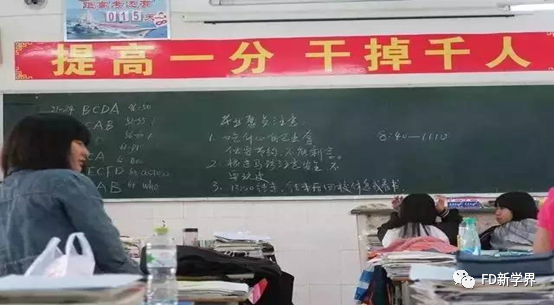
After the reform and opening up, students certainly studied "for the great rejuvenation of the Chinese nation", but they also heard some special slogans and words from time to time. For example: "Raise one point and kill a thousand people", "As long as you can't die in learning, learn to death", "I have to examine myself three times every day: Are I tall? Are I rich? Are I handsome? No, go and study!" These words may not be appropriate, but they also reflect the reality of students' life and motivation in the college entrance examination society from one perspective.
From this point of view, at least since the imperial examination, these two seemingly diametrically opposed purposes/goals/reasons/motivations/discourses have been mixed together, and grand narratives and subtle narratives have coexisted in parallel for more than a thousand years. According to the personal experience of the lucky people of our generation, this should be the truth of history and the truth of reality.
(three)
It seems strange that two kinds of purposes and motivations, one as noble as the family, the country and the world, and one as humble as the dust grains, can coexist in harmony for more than a thousand years, but when you think about it, it is understandable.
The first point is, of course, that different scholars have different ambitions and motivations. Those with lofty ideals take their family, country, and world as their purpose and motivation. Ordinary scholars can support themselves, support the elderly, and contribute a little to the village community, so it cannot be said to be bad. It is also normal in society for everyone to get what they need without disturbing each other.
The same land can have towering trees and creeping flowers and plants; the same sky can have soaring eagles and chickens and ducks walking close to the ground. There are differences in height and different positions, but there is no difference in personality. It is inappropriate to insist on turning trees into pots and putting eagles in cages, or on the contrary, letting flowers and plants grow into tall trees and hens flying into the sky.
The same goes for the motivation and purpose of learning. "Establishing a heart for the heaven and earth, and establishing a destiny for the livelihood of the people" is of course the ceiling of ancient ambitions and goals. However, if people say this and continue to do it, it may not necessarily be a good thing. The sky is only one day, and the earth is only one heart. You want to stand up, and I want to stand up too, so what should I do? If a living person stands up and says, my fate is up to me and not up to you, what will be the result? It is very likely that he either obeys you and is established by you, or disobeys and is fucked by you; or vice versa. Whether such a world can be peaceful for all eternity is really hard to say. "Below the three mountains of yellow dust and clear water, thousands of years of change are like running horses." If you look at the changes in the past dynasties, you can probably understand some of the truth. Even from the perspective of the ancient emperors and the imperial court, they may not want scholars to "establish their minds for the heaven and earth, and their lives for the people." They may think that if you want to establish your minds and lives for the sake of the people, then do I, the emperor, have nothing to do? "The book has its own house of gold, and the book has its own beauty like jade" is said to have been said by Zhao Heng, Zhenzong of the Song Dynasty. It goes without saying that this kind of words has a seductive tone. It is not known whether it also contains warnings against scholars interfering too much in the affairs of the Zhao family.
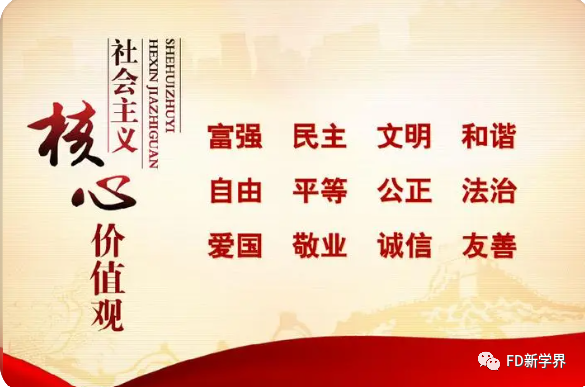
Of course, the most important reason why these two seemingly different motivations and purposes of reading can go hand in hand for thousands of years is that they are also superficially different but actually very similar. Whether it is for the rise of China or for the rejuvenation of China, it is inseparable from economic development and the word "money". The big rivers are full and the small rivers are full. The small rivers are rushing and the big rivers are happy. The wealth of the country can make the people rich, and the wealth of the people can also be combined into the wealth of the country. The two are inherently indistinguishable. The first word of the socialist core values is "prosperity", and the first word is "rich". "Wealth" here refers to both the country's wealth and the people's wealth. It can be seen that except for a certain period of time, the country talks about money and wealth very generously, encouraging all citizens, including scholars, to pursue wealth and get rid of poverty as soon as possible. In particular, they are encouraged to create wealth for themselves and society. As long as it is legitimate income, RMB is a reward from society for wealth creators.
There is something wrong with rich people who despise money, even hate money, or who are obsessed with money while saying nonsense about not loving money or other nonsense. Thinking that money is evil, there is no emotion when talking about money, and antagonizing scholars to get rich and live a good life with rise and rejuvenation. This is a misunderstanding of wealth, feelings, and rise and rejuvenation. Black and white is also a kind of simple linear thinking; I am definitely right and you are definitely wrong, which is a kind of cognitive naivety.
To put it bluntly, even in a love marriage, under the same circumstances, it is more reasonable to join hands with the other person because he/she has money than to join hands with him/her because he/she has no money, although relationships are sometimes unreasonable.
It is worth reminding that although reading can help make money and help rise and rejuvenate, this is only its function and value, not necessarily its essence. The nature of reading is probably to pursue truth, wisdom and morality. Confucius said: "Being rich and noble without justice is like a floating cloud to me." Perhaps this is what readers and scholars should say more.
(Four)
As a teacher, of course, we should encourage young students to study in order to continue to rise and rejuvenate. We should also guide them to implement this grand ambition to understand wealth, respect wealth, and create wealth; learn from the strong, care for the weak, and respect dissenters; "Do not do to others what others do not want you to do to others", "Be selfish and private, love yourself and love others"; teach them that the original meaning of reading is to pursue truth, wisdom and morality.
Because I was not present, I don’t know if Teacher Chen mentioned this. From the Internet, I saw that he also included his family and words such as "hybrid", and I can feel that he worked hard for the effect. But judging from the results, it can only be said that he doesn't know much about the psychology and needs of middle school students, and his flattery is on the wrong side of the horse. Despite giving more than 1,000 speeches.
Of course, judging from the microphone grabbing incident, the students seemed to have some unrealistic expectations for the lecture. In fact, no speaker may be able to meet the wishes and expectations of all listeners. Essentially, no outsider except yourself knows exactly what you are thinking and what you need. It is true that the speeches of teachers (others) may not all be correct. They can be questioned and discussed, and they need to be questioned and discussed, but perhaps a better way of dialogue can be used. For those "teachings" that you do not accept or cannot accept for a while, if there is no suitable opportunity for questioning and discussion, it is not a bad idea to let it drift by, as long as he does not force you to accept it. Also, is the theory of worshiping Mei appropriate?
(five)
If one day I am in class and the microphone is snatched away by a student, I may feel uncomfortable for a while.
However, judging from past experience, the probability of this happening should be low. Even if they are dissatisfied with the content and methods of my courses, they probably won't be so pushy, because most of them know that harmony without diversity and diversity are the most authentic Chinese culture; in my classes, they also have enough opportunities to express and dialogue, and the microphone is often in their hands, and they don't have to go on stage to grab it; Even if we have different opinions, we understand that both parties are explorers of the truth, not masters of it. They will not refer to the teacher (others) as "this person" because of their different opinions. Instead, they will speak politely: "Teacher, I don't agree with your point of view. The reasons are 1, 2, 3, 4... If there is any inappropriateness, please enlighten me."
After all, college students have already passed the highly competitive stage of the college entrance examination, where "a single point higher will kill a thousand people." They are older, more knowledgeable, have a broader vision, and have a softer heart. They know that if they snatch other people's microphones in class today, they may cut off other people's articles and destroy their accounts if they open a company in the future. If they have more power, they will do even more outrageous things. "Don't do to others what others don't want you to do to them; don't do to me what you don't want others to do to you." This is the golden rule of Chinese civilization and one of the bottom lines of civilization.
I believe that this classmate who raised his arms and shouted slogans of rejuvenation on the podium will soon understand that these are one of the essentials of "reading for the great rejuvenation of the Chinese nation."
I saw reports that Teacher Chen is under investigation because of this speech. As a teacher, I feel it is my duty to say a few words for reference by investigators.
About the author
Magic Arhat, also signed as Demon City Arhat, real name Luo Shuhua, professor at Fudan University, main writer of the public account of "FD New Academic Circle", and programming enthusiast. Main teaching and research directions: Dream of Red Mansions, Chinese literature and criticism, traditional Chinese culture, academic research theories and methods, Chinese writing, education and culture in the Internet era, network architecture and design. His books include "Two Phoenixes Protecting the Pearl: The Structure and Narration of the Dream of Red Mansions", "A Close Reading of the Red Mansions", "Mainstreams of Chinese Fiction", "The Study of Chinese Narrative", "History of Chinese Prose", "Chinese Writing Tutorial", etc. In the field of "Dream of Red Mansions", the theories of "Two Phoenixes Protecting Pearls" and "Chai Dai competing for marriage" were proposed. In the field of culture, "Don't do to others what others don't want you to do to them; don't do to me what you don't want to do to me" is the golden rule of Chinese culture.
Message description
FD New Academic Circle advocates and follows the principles of dialogue: when discussing issues, do not ignore others, present facts, be reasonable, abide by laws, have goodwill, tolerate different opinions, stay motivated, and deal with the issue rather than the person. This is called the "Nine Laws of Dialogue in the New Academic Circle". All messages and comments will be posted without distinction in views and positions, with the exception of rumors and lies that are clearly inconsistent with facts and laws, and remarks that call for violence, hatred and personal insults. If your messages and comments are not among the "exceptions" and are not released, it is not because of this account, but because they are controlled by the WeChat public account platform, or the comment limit for this article has been reached. We would like to inform everyone, thank you for your support and participation.
Machine-translated from the Chinese original 魔罗汉:开学第一课,我也来抢个话筒 (published 2023-02-28). WeChat original ↗