First of all, on behalf of Teacher Huang Lin, I would like to express my gratitude and congratulations to everyone for coming and the smooth progress of this meeting. Teacher Huang is a senior researcher of "Jin Ping Mei" and also deeply understands the essence of "Dream of Red Mansions". The teacher was originally planning to attend this grand event, but unfortunately, his wife had an operation a few days ago and needed to stay at home with her, staying with her every step of the way. The teacher felt guilty for missing the event, but I felt that this was exactly the attitude that a true researcher of "Jin Ping Mei" and "Dream of Red Mansions" and literature researchers should have. While academic research is important, caring for and accompanying the people around you is even more important. (applause)
When I step onto the podium, it means that our meeting is coming to an end, toward a victorious end. Everyone may have a similar feeling about this meeting: this meeting is very tense, compact and compact. (Laughter) I've never been in such a tense meeting. It starts at eight in the morning and lasts until 5:30 in the afternoon. There is no break at noon. It can be said that there is no time and airtight. Last night, I took advantage of my professional life and invited several teachers to give collective lessons to the students, depriving them of their rest time. Each professor's speech time is also very long, each report lasts for thirty minutes. We can only attend each class in school for thirty minutes, which can be regarded as a conscience lesson, right (audience laughs). After these more than twenty reports, there are more than twenty lessons. What is the concept? Isn’t it just a course? It’s not surprising that everyone feels nervous, compact, and tight when a course is compressed into two days.
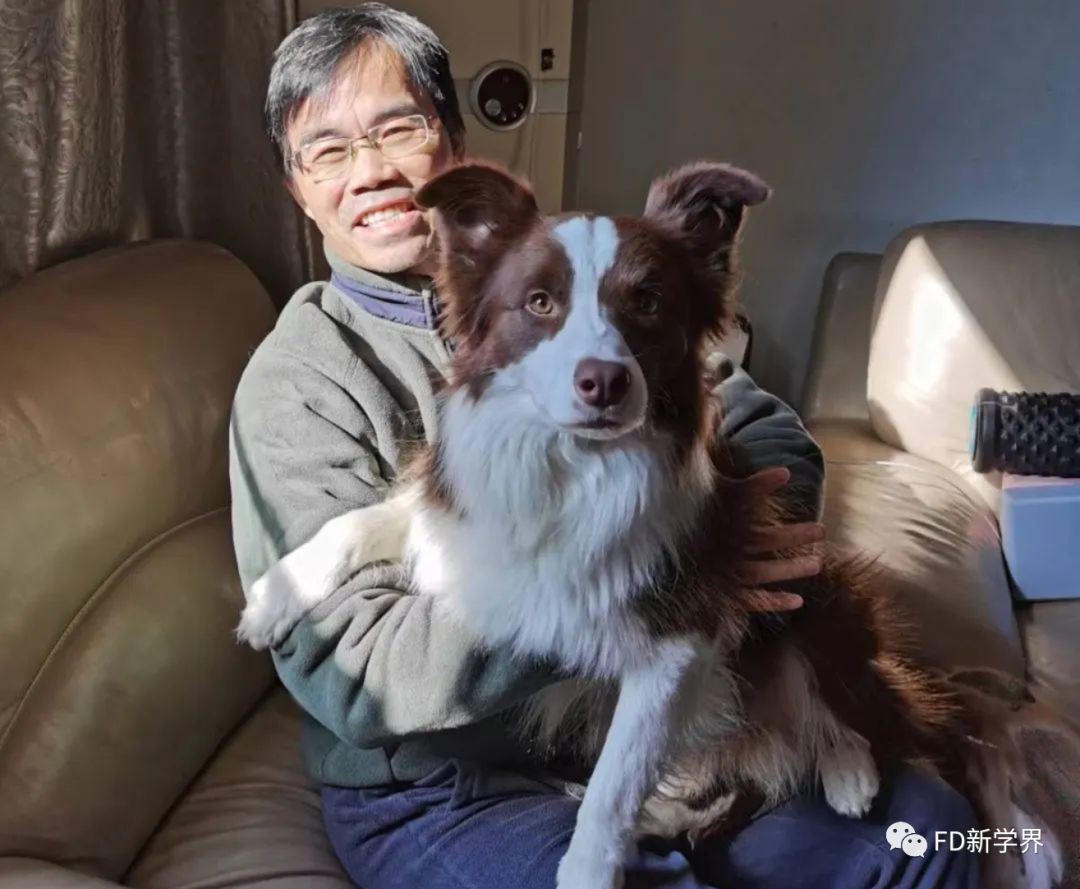
Because I rarely have such early classes or hold such early meetings, I have squeezed time to get to the venue these two days, and I only arrived two or three minutes before eight o'clock. Director Chen Yinchi criticized me when we met yesterday: "Brother, are you still the convener of the meeting? Are you still the host? Shouldn't you be a host?" He didn't know that I also shouldered another important mission during this meeting. I have a puppy, Pochi, at home. Well, it can also be said to be a big dog. If you bring him over, he can climb up the podium. He has to go out for a run for an hour at six o'clock every morning. This puppy needs my care even more. But we are all big professors here, so there is no need for me. The affairs of the conference are handled by the staff of the Chinese Civilization Research Center, and Professor Lin Tao takes care of the invitation, arrangement, and hosting of the conference. I was actually summoned by him, and it was not appropriate to add chaos to the meeting by making random remarks. The most beautiful scenery of this meeting is Professor Qi Lintao sitting at the gate, using his orchid finger to gently slide the PPT pictures on the screen. (Laughter) Although I was a little rude, but everyone understands the reason, especially when they know that I am in a hurry, they should be tolerant and considerate (laughter).
In addition, I sat in this corner during the whole meeting and did not show my face, which was also out of helplessness. First, I really haven’t done much research on "Jin Ping Mei" and I am not qualified to sit on an equal footing with everyone. I can only listen attentively. Related to this, I rarely participate in the activities of "Jin Ping Mei" and the Jin Academy. I am lucky enough to meet many famous teachers here for the first time, which makes up for the regret. Teacher Huang Lin often taught me that while I was in Huangmen, I should write several articles on "Jin Ping Mei" and actively participate in metallurgical conferences. Of course I dare not not listen to the teacher's teachings, but there is nothing I can do about it when I pick up a pen and can't write. Everyone sees that I am over fifty years old, almost sixty years old, but my mentality is still very young. Well, I am like an immature boy. Whenever I pick up "Jin Ping Mei", I still blush and my heart beats, and I dare not read it (audience laughs), but I read "Dream of Red Mansions" with gusto. So in this meeting, I can only hide here and listen.
Thanks to your intensive lectures and my careful listening, I finally have an understanding of "Jin Ping Mei" and its translation, and I would like to report some thoughts to you.
This conference is called "The Golden Lotus of the World: Overseas Translation and Dissemination". There are more than 20 reports, which roughly include three aspects.
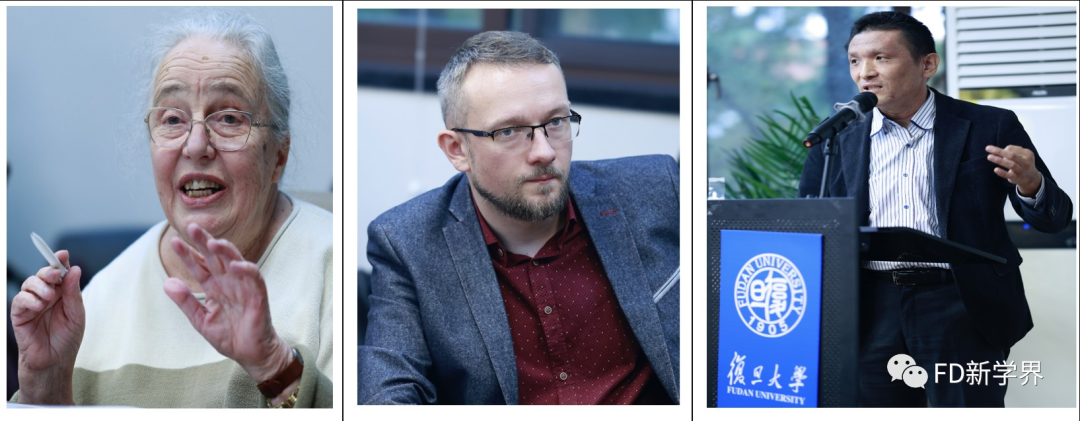
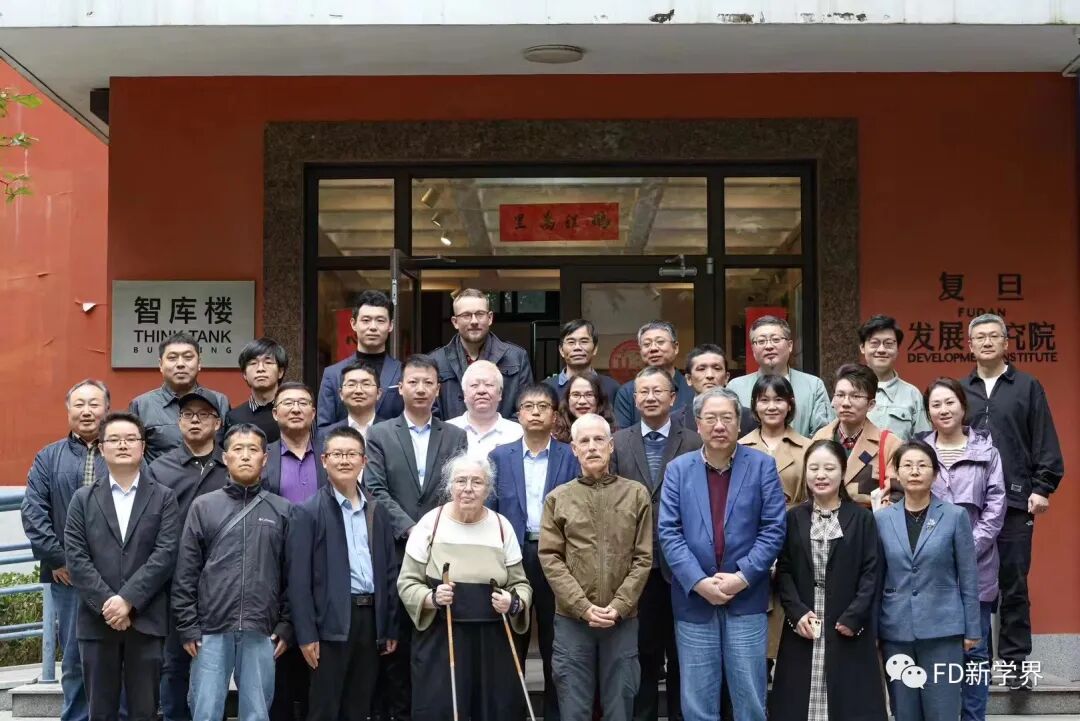
First of all, our translators, the translators of "Jin Ping Mei", came to Fudan from all over the world to introduce their translation experiences, insights and achievements. Special thanks go to Mr. Vibeke Børdahl, who pushed his wheelchair from Denmark to here step by step, which was not easy (laughing); Mr. Ondřej Vicher flew from the Czech Republic, passing through war-torn areas on the way, and risked being hit by missiles (laughing); Mr. Tomoyuki Tanaka also came across the ocean to see you, to share with you the pain and joy of translating "The Golden Lotus" word for word. To those translators of "Jin Ping Mei" and Chinese literature who came to the venue in person, as well as those who were unable to come to the scene this time, we express our deep respect and thank you. (Warm applause from the audience) Through your translation, people from all over the world will not only have the opportunity to understand "Jin Ping Mei", Chinese literature and culture, but their quality of life, especially the quality of nightlife, should also be improved. (Audience laughs)
The second aspect is the research and introduction of the translation of "Jin Ping Mei" by scholars at home and abroad. This conference is not only a big gathering of translators and researchers of "Dream of Red Mansions", but also a big gathering of translations of "Dream of Red Mansions" (the audience laughed: "It's not "Dream of Red Mansions", it's "Jin Ping Mei""), oh, yes, it's "Jin Ping Mei". It shows that what I said before is not untrue, right? The fox's tail will always be exposed (laughing to myself). With the help of the conference manual, we can see that Mr. Zhou Xuanlong's "A Preliminary Study on the Translation Quality and Problems of Clement Jin Ping Mei", Mr. Wen Xiuying's "Study on the English Translation of Jin Ping Mei and Rui Xiaowei's Translation", Mr. Zhao Chaoyong's "Study on Reader Acceptance of the English Translation from the Perspective of Reception Aesthetics", and Mr. Pan Jianing's "Research and Translation of Rui Xiaowei's Jin Ping Mei Philology" were excellent reports, which provided in-depth research and introduction to several important English translations.
Mr. Miao Huaiming's "Discovery and Analysis of the First Foreign Complete Translation of Jin Ping Mei", Mr. He Jun's "Translation and Research of Jin Ping Mei in the German-speaking World", and Mr. Wang Jinbo's "Research on the Translation and Reception of Franz Kuhn's Jin Ping Mei" made in-depth and detailed research and introduction to the German translation.
Next, Mr. Gao Yuhai's "Research on the Golden Lotus by the Russian Sinologist Kobodev" and Mr. Liu Mingyang's "The Golden Lotus in Russia" made some in-depth or systematic research and introduction on Russian translation and communication. Mr. Yang Bin's "Analysis of the spread of Jin Ping Mei in Japan", Mr. Jubao's "Review of Mongolian translations of Jin Ping Mei stored at home and abroad", Mr. Xiuyun's "Literary Investigation of the Manchu Translation of Jin Ping Mei in Dalian Library", Mr. Xia Lu's "Analysis of the Cold Reception and Reasons of Jin Ping Mei's Translation in Vietnam", and Mr. Xiao Daping's "Research on the Korean Translation of Jin Ping Mei" have jointly completed the puzzle of Asian translation from different angles.
Mr. Zhang Hongwei's "Comparative Translation Fragments and a Glimpse into the Arabic Translation of Jin Ping Mei" is very rare and makes up for the shortcomings of the Arabic translation of this study. Mr. Zhang Lijun's "Practice of the "Art of Betrayal" in the Translation of Jin Pingmei by Lei Linkosi" was the most courageous and candid report in the two-day report meeting, and was richly illustrated with pictures and texts. In his previous report, Mr. Yi Debo said that he would show you some wonderful pictures, but in fact only one or two were shown. Obviously, everyone was still unsatisfied. This regret was compensated to a certain extent in Mr. Zhang Lijun's report. (Audience laughs) Finally, Teacher Tang Jun drew a magnificent "World Map of Translations of Jin Ping Mei", which brought a successful conclusion to the conference report.
The above reporters either unearthed treasure documents from the secret rooms of the ancient castle, or interviewed the translators face-to-face, or checked the translation word for word, or based on theoretical macroscopic observation, or with the help of computing technology, they jointly described the process of "Jin Ping Mei" swaying towards the world with the steps of a golden lotus, allowing us to see the wonderful beauty of the plum blossoms in the golden vase blooming all over the world. It is worthy of being a major review and summary of the translation and communication research of "Jin Ping Mei".
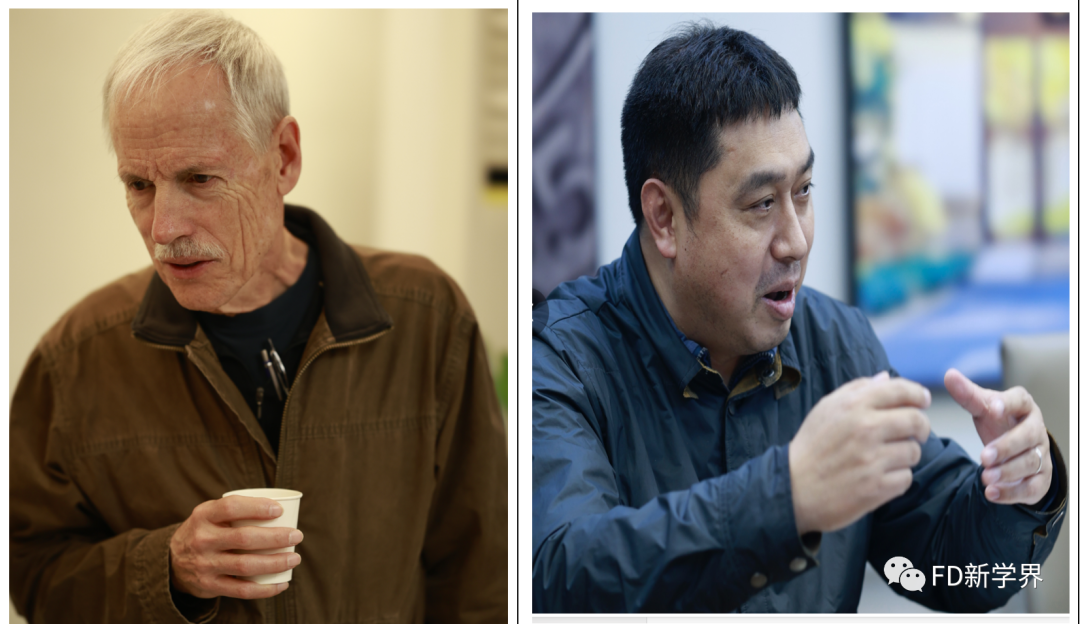
The third aspect is the study of the text of "Jin Ping Mei". There are not many in this area, but they are very representative, one Chinese and one foreign. Mr. Keith McMahon conducted an in-depth study on the essence of "The Golden Ping Mei", which is the sexual description. The Chinese title of the report is "Blindly Breaking the World's Love" and the English title is Saying All that Can be Said. They complement each other and give a clever response to "The privacy of the boudoir, why is it not there? It is unspeakable." It is a bit regretful that Mr. Mark Meng did not disclose all these indescribable things to the public in view of the fear of telling the truth. Perhaps he also refused to share the delicious food. (Audience laughs) Mr. Zhang Yihong's "Study on Pu Andi's Jin Ping Mei from the Perspective of "Chinese Narratology"" reveals the four major characteristics of Pu Andi's research: theoretical observation, historical reading, textual criticism, and mutual learning between China and the West. The revelation of these four characteristics should also have important reference value for the study of other novels. However, the structure research of Pu Andi's ten-chapter unit may be mechanical, and attention must be paid to it. The text research of these two gentlemen will definitely be helpful for the translation and dissemination of their works, and it does not deviate from the theme of this conference.
Perhaps because this conference did not have a collection of papers, and I was responsible for summarizing the conference, it can be said that I listened to the lectures more seriously than ever in the past two days. I listened and took notes, not counting all the notebooks issued by the conference. I also stole a notebook from Teacher Yi Debo. Through this conference, I not only learned more about the translation and dissemination of "Jin Ping Mei", but also gained a deeper understanding of the nature of academics and culture, as well as the differences, exchanges, circulation and integration of culture and academics. Everyone here comes from different cultures and regions, with different subject backgrounds. Some are from English, some are from Chinese, and they also have different directions and characteristics in translation or research. In addition to the different languages of translation, there are also differences between the complete version and the abridged version. I annotate the Six Classics and the Six Classics annotate me, or I translate the Golden Ping and the Golden Ping translates me. There are differences between literary translation and academic translation, restoration and betrayal. The research section has different characteristics such as literature, edition, text, thought, culture, etc. Each has its own characteristics and strengths and weaknesses, fully demonstrating the diversity, difference and richness of translation and scholarship. These differences not only do not hinder mutual communication, but constitute the prerequisite for communication. Without differences, there would be no communication. Through communication, especially two-way communication and cyclic communication, the effect of mutual integration is achieved. Due to the difference between translation and academic research, we can more clearly see the strengths and weaknesses of the other party and our own shortcomings and ignorance. We also have a more sympathetic understanding of the mistakes in the translation of works and academic research. On the one hand, we point out the mistakes in good faith, and on the other hand, we are tolerant. It is precisely because of the differences and the desire for communication that "Jin Ping Mei" has spread all over the world, and friends from all over the world have gathered in Fudan. Scattered is a sky full of stars, gathered is a happy fire.
During this meeting, I also deeply felt that some exchanges at this stage are still one-way, and there is a lack of more two-way and circular exchanges. This requires us to have a deeper understanding of both sides, especially the language and culture of the other side. If you don't understand Danish, Czech, Japanese or other languages, you won't be able to appreciate the beauty of their translations, see their shortcomings, and help the other party improve their mistakes and make them perfect.
The reason why "Jin Ping Mei" is deeply loved by all over the world, especially by everyone here. Why do translators and researchers devote their lives to one book for decades? On the one hand, it is certainly due to their own sense of mission. On the other hand, it may also be directly related to the content and nature of "Jin Ping Mei". There is nothing private about the boudoir. The privacy of the boudoir is the ultimate in communication and integration. From it, you can feel the fundamentals of academics, culture and people themselves. This is probably its ultimate charm.
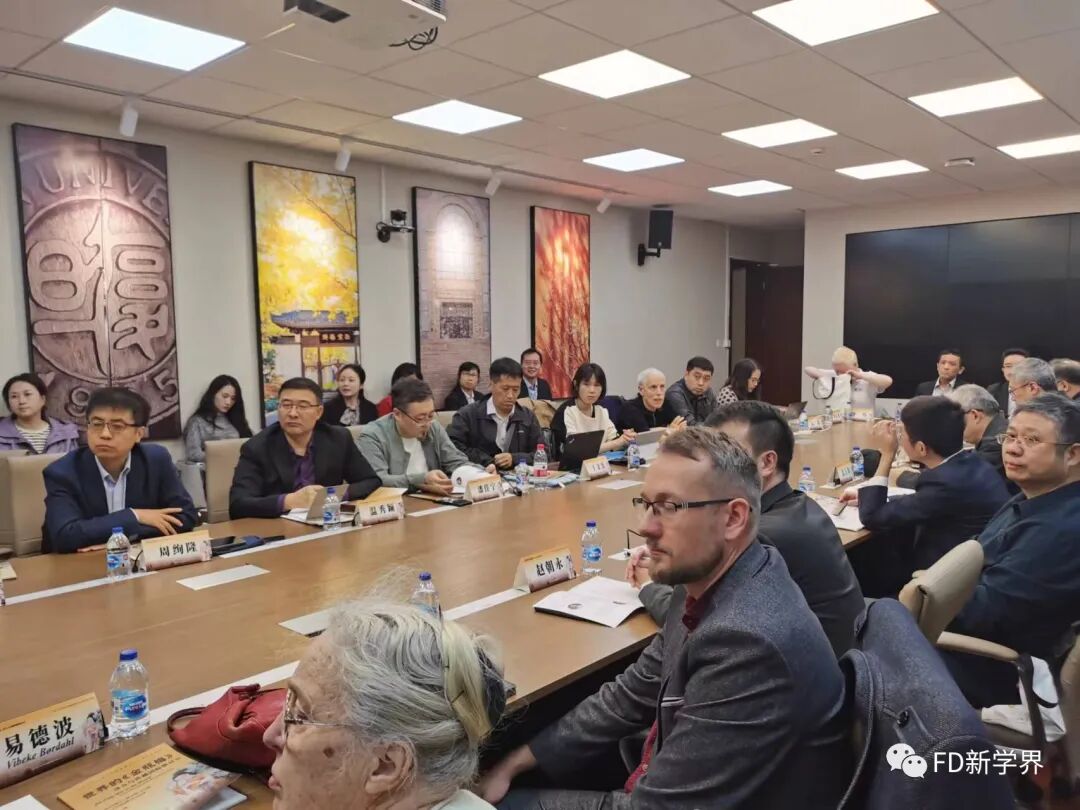
Finally, I would like to thank everyone once again for coming all the way to gather at Fudan and teaching me a vivid lesson. Special thanks go to Professor Qi Lintao, who prepared and hosted this meeting from beginning to end. He put in a lot of effort and put on the hat of a convener even though I had no contribution at all. We would also like to thank Director Chen Yinchi, Teacher Qian Yu and other staff of the Chinese Civilization Center for their strong support. Please forgive me for any shortcomings in the meeting.
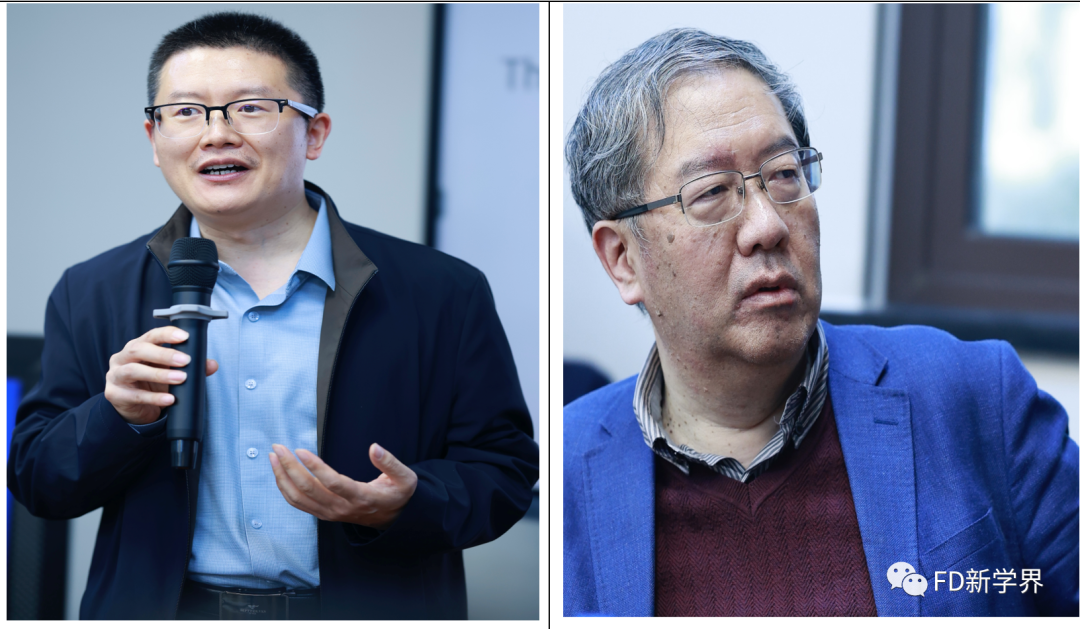
Of course I have some expectations. There is no end to learning. I hope that after this conference, everyone will continue to read, study and spread "Jin Ping Mei" in depth, especially to apply what they have learned, have more children, and make due contributions to increasing the birth rate around the world. It is best for each researcher to complete three indicators. Otherwise, five hundred years from now, no one may be studying "The Plum in the Golden Vase", and there will never be such a gathering again. (laughter)
Thank you all again, see you soon. (applause)
(Compiled based on the recording of the concluding speech of the conference. Time: 15:30-16:00, November 11, 2023, Location: 402, Fudan Think Tank Building.)
About the author
Mo Luohan, real name Luo Shuhua, family name Mo Hongxuan, alias Modu Luohan, is a professor at Fudan University and the main writer of the public account of "FD New Academic World". Main teaching and research directions: Dream of Red Mansions, famous works and civilization, academic research theories and methods, Chinese traditional culture. His books include "Two Phoenixes Protecting the Pearl: The Structure and Narration of the Dream of Red Mansions", "A Close Reading of the Red Mansions", "Mainstreams of Chinese Fiction", "The Study of Chinese Narrative", "History of Chinese Prose", "Chinese Writing Tutorial", etc. In the field of "Dream of Red Mansions", the theories of "two phoenixes protecting the pearl" and "chai and dai competing for marriage" were put forward. In the cultural field, advocating "don't do to others what others don't want you to do to them; don't do to me what you don't want others to do to you; respect the strong and pity the weak, compete with each other; be open and inclusive, be honest and abide by the rules" is the core of the Chinese national spirit.
Message description
The FD New Academic Circle advocates and follows the dialogue guidelines of "discussing issues without sidestepping; presenting facts and being reasonable; following laws and regulations with good intentions; transcending positions and staying far away from motives; tolerating dissent and not focusing on the individual." This is called the "Nine Laws of Dialogue in the New Academic Circle". All messages and comments will be posted without distinction between positions and opinions, with the exception of rumors and lies that are clearly inconsistent with facts and laws, and remarks that call for violence, hatred and personal insults. If your messages and comments are not among the "exceptions" and are not released, it is not because of this account, but because they are controlled by the WeChat public account platform, or the comment limit for this article has been reached. We would like to inform everyone, thank you for your support and participation.
Machine-translated from the Chinese original 罗书华:多少有点放荡的发言 I “世界的《金瓶梅》国际研讨会“闭幕词 (published 2023-11-22). WeChat original ↗