The last time I scolded a student was on October 30. In a flash, it’s the weekend at the end of the month, and I can curse without restraint again. Isn’t it wonderful?
1. About "The Symbiosis of the Realm of Poetry and the World of Imagination"
Luo scolded:
"The symbiosis of the realm of poetry and the world of imagination" is a topic you can consider. Poetry is also an imaginary world, right? The article is divided into three sections, from overview to function to historical position, with a good structure.
Since the entire article is about poetry, the word "poetry" in the subtitle of the second section can be deleted. This section talks about functions. Is the “tendency to show off talents” a function? Let’s think about it for a moment.
The third section talks about inheritance and breakthrough. It is pointed out that the number of poems in Liaozhai is significantly reduced compared with the previous generation of classical Chinese novels. The basis seems to be insufficient. The reference is only 243 poems in "Yi Jian Zhi", which includes many episodes of A, B, B and D. "Not using a lot of poetry to describe" and "hardly using poetry to explain" are also problematic and weird. This is neither an inheritance nor a breakthrough. From a negative perspective, it is difficult to see the positive meaning of "not using it extensively" or "not using it". More importantly, would previous classical Chinese novels use poetry to describe and reason? Not really, they are mostly the works of the characters in the text. Using poetry to describe and reason should be the characteristics of Pinghua. There are a large number of poems in the novella romance novels of the Ming Dynasty. Let’s examine whether they are used for description and reasoning.
2. Regarding "Research on Character Theory of Dream of Red Mansions"
Luo scolded:
My last and previous opinions are just for reference and do not necessarily need to be copied. My words are just some peripheral thoughts and may not be in line with the actual situation of the target. If you conduct more in-depth research, you should be able to find better lines and frameworks. All my speeches are like this.
Zhijun said that the introduction is relatively brief and needs to be enriched. Why do you want to study "A Theory of Characters in A Dream of Red Mansions"? What special value does it have? It has a decisive value in the history of red studies, especially in the history of character studies in "A Dream of Red Mansions". It is still being published again and again. Isn't this right? This part should be explained.
It seems that the version evolution part should not be placed in the introduction, but somewhere in Chapter 3. Of course, if it is written now, it will be easy to transfer it later, and the workload will not be heavy.
The most important thing is that you need to understand in your own mind where the classics of this book lie. Once you grasp this, you can start writing your thesis. You can give an overview first in the introduction, and then expand on it in detail in Chapters Two and Three. It feels like you may not have grasped it now.
This requires knowing its background. One is the background of the history of Red Mansions, and the other is the background of the history of character research in Dream of Red Mansions. To know the basic paradigm of character research in "A Dream of Red Mansions", have you read "Commentary on the Controversy between Hairpin and Dai" that I asked you to read last time? Triggered or inspired? The opposite trigger is also good. Are the three paradigms of ground figure paradigm, typical paradigm, and cultural and aesthetic paradigm reasonable? Are there any other paradigms? If you think this conclusion is reasonable, then you need to position "Theory of Character". What kind of paradigm is it? It doesn’t have to be one of the three types. It’s probably between several types. There is a gradient, and a position must be determined for it.
Then, discuss why it is where it is and what changed between the two versions. in this location and why the change occurred. Trends of the times, literary theory, history of red studies and character studies in "A Dream of Red Mansions", the 1930s and 1940s,
Kuomintang-controlled areas, liberated areas, left-wing and right-wing areas, etc., these are its background and coordinates. Through the author's collection of essays and poems, we can see its origin, classify it into categories, and also see its status, characteristics, and value. You must have these three layers of background and coordinates, otherwise there is no way to talk.
There may have been dissertations in this area before, but judging from the general situation of dissertations, they may not have achieved this, so there is no need to worry.
The first draft will be handed in on December 6th, and we will go through the process first. It’s about the beginning of March for the pre-defense. There are still three months left. It’s still time to concentrate on research and arrange less internships. If you don’t have a plan, you will be scolded.
3. About "Scene Description of Chinese Novels"
Luo scolded:
Compared with last month, there are some new developments, which is gratifying. As the old saying goes, we still need to consider the choice of direction in research, whether to choose "scene description of Chinese novels" or "scene theory in Chinese novel criticism". I personally prefer the former. In addition, the construction of scene theory can be roughly divided into four parts, namely the relationship with the characters and the relationship with the plot. The plot relationship can be divided into the relationship with the love affairs, and the rhythm is another. Idle writing and busy writing probably belong to the rhythm. In addition, the scene description itself can also be a self-contained one, such as fictional realism. These four sections should be placed in a larger context, such as the characteristics of novel reviews by Jin Shengtan and others, and the system and theory of scene description in Chinese novels. The latter is both the background and the goal. With this background, the first four plates and their internal structures can be glued together.
4. Book report on "The Rise of Modern Academic Research Institutions in China"
Luo scolded:
Well, this is a good book report. You can clearly feel what book you read, what feelings and gains you have made, and it is also clearly organized and structured. If the standards were higher, such as "clear problem awareness" and "prudent attitude towards historical data", such a discussion may not be appropriate for a mature scholar, nor can it be regarded as praise, because these are the basic requirements of academic research. If he has no awareness of the problem and his attitude is not prudent, then you can point it out. If we want to have an in-depth discussion, we should focus on the specific issue he discussed, which is to look at the modernization of traditional Chinese academics through the formation of Sinology. This depends on what he provides more than the previous discussion. Teacher Chen Pingyuan also wrote "The Establishment of Modern Chinese Academics: Centered on Zhang Taiyan and Hu Shi" before. To discuss it in depth and see its pros and cons, you must understand the issues discussed, the existing research, and master a wider range of information, so that you can see it more clearly. Only in Lushan Mountain, the true face of Lushan Mountain cannot be seen clearly. This is true for book reports, academic evaluations, and academic research.
In addition, you can refer to the "New Academia Academic Evaluation Standards" when making academic evaluations. Without standards, there is no way to evaluate. If you feel that the standards are imperfect, you can give your opinions; if there are no better opinions for the time being, you can apply them. Although in the current environment, it is difficult for such a standard to have a greater impact, and I do not have high expectations myself, but the number of clicks of about 3,000 is still one of the standards with the largest number of clicks in recent years. These three articles, "About Mo Hongxuan Reading Club", "New Academic Evaluation Standards", "The Relationship between Sheep Herding, Divorce and Tutoring Graduate Students", and perhaps "Review of Research on Ancient Chinese Novels and Dramas in 2014", are basically written in them. Some of my thoughts on academic research are basically written in them, and my daily speech is basically the repetition and application of them. You can refer to it directly when studying, writing or making academic evaluations.
5. About "Zou Tao's Geographic Writing"
Luo scolded:
The research object is also unclear. Which books are we going to study? What will "geographic writing" study? I can't feel it. "Shadows in the Dust and Sky on the Sea" is a novel, right? Is "The Examination of Recent Politics of All Nations" a political book? According to the four-part classification, it belongs to the history department. "San Jie Lu Bi Tan" is a note, and "San Jie Lu Collection" is a collection. How to study these works of different styles? Why not take a certain work as the research object, or focus on "Zou Tao's Shanghai Writing" to see how the Shanghai he wrote is different from the Shanghai of people at that time? "Zou Tao's Overseas Writings" should also work. This way at least the object is more certain. There is still one year left, so it should be enough time.
6. About "The Inheritance and Transformation of Jin Shengtan"
Luo scolded:
Relevant comments from the reviews of Jin Shengtan's "Sketches of Talents" and "The Romance of the West Chamber" have been excerpted. This work deserves recognition. But this question is very difficult. To do it well, we must first understand what the "origin, inheritance, transformation, and combination" in Chinese literary theory mean? What does it refer to as "originality, succession, transition, and integration"? I guess that previous poetic and literary commentators just talked about chapter structure in general, and Jin Shengtan might have just talked about it casually in a general way. This is a very general concept that applies to almost all chapters and processes. For the study of this concept, the basic path is to analyze, that is, to see what objects they refer to by "original inheritance, transformation and integration"? What are the methods of “starting”, “inheriting”, “transforming” and “combining”? What is the significance and value of each of these distinctions or classifications? In what context and coordinates does it make sense? What is the purpose of your research?
Simply saying that Jin Shengtan applied "rise, inherit, transform, and combine" to various commentaries is of little value. It is a concept with high applicability. Even stage performances can also have rise, inherit, transform, and combine, and stage lighting can also have rise, succession, transform, and combine. Simply listing the relevant comments in reviews and simply explaining them will not be effective. It seems natural to say that "initiation, inheritance, transfer and combination" belongs to the category of grammar and has little value.
Maybe we can examine the process of "original inheritance, transformation and integration". Mr. Jiang Yin and Mr. Huang Qiang have done so before, and maybe we can make some progress. As a course assignment, of course you can choose a genre such as opera and try to write it into a piece first. If we want to understand Jin Shengtan's "origin, inheritance, transition, and combination" in various literary styles, the goal is probably to find Jin Shengtan's "origin, inheritance, transition, and combination" structural concept across literary styles. The background is the structural science of various literary styles. The conditions are not enough for the time being. It requires not only a careful reading of the text, but also a broad theoretical background. At that time, I was writing "Two Phoenixes Protecting the Pearl", I criticized four or five sets of "Dream of Red Mansions", and I started writing my master's thesis after reading through all the relevant theoretical works at home and abroad, both ancient and modern.
7. Regarding "From Reality to Fiction: The Origin and Development of Narratives"
Luo scolded:
You are in the intense writing stage now, so I won’t comment too much to avoid disturbing the process. Just cover your head and write in capital letters. It would be better if you have a chance to comment after you finish writing. If you have enough determination and are not swayed by other people's opinions, you can handle the falsehood and truth in the text, quotations, and the author's appearance and position better. The question about where the subject-object questions and answers in Han Fu come from is from a stylistic point of view. It can be traced back to Chu Ci, and then extrapolated beyond the text, it is the simulation and reproduction of dialogue between characters in real life, so it has the dual characteristics of text and narrative. It is very important to understand this. Text is just the author's words, while narrative is a simulation of the world, in which the speaker can be seen and the speaker's words are included.
8. Regarding "The Praise of Literati in the Late Qing Dynasty and the Early Republic of China"
Luo scolded:
It is also a problem of objects, background and coordinates. This is a problem that everyone needs to solve now. We are not in a hurry to discover the problem now. This will take several years to develop, so there is no rush. One paper also said that whether it is a book report, you must be able to clearly feel its starting point, what kind of books you read, what is the object of the research, and what is the background? The title says "late Qing Dynasty and early Republic of China", which means how the patronage at this time is different from that of the previous generation. "The patronage of literati" means that it is different from "businessmen", "bureaucrats" and other patronage. If these are revealed, it will have some meaning. If we focus on the matter and just list a few ways to support ourselves in that era, it will not be of much value. Everyone can probably name these methods casually.
9. About "The Sketch: North Korea's Reorganization"
Luo scolded:
The target is also unclear, so it is better to study a certain work directly. The spread and influence of a certain writer's collection in North Korea is much better than the general "short pieces". You can also choose the "sketches" in "Records of the Joseon Dynasty" and "Records of Jeongjo" as objects, if they refer to sketches of the Ming and Qing Dynasties. First of all, we need to find and list these works, their versions in North Korea, which people and works they influenced, and then read them one by one.
Before Luo finished cursing, the students couldn't wait to close their computers and walked out of Mohongxuan one by one in despair. The time at this time is 23:20.
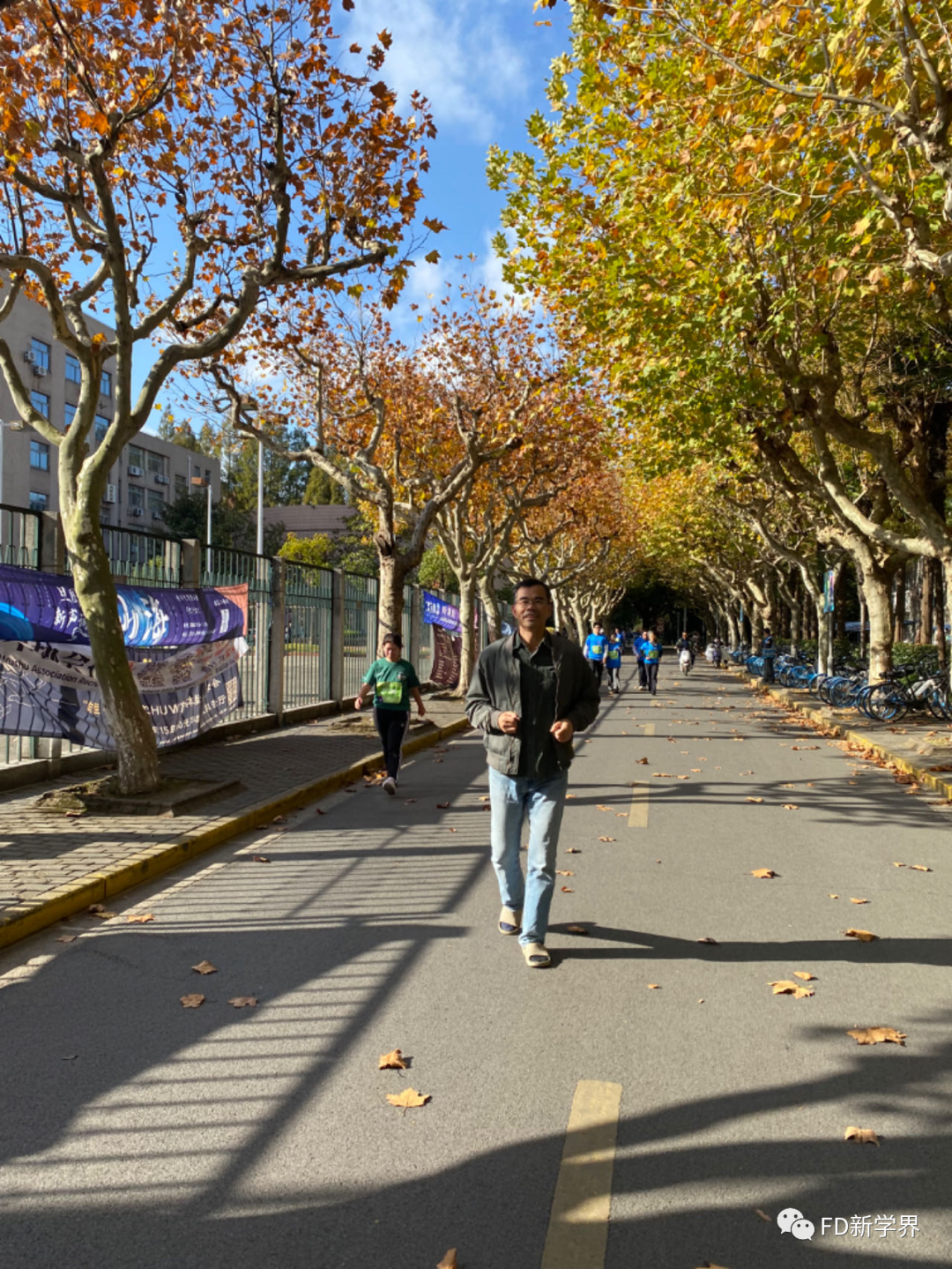
(This is a personal speech at the Mohongxuan monthly reading club. Time: 19:00 on November 24; Location: Mohongxuan, the west main building of Guanghua Building. On November 25th, I came out of the cafeteria for breakfast and saw that the school was conducting a fun run. So I put on my slippers, picked up two uneaten eggs, and followed the team to complete the 3300m fun run. Back to the office, I recorded the memory of last night’s speech as above.)
About the author
Mo Luohan, real name Luo Shuhua, family name Mo Hongxuan, alias Modu Luohan, is a professor at Fudan University and the main writer of the public account of "FD New Academic World". Main teaching and research directions: Dream of Red Mansions, famous works and civilization, academic research theories and methods, Chinese traditional culture. His books include "Two Phoenixes Protecting the Pearl: The Structure and Narration of the Dream of Red Mansions", "A Close Reading of the Red Mansions", "Mainstreams of Chinese Fiction", "The Study of Chinese Narrative", "History of Chinese Prose", "Chinese Writing Tutorial", etc. In the field of "Dream of Red Mansions", the theories of "two phoenixes protecting the pearl" and "chai and dai competing for marriage" were put forward. In the cultural field, advocating "don't do to others what others don't want you to do to them; don't do to me what you don't want others to do to you; respect the strong and pity the weak, compete with each other; be open and inclusive, be honest and abide by the rules" is the core of the Chinese national spirit.
Message description
The FD New Academic Circle advocates and follows the dialogue guidelines of "discussing issues without sidestepping; presenting facts and being reasonable; following laws and regulations with good intentions; transcending positions and staying far away from motives; tolerating dissent and not focusing on the individual." This is called the "Nine Laws of Dialogue in the New Academic Circle". All messages and comments will be posted without distinction between positions and opinions, with the exception of rumors and lies that are clearly inconsistent with facts and laws, and remarks that call for violence, hatred and personal insults. If your messages and comments are not among the "exceptions" and are not released, it is not because of this account, but because they are controlled by the WeChat public account platform, or the comment limit for this article has been reached. We would like to inform everyone, thank you for your support and participation.
Machine-translated from the Chinese original 魔罗汉:每月痛骂一次学生,是导师的特别福利 (published 2023-12-14). WeChat original ↗