Huang Rufang is called "Director Huang" by his colleagues. In recent years, he has initiated and established three public welfare organizations related to rare diseases.
Director Huang himself is also a rare patient. He has suffered from "pseudoachondroplasia" since childhood, which makes him shorter than the average adult and has many inconveniences in daily life. But what Director Huang mentioned was his luck, because this disease "neither affects intelligence nor lifespan." In his opinion, this is already much luckier than many patients with rare diseases.
Popular science writer Yu Boya is the author of "Duku" and has published articles such as "Why Paper Books Continue to This Day". Not long ago, he rushed from Guangzhou to Hangzhou to join Director Huang's cause, and together we declared war on the 7,000 rare diseases that plague mankind and countless Chinese families.
This opportunity gave Duku editor-in-chief Lao Liu the opportunity to chat with the two of them about these seemingly rare but actually ubiquitous diseases, the stories they encountered and experienced, their efforts, and the difficulties they are facing.
February 28, 2023 is the 16th International Rare Disease Day. Come and listen to the stories of these people who declare war on 7,000 diseases on our behalf. The following is a text excerpt from this conversation. Click on the audio to listen to the full content.
Zhang Lixian:Hello, I am Lao Liu. Today, two special guests came to the recording room of Duku, one is teacher Huang Rufang and the other is Yu Boya. Let me introduce Yu Boya first. I owe you so many years of manuscripts for "Duku". I originally wanted to hunt you down, but I didn't expect you to come to my door. Let me ask you all.
Yu Boya:Hello readers of Duku, I am the author and reader of "Duku". I have published two articles in "Duku", and the third and fourth articles will be in the distant and near future.
Zhang Lixian:We will talk about the postponement of the manuscript later. Next, we will introduce the male lead teacher Huang Rufang who we chatted with today.
Huang Rufang:Hello Brother Six, hello listeners, my name is Huang Rufang. Through the audio, you can't see the "special" guests introduced by Brother Six. In fact, I am a relatively short person who has suffered from a rare disease, pseudoachondroplasia since I was a child. I am very happy to have the opportunity to visit Duku today and have a chat with Brother Six.
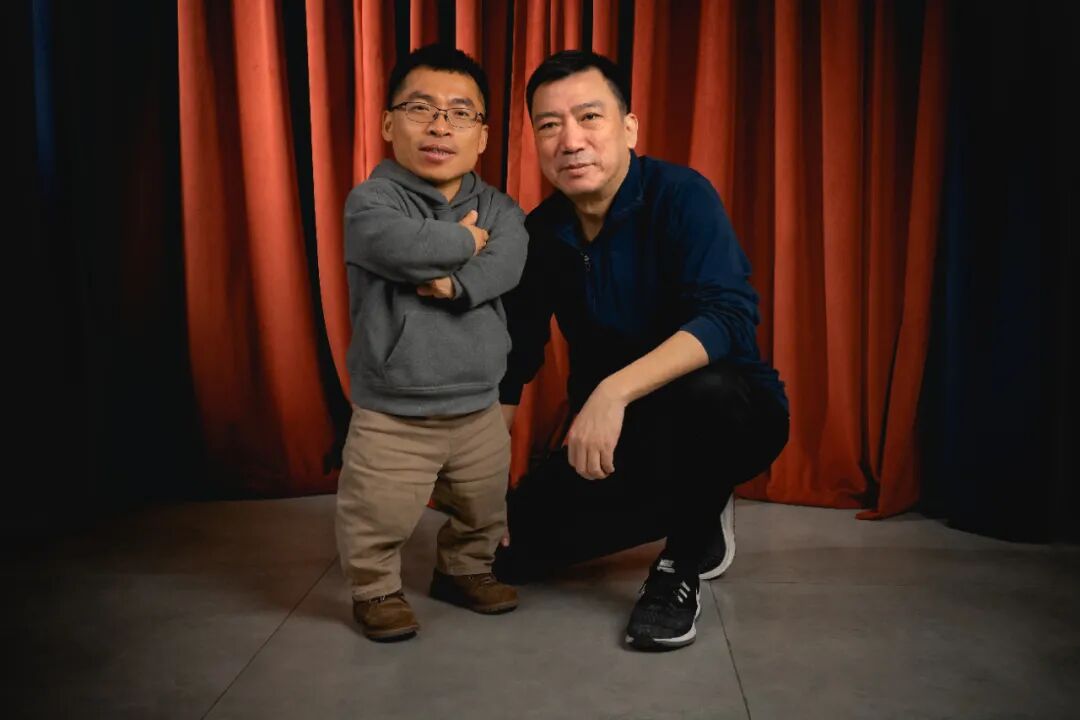
Huang Rufang (left) and Lao Liu (right).
One thousandth and one hundred percent
Zhang Lixian:When was your disease discovered?
Huang Rufang:When I was first born, I actually couldn't tell that I was short. According to my mother, when I was about three or four years old, I noticed that I was different from other children. I swayed a bit when walking, and I was not as tall as other children of the same age. It was more difficult for me to cross the threshold of my home. At that time, I realized something was different, so I started seeking medical advice from a young age until I was almost ten years old.
Zhang Lixian:What is the final diagnosis and the verdict of your fate?
Huang Rufang:There is actually no diagnosis, and there is a very interesting story here. I was born in the 1980s, and not everyone knew about this disease at that time, so I used many wrong treatment methods when I was a child. For example, I ate black egg custard. Why is it black? Because the medicine I was given before was in capsules, but I just couldn’t swallow the capsules. The parents opened the capsule and mixed the medicine into the egg custard, because children love to eat egg custard and find it particularly delicious. Now that I think about it, they are actually very ignorant. Because I didn’t understand the method, I went to see a Chinese medicine doctor when I was a child. I had the impression that my legs were full of needles. It was not until later that I learned that there is no effective treatment for the disease I suffer from in the world, and there is no need to take any medicine. Whether it’s the black egg custard or the legs covered with acupuncture, I’ve suffered a lot of unnecessary suffering.
Zhang Lixian:How rare is this disease you are talking about?
Huang Rufang:Medically speaking, this disease has an incidence rate of approximately 1 in 10,000 newborns.
Zhang Lixian:It doesn't sound "rare", it's one in ten thousand. For you, this ratio is 100%, although for the world's statistical samples, it is one in 10,000. In China, if it is one in ten thousand, it should be said that there are a lot of people.
Huang Rufang:Rare or rare, because after all, it is one in ten thousand, this is a matter of probability. For China's total population of 1.4 billion, there are tens of thousands of people suffering from this disease. In real life or in movies and TV series, you can also see many people with short stature, but they are not necessarily all suffering from my disease. There are about 140 kinds of diseases in the world that can cause short stature. What I have is one of the relatively rare ones.
This disease does not affect life span or intelligence, but due to a series of problems with cartilage development, there are still some complications. Especially when I am in my thirties or forties, I have already developed hip joint problems, which are very painful and may affect walking in severe cases. I don’t know what the cause is, and there is no effective treatment. Because the bone problem is a flaw, I can only say to save it. In fact, when each of us is in our sixties or seventies, our hip joints and bones will deteriorate. For me, the deterioration is a little more serious than ordinary people, and it comes earlier, so I have to use it sparingly.
Zhang Lixian:Although you look different from ordinary people, do you still live among ordinary people?
Huang Rufang:This is very lucky. I am especially grateful to my parents. Although they are not particularly well-educated or have good educational concepts, it is precisely because of their simplicity and kindness that I grew up in an ordinary environment and did not become a child who was over-protected in a greenhouse. I have suffered all the hardships I have to endure, I have had my grievances, and I have been discriminated against. But precisely because of this, I have a better understanding of my own life as an individual, and how my life experience is different from ordinary people.
Zhang Lixian:When I saw you for the first time, I felt that the look in your eyes was that of a very normal ordinary person.
Huang Rufang:Yes, this is also what I ask of myself. Use the life of ordinary people to demand of yourself, live a more natural, free and easy life. Especially when getting along with friends, don't make the other person feel pressured - "Will I say the wrong thing and make you very sensitive?" No, I am a person who often makes fun of myself and makes fun of myself.
Zhang Lixian:Have you always gone to a school like ordinary kids go to? Which school did you attend last?
Huang Rufang:Yes. I majored in advertising and graduated from Zhejiang University City College in 2006. I was exactly the same as my other classmates at school and didn't need any special care. It’s not that the school or my classmates are unwilling to help me and take care of me. It’s just that I want to be more comfortable for myself and to make the classmates around me—whether they are in the same dormitory, in the same class, or at the same school—comfortable, and not to make everyone feel that I am a burden.
Zhang Lixian:You majored in advertising. What was the life path you originally planned for yourself?
Huang Rufang:I didn't make any plans for my life. But I think one thing is for sure, I like to do charity and engage in work that uses my time to change society and make it a better place.
Zhang Lixian:Is your preference for doing charity related to your own feelings?
Huang Rufang:I don't think so. After graduating from college, I did some other charity work, such as AIDS-related projects. Starting in 2008, I found that no one in China paid attention to the rare disease group.
Fifteen years from scratch
Zhang Lixian:Did the word "rare disease" exist in 2008?
Huang Rufang:Brother Six said it very well. There is this word, but it is rarely mentioned in the context of Chinese society, and many people have not even heard of "rare disease".
Zhang Lixian:If you have been doing work related to rare diseases since 2008, you must have a unit. What unit asked you to do it?
Huang Rufang:For public welfare, we need public welfare organizations. So in 2008, I established a charity organization to work on rare diseases.
Zhang Lixian:In 2008, you were only 27 years old. Have you been doing this since then?
Huang Rufang:Yes, I have established three charity organizations in total. The charity organization operated from 2008 to 2013 was called Porcelain Doll, focusing on a rare disease that is particularly prone to fractures - brittle bone disease (osteogenesis imperfecta). In 2013, I launched the Coder Rare Disease Center, which I am now in charge of.
Zhang Lixian:Where did the word "Coude" come from?
Huang Rufang:The English abbreviation of our organization is CORD. This name is very famous internationally. We also participate in many international affairs on behalf of China, so we wanted to match the Chinese and English names, so we chose the name "CORD", which sounds a bit foreign. It is a public welfare charity covering the field of rare diseases nationwide, and is currently the largest and most influential rare disease public welfare organization in China.
The third one is the Ruio Charity Foundation, an innovative foundation that I jointly launched in February 2022 with a group of top scientists and entrepreneurs, focusing on the promotion of rare disease research and translational medicine in China. I hope to make China's contribution to the drug development and treatment of rare diseases in the future.
Zhang Lixian:Can we sum it up this way: CODE deals more with patients and their families, while Ruiou deals more with R&D institutions?
Huang Rufang:It can be understood this way.
Zhang Lixian:It seems that these three things and three institutions are actually the same thing, and they are still rare diseases, right?
Huang Rufang:Yes. I have spent the past fifteen years doing advocacy and charity related to rare diseases to promote social change.
Zhang Lixian:What have you done in the past fifteen years? Report back.
Huang Rufang:This is the time not to be humble but to brag. First of all, it is indeed not easy. In fifteen years, starting from scratch, from being little known fifteen years ago to being widely known now, we have done a lot of social work, social publicity, and social advocacy.
Zhang Lixian:Are you the only one?
Huang Rufang:It is the largest family. It was a little less at first, but now more and more people are joining. Rare diseases have now become an important part of the medical field, so more and more hospitals and academic groups are paying attention, including government departments. But fifteen years ago, it was really unknown. This is our first contribution.
The second is to find families with rare diseases one by one. It took us fifteen years to find more than 200 rare diseases, involving as many as 60,000 families, which is very large.
Zhang Lixian:Two hundred diseases and 60,000 families are equivalent to building a database.
Huang Rufang:Yes, a massive patient database. When we tell the public that rare diseases are rare and that rare disease groups need help, others will ask, where are these patients? We have to find them before we can possibly help them. This is the second thing we did that I think is pretty amazing.
Zhang Lixian:These 60,000 families are involved in 200 rare diseases. How many rare diseases are there in the world?
Huang Rufang:There are more than 7,000 known rare diseases in the world, a huge number. The number of patients with each rare disease is very small. You may not be able to imagine that for some rare diseases, the total number of patients in the world may not exceed 100.
Zhang Lixian:No more than 100 people out of nearly 8 billion people?
Huang Rufang:Yes, very very rare.
Zhang Lixian:I’m thinking that it’s because technology is now so advanced that so many rare diseases have been discovered, and there may be even more rare diseases that have not been discovered.
Huang Rufang:Yes, new rare diseases or genetic mutations are reported every year. The physical diseases and genetic problems faced by humans are very complex and challenging. In other words, there are still many diseases that we have not yet understood and explored.
The third thing is to promote changes in national policies. It turns out that many rare diseases are not the focus of our country, or the country does not have so many policies to pay attention to. What we have to do is to promote rare disease diagnosis and treatment policies, drug introduction policies, medical security policies, etc.
Zhang Lixian:At least it must be covered by medical insurance and reimbursed.
Huang Rufang:Yes, making rare diseases truly accessible and affordable is important. One of the most outstanding things we have done in this regard is to promote the release of the country's first batch of rare disease catalogs in 2018. The birth of this catalog is equivalent to the country having some commitment and guidance on these diseases, and providing legal and policy protection. This is a landmark policy for our rare disease industry.
Zhang Lixian:How big a role do you play here?
Huang Rufang:It should be said that it is a very big and very direct promotion effect. The country has never had a definition or catalog of rare diseases, which is relatively backward from a global perspective. In 2016, we took active action. Our country's medical and epidemiological data are relatively lacking, and there is no way to directly define rare diseases like in the United States. Faced with such a basic situation, what should we do? We think there should be a compromise solution, first publish a catalog. We have sorted out more than 100 diseases and pushed the country to start from this list and solve these more than 100 diseases first. In 2016, we released a private version of the rare disease list, which directly promoted the introduction of the national version of the rare disease list in 2018.
Zhang Lixian:This is definitely useful for the formulation of relevant national policies. I don’t know if this directory is useful to ordinary people, or to those who are unfortunate enough to “win the lottery”?
Huang Rufang:Very useful. With this catalog, all hospitals, doctors, and policies will tilt towards the diseases on the catalog; overseas pharmaceutical companies and drugs will also quickly enter the Chinese market because they feel that China has policies to support them. When the National Medical Insurance Administration formulates policies and considers which drugs can be included in medical insurance, it will also give priority to diseases on the catalog. Therefore, although it is not a mandatory law, it has played a very positive role in promoting the diagnosis and treatment of rare diseases, medical security, and the introduction of drugs.
Zhang Lixian:This is really a life-saving thing, has merit, and is worth "bragging". So-called rare diseases, like the one you have, are because so few people have them and their names are rarely used, so they all sound very difficult to pronounce.
Huang Rufang:Yes. The longest name of a rare disease that I know of has seventeen or eight Chinese characters, and ordinary people cannot remember it at all.
Zhang Lixian:Maybe because it is rarely used, there is no need to abbreviate it.
Huang Rufang:Yes. Many medical students have never seen the names of these diseases at undergraduate, postgraduate, or even in class classes because they are so rare.
Zhang Lixian:According to your current statistics, what is the smallest number of patients with a certain disease in China?
Huang Rufang:We received a request for help from a patient last year. After checking the literature, we found that there is only one patient with this disease in China. It occurs in childhood, affects intelligence, and has a great impact on life span. We contacted a foundation in the UK, and they were able to find more than 130 patients with this disease around the world. The one we came into contact with was the only one in China.
Zhang Lixian:It sounds like this patient was discovered because of you.
Huang Rufang:Yes, but it’s also hard. During my more than ten years of work, I often doubted myself. What is the value and significance of what I am doing? Because there is nothing I can do for most of the patients and families that come to me.
Zhang Lixian:We tried to talk as calmly as possible. What are the main symptoms of rare disease patients?
Huang Rufang:Rare diseases are not one kind of disease, but a collective name for a class of diseases that can be found in various disease systems. For example, the pseudoachondroplasia I have is an orthopedic disease. It is currently known that rare diseases mainly occur in the nervous system. I wonder if you have heard of "soul bargaining"? There is a disease in "Soul Bargaining" called SMA (spinal muscular atrophy), which is a neurological disease, as well as Parkinson's disease and Alzheimer's disease that everyone knows. These diseases account for a large category of rare diseases. In addition, some orthopedic and hematological diseases are also relatively common. Neurological diseases are the most difficult to resolve. Ordinary people can understand that when there is a problem with the nervous system, it is the most difficult to solve it through medication.
Rare disease patient stories
Zhang Lixian:Speaking of rare diseases, are there any celebrities related to rare diseases? This may be easier for everyone to understand.
Huang Rufang:The most famous is Hawking, who suffered from amyotrophic lateral sclerosis (ALS). Not long ago, Canadian singer Celine Dion announced that she suffers from stiff-person syndrome. There is another person you may have heard of, named Nick Vujicic, an Australian who has given lectures to tens of thousands of people in China. He suffers from Seal Syndrome and was born without limbs, but this guy is very cool. He surfs, forms a band, and does everything you can't imagine. Einstein also had a rare disease that left him with voluminous, afro hair, which he was born with. He did not have such a hairstyle intentionally, but it was caused by a genetic defect. Many basketball stars are so tall. If you think about it carefully, it is not particularly normal. There is a rare disease called Marfan syndrome. The patient's fingers and height will be unusually long. There is a volleyball player in China who has Marfan syndrome.
Zhang Lixian:Can you share with us some of the patients you have encountered? Although talking about it makes me feel a little bit unhappy.
Huang Rufang:Not really, this is my job, I am exposed to these diseases every day, and sometimes I become a little numb. If you look at the work in a longer time dimension, in five or ten years, we have still done a lot, which is quite remarkable. In every moment of every day, most of the stories I encounter are patients’ stories, and I would like to share them with Brother Six and our readers here.
There is a disease called facioscapulohumeral muscular dystrophy. It doesn’t matter if you can’t remember the name. It is a neuromuscular disease with an incidence rate of 1 in 10,000, which is very rare. Two of my colleagues are patients with facioscapulohumeral muscular dystrophy. This disease is very cruel. In daily life, we do not think that smiling is a luxury. However, due to muscle atrophy, people with this disease have very few facial expressions and cannot even smile. Ordinary people will think that this person is so cold. So sometimes even a smile becomes a luxury wish for a group.
These two colleagues, one is from Chongqing and the other is from Xinjiang, two very handsome and talented young people. Every time I tell their stories, I feel very sad. Why? Because this is a progressive disease, they can predict that ten years from now, the progression of the disease will cause their bodies to shrink and they will gradually be unable to walk.
Zhang Lixian:Did these two colleagues become colleagues with you because they had this disease and paid attention to rare diseases?
Huang Rufang:Yes, because they know what we are doing, they choose to join the team and make their own contribution to the cause of rare diseases with us. Nearly one-third of the colleagues in the team come from patients or families with rare diseases.
Zhang Lixian:Are there any other stories that might be beyond ordinary people’s cognition?
Huang Rufang:I try to tell some picturesque and interesting stories. There is a disease called phenylketonuria. Its English abbreviation is easy to remember, PKU, the abbreviation of Peking University. PKU is an enzyme deficiency disease, which can be understood as the lack of a catabolic enzyme in the body and the inability to break down protein. It also means that people with this disease cannot eat high-protein foods, so this group is also considered to be "unworldly." The big fish, meat, rice, noodles, eggs, and milk we eat every day are all high-protein foods. Children in this group have not been able to eat these foods since they were young. For ordinary people, they are nutritious foods, but for them they are toxins. The accumulation of these toxins in the body will affect intelligence. Some children with intellectual problems in rural areas may have PKU.
Zhang Lixian:Just the more you eat, the stupider you become?
Huang Rufang:Yes, a lot of toxins accumulate, causing damage to intelligence. They have to eat special low-protein food, and this "special food" has to be purchased specially. The treatment method is actually that simple, but due to the backwardness of medical diagnosis, many children are not diagnosed at birth, which is a pity. They could have been saved through diet, but because they were not diagnosed in time, they became what we call "fools."
Zhang Lixian:My daughter didn’t like to eat when she was a child. We tried many methods, but her weight was still lower than the average. The final blood test revealed that she was allergic, and of course she had a sensitive constitution within the normal range. She could not eat milk or eggs at that time, so she had to eat amino acid milk powder. The milk powder tasted particularly unpleasant, but fortunately she could still drink it. As she grew older, she became desensitized and can now eat milk and eggs. This is a little bit of experience, and I know how painful it is.
Huang Rufang:As a father, you too can relate to the pain of having a child eat special foods. It is true that low-protein food must not taste good.
Zhang Lixian:At least if you know what kind of disease he has and let him eat the right food, you can avoid many disasters.
Huang Rufang:Yes, this is why we must pay attention to rare diseases. After the child is born, if the child is tested by collecting heel blood in time, a drop of blood or a small needle - the current blood collection method is invisible to the child - can detect whether he has PKU. Once diagnosed, by adjusting the diet, the child will end up looking exactly like ordinary children.
Zhang Lixian:It should be said that most rare disease cases are tragic stories.
Huang Rufang:I especially want to share a story around me. I have a good friend whose mother has spinocerebellar ataxia, which is a neurological disease. He has known since he was sensible that his mother was ill and confined to a wheelchair, and it was getting worse. Later he found out that he also carried this gene. When I met him, the young man was in his mid-twenties and could walk, jump, and run. I have known him for six or seven years, and the latest news I learned is that he accidentally fell down again a few months ago, and it is difficult for him to go out like a normal person anymore. Because spinocerebellar ataxia affects the balance between the left and right sides of the brain, people can easily fall and lose motor function.
For young people in their twenties, this is very cruel. When he learned about the disease, there was nothing wrong with his body, but he knew what kind of person he would become in ten or twenty years, which meant that he was suffering every day, not knowing when this "ticking time bomb" would explode. This is a rare disease. The biggest challenge facing human medicine is rare disease.
Zhang Lixian:Why is it the biggest challenge? Is it because the number of patients is small and not enough scientific and technological power has been invested?
Huang Rufang:You are absolutely right. Precisely because the disease is rare, many scientists have not paid attention to it. Most commercial companies or drug R&D companies will not develop drugs to treat rare diseases because there are too few people and the drugs are so expensive to develop.
Zhang Lixian:Is it because it is rare that there is also a problem of insufficient samples?
Huang Rufang:This is also a certain reason in scientific research.
Zhang Lixian:I heard that there is a medicine that can treat myasthenia, and it costs hundreds of thousands per injection.
Huang Rufang:Yes, it’s 700,000 shots, which is the SMA (spinal muscular atrophy) I just mentioned. There are currently three effective treatments for this disease in the world, and there are even gene therapy drugs that can cure it with one shot. Therefore, this group is lucky among misfortunes, and Chinese patients now have a very small burden of medication. If treatment is started from an early age, these children will be like ordinary children.
Zhang Lixian:You just said that there are 7,000 rare diseases in the world. How many of them can be effectively treated with drugs now?
Huang Rufang:There are about 700 kinds, and about 6% of rare diseases have corresponding therapeutic drugs, which means that we are still at a loss for 94% of rare diseases. But in the face of such a grim fact, our country, society, philanthropists, and entrepreneurs do not understand that this is the biggest challenge facing us humans. Technology has become so advanced that we can send humans to the space station or tens of thousands of meters under the sea, and we can build a small, efficient mobile phone. We must be able to develop drugs to treat rare diseases, but we have not done so.
What can we do about rare diseases?
Zhang Lixian:I share an experience. When "Duku" was founded in 2006, there was a reader who subscribed to "Duku" and he was from Shanghai. He sent me a text message one year, saying that he had ALS and hoped that I would pay attention to the ALS group. But seriously, I don't know what I can do. He once came to Beijing and asked me to meet him. Due to time constraints, I did not meet him, but there was another reason. I felt that I was a little scared and I didn’t know what to do after meeting him. I sent him some money, but I knew it wasn't money he needed.
Huang Rufang:I understand how you feel.
Zhang Lixian:This is what I want to ask, what can we do for rare diseases?
Huang Rufang:For the general public, the first thing to understand is that rare diseases are relevant to everyone. Take myself as an example, I am a patient with a rare disease, but no one in my parents or my entire family has this disease. How could I get it? Because rare diseases are related to everyone, as long as there is life inheritance, there is a possibility of genetic mutations when humans give birth to the next generation. For me, I won this "big prize", but rare diseases are related to everyone, and I hope that every listener and everyone will pay attention to rare diseases.
I once made an interesting statement that patients with rare diseases actually help healthy people bear the risk of the disease. For example, the incidence rate of the disease I have is 1 in 10,000. If 10,000 newborn babies are born in Beijing, I will happen to be the one who wins the "big prize". The other 9,999 children will be healthy. I hope that the families of the other 9,999 children can help the family that "wins the lottery". If the whole society can reach such a consensus, the problem of rare diseases will definitely be solved. But on the contrary, many people think that I am not sick now, that rare diseases are far away from me, that they do not need to be paid attention to, and that they have nothing to do with me.
Zhang Lixian:I suddenly understand your motivation for establishing Cod and Ruiou. Coode is to help patients, but some patients may not need money but medicine, so Ruiou was established.
Huang Rufang:Yes. In fact, Ruiao faces more diseases for which there is no drug treatment. We hope to promote drug research and development through scientific research. Over the past thirty years, our country's economic development, scientific and technological strength, and educational level have been very impressive. We hope that China will also join the global scientific research and drug development on rare diseases.
Unfortunately, Chinese scientists and drug development companies have made very limited contributions to the treatment of rare diseases in the past fifty years. This is why I hope that in 2023, through the power of public welfare, like the world's best foundations, we can fund scientists to invest in the scientific research of rare diseases, promote drug research and development, and ultimately help rare disease patients in China and around the world get good treatment, and contribute China's strength.
Zhang Lixian:Your foundation not only supports patients and families, but also funds research and development institutions?
Huang Rufang:The Coode Rare Disease Center is dedicated to patient services and industry promotion, while the mission of the Ruiou Charity Foundation is to become an innovation engine for rare disease scientific research and translational medicine in China, and is committed to promoting rare disease scientific research in China.
In order to support Chinese young researchers in the field of rare diseases to attend international academic conferences, broaden international academic horizons, and enhance international academic exchanges, the Ruiao Charity Foundation has recently released the Ruiao Young Scholars Visiting Funding Plan (click to view to learn more).
Zhang Lixian:As mentioned just now, there are already more than 700 drugs in the world that can treat 6% of rare diseases, but China has currently had zero success in drug research and development. Compared with foreign countries, what are the gaps between China and other countries in the field of rare disease research? Including policy gaps.
Huang Rufang:In addition to policies, there are also relatively large gaps in medical security. In the United States, many rare diseases can be covered by medical insurance, and some patients can get good treatment without even paying a penny. But in China, most of the rare disease drugs, especially the very expensive ones, need to be paid by the patients themselves. You may not know how expensive medicines for rare diseases are. Brother Six also mentioned just now that some medicines cost RMB 700,000 per injection. If you unfortunately suffer from a rare disease and require lifelong treatment, it would cost RMB 700,000 per injection and three injections a year. This is unimaginable. Therefore, some policy solutions are needed to solve the problem of patients with rare diseases having access to and affording drugs.
Zhang Lixian:Overseas countries can develop more than 700 drugs and may invest a lot of R&D funds. How big is the gap between China and the world in this regard?
Huang Rufang:Take the United States, for example. Their National Institutes of Health (NIH) has set up a special research institute to fund drug research and development in the field of rare diseases, free of charge. The United States invests a lot of money in scientific research. There are many universities, research institutions, and even small and medium-sized drug research and development companies that can receive government funding to specialize in rare disease drug research and development.
Zhang Lixian:It doesn't sound like it's for business.
Huang Rufang:Yes. As long as someone is willing to study rare diseases, the country will support him. In different government systems, such as the relevant policies of the U.S. Food and Drug Administration (FDA), if your company is researching rare disease drugs, the FDA will speed up the process of drug approval for you, queue up separately, give you great policy preferences, and tax exemptions. Policies will guide companies to invest in the development of rare disease drugs to ensure that small companies can also make money. As long as they can make money, why wouldn't commercial companies do it? Both research and development of drugs for rare diseases and non-rare diseases can make money, and the former has better policies, so the research and development of drugs for rare diseases is very popular in the United States. Our country has also invested a lot of scientific research funds, but it has not been tilted towards the field of rare diseases, and no one is willing to do it.
Zhang Lixian:But I think that with the advancement of science and technology and the development of the economy, some resources can always be released, whether it is financial resources, scientific research resources, or policy resources for rare diseases, right?
Huang Rufang:Yes. In recent years, with everyone's joint promotion and appeal, the country has paid more and more attention to rare diseases from the policy level. Of course, the most difficult thing is in the field of scientific research. Scientific research has a strong strategic significance. The current international situation is very severe, especially between China and the United States. We are facing challenges in different technical fields, and in medical technology and drug research and development, we need to catch up even more, so the country should invest more. I would also like to take this opportunity to appeal to our audience. If you have the opportunity to do charity, I hope you can allocate your donations and charity efforts to the field of life sciences.
Zhang Lixian:Teacher Huang, I have to ask a very utilitarian question. If we use charity money to help a specific patient or a family, its impact will be immediate and it can at least alleviate some of the urgent needs; but if we use this charity money for research and development, nothing may be accomplished in the end. Is this the case?
Huang Rufang:You are absolutely right. This actually reflects our citizens’ concept of charity. In the past 20 to 30 years, we have often said that we are "fearful of poverty" and education is also very backward. Therefore, many entrepreneurs and people with free wealth will subsidize poor students and people who cannot afford food or medical treatment. This concept of charity is very different from that in the United States. As you can see, people like Facebook founder Zuckerberg, Elon Musk, and Bill Gates have invested a large amount of charitable funds in the field of life sciences to effectively solve many disease problems.
Zhang Lixian:This sounds like it's getting to the root of the problem.
Huang Rufang:Yes. But it is true that as you said, most of the scientific research funds are wasted, but this must be wasted.
Zhang Lixian:The price must be paid.
Huang Rufang:Because scientific research is very, very difficult. There is a popular saying in the industry that the drugs we use in hospitals must require ten years and billions of dollars of investment to finally be developed. This is the concept of taking a medicine every ten years.
Zhang Lixian:We have published books on how humans treat diseases and develop drugs. I have only scratched the surface and know that one billion US dollars and ten years are relatively small. With the advancement of technology, if we can see some light, maybe in five years, it will not be a billion dollars or ten years, but maybe it will be shortened to three years, the cost will gradually decrease, or the success rate will increase.
Huang Rufang:In fact, it is possible. You can recall that it has been more than three years since the outbreak of the epidemic, and we have already had vaccines and drugs. Where did these drugs come from? Isn't it just developed by medical personnel from the emergence of the epidemic to now? Why was it developed in just three years? Because the new coronavirus is an infectious disease facing all mankind, scientists from all over the world and the national strength of all countries must be mobilized to research and develop it. But when it comes to rare diseases, that’s not what we do or think about. In fact, science and technology are not the biggest challenge. The biggest challenge comes from our concepts. Do you want to do it? Do you want to conquer terminal diseases?
Zhang Lixian:We can't control the macro aspect, at least I think that's what you want to do. The self-help awareness and self-improvement ability of rare disease patients and their families are indeed very touching.
Huang Rufang:Yes, I kind of lead by example. As a patient, I often say to myself, if I cannot stand up with a more positive image, if I as a patient do not take action, and even we ourselves are not willing to stand up and call for help, how can we expect our doctors, our scientists, our caring people and philanthropists to help us? This is why I have been working for fifteen years.
Do the hardest thing and make it happen
Zhang Lixian:The things you have done in the past fifteen years are worthy of pride, but I think this is not only because you are a rare disease patient. There must be many other factors. Can you share your secret to success?
Huang Rufang:Not exactly a success. I think the most important thing is that I really like to do charity. I am very interested in many issues of charity. Because I understand this group, I want to start with rare diseases. The biggest reason for achieving small achievements is that there is a group of people around me who support me and help me. It can be said that there are many noble people, and it is because of everyone that I can accomplish these things.
Zhang Lixian:Let's not be so polite, just talk about yourself.
Huang Rufang:I'm not being polite, it's just the fact that I can't do so much on my own.
Zhang Lixian:Human beings have developed to this day, and there have been many templates. Do you have a model institution in mind, which is the ideal you are pursuing, or are you completely cultivating virgin land?
Huang Rufang:The structure and business model established by the Coed Rare Disease Center over the years are very stable. I can proudly say that among similar organizations around the world, we are doing better and leading the way.
Zhang Lixian:You can already serve as a model for other organizations.
Huang Rufang:Yes. The Ruiou Charity Foundation is driven by scientific research and has just started. Over the past year or so, we have deeply analyzed and studied more than 30 foundations around the world that are doing very well. Among them, an American institution called the "Cystic Fibrosis Foundation" is our main model for learning. It specifically targets a rare disease called cystic fibrosis. There are not many patients with this disease in China. It occurs mostly in Jews.
Zhang Lixian:What’s so great about this foundation?
Huang Rufang:From its establishment in the 1950s and 1960s until the 1990s, this foundation continued to invest in scientific research, fund scientists, and develop drugs to treat cystic fibrosis. Been doing this for over forty years.
Zhang Lixian:After forty years of hard work, some results have come out.
Huang Rufang:Yes, finally in 2000, by funding a company, a drug to treat this disease was developed. By 2023, more than four drugs will be used to treat this disease. I visited this foundation in 2016 and asked their CEO at that time, you have promoted the development of so many drugs, what is the next step? From my understanding, it has already reached its end. The CEO’s words are still fresh in my mind. He said that we will eventually get rid of this disease.
Zhang Lixian:Just like humans killed smallpox.
Huang Rufang:Yes, destroy it.
Zhang Lixian:That is what is called the true perfection of merit.
Huang Rufang:Yes. Therefore, the Cystic Fibrosis Foundation still invests more than $100 million every year to fund drug development for this disease worldwide.
Zhang Lixian:Is there anything advanced in this foundation’s operating mechanism that’s worth learning from?
Huang Rufang:Very innovative. Where does the money for their charity work come from? It is the income from funding pharmaceutical companies to develop cystic fibrosis drugs, which now generates nearly $500 million in drug sales every year.
Zhang Lixian:In other words, these donations are actually an investment?
Huang Rufang:Yes, it is a kind of venture philanthropy. This foundation has also established a special investment company. If any company does very well, it will invest directly. This is a very large business model. Although the Ruiou Charity Foundation has just started, we also have the ideal to fund scientific research. In the future, we also hope that more and more donations will come to our foundation, so that we can invest in more socially responsible commercial companies. If they are willing to develop drugs for rare diseases, we will fund them. Once a drug is developed and commercial returns are generated, it returns to the foundation to continue investing in more drug research and development, forming a virtuous cycle. We hope to implement this latest global venture philanthropy model in China.
Zhang Lixian:It sounds like, in addition to your own reasons, including the help from noble people you mentioned, it is actually your strong learning ability.
Huang Rufang:Yes, I am bragging about this again, it is indeed true. I have a relatively deep insight into this industry and a good understanding of China's development direction in this field. Whether it is the business of the Coder Rare Disease Center that I am leading now or the business of the Ruiou Charity Foundation, we are always doing leading and far-sighted things. We know what the country will change or need in this field in three to five years. We have already started doing it three to five years in advance, so it is the most difficult thing to do. It is a pioneering business, which allows us to promote changes in China's status quo in the shortest time.
Let the rare be seen
Zhang Lixian:Maybe someone was still waiting for Yu Boya to speak. After waiting for more than an hour, he finally arrived. We can let Yu Boya, who has been silent all this time, say that the reason why you will appear in our recording studio today is because you "transferred" to Ruiao Charity Foundation, right?
Yu Boya:Yes. As early as 2010, I came into contact with rare diseases. At that time, we collaborated with Peking University to hold a “Porcelain Time Science Public Welfare Forum” and invited another founder of Porcelain Doll—she herself is a “Porcelain Doll” patient—to talk about her experience and the process of founding Porcelain Doll. My relationship with rare diseases began this year, when I served as a volunteer and translated some manuals on diagnosis and treatment.
Later I went back to school for graduate school. I studied medicine as an undergraduate, but when I entered graduate school, I felt that I was more interested in people, so I studied psychology, including neuroscience. At this stage, I also had some close connections with rare diseases. For example, in the book I translated, "Chasing Traces of Memory," the author Kandel's best friend was an ALS patient. He was a talented professor and a comrade who had worked with Kandel for decades. He was diagnosed with ALS in middle age and died soon after. This incident dealt a huge blow to Kandel. Later, when I was doing science popularization, including translating science books, I was often able to come into contact with some information related to rare diseases.
Zhang Lixian:In fact, rare diseases sound not so far away from each of us.
Yu Boya:Yes. When people read, they generally don't read the notes at the back of the book, but I translated the notes in the book "Chasing Traces of Memory" very carefully. There is a two-page note talking about a rare disease - Huntington's disease, which is what we often call Huntington's disease. The note said that in the 1950s, a celebrity in the United States suffered from this disease, and his family launched a Huntington's disease patient organization, similar to the model of the Cystic Fibrosis Foundation. In the following decades, they funded scientific research through this organization and finally found some methods to treat Huntington's disease. Of course, Huntington's disease cannot be completely cured so far. But such a two-page note gave me a perceptual understanding of the model of funding scientific research by rare disease patient groups.
If you only do science popularization and translation work, it is actually quite nourishing in your own small world. Until last year, my colleague Zhang Wenjun—we all called her “Xiaochan”—who worked with me on the “Guohu Time Charity Forum” suddenly contacted me one day. I remember very clearly that it was September and the weather was still very hot. I was lying in bed translating the last chapter of a book. After receiving her call, we chatted for a long time and learned about the newly established Ruiou Charity Foundation from her.
Zhang Lixian:Does Teacher Huang know Xiaochan?
Huang Rufang:Xiaochan is my colleague, and we have agreed to trick Yu Boya over.
Zhang Lixian:This is a trap.
Yu Boya:When Xiaochan contacted me, I quickly understood what Ruiao Charity Foundation does and what it wants to do.
Zhang Lixian:You quickly identified the trap and fell into it, right?
Yu Boya:Yes, you can say that. But all in all, I still thought about it more carefully. For me, if I continue to do popular science writing and translation, it would be completely OK in my own little world. But public welfare was originally a focus of my work in Beijing, and I have always paid close attention to various vulnerable groups. Rare disease groups are part of the vulnerable groups. Another particularly important point is that I studied pharmacy as an undergraduate and studied psychology and neuroscience as a graduate student. My knowledge background and knowledge structure are sufficient for this job, and to some extent, I may be able to put my accumulation to use better than writing and translation, so after comprehensive consideration, I decided to accept this challenge. Director Huang also mentioned just now that this is a very innovative model in China and has never been done before. I am more or less adventurous myself and thought I could give it a try, so I chose Ruiou Charity Foundation.
Zhang Lixian:I think what you are doing is not that easy.
Yu Boya:Yes, this is also one of the reasons why we appear in Duku Recording Studio. I have only been with Ruiao Charity Foundation for more than a month now, and a large part of my work is to use up the character and connections I have accumulated for so many years, including coming to ask Brother Six for advice.
Zhang Lixian:I think consumption doesn't matter, we are just consumables anyway. What's more important is that you have to change your temperament. You used to be a nerd, but now you have to become a social butterfly. How difficult it is.
Yu Boya:Yes, this is really hard for me. After all, I am studying psychology. If I want to make a superficial statement, I can still do it easily. I will just struggle internally, so just let myself consume it secretly every day.
Huang Rufang: I had to ask for help.
Zhang Lixian:This may also be the gesture of a charity foundation. You are not doing it for yourselves, so why are you asking others? I have also seen that many foreign charity foundations are arrogant and confident. There are indeed some foundations in our country that really have to put themselves at a very low level in order to get some help and recognition. I think it may be a matter of social concepts.
Huang Rufang:Yes, because everyone doesn’t know much about this industry, including my parents. At that time, I said that I wanted to do charity work. People thought that you were looking for a job and doing charity work by the way. Unexpectedly, if you were to do it full-time, people would ask, how do you support yourself?
Zhang Lixian:What you want to do in the future is to make some breakthroughs in the research and development of rare disease drugs; and to make public welfare foundations live proudly and confidently. I think this has achieved the goal.
Huang Rufang:Yes. Practitioners of this job and profession should also be recognized by society. What we do is sometimes even more valuable than a commercial job.
Zhang Lixian:Yu Boya abandoned Huizhou and went to Hangzhou. This happened when you were 36 years old. After making such a big change in your life, did you never look back?
Yu Boya:I can make a promise in front of the broad audience across the country. Since I have made such a prudent and important decision, and I have expressed my feelings to Director Huang before, I hope that in the next five or ten years, the Ruiou Charity Foundation will make some progress in this grand undertaking of scientific research funding, or at least take root.
Zhang Lixian:On behalf of our readers across the country, I forgive you for delaying your manuscript, and you will continue to delay your manuscript due to "Duku".
Yu Boya:Will definitely pay it back.
Zhang Lixian:I think anyone can do the work of science popularization, but if you don’t do the work you are doing now, probably no one will do it. What Duku can do is just give us a "proposal composition".
Huang Rufang:Thank you Brother Liu, I feel very warm when I hear this. The road ahead for the Ruio Charity Foundation will be very difficult. As everyone has heard by now, they basically know that to achieve the mission and goals of the foundation, two factors are needed. The first is professionalism, because after all, it is related to scientific research and drug research and development, which is a matter with extremely high thresholds and professionalism. That’s why we invited Bai Ya to join our team because he is a professional. Also, it requires a lot of capital. As we all know, the promotion of scientific research does not rely on a temporary, short-term, or a little bit of money, but requires ten, twenty, or even longer years and a large amount of scientific research funds to complete. This is our biggest challenge.
Zhang Lixian:Basically, we still have to rely on investment regardless of benefits and returns.
Huang Rufang:Of course, as a public welfare foundation, we hope to use scientific research funds as much as possible on scientific projects that can really produce results. We are confident in this, but we need a discerning eye to identify projects, and please Bai Ya to pick out good projects.
Zhang Lixian:First, we need to wake up some friends who have money in their pockets and ask them to fund this project, but I think what is more important than this is waking up the policy.
Huang Rufang:Yes. It is hoped that the country will have more scientific research funds to guide scientific research on rare diseases.
Zhang Lixian:For people like us, I especially hope that you can leave us specific "homework".
Huang Rufang:Today's conversation is the greatest support for us, letting everyone hear our story and know that we, a group of young people with ideals and sentiments, are doing a public welfare undertaking that no one else has done.
Zhang Lixian:We have not done enough to do this. It is equivalent to just forwarding it and it will not have any effect. We should also pay with real money.
Huang Rufang:Then I hope that Liu Ge, in your daily work and life, if you meet artists, entrepreneurs and other people with public welfare, will act as our volunteers and consultants and share our stories with them.
Zhang Lixian:Can you tell me the most urgent or specific need? What do you need to do?
Huang Rufang:We hope you can donate to us.
Zhang Lixian:I still want to forward this to those friends who have spare capacity, have this awareness and concept, and are relatively well-off financially.
Huang Rufang:Yes, entrepreneurs and philanthropists with financial freedom, especially those with such kindness, hope that their wealth can really play a more effective role.
Zhang Lixian:Boya, please show your determination too.
Yu Boya:I hope that all readers who listened to this podcast today will be able to spread the story and voice of our charity foundation, which has been established for less than a year, to more people, and I would like to contribute your small contribution.
Zhang Lixian:I am very happy and very grateful to you for coming. For me, it really solves a knot that has been in my heart for many years. The Shanghai reader I just mentioned has sent me several text messages, but I haven’t contacted him for at least seven or eight years, and I don’t know his condition. I sent him some money, but I knew it wasn't money he needed. I now know what he needs and what I can do. Let’s work hard together in the future.
Huang Rufang:Thank you, Brother Six.
Zhang Lixian:Say goodbye to the friends who listened to our program this time, and let’s cheer together.
Huang Rufang:OK. I hope everyone can take care of themselves and thank you all.
Yu Boya:Goodbye, viewers.
Zhang Lixian:Goodbye.
Here is a guide to the latest content of Duku App

Machine-translated from the Chinese original 听,这些向七千种疾病宣战的人 (published 2024-01-22). WeChat original ↗