Prologue
I met Xu Shaochun, chairman of the board of directors of Kingdee Group, in the lounge of a Beijing hotel. After greeting him, the first thing he said to me was: "I also read your recent article "China's Enterprise Software Industry Is at Its Most Dangerous". Although you said a lot of facts, I still think that now is the time for us to have the best development opportunities."
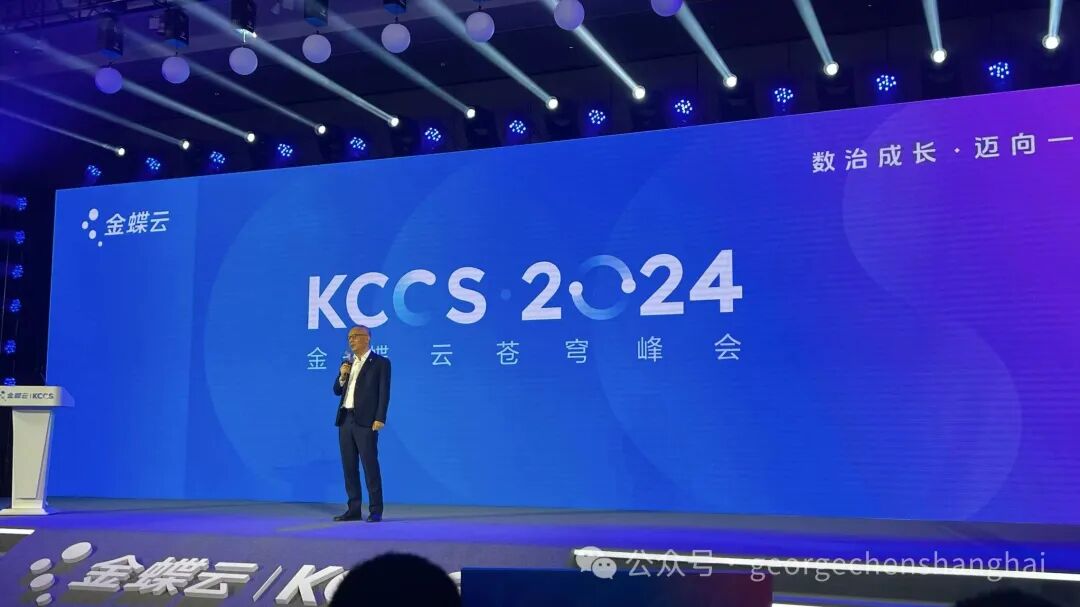
Then: Cloud Transformation
Judging from last year's performance information disclosed in Kingdee's financial report, its cloud service business revenue accounted for 79.3% of its total revenue of RMB 5.679 billion, of which annual recurring revenue (ARR) from cloud subscription services was approximately RMB 2.86 billion, a year-on-year increase of 33.1%. These data show that Kingdee has transformed from a company that provides software licenses and software development and delivery services to a company that mainly focuses on service subscription revenue, and has the main revenue model characteristics of cloud companies.
At the same time, Kingdee's operating losses have narrowed year by year, with a net loss of 210 million yuan in 2023, a significant decrease from the previous year 46%, indicating that we have now passed the painful period of starting the cloud transformation - because the traditional software license model recognizes revenue once when the contract is signed, while the subscription model spreads the one-time revenue evenly over the next few years. Therefore, in the initial stage of cloud transformation, traditional enterprise software companies assume that R&D, marketing, management and other costs remain unchanged. The accounting operating income recognized in the current year will be significantly reduced compared to the license sales model. This is a problem that all traditional software companies will encounter when transforming into cloud companies.
Kingdee was able to overcome the biggest obstacle to cloud transformation. It is conceivable that the managers of this company have experienced tremendous pressure in the past few years.
Kingdee's company name indicates its positioning in the enterprise management software industry. Enterprise management software is a category of the enterprise software industry. Enterprise software is an emerging industry that only formed in the 1970s. During the 50 years of development of this industry, its development is not only the evolution of technology, but also the evolution of business models. In the process of industry development, most companies that are eliminated are not because their technology cannot keep up with the times, but because their business models have not kept up with the times.
In the interview, Mr. Xu said that the Cangqiong platform, which was developed in 2016, laid the foundation for Kingdee’s cloud transformation in the past eight years. From the perspective of industry development, Kingdee has actually not missed every opportunity for technological transformation that has emerged in the industry in the past thirty years. Cloud services are a business model, and the technology that supports it did not come out of nowhere - enterprise-level computing has experienced staged development from mainframes in the 1970s, to minicomputers in the 1980s, to personal computers in the 1990s, to the rapidly developing Internet in the early 21st century, and to the mobile Internet in the 10s. Kingdee's ability to accelerate transformation in the cloud era is inseparable from its accumulation over the past many years.
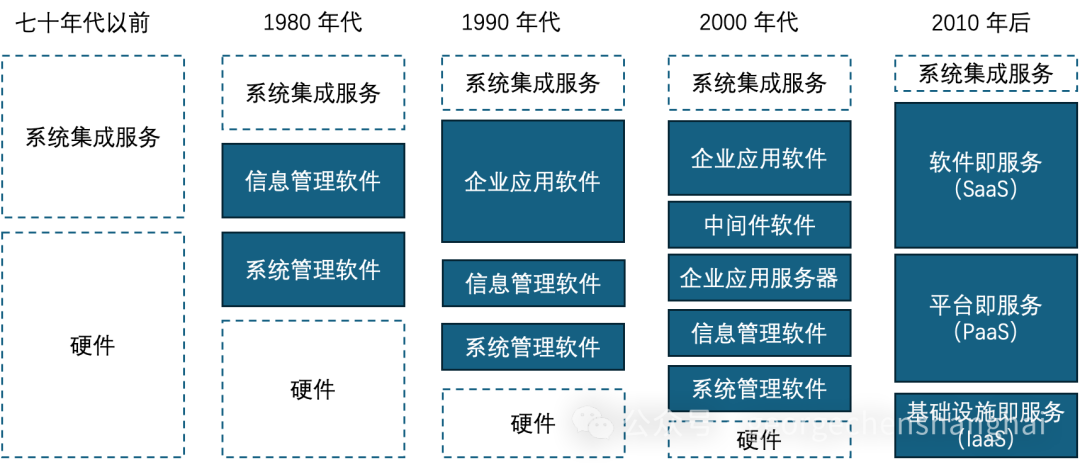
The above figure shows the development of the product range of the enterprise software industry over the past fifty years, as well as the approximate relationship between the investment in system integration services and hardware. It can be seen that the basic base of SaaS is PaaS, and the technology of PaaS is developed from the Enterprise Application Server (Enterprise Application Server). The so-called "Enterprise Application Server" refers to the development and operation framework that constitutes business applications. It is the logical abstraction layer connecting the basic database of information management and user-oriented business applications. It is also approximately equivalent to the "middle platform" mentioned in previous years. This architecture is With the development of the Internet at the beginning of the 21st century, it evolved from the client/server architecture of the 1990s.
Kingdee's cloud transformation can be said to have started very early in terms of technical preparations. Around 2005, leading mainstream enterprise software companies at that time, including IBM, HP, Oracle, SAP, etc., all proposed enterprise software architectures based on Internet services. Although each company had different names for commercial promotion purposes, IBM's "service-oriented architecture” (SOA for short) is the most representative. As early as around 2006, Kingdee followed the SOA trend and launched the SOA-based enterprise software suite EAS. The technical base of EAS was called "Apusic" and its developers came from Kingdee Central Research Institute. At that time, it was also called "application middleware" and can be said to be the predecessor of today's Kingdee cloud platform.
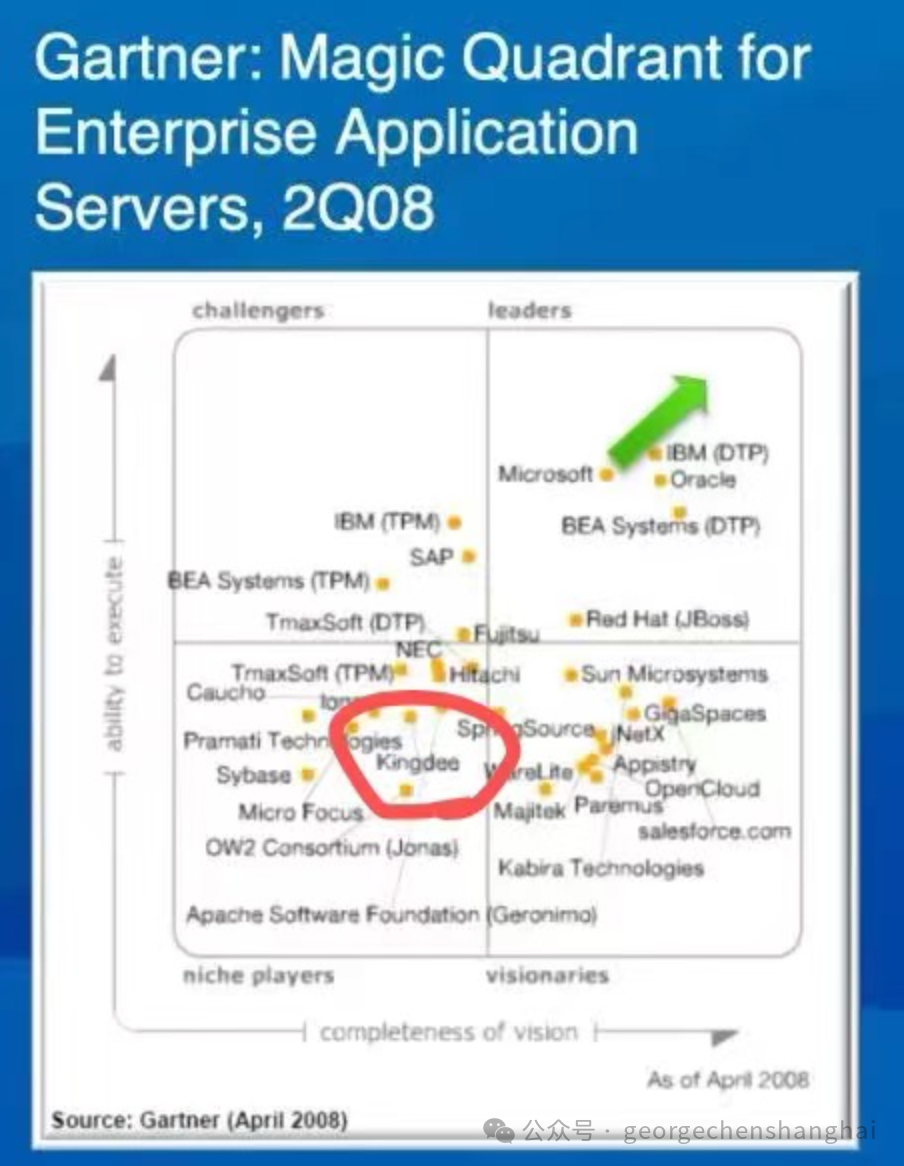
A few years ago, when I was researching leading U.S. SaaS vendors such as Workday, I discovered that when Workday started its business, the technical base of its SaaS products was actually an acquired application middleware startup. When Workday acquired it, that startup's product was actually at the same level as Kingdee's Tianyan in Gartner's Magic Quadrant for Enterprise Application Servers. Today, Tianyan is still a subsidiary of Kingdee, and the cloud platform technology has long been upgraded, which shows that the technological advancement of Kingdee cloud platform is no less than that of its international SaaS peers.
I observed that in terms of business exploration, Kingdee had tested the cloud service model in the small and micro enterprise market as early as 2007, and also invested in some early SaaS companies. However, today Kingdee announced that its formal cloud transformation began in 2011.
In 2018, Kingdee was officially launchedGolden Butterfly Cloud · Sky, which is an enterprise-level cloud-native PaaS platform. Subsequently, Kingdee and Gartner released the EBC (Enterprise Business Capability, defined as a new stage of enterprise management after ERP) white paper, advocating the concept of "assembly". This enables Kingdee Cloud business to extend from peripheral applications such as office collaboration to the core business systems of enterprises. At that time, the domestic SaaS industry still had the so-called "SaaS first, then PaaS" controversy. There was a debate on whether to do PaaS. Kingdee relied on its years of technology accumulation to directly enter the "SaaS + PaaS" model. Long-term technology accumulation and innovative product awareness are the key success factors for Kingdee Cloud's transformation.
However, the changes in the revenue/profit model of cloud companies are not just about converting the one-time revenue of traditional software companies into annual subscription revenue, but also pursuing the user's life cycle by pursuing customers' usage and stickiness of cloud services (measured by online time, number of functions used, and frequency of use). To maximize the long-term value (measured by indicators such as total paid time, renewal rate, churn rate, etc.), the business model of cloud services is based on user operations to achieve revenue growth, including various growth paths such as price growth, user number growth, user level growth, and module growth, which is the "flywheel effect" of Internet business.
I have always believed that the cloud transformation of traditional enterprise software companies is not just about putting locally installed software on the Internet and delivering it to customers, nor is it just about converting the revenue/profit model into an annuity-type income subscription, but about fundamental changes in business strategy, product and pricing strategies, product technology architecture, and operating systems; in short, cloud transformation is the digital transformation of the software company itself.
A pure SaaS/PaaS cloud company. In terms of external revenue and profit model, SaaS is not only a software application, but also an open interconnection of business capabilities. PaaS It is not only a development platform, but also a software market for partners and a connection platform for ecological partners. Cloud companies charge not only software service fees, but more attention to platform service fees and service connection fees. In terms of internal operations, cloud companies emphasize a user-operation-centered growth model, and have completely different operating methods from traditional software companies in product research and development, marketing and sales, product service delivery, customer success services and other aspects.
Therefore, on the one hand, we would like to congratulate Kingdee on its initial success in its cloud transformation. In the future, we also hope to see it further deepen the construction of the business model and operating model of SaaS companies, improve the profit model of SaaS, and further enhance profitability.
Now: Large Enterprise Market
The application of computers in enterprises first started with large enterprises. Early computers were very expensive and only large enterprises could afford them. Therefore, before the 1990s, the development of enterprise software, from data file processing, database software to ERP software, was all aimed at large enterprises. After the 1990s, with the development of personal computers, the Internet and mobile Internet, enterprise software for small and medium-sized enterprises and small and micro enterprises has flourished. Since enterprises of different sizes have very different corporate maturity and management complexity, different demands for enterprise software applications, and huge disparities in IT affordability, the large enterprise market, the medium-sized enterprise market, and the small and micro enterprise market are several different markets for enterprise software vendors. Manufacturers usually provide targeted products for different markets, with large differences in solutions, technical routes, and product pricing. Specifically:
1. Very large enterprises:The organization and business are very complex and require highly customized solutions; the enterprise architecture is complex, and the software for the new system needs to be able to integrate with multiple existing systems and platforms; the stability and reliability of the software are extremely high, and there are strict requirements for data security and compliance. Very large enterprises will bring a stable annual operating revenue stream to enterprise software vendors.
2. Medium and large enterprises:There is a need for software solutions that are flexible and easily adaptable. Although this will lead to the need for customization, due to budget constraints, attention must be paid to the cost-effective balance of the software between the functional requirements and the additional expenses caused by personalized development. For software to be able to support enterprise expansion and growth, software providers need to be able to provide continuous support and services.
3. Small and medium-sized enterprises:They are more cost-sensitive and require cost-effective software products. The software needs to be highly usable so that employees can get started quickly. Most of these enterprises do not have a dedicated IT department, nor do they have the customization capabilities and budget. They tend to choose integrated solutions that are small and complete. They require software that can be quickly deployed and implemented to reduce upfront investment in resources. It is simple to maintain during use and the supplier's service response is timely. The survival status of small and medium-sized enterprises is unstable, and generally speaking, the income stream to enterprise software vendors is also unstable.
The leading manufacturers in the foreign enterprise software industry all focus on large enterprises as customers, such as SAP, Oracle, Salesforce, etc. The development history of these companies all started as large enterprises. In the past two decades, through mergers and acquisitions, they have also begun to develop product lines for small and medium-sized enterprises. This market development path from high-end to low-end can make good use of their brand advantages.
Although Kingdee initially entered the medium-sized and small enterprise markets, from the beginning of its rapid development, it has actively improved its product positioning and strived to develop software products for large enterprises.
Enterprise Architecture (Enterprise Architecture) is an information technology management methodology for large enterprises. Kingdee was the first software vendor in China to introduce TOGAF, the global de facto standard for enterprise architecture management, and once became one of the six global directors of The Open Group, the sponsoring organization of TOGAF. It advocates "service-oriented architecture" (SOA) with global companies such as IBM and SAP. As early as around 2007, Kingdee developed the first domestic enterprise management suite EAS that fully supports SOA and is oriented to the large enterprise market based on the TOGAF methodology. Over the past ten years, this product has been successfully used by many large enterprise customers represented by China Merchants Group and CRRC.
Today, China's large enterprise management software market, including state-owned enterprises and large private enterprise groups, is facing tremendous changes in the industry. This is also the industry opportunity that Kingdee needs to seize most after successfully completing its cloud transformation.
China's accession to the WTO at the beginning of the 21st century not only promoted the opening up and growth of the economy, but also promoted the innovation of enterprise management concepts, management models and technologies. In this process, enterprise management software was used as an important tool to enhance enterprise competitiveness. In addition, the State-owned Assets Supervision and Administration Commission was established at that time. In order to adapt to the international market and improve management efficiency, state-owned enterprises and large enterprises carried out in-depth reforms, introduced modern enterprise management systems, and adopted enterprise management software to optimize processes and improve compliance and transparency. In response to this trend, there was an upsurge in ERP construction between 2005 and 2015. This period also allowed foreign enterprise management software manufacturers such as SAP and Oracle to occupy a mainstream position in China's large enterprise market due to their rich global implementation cases and strong global consulting company partner ecosystem.
In the past ten years, with the upgrading of technology and the latest developments in international geopolitics, the construction of information systems of large enterprises has begun to enter a new stage - the development of management software.Domestic substitutionThe trend has just begun and continues to strengthen. Today, most of the ERP systems of large Chinese enterprises were built during the WTO era and have been in use for 15 years or more. This is not only due to internal factors such as the normal expiration of the system life cycle and the extension of application needs (such as treasury management, financial sharing, etc.), but also external driving forces such as national policy support, data asset management and information security requirements. Domestic software companies are gradually catching up with international standards in technology. Large companies tend to use domestic management software with independent and controllable technology to reduce external dependence.
From the perspective of large-scale enterprise applications, there are roughly three ways to use domestic software to switch existing information systems based on foreign large-scale ERP software:
The first way is to use "high imitation". Some manufacturers appear on the market to provide products that are very close to foreign software in terms of user interface, operating habits, terminology, etc. Some companies are also trying to use outsourcing development to clone currently used foreign software to reduce the risk of switching.
The second way is to replace them with products from leading domestic management software such as Kingdee. The current challenge for domestic management software is not the technical foundation or product maturity, but the influence of the management concepts contained in the product on large enterprises and the delivery capability of complex projects.
The third way is for enterprises to self-develop a new generation of enterprise management systems. For the purpose of independent control and prevention of "stuck necks", many large enterprises have chosen not to use packaged software products for implementation. Instead, they have adopted a self-research model of developing and constructing technical architecture and product definitions starting from drawings on white paper, using their own technology teams and labor outsourcing.
As an industry practitioner for many years, from the perspective of industrial development, I think the third method is detrimental to Kingdee’s development. In the early days of the European and American markets, there was also a dispute between self-research and packaged software. In the 1970s, large enterprises even developed their own database management software. Tom Siebel, Oracle's vice president of sales during its entrepreneurial period and later pioneered the CRM software industry, wrote in his book "Digital Transformation" that when he was selling Oracle database software, he felt that the biggest competitor was not other database software companies, but enterprise information technology leaders who were keen on self-developed software.
However, in the end, the packaged software model won out. Tom Siebel said that more than ten years later, CIOs who developed self-developed database software all asked him to replace it with standard database software. This promoted the rapid development of enterprise software companies such as Oracle and SAP and the modern SaaS model.
In contrast, although Japan has a developed economy and a solid foundation in the electronics industry, due to the closed management system of large enterprises and the lack of emphasis on software industry innovation, an industry model of customized development of enterprise management software has been formed, which has directly hindered the development of Japan's information technology industry. Today, it lags far behind Europe and the United States.
Faced with various chaos in the localization of management software for large Chinese enterprises, and worried that China's enterprise software industry would fall into the Japanese model, I proposed the proposition "China's enterprise software industry has reached its most dangerous moment." When I asked Mr. Xu about this proposition, Mr. Xu said that he also felt the challenges of the market, but he was not pessimistic. He felt that dangerous moments are the best moments. Market problems have been fully exposed, and Kingdee has gradually found solutions.
Serving large corporate customers well is Kingdee's most important market strategy at present. Mr. Xu agreed with my opinion that Kingdee’s foundation is still a product-based company with technological innovation, rather than an outsourcing company that sells manpower. So based on this premise, how to deal with the large-scale enterprise market where the living environment seems to be getting worse and worse? Mr. Xu believes that there are three starting points:
first isCustomer successbrand image. Mr. Xu admitted that large enterprises have many customization needs, difficult projects, and high delivery risks. His strategy is “Become one by doing one"If he predicts that this customer's project will suffer serious losses and cannot become Kingdee's benchmark customer, he would rather give up than engage in a price war with his competitors. But as long as you win this order, no matter how much it costs, you must do it well.
In the past period of time, Mr. Xu said that for large customers such as Huawei, Yunnan China Tobacco, Yixintang, and Weichai Lovol, he used his own character and Kingdee's brand to protect them. Although the investment was huge, it was successfully delivered in the end, accumulating implementation experience for many large enterprises, and polishing and enriching product functions; customer reputation is an asset for Kingdee to continue to serve large enterprise customers.
followed byPartner ecological construction. The most important success model for foreign software companies in the large-scale enterprise market is a partner ecosystem with large-scale system integration consulting. After years of exploration, Kingdee has also tried to seek cooperation with large-scale system integrators and international consulting companies. In practice, it has realized that haste makes waste. With the experience of successfully delivering these large enterprise projects in the past few years, Mr. Xu believes that he has found a way to share the joys and sorrows with partners in the project and develop partners steadily.
Successfully delivering a model project is not only a success for the customer, but also a success for the partners. Mr. Xu believes that we should not blindly pursue the short-term effects of cooperating with major international companies, but prepare to spend five to seven years in the project to cultivate and strengthen implementation partners who are willing to grow with Kingdee, especially to support those partners who are deeply involved in industry solutions to accumulate experience. At the same time, Mr. Xu also has full respect for major international consulting companies. As Kingdee itself becomes stronger, I believe the ecological construction will become more complete and complete.
Third, and most importantly, we still need toProducts for large enterprisesBe solid. We should standardize product functions well, improve product cost-effectiveness, and technically build a product architecture that is truly oriented to very large enterprises with a revenue of hundreds of billions.
Kingdee has always positioned itself as a technology company in its thirty years of development, from solutions for small and medium-sized enterprises to solutions for large enterprises, and now to ultra-large solutions. Kingdee's products and platforms have gone through several generations of development, and its technical architecture has been continuously optimized. Mr. Xu believes that he and his team have thought clearly, are clearly aware of the gap with their international counterparts, and are catching up very quickly. Today, there is no gap in the world in the basic technology of enterprise software. Seizing AI opportunities and accumulating Chinese management practices are the key points of product development for Kingdee to ultimately win the large enterprise market.
The future: The road to AI
Whether it is traditional software or SaaS cloud services, Kingdee has always been positioned to provide information technology solutions for enterprise management. Kingdee's cloud transformation in the past was the general trend. Today, the artificial intelligence transformation has reached a situation where progress will lead to success and slow down will lead to death. This is the background for this year's President Xu to lead Kingdee to fully invest in AI and stop the breakthrough and change to the establishment at the annual press conference.
I asked Mr. Xu: What is the basis of confidence for the success of Kingdee’s AI transformation?
On the one hand, Mr. Xu humbly admitted that foreign countries have first-mover advantages in technological innovation. Whether it is the Internet or cloud computing, they all started abroad. This round of artificial intelligence craze has also been well-established in foreign technology circles. But on the other hand, he believes that as long as Chinese companies and Kingdee themselves have a clear direction, they can quickly Keep up quickly, there is no gap in technology in this world - the Internet was not invented in China, but China has become a big Internet country today; when he led Kingdee to start its cloud transformation, many people did not know what the cloud was. Ten years later, Kingdee's cloud transformation has also been successful. Although technologies such as neural networks and deep learning were not invented in China, China’s advantage is that it has a large number of people in the National University and rich application scenarios. In terms of technology application, China has greater opportunities. Mr. Xu hopes that Kingdee’s products will spread the roots of AI far and wide and create more innovation and practice opportunities in Chinese society.
Mr. Xu believes that in the application of enterprise information technology, AI can improve the problem of "excessive sensibility and insufficient rationality" in China's traditional enterprise management methods. AI can use its perception, learning, computing and general intelligence capabilities to automatically integrate scientific processes and rules into corporate business, and to precipitate the practice of the "Chinese Management Model" to reconstruct the relationship between people and systems. People will not be able to perceive information systems like ERP that were difficult to understand and complex to operate in the past. All interactions between the system and people will be done by AI, and the system will even replace people to operate business.
So what kind of products will Kingdee’s artificial intelligence transformation deliver?
At the 2024 Cloud Summit, I got to take a peek at Kingdee’s newly released artificial intelligence assistant: Cosmic. It is a conversational intelligent management assistant developed by Kingdee based on its existing enterprise practice scenarios and training data. It can be customized using the newly launched AI application development tools on the Kingdee cloud platform and deployed to various applications on the Kingdee cloud platform. Cosmic has the perceptive ability of listening, speaking, reading and writing, the memory ability to accumulate and utilize management experience, the thinking ability to understand requests and plan actions, and the action ability to mobilize digital services and realize intentions.
At the conference site, Kingdee's R&D personnel publicly demonstrated that Cosmic helps managers and employees cope with many management tasks such as financial management, data analysis, contract processing, and cadre selection, making enterprises run smoother and more efficiently. Currently, Cosmic covers a variety of business scenarios such as finance, human resources, and supply chain.
In recent years, I have predicted in many articles the impact of artificial intelligence on different forms and stages of development of traditional enterprise information technology applications. In general, information technology processing business is becoming more and more intelligent and automated, partially or completely replacing the role of humans in business processes. The main trends that can be observed are:
-
Enhanced data analysis capabilities: Traditional business intelligence (BI) is based on preset data models, algorithms and information presentation methods. AI can not only provide more powerful and intelligent data analysis capabilities, but also evolve from descriptive and diagnostic analysis to predictive and normative (i.e. action plan recommendation) analysis. The human-computer interaction process of data analysis is based on continuous natural language. This kind of BI combined with AI is also called AI-BI.
-
Natural language processing:Information systems can understand and respond to natural language requests, making the user's interaction with the system more intuitive and natural.
-
Optimized decision support:AI can help information system users at all levels of the enterprise, from senior decision-makers to front-line business operators, to make more data-driven decisions and provide decision-making suggestions by analyzing historical data and real-time data.
-
hyperautomation(Hyper-automation): Hyper-automation is the culmination of current artificial intelligence-driven enterprise process automation concepts. It inherits the data and process services of traditional enterprise information systems. These services use process mining and process management technology, and with the support of AI, complex rule-based business processes are automated by machines instead of humans, such as automatic filling of order information, intelligent inventory management and predictive maintenance, bringing efficiency, timeliness and accuracy that human work does not have. The aforementioned intelligent decision-making can use application programming interfaces (APIs) or software robots (RPA) to automatically invoke business execution.
-
Personalized and intelligent user experience: Through machine learning, enterprise management software can provide personalized user experience, customize the interface and functions according to the user's behavior and preferences; integrate intelligent assistants and chat robots, guide users in real time according to the user's operating context, and help solve user problems.
-
Risk Management and Compliance: AI can monitor and predict potential risks and compliance issues, helping companies take timely action to avoid potential losses.
-
Integrated IoT(IoT): The combination of AI and IoT can achieve more intelligent operational automation and status monitoring, improving operation-level efficiency and safety.
-
Continuous learning and self-optimization: The AI system has self-learning and The ability to self-optimize, allowing them to continuously improve performance and accuracy over time.
-
Data security and privacy protection: With the widespread application of AI in enterprise management software, data security and privacy protection have become more important, requiring more advanced security measures.
The role of agents in enterprise software automation will become increasingly important. An intelligent agent is a system that can perceive its environment and make decisions and execute them based on the perceived information to achieve a specific goal. To use a popular analogy, just like in the world of online games, if each online game character is the embodiment of "general artificial intelligence" (or "strong artificial intelligence"), then it is an "intelligent agent." Similarly, when the physical business world generates digital twins, in the digital twin world, agents can do the following work and map it to the real world:
-
Automate repetitive tasks and reduce labor requirements.
-
Collaborate with human workers to increase productivity.
-
Learn and adapt to new business scenarios and needs.
-
Monitor business processes to identify and resolve issues in a timely manner.
-
Plan ahead and adjust business strategies with predictive analytics.
If hyper-automation characterized by intelligent agents is the foreseeable ultimate state of artificial intelligence transforming traditional enterprise management information systems, then how far is Kingdee’s artificial intelligence transformation from this sci-fi world-like vision?
In 2023, Kingdee released the large model capability platform "Cang Qiong GPT", and based on this, it released a large financial model, which encapsulates Kingdee's 30 years of financial knowledge and practice of serving millions of customers, and can provide enterprises with comprehensive analysis and forecasting, expert support, report generation and interpretation services. After application practice by companies such as C&D Real Estate and Hisense Group, it has more financial intelligence genes than general large models.
Judging from the product demonstration released by Kingdee this time, Kingdee's AI platform has the algorithm service capability to access mainstream large language models (LLM), fine-tuning for large models to support specific task optimization, converting raw data into easy-to-process embeddings for large models, and retrieval-enhanced generation (RAG) to enhance the ability of large models to process external knowledge. AI-BI seems to be close to practicality. Kingdee executives publicly demonstrated AI-BI based on generative AI: from the financial collection data, it automatically analyzed that the decline in collections was because some customer orders were not delivered on time, and then further explored which orders were not delivered on time and the reasons for late delivery. The entire analysis process looked very smooth, and I personally think it is worthy of the attention of current Kingdee users and even trying it.
However, large model applications also include various technologies such as meta-learning, knowledge distillation, reinforcement learning, transfer learning, and ensemble learning, which are used to expand the application scope of large models and improve application performance, which places in-depth requirements on the engineering capabilities of the Kingdee AI platform.
I believe in AI-BI This is just the beginning for Kingdee. To achieve intelligent decision-making in various business scenarios, online real-time integration of data analysis and transaction processing, and hyper-automation of business processes, it not only requires Kingdee to further leverage its highly decoupled, event-driven platform architecture capabilities accumulated in the cloud transformation era, but also requires Kingdee’s internal and external The digital service ecosystem is more complete. For example, advanced supply chain analysis and optimization are not the traditional strengths of Chinese management software companies. This field has a development history of more than 20 years abroad. There are also many emerging companies in China that imitate foreign companies in making optimizer software. Kingdee does not necessarily have to build all its own AI capabilities. Its AI The significance and value of transformation in business innovation even exceeds just technology research and development.
As for the scene demonstrated by Kingdee earlier, in which late delivery of an order leads to a decline in collections, it can be imagined that today the general manager, financial manager, sales manager, supply chain manager, etc. handle this scenario. Although AI has improved the managers' business insight capabilities, the actual processing of orders still requires manual processing in multiple applications such as data analysis systems, financial systems, supply chain planning systems, order systems, etc. The real intelligent process may be that relevant managers communicate in group chats in WeChat groups, and orders are automatically processed in the background.
Mr. Xu believes that the development of enterprise management software from ERP to EBC must be based on AI agents in the future. Dialogue robots are just a manifestation of agents. As for its ultimate form, we still need to continue to explore. Until we fully understand it, we will call it "Smart EBC". He believes that "intelligent EBC" is a "visible" ERP system compared with traditional ERP systems. The information system we are facing now is a silent system that requires people to click on the computer to process transactions or query information. In the future, the way I interact with AI is sound, image, and video. This will be a spiritual and smart system.
Mr. Xu believes that the human-machine collaboration model in the enterprise first started with humans operating a rigid system, and then the system embedded a little intelligence. Humans had to do a lot of work, and AI provided insights. Today, AI-assisted partner models are gradually emerging. AI does more, humans do less, but humans still do more. In the future, people only need to do a little work and give orders, and AI will do the rest. Human nature is to use our imagination and creativity, and all mechanical, repetitive, reasoning, and knowledge-based tasks should be left to AI.
In my conversation with Mr. Xu, Mr. Xu particularly emphasized that all aspects of enterprise operations are very complex. It is necessary to grasp a specific scenario, a specific process or a specific customer value proposition, and use AI to do a thorough job. He is particularly optimistic about AI’s breakthroughs in decision support scenarios. I believe that production and sales coordination is the highest-priority digital scenario in most manufacturing companies. Just as ChatGPT is the “killer application” of generative AI, I very much hope that Mr. Xu can find a killer AI application in enterprise scenarios.
In addition, although the technical details of the Kingdee AI platform were not disclosed at the press conference, its publicly displayed architecture diagram also reflected considerations of AI risk control, data security and other issues. In short, it can be said that Kingdee has accumulated sufficient momentum and preparations for AI transformation. The journey ahead is long and Kingdee still has a lot to do in terms of business model innovation, ecological construction and technology accumulation.
Postscript: Original Intention—Chinese Management Model
During the conversation, I raised a proposition with Mr. Xu - how is the Chinese management model he initiated different from Western management? How is China's management model truly connected with the digital transformation of enterprises?
Kingdee is positioned as an enterprise software company, and its products are used to support enterprise management. From the perspective of business transaction logic, its users are enterprise employees or partners, and it is enterprise managers who actually decide to purchase and pay. Therefore, the value proposition of Kingdee products is not the technical value of the software code to a large extent, but the value of management knowledge paid for by enterprise managers, which is the so-called "best business practice"; in terms of delivery form, it is a software system or Internet service, and the business essence is payment for knowledge.
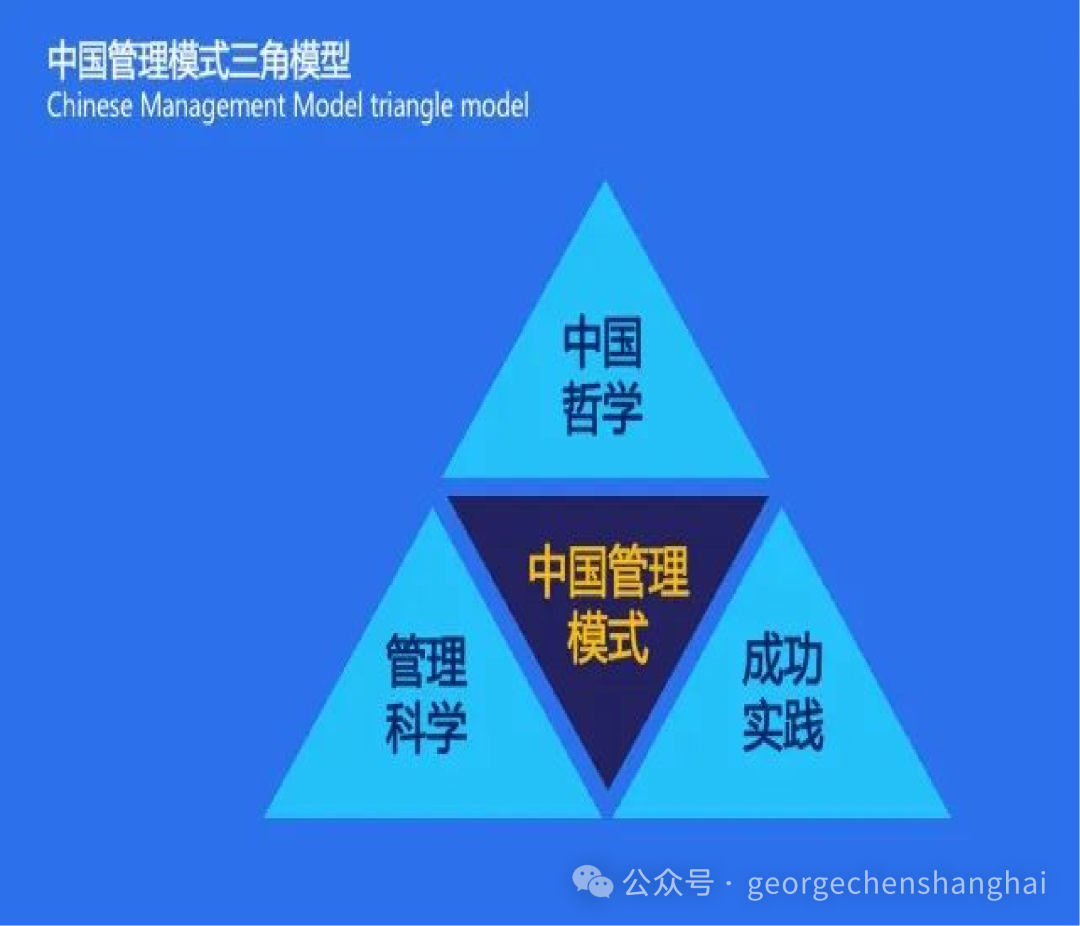
Mr. Xu said that he used a triangular model to summarize the "Chinese management model". The top of this triangular model is Chinese philosophy, the right is best practice cases, and the left is management science, tools, methods, technology, etc., to analyze a successful Chinese company from three dimensions. Although each company has its own successful practices and adopts effective scientific methods, in my opinion, it ultimately comes down to the pursuit of Chinese management philosophy.
Many Chinese entrepreneurs and scholars have put forward the proposition of "Chinese management model". So, is there a "Chinese management model" that is different from general corporate management theories and has Chinese characteristics?
I believe that the world’s mainstream enterprise management software originated from European and American countries, and its ideas are based on contemporary Western management theories. These management theories mainly have four sources:
The first is work standardization and operational flow, from Frederick Taylor's "scientific management" and Henry Ford's assembly line production at the beginning of the last century, to Frank B. Gilbreth's action research and flow charts in the 1930s and 1940s, and Allan H. Mogensen's "work simplification" design with full participation of all employees. Emphasize using standardized processes (flows) and work specifications to reduce manual complexity and simplify work, hire, train and pay employees according to standardized job requirements, and improve work efficiency and consistency.
The second is the assumption of human nature in management activities, emphasizing employee participation, self-realization, fairness and justice, including the Hawthorne experiment led by Harvard professor Elton Mayo around the 1930s, which revealed that the improvement of workers' productivity is related to the attention and importance they feel. The two-factor motivation theory proposed by psychologist Frederick Herzberg in the 1950s revealed that wages, working conditions, management policies, etc. are the hygiene factors of employees' work, while things related to the work itself, such as achievements, recognition, work challenges, responsibilities, personal growth, etc., are motivating factors. The theory of human nature is a supplement to the previous point of scientific management theory.
The third is the modern corporate governance model in which professional managers assume management responsibilities. Corporate historian Alfred D. Chandler Jr. Chandler pointed out in the 1960s that with the expansion of corporate scale and the diversification of operating activities, the importance of management coordination exceeds market coordination. This has led to the emergence of corporate hierarchical management teams and the separation of management rights and ownership. Professional managers have replaced corporate owners as the actual decision-makers of the corporate. In his seventies and eighties, Peter Drucker pointed out that the core responsibilities of professional managers include: goal setting, organizational arrangements, motivation and communication, performance evaluation, personnel training, and managers acquire knowledge through practice. The widespread mobility of professional managers in society and the fiduciary management relationship between professional managers and the company's board of directors are the driving force for the standardization of enterprise management software. Japanese society is a chaebol economy and has a lifelong employment system. This is also the main reason why Japan lacks standardized enterprise management software.
Fourth, in the late 1980s, the business process reengineering theory proposed by Hamer, Ciampi, Davenport and others shifted the focus of enterprise management and operations from department functions and hierarchical management to business processes centered on customer value creation and horizontally connected with enterprise functions ("Business Process Business Process"). The accurate translation of "process" should be called "enterprise process", which is slightly different from the meaning of "process" in the first point above, which refers to job standardization). It fundamentally changes the organization. This corrects the hierarchical management organization in the third point and greatly promotes the emergence and development of enterprise management software.
The social background of the Western management theories that promote the development of enterprise management software is that they completed industrialization at the end of the 19th century and experienced a series of historical stages such as the intensification and reconciliation of labor-capital class conflicts and the formation of financial capital in the first half of the 20th century. These management methods that focus on hard system factors and soft organizational factors are based on the characteristics of assembly line collaboration in the industrialization era and continuous innovation in the post-industrialization era.
It took several decades for China to enter a fully industrialized society. It truly entered the fast lane of economic development after joining the WTO. Kingdee also developed during this time. China is a socialist country, and there is no inherent class conflict between labor and capital, as assumed by Western management political and economic assumptions. China's economy is a diversified mixture of state-owned enterprises, private enterprises and foreign-invested enterprises. It lacks a Western-style professional manager class with a large number of personnel and a high degree of specialization. Compared with the Japanese model, the degree of mobility of social professionals and the degree of openness of enterprises are relatively high.
If we carefully observe the colorful management ideologies of current Chinese entrepreneurs, we will find that they are mixed with social imprints of various eras: both those from the feudal era andsmall farmer consciousness, some entrepreneurs are keen to emphasize dividing the company into small teams, each team operates independently, trades and games with each other, focuses on short-term interests, and ignores collaboration and scale effects; there are also those in the industrial eraefficiency consciousness, Reform and opening up have enabled many Chinese companies to integrate into the international industrial chain, be market-oriented, and have global awareness to innovate products and improve quality. China has become the country with the most complete industrial categories in the world; and in the Internet eraopen awareness, Chinese Internet companies lead the world in business innovation capabilities in the platform economy and emerging media, and the practices of Internet companies have also greatly affected the management thinking of traditional enterprises.
Therefore, I have personally observed that many Chinese companies are indeed pioneers in digital transformation. Their management models benefit from the full empowerment of digitalization and demonstrate Chinese characteristics, such as:
1. Shell:Using digital means to establish an online and offline real estate transaction and service system, it has completely changed the business model of the real estate brokerage industry. It achieves efficient management and performance tracking of brokers and improves the transparency and efficiency of business processes; this system is an open platform that integrates internal and external resources of the enterprise to share customer value creation.
2. Hisense:As an industry giant, Hisense has demonstrated strong resilience in the context of the slow-speed global economy, and has delivered outstanding results with revenue exceeding 200 billion in 2023, an increase of 9%. Hisense has written "leading advanced manufacturing with intelligence as the core" into its corporate mission, actively embraces the wave of digital transformation, and has clarified the goals of digital transformation within the company. Hisense joins hands with Kingdee to build a "financial middle platform" to improve management efficiency, promote financial transformation and upgrading, empower the group's digital operation analysis and business insights, and have a demonstration effect in the digital transformation and globalization of China's manufacturing industry.
3.McDonald’s China:After Chinese capital acquired the business of the world's largest fast food company in China, it carried out a thorough digital transformation of the Chinese business. All aspects of the business, including customers, employees and store managers, and the supply chain, were fully equipped with digitalization. Not only did it achieve dramatic growth in the number of stores and the company's capital value in China, but it also became McDonald's' globally recognized digital benchmark.
Mr. Xu said that he would pay attention to these cases and also invited me to join in the extraction of Chinese management models.
Kingdee’s corporate core values are “Be conscientious, follow the right path, and follow the royal path”, this is a declaration with Chinese characteristics. Mr. Xu told me that as early as 2008, Kingdee had joined forces with the China Management Modernization Research Association and several well-known domestic management schools to officially launch the selection of the China Management Model Outstanding Award with the goal of "making the Chinese management model rise in the world." The award-winning companies include Hisense, Haier, Anta, Sany, China Merchants, New Hope, Vanke, etc. This year has continued to the 17th edition. In 2017, the "China Management Model Excellence Award Council" officially upgraded the Chinese Management Model 50+ (referred to as "C50+"), which is composed of management scholars and influential entrepreneurs who are committed to studying Chinese management models. It inherits the mission of "making the Chinese management model rise in the world" and takes "the integration of knowledge and action" as its core concept. It is committed to promoting dialogue, exchange and cooperation between theory and practice, and promoting the progress of Chinese enterprise management.
If "to be conscientious, to follow the right path, and to act kingly" is the core value of Kingdee, then I very much hope to see Kingdee write more beautiful cases for China's management model in the journey of yesterday's cloud transformation, today's large enterprise market development, and tomorrow's AI transformation.
Machine-translated from the Chinese original 金蝶的征程和初心 (published 2024-06-05). WeChat original ↗