This Magic Red Class is not only a discussion of the dream of Red Mansions and the struggle against the Qing Dynasty and the restoration of the Ming Dynasty, but also a discussion on academic research and even life and society. It should be allowed to go out of Fudan and enter society.
I believe that after reading this discussion in the Magic Red Class and taking Fudan’s hard-core test papers, I will never again easily talk about or believe in anti-Qing and Fuming theories.
Time: 18:30 on December 17, 2025
Location: Classroom 1104, Sixth Education, Fudan University
Course: Dream of Red Mansions and Life
Host, record and organize: Mo Luohan
1. Have you eaten the melon of "anti-Qing and Fu-Ming"?
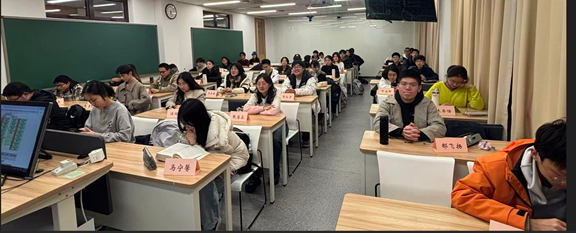
Mo Luohan: Time flies so fast, and in a blink of an eye, we have arrived at the last lesson of this semester (...9999 words are omitted here...) By the way, have you watched the video recently and eaten the big melon of "A Dream of Red Mansions" and "Revolt against the Qing Dynasty and the Ming Dynasty"?
All classmates (mysterious smiles): Eat, eat.
Demon Arhat: Is it delicious?
All the students: (Sorry, I’m thinking deeply)
Demon Arhat:
Generally speaking, this winter's "Dream of Red Mansions" meme can be roughly divided into three parts: First, one or several anchors with a large number of fans talked about the theme of "Dream of Red Mansions" as "anti-Qing and restoration of Ming". The fans' reasons include but are not limited to: "Jia's Mansion" means "fake mansion", which means that the Qing Dynasty was a "pseudo-mandarin" "Chao" means; "Jinling" is the old capital of the Ming Dynasty, and Grand View Garden is the "Da Ming Garden"; Jia Baoyu is the jade seal handed down from the country, and he likes to eat girls' rouge and is considered to be the jade seal that needs sealing mud; Lin Daiyu is the incarnation of Emperor Chongzhen. She was buried twice in mid-March and on April 26th. The former is considered to be related to Chongzhen The emperor's festival on March 19th is related to the festival, which is considered the first day of the "Ten Days of Yangzhou", and Lin Daiyu's "jade belt hanging in the forest" corresponds to Emperor Chongzhen's self-hanging Jingshan branch; "Shan" generally refers to the nomadic people, implying hostility to the Manchus; when Daiyu entered the Jia Mansion, she saw "sixteen nanmu chairs lined up in two rows" in the Rongxi Hall of Rongguo Mansion, and there were sixteen emperors in the Ming Dynasty; in the ninth episode of "Naughty Boys Trouble in School", Baoyu's servant Mingyan scolded Jin Rong and said, "Who are you, surnamed Jin!" "You are a good boy, come out and touch your uncle Ming!" "The gold here refers to the post-Jin Qing Dynasty, and "Uncle Ming" means "Uncle Ming". And so on. This is probably the first part of this melon.
I can also add a few strong examples: For example, Cao Xueqin read "Mourning Hongxuan" for ten years, adding and deleting five times; the image of the entire "Dream of Red Mansions" is "Men are flesh and blood made of mud, and daughters are flesh and blood made of water. I feel refreshed when I see my daughter, and I feel stinky when I see a man."
This wave swept across the entire Internet, and the waves crashed on the shore. It also attracted fierce opposition, including some Red Studies researchers who also stood up and pointed out that this is called the Suoyin Sect in the history of Red Studies. Such claims are nonsense. Please stop making trouble. This is probably the second episode.
It seems that this persuasion did not have much effect, and the noise became louder and louder. So the official media also came out to speak out, calling for rational speech, to build a strong sense of the Chinese nation's community and maintain national unity. The relevant platforms also adopted the method of extinguishing the fire and banning accounts. This is probably the third time this Gua has done so.
Now, what do you think of this trend? When you discuss this incident with your friends or netizens, what opinions will you express? Is Dream of Red Mansions anti-Qing Dynasty and Ming Dynasty? Could it be anti-Qing Dynasty and Ming Dynasty? Do you want to put out the fire and ban the account?
2. He can interpret and I can criticize
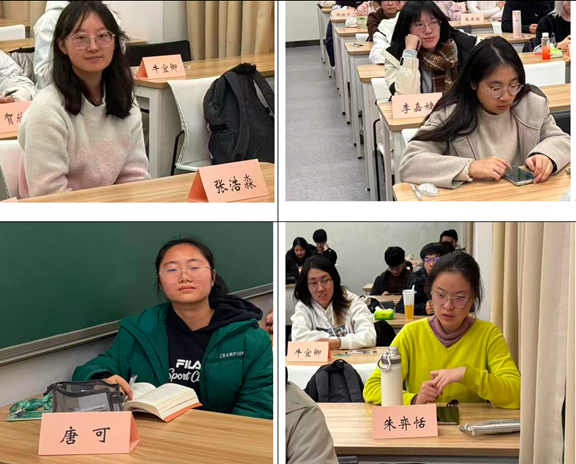
Zhang Haomiao: There are a thousand copies of "Dream of Red Mansions" for one thousand readers. Different readers will have different understandings, which is normal. But in my opinion, their understanding is not in line with Cao Xueqin’s original intention.
Li Jiajie: Yes, I don’t accept their statement either. Although readers have the freedom to understand, they should not impose wrong views on the audience.
Mo Luohan: Let me understand sympathetically. When they hear you say this, they may return it to you as it is: "Your interpretation is wrong; my understanding is in line with Cao Xueqin's original intention." In addition, why do you feel that he imposed it on others? How are they imposed?
Li Jiajie: These interpretations make no sense, but they think it is absolutely true and everyone else is wrong.
Mo Luohan: Is there a problem? Can't he feel like he's right? When I spoke, didn’t I think that Hu Shi, Yu Pingbo, Zhou Ruchang, and Feng Qiyong were wrong in many of their statements? On the other hand, if I myself thought this thing was wrong, would I still publish it so confidently? This doesn't seem to be the same thing as imposition? When we receive and listen, we may look for mouth substitutes; but when we speak, we should only think about speaking for ourselves, not necessarily just to be someone else's mouth substitute, right?
Tang Ke: What they said is basically baseless. I really can’t see it. In short, I don’t really agree with it.
Mo Luohan: Well, that’s no problem. Maybe they also expect that not everyone will understand and accept this.
Zhu Yitian: Their interpretation is too simple. According to this method, not only can we draw the conclusion of overthrowing the Qing Dynasty and restoring the Ming Dynasty, but we can also draw the conclusion of overthrowing the Ming Dynasty and restoring the Song Dynasty. I can say that "yingchun", "ying" means "ying", implying that "yingchun" symbolizes Yingzong of Song Dynasty. You see, they are all concubines; even the Yingzong "Golden Belt" and "Rhinoceros Belt" incidents are similar to the "Feng Chai" incident in the Spring Festival! Therefore, "A Dream of Red Mansions" can also be a "work in mourning for the Song Dynasty". Thus, contradictory conclusions are reached through the same method.
Demon Arhat: Understand, you are fighting fire with fire. For the same object, using the same method, you can draw different or even opposite conclusions, which shows that this kind of discussion and conclusion are invalid and untrustworthy. Of course, when you use this method to communicate with them, will they accept you?
Zhu Yitian: I expected that they would not accept it.
Demon Arhat: It seems that you are mentally prepared for "what you say is in vain, and what you don't say is in vain". Okay, what do you think?
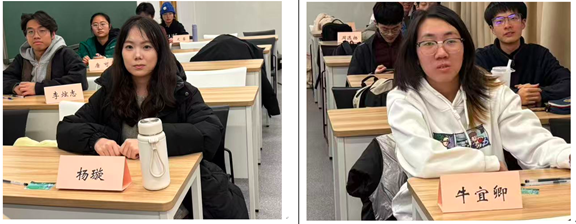
Yang Xuan: Cao Xueqin's great ancestor had already "entered the pass from the dragon", became the coat of arms of the royal family, was included in the flag book, and became a Manchu. The Manchu Cao Xueqin rebelled against the Qing Dynasty and mourned the Ming Dynasty. This makes no sense logically.
Mo Luohan: It is necessary to discuss this issue from the perspective of the author's family background and understanding people and the world. Cao Xueqin's family has a very close relationship with the royal family. His great-grandfather Cao Zhenyan took his great-grandfather Cao Xi "from the dragon into the pass". His great-grandmother Sun was Kangxi's wet nurse, and his grandfather Cao Yin was Kangxi's study companion, just like Qin Zhong was Baoyu's school companion. It makes no sense for such an author to want to rebel against the Qing Dynasty. Besides, Cao Xueqin was born around 1717, more than 80 years after the Qing Dynasty entered the customs. When he wrote "A Dream of Red Mansions", it was a century after the Qing Dynasty entered the customs. He had no idea where the Ming Dynasty was, whether it was facing east or west. However, these people may not know this, or they may not care if they know it. They also don’t know or don’t care. Judging from the existing literature, Cao Xueqin is still one of the most likely authors of "Dream of Red Mansions". They only need to de-Caohua "A Dream of Red Mansions" and simply say that the author of "A Dream of Red Mansions" is not Cao Xueqin. Okay, what do students think?
Niu Yiqing: I feel that those statements are literal, detailed, and roundabout, which is hard to believe.
Demon Arhat:
Do you think these statements are "unscientific"? The word "unscientific" was very popular a few years ago, but people are still saying it now, right? It doesn’t seem so fragrant anymore, does it? I also feel that this statement is not the academic discourse of scholars with academic training, but rather the "smart" of ordinary readers.
The humanities is a discipline that uses language as a medium. Anyone who knows a few words can access the works and express opinions. The ignorant are fearless. They not only think they "understand", but also think they are "right" and the only "right". They don’t know that there is professionalism involved, and that it requires well-trained training. There are profound differences between personal feelings and rational analysis, and between daily discourse and professional discussion. This is most prominent in the fields of literary interpretation and literary and historical research. In the natural sciences, art, and philosophy that use symbols, terminology, and formulas as media, ordinary readers simply do not understand these symbols, so it is rare for ordinary readers to confuse them with professional scholars and talk about them in the same way.
For example, when you say that the main theme of "A Dream of Red Mansions" is "revolting the Qing Dynasty and restoring the Ming Dynasty" or something else, you first need to know the basic nature of poetry, novels, literature, history, philosophy and other genres or disciplines; you need to know what these works can or are suitable to express, what they cannot or are not suitable to express; what methods and elements they use to express their main purpose; you need to answer what potential conclusions there are in the "phenomenon" or "argument" you see, and which is the most likely? Why this conclusion rather than which conclusion? What are its material and logical basis? Are these comments scattered and chaotic, or are they structured and organized into a system? This is the fundamental difference between nonsense and professional arguments. "Views" and "views" expressed only based on sporadic similarities, correlations, and possibilities have little academic value. There are almost infinite similar and related things or "possible" conclusions in the world. Nothing is impossible.
"A Dream of Red Mansions" is an encyclopedia-like work with nearly one million words, and is very rich in content. If you adopt this method of searching for chapters and excerpting sentences, and then say what the main theme of "A Dream of Red Mansions" is through certain similarities, there is no need for links between phenomena and conclusions, no internal self-consistency, and no need to compare with other possibilities. Then, you want to say that the main theme of "A Dream of Red Mansions" is what it is, and "A Dream of Red Mansions" is not "A Dream of Red Mansions", but really a little girl who can be dressed up.
For example, I can also say that the original meaning of "A Dream of Red Mansions" is to predict the failure of the Kuomintang Chiang Dynasty. Why do I say this? You see, there is an actor named "Jiang Yuhan" in "Dream of Red Mansions". Jiang means Jiang, and the Jiang family dynasty; jade means jade seal, and political power; letter means letter cover, and encapsulates it. This heralds the end of the power of the Jiang family dynasty. The argument here seems very reasonable, right? However, why does "Chiang" correspond to "Chiang Dynasty", "Jade" means "Jade Seal", and "Han" means "end"? What is the principle? What's the point? Is there any realistic basis? Can we draw such a conclusion just because their sounds, shapes, and meanings are somewhat similar or related? If this is the case, then how many thousands of people and things can they correspond to? On the other hand, the possibility of "the end of the Chiang Dynasty's regime" is only one of so many possibilities, and its possibility is very slim, almost close to zero.
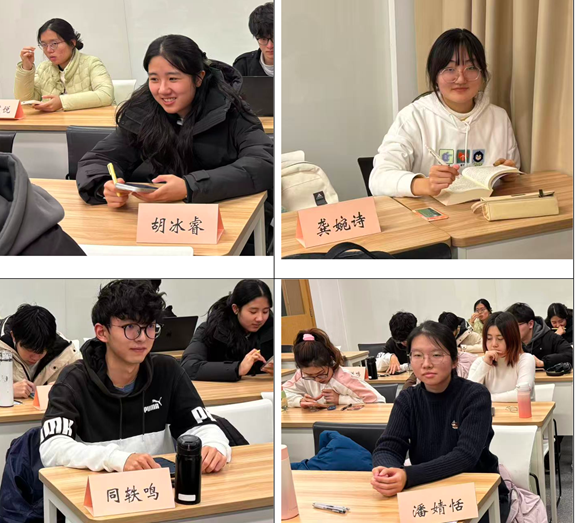
Hu Bingrui: But, aren’t there many homophones in “A Dream of Red Mansions”?
Mo Luohan: Indeed, through Zhi Pi's revelation, we can know that there are many homophones in "A Dream of Red Mansions". We have mentioned before that "Ying Lian" means "Ying Lian", and "Yu Xin" means "Foolish Faith". The more famous examples are probably "Yuan", "Ying", "Tan" and "Xi" are homophonic to "Yuan Ying Sigh", "Thousand Reds Yi Cave" and "Ten Thousand Beauties Same Cup" are homophonic to "Thousand Reds Yi Cry" and "Ten Thousand Beauties Tong Sad". No one will deny that "Dream of Red Mansions" uses homophonic memes. On the contrary, memes like "Thousands of Reds in a Cave" and "Ten Thousands of Beauties in the Same Cup" are almost a twist on "Thousands of Reds in a Cave" and "Ten Thousands of Beauties in the Same Cup" are very direct, and its direction is also very clear. Anyone with a little literary appreciation will sense this meaning and will not think of looking elsewhere; secondly, this kind of emotion of lamentation and regret is consistent with the meaning. The thoughts and emotions expressed in the characters, plots, and endings of the book are completely consistent, and there is no bluntness at all; moreover, Zhipi clearly reveals the meaning of so many homophones, and discusses the purpose of "Dream of Red Mansions" in many places, but nowhere is it pointed to "anti-Qing and restoration of Ming". Doesn't this just explain from one perspective what the main purpose of "Dream of Red Mansions" is and what it is not?
Gong Wanshi: I have another understanding. If what they say about "revolting the Qing Dynasty and restoring the Ming Dynasty" is true, then "A Dream of Red Mansions" opposes something from the Qing Dynasty and restores something from the Ming Dynasty. Isn't the Qing Dynasty system an inheritance and copy of the Ming Dynasty system? I don’t know why Cao Xueqin wanted to rebel against the Qing Dynasty and restore the Ming Dynasty.
Mo Luohan: This is a very, very big problem, and it is also an issue we have emphasized repeatedly. When you propose a concept or a proposition, you cannot just have a signifier but no signified, and you cannot have words but no specific content. For example, "Reverse the Qing Dynasty and restore the Ming Dynasty", what aspects of the Qing people were opposed, and what aspects of the Ming people were restored? The novel mainly reflects the author's ideological tendency and the theme of the work through characters, plots and structures. So, what images does "Dream of Red Mansions" mainly create, and what is its main plot? Why do we say that these characters and plots embody the idea of "resisting the Qing Dynasty and restoring the Ming Dynasty". If these questions are not answered, then "Anti-Qing and Restoration of Ming" will be just an empty symbol, an empty slogan that is divorced from the actual work, or a toolbox for my use to contain whatever I want.
Tong Yiming: There is no content in their statements, only positions and emotions.
Li Jiajie: This kind of statement that has no content and no basis is to impose one's own understanding on Cao Xueqin.
Mo Luohan: I finally understand why you keep mentioning the word "imposition". It turns out that it is because you feel that they impose their own ideas on Cao Xueqin and his works. Okay, now there is a question. Since this kind of statement is fundamentally nonsense where the position is greater than the opinion, then why does such a statement still have such a large market and become a hot topic of public opinion on the entire Internet?
3. There is a reason for the popularity of brainstorming
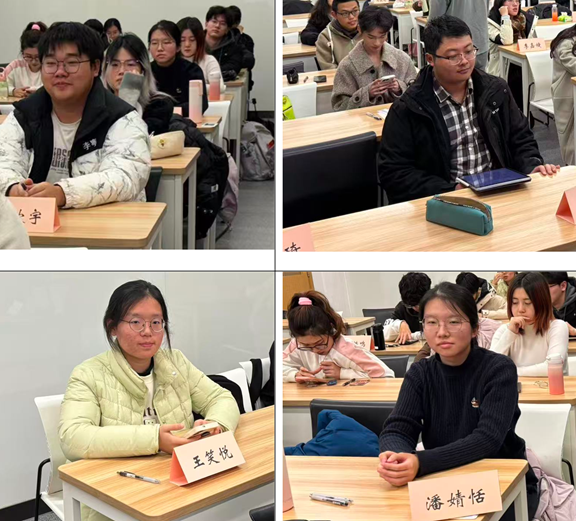
Sheng Yufang: Some of their statements also provide other possibilities, giving people a sense of freshness, and some interpretations are also quite enlightening. However, I think it is not important how they interpret it. What is important is why there is such a noise at the moment.
Mo Luohan: Indeed, for interpreters and uninformed readers, this statement may be relatively new, but for readers who are more familiar with the history of red science, there is nothing new. The suo-yin interpretation almost accompanies "A Dream of Red Mansions". By the 1910s, two books, "A Dream of Red Mansions" by Wang Mengruan and Shen Ping'an, and "Suo-yin" by Cai Yuanpei, were published, which could be said to be expensive in Luoyang for a while. I myself have personally experienced two waves of hidden climaxes, one was Huo Guoling's dream interpretation, and the other was Liu Xinwu's revelation. It was an unprecedented event, and everywhere I went was crowded with people. From this perspective, these statements are not only not new, but also outdated. They are simply a resurgence of scum. In addition, even if it is a refreshing new statement for this part of the readers, it is worth thinking about. Does the "new" mean the "right"? Does “new” mean “good”? Of course, it is indeed worth exploring what is the reason for the emergence of such hot public opinion in this era.
Tong Yiming: In my opinion, this issue may have something to do with the current economic downturn. When the economy is down, some nationalist and populist voices tend to emerge. This is also the case in Japan.
Mo Luohan: Ah, is our economy going down? Aren’t we all singing and dancing, and the situation is great? I have stayed in the ivory tower for a long time, just living in the media and not knowing what real life is like. But politics and economics should be a grand narrative, a background, and one of the angles of explanation. See if there are other more recent explanations?
Bao Jiayuan: I think this is mainly because this kind of interpretation is simple, easy to understand, fresh, interesting, and can easily become a topic of conversation. This may be an important reason.
Mo Luohan: This is explained from the perspective of discourse production and reception, which is very good. This kind of viewpoint and discourse does not require time-consuming research or verification. As long as the imagination is open, you can open your mouth and it is easy to be welcomed by readers and audiences. Who likes to use their brains, and who doesn’t like fun?
Niu Yiqing: When these seemingly simple, fresh and interesting remarks are combined with some big narratives, they will even give people a surprising feeling.
Mo Luohan: Ah, it turns out that "Dream of Red Mansions" is such a profound novel. Why didn't I know that before? Why doesn't our textbook say that? Not only is it refreshing, but it is also enlightening. Maybe many readers will feel this way. OK, is there anything else you can explain?
Zhu Yitian: This method of interpretation has a far-reaching tradition. The classic interpretation of "The Book of Songs" interprets "love" on the surface as political relationships such as "king and subject". In fact, since Qu Yuan, many literati have used women to describe themselves and hint at political topics. However, this approach has been affirmed in the interpretation of "The Book of Songs" and criticized in the interpretation of "A Dream of Red Mansions". In fact, the two ideas have something in common.
Mo Luohan: Yes, this is an angle. It seems that suoyin is not a patent of the "Dream of Red Mansions" family, nor is it a new thing that only appeared in the 1910s, but an old antique that is constantly being unearthed. Students who have a little knowledge of Confucian classics may know the words "Spring and Autumn Brushwork", "Small Words and Great Meanings", "Vanilla Beauty" and "Gentleman's Competence". The most typical example is the familiar "Guan Guan Jiu Jiu, in the River Island", which is interpreted in "Mao's Poems Preface" as "the virtue of the concubine". This is the fertile ground for the Soyin Sect to continue to resurrect. This is a typical perceptual thinking and poetic thinking. It is the memory and retention of primitive thinking and magical thinking. It is a typical way of thinking in human childhood and individual childhood. Yi Tian looked for the reasons from a historical and traditional perspective. Is there any other explanation besides this?
Wang Xiaoyue: The reason why these views have become a hot topic should be related to their controversial and topical nature.
Mo Luohan: Well, this is an important password for communication. If you want to be on the hot search, whether it is controversial or not is an important element.
Pan Jingtian: Another reason is that the people who put forward these views and pursue these views have probably never read "Dream of Red Mansions" at all.
Mo Luohan: Yes, those who have read "A Dream of Red Mansions" carefully and experienced it will turn a blind eye to the details of the characters and plots in "A Dream of Red Mansions", but open their eyes to look for chapters and excerpts in it, and then play it out; who has read "A Dream of Red Mansions" seriously and has their own deep feelings, but will be led by this group of people, listen to his words, follow him, and count the money for him after being sold by him? See if there is anything else you want to say?
Tang Ke: The popularity of mobile phones and the Internet is also a condition for its rapid spread.
Mo Luohan: Yes, everyone is on the same platform. Whether they have read "A Dream of Red Mansions" or not, whether they have the basic knowledge and ability to interpret literary works, they all want to "talk about it here", and they are all qualified to say it online. Everyone is equal in front of the Internet, and experts will always be in the minority. Even if they speak, no one will listen, and they will be drowned in the vast ocean of the Internet.
A classmate: The push algorithms of major platforms are also an important reason.
Demon Arhat: Yes, you do what people want and feed them accurately, so the wind takes advantage of the fire, and the fire helps the wind, sweeping the Internet. So, is there a deeper reason? Who is responsible? When we study "Dream of Red Mansions", do the educators have any responsibility for this?
4. Since you can’t get it, try to get close.
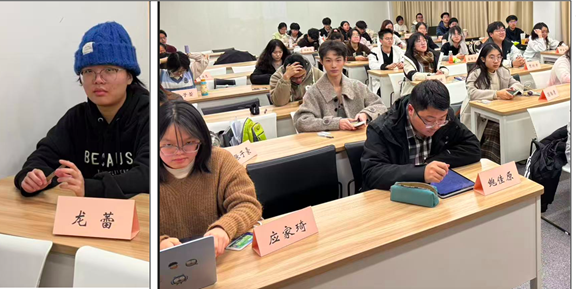
Long Lei: There may be an issue here between me annotating the Six Classics and me annotating the Six Classics. To be more precise, it is whether the author of "A Dream of Red Mansions" can be restored and whether he should restore it; if it can be restored, should the author's original intention be used as the standard?
Mo Luohan: This is a deep reflection on the interpretation of the work, a very profound, core and unavoidable question. What do you think?
All students: (seems to feel challenged)
Mo Luohan: This issue is indeed a bit difficult, and it is indeed very important. If this issue is not resolved, fundamentally speaking, our discussion will lack academic foundation and basis. This also directly leads to another question: when we evaluate relevant remarks, should we use the original intention of the author and the theme of the work as the evaluation criterion? Further derivation, if the author or the original intention of the work does not prevail, then is there still a need for standards? What should be the standards? Whose words should be used as the standard?
All students: (continue to be silent or meditative)
Demon Arhat: Everyone raised the white flag and surrendered? Now we finally know why people are so confident about the huge outcry this time. Any objections?
Zhu Yitian: It’s not a refutation. I think as a "reader", there is no problem no matter how you interpret "A Dream of Red Mansions"; just like we all have the right to find our own "Hamlet" in "The Revenge of the Prince". Because readers’ goal in reading is to find resonance and themselves in the book. However, as a "scholar", his obligations are different from those of a "reader". What he has to do is to "seek truth", to try to restore from the text the emotions that the author may have poured into it, to restore the original appearance of the living individuals in the story, and to try to see the reality beyond time and space, even if this reality is impossible to completely achieve. Therefore, "readers" can fully express their own answers in their own communication circles, but this is not the job of "scholars".
Demon Arhat:
A very good round. First of all, we should admit that the author's original intention and the theme of the work are indeed difficult to restore and verify. This is undoubtedly true; how do you prove that this is the author's purpose and the theme of the work? Why do different people claim to have discovered the author's original meaning, but these original meanings are different from each other?
In addition, everyone has the right and freedom to interpret, and when everyone talks about a work, they are talking about themselves. The result is that "the classics see Yi, the Taoist sees prostitution, the revolutionist sees Paiman, the scholar sees lingering, and the gossip sees the secret of the palace." This is also certain.
A question arises here: Since the original meaning cannot be restored, can we give up pursuing the original meaning of the work? Is it because "poetry cannot reach exegesis" that we simply give up "exegesis"?
Of course not. On the contrary, the less we know the original meaning of the author or work, the more we have to find ways to find this original meaning. Just like the truth, although we cannot obtain the absolute truth, we must find ways to continue to get closer to the truth. This is the destiny of human beings. Looking at it from another direction, is it possible that because we can’t get the truth, the original, and the original intention, we can just lie down, or just talk nonsense as we please? Is it possible to claim that one is the truth and then plug one’s own ears and seal the other party’s mouthpiece?
A new question will arise here: Who would think that he is talking nonsense and what the other party says is correct? Most likely not. On the contrary, both the proponents and opponents of "anti-Qing and restoration of Ming" are likely to think that they hold "the pearl of the spiritual snake, the jade of Jingshan".
This is the case. So is there a way to know who is more academic and who is closer to the truth? Of course there are still some, but there are three basic principles: first, while adhering to your own opinions, propositions and basis, maintain at least a minimum degree of questioning and openness to your own opinions, and maintain at least a minimum degree of respect and acceptance of different or contrary opinions; second, take "present facts, reason, and have evidence" as the basic principle and standards, strive to see as many "possibility" as possible, but not talk about empty "possibility" that lacks material support, find a definite link between the phenomenon and the conclusion, and look for the greatest possibility; third, on this basis, communicate, criticize, and respond to each other openly, honestly, and in good faith, and have friendly and fierce debates. The first is the premise of academics, the second is the foundation of academics, and the third is the guarantee of academics. Without scholarship, there is no criticism; without criticism, there is no scholarship. The truth becomes clearer with more debate. As long as you adhere to these three principles, even if you cannot find the true meaning, true origin and truth of "A Dream of Red Mansions" or other things, you can always get closer to it. Otherwise, we will surely sink into the quagmire of self-talk, self-righteousness, I am right and you are wrong, I say but you listen, or even you and me are not there, or there is total silence, and there will be no recovery.
These three principles seem simple, but they are not easy to implement. This is not only an attitude, but also an ability and a social relationship. The improvement of abilities and the change of relationships are not only determined by personal wishes and efforts, but also by the soil and environment in which they grow up, and by the discourse methods of family, society, schools, and scholars. When families, communities, schools, and scholars only allow one voice, a standard voice, and an exclusive voice to speak and answer questions, when scientists demonstrate in major newspapers that rice and wheat can produce "more than twenty times more than two thousand kilograms per hour," and when scholars often take it for granted when doing research, Internet discourse is filled with mutually exclusive and antagonistic emotions and words. It is not surprising that this kind of wave occurs. The Internet is nothing more than a reproduction and imitation of the real world.
From this perspective, the advocates of "anti-Qing and restoration of Ming" have no personal responsibility. On the contrary, the real responsibility lies with teachers, scholars, and everyone here. Because netizens and fans are also taught by teachers at all levels, and those who are fed various works are nurtured by relatives and friends around them; the so-called "Suoyin Sect" is not a creation of netizens, but is misled by scholars such as Cai Yuanpei and Zhou Ruchang. The reason why our Magic Red Class does not adopt the method of lecture, listening, teaching and receiving, but requires everyone to read word by word outside the class, and repeatedly deduce and refute the questions one conclusion after another in class, is the deep reason.
Of course, such a major responsibility and task cannot be expected to be accomplished overnight, nor can we expect the entire network to be clean and clear as soon as we wake up. After all, both human beings and individuals have gone through or must go through a stage where they do not distinguish between subject and object, cover their ears and steal the bell, do not distinguish between right and wrong, only respect me, and there is you and not me. Both humans and individuals have a growth process from childhood to adulthood, from perceptual to rational; in addition, people's words are also different. methods, forms, roles and positions, such as daily discourse and written discourse, playful discourse and serious discourse, metaphysical discourse and scientific discourse, novel discourse and academic discourse, private discourse and public discourse, childhood children's discourse and adult discourse, primary school students' discourse and doctor's discourse, human speech and non-human speech. If all words in all roles and on all occasions are required to be so "academic", so "correct", and so "full of standpoints", they may become empty and boring, and there is also the danger of mistaking wrong for right. Therefore, there must be tolerance, goodwill and even respect for different, opposing, and "wrong" voices. Especially when they position themselves as "imaginative people" and amuse themselves with their imaginations. Mr. Liu Xinwu positions his works as "fiction works" rather than "academic works", so there is no problem.
By the way, they are not the "Suoyin Sect" at all. The word "Suoyin Sect" does not match their actions at all. They have never asked for any hidden things. Only the name "Naodong Sect" matches them.
Well, today’s class ends here, and this semester’s class ends here. Through these weeks of discussion, we can more clearly understand that this class is not dedicated to studying the version of "Dream of Red Mansions", nor is it entirely a "Dream of Red Mansions" class. It is better to say that this is a veritable "Dream of Red Mansions and Life" class. Thank you all for your in-depth participation throughout the semester.
All the students: (sitting still, seeming unwilling to leave)
Demon Arhat: Why are you still here? There is no such thing as a banquet in the world, so let’s all go. Happy finals!
All students: (Applause reluctantly)
Link: "Anti-Qing and Restoration of Ming"? It’s better to pass the Fudan Hard Core Test Paper first.
About the author
Mo Luohan, real name Luo Shuhua, family name Mo Hongxuan, alias Modu Luohan, is a professor at Fudan University and the main writer of the public account of "FD New Academic World". Main teaching and research directions: Dream of Red Mansions, famous works and civilization, academic research theories and methods, Chinese traditional culture. His books include "Two Phoenixes Protecting the Pearl: The Structure and Narration of the Dream of Red Mansions", "A Close Reading of the Red Mansions", "Mainstreams of Chinese Fiction", "The Study of Chinese Narrative", "History of Chinese Prose", "Chinese Writing Tutorial", etc. In the field of "Dream of Red Mansions", the theories of "two phoenixes protecting the pearl", "chai and dai competing for marriage" and "Russian front and fat queen" were put forward. In the cultural field, it is the core of the Chinese national spirit to advocate "don't do to others what others don't want; don't do to me what we don't want; respect the strong and pity the weak, compete with each other; be clear about responsibility and tolerance, and be honest and keep promises".
Message description
The FD New Academic Circle advocates and follows the dialogue guidelines of "discussing issues without sidestepping; presenting facts and being reasonable; following laws and regulations with good intentions; transcending positions and staying far away from motives; tolerating dissent and not focusing on the individual." This is called the "Nine Laws of Dialogue in the New Academic Circle". All messages and comments will be posted without distinction between positions and opinions, with the exception of rumors and lies that are clearly inconsistent with facts and laws, and remarks that call for violence, hatred and personal insults. If your messages and comments are not among the "exceptions" and are not released, it is not because of this account, but because they are controlled by the WeChat public account platform, or the comment limit for this article has been reached. We would like to inform everyone, thank you for your support and participation.
Machine-translated from the Chinese original 复旦魔红课:红楼梦“反清复明”为什么是无稽之谈 (published 2025-12-26). WeChat original ↗